|
"NCA Health & Safety News" provides you with valuable information and assists in your quest to achieve a world-class safety culture. We believe that developing a safe work ethic is a never-ending process that must be part of every business's professional development.
Please do not hesitate to contact the office with your input, suggestions or safety questions. We value your feedback!
| | |
October Construction Tips 🍂👷
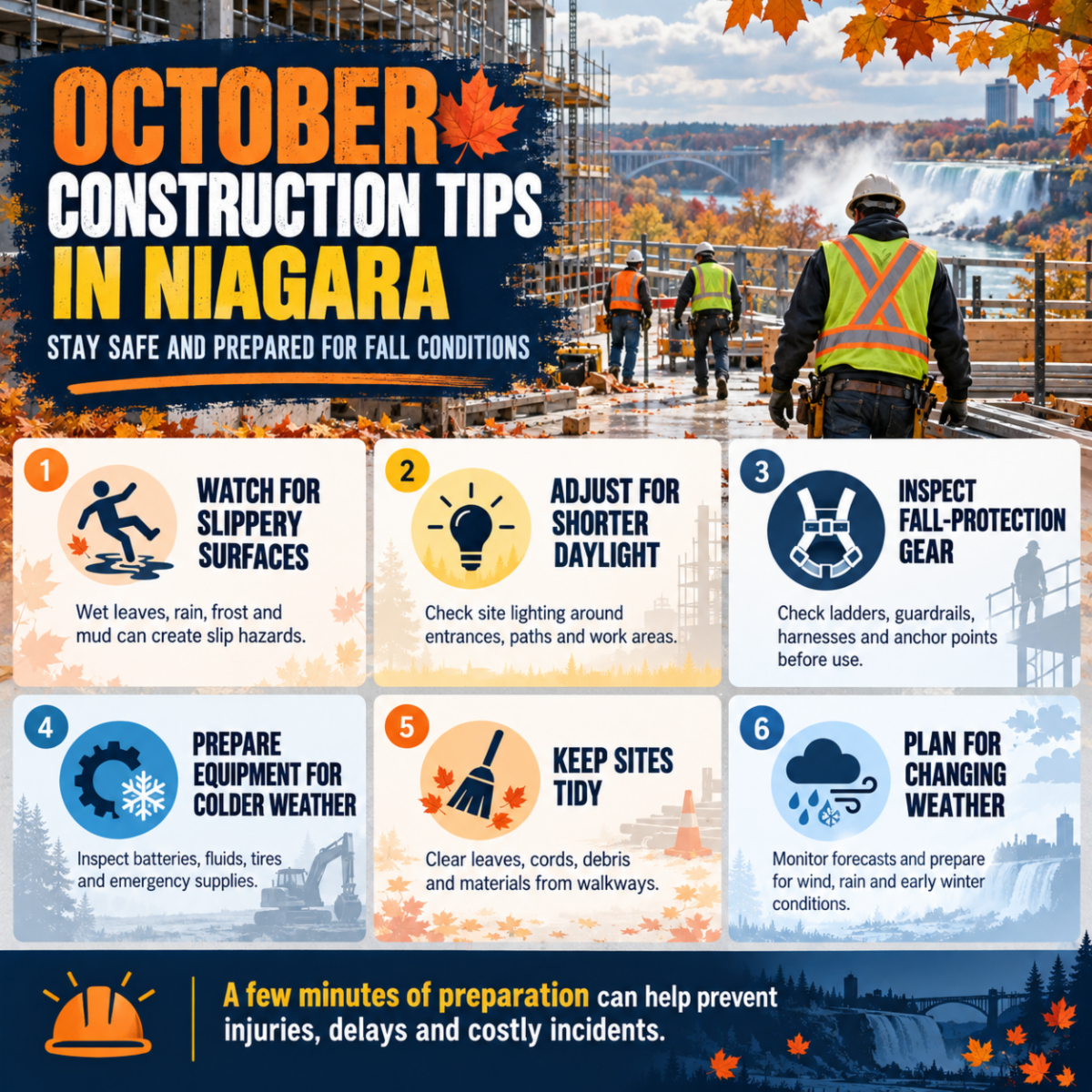
As temperatures drop and daylight hours shorten, October is a good time to prepare jobsites for changing fall conditions.
-
Watch for slippery surfaces. Wet leaves, rain, frost and mud can quickly create slip-and-fall hazards. Keep walkways, stairs and work areas clear and well maintained. Ontario identifies slippery surfaces, poor lighting and inadequate housekeeping as contributors to construction-site falls. Ontario
- Adjust for shorter daylight hours. Check temporary and permanent site lighting, particularly around entrances, parking areas, stairs and equipment routes.
-
Inspect fall-protection equipment. Cooler, wetter weather is a good reminder to inspect ladders, guardrails, harnesses, anchor points and other fall-protection systems before use. Ontario
- Prepare equipment for colder weather. Check batteries, fluids, tires, heating systems and emergency supplies before consistently colder temperatures arrive.
- Keep sites tidy. Fallen leaves, debris, extension cords and materials can become hazards when conditions are wet or visibility is reduced.
- Plan for changing weather. Niagara conditions can change quickly in the fall. Monitor forecasts and adjust work plans when high winds, heavy rain, frost or early winter conditions are expected.
-
Be mindful of road construction. Niagara Region's 2026 roadwork remains weather-dependent and may involve lane restrictions and delays, so allow extra travel time when moving crews and materials. Niagara Region
- Start winter planning now. Review snow-clearing responsibilities, salt and sand supplies, site access, heating requirements and winter emergency procedures before the first significant snowfall.
October Safety Reminder: A few minutes spent preparing for changing fall conditions can help prevent injuries, delays and costly incidents.
| | | |
9 workplace tips for a safe and healthy fall season
As the crisp autumn air arrives across Ontario, it brings along more than just colourful leaves. It’s time for employers to address some seasonal hazards that may have slipped off the radar during the summer months. Now is the time to proactively address these hazards and ensure a safe transition into the cooler season. READ MORE
| | |
Prevention of Slips, Trips and Falls
How do falls happen?
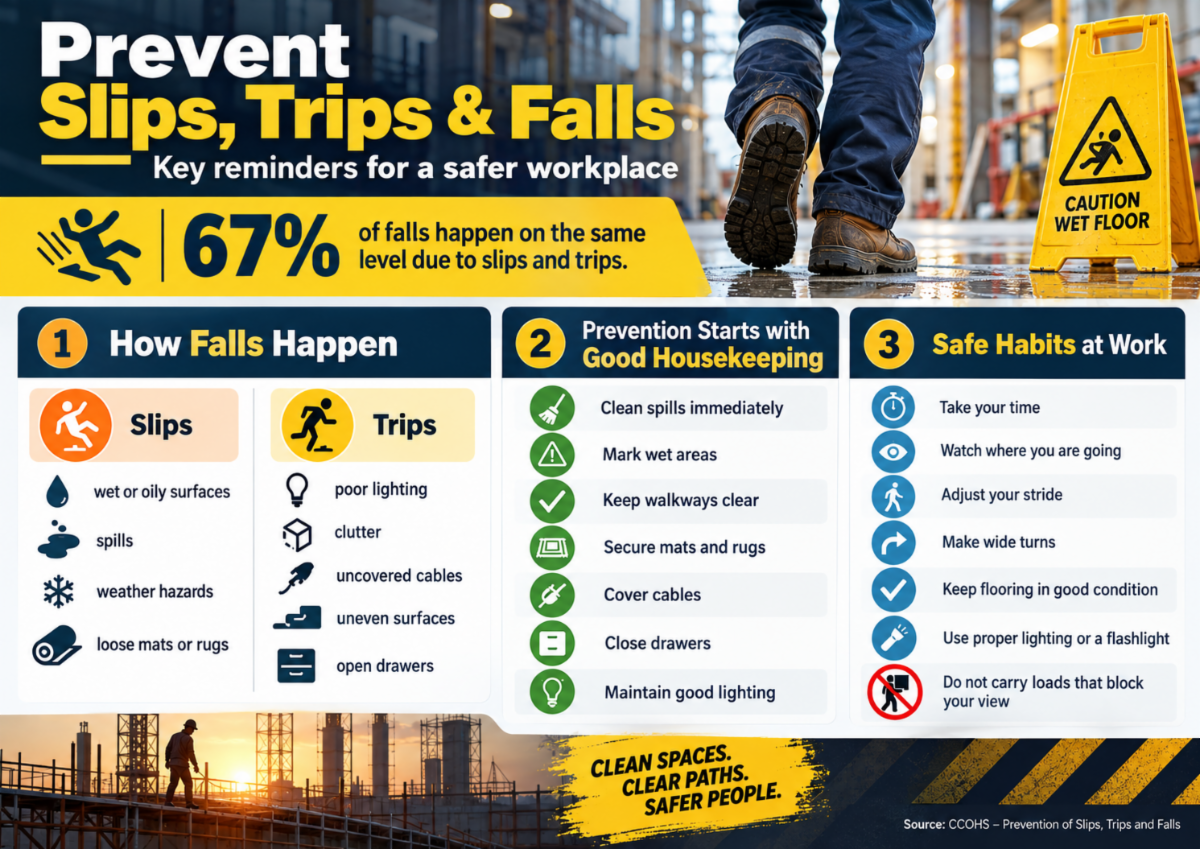
Statistics show that the majority (67%) of falls happen on the same level resulting from slips and trips. The remaining 30% are falls from a height. This document will summarize information on "falls on the same level" (slips and trips). Falls from an elevation, such as falls from ladders, roofs, down stairs or from jumping to a lower level, etc., is discussed in other documents since each type of fall must be assessed as part of a fall prevention program. READ MORE
| | |
Winter Driving Safety: Be Prepared for Changing Conditions
Winter roads can quickly become challenging due to snow, ice and reduced visibility. Transport Canada recommends adjusting your speed to road and weather conditions, allowing extra stopping distance, clearing all snow and ice from your vehicle, and using winter tires on all wheels for improved traction. Drivers should also avoid sudden braking or steering, keep headlights on when visibility is poor, and ensure they are prepared for emergencies before heading out.
Read Transport Canada’s Winter Driving Safety Tips
| | |
Propane Heater Safety Tips
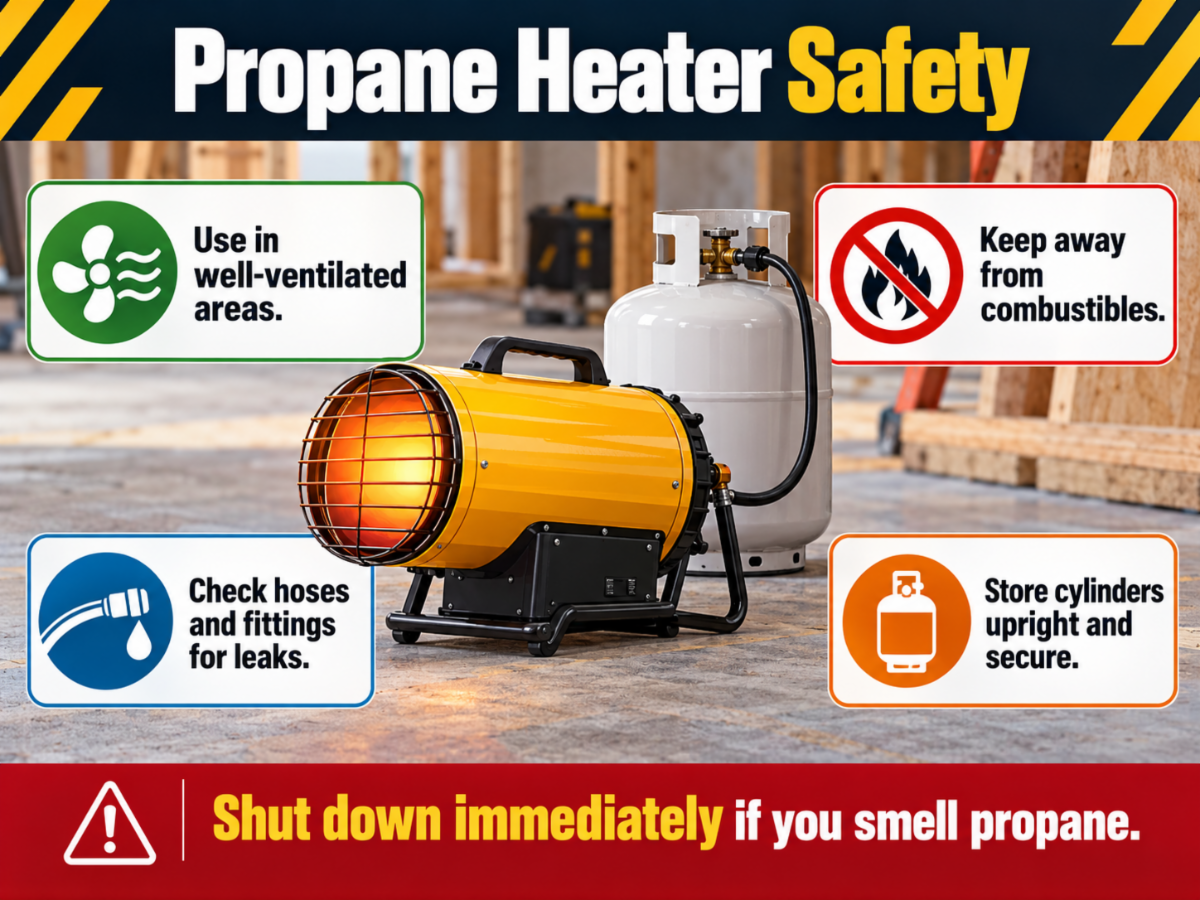
Propane heaters can provide effective temporary heat on construction sites and in work areas, but they must be used carefully to prevent fire, explosion, and carbon monoxide hazards.
- Use only approved heaters and follow the manufacturer’s instructions for setup, operation, and clearances.
-
Provide adequate ventilation. Propane can displace oxygen, and combustion can produce dangerous carbon monoxide. Never use a heater in an enclosed or poorly ventilated space unless it is specifically designed and approved for that use. CCOHS
-
Keep heaters away from combustible materials such as cardboard, wood, tarps, paper, fuel, and other flammables. CCOHS
- Check hoses, regulators, fittings, and connections for damage or leaks before use. If you smell propane or suspect a leak, shut off the supply if it is safe to do so, leave the area, and eliminate ignition sources.
-
Keep propane cylinders upright and secured in a well-ventilated location away from heat and ignition sources. CCOHS
-
Place heaters on a stable surface where they cannot be knocked over or block exits or emergency equipment. TSSA
-
Never move a heater while it is operating. Shut off the fuel supply and allow the unit to cool first. TSSA
- No smoking or open flames near propane cylinders, heaters, or storage areas.
-
Keep an appropriate fire extinguisher accessible and ensure workers know what to do in an emergency. CCOHS
-
Remember: If something smells wrong, looks damaged, or the heater is not operating properly, shut it down and have it inspected before using it again.
| | |
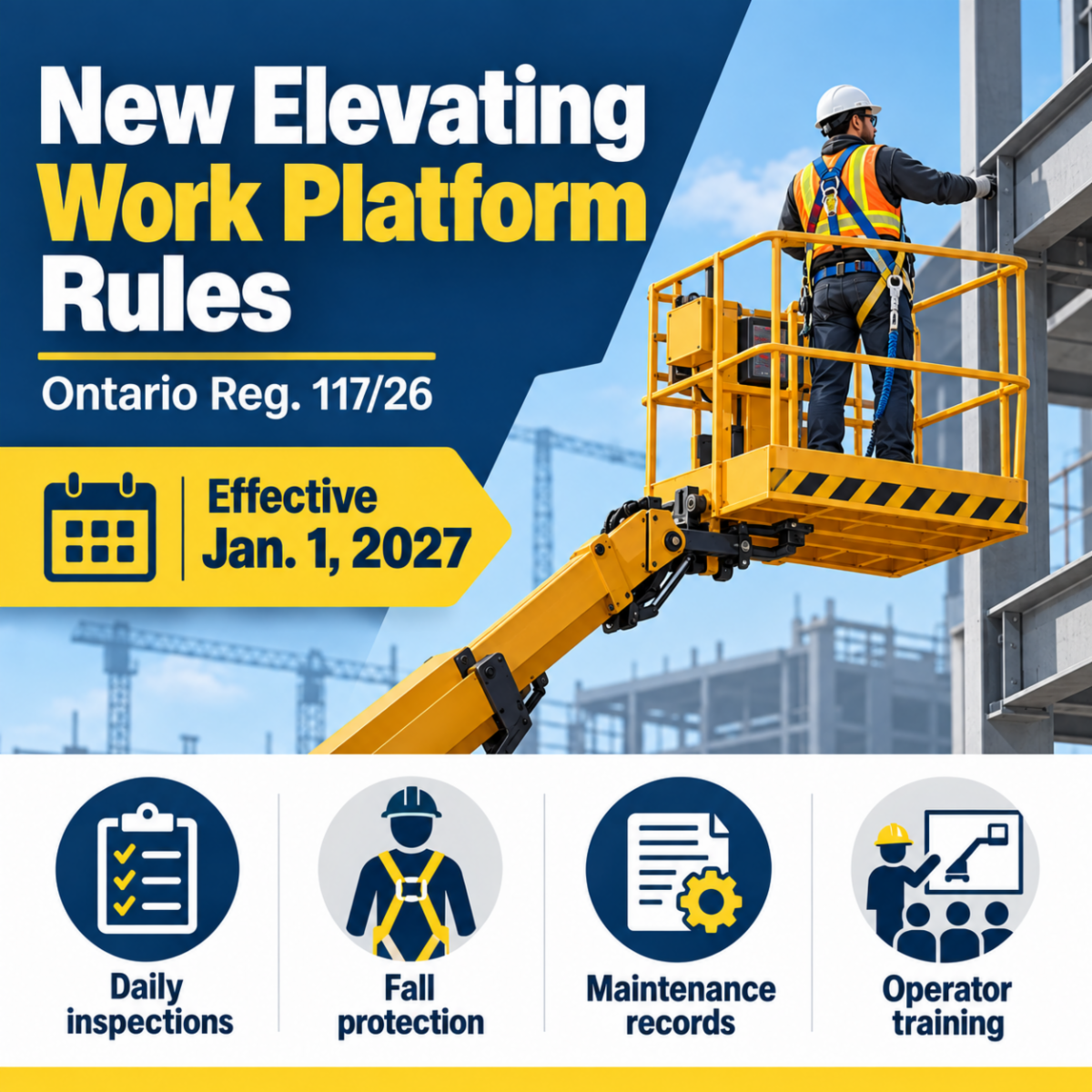
New Ontario Elevating Work Platform Regulation Coming in 2027
Ontario’s new stand-alone regulation for elevating work platforms, Ontario Regulation 117/26, comes into effect January 1, 2027. The regulation introduces dedicated safety requirements for equipment such as boom lifts, self-propelled platforms, vehicle-mounted aerial devices and mast-climbing work platforms.
Key requirements include updated design and maintenance standards, daily pre-use inspections, permanent maintenance records, adherence to rated load limits, and mandatory fall protection and anchorage requirements. The regulation also strengthens operator training, including theory, practical evaluation and make-and-model familiarization, with training valid for five years.
Employers and contractors who use elevating work platforms should review the new requirements now and ensure equipment, training and procedures are ready for compliance ahead of January 2027.
| | |
Ontario’s new Type 2 head-protection requirements: What employers need to know
Head protection is undergoing one of its most significant changes in decades.
Traditional Type 1 hard hats remain widely used across Canadian construction sites, but they are designed primarily to protect against impacts to the top of the head. Workers can also suffer serious head injuries after falling, slipping, striking structural steel or being hit from the side by equipment or moving materials. Read More
| | |
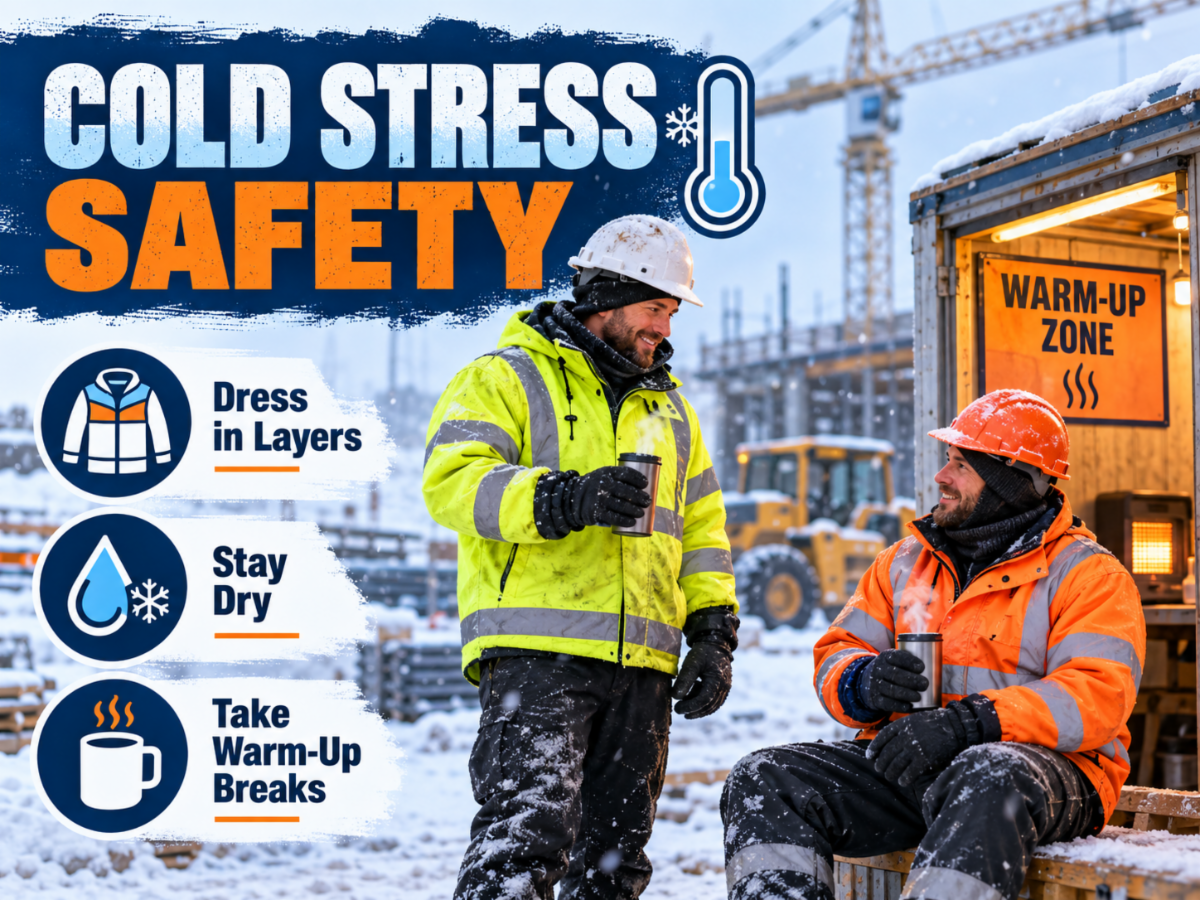
Cold Stress: Protecting Workers as Temperatures Drop
As temperatures begin to fall, workers who spend time outdoors or in unheated areas can be at risk of cold stress. Construction workers are particularly vulnerable because exposure to cold temperatures, wind and wet conditions can cause the body to lose heat faster than it can produce it.
Cold stress can lead to serious conditions including frostbite and hypothermia. Frostbite most commonly affects the fingers, toes, nose and ears, while hypothermia occurs when the body's core temperature drops below 35°C. Warning signs can include intense shivering, fatigue, loss of coordination, difficulty speaking, confusion or changes in behaviour. As hypothermia becomes more severe, shivering may stop and the person may become unresponsive.
Help Prevent Cold Stress
- Dress in layers so clothing can be adjusted as conditions or activity levels change.
- Wear a wind-resistant outer layer, insulated gloves or mittens, warm head protection and insulated, waterproof footwear.
- Keep clothing dry. Wet clothing can significantly increase heat loss.
- Take regular breaks in a warm, sheltered area, particularly during prolonged exposure.
- Pay attention to the wind chill, not just the air temperature.
- Encourage workers to watch out for one another and recognize the early signs of cold stress.
- Plan outdoor work with weather conditions in mind and adjust work/rest schedules when conditions become severe.
Know the Signs — Act Early
If a worker shows signs of cold stress or hypothermia, move them to a warm shelter, remove or loosen wet or restrictive clothing where appropriate, warm them gradually and seek medical attention when needed. Frostbitten areas should not be rubbed or massaged, and they should not be thawed if there is a possibility they could freeze again.
Cold-weather safety starts before the workday begins. Check the forecast, dress appropriately, provide access to warming areas and make sure everyone on site knows how to recognize and respond to cold-related illness.
Remember: Cold + Wind + Wet Conditions = Increased Risk.
| | |
Click here for IHSA's 2-minute news for August
Click here for IHSA's 2-minute news for September
|
IHSA Safety Talks – A Great Toolbox Talk Resource
Looking for fresh topics for your next toolbox or safety talk? The Infrastructure Health & Safety Association (IHSA) offers a comprehensive collection of free Safety Talks designed to be delivered in about five minutes.
Topics cover everything from working at heights, PPE, electrical safety and equipment to cold stress, winter hazards, ergonomics, occupational health and mental health.
These practical resources can help workers recognize hazards, discuss safe work practices and keep health and safety top of mind on the jobsite.
IHSA also provides a Safety Talk Report Form to help employers document the topic, date and workers in attendance.
Explore IHSA Safety Talks: IHSA Safety Talks Resource Library
| | Call Jenn for more information:
289-271-8623 | |  | Click here for more information. | | | |
Click here for the September edition of the Ministry of Labour, Immigration, Training and Skills Development monthly newsletter.
| |
Train on Your Time with IHSA eLearning
Take charge of your training with IHSA’s fully interactive eLearning courses. Designed for flexibility and built with engaging multimedia content, these courses let you learn anytime, anywhere—when it works for you.
| | |
MLITSD Ministry of Labour, Immigration Training & Skills Development Report for: September 2026
Click above for full reports (critical injuries, fatalities, Provincial Coordinator's Comment, incidence details and codes, news)
| | |
GAIN THE COMPETITIVE ADVANTAGE OF GOLD SEAL CERTIFICATION - Gold Seal Webinars
The Gold Seal Certification program has been the industry’s most trusted, valued, and reliable certification for those in the management of construction. Gold Seal Certified (GSC) credentials demonstrate your commitment to the profession and your expertise through certifying education, experience, and competency.
Ever wonder what it takes to get Gold Seal Certified?
Find out the answers to these questions and more:
• Do I qualify to write the Gold Seal exam?
• Do I need more experience or training?
• What information do I need to apply?
• What is the application process through the online portal?
Watch a recording of a Gold Seal information session here.
Here is the next date for this certification:
November 20, 2026
- Time: noon Eastern time.
- Enroll by October 30, 2026.
- For new enrolled applicants and in-progress applicants, the deadline for GSC applications and final reviews is November 11, 2026.
- The last date for approved GSC applicants to choose this exam date is November 11, 2026.
For more information, click here.
| | NCA Training & Development courses at the NCA | | |
NCA Training Courses
(membership discounts)
♦ Live Webinars & Workshops
♦ Online Courses
Please request the most recent training newsletter here.
| | Safety courses created to enhance health and safety awareness and help prevent injures to workers, e.g. Confined Space Safety Awareness, Pipeline Construction Safety Training and more - safety and management courses. Contact us for more information. | |
| Helpful H&S Resources and Information | | Ministry of Labour, Training & Skilled Trades NEWSROOM | | Stay up to date with the latest industry safety news and training by clicking here. | | Check out these valuable resources by clicking here. | | Check out this valuable resource by clicking here. | | Click Here for WSIB Newsletter | |
NCA has made safety awareness a primary initiative for our Association. Our PATHS initiative, Partners Aligned Together for Health and Safety - making a stronger commitment to safety awareness and training.
P.A.T.H.S includes:
- NCA Health & Safety Newsletter
- NCA New Safety Training Partners
- NCA WSIB Health & Safety Excellence Program
- NCA Membership Appreciation Day & Safety/Member Tradeshow
- NCA Safety Resources and Guidelines
- NCA Guidance to become "Supporting Ontario’s Safe Employers" (SOSE) eligible
- NCA Partners with Audit Companies
Have a question for our Safety Committee? Email office@niagaraconstruction.org
| | | | |