|
WHAT EVERY THERAPIST SHOULD KNOW ABOUT INSURANCE
By Barbara Griswold, LMFT
Author, Navigating the Insurance Maze
April 7, 2026
| | |
Hello, everyone,
The U.S. Supreme Court ruled this week that Colorado’s laws banning "conversion therapy” for minors violates the free speech rights of mental health professionals.
There is no doubt that this will harm many LGBTQ+ clients, particularly minors, who will no longer be protected by laws that forbid efforts to change their sexual orientation or gender identity.
But this ruling reaches far beyond LGBT youth. What is included in a therapist's right to free speech? As health professionals, do we have the right to say anything we want? Can we legally advise clients to use other unproven, unsafe, or even harmful types of treatment? Can we discourage evidence-based techniques? Are we free to discourage a client's treatment goals if they don't match our personal values?
In an article from the American Psychological Association, CEO Arthur C. Evans Jr., PhD, writes “we are disappointed that the Court has left a core legal question of the case unresolved: whether states can regulate what licensed mental health professionals say to their patients in a clinical session... The answer will determine not only the fate of ‘conversion therapy’ bans, but the broader authority of state licensing boards to enforce best practice — often enacted for the safety and protection of consumers — in any profession that uses speech to deliver therapeutic interventions.”
Warmly,
Barbara
| |
ARTICLE
Which Health Plans Deny the Most Claims (And How To Fight Back)
If you’ve ever stared at a denial letter and thought, “Seriously?” you’re not alone. A Kaiser Family Foundation (KFF) poll found that roughly one in three insured adults reported having a health plan deny coverage for a health care service within the past two years.
Yet as I also discussed in my last newsletter, KFF also found that only about 1% of denials are appealed. So I introduced you to ProPublica's Claim File Helper, a tool which can help you to get the health plan's claim file to use for appeals.
In today's article I will share more surprising denial statistics, and introduce you to some other tools that can really help you to easily fight a claim denial.
More denial statistics
KFF also did an in-depth study of the denial statistics of plans that sell insurance on Healthcare.gov. They found that an average of 19% of in-network claims submitted in 2024 were denied. That’s almost 1 in every 5, a statistic that has remained pretty stable over the years.
Perhaps more of a surprise (at least to me) was that a significantly higher percentage (37%) of out-of-network claims were denied.
Reported denial rates varied widely by state, with Hawaii having the highest average denial rate in 2024 (Alabama won that sad trophy in 2023). South Dakota once again took the ribbon for lowest denial rate. And there was significant variation in denial rates between the health plans that operated within the same state, with in-network denial rates ranging from as low as 3% at one health plan to as much as 36% at another plan in the state.
Which were the worst plans? Why are denials happening? Are there ways to fight back? (Hint: Yes!)
Read the rest of the article to
- see the denial rates for the health plans you work with
- hear the most common reasons for denials
- view the denial rates in your state
-
learn about some cool free tools THAT WILL ACTUALLY WRITE APPEAL LETTERS FOR YOU! Read the rest of the article.
| | |
Want to Spend Less
Time on the Phone With Health Plans? 3 Tips
[Thanks to the folks at Practice Solutions, one of the billers on my Billing Service List, for inspiring this article with one of their recent blog posts.]
We've all been through it: You spend an hour on the phone with the health plan, and, if by some miracle you reach a human, they make some kind of promise to follow up. Maybe they promise to resubmit a claim, or to send a check. Or they promise to call you back, or have a supervisor call you back.
But after days or weeks you get no response. And the next time you call, you have to start at the beginning to describe the problem, as if you never called in the first place.
So here are 3 often-overlooked tips to make your calls to health plans more successful:
-
If they promise action, ask for a deadline, and mark your calendar. For example, if the rep says they will resubmit a claim, ask how long you should allow before you call back. If the plan says processing a claim will take 30 days, mark your calendar to follow up in one month.
-
At the end of the call, ask for the Call Reference Number, and document it. The Call Reference Number is a number that the health plan assigns to any phone call with you or your client, and to the notes the representative took during the call.
If you have to call back a second (or third, or fourth) time, being able to give the rep Call Reference Numbers from previous calls helps them find the notes from those calls. Ideally, this can help them see what was previously discussed, and what promises were made, so you don't have to start at Square One again.
Also, if you ever have to appeal a claim or coverage denial, you can use Call Reference Numbers in your written appeal. They serve as documented proof of the calls you made to try to resolve the issue, and of what you were told in each call by the plan. They may even have call recordings they can access.
-
Take notes during the call, and summarize to the rep what you wrote down. Afterwards, document the call in more detail. Include claim ID numbers, date and time of the call, the phone number you dialed, the name and department of the representative you spoke with, and what exactly the representative said or told you to do.
| | |
BILLING SERVICE LIST
List of 108 nationwide mental health billing services, with details about their fees and services, plus reviews to help you find and choose a personal biller. For info, click here
| |
WEBINAR: "WHAT'S MISSING FROM YOUR CHARTS: WRITING GREAT NOTES"
This recorded webinar is aimed at all therapists, since we all can have charts reviewed by insurance, disability, and licensing boards. Includes 8 note examples, 3 note templates, and telehealth note requirements. For info, click here
| |
WEBINAR: "TELEHEALTH LAW & ETHICS: WHAT YOU NEED TO KNOW ABOUT APPS, AI, AND OTHER ADVANCES IN CARE"
While applicable nationwide, this recorded course meets the mandatory telehealth course requirement for all California MFTs, LCSWs, & LPCCs. We discuss the latest technology and how it can be safely used, including Artificial Intelligence (AI), email, texting, seeing clients in another state & HIPAA compliance. For info, click here
| |
PRACTICE FORMS PACKET
Get 24 essential forms Easy to customize. Designed to meet legal, ethical, and insurance expectations. For info, click here
| |
WEBINAR: "COUPLES THERAPY: BILLING, DOCUMENTATION,
& ETHICAL DILEMMAS"
Working with couples involves navigating complex billing, documentation, and ethical issues. This recorded webinar answers all your questions such as when can you ethically bill insurance? Who really is your client? Do you need two charts and treatment plans? What does insurance expect? For more info, click here
| |
WEBINAR:
"ARE YOU COMMITTING INSURANCE FRAUD?"
This recorded webinar answers all your questions about fraud and contract violations, including the ethics of billing two plans for a couples session, sliding fees, waiving copayments, and how to avoid common types of fraud. For info, click here
| |
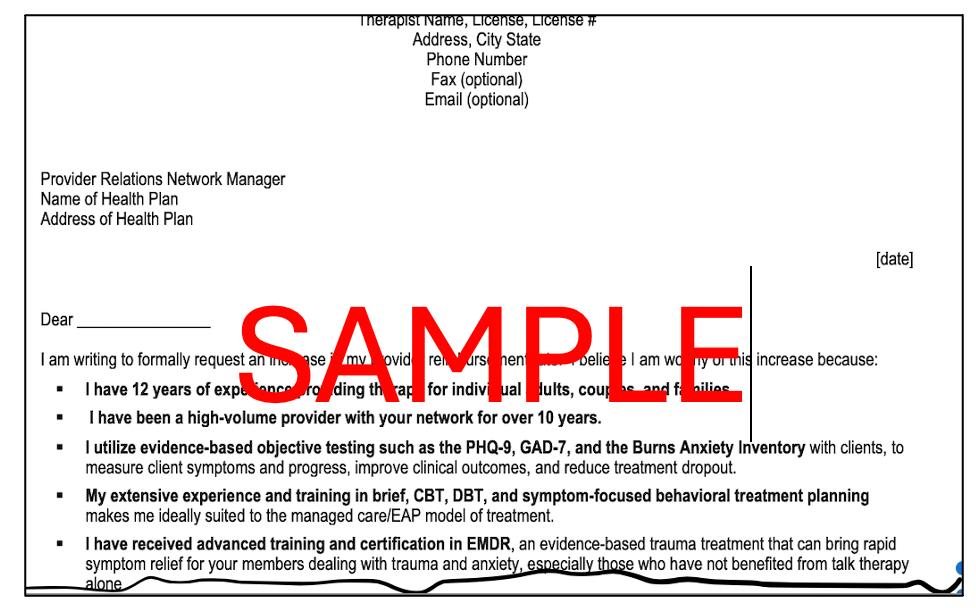
RAISE REQUEST TEMPLATE
Did you know 40% of therapists in one survey had received a raise from a health plan? This template will help you understand how to format your request and what to say when asking for a raise. For info, click here
| |  | |
WEBINAR:
"AUDITS AND RECORDS REQUESTS: WHAT EVERY THERAPIST SHOULD KNOW"
This recorded webinar is for all therapists, since even out-of-network therapists can have their notes requested by an insurance plan or other agency -- and can be asked to pay back monies already collected. Learn to prevent this. For info, click here
| |
WEBINAR: "HOW TO WRITE A 10-MINUTE TREATMENT PLAN"
Do you hate writing treatment plans, worry about the ones you write, or don't write them at all? This recorded training will teach you how to write brief plans that satisfy legal, ethical, and insurance expectations, so you feel confident if you receive a records request, and won't have to pay money back if audited. For info, click here.
| |
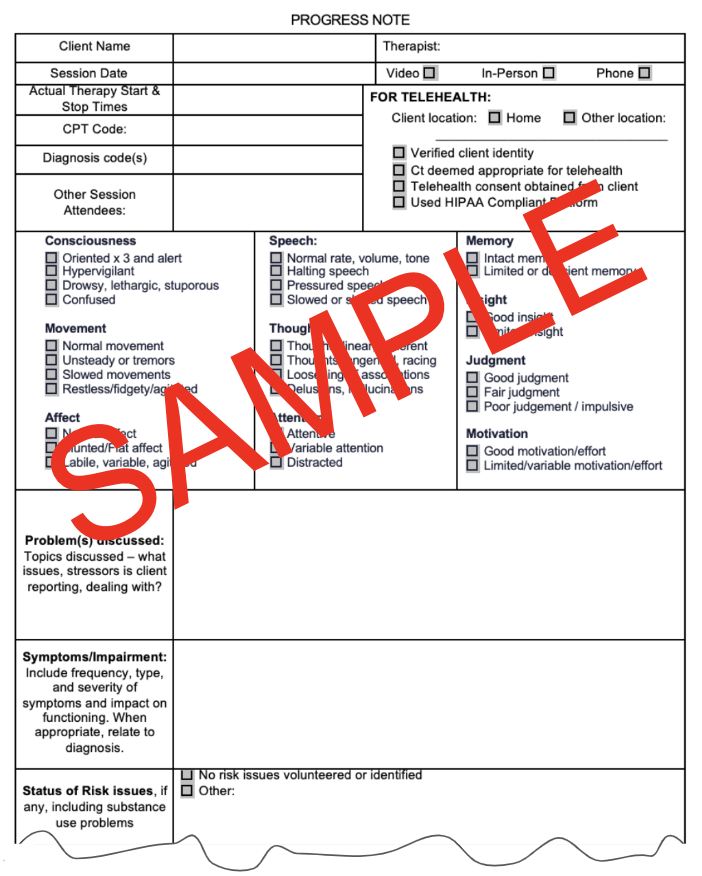
PROGRESS NOTES TEMPLATE
This progress note template has been designed to pass an audit by the toughest insurance plans or licensing boards. Available in fillable PDF format, Word format, and Pages format. Have confidence in your session notes. For more info, click here
| |
WEBINAR: "THE FIRST SESSION: Juggling Clinical & Administrative Tasks"
This recorded webinar gives tips on juggling all those intake tasks -- building rapport and taking a history, doing a diagnostic assessment, while handling paperwork, payment and insurance issues. For more info, click here
| |
WEBINAR:
"SHOW ME THE MONEY: Understanding Rates, Raises, and Resigning"
This recorded course tells you how to increase your chances of getting a raise from a health plan, and gives both clinical and practical steps for asking for a raise. It also outlines the practical and clinical steps to take when resigning. For more info, click here
| |
WEBINAR: "WHAT OUT-OF-NETWORK THERAPISTS SHOULD KNOW ABOUT BILLING"
This recorded webinar covers what every therapist should know about billing and insurance -- even if you have never signed an insurance plan contract. We'll discuss common errors made by out-of-network providers, sliding scale fees, and helping self-pay clients afford treatment. For info, click here
| |
|
MY BOOK!!!
Navigating the Insurance Maze: The Therapist's Complete Guide to Working With Insurance -- And Whether You Should -- 10th EDITION
Get the digital version only or both the paperback and digital versions
Click here for info. Please buy direct from us - Amazon keeps 55% of profits!
CALIFORNIA LMFTs, LCSWs, LPCCs, and LEPs: You can now get 10 CEs for reading my book, and 2 can count as Legal and Ethical CE credits. Buy my book here and buy the CE test here to get your CEs. You can even take the test if you have already read any edition of my book.
| | |
Know a colleague who might appreciate this newsletter?
Forward it!
| |
|
Barbara Griswold, LMFT
Author, Navigating the Insurance Maze: The Therapist's Complete Guide to Navigating Insurance -- And Whether You Should
theinsurancemaze.com 408-985-0846
| | | | |