REMINDER: YOUR SUBMISSIONS ARE ENCOURAGED | | |
1. Bindu's Corner: This week, Bindu presents us with quotes on both internal and external peace
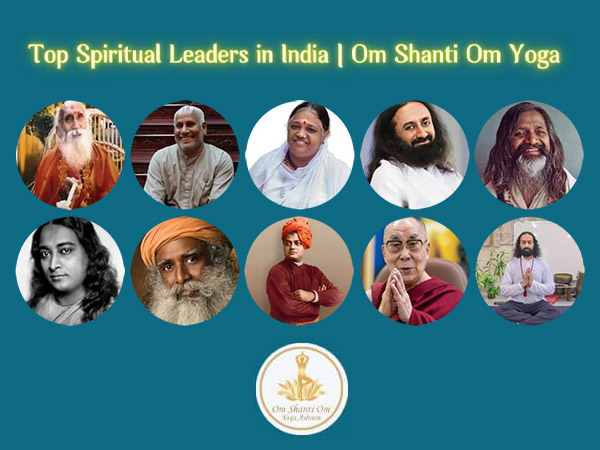
2. Spirituality: India is a country with rich and diverse religious and spiritual traditions. I have one website's top-ten list of India's spiritual leaders and definitions of the three most common Hindu titles: Guru, Swami, and Yogi.
3. Student's Corner: It's graduation season, and most colleges around the country will have had their commencement ceremonies by the end of next week. I have a rundown of this year's speakers and Time Magazine's pick for the 10 best commencement speeches.
4. Bicycling: E-bikes are everywhere now. I have safety tips for riders from the Naval Postgraduate School in Monterey, CA.
5. Armed Forces Day: I want to send a big thank-you to all active-duty and veteran soldiers, marines, sailors, airmen, guardians, and coast guardsmen for the sacrifices they make to keep our country safe on this Armed Forces Day.
6. Pet's Corner: Summer weather is on its way. I found a website where you can check the ground temperature in your locale in real time to see if it's safe for your pet's paws.
7. Hayward M. Fox, Ph.D.: With this issue's emphasis on spirituality, I think this week is a good time to try out one of Dr. Fox's guided meditations.
| | Now, to this week's Flock. | | 1. Bindu's Corner: Thoughts on Peace | | Here are some pearls of wisdom on the need for inner peace to achieve greater harmony and peace among the world's communities. | | From Inner Peace to World Peace | | |
“Inside the body there is desire and greed; inside the mind there is doubt; inside the world there is change, there is death. Go beyond these and you will find peace and bliss.”
—Swami Ramakrishnanda
“To one who is at peace, the entire world is a peaceful forest. To one who is restless with a thousand thoughts, it is an ocean of sorrow.”
—Yoga Vasistha
“Harmony seldom makes a headline.”
—Silas Bent
“If you are inwardly free from fighting, no one will be able to
start a fight with you.”
— Anonymous
“Our work for peace must begin within the private world of each of us.”
— Dag Hammarskold
| |
2. Spirituality: 10 Spiritual Leaders of India
| | The article referenced below from the Om Shanti Om Yoga Ashram lists their picks for the top ten spiritual leaders of India. Several of them have appeared in the Flock before. In February of this year, I featured Swami's Beach in Encinitas, CA, affectionately named after Paramahansa Yogananda. Bindu's Corner has featured quotes from Sri Sri Ravi Shankar (aka Gurudev) and Swami Vivekananda. Click through to the full post to learn why each spiritual leader made the list. | | 10 Best Spiritual Leaders in India | |
India is often referred to as the land of the saints, mystics, and sages. For centuries, this spiritually vibrant country has given birth to enlightened souls who have guided humanity with wisdom, compassion, and selfless service. While Indian spiritual leaders keep alive the traditional sacred practices of yoga, meditation, and Vedanta, they also modify them in harmony with modern ways of life. Whether you're delving into the practice of meditation, spiritual awakening, or looking for inner peace, the renowned spiritual leaders in India provide valuable wisdom and techniques that change lives.
1. Guru Swami Yogananda Ji – The Immortal Yogi
2. Guru Buddhi Prakash Ji – The Himalayan Philosopher
3. Yogi Dinesh Chander Ji – The Authentic Yogacharya
4. Mata Amritanandamayi Devi (Amma) – The Hugging Saint
5. Sadhguru Jaggi Vasudev – The Modern Mystic
6. Maharishi Mahesh Yogi – Master of Transcendental Meditation
7. Sri Sri Ravi Shankar – The Ambassador of Peace
8. Swami Vivekananda – The Monk Who Shook the West
9. Paramahansa Yogananda – The Messenger of Divine Love
10. The 14th Dalai Lama – The Face of Compassion
Bottom Lines
The famous spiritual gurus in India are more than just teachers—they are carriers of light, compassion, and divine truth. From the ancient saints to contemporary Indian gurus, right from the silent Himalayan monks to international spiritual icons, they personify the timelessly effulgent spirit of Indian spirituality.
These leading spiritual figures in India have touched the hearts of millions with their wisdom, service, and presence. Their organizations, teachings, and lives are living embodiments of what it is to live a life of purpose, awareness, and oneness. Regardless of whether you're on the path of yoga, meditation, or devotional love, the wisdom of these enlightened beings can be your guide.
| | The terms Guru, Swami and Yogi can be a little confusing to readers not familiar with Indian culture., partialy because they are both not interchangeable and not exclusive. All three terms can be used as titles requiring specific criteria to be met by the holder. Yogi has the most strict requirements of the three, while swami and guru can be used as honorifics like "Mr." or "Ms." in English as long as the subject is worthy of the term. | | Guru, Swami, and Yogi – The Difference | | |
The words Guru, Swami and Yogi are the indicators of a person's social and spiritual stage. Most people use these words alternatively. But there is difference among these names. The person should qualify or possess particular qualities and wisdom to be called with these names.
Guru
Guru literally means “out of darkness into light”. Guru is one of the most widely used word in spiritual, social, corporate and in many other areas across India and in other countries. The purpose of using the word is different, but the central theme of that word is same in all.
To be called as ‘Guru’ a person must possess the qualities, skills and wisdom. Guru is a perfect person possessing perfect practice and knowledge on a particular subject. He should have the ability to teach or train his students or others as per his capabilities on that subject. He has to have the capability to simplify issues related to his mastered subject so that it is easily understood by others.
A guru may be a swami or yogi or other person. For example, Steve Jobs can be called as tech guru because of his expertise in technology and innovation.
Yogi
Yogi is a person who masters yoga. There are different types of yoga paths. A yogi who masters in any of them is commonly called a Yogi. If any specific yoga path is added before yogi means he is master in that yoga path. For example, a person mastered in Hatha yoga is called as Hatha yogi, if in Karma Yoga called as Karma Yogi.
A yogi is basically not a guru. If he wants to teach his expertise to others then he becomes guru. For example, B. K. S. Iyengar mastered Hata yoga practice. So he is a Hata yogi. Later he decided to teach the yoga postures. So he became a Guru.
Swami
A person who voluntarily works for the sake of every being including self, in a way of spiritual and social development is called as Swami. He does not consider any differentiation in the social life such as caste religion etc. to serve.
A swami can become a guru if he gains knowledge in a particular subject and is interested to preach. But he can become a yogi only when he meets the characteristics of yogi.
Swami Vivekananda, and Paramahansa Yogananda fulfill all the three categories. They taught the public on many issues, they are masters in yoga and both were initiated into swami hood and gave selfless service to the society.
| | |
Maharishi
Definition: an enlightened Hindu sage, guru, or spiritual teacher of mysticism. The word originates from Sanskrit, combining maha (meaning "great") and rishi (meaning "seer" or "sage")
Usage: It is often used as an honorary title preceding the name of a highly revered spiritual master (e.g., Maharishi Mahesh Yogi, who popularized Transcendental Meditation).
Mahatma
Definition: a person deeply revered for their wisdom, saintliness, and spiritual authority. The term originates from the Sanskrit mahātman, which literally translates to "great soul"
Usage: an honorific title used for esteemed sages, holy people, or religious scholars..
Sri
Definition: (also spelled Shri, Shree, or Sree) is a Sanskrit-derived term meaning splendor, radiance, beauty, prosperity, wealth, and auspiciousness. Primarily used in South Asia as a title of respect, it acts as an honorific prefix.
Usage: placed before the names of distinguished persons, teachers, or gods to show reverence. It can be repeated to denote a higher status.
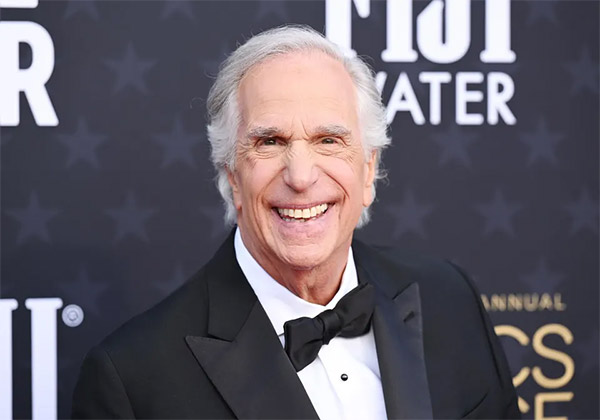
| | 3. Student's Corner: Commencement Speeches | | One of several celebrities selected to serve as a college commencement speaker this year, Henry Winkler will address the graduates of Emerson College, his alma mater. | | Most colleges in the US will have wrapped up their commencement ceremonies by the end of next week. Here in Tucson, the University of Arizona held its commencement ceremony today, with former Google CEO Eric Schmidt delivering the address. Forbes has a comprehensive rundown of commencement speakers, from Arthur Brooks to Henry Winkler, who will be speaking across the country next week. Following that, I have Time Magazine's list of the Top 10 Commencement Speeches, with links to recordings and transcripts. | | An Early Look At The Headliners Speaking At 2026 College Commencements | | From Forbes, By: Michael T. Nietzel, March 5, 2026 | | |
“Happiness Expert” Arthur Brooks will be the featured speaker at the University of Utah’s campus-wide commencement. Brooks is the Parker Gilbert Montgomery Professor of the Practice of Public Leadership at the Harvard Kennedy School and Professor of Management Practice at the Harvard Business School, where he teaches courses on leadership, happiness, and nonprofit management. The author of 15 books, Brooks also serves as a CBS News Contributor and writes the “The Pursuit of Happiness” column for The Free Press…
Misty Copeland will deliver the commencement address for Wake Forest University on May 18. Copeland made history when, in 2015, she became the first Black woman to become a principal dancer at the American Ballet Theatre. She retired from the ABT in 202533
Emerson College has chosen actor Henry Winkler to speak to its graduates this spring. Best known for his role as Arthur “Fonzie” Fonzarelli in the 1970’s comedy series Happy Days, Winkler is an Emerson alum. In addition to his acting career, Winkler, who has dyslexia, has co-written the Hank Zipzer children’s books, a popular series about a child with dyslexia.
| | Top 10 Commencement Speeches | | |
Forget the kerfuffles over President Obama's talks at Arizona State and Notre Dame. Commencement speeches are one of the great collegiate traditions — and the last lesson students get before entering the real world. Here are TIME's favorites
David Foster Wallace, Kenyon, 2005
American writer and professor
This Is Water
Audio and Transcript »
Steve Jobs, Stanford, 2005
American businessman, investor, and inventor
Video and Transcript »
Conan O'Brien, Harvard (Class Day), 2000
American comedian, writer, actor, and television host
Video and Transcript »
Russell Baker, Connecticut College, 1995
American journalist, narrator, writer of Pulitzer Prize-winning satirist
Transcript »
Winston Churchill, Harrow School, 1941
British statesman, military officer, writer, and Prime Minister of the United Kingdom from 1940 to 1945
Never Give In, Never, Never, Never
Audio »
Transcript »
George Marshall, Harvard, 1947
American general and politician
The Marshall Plan Speech
Audio »
Transcript »
John F. Kennedy, American University, 1963
35th president of the United States
Words of Wisdom
Video »
Audio and Transcript »
Bradley Whitford, Wisconsin, 2006
American actor and producer
What’s up, Mad City?!
Transcript »
Barbara Kingsolver, Duke, 2008
American novelist, essayist, and poet
Video »
Transcript »
Stephen Colbert, Knox College, 2006
American actor, comedian, writer, producer, singer, and political commentator
Video and Transcript: »
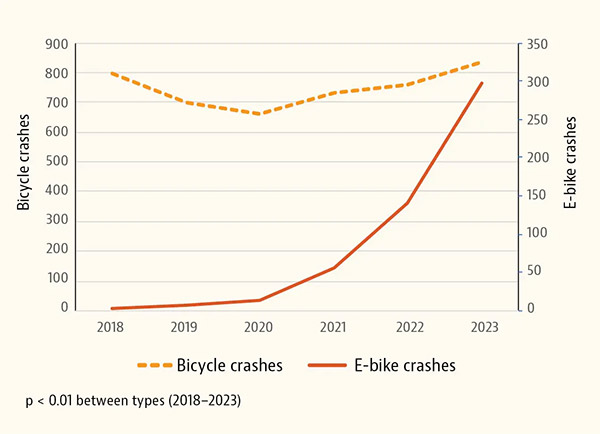
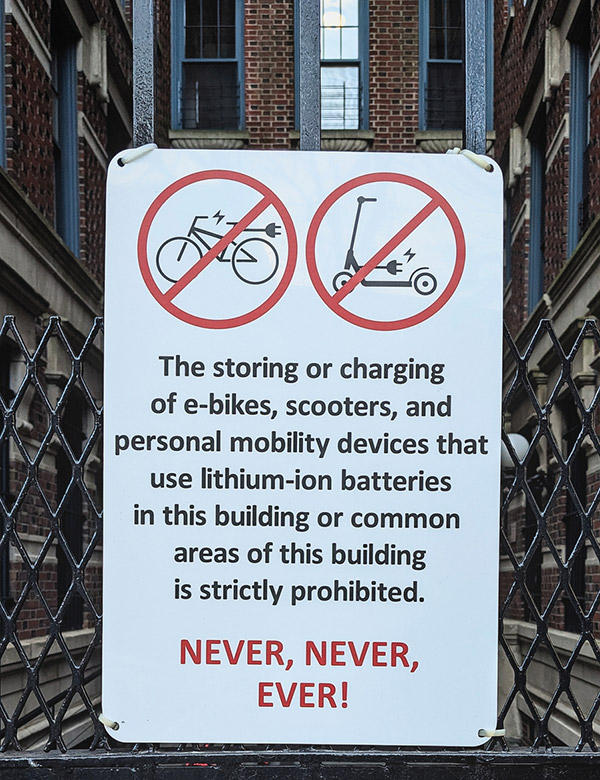
| | 4. Bicycling: E-Bike Safety | | E-bikes have become a popular mode of transportation for both adults and children. Partially because they resemble traditional bicycles, many people unfortunately take a cavalier attitude toward safety when it comes to e-bikes. All riders need to pay attention to safety and some of the intrinsic differences between an e-bike and a traditional bicycle. E-bikes are much heavier than pedal-powered bikes and take more effort and distance to stop, while at the same time, they can easily cruise along at 20mph, topping out near 30mph. With higher speeds at less effort, riders often feel more comfortable riding in traffic alongside cars despite the inherent danger. E-bikes also require more maintenance attention than traditional bikes, due to their weight and the additional torque of the motor. Tire pressure, brakes, and the chain should be checked before every ride. Lithium-ion batteries also need special attention, as they can short-circuit and catch fire from overcharging or undercharging. Cracks in the battery housing can lead to water intrusion, which can lead to a fire. Many apartment buildings are even banning e-bikes now because of the fire risk. Aside from these issues, the number one thing riders can do to reduce their risk is wear a helmet. Modern bicycle helmets are light and comfortable, and I can't imagine riding any bicycle without one. | | |
1 Always wear an approved helmet
Every bike rider, E-Bike or not, should wear a helmet when they ride, regardless of age, speed, or the legal requirement to do so. It's the best safety step you can take. It's also the law in many states, depending on the age of the rider and the type of E-Bike you're riding.
2 Know and follow the vehicle code
When you ride your E-Bike on street and roads, you're a vehicle in the eyes of the law. That means you should know and follow your city, county, and state vehicle code.
That includes:
- stopping a stop signs and red lights
- using appropriate lanes
- yield when you don't have the right of way
- use turn signals or hand signals when appropriate
- using lights in dim or dark conditions
3 Understand the rules for E-Bikes in your area
There are 3 common rules to know in most states related to E-Bikes:
- minimum ages for E-Bike riders
- helmet requirements for E-Bike riders
- trail access restrictions on where E-Bikes can be ridden
4 Perform a "pre-flight" check on your E-Bike before you ride
Every E-Bike needs regular maintenance and occasional adjustments to stay in tip-top shape. While more complicated repairs might be a job for a bike shop, anyone can perform a basic safety check before riding.
5 Take extra care before you decide to ride at night
Riding at night is more dangerous than daytime riding. It's harder to be seen by others, and also harder for the rider to see obstacles on the road or trail.
6 Don't carry passengers if your E-Bike isn't designed for it
"Riding double" by attempting to carry a passenger on your E-Bike designed for a single rider is dangerous! The weight of an extra passenger changes the way your bike handles and increases stopping distance. You might also exceed the maximum weight limits on your E-Bike if you carry a passenger.
7 Understand what actions will turn your E-Bike's motor on
Having the motor on your E-Bike turn on when you aren't expecting it could be dangerous. It's important to understand the features and operation of your specific make and model. This can vary by E-Bike, so spend some time to get familiar with the one you're riding.
8 Power down when you don't need assistance
A simple safety step you can take is to power down when you don't want the electric motor to turn on. This could mean switching your E-Bike to pedal assist level 0 temporarily, or turning the E-Bike off entirely.
9 Buy an E-Bike with built-in safety features
Quality E-Bikes, regardless of make/model, share some common safety features. You should choose an E-Bike that offers these functions:
- Motor-interrupt brake levers.
- Disc brakes.
- Reflectors.
| | Brooklyn, NY appartment sign. | | Fire Safety Considerations for E-Bikes and E-Scooters | | Teen shares recovery from e-bike crash; doctors seeing surge in head injuries | |
5. Armed Forces Day: May 16, 2026
| | Armed Forces Day honors all soldiers, marines, sailors, airmen, guardians, and coast guardsmen who are currently serving or have served to protect the United States. For that, we owe them our respect, thanks, and acknowledgment for their service on this day and every day. | | What Is Armed Forces Day and Why Is It in May
The spring holiday has recognized active and former U.S. military members since 1950.
| | From: Histoty.com, By: Tim Ott, May 12, 2026 | | |
Armed Forces Day marks a time to celebrate the efforts of the uniformed personnel within the U.S. Army, Navy, Marine Corps, Air Force, Space Force and Coast Guard. Whether during periods of regional conflict or relative peace, the approximately 1.34 million active-duty service members across the American military help keep their fellow countrymen and women at home out of harm’s way.
Here’s what to know about the honorary holiday that is part of the annual Armed Forces Week.
How is Armed Forces Day different from Veterans Day and Memorial Day?
Armed Forces Day celebrates both active and former members of the U.S. military. Meanwhile, Veterans Day commemorates former service members every November 11, and Memorial Day, observed on the last Monday of May, specifically honors people who died while serving.
Why is Armed Forces Day in May?
According to Defense Secretary Johnson, the selection of a suitable date proved the most challenging aspect of Armed Forces Day’s inception due to the lack of available days on the calendar. It was believed that an attempt to combine Armed Forces Day with an already established holiday or commemoration such as D-Day would diminish the significance of both occasions. Furthermore, both the cold stretches of winter and the summer vacation months marked suboptimal periods for communities to come together to celebrate. It was finally determined that the third Saturday in May was one of the few pleasant-weather dates that presented no conflicts to existing traditions.
How is Armed Forces Day celebrated?
In Proclamation 2873, President Truman urged his fellow citizens to “display the flag of the United States at their homes on Armed Forces Day and to participate in exercises expressive of our recognition of the skill, gallantry, and uncompromising devotion to duty” that military members display.
As with Memorial Day and Veterans Day, Armed Forces Day is celebrated in many communities with parades, picnics and other events. Many military bases host tours, demonstrations and family activities on this day. The Veterans of Foreign Wars provides additional suggestions for meaningfully marking the occasion, including donating to or volunteering for a veterans’ service organization.
| | 6. Pet's Corner: Protect Your Pet's Paws | | Recently, I found a free site called Pawmometer, where all you need to do is enter your city or zip code to get a report listing current weather conditions in your area and advice to avoid, take caution, or safely walk your dog on artificial turf, asphalt, sand, concrete, grass, or dirt. Just to be safe, when it's hot out, I recommend suiting your dog up with a set of booties made for heat protection. | | Is the pavement too hot for your dog's paws? | |
7. Hayward M. Fox, Ph.D.: Guided Meditations
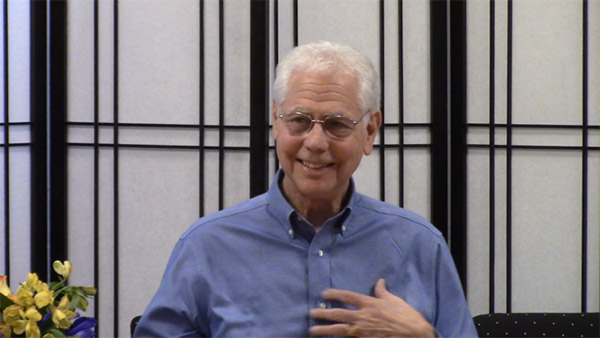
| | Hopefully the earlier posts on spirituality have gotten you in the mood to try a guided meditation, please head over to Dr. Fox's Institute for Personal and Transpersonal Knowledge and try one of his guided meditations. I can personally recommend Chanting Om Ah Hum this week. | | These Flock regulars are always here for you: | | Don't Be Shy: Share Your Stories! | | I'm looking forward to sharing more of your personal stories - oral, written, or otherwise, as we enter our third year. I'd so love to present them to The Flock, hit a mailbox below to share your story. | | Subscriptions & Idea Submissions
Reminder: Your submissions are always welcomed. | | |
Feel free to forward this email to a friend. If this was forwarded to you and you would like to receive your very own Flock Newsletter, you can sign up here. If you have any questions or suggestions for future Flock resources, don't hesitate to contact me.
Your fan and friend,
Beth
| | | The information and materials contained or referenced in this newsletter are for informational purposes only and not intended to be a substitute for professional medical advice, diagnosis, or treatment. Always consult a physician or other qualified medical professional with any questions you may have regarding a medical condition or treatment and before beginning a new health care regimen. Do not disregard professional medical advice or delay seeking medical advice or care based on anything contained in this newsletter. | | | | |