July 2026

Chlorine Gas Toxicity

Background

Chlorine (Cl₂) is a dense, greenish-yellow gas with a pungent odor. It is a potent pulmonary irritant and oxidizing agent with intermediate water solubility. Historically, Cl₂ has been used as a chemical warfare agent, including during World War I and more recently in conflicts in Iraq and Syria. Today, Cl₂ is widely used in industrial and commercial applications, such as water treatment, pulp and paper production, mining, textile manufacturing, plastics production, and cleaning products, making it a common source of occupational exposure (Zellner & Eyer, 2020). Poison centers frequently receive calls involving inadvertent Cl₂ gas generation when household bleach is mixed with vinegar or other acid-containing cleaners or exposure to swimming pool shock products, resulting in respiratory irritation and potential pulmonary injury (Buehler et al., 2025).


Mechanism of Toxicity

Chlorine toxicity is primarily mediated by local tissue injury rather than systemic absorption. Upon contact with moist mucosal surfaces, Cl₂ reacts with water to form hypochlorous and hydrochloric acids and generates reactive oxygen species, leading to oxidative damage, inflammation, and injury of the respiratory tract and other exposed tissues (White & Martin, 2010).

Treatment

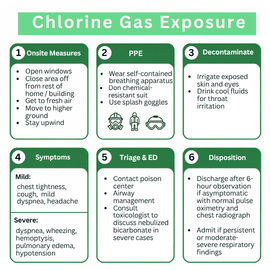
Remove patients from the area of exposure to fresh air as soon as possible. Chlorine gas poisoning is usually self-limited, requiring supportive treatment with focus on Airway, Breathing, and Circulation:

  • Monitor to ensure adequate oxygenation. Intubation may be required early if there is evidence of airway swelling
  • Drug therapy for mild or severe symptoms is the same as for asthma and acute respiratory distress syndrome (ARDS)
  • Albuterol: the general indication for use is wheezing, cough, and shortness of breath
  • Steroids: efficacy of corticosteroids for pulmonary irritants is limited. For severe exposures, they may reduce the inflammatory host defense response and improve surrogate markers of pulmonary damage but offer little outcome enhancement in patients with ARDS
  • Sodium bicarbonate: in select cases of severe toxicity, nebulized sodium bicarbonate may provide benefit (Nambiema et al., 2022).


Key Points:


  • Chlorine gas is a dense greenish-yellow gas with a pungent odor


  • Primarily a pulmonary irritant


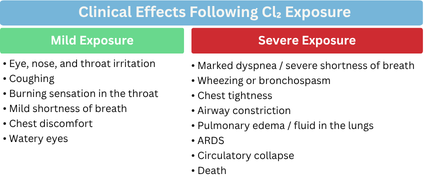
  • Most likely symptoms include irritation of the eyes, nose, and throat, dyspnea, wheezing, and chest tightness


  • Remove patients to fresh air as soon as possible


  • Treatment is mainly supportive with a focus on airway, breathing, and circulation


  • Higher concentrations can result in airway constriction, fluid accumulation in the lungs, ARDS, circulatory collapse, and death

Written By: Dr. Tanya Cabrito, MD, MPH - UC OEM Resident

Reviewed by: Dr. Goertemoeller, Dr. Pancioli, Dr. Hays, Dr. Yin

Edited by: Julia Conroy, MAEd, MCHES

For questions or to submit topic ideas contact:


OhioPoisonCenters@cchmc.org

OhioPoisonCenters.org

Subscribe to Poison Pearls


Email  Web