The Ohio Water Resources Center Newsletter

Issue 2 | Volume 7 | February 2025

From Our Directors

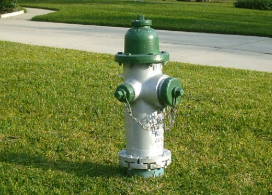
The wildfires in the Los Angeles area are now fully contained, with the Palisades and Eaton fires ending up as among the deadliest and most destructive in California history. On January 8, during the peak of the fires in the Pacific Palisades area, about 20% of the fire hydrants lost water supply. While the LA Department of Water and Power (LADWP) filled all available reservoirs and storage facilities ahead of the windstorm, the pumps to refill storage tanks could not keep up with demand. LADWP indicated they had four times higher demand than they have ever had. Water distribution systems are not designed for such a large demand from such a catastrophic event.  


Over the last 50 years, there has been an upward trend in wildfire damage with California and Texas being the most prone to wildfires. Because of that, it is no surprise that California has been struggling with homeowners losing coverage due to the rising threat of wildfires. In 2023 wildfires in Ohio burned 2500 acres out of the 1.5 million acres burned in the US. While fire demand is important for sizing water systems anywhere, we are unlikely to see hydrants running dry from wildfires in Ohio—thankfully.  


Research Spotlight


Evaluating the relationship between variable winter/spring conditions and cyanobacteria dynamics in Ohio reservoirs

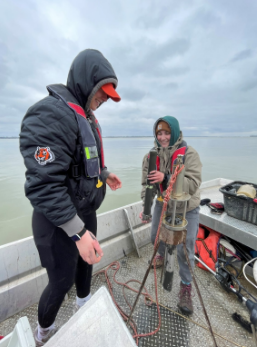
Dr. Lesley Knoll from Miami University recently completed an Ohio Water Resources Center project via a United States Geological Survey 104(b) subaward. The research is clear that excessive nutrients and warm, calm summer conditions influence harmful algal bloom formation However, it is less clear whether factors that influence phytoplankton dynamics in winter and spring play a significant role in fueling a bloom the following year. This project examined how cyanobacteria respond to light and nutrients in colder months by analyzing sediment and water samples from two lakes in western Ohio—Grand Lake Saint Marys and Acton Lake. 


Both reservoirs are dominated by cyanobacteria in the summer months. Cyanobacteria were also dominant in Grand Lake St. Marys during monthly experiments in February through May, while in Acton Lake they made up a smaller portion of the phytoplankton community. In both reservoirs, cyanobacteria increased in warmer temperatures, with nutrient addition (mimicking a storm event), and under low light conditions. Responses to nutrients were weaker in winter than in warmer spring months. 


Dr. Knoll’s team also found that light levels affected cyanobacteria composition in Acton, indicating seasonal shifts. Sediment experiments in spring showed that light was crucial for cyanobacteria recruitment in both reservoirs. In Grand Lake St. Marys, warmer temperatures also played a role, while in Acton, nutrient addition was a key factor. Find project information here or on our project map.  


USGS Science Highlight


USGS releases a comprehensive look at water resources in the United States

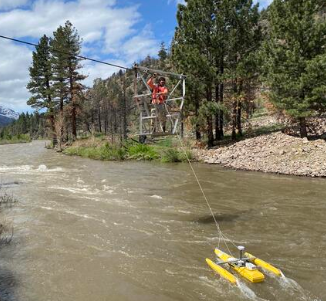
The U.S. Geological survey released the National Water Availability Assessment, creating a scientific overview of water availability and offering insights into the balance between water supply and demand across the conterminous United States. The new assessment utilizes state-of-the-art models to fill the gaps between monitoring sites. Unlike previous assessments that monitored water quality and use separately, the new assessment integrates water quality and use for a better understanding of water availability.


The assessment found that nearly 30 million people live in areas where available surface-water supplies are limited relative to water use. This indicates a high level of water limitation. People living in areas with high water limitations were more vulnerable when compared to people living in areas with lower water limitation. The United States is facing an increase in challenges related to water availability, and the assessment provides insight into understanding where shortages exist, where surpluses can be found, and the quality of the water. 


News Updates


New water infrastructure developed in Yellow Springs

Via Dayton247Now, January 24, 2025


Severe cold causes water main breaks all over Northeast Ohio

Via FOX 8 news, January 23, 2025


What to do when pipes freeze? How to keep the water running in Ohio's winter weather

Via Cincinnati Enquirer, January 22, 2025

American Water inks 10-state deal with PFAS treatment materials and services provider

Via Water Finance and Management, January 20, 2025


What is our best option for water in dry years? (availability analysis including water reuse for Palo Alto) 

Via Palo Alto Online, January 27, 2025


L.A. Wildfires Reveal the Limits of Hydrant Systems

Via The New York Times, January 25, 2025

Have a news article for us to feature? Email us at OhioWRC@osu.edu!


Policy Update

Ohio EPA: Public notice and public hearing- Ohio Environmental Protection Agency Water Pollution Control Loan Fund rules

The Ohio EPA will hold a public in-person and online hearing on the proposed rulemaking for the Water Pollution Control Loan Fund on March 3 at 10:30 am. During the hearing, the public may submit written comments on the record about the proposed rules. See details here. 

Opportunities


Call for Applications: Knauss Marine Policy Fellowship 2026

The Sea Grant Knauss Fellowship provides a unique educational and professional experience to graduate students and law students who have an interest in ocean, coastal and Great Lakes resources and in the national policy decisions affecting those resources. The fellowship matches highly qualified graduate students with hosts in the legislative and executive branches of government located in the Washington, D.C. area for a one-year paid fellowship. Applications are due February 19, 2025.


Request for Proposals: Ohio Sea Grant 2026-2028 Research Projects

Ohio Sea Grant is requesting pre-proposals for one- or two-year research projects on Great Lakes issues with particular significance to Lake Erie and its watershed. There are several areas of priority from Ohio Sea Grant and some priorities listed by specific agencies. These priorities can be found in the proposal guidelines. Proposals are due February 20, 2025.  

2025 Ohio Section AWWA Scholarship Program

The OAWWA will award Undergraduate and Graduate students continuing education scholarships for the 2025-2026 academic year. Eligible applicants are any student residing in Ohio and attending an Ohio-accredited institution of higher learning during the scholarship year in a water industry-related program. Applications are due February 21, 2025.  


Looking for Judges: ISEF 2025

The Ohio Academy of Science is looking for judges for the 2025 Regeneron International Science & Engineering Fair (ISEF). This is the world’s most prestigious STEM competition for high school students, and it will take place in Columbus. Approximately 1,800 students from 60 countries, regions, and territories. Roughly 1,200 Grand Award judges are needed within 22 scientific disciplines. Please contact Alyson Gruber or Mike Woytek with any questions or if interested in becoming a judge. The judges will be needed on May 13 and 14, 2025.  

To find more resources offered by Ohio WRC, please visit: https://wrc.osu.edu/resources

Upcoming Events

Conference: 2025 WateReuse Symposium

March 16-19, 2025 • Tampa, Florida

The WateReuse Association is hosting its annual symposium. The Annual WateReuse Symposium is the premier conference on water recycling, attracting water professionals and water reuse practitioners globally for knowledge-sharing, networking, and collaboration. This conference is a great opportunity to learn about research, industry, network and attend workshops.

Register here


EPN Breakfast Event: Water Reuse for Ohio's Future

March 25, 2025 • Columbus, Ohio and Virtual

This EPN event, presented in coordination with the Water Management Association of Ohio (WMAO), the Ohio Water Resources Center, and TerrAqua, will bring together a cross-disciplinary panel of leaders involved in water management, conservation, and reuse. This program will be an opportunity for sustainability-focused professionals to share lessons learned and discuss future applications for Ohio’s water stewardship as the state continues to grow. 

Register here


Conference: ACS 2025 Spring Conference

March 23-27, 2025 • San Diego, California and Virtual

The American Chemical Society is hosting its annual spring conference. This conference is great for anyone in chemistry or any interdisciplinary overlap. The ACS holds two major conferences a year with sessions focusing on fields ranging from agriculture to medicine and so much more. This is a great networking and learning opportunity for everyone.

Register here


Conference: ASLO 2025 Conference

March 26-31, 2025 • Charlotte, North Carolina

The Association for the Sciences of Limnology and Oceanography is hosting its annual conference. This year’s meeting focuses on the connectivity between all water systems and how we are connected to those systems. Presentations will cover a broad range of water related research, management, extension and education.

Register here

Have an event you'd like us to feature? Email us at OhioWRC@osu.edu!

Get in Touch


Email: OhioWRC@osu.edu

Website: https://wrc.osu.edu

Address: 473 Hitchcock Hall 

2070 Neil Avenue

Columbus, OH 43210

LinkedIn  Instagram
wrc.jpg

About Us

Research

Outreach

Publications

Resources