|
Classic Servicing Costs: Managing Expectations
Some cars are more trouble than others. Depending on your tolerance for inconvenient surprises and unexpected bills, older cars may or may not be your cup of tea. That said, unless you are really unlucky or choose poorly, maintenance on an older car will cost less than depreciation on a new one. This is presuming that cars will start to depreciate again...
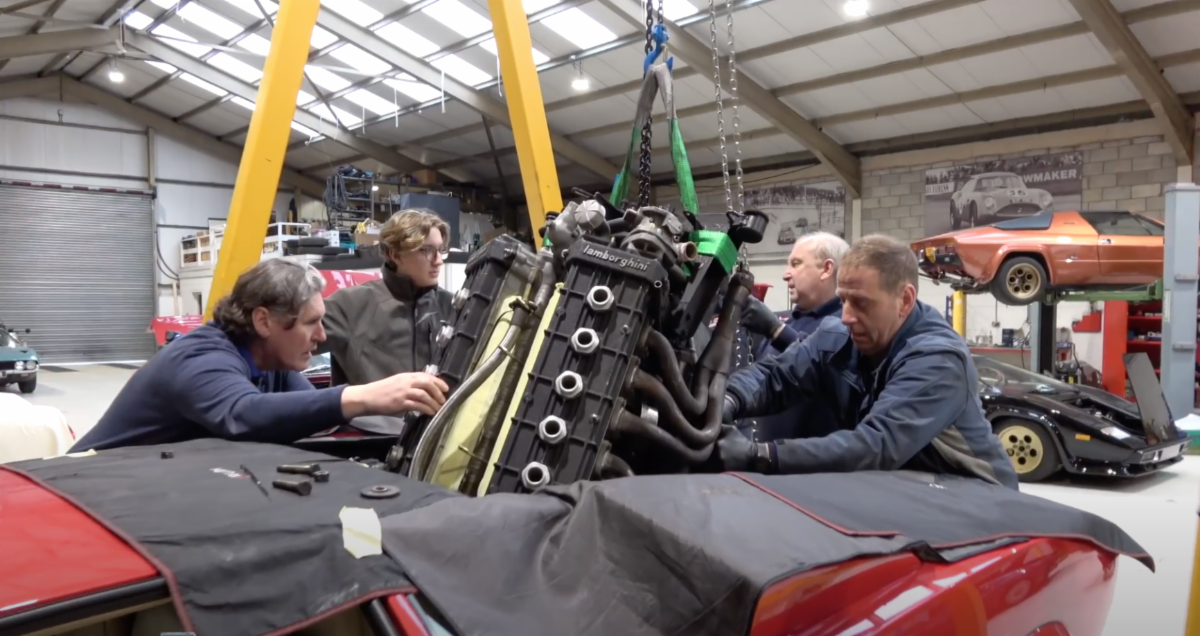
The key is managing expectations. Nobody who buys a Lamborghini Countach has the expectation that servicing it will be inexpensive, though they should probably watch the Harry Metcalfe video above for some clarity. I opined in recent columns and videos that the Jaguar XJS - much maligned for its maintenance costs - offers a sublime driving experience that justifies it needing a bit more love. And further to that; with a relatively low purchase price, and many nice examples to choose from, it makes perhaps the best classic buy in today's heated market. My friends and I often discuss the Citroen DS, but nobody's bought one yet - probably because there is nobody locally to look after one (that I know of). I loved my 1950's Bentley R-Type, but I did get a $8k bill to replace the radiator...
Because cars like these scare people, the prices are low. This does present an opportunity for the enthusiast with more bravery than means to indulge in his or her passion, without being priced out of the market.
What makes the difference between feeling like a king, smug in the knowledge that you've paid far less for your elegant machine than your sensible neighbour has with his Camry, and having to defer your retirement?
I think there are three important considerations:
1) Find a good car to start with. Restoring just about any car will cost over $100,000. A quality paint job is $20k+, an interior $10k+, engine $25k+, gearbox $10k+, etc. Invasive metal work to cure rust problems can be eye-watering expensive and not have any effect on the car's value. With a $30,000 classic, you really don't want to do any of this.
Jay Leno wrote in his latest column for Octane Magazine that it is almost impossible to make any money restoring a car if you do it properly. I've found this out the hard way. If you hire Canepa Design, Paul Russell, or Kevin Kay you can expect perfection and get it - but you will need very deep pockets. Beneath this 'cost-no-object' level, the quality of work varies greatly.
So what you are probably looking for is an original car that has never been taken apart, and has been looked after. The character of the owner will tell you a lot. Generally if the person who owned the car is straight-up, the car will be okay too. If the owner is sketchy, you can bet the car is hiding some sins.
There are a lot of great cars from the 1980's that would make good choices. Most have had the benefit of galvanized body panels which means serious rust is rare for vehicles that haven't been in an accident. Electronic fuel injection, safety cells, working A/C and modern comfort convenience items make the cars useable day to day. Production volumes are usually in the tens or hundreds of thousands, so there is a good pool of vehicles to choose from.
When I was in university in the late 1980's $10k bought you a nice Alfa GTV and $20k bought you a Mercedes Pagoda. My Mercedes 420 SEL was $80k in 1989 when the average price of a house in Calgary was $150k. Today these values have been scrambled: the Alfa is $80k, the 280sl $175k, and the Mercedes sedan $15k!
2) Find a good specialist to look after the car. Make friends. Don't complain about the bill, and pay them for all of their time. Take their advice. Nobody is getting rich fixing old cars. When things take longer or cost more or when the problem doesn't get fixed the first time, be patient. No mechanic has a crystal ball, and it can be time consuming to sort out some mysterious problems.
3) Educate yourself about the car. There is a forum for virtually every car. It isn't too hard to figure out who the real experts are, and many are incredibly generous with their time. The percentage of trolls is inversely related to the age of the readers. Honda forums are pretty rough. The guys on the vintage Ford tractor forums are all gentleman.
With intimate knowledge of the car, and the mechanical sympathy that comes with it, you will be able to give meaningful feedback to your mechanic. Also, you can save a lot of time by sourcing the parts. Think of it as a partnership.
There are some pitfalls to avoid. In around the year 2000, manufacturers started developing some new technologies for casting engine blocks, traction and stability control systems and complex variable valve timing. At the same time many manufacturers went away from fixed oil change intervals and developed 'Flexible Service Systems' that increased the oil change intervals up to 25,000km. Coatings on cylinder bores can score. Sludge can clog all the oil passage ways in an engine that has seen infrequent servicing. A new engine can cost more than your car is worth. Some of the electronic control units and actuators can be extremely expensive. Due diligence and a thorough Pre-Purchase Inspection are essential.
I have been driving 1980's cars from Mercedes, Porsche, BMW and Jaguar for the last twenty years. I've kept detailed records and spreadsheets on every car. As for a total cost of ownership including purchase and sale, as well as all maintenance, they have all averaged about $4,000 per year driving about 5,000-10,000 km. With all the satisfaction and a fair degree of utility that they have given, I consider the money well spent. Certainly more satisfying than what a $350 lease payment would get me.
|