Paris Agreement

Crediting Mechanism

Newsletter

27 April 2026

In this issue


  • Public Input Sought Ahead of Supervisory Body and Expert Panel Meetings
  • Upcoming Accreditation Expert Panel Meeting
  • Second Global Article 6.4 DNA Forum Advances Readiness Under the PACM
  • Article 6 Event Recap: Climate Week 3
 

Public Input Sought Ahead of Supervisory Body and Expert Panel Meetings

The Methodological Expert Panel (MEP) held its 13th meeting in Bonn last week, building on work from its 12th meeting earlier this year.


As part of the outcomes, several calls for public input have been launched to inform the Article 6.4 Supervisory Body’s consideration of items at its 21st meeting (18 to 21 May 2026).


1.The MEP is seeking input from stakeholders on a draft mechanism methodology on energy efficiency measures in household cooking. 


  • The consultation period is open from 24 April until 15 May 2026.
  • The input received will be considered by MEP at its next meeting from 22 to 26 June 2026.

2. The MEP has recommended the following items for the Supervisory Body to consider at their upcoming meeting.


Stakeholders are encouraged to provide input on the recommendations from MEP012 and MEP013 by 6 May 2026 at 23:59 CEST.

The consultation on the set of MEP recommendations was opened earlier than usual, as the relevant meeting reports and annexes were already available. This allows additional time for stakeholder inputs to be compiled and considered ahead of the Supervisory Body’s deliberations.


Upcoming Accreditation Expert Panel Meeting

The Accreditation Expert Panel (AEP) will meet in virtually from 28 to 29 April 2026 to review accreditation cases for Designated Operational Entities (DOEs) under the Paris Agreement Crediting Mechanism.


Second Global Article 6.4 DNA Forum Advances Readiness Under the PACM

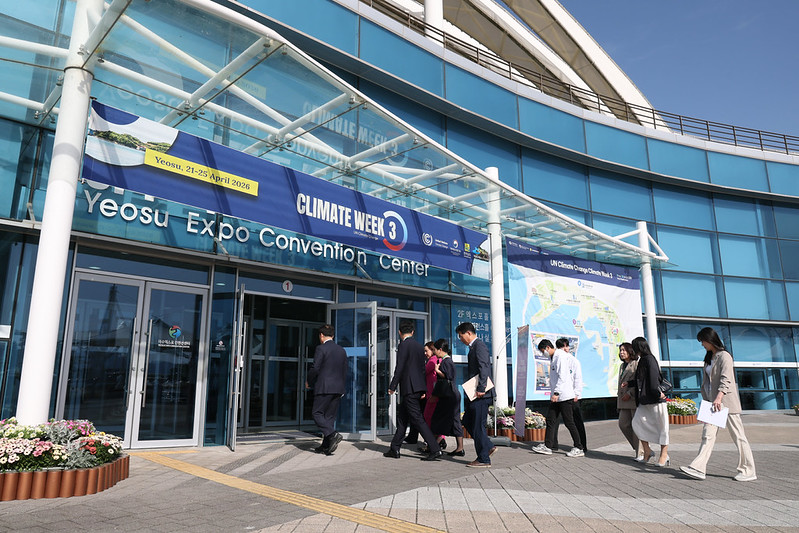
The second Global Article 6.4 DNA Forum took place during Climate Week 3 in Yeosu, bringing together more than 80 participants, including Article 6.4 Designated National Authorities and UN Climate Change National Focal Points.


The Forum combined technical briefings with interactive discussions, helping participants build a shared understanding of recent CMA, CMP and Supervisory Body decisions. It also clarified key procedural requirements, particularly around the transition of Clean Development Mechanism (CDM) activities, and strengthened understanding of the roles and responsibilities of DNAs.


Members of the Supervisory Body joined the event, with the Chair and Vice Chair delivering opening and closing remarks and sharing updates on progress in operationalizing the Paris Agreement Crediting Mechanism.


Over two days, discussions focused strongly on practical implementation. A mix of expert presentations, panel discussions and breakout sessions covered topics such as host Party approvals and authorization processes, the mechanism registry and reporting requirements.


These were complemented by country experiences that brought real‑world perspectives to the conversation. In breakout sessions, participants explored priority issues including DNA readiness, CDM transition and the types of support needed from the Supervisory Body and the secretariat. These exchanges helped surface common challenges and capacity gaps, while also highlighting practical solutions and lessons learned from frontrunner countries.


The Forum concluded by identifying priority areas for future work, reinforcing its role as a space for transparent, effective and high‑integrity engagement under the PACM.

Article 6 Event Recap: Climate Week 3

Climate Week 3 in Yeosu featured a series of Article 6 related capacity‑building events, bringing together policymakers, technical experts and stakeholders to deepen understanding of implementation under the Paris Agreement. 


The PACM Global Value Proposition and CDM Transition – Now or Never? session (22 April 2026) helped advance understanding of the Paris Agreement Crediting Mechanism’s value proposition and the pathway for transitioning CDM activities. Discussions covered key rules, timelines and stakeholder roles, and enabled practical exchanges on transition challenges and possible approaches.


Also on 22 April, the Regional Dialogue on Carbon Pricing (REDiCAP) for Northeast and Southeast Asia strengthened regional exchange on carbon pricing policy design and implementation. The dialogue highlighted how domestic carbon pricing systems can be reinforced through linkages with international carbon markets, including Article 6.4, in support of national climate frameworks.


The Article 6.4 Strategic Market Dialogue (24 April 2026) focused on advancing operational discussions under the mechanism, including market alignment, stakeholder roles, and supply‑demand dynamics for mitigation outcomes. Technical and policy inputs from participants supported greater convergence on the core elements needed for effective implementation.

Have you been forwarded this newsletter? Sign up for the latest news on the Paris Agreement Crediting Mechanism.

A6.4mechanism-info@unfccc.int | unfccc.int

STAY CONNECTED

Facebook  Twitter  Instagram  Linkedin  Youtube  TikTok  Web