Weekly Digest Number 29 - July 20, 2021 |
|
Second Call: RWU is Looking for a Part-Time Staff Support Person!
|
|
Railroad Workers United (RWU) has reached the point where the work of preparing membership cards and welcome packets for new members, soliciting membership renewals, fundraising, and all the other aspects of keeping the organization alive and well is beyond the capacity of volunteer labor.
One of the great strengths of RWU is that we are working railroaders; but that also means that most of us do not have the time - nor the expertise - to take on the necessary day-to-day clerical work of maintaining the organization.
We are currently accepting applications for this new part-time position, and will conduct interviews during the month of August. We plan to hire in early September, with a start date sometime after Labor Day.
|
|
3 workers rescued after freight train derailment in Iron County |
|
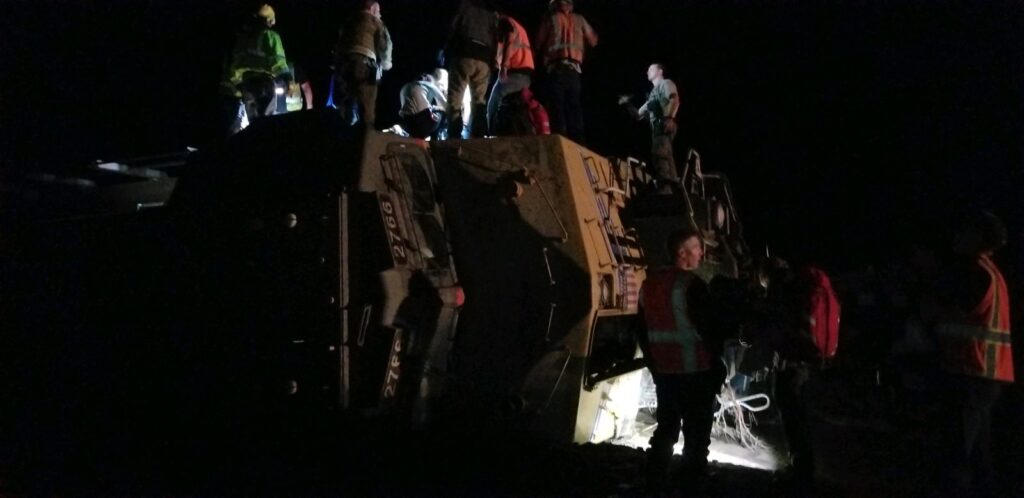
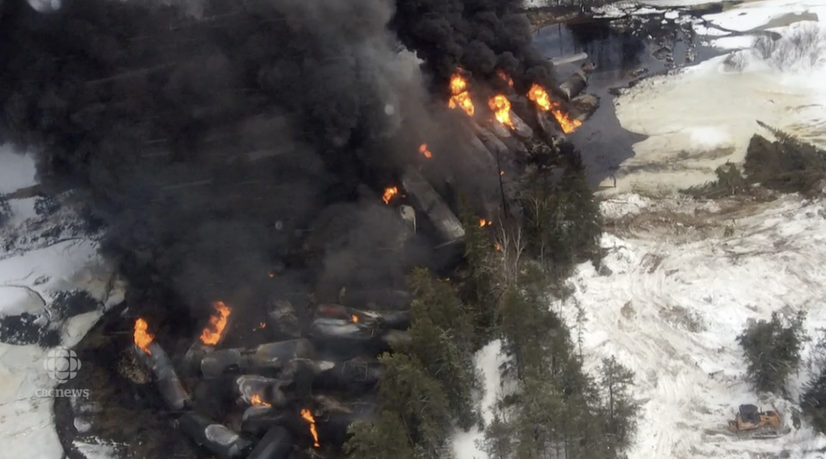
Three railroad workers were safely evacuated from a Union Pacific freight train that derailed northwest of Cedar City late Thursday night.
At approximately 10:10 p.m. Thursday, Cedar Communications received a 911 call about a train that had derailed near Lund, a tiny, remote community about 30 miles from Cedar City, the news release stated, adding that the train consisted of approximately 95 cars and was operated by a three-man crew. The type of cargo the train was carrying and its overall weight have not yet been determined.
The three occupants of the train were all reportedly injured in the crash, including one who had a bleeding head injury. Nevertheless, the three men were able to get themselves out of the train and onto the upper side of the tipped-over locomotive. The men reported there had been water covering the tracks just prior to the derailment.
|
|
Vet can take service dog to work, jury says |
|
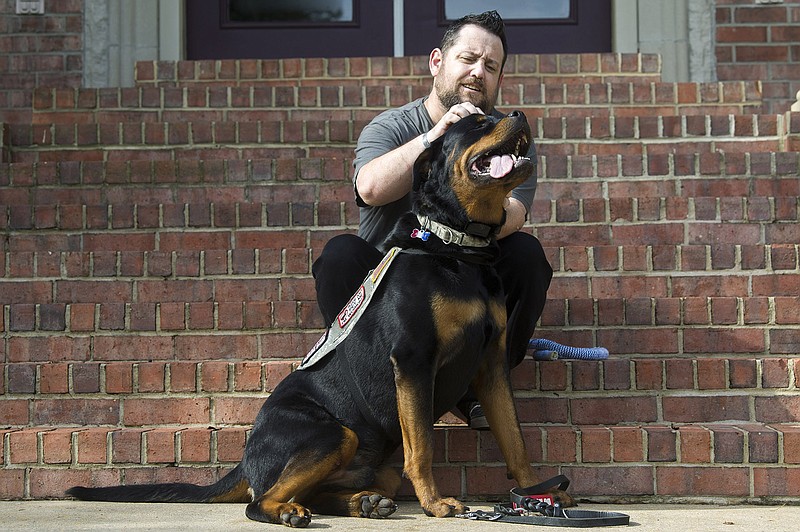
More than six years ago, Union Pacific Railroad told Perry Hopman his service dog couldn't accompany him to work, but Friday, a jury said otherwise.
The federal jury unanimously concluded that the company must allow the Army veteran to bring the dog, Atlas, to work to help him deal with ongoing symptoms of post-traumatic stress disorder and a traumatic brain injury.
Hopman, 45, of Benton, said he was relieved after Judge Kristine Baker read the verdict.
"I'll finally get to work without being in pain and having flashbacks," he told the Arkansas Democrat-Gazette.
The jury also awarded Hopman $250,000 in compensatory damages but did not levy punitive damages against Union Pacific, the country's largest railroad. The ruling came after a five-day trial in U.S. District Court in Little Rock.
|
|
STB chairman questions level of rail competition, Wall Street influence on Class I railroads |
|
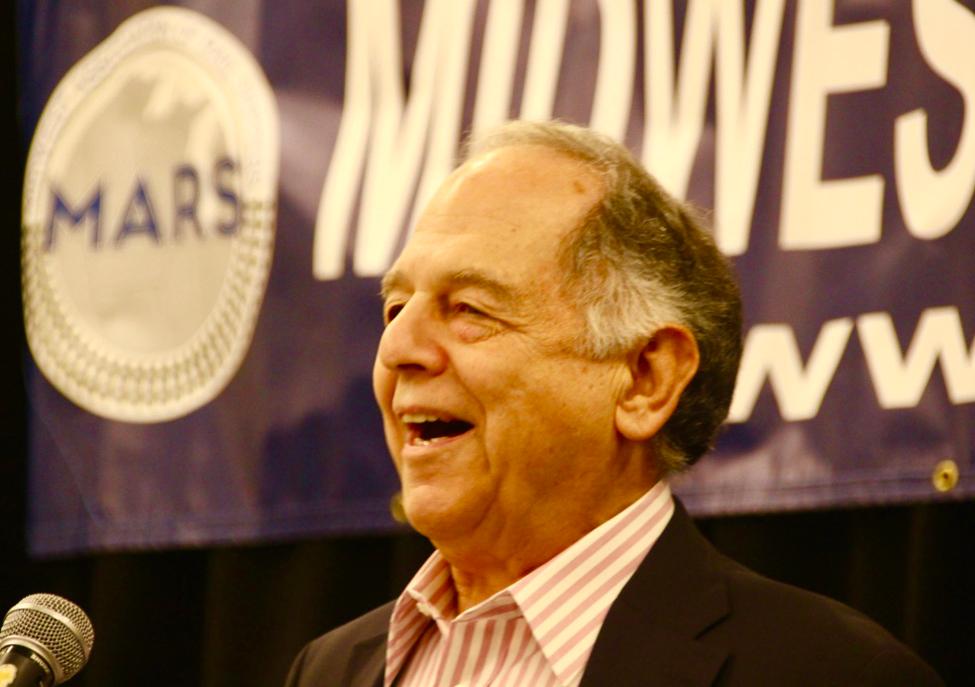
Surface Transportation Board Chairman Martin J. Oberman fully supports the White House’s call for more competition in the rail industry and questions whether Class I railroads are shirking their obligations as common carriers due to pressure from Wall Street.
Oberman, addressing the Midwest Association of Rail Shippers today, said the Biden administration’s executive order issued last week dovetails with efforts already under way at the STB. The order directs more than a dozen federal agencies to take up 72 initiatives aimed at limiting the dominance of large corporations, including railroads.
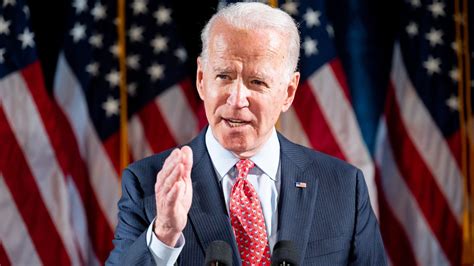
Oberman watched President Joe Biden sign the order at the White House on Friday. “One leaves with the clear impression that this administration is quite serious in moving forward across the economy and across all government agencies in the area of promoting more robust competition,” Oberman says.
“There are just many, many parts of the country … where there’s just not real effective competition among rail carriers,” Oberman says.
The board chairman also says he’s concerned the nation has a less robust freight rail system due to a combination of deep employment cutbacks related to the implementation of Precision Scheduled Railroading, the demarketing of rail service for some commodities and shippers, and Wall Street pressure for ever-lower operating ratios.
“While everybody applauds efficiency — and I do — I am concerned that we may well have stripped our resources down too far to keep our national rail network as healthy as it needs to be to rebuild the economy,” Oberman says.
|
|
Virtual Coupling increases capacity with 20 trains per day in Russia |
|
The introduction of a virtual coupling systems on the Bolshoy Lug – Slyudyanka section in Russia increased the capacity by 20 pairs of trains per day. |
|
Virtual coupling provides synchronous movement of two adjacent freight trains with the minimum allowable distance from each other. When using the new system, traffic lights are not needed, as the driver is guided by the distance to the train in front. Currently, over 300 locomotives operating in Eastern Russia are already equipped with virtual coupling systems, and this number is scheduled to increase to 630 units by the end of the year.
The principle of Virtual Coupling is that a virtual ‘traffic light’ is placed on the last carriage of a train, which allows the convoy behind it to keep a safe distance. The technology makes it possible to reduce the passing interval by up to two times – from 10 to 5 minutes. Due to this, many more trains in total can pass through. In this case, the coordination of locomotive driving modes takes place via a secure digital radio channel.
In the future, it is planned to create a Radio Block Center, which will allow controlling dozens of trains from one place. Due to the synchronization of their movement, it will then be possible to achieve the maximum effect.
The train schedule and speed limits along the way will be transmitted to the locomotive via a digital radio channel. Repeaters with a dedicated frequency range will be deployed along the railway. When an RBS will be used, it will be possible to reduce the interval between trains to an absolute minimum.
|
|
NTSB expresses concern about STB proposal on trackage rights |
|
Risks of crews operating in unfamiliar territory should be addressed, safety agency says, citing Amtrak Cascades collision |
|
In an uncommon move, the National Transportation Safety Board has weighed in on a proposed rule before the Surface Transportation Board, expressing concern about a proposal regarding temporary trackage rights.
The proposed rule, requested by the Association of American Railroads, would allow an exemption from the usual process to approve trackage rights to address situations such as natural disasters or accidents. Currently, an exemption cannot become effective until 30 days after the railroad files a notice unless the STB provides a waiver; the new rule would allow the exemption to take effect five days after a notice is filed.
In its filing, the NTSB says the rule could reduce the level of safety because of crews operating in unfamiliar territories, and cites two Amtrak accidents as example.
|
|
Today’s News & Commentary from: |
|
The Senate Democrats’ new budget reconciliation bill plans to financially penalize companies that violate workers’ rights. The proposal is planned to be embedded into the $3.5 trillion bill, utilizing the National Labor Relations Board to levy penalties where appropriate.
Senator Bernie Sanders remarked that this provision would be part of the PRO Act’s integration into the bill. He did not expand on what other provisions might also make it into the legislation. These monetary penalties would give unions much more leverage at the bargaining table with employers, who frequently only face the penalty of potential backpay.
The absence of meaningful penalties makes it economically rational for employers to fire pro-union employees even if they are forced to rehire them. Union officials remain committed to passing the entire PRO Act into law.
|
|
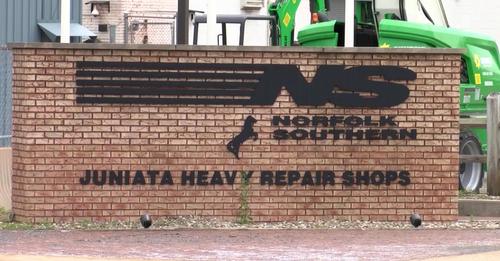
Furloughs at NS shop concerning |
|
Precision Scheduled Railroading, which Norfolk Southern began to implement in fall 2018, apparently is the culprit behind another troubling jobs cut exacted at Altoona’s Juniata Locomotive Shop.
Norfolk Southern’s furloughing of 86 shop employees on July 9 — and eliminating an additional 14 jobs through attrition — has left Mountain City residents wondering how much of a future might exist for the shop.
As a result of the latest action, the shop’s employee roster has shrunk to about 400 names; after NS laid off 100 employees in September 2019, 650 workers remained.
Highly skilled, dedicated workers who always have been an asset to the company’s delivery of service have been cast aside as the result of an operational concept that has yet to be fully time-tested.
|
|
Rail Competition, Switching Under Scrutiny After Biden Order |
|
A longstanding debate over competitive access to freight railroads resurfaced following President Biden’s wide-ranging executive order that seemingly favors shippers.
The July 9 order, targeting consolidation in numerous industries, asks the Surface Transportation Board—the agency overseeing railroads—to “further competition in the rail industry and to provide accessible remedies for shippers.”
The order emphasizes remedies that compel railroads to allow shippers more flexibility in switching carriers, such as being able to switch carriers mid-route. For shippers, it’s a step forward in their decades long fight against a rail industry they argue has hiked rates and neglected reliable service since deregulation in the 1990s.
|
|
White House summons labor and business groups to talk infrastructure |
|
Biden administration officials are inviting labor and business groups to the White House on Friday to strategize on how to pass the $579 bipartisan infrastructure deal, according to an administration official.
Why it matters: By welcoming groups as disparate as the Chamber of Commerce and the Ironworkers, top White House officials Anita Dunn and Cedric Richmond are working to build a broad coalition to ensure the bipartisan agreement for “hard” infrastructure becomes law.
Last week, the Chamber and the AFL-CIO announced a coalition of groups — from manufacturing — to retail that will band together for passage of the infrastructure package.
|
|
Union Pacific suspends inbound international container shipments to Chicago for a week |
|
In the latest pandemic-related disruption, Union Pacific has told customers it will halt all shipments of international containers from West Coast ports to its Global IV terminal in Chicago for up to a week.
The embargo, scheduled to begin on Sunday night, will help the railroad clear a container backlog at Global IV. The terminal is clogged largely due to reasons beyond the railroad’s control. Labor shortages and pandemic-related restrictions have slowed unloading and loading of containers at customer facilities. That has led to a shortage of chassis and drayage capacity during a period of high demand.
Other railroads, including BNSF Railway and Norfolk Southern, also have taken steps at various times this year to limit inbound volume at congested terminals in Memphis, Chicago, and elsewhere on their systems.
Intermodal analyst Larry Gross says UP’s move will create massive backups at West Coast ports, which are already busy as retailers are looking to keep up with consumer demand and aim to restock depleted inventories at their warehouses and store shelves.
As many as 40,000 twenty-foot equivalent units — or TEUs, the standard measure of international containers — will be stuck at West Coast ports over the next week due to the UP embargo, Gross says. That’s equivalent to 50 double-stack trains, each with 200 wells and a capacity for 800 TEU.
|
|
At a Convention Like No Other, Teamster Challengers Turn a Corner |
|
All 1.3 million Teamsters have the right to vote on their top officers. Now that the slates are nominated, members will be mailed a ballot on October 4; votes will be counted November 15.
At the convention, members of the durable reform movement Teamsters for a Democratic Union and their allies achieved constitutional amendments they’ve been seeking for decades.
For one, they won majority rule on contracts. Delegates voted to end the two-thirds loophole, which let leaders force a contract through unless a supermajority voted no; President James P. Hoffa sparked fury in 2018 when he imposed a UPS pact where members’ top concerns were ignored or worse.
About that out-of-touch contract: delegates also wrote into the constitution that every bargaining committee from now on has to include rank and filers.
“There’s definitely a thirst for change,” said Sean O’Brien, who leads the Teamsters United slate, “because there’s been 20 years of complacency. There’s been ineffective organizing. There’s been a lack of political action.”
|
|
Video from the Facebook page of Butte County Fires, Accidents, Crimes (BCFAC) |
|
7/16/2021 (Friday): BCFAC Dixie Fire News: Union Pacific Railroad used their fire train to transport 6 crews of firefighters out of the Dixie Fire zone at the end of their shift Friday morning.
The request placed by Cal Fire indicated there would be about 100 men including some CDCR inmates seen at the front of the train wearing orange.
The tracks follow the Feather River and Highway 70 in the Feather River Canyon where the Dixie Fire is burning in the Cresta Dam area.
The tank you see in the video is used to hold water to spray the wooden trestles, ties and vegetation along the tracks when they are threatened by fire.
|
|
Transportation Industry Alert - Labor Law Changes from the Biden Administration on the Horizon
|
|
Labor Task Force: The president has also issued an executive order establishing a “Task Force on Worker Organizing and Empowerment,” which seeks to promote his administration’s “policy of support for worker power, worker organizing, and collective bargaining.”
Bottom Line: In his first 100 days in office, President Biden has acted quickly and aggressively to make good on his pledge to be the “strongest labor president [we’ve] ever had.” While some of these efforts have quickly come to fruition, the fate of others remains unclear. One thing is clear, however; the new administration is committed to making vast changes in the traditional labor law world.
|
|
EDITOR'S NOTE: A brief word from the folks at: |
|
Confront your fears. Hold your elected union leaders accountable. Debate with them. Enforce your Local bylaws. These things will improve union democracy and make the union stronger
|
|
What the Exxon tapes reveal about the American Petroleum Institute’s lobbying tactics on oil trains |
|
Senior ExxonMobil lobbyists were recently exposed by undercover reporting from UnEarthed, an investigative journalism project of Greenpeace, which captured footage of the employees explaining how the oil giant influences policy makers using trade associations like the American Petroleum Institute (API).
The undercover footage revealed Exxon lobbyists boasting about wins for the company under the Trump administration and admitting to continued efforts to sow doubt about climate change and undermine action to tackle the crisis.
The recordings also confirmed the findings of years of DeSmog research on API’s lobbying tactics. “Did we aggressively fight against some of the science? Yes. Did we hide our science? Absolutely not,” Keith McCoy, a senior director in ExxonMobil’s Washington, D.C. government affairs team, told the undercover reporter Lawrence Carter. “Did we join some of these ‘shadow groups’ to work against some of the early efforts? Yes, that’s true. But there’s nothing illegal about that. You know, we were looking out for our investments; we were looking out for our shareholders.”
These revelations exposed by UnEarthed and first published by Channel 4 News help shed light on API’s lobbying strategies, particularly when it comes to transporting oil by rail.
|
|
Can the US get the strategy right for high-speed rail? |
|
President Joe Biden, often referred to as “Amtrak Joe” in infrastructure circles, sees his administration’s $1.2 trillion infrastructure framework as an opportunity to invigorate and connect rural communities through high-speed rail. According to a White House fact sheet released Thursday, rural communities acutely feel the effects of the United States lagging behind the rest of the world in terms of passenger rail reliability, speed and coverage. The framework includes $66 billion in passenger and freight rail, and the White House has vowed to ensure the plan delivers "world-class rail service to areas outside the northeast and mid-Atlantic."
But as California State Treasurer Fiona Ma has warned, the federal government has tried to jump-start the high-speed rail revolution before. If the Biden administration is going to achieve its vision for high-speed rail, it needs to be smart about the funding strategy. In a letter to Congress last month, her warning was clear. "Spreading funding thinly across dozens of states and congressional districts to secure votes is a recipe for incremental progress with no new operational trains on the horizon," she wrote. "Such was the case with the federal government’s last attempt to bolster HSR after allocating $10.5 billion in 2009-2010. The approximate ridership on new rail lines built with these funds? Zero."
|
|
Editor's Note: Do you suppose long time carrier mouthpiece, Frank Wilner, is doing a preemptive strike against the STB in anticipation of a ruling he won't agree with. Maybe the KCS merger? |
|
High Time for Sunshine at STB |
|
It took Congress 63 years to get the message—until 1976, when it passed the Government in the Sunshine Act requiring that all multi-member federal agencies conduct their business in public, such as through open voting conferences, public hearings and oral arguments that allow regulators to interact with the regulated.
Yet more than four decades since passage of the Government in the Sunshine Act, the Surface Transportation Board (STB)—following the lead of its predecessor Interstate Commerce Commission (ICC)—remains largely in ostrich mode with its head buried deeply in the sand. Rather than being a transparent agency, most Board business—with few exceptions—is conducted behind closed doors among Board members and key staff, through an administrative device called “notation voting.”
Notation voting is an exchange of comments in writing—an informal circulation process by which Board members individually make comments and edits on draft decisions originating with the chairperson. While notation voting has not been found violative of the Government in the Sunshine Act, it certainly does not honor the law’s purpose of greater government transparency. Nor does the posting on the STB website of summary statements following member/key staff closed-door discussions on pending matters.
|
|
There’s a Good Reason Biden Singled Out Railroads for Criticism |
|
"The industry’s own regulator warns that consolidation has “created the potential for monopolistic pricing.” |
|
When President Joe Biden on Jan. 9 issued an executive order to increase competition in the U.S. economy, most of the news coverage focused on what he said about 21st century industries such as the internet and pharmaceuticals. But Biden also had something to say about railroads, which have drawn complaints about monopolistic practices since their birth in the 19th century.
Biden’s order touches on one of the most sensitive issues in freight railroading: reciprocal switching, which is akin to net neutrality for the internet except that instead of electrons it deals with rails, switches, and long trains laden with everything from coal to soybeans. Under reciprocal switching, a railroad can pay a competitor to deliver cars for it to a customer that it has no way of reaching otherwise. Reciprocal switching breaks the monopoly control that a railroad has over its captive customers.
In his executive order, Biden encourages the Surface Transportation Board to look into strengthening reciprocal switching rules if it determines that doing so would be good for competition. The president can’t order the Surface Transportation Board to do so because the agency—the successor to the Interstate Commerce Commission—is independent.
|
|
|
|
|
|
|