|
**BACK BY POPULAR DEMAND**
The Institute for Adolescent Trauma Treatment & Training presents:
Trauma & Addiction: How We Got Here & How We Get Out
Workshop I: The Impact of the Social Environment on Addiction & The Neurobiology of Trauma
(February 9th, 2024: 10:00 am - 12:00 pm)
and/or
Workshop II: Hope & Healing: Tools for Transformation
(February 16th, 2024: 10:00 am - 12:00 pm)
* PLEASE NOTE: Workshop I is an encore presentation of a previously held event.*
| |
|
Neurobiology of Trauma
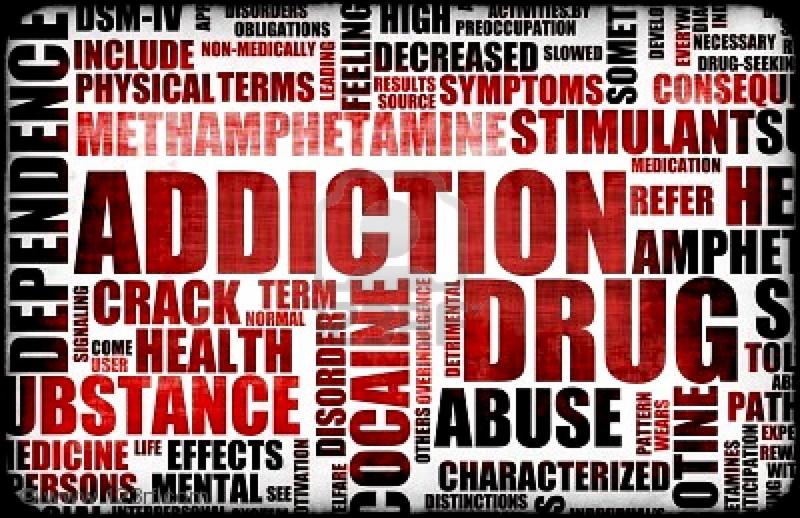
Back by popular demand, this workshop will integrate the latest attachment research to explore the relationship between trauma and substance use. The opioid crisis is a local and national health emergency, yet society’s approach to this problem ignores its main cause: that disruptions in our social environments, such as trauma from abuse or societal oppression, cause profound changes in our bodies, brains, and stress response systems that make widespread addiction more likely. This presentation explores how Adverse Childhood Experiences (ACEs) and trauma are linked to a wide range of negative outcomes and risk-taking behaviors including substance use/ misuse. In order to combat addiction we must have an understanding of the neurobiology of trauma and how our bodies respond to social suffering. Anthony Zenkus will present a framework for looking at and treating addiction that draws on the latest scientific evidence that addicts are created, not born, and that meaningful changes in our social environments can heal addiction as well as prevent it from happening in the first place.
| |
|
Hope & Healing
Substance abuse is often viewed as the cause of innumerable medical, psychiatric, economic, and legal problems, with staggering consequences for impacted individuals and families, and society more globally. And while substance abuse is in fact associated with a range of negative outcomes, the nature of that relationship is often misunderstood or overlooked. By applying a “trauma lens” when working with people suffering from addiction, labels (such as “bipolar” or “delinquent”), and associated destructive behaviors can be better understood by the function they serve. When stripped of the labels, these “challenging” behaviors can be more clearly seen as efforts to cope with very difficult, oftentimes traumatic environments, and as such, represent an individual’s attempt to survive. This workshop will discuss trauma-informed interventions used to treat Developmental Trauma Disorder (DTD) and complex trauma, with a particular emphasis on the understanding the function of addictive behaviors, as well as the importance of using interventions beyond talk therapy. Participants will learn about somatic approaches to healing, mindfulness, and creative arts approaches as well as interactive methods to engage clients in treatment, thereby improving retention of an often “difficult to treat” population, and fostering positive outcomes overall.
| |
* See important note about registration below. | |
|
How?
A link to the training will be sent to the email used for registration 48 hours prior to the event.
Please register for each day separately if you would like to attend both events
*Attendance is tracked via Zoom Analytics.
| |  |
|
When?
Workshop 1:
February 9th, 2024
10:00 AM - 12:00 PM
2.0 CEs
Workshop 2:
February 16th, 2024
10:00 A.M. - 12:00 P.M
2.0 CEs
Live via Zoom
| | |
|
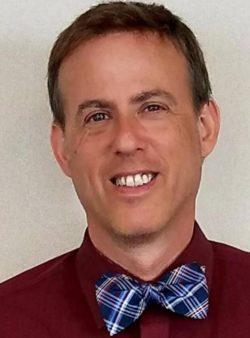
Anthony Zenkus, LMSW is a licensed Social Worker and is an adjunct faculty in the School of Social Work at Adelphi University and Columbia University. Anthony has trained thousands of professionals on the issues of interpersonal violence, income inequality, and the effects of trauma and chronic stress on the brain, body, and behavior. In addition, he has been trained by Vice President Gore as a presenter in his Climate Reality Project. In 2016 Anthony did a TED Talk on the effects of inequality on the development of children. Anthony is also an activist and has been an organizer with Occupy Wall Street as well as being involved with Black Lives Matter and environmental causes. He has appeared regularly in print, online, and television media as an expert on family violence, trauma, and the effects of inequality.
| |
|
IMPORTANT NOTE
** Attendance is tracked via Zoom using the email provided upon registering. Participants must attend the entire event
to receive CEs. Partial CEs will not be provided. **
*This no-cost workshop is made possible through federal funding from the Substance Abuse and Mental Health Services Administration. All are welcome to register! However, please note if you attended Workshop I previously and received CEs, NYS may not accept CEs for the same workshop. Workshop II is brand new and has not been offered before. Please register separately.*
| |
|
(Up to 4 CEs)
Registration
Please note, each workshop has its own registration link.
*No fee made possible through federal funding from SAMSHA.*
| |
|
Credentialing Information
*Social Workers
*Mental Health Workers
*Marriage Family Therapists
*Psychologists
*CASAC Renewal Pending
*Licensed Creative Arts Therapists
| | |
|
For more information contact:
iatttworkshops@adelphi.edu
516-877-4063
Our team is here to help.
- Nicole Sullivan, LCSW
- Irene Jun, Program Coordinator
- Victor Labruna, PhD, Co-Director
- Mandy Habib, PsyD, Co -Director
| | |
|
Continuing Education
Adelphi University School of Social Work is recognized by the New York State Education Department’s State Board as an approved provider of continuing education for licensed social workers, psychologists, mental health counselors, marriage and family therapists, and creative arts therapists, #0032. CASAC renewal credits are determined on an individual course basis.
Adelphi University School of Social Work: Continuing Education and Professional Development, #1786, is approved to offer social work continuing education by the Association of Social Work Boards (ASWB) Approved Continuing Education (ACE) program. Organizations, not individual courses, are approved as ACE providers. State and provincial regulatory boards have the final authority to determine whether an individual course may be accepted for continuing education credit. Adelphi University School of Social Work: Continuing Education and Professional Development maintains responsibility for this course. ACE provider approval period: 03/03/2022 – 03/03/2026.
Accessibility Statement
The Americans with Disabilities Act (ADA) and Adelphi University require that all events be accessible. To request a reasonable accommodation, please contact the event host identified on the event webpage; please allow for a reasonable time frame. The event host, when necessary, will collaborate with the Student Access Office.
For further information, please contact the Student Access Office at 516.877.3806 or sao@adelphi.edu.
| |
Adelphi University
School of Social Work
Institute for Adolescent Trauma Treatment & Training
Phone (516) 877-4334 | Fax (516) 877-6222
| | | | |