REMINDER: YOUR SUBMISSIONS ARE ENCOURAGED | | |
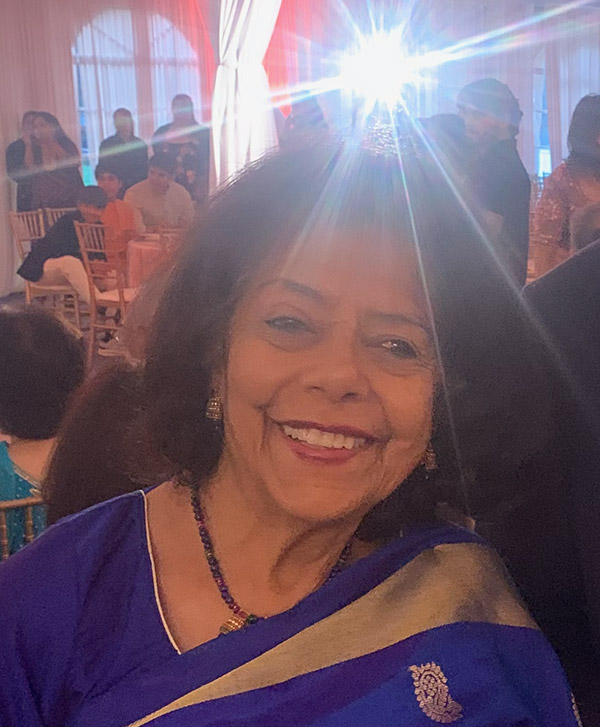
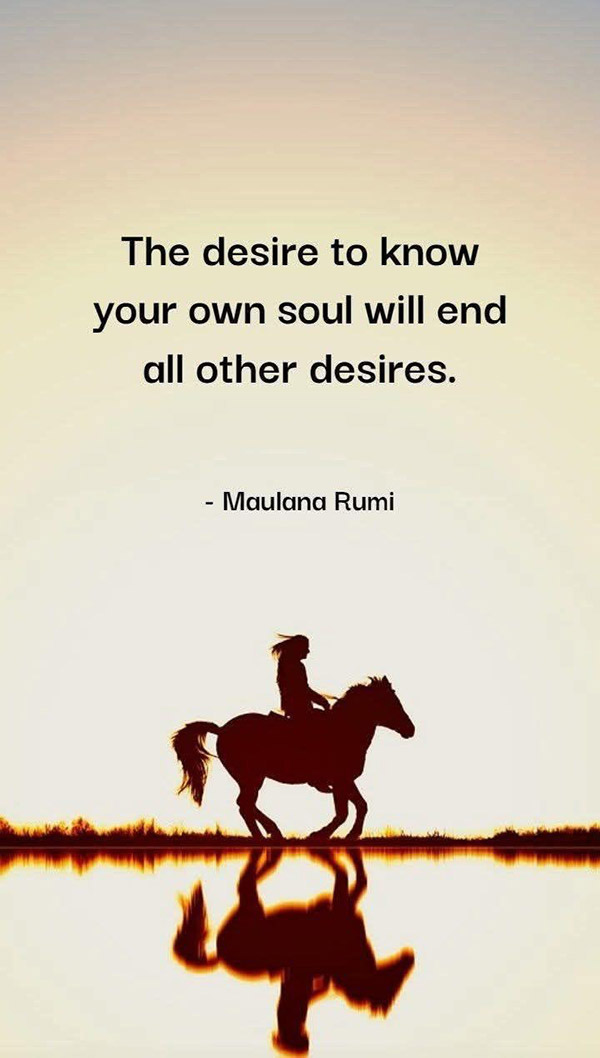
1. Bindu's Corner: This week's affirmation comes from the 13th-century mystic poet Maulana Rumi.
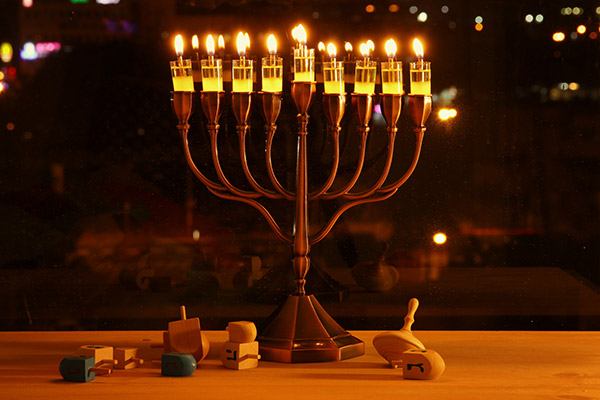
2. Hanukkah 2025: This Sunday is the first day of Hanukkah. Whether you celebrate the holiday or not, get out to one of over 15,000 public menorah lightings worldwide to show support for your fellow community members.
3. Holiday Travel: This week, I'm highlighting a Christmas destination city from each continent, except Antarctica.
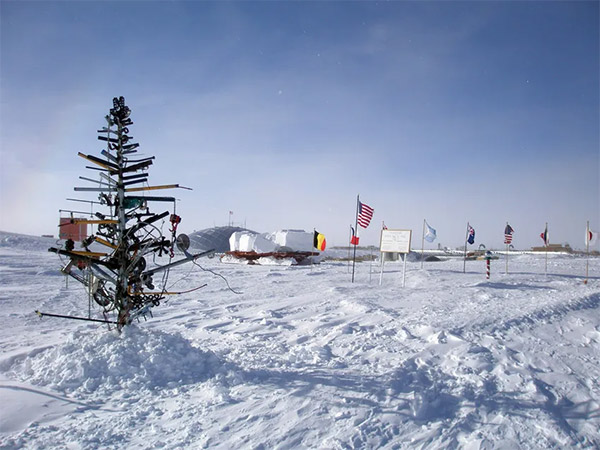
4. Antarctica: How scientific researchers in Antarctica celebrate Hanukkah and Christmas.
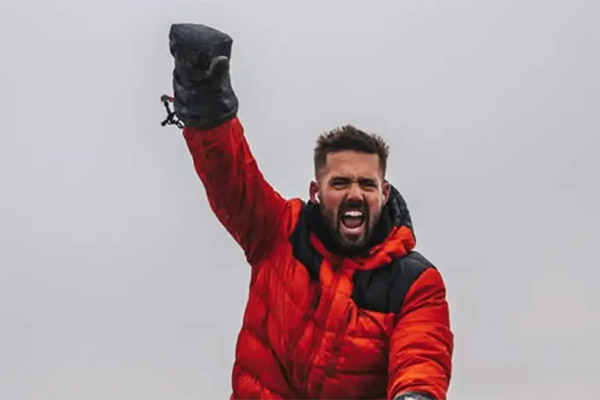
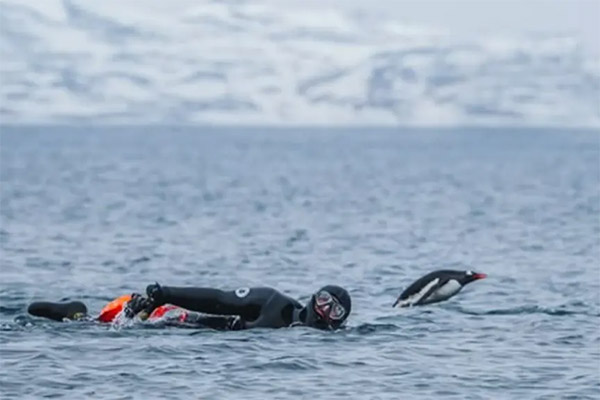
5. Endurance Athletes: Triathlete Spencer Mathews has set new world records by completing an Ironman distance triathlon on each of the seven continents in under 22 days.
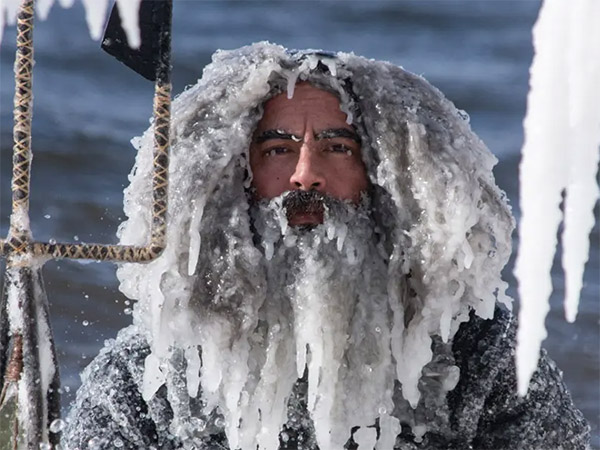
6. Surfing: Winter surfer Daniel "Surfer Dan" Schetter has become a Great Lakes legend for his Ice beard and surfing the frigid winter waters of Lake Superior.
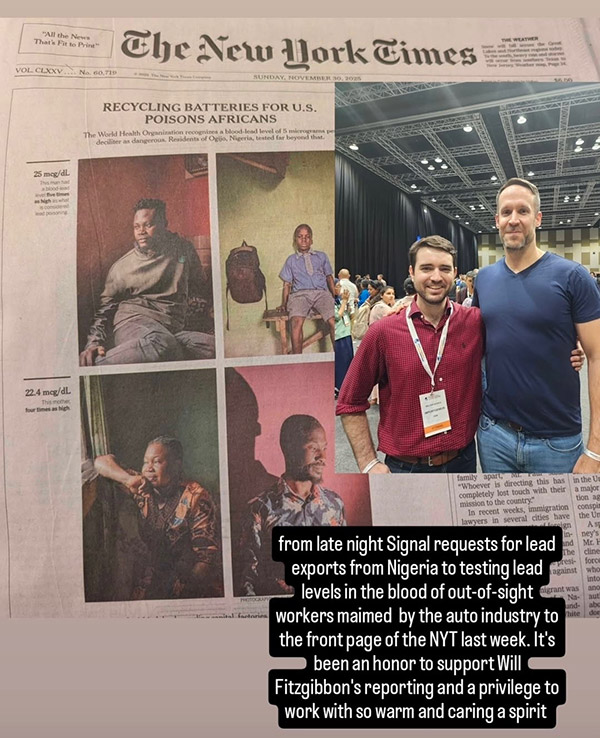
7. The Next Gen: William George has been working remotely from Malaysia, providing support via his shipping expertise to a story that made the front page of The New York Times.
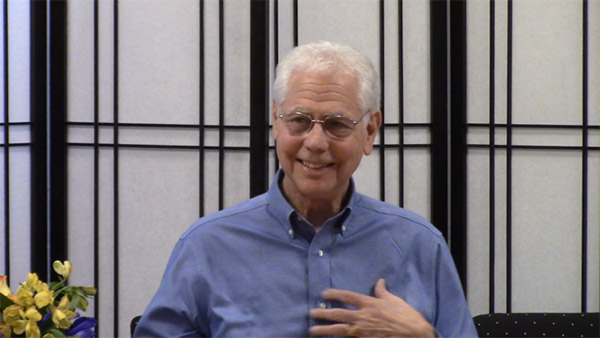
8. Dr. Hayward M. Fox, Ph. D.: This week, I would like to again direct you to Dr. Fox's guided meditation for stress relief during this holiday season.
| | |
I hope you will pick and choose, and enjoy your reads.
Please feel free to share the Flock.
| | Now, to this week's Flock. | | This week, Bindu brings us the wisdom of the 13th-century Persian mystic poet Maulana Rumi. | |
2. Hanukkah 2025, December 14 – December 22, 2025
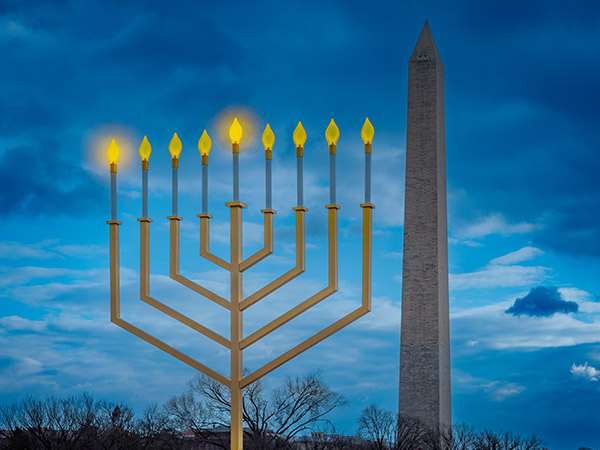
| | This year, Hanukkah, sometimes spelled Chanukah, begins this Sunday, December 14th, at sunset. The eight-day “festival of lights” runs until nightfall on Monday, December 22nd. Happy Hanukkah to all! | | |
The eight-day Jewish holiday known as Hanukkah, also spelled Chanukah, commemorates the second century B.C. rededication of the Second Temple in Jerusalem, after Jews had risen up against their Greek-Syrian oppressors in the Maccabean Revolt. Hanukkah, which means “dedication” in Hebrew, begins on the 25th of Kislev on the Hebrew calendar and usually falls in November or December.
Often called the Festival of Lights, the holiday is celebrated with the lighting of the menorah, traditional foods, games and gifts.
| | |
The Hanukkah ‘Miracle’
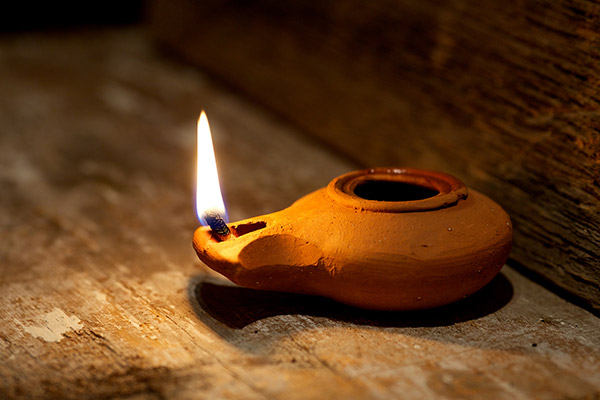
According to the Talmud, one of Judaism’s most central texts, Judah Maccabee and the other Jews who took part in the rededication of the Second Temple witnessed what they believed to be a miracle. Even though there was only enough untainted olive oil to keep the menorah’s candles burning for a single day, the flames continued flickering for eight nights, leaving them time to find a fresh supply. This wondrous event inspired the Jewish sages to proclaim an annual eight-day festival. (The first Book of the Maccabees tells another version of the story, describing an eight-day celebration that followed the rededication but making no reference to the miracle of the oil.)
| | 6 Ways Hanukkah 2025 Is Unique | | |
1. We Light Twice on Sunday
The first and last nights of Chanukah are always on the same day of the week. This year, that lucky day will be Sunday, meaning we have two Sundays on which to hold Chanukah parties, public menorah lightings, and even car parades. Hooray!
2. It’s Actually the Second Hanukkah of 2025
Last winter, Hanukkah began in 2024 but spilled into 2025. This Hanukkah is thus the second one we are celebrating during this calendar year.
3. We Will Read Excerpts From Three Torah Scrolls
The sixth day of Chanukah is special since it is:
- Chanukah
- Shabbat
- The first day of Rosh Chodesh, when we welcome the new month of Tevet
In synagogues around the world, three Torahs will be read from that day: one from which we will read the weekly Torah portion (Miketz), one for the Rosh Chodesh reading, and a third for the Hanukkah reading.
4. It’s 250 Years Since American Independence
This coming summer will be 250 years since the American colonists declared their independence from British rule. What better way to celebrate our cherished freedoms than by participating in public Menorah lightings, which celebrate our miraculous victory over the Greek oppressors who outlawed Jewish practice and Torah study.
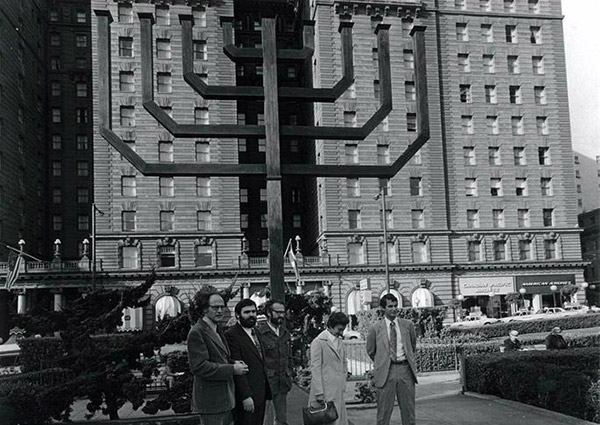
5. It’s 50 Years Since the First Giant Menorah
| |
In 1975, Chabad of San Francisco partnered with Bill Graham to put up a giant mahogany menorah in Union Square, and a new tradition was born. This year, that tradition turns 50!
6. It’s Now!
Perhaps the most important thing about this year’s Hanukkah is that it is now. This moment in history has never been experienced and will never return. Let’s seize the moment to make this holiday memorable, inspiring, and uplifting—for ourselves and for those around us!
| |
3. Holiday Travel: Best Cities to Spend Christmas.
| | Last year, in November and December, I ran a series on Christmas holiday destination cities. Most of the destinations were in Europe and North America. This year, I'm working from Condé Nast's 28 Best Places to Spend Christmas Around the World, and I'm going to feature one city from each continent on their list. | | 28 Best Places to Spend Christmas Around the World | | |
As holiday cheer spreads across the globe, it's natural to wonder—where’s the best place in the world to celebrate Christmas? And that's precisely the kind of curiosity we at Traveler love to indulge. Put the rest of your vacation days to good use exploring some of the world’s best cities, which, come Christmastime, transform into seasonal wonderlands packed to the brim with winter festivals, dazzling light displays, and plenty of mulled wine to keep you nice and toasty through the rest of winter.
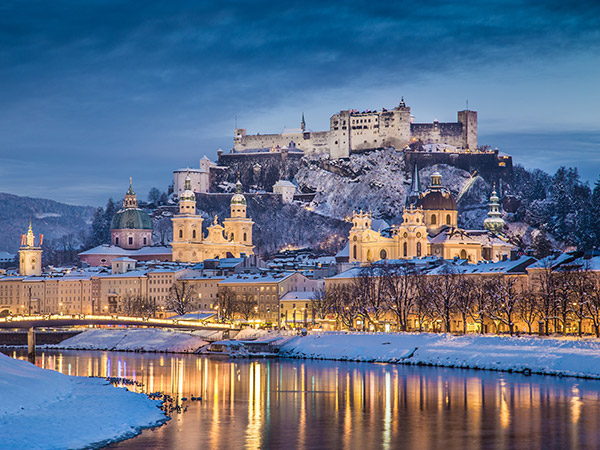
While every place celebrates the holidays in its own way, they all promise a holly, jolly good time. From Taipei to Zagreb, these are the best places to spend Christmas around the world in 2025.
| |
North America
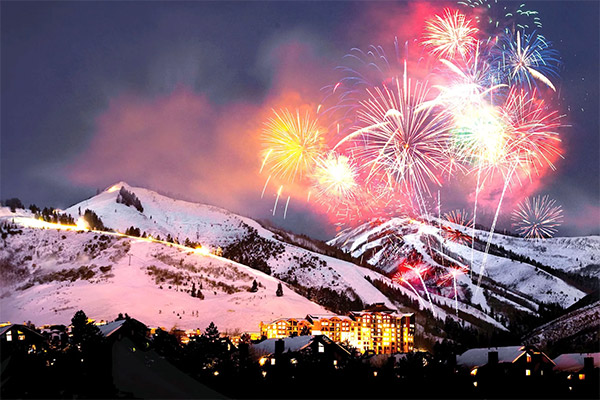
Park City, Utah
| | |
Why we go: As if the world-class skiing isn’t reason enough to visit Park City this winter, the town also happens to be a wonderful place to spend Christmas. The former Olympic city has ample opportunities for skiing, fly fishing, snowmobiling, and dog sledding—with no shortage of resorts to warm up in between runs.
The one thing to get you in the spirit: Hop on a 90-minute train ride with the North Pole Express at Heber Valley Railroad, where you can sip hot cocoa and meet Mrs. Claus.
| |
South America
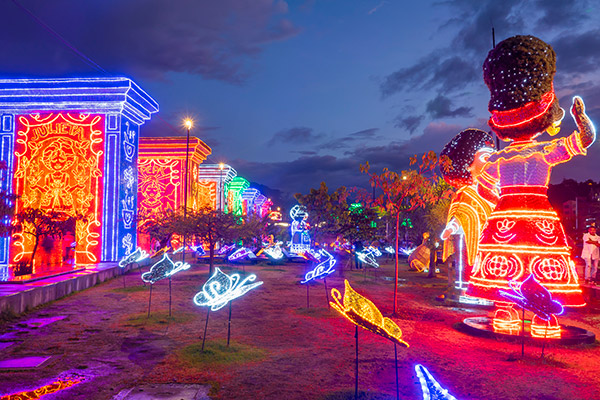
Medellin, Colombia
| | |
Why we go: It may be known as the “City of Eternal Spring,” but Medellín celebrates the winter holiday season pretty damn well. The Colombian city puts Christmas into overdrive with its annual Alumbrados, a festival of lights that began back in 1967 and features massive displays made of around 27 million LED lights.
The one thing to get you in the spirit: Start each morning with a cup of coffee and an almond croissant at Pergamino Café.
| |
Europe
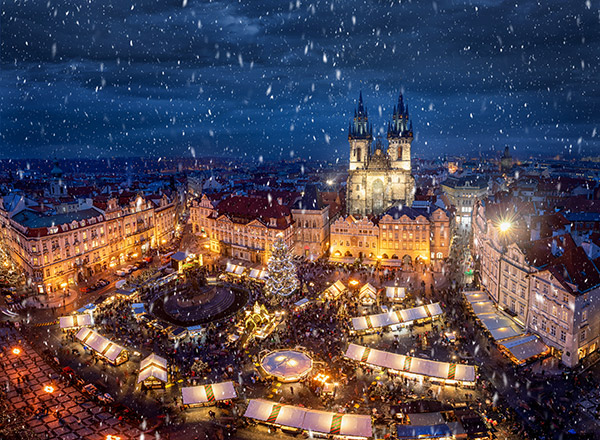
Prague, Czech Republic
| | |
Why we go: Prague’s holiday markets easily make the city one of the world’s best places to spend Christmas: They run for a full month, with locals and travelers passing through for mulled wine, sticky pastries, and roasted ham. The main markets take place in the Old Town and Wenceslas squares, just 10 minutes apart by foot—and are set to the backdrop of some of the prettiest Gothic architecture you’ll ever see.
The one thing to get you in the spirit: Sip on Svařák, a Czech mulled wine with a citrusy touch from a market stall. Or for a sweeter taste, indulge in a hot chocolate at Cafe Slavia, founded in 1881.
| |
Africa
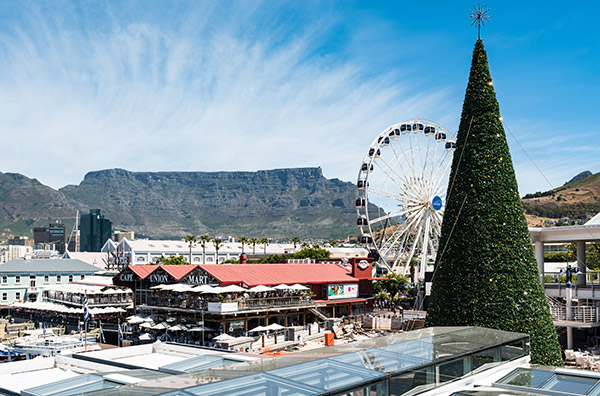
Cape Town, South Africa
| | |
Why we go: If you’re looking to escape winter during Christmas, you can't do much better than Cape Town—it’s summer in the Southern Hemisphere, after all. You can even visit one (or several) of the South African city’s holiday markets without having to wear a coat and scarf.
The one thing to get you in the spirit: They’re not exactly Santa’s elves, but the estimated 2,000 to 3,000 African penguins at Boulders Beach—where you can get close enough to take portrait-mode photos of them—are sure to warm your heart just the same.
| | |
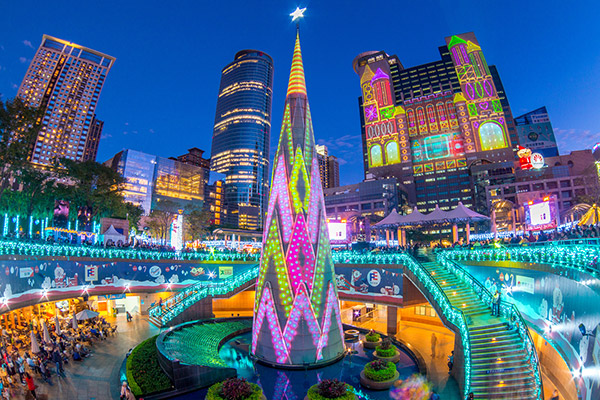
Why we go: December 25 isn’t a public holiday in Taipei, but it’s still one of the best places to spend Christmas, as the city celebrates with incredible lights displays, festive attractions, and events. During the weeks between mid-November and the New Year, pretty much the entire Banqiao District transforms into Christmasland—which is exactly what it sounds like. We’re talking massive Christmas trees, rides, concerts, and markets selling local goods.
The one thing to get you in the spirit: Don’t miss the Christmasland section over in the Fuzhong Business district, with a magic forest and Boshou light park.
| |
Australia
Sydney, Australia
| | |
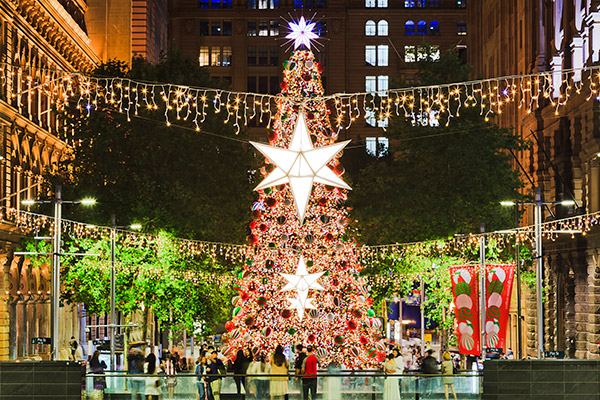
Why we go: Have you ever experienced the holidays down under? We promise you haven’t seen Christmas lights until you’ve experienced Sydney’s Christmas lights. Plus, in Sydney, they've upped the ante from the mere 12 days of Christmas to celebrations that last the whole month with “Sydney Christmas.” The festival features the city’s largest Christmas tree at Martin Place.
The one thing to get you in the spirit: Walk under the 3,500 twinkling lights at the Strand Arcade, or, if you need magnitudes more, the 85,000 twinkling LEDs at the awe-inspiring Pitt Street Mall Canopy of Light.
| |
4. Antarctica: Hanukkah and Christmas in Antarctica
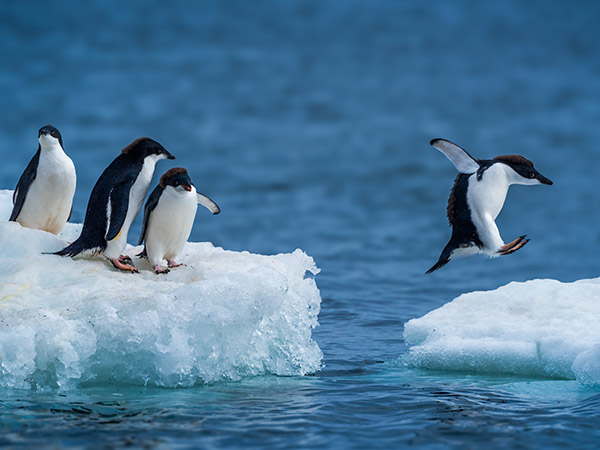
| | Since the human population of Antarctica consists almost entirely of scientists working at international research outposts, and December in the Antarctic falls in the middle of the austral summer with 24 hours of sunlight, Hanukkah and Christmas celebrations are generally small. | Sea Urchins: An Unlikely Menorah | From: Kar-Ben Publishing, December 20, 2019 | |
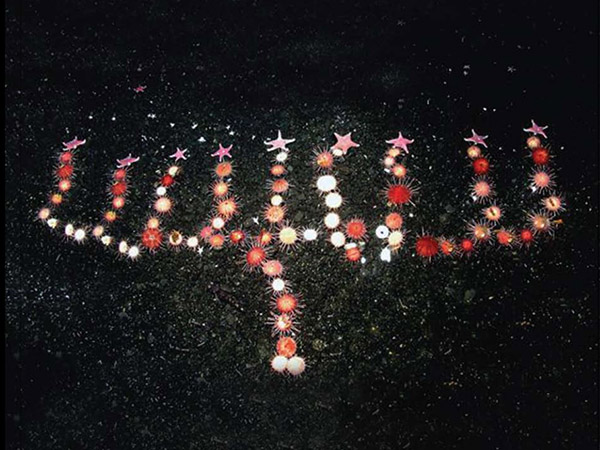
A menorah can be made out of a variety of different materials. Some are crafted from metal or clay. Some are made with plastic and use lightbulbs as flames. Some are made as school art projects. And some are made from the most unlikely materials.
December comes during the summer in Antarctica. This means that it’s part of six months of constant sunlight. For those who celebrate Hanukkah, recreating the warm celebratory glow of the menorah becomes a concern. In Esther Susan Heller’s book, Menorah Under the Sea, she follows marine biologist David Ginsburg to Antarctica as he finds an unusual way to make Hanukkah feel like Hanukkah.
Stationed at the McCurdo Station in the frozen tundra, Ginsburg spent five months studying sea urchins along the frigid ocean coastline. Ingenuity and creativity allowed him to find a solution to the questions, “How can I celebrate Hanukkah when there is no nightfall? Can I light a menorah while the sun is still shining?”
On the first night of Hanukkah, Ginsburg was studying the sea urchins and got an idea watching them move slowly to conserve energy. He started gingerly gathering them and arranging them on the ocean floor. Soon enough he had crafted a living menorah, using starfish as flames.
| How big a celebration is Christmas in Antarctica? | |
Not very - is the simple answer. Summer on scientific bases is a time of great activity and comes right in the middle of the time limited work season. The great majority of people in Antarctica at any one time are on scientific bases, tourist numbers are higher overall but they usually spend just 1-2 weeks there. The majority of personnel on scientific bases are there for the summer only (2-5 months) and they know they're going to Antarctica to work, the window is narrow and the cost to get and keep them there is high…
So is there a celebration?
There certainly is! Christmas day is usually a non-working day for most people, though many will also be doing their jobs for part of the day at least.
Details depend on the nationality of the base and on the prevailing base culture, but pretty much all Antarctic bases will have a slap-up Christmas meal and a party of some type. Volunteers often help the base cook/s prepare the special meal…
A party in the evening tends to be the main event. Dinner will be as traditional as possible in the circumstances, though fresh vegetables and meat are not easy to come by and so will be supplemented with dried, tinned or frozen varieties.
Fancy dress is always a great Antarctic favourite (costumes often taking much of the day to make, usually with some theme or other. If there is anyone on base who can sing or play an instrument (even if pretty awfully) then they will stand up and do their bit. Many base members will have presents from home that may well have arrived months earlier and are saved until Christmas to be opened.
| |
5. Endurance Athletes: Spencer Matthews
| | British television personality and endurance athlete Spencer Mathews performs extreme endurance challenges to raise money for charities. In 2024, he completed his Desert Challenge: 30 marathons in 30 days through the Jordanian desert, where he earned his first Guinness World Record and raised over £600,000 for Global's Make Some Noise, which supports smaller UK charities and grassroots projects. He recently finished his latest challenge, Project Se7en: an Ironman-distance triathlon (140.6 miles) on each of the seven continents in a short time frame. | |
Spencer Matthews smashes world record as PROJECT SE7EN ends with historic triathlon in Antarctica
Spencer Matthews has conquered one of the most ambitious endurance challenges ever attempted.
| | From: Tri247, By Jonathan Turner, December 4, 2025 | | |
After 21 days, seven continents and a challenge that repeatedly pushed him beyond exhaustion, Spencer Matthews has completed PROJECT SE7EN – finishing his seventh full-distance triathlon in Antarctica to set a new benchmark for ultra-endurance and raise vital awareness for men’s mental health.
Remarkably he had never completed a full-distance triathlon – which is a 3.8km swim, a 180km bike ride and a run marathon – until this challenge, though 30 marathons in 30 consecutive days across desert terrain last year and other endurance feats had given him a taste of what was likely to be in store…
And when the green light came, the toughest leg of the swim suddenly became a reality. He’d admitted the danger of leopard seals had given him nightmares in the build up so when he was able to tick off the 3.8km battle through icy waters, the significance was obvious.
| | |
How the challenge played out
The mission began with momentum in London and quickly turned brutal in Arizona, where he described himself and teammate Chris Taylor as being “somewhere near Hell” during the final miles of IRONMAN Arizona. After that, each new continent brought its own test.
Cape Town pushed him deeper into fatigue. Perth threatened to break his sleep cycle entirely. Dubai layered heat on top of exhaustion. Rio de Janeiro hit him with humidity and emotional drain.
And then it all came down to Antarctica – and in between of course were all the logistics and extra stresses of travelling around the world while also trying to recover for the next leg.
But this was always about much more than the miles.
PROJECT SE7EN was created to raise funds and awareness for James’ Place, the suicide-prevention charity that supports men in crisis. He told us at the start that it was all about “having a meaningful impact” – it was his ‘why’ and the greater purpose which helped carry him through.
To put things into context, Matthews somehow condensed the previous world record of four years into a matter of weeks.
The two new records are:
• Fastest 140.6-mile triathlon on Antarctica (28 hours 51 minutes 11 seconds)
• Fastest time to complete a 140.6-mile triathlon on seven continents (21 days 9 hours 18 minutes)
| |
6. Surfing: Catching the Winter Waves on Lake Superior
| | Flock readers might be surprised to see me posting a surfing story in December. The two surfers in the video below are indeed a different breed, braving frigid water, sub-freezing temperatures, and ice flows to surf the wind-blown waves of Lake Superior. | | The Ice Beard Surfers of Lake Superior | | |
Yes, Lake Superior does actually have surfing, and yes, there are people who do surf there year round. The most famous of those crazy surfers would have to be Daniel “Surfer Dan” Schetter, whose ice beard is the stuff of legends. At least it’s the stuff of VICE’s latest addition to their “Local Legends” video series.
Schetter came into internet fame when images of his “ice beard” went viral. How does one grow an ice beard? By first having beard and then by surfing in sub-freezing weather. That practice results in icicles clinging to the hairs of your beard. Add in a trident—which Schetter just happens to have—and you start to look like a real-life Poseidon…
But it’s not just all ice beards for Schetter. He’s also saved the lives of several individuals while surfing. “When the fire chief told me that I’m the most valuable guy in the water during rescues,” says Schetter, “I agreed with him.” Surfer Dan leads a legendary life, that’s for sure, and it’s one that few people could do.
| | The Ice Beard Surfers of Lake Superior | Local Legends | |
7. The Next Gen: In The News with William George
| | The Flock's favorite roving reporter, William George, has been roving in Malaysia this past month, where he was providing support to reporters from The New York Times by tracking lead shipments for a front-page exposé on the health effects from lead exposure on communities near and workers in African factories contracted by the US auto industry to recycle batteries. | | Recycling Lead for U.S. Car Batteries Is Poisoning People | | From: The New York Times, By: Peter S. Goodman, Will Fitzgibbon, and Samuel Granados, November 18, 2025 | | |
Poisonous Dust falls from the sky over the town of Ogijo, near Lagos, Nigeria. It coats kitchen floors, vegetable gardens, churchyards and schoolyards.
The toxic soot billows from crude factories that recycle lead for American companies.
With every breath, people inhale invisible lead particles and absorb them into their bloodstream. The metal seeps into their brains, wreaking havoc on their nervous systems. It damages livers and kidneys. Toddlers ingest the dust by crawling across floors, playgrounds and backyards, then putting their hands in their mouths.
Lead is an essential element in car batteries. But mining and processing it is expensive. So companies have turned to recycling as a cheaper, seemingly sustainable source of this hazardous metal.
As the United States tightened regulations on lead processing to protect Americans over the past three decades, finding domestic lead became a challenge. So the auto industry looked overseas to supplement its supply. In doing so, car and battery manufacturers pushed the health consequences of lead recycling onto countries where enforcement is lax, testing is rare and workers are desperate for jobs.
Seventy people living near and working in factories around Ogijo volunteered to have their blood tested by The New York Times and The Examination, a nonprofit newsroom that investigates global health. Seven out of 10 had harmful levels of lead. Every worker had been poisoned.
More than half the children tested in Ogijo had levels that could cause lifelong brain damage.
| |
8. Hayward M. Fox, Ph. D.
| | This week, I would like to remind everybody to take a few moments to step back from catering to friends and family during the hectic holiday season and practice a little self-care. Take advantage of the guided meditations that Dr. Fox generously provides on his website. Ten minutes of relaxing meditation can revitalize the mind and spirit, leaving you refreshed and ready to spread the joy of the season to friends and family. This week, I am recommending the Blue Sky meditation. | | These Flock regulars are always here for you: | | Don't Be Shy: Share Your Stories! | | I'm looking forward to sharing more of your personal stories - oral, written, or otherwise, as we enter our third year. I'd so love to present them to The Flock, hit a mailbox below to share your story. | | Subscriptions & Idea Submissions
Reminder: Your submissions are always welcomed. | | |
Feel free to forward this email to a friend. If this was forwarded to you and you would like to receive your very own Flock Newsletter, you can sign up here. If you have any questions or suggestions for future Flock resources, don't hesitate to contact me.
Your fan and friend,
Beth
| | | The information and materials contained or referenced in this newsletter are for informational purposes only and not intended to be a substitute for professional medical advice, diagnosis, or treatment. Always consult a physician or other qualified medical professional with any questions you may have regarding a medical condition or treatment and before beginning a new health care regimen. Do not disregard professional medical advice or delay seeking medical advice or care based on anything contained in this newsletter. | | | | |