Long Island Swimming Officials Association 
Serving Long Island Swimmers for 64 years! 
April 2021
Let's see how this goes ...

I recall discussing with an official the diving crow-hop rule; technically - foot/feet leaving the board prior to a back/inward takeoff. Each diving judge shall deduct ½ - 2 points. This official said that they do not deduct any points, not enforcing it - the divers can do it in college and USA Diving so they were not taking points off for a crow-hop.

Our job is to enforce the rules as currently written by the NFHS. Not just the ones that we agree with, or only if the swimmers and divers get an advantage by what they are doing incorrectly (yes , I have heard that one too "I know it's against the rules but the swimmer did not really get an advantage so I did not make the call), or if they are new/inexperienced officials - YES, WE CALL ALL VIOLATIIONS IN MODIFIED/JUNIOR HIGH SWIM MEETS - that's how the swimmers learn and improve - by having their mistakes identified so that they can make corrections.

Every official that you are on the deck with is a trained, certified official - even the new ones. We expect you to help and guide them if they are new - but they are trained and able to report violations to the referee.

What also happens by being selective with enforcing rules is that you make the rest of us look like the bad guy. One sentence that I dislike hearing is, "That swimmer has done that all season and you are the only one that disqualified them." Especially if the call is made at a championship. If those violations are called during the season, the swimmer can make necessary corrections.

If there are rules that we do not agree with, there is a mechanism each year to provide input to the NFHS. Otherwise we should be be making sure that the competitions are fair to all - someone swimming or diving legally should not lose to someone not following the rules.

Thank you,
George Fleckenstein
president 
Standing Forward Takeoffs Approved in High School Swimming and Diving Rules
By NFHS, April 2021

In an effort to increase participation in high school swimming and diving, standing forward takeoffs have been approved, effective with the 2021-22 school year.

This significant addition to high school diving was one of several rules changes recommended by the National Federation of State High School Associations (NFHS) Swimming and Diving Rules Committee at its March 21-23 meeting held virtually this year. All of the committee’s recommended rules revisions were subsequently approved by the NFHS Board of Directors.

The addition to Rule 9-5-2 states that for standing takeoffs, “the diver will assume a starting position that includes an upright head and body with arms straight and in a position of the diver’s choice. The diver may move the arms to various preparatory positions provided there is no attempt to start the dive.”

The new language also notes that just before or after the starting position is assumed, the diver shall stop oscillating the board. For standing takeoffs, the diver cannot oscillate the board more than four times, cannot let one or both feet leave the board during an oscillation prior to the final spring from the board, and cannot permit an oscillation to be too large to disrupt the tempo of the dive.


“The standing forward takeoff is a critical part of the educational process in teaching new dives,” said Sandy Searcy, NFHS director of sports and liaison to the NFHS Swimming and Diving Rules Committee. “This provision allows divers to participate in competition sooner, even if they have not mastered all parts of the dive, and it encourages growth in the sport.”

A new article in Rule 9-3 notes that if a diver elects to perform a standing forward takeoff, he or she must declare intent to the diving referee before performing the dive. When a diver performs a standing forward takeoff, a two-point penalty is assessed since all components of the dive are not being completed. In addition, if a diver doesn’t declare intent to perform a standing takeoff, it will be an unsatisfactory dive, and the diver will receive a score no higher than two points.

In other diving rules changes, Rule 9-2-1 now allows for diving boards to be open for practice during championship meets if breaks between sessions extend longer than 10 minutes – unless the meet director establishes specific guidelines prior to the start of competition. A change in Rule 3-3-5c now permits divers to use temporary adhesives during competitions.

In addition, a new Rule 9-6-4 states that if a dive is executed other than that which was announced, and is properly listed on the scoresheet, it will be judged as a correct dive and considered an announcer error. If the diver completes a dive as announced and it is determined that the announcer was in error, the diver will be allowed to immediately perform the correct dive.

Among changes in swimming rules, new Rule 3-3-5 permits competitors, for religious reasons, to wear suits that provide full body coverage without obtaining prior state association authorization – as long as the suit meet requirements in Rule 3-3-4b(1-3). The NFHS Swimming and Diving Rules Committee is the fifth NFHS sports rules committee to adopt or adjust a rule this year related to the wearing of equipment for religious purposes.  

A revision in Rule 3-2-5 now states that in relays, the leadoff swimmer must be declared at the specified time and place prior to the start of the event. 

A complete listing of the swimming and diving rules changes will be available on the NFHS website at www.nfhs.org. Click on “Activities & Sports” at the top of the home page and select “Swimming and Diving.”

According to the most recent NFHS High School Athletics Participation Survey, swimming and diving is the 10th-most popular sport for boys with 136,638 participants in 7,704 schools, and the eighth-most popular sport for girls with 173,088 participants in 8,007 schools.
diving-board.jpg
Things Every Diving Judge Should Know...
...It is important to hear the announcer read the dive and dive description in order to develop a mental picture of the dive to be completed. Begin judging the dive when the starting position has been established and do not stop judging the dive until the diver has passed below the surface of the water. Once the dive is completed, select a score quickly without consulting another diving judge. If there is an error in a score read by the announcer, immediately bring it to the attention of the diving referee.

...The diving referee determines failed and unsatisfactory dives. An unsatisfactory dive results in a maximum score of 2 points, but that does not mean that a judge is obligated to show a score of 2 points, especially if there were deficiencies requiring mandatory deductions or deficiencies in other elements of the dive. A score of 0 can be shown without the dive having been declared a failed dive and the score itself would not mean that the dive would be considered a failed dive.

...The judging panel may or may not include the diving referee (Rule 9-6-1).
What Have We Learned During the Pandemic in High School Sports?
Dr. Karissa Niehoff, NFHS April 2021

While there is great optimism about having students back in their favorite sport or activity, and fans back to support these student participants, we must be careful not to forget what we have learned during this unprecedented pandemic. The struggles we have faced over the past year have reminded us of many significant aspects of participation in sports and performing arts activities.

So, what must we remember? 
  • The Importance of Participation.
  • The Mental and Emotional Health of Students is Tied to Participation.
  • We Must Be Thankful and Appreciative.
  • There is More Than One Way to Accomplish Goals and Dreams.

NEW BOARD MEMBER ORIENTATION

Your Board of Directors held a NEW BOARD MEMBER ORIENTATION on April 28. Every member of the LISOA board attended and participated including our Board Advisor, Bob Kersch.

The agenda included a review of our guiding documents, how our association operates, each of our 14 committees, and our six appointed positions.

New board members Christine Duong and Nelson Gonzalez are now up to speed on their roles and duties. And the members had good discussions on corrections and future improvements.

FROM THE NATIONAL ASSOCIATION OF SPORTS OFFICIALS:

"An excellent board of directors has a documented onboarding process — another way of defining the process of integrating and familiarizing new board members with everything from ethical duties to meetings.

Excellent boards of directors assume nothing and initiate plans to meet needs. And the need in terms of new board members is to provide them with as many tools and as much expertise as possible for their role."
NFHS RELEASES HIGH SCHOOL SWIMMING & DIVING RULES CHANGES FOR 2021-2022
SwimSwam
The NFHS, which governs most high school sports in the United States, has released its new swimming & diving rules changes for the 2021-2022 school year.

While most of the rules are minor, there are a handful that coaches need to know about.

One such rules change involves allowing competitors to wear suits providing full body coverage for religious reasons. This eliminates the need for individual state associations to authorize suits providing full body coverage.

Full body suits must still adhere to Rule 3-3-4, namely that it must be made of a woven/knit textile material, must be permeable, may not aid in buoyancy, and may not have fastening systems other than a waist tie or elastic material in the terminal ends.

This national change allows swimmers to wear current iterations of modesty suits already being made without having to receive state approval.

Most of the significant changes involve diving, which now allows a standing forward takeoff as part of efforts to attract more competitors to the sport. To use the standing forward takeoff, a diver must declare their intent ahead of time and will receive an automatic 2-point penalty.

Most levels of diving already allowed standing dives, including international competition and NCAA competition, so this catches the high school rules up to that standard.

The rule book also clarifies that four oscillations of the board are permitted before a diver leaves the board, which the NFHS rules committee hopes will remove some vague language.

While the nature of the rules proposals are approved, the exact language is still in a draft stage.

2021-2022 NFHS RULES CHANGES AND RATIONALE
3-2-5: Changes protocol for declaration of the lead-off swimmer in a relay to be submitted prior to the start of the event.
Rationale:  The lead-off swimmer must be declared at the specified time and place prior to the start of the event, which is consistent with entry procedures for identification of all relay participants.

3-3-5: Permits competitors to wear suits providing full body coverage for religious reasons.
Rationale:  Eliminates the need for state association authorization of suits providing full body coverage. Added language allows for exercise of religious practice without creating a competitive advantage for the athlete.     

3-3-5b,c,d:  Permits the application of temporary adhesives for divers.
Rationale:  Allows divers to protect themselves from hand slippage, minimizing risks for the diver.

5-4-3 NOTE: Clarifies protocol for conducting swim-offs and what purposes the time can be used. 
Rationale:   Updated language clarifies the impact of the swim-off time on future seedings.

9-2-1:  During championship meets, new language establishes when diving boards should be open for practice if breaks between sessions extend longer than ten minutes.
Rationale: Defines when diving boards shall be made available for practice during the break between sessions of a championship meet unless the meet director establishes specific guidelines prior to the start of competition.

9-3-7 PENALTIES, 9-5-2, 9-5-5, 9-7-4f, 9-7-5k, 9-8-2c: Permits standing forward takeoffs, clearly defining the proper procedure for performing a standing forward takeoff and the protocol for application of the mandatory two-point deduction.
Rationale: The standing forward takeoff is a critical part of the educational process in teaching new dives. This provision allows divers to participate in competition sooner and encourages growth in the sport.

9-5-4b: Clarifies that only four oscillations are permitted before the diver leaves the board.
Rational: The removal of vague language clarifies the number of oscillations a diver may take while on the diving board.

9-6-4: Defines process to rectify announcing errors that occur during diving competition.
Rational: Language establishes protocol when an announcer error occurs. The diver should not be penalized for the error of meet personnel; the referee retains broad discretion to resolve such problems in the most equitable and efficient way possible.

2021-22 SWIMMING AND DIVING EDITORIAL CHANGES
1-4-2, 4-1-6, 4-4-1, 4-4-2, 4-5-1, 6-2-2, 6-4-1b(3), 8-3-3

2021-22 SWIMMING AND DIVING POINTS OF EMPHASIS
  1. Suggested Meet Warm-up Procedures
  2. Responsibility of Official, Competitor, and Lap Counter in Distance Events
  3. Updating Diving Rules
May 15: International Water Safety Day - Do Your Part, Be Water Smart!

May 15th is International Water Safety Day and the American Red Cross wants to ensure that every member of your family is ‘water smart.’

Learn the basics for keeping yourself, your family and your friends safe in and around the water every day. It all begins with learning safety and swimming skills.

Swim as a pair near a lifeguard’s chair. Buddy up. Never swim alone. Only swim in places that are protected by lifeguards – or, if at a home pool, only swim when an adult is actively supervising the water.

Look before you leap. Check the water and weather conditions to be sure that it’s a safe place and time to swim. Always enter the water feet first unless the area is intended for diving.

Follow the rules. They exist to keep you safe. Always listen to the lifeguards.
Don’t just pack it, wear your jacket. Everyone should wear a U.S. Coast Guard-approved life jacket when on a boat. Anyone who needs a bit more support should wear one when going into the water.

Think so you don’t sink. Know what to do if you get into trouble in the water. The more skills you have, the better you’ll be able to deal with unexpected situations.

Reach or throw, don’t go. Use reaching or throwing equipment to help a struggling person get to safety. Only trained lifeguards should enter the water to help someone in trouble, and even then, the lifeguard is going to use rescue equipment.

Knowing how to swim, making smart choices around the water and knowing what to do if something goes wrong can make the difference between life and death.

TAKE THE PLEDGE Post a photo of you taking the Pool Safely Pledge and share it on your social networks. Use the following hashtags #PledgeItOn and #IWSD. Challenge your family members and friends to do it too.

TAKE A CLASS Go to redcross.org/watersafety to learn more and to register for swim classes, water safety and CPR training.

I have 1000 of the above stickers - let me know if you would like some for any events in May.
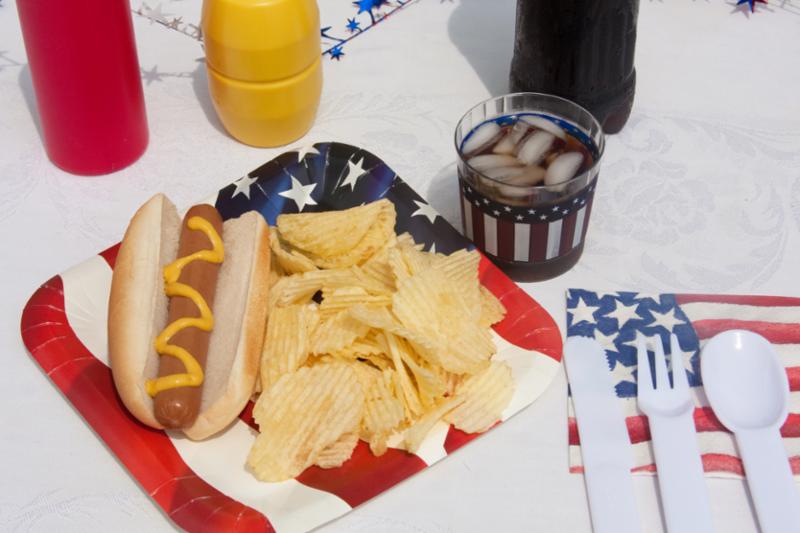
hotdog_picnic.jpg
LISOA END OF SEASON PICNIC

Saturday, June 5, 2021
4:00 p.m. - 7:30 p.m.
Please RSVP
John Tesh - Intelligence For Your Life
An idea to improve your daily happiness comes from Dan Buettner in his book The Blue Zones of Happiness. He recommends that you optimize your home environment to boost your pride. Create a "pride shrine".

A “pride shrine” is a place with family photos, mementos, and objects that display your accomplishments. A place in your house that you pass a lot where you put items that trigger pleasant memories.

It is comprised of things that remind you of where you came from. Every time you walk by, you’ll be rewarded with a surge of pride and a reminder of how you fit into the world. So maybe it has a picture of your dad in his uniform from the war, a seashell you found on your last family vacation, a paw print of your beloved dog who passed away.

Buettner says that the happiest cultures in the world feel a connection to their ancestors and their own personal history.

The primary role of the official is to ensure fair competition which is conducted in a positive, safe and healthy environment and that actions of the competitors, coaches and other team personnel are in compliance with the rules.
The purpose and goals of the LISOA and its members shall be to:  
Officiate all meets in a competent and professional manner.
Have its members actively work to improve interscholastic swimming and diving officiating.
Provide a consistent interpretation and administration of interscholastic swimming and diving rules.
Service and collaborate with the swimming and diving community for the improvement of swimming and diving.
The official must establish the best possible competitive climate for fair competition with the attention on the athletes, rather than on the official. The conduct of each official affects the public’s attitude toward all officials. Therefore, every official must uphold the honor, integrity and dignity of the profession.
OUR OFFICERS
President:
George Fleckenstein
Vice President:
Nelson Gonzalez
Secretary:
Christine Duong
Treasurer:
Barbara Wendt
Directors:
Doug Virkus
Larry Wachter
Rules Interpreter:
Bob Kersch
Past President:
Frank Dowd
OUR CHARTER MEMBERS (1957)

Charlie Schlegal
George Columbo
Jim McAllister
Dick Atwater
Jack Reilly
Frank Krayer


NYSCSO Distinguished Service Award Members

Laurette Tekverk (2020)
Jim McAllister (2019)
Doug Virkus (2011)
Mush Masters (2008)
Pete Moeschen (2004)
Stan Adler (1993)
Bob Kersch (1990)

liswimofficials.com