|
Living Faithfully in “Exile”
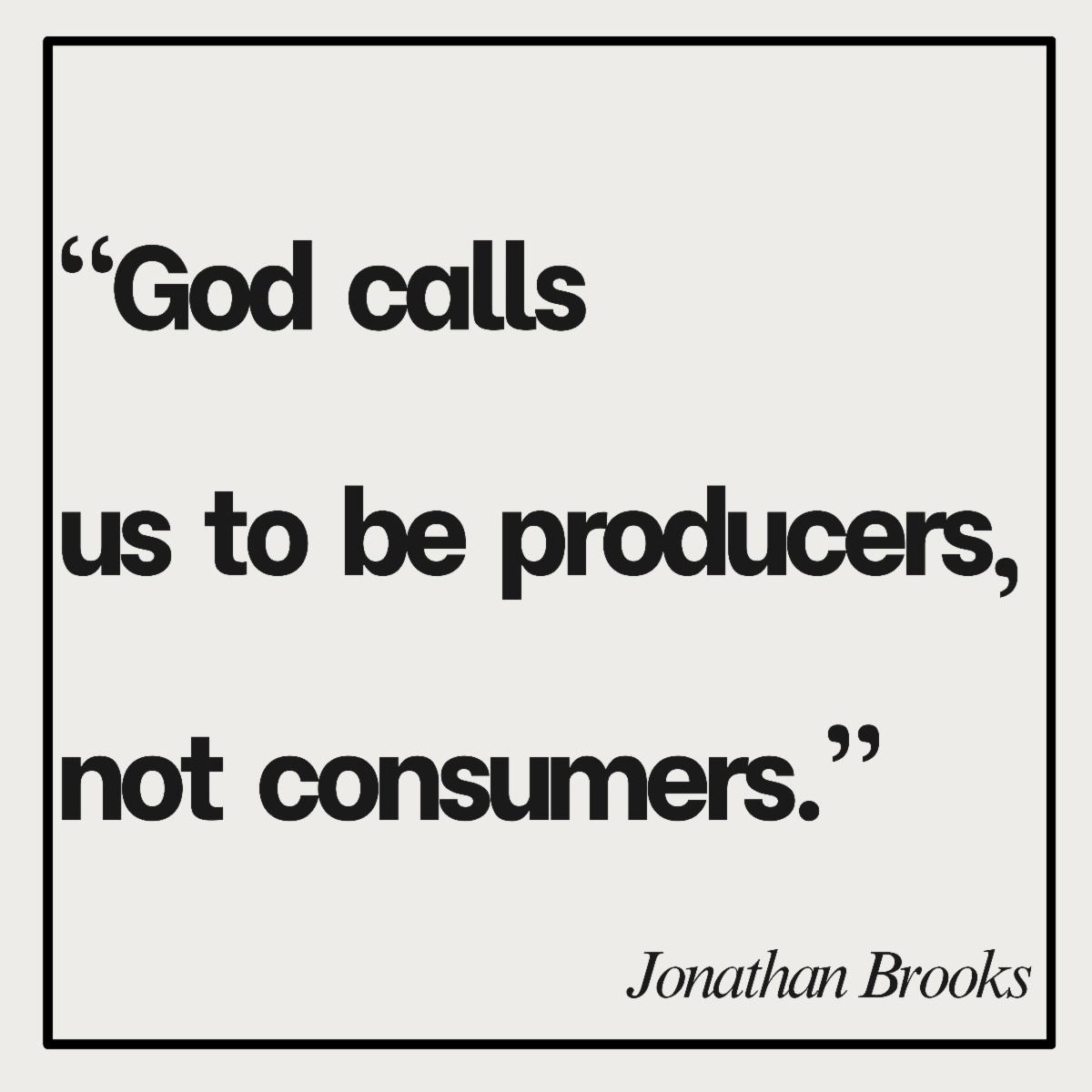
Jonathan Brooks, in The Church Forsaken, reminds us that God calls us to be producers, not consumers. That simple phrase carries deep weight for the church today. Many of us feel as if we are living in exile—overwhelmed by global crises, political division, climate anxiety, and ongoing trauma in our communities. Like our faith ancestors in Babylon, we are in a place we do not want to be.
Amid that unwanted place, the prophet Jeremiah speaks a surprising word from God: “Build houses and live in them; plant gardens and eat what they produce… seek the welfare of the city where I have sent you into exile, and pray to the Lord on its behalf.” (Jeremiah 29:5–7) Even in exile, God calls the people not to withdraw into fear or passive survival, but to plant, build, eat, and seek the flourishing of the place where they are. In other words, God calls them—and us—to be active producers of life, hope, and the common good.
Exile, exhaustion, and the consumer story
Brooks describes exile as “being where you don’t want to be.” That definition resonates with our churches and the wider Florida Conference. Many clergy and congregations feel stretched thin, grieving losses, and unsure about the future of institutional church life. In that weariness, it’s easy to slip into a consumer posture: asking, “What will make this easier for me? What will make people happy enough to stay?” rather than, “What is God asking us to create here and now?”
We swim in a culture that relentlessly focuses on consumer happiness. We are conditioned to evaluate almost everything—products, meals, experiences, even relationships and churches—through the lens of personal satisfaction. We are inundated with invitations to consume, upgrade, and discard more. That story forms us spiritually, whether we name it or not.
The cost of consumer religion
A consumer mentality inevitably seeps into the life of the church. It sounds like:
- “What can the church do for my family and me?”
- “Does worship meet my needs?”
- “Is this ministry ‘worth it’ if the numbers don’t meet my expectations?”
In this frame, congregations become spiritual service providers, clergy become religious content creators, and members become customers with preferences to satisfy. This posture not only exhausts pastors and lay leaders but also diminishes the call to discipleship. It trains us to think of faith as something we receive and consume rather than a life we actively co-create with God and one another.
The consequences are not only spiritual but also ecological. Our consumer culture has overwhelmed the earth with our trash. We consume products, meals, and experiences without considering the impact on land, water, and neighbors—human and non-human. When the church mirrors that mentality, we risk blessing patterns that are literally choking God’s good creation.
Called to cultivate, not just consume
Jeremiah’s word in exile invites a shift from consumers to producers: “plant gardens and eat what they produce.” The people are called to cultivate life where they are, not merely to survive on what is handed to them. For today’s church, a producer mentality sounds like:
- “How can I share my gifts so that the church’s mission is fulfilled?”
- “What can we create together to bear witness to God’s reign here in Florida?”
- “How can our congregation foster hope, justice, and healing for our community and our planet?”
To be producers is not to “produce” in the capitalist sense of relentless output and burnout. It is to join God in cultivating the conditions in which people, neighborhoods, and ecosystems can flourish. It is to see ourselves as stewards, gardeners, and co-laborers with Christ, not as spectators or critics.
Eastertide Spiritual Practices
For congregations and clergy, this call invites very tangible shifts.
1) Reframe the questions we ask
- Shift from “How do we attract more people?” to “How do we deepen our capacity to bless this place?”
- Move from “What do people want from church?” to “What gifts has God already placed among us for our neighbors?”
2) Name and challenge consumer patterns
- Preach and teach explicitly about consumer culture and its spiritual impact, including its effect on our relationship with the earth.
- In leadership meetings, gently ask, “Is this a consumer or a producer question?”
3) Cultivate ecological discipleship
- Connect Jeremiah’s call to plant and build with concrete creation care practices in your local context.
- Encourage ministries that reduce waste, share resources, and honor the limits of the land and water that sustain us.
4) Form producer-minded disciples
- Help members discern their gifts and callings, then create real avenues for those gifts to shape the congregation’s life and mission.
- Celebrate stories of people who have moved from “What can I get?” to “What can I help build?” within the life of the church.
5) Care for clergy as co-producers, not vendors
- Resist the temptation to treat pastors as spiritual vendors whose job is to keep people happy and entertained.
- Encourage clergy to lead as cultivators of community capacity, not merely providers of religious goods and services.
In a traumatized and weary world, God’s call to be producers may feel counterintuitive, even overwhelming. Yet, like the exiles in Babylon, we find that planting, building, and seeking the city’s welfare is precisely how God sustains us. As we move from consumers to producers—of justice, mercy, beauty, and care for the earth—we bear witness to a different story, one in which God is still at work, even in places we never chose.
Rev. LaTrell Harrison
ACM Search and Call and Congregational Care
Florida Conference United Church of Christ
May 7, 2026
|