Rail Workers Weekly News Digest
Number 16 - July 9th, 2019
|
|
Below is a series of articles compiled over the previous week.
They are of interest to railroad workers.
_____________________________________________
|
|
2019-16 Article 1
DOT Says Unions Can't Block Use Of Mexican Rail Crews
In a brief filed Friday, the government said there's no basis for the court to allow the unions — the
Brotherhood of Locomotive Engineers and Trainmen
and the transportation division of the International Association of Sheet Metal, Air, Rail and Transportation workers — to continue the suit, arguing that the unions haven't identified a specific agency action they are challenging.
Read more ...
|
|
2019-16 Article 2
AAR: U.S. rail traffic tumbled for fifth-straight month in June
U.S. railroads remained in a rut last month. June was the fifth-straight month that their carloads and intermodal traffic declined on a year-over-year basis.
Combined U.S. carload and intermodal originations dropped 6.3 percent to 2,099,368 units. Only four of the 20 carload commodity categories tracked by the AAR posted gains in June, including petroleum and petroleum products, up 18.1 percent, and nonmetallic minerals, up 5.1 percent.
Read more ...
|
|
2019-16 Article 3
Medical fitness-for-duty standards: Where are they?
On June 28, 2016, at 8:21 AM CDT on the barren plains of West Texas, two BNSF freight trains collided, head-on, at a combined speed of approximately 100 mph. The incident claimed the lives of three train crew members and caused tens of millions of dollars in damage to equipment and collateral cost. Three years later, the
National Transportation Safety Board (NTSB) finally released a Railroad Accident Brief on this tragic incident.
Make no mistake, this and several other similar incidents were not “accidents.” They were the predictable result of the railroad industry’s failure to monitor the medical fitness-for-duty of train operating personnel. As a result, some people are operating trains, putting themselves and others at risk, when they are not medically fit for duty.
Read More ...
|
|
2019-16 Article 4
New GAO Study Confirms Trains Are Getting Longer and Will Likely Continue to Increase in Length in Coming Years
Today, a group of House lawmakers, led by Chair of the House Committee on Transportation and Infrastructure Peter DeFazio (D-OR) and Chair of the Subcommittee on Railroads, Pipelines, and Hazardous Materials Daniel Lipinski (D-IL), announced the results of a Government Accountability Office (GAO) study on the impact of train lengths. The study showed that while the average train length has increased by about 25 percent since 2008, there is little to no data being collected to measure the impacts on communities or whether train operators are receiving adequate safety training to handle longer trains.
In recent years, Members of Congress have noticed an uptick in the number of constituents reaching out to express concern about trains blocking grade crossings in their communities. In 2017, Chair DeFazio and others
asked GAO
to take a closer look at the length of trains, noting that while available data showed the average freight train had about 70 cars, press reports indicated some railroads were operating trains with close to 200 cars or more that were more than two miles long. Longer trains can create unusually long delays at grade crossings and may pose safety risks to train crews and the public, including impeding the response time for emergency responders.
In its study released today, GAO made two recommendations:
Read More ...
|
|
2019-16 Article 5
Sen. Udall urges Amtrak plan to preserve, modernize long-distance passenger rail
During an oversight hearing of the Senate Commerce Committee last week, U.S. Sen. Tom Udall (D-NM) addressed Amtrak CEO and President Richard Anderson, demanding details on efforts to preserve and improve long-distance passenger rail.
Udall pressed the Amtrak official for blaming Congress and others over budgetary concerns while failing to engage its stakeholders. His criticism follows news that Amtrak is considering breaking up long-distance routes, though it backed down from doing so during Fiscal Year 2019 after a fight over the Southwest Chief rail line service.
“When Congress rejects Amtrak’s corridor plan, it appears that Amtrak will once again be left without a real vision for the National Network. That is deeply disappointing. Amtrak must develop a visionary and bold plan to preserve and improve long-distance rail for the American public,” Udall said.
Read More ...
|
|
2019-16 Article 6
Blue-Green Alliance: Solidarity for Climate Action
The BlueGreen Alliance and its labor and environmental partners are committed to the vision, principles, and policies outlined in this document, and are committed to a process of working together to identify concrete solutions to achieve these goals.
Americans face the dual crises of climate change and increasing economic inequality, and for far too long, we’ve allowed the forces driving both crises to create a wedge between the need for economic security and a living environment. We know this is a false choice—we know that we can and must have both, and we need a bold plan to address both simultaneously.
Read more ...
|
|
2019-16 Article 7
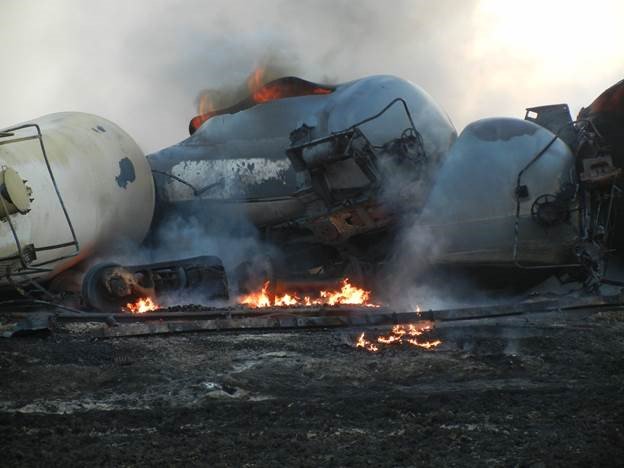
'Bomb Trains,' a New Book on the Deadly, Ongoing Threat of Oil by Rail
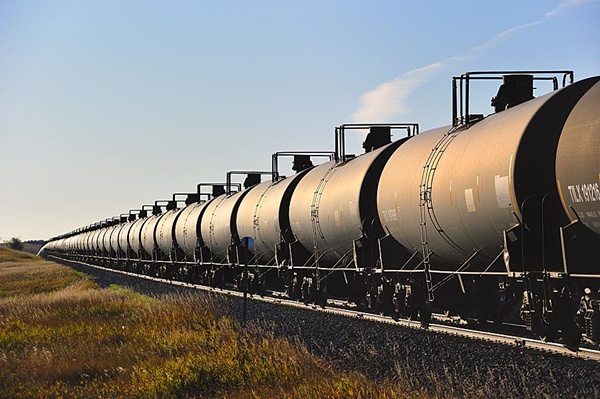
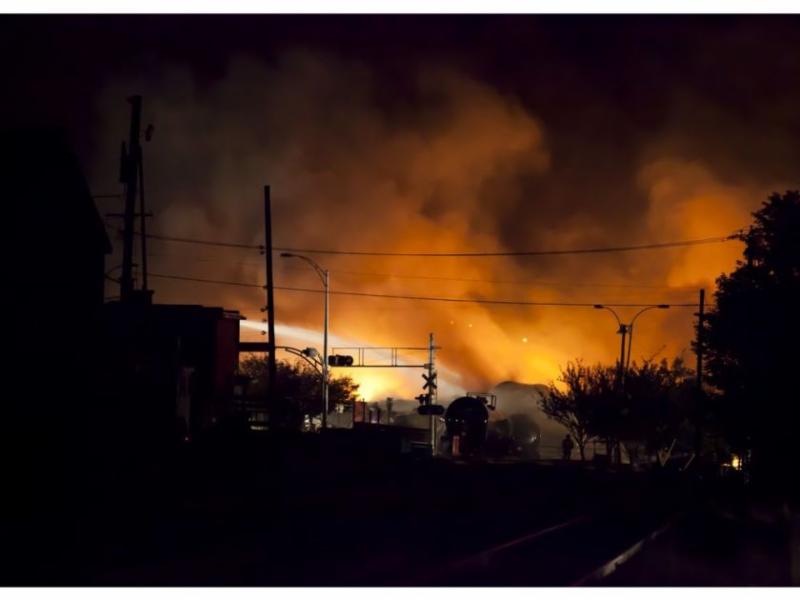
On July 6, 2013, a train hauling crude oil from North Dakota's Bakken region derailed in Lac-Mégantic, Quebec, resulting in fires and explosions that killed 47 people and wiped out a large part of the small Canadian town's center. At the time I was living in Albany, New York, which had become
a major distribution point
for Bakken oil delivered to the Port of Albany in mile-long trains like the one that devastated Lac-Mégantic. In the six months following the deadly disaster, several more trains of Bakken oil derailed and exploded across North America.
Unfortunately — as I explain in the book — little has been done to improve the safety of moving oil and ethanol by rail since then, and the risks to people and the environment remain as great as they were in 2013. After the Lac-Mégantic disaster, the oil and rail industries and regulators all made a great show of how they were addressing the risks of crude oil trains.
In practice, however, the oil and rail industries and their lobbyists — along with cooperative regulators and politicians — made protecting industry profits the top priority. The regulatory systems in the U.S. and Canada are
so deeply flawed
that industry controls the process and prevents the addressing of known risks.
Read more ...
|
|
2019-16 Article 8
6 Years on: Why we must never forget the Lac-Mégantic rail disaster
Six years ago, on July 6, 2013, at 1:14 a.m., a runaway train loaded with volatile oil derailed in the centre of the small Québec town of Lac-Mégantic, its disgorged contents erupting in a succession of fiery explosions which one witness described as “the vomiting bowels of hell.”
The death and destruction wrought on that apocalyptic night was unprecedented on Canadian soil. It killed 47 people, orphaned 27 children, incinerated the town centre and spilled six million litres of toxic Bakken shale oil into the environment. The disaster’s damaging health and environmental effects continue to plague the community.
Though its circumstances were unique, Lac-Mégantic shares similar characteristics with other industrial disasters: negligent corporate practices; vague or non-existent rules and regulations; inadequate oversight and/or enforcement; and an under-resourced regulator deferential to an industry with broad powers to regulate itself.
Read more ...
|
|
Railroad Workers United
Solidarity -- Unity -- Democracy
|
|
|
|
|
|
|