Elmo Peeler Note-for-Note Piano Transcriptions |
|
|
Greetings!
Today is the first day of August and time again for my monthly newsletter, to keep you informed of recent transcriptions and other news of the last month.
I apologize for the lack of a newsletter last month, which was caused by my coming down with Omicron in the middle of June. Although it lingered, lasting about a month, I'm now back to 100%.
|
|
|
|
My two new "musical offerings" this month are transcriptions of two exceptionally beautiful Bach pieces:
1) Violin Concerto in E, BWV 1042 - slow movement
2) Double Violin Concerto in D Minor, BWV 1043 - slow movement
They sound great not only on an Electronic Keyboard but also on piano.
I wish that "Papa Bach" himself could hear how magnificent his music sounds using today's technology (electronic keyboards). I believe he'd approve.
|
|
BTW, to make sure that my email doesn't end up in your Spam folder, please add me to your Contact list and/or mark my email as "Not Spam".
Note that every Title Heading is clickable.
|
|
ALL of the Sheet Music listed on my website has been personally transcribed by me, and guaranteed to be note-for-note perfect.
Whether you:
- have a cover band and want to get your keyboard parts exactly correct,
- are a professional who wants to study the styles of rock's greatest keyboard players, or
- are a hobbyist that wants to learn how to play pop/rock and great piano music,
...these note-for-note transcriptions will prove extremely helpful.
|
|
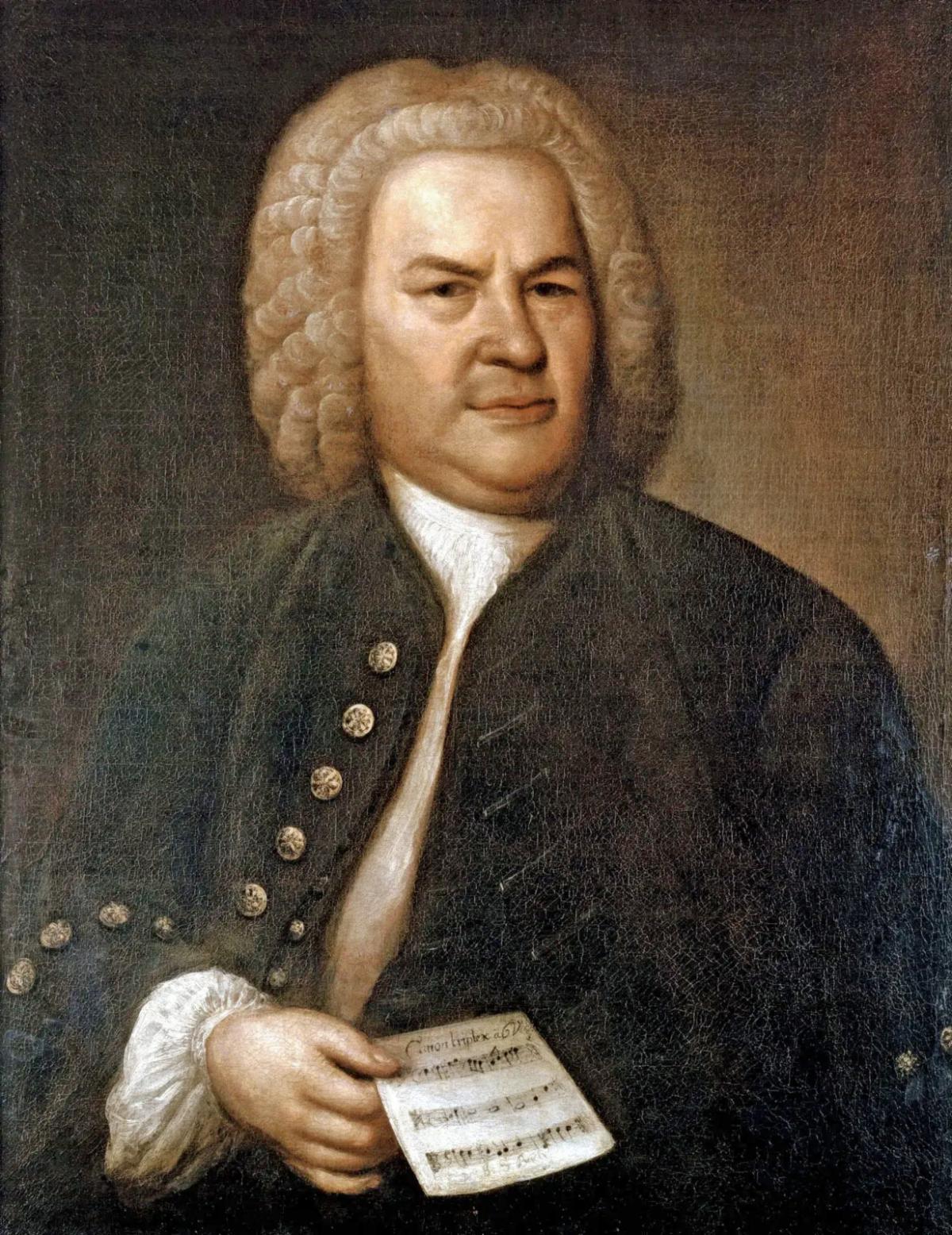
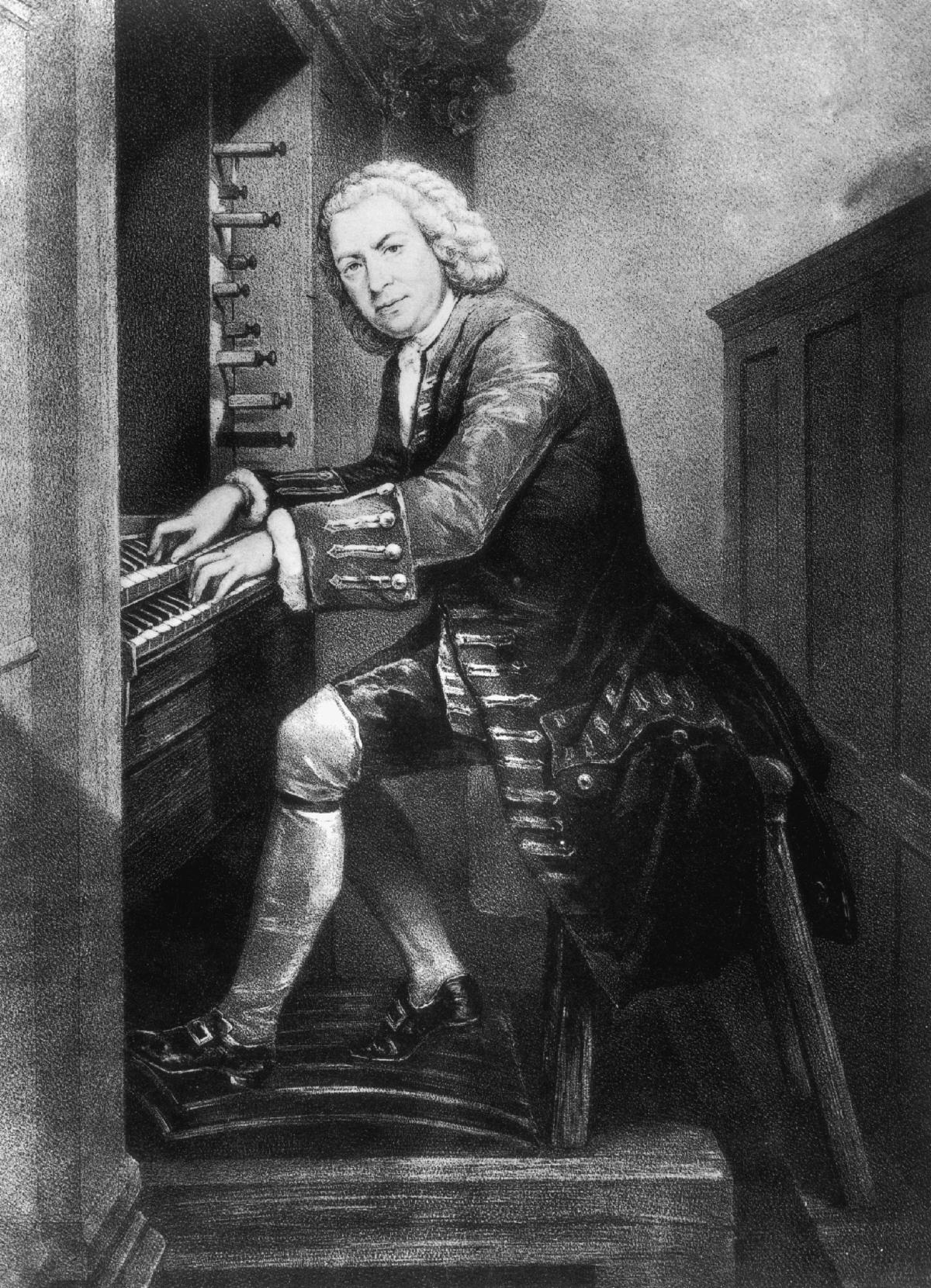
Born in Germany in 1685, Johann Sebastian Bach came from a family of musicians, stretching back several generations. His father, Johann Ambrosius, worked as the town musician in Eisenach, and taught young Johann to play the violin. At the age of seven, Bach went to school where he received religious instruction and studied Latin and other subjects. By the time he turned 10, Bach found himself an orphan after the death of both of his parents. His older brother Johann Christoph, a church organist in Ohrdruf, took him in, provided some further musical instruction, and enrolled him in a local school. Bach stayed with his brother's family until he was 15. Bach had a beautiful soprano singing voice, which helped him land a place at a school in Lüneburg. After his voice changed, Bach switched to playing the violin and the harpsichord.
He landed his first job as a musician in 1703 (age 18) at the court of Duke Johann Ernst in Weimar. There he was a jack-of-all-trades, serving as a violinist and at times, filling in for the official organist.
Bach had a growing reputation as a great performer; and it was his great technical skill that landed him the position of organist at the New Church in Arnstadt, where he was responsible for providing music for religious services and special events as well as giving music instruction.
|
|
|
An independent and sometimes arrogant young man, Bach did not get along well with his students and was scolded by church officials for not rehearsing them frequently enough. And he didn't help his situation when he disappeared for several months in 1705. While he only officially received a few weeks' leave from the church, he traveled to Lübeck to hear famed organist Dietrich Buxtehude and extended his stay without informing anyone back in Arnstadt.
In 1706, he married his cousin Maria Barbara Bach, with whom he had seven children. After Maria died in 1720 Bach married a singer, Anna Magdalena Wülcken, with whom he had thirteen children.
In 1707, Bach gladly left Arnstadt for an organist position at the Church of St. Blaise in Mühlhausen. Unfortunately Bach's musical style clashed with the church's pastor. Bach created complex arrangements and had a fondness for weaving together different melodic lines. His pastor believed that church music needed to be simple.
After a year in Mühlhausen, Bach won the post of organist at the court of the Duke Wilhelm Ernst in Weimar. He wrote many church cantatas and some of his best compositions for the organ while working for the duke. During his time at Weimar, Bach wrote "Toccata and Fugue in D Minor" and also composed the cantata "Herz und Mund und Tat," which included "Jesu, Joy of Man's Desiring".
In 1717, Bach accepted a position with Prince Leopold of Anhalt-Cöthen. But Duke Ernst had no interest in letting Bach go and even imprisoned him for several weeks when he tried to leave. In early December, Bach was released and allowed to go to Cöthen.
Prince Leopold had a passion for music, played the violin, and often bought musical scores while traveling abroad. While at Cöthen, Bach devoted much of his time to instrumental music, composing concertos for orchestras, dance suites and sonatas for multiple instruments. He also wrote pieces for solo instruments, including some of his finest violin works. His secular compositions still reflected his deep commitment to his faith with Bach often writing the initials I.N.J. for the Latin In Nomine Jesu, or "in the name of Jesus," on his sheet music.
In 1721 Prince Leopold got married, but his new bride discouraged the prince's interest in music. Around this time Bach completed the first book of "The Well-Tempered Clavier" to help students learn certain techniques and methods. However, in 1723 the prince dissolved his orchestra and Bach had to turn his attention to finding work.
After auditioning for a position in Leipzig, Bach signed a contract to become the organist and teacher at St. Thomas Church. With new music needed for services each week, Bach threw himself into writing cantatas. The "Christmas Oratorio," for example, is a series of six cantatas that reflect on the holiday. Bach also created musical interpretations of the Bible using choruses, arias and recitatives. These works are referred to as his "Passions," the most famous of which is "Passion According to St. Matthew." Written in 1727 or 1729, it tells the story of the Gospel of Matthew. The piece was performed as part of a Good Friday service. One of his later religious masterworks is "Mass in B minor." In 1733 he had developed sections of it, the Kyrie and Gloria, which were presented to the Elector of Saxony. Bach did not finish the composition, a musical version of a traditional Latin mass, until 1749. It was not performed during his lifetime.
By 1740, Bach was struggling with his eyesight, but he continued to work. He was even well enough to travel and perform, visiting Frederick the Great, the king of Prussia in 1747. He played for the king, making up a new composition on the spot. Back in Leipzig, Bach refined the piece and gave Frederick a set of fugues called "Musical Offering." In 1749, Bach started a new composition called "The Art of Fugue," but did not complete it. He tried to fix his failing sight by having surgery the following year, but the operation ended up leaving him completely blind. Later that year, Bach suffered a stroke. He died in Leipzig on July 28, 1750. During his lifetime, Bach was better known as an organist than a composer. Few of his works were even published during his lifetime. Still Bach's musical compositions were admired by those who followed in his footsteps, including Mozart, Beethoven and Chopin. He is now recognized as one of the greatest musical geniuses of all time.
Here are my new J.S. Bach transcriptions/arrangements:
|
|
|
|
This month my two new transcriptions/arrangements are of exquisitely gorgeous Bach compositions - the slow movements from his Violin Concerto in E and his Double Concerto in D Minor.
These two classics have never before been made available for electronic keyboard, complete with Bach's original orchestration for string orchestra.
These arrangements/transcriptions could accurately be called transcriptions, in the sense that they precisely reflect Bach's original scores - no non-Bachian notes have been added, no sections have been tampered with.
To ensure their accuracy/authenticity I created them using hand-written manuscripts from the 1700s as the source.
|
|
Albert Schweitzer said, "Every amateur should know the wonderful peace of the Largo Ma Non Tanto in F major" (he was referring to the slow movement of the Double Violin Concerto).
In the first volume of his 1873 Bach biography, Philipp Spitta wrote of the Double Violin Concerto, "In the middle movement, a very pearl of noble and expressive melody, the orchestra is used only as an accompaniment, as was usual in the adagios of concertos."
If you have an electronic keyboard with string patches available, these transcriptions/arrangements will allow you to be both the violin soloist(s) and the accompanying string orchestra. And if you prefer to play them on a piano, they sound wonderful on just a piano.
|
|
BTW, MIDI files are available in addition to the PDF sheet music for both new transcriptions. |
|
For Super-clean Articulation
|
|
|
|
Because of my bout with Omicron I have not had time to create a new exercise. However, you may find this Bach-inspired exercise helpful.
Every pianist strives to play cleanly and with precise, clear articulation. In the classical-music world no composer requires crisp articulation more than Johann Sebastian Bach, in whose music the damper pedal is rarely used and where "the fingers do the walking".
This exercise was inspired by a finger pattern Bach used in his Invention No. 8 in F major, of which Ferruccio Busoni, the great Romantic-era pianist, says, "the performance of this little virtuoso piece demands the utmost precision."
There are three sections, all of which are in sixths.
The first section - using 3/4 meter like the Bach Invention - states the motif that Bach himself used (although in a different key), and ascends step-wise up an octave and then back down.
|
|
The second section, in 4/4, is slightly more challenging. Bach's 16th-note figure is played only once, not three times, before immediately beginning its ascent - up an octave and then back down. The third section adds a higher note in the Right Hand and a lower note in the Left Hand, requiring the 5th fingers to become involved - again ascending up and down an octave. These three sections, progressively more difficult, should help improve one's articulation, finger independence, and clarity in 16th-note runs.
This exercise is available as both a sheet-music PDF and as a MIDI file.
|
|
(to listen to it, click here) |
|
The Hangout Place for Gospel Classics
|
|
You don't have to be from the Deep South to love Gospel piano, nor do you need to belong to any particular religion. All you have to have is a love for wonderful old-time, swinging, uplifting piano-playing.
Leon Russell, Billy Preston, Richard Tee and Ray Charles, some of the greatest keyboard players ever, loved the style and infused their own performances with Gospel licks and rhythms.
Inspired by the wonderful playing of the portly Associate Pastor/Musical Director of my childhood's Baptist Church deep in the piney woods of Mississippi, in recent years I've transcribed and/or arranged a few Gospel classics.
This little corner of my newsletter is where I'll keep you informed of my latest efforts to share that old-time Gospel sound.
Here are my Gospel transcriptions and/or arrangements, plus some exercises:
Full-blown Gospel:
Heavily Gospel Influenced:
Moderately Gospel Influenced:
Gospel-related Exercises:
|
|
Helpful for Those that Don't Read Sheet Music Well
|
|
Most of my transcriptions have heretofore been available only as sheet music in PDF's. That is gradually changing - some are now also available as MIDI files, which can be especially helpful for those who would prefer to listen to them than to read the sheet-music notation.
This section of my newsletter is where I'll keep you informed of which transcriptions and exercises are available as MIDI files.
BTW, if you'd like my sheet music in a MIDI file, just let me know which one(s).
Here are the currently available MIDI files of my transcriptions, arrangements, and exercises:
MIDI Files of Rock, Pop & Classical Transcriptions:
MIDI Files of Exercises:
|
|
If you're using a vintage synthesizer, please check out our synth patches here.
These are the most highly-organized and best-sounding synth patches available anywhere, guaranteed. Get the most out of your vintage hardware with these large patch libraries:
Ensoniq
Kawai
Korg
Roland
Yamaha
Even if you don't use the actual hardware synthesizers, there are software emulations that will allow you to play these patches on your computer, as VSTI's in your sequencer. These include:
Nils' K1v – Kawai K1 Emulation Plugin
Korg Legacy Digital Edition (for M1 & T1 synths)
Native Instruments FM8 (for DX7 synths)
Aurora FM (for DX7 & TX81Z synths)
SQ8L (for ESQ-1 synths)
|
|
Want to learn how to play piano better? I'll be happy to help you. And if you're not happy with your first lesson, there will be no charge.
By means of Skype lessons (or in-person if you're in L.A.), I can coach you and help you to improve your technique, your rhythm, your ability to improvise, your knowledge of music theory, your sight-reading, and to develop relative pitch.
|
|
- The Beach Boys
- Rod Stewart - All 'Unplugged' Concerts
- Ricky Nelson - Stone Canyon Band
And I've also won classical piano competitions performing Beethoven, Rubinstein and Saint-Saens' Piano Concerti. See me playing here. "Josie's Boogie" is quite the virtuoso dramatic minor-key showpiece; check out the ascending double-octave run at the ending... :)
Thanks to the internet, I can help you play piano better - rock or classical, by ear or by note.
Or if you live near the Hollywood Hills, I'll teach you in my home or yours.
1) Your musical background
2) Where you are currently, musically-speaking
3) Your musical goals
|
|
|
My students include members of:
- Weezer (Rivers & Brian)
-
Vampire Weekend (Ezra & newest addition, Greta)
- Incubus (Mike)
- The Strokes (Nick)
- Rooney (Robert)
-
Jason Schwartzman (Mozart in the Jungle)
- Courteney Cox
- Pablo Dylan
|
|
|
|
|
"I have purchased many of your transcriptions and exercises over the years and they are great! I have learned so much from your work and it has been so much fun learning these songs that would take me hours and hours to figure out on my own. THANK YOU!
I play in a classic rock cover band...
Thanks again for all the music!
- Deb G.
|
|
|
Los Angeles, CA
323-650-6602
|
|
|
|
|
|
|
|