We will be closed on Monday September 5th for Labor Day
In addition, please mark your calendars as we will be closed on Monday and Tuesday
September 26 & 27th for a holiday and long weekend
|
|
Change Someone’s Day
Flex your superpower.
A few words show you care.
The signs haven’t been put up. The front desk hasn’t arrived. The displays for the dining table tops are not ready. Samples for the AF Sofa Line are still in the works. Many of the pieces for the new AF Outdoor Collection are patiently waiting for a ride up North from Charlotte to their new 4th floor showroom home. There remain uncovered spots on walls and floors, some with dangling but capped wires, edgily anticipating the contractor’s completion. The plumbers seem to always be waiting for a part; as do the HVAC people. The carpet sits embarrassed at the burn marks caused by a rushing iron workers' welds wondering when it will be replaced. The designer’s library on the third floor yearns for her banquettes, tables, and computers. A resurrected family lighting line longs for the electrician to provide energy to allow her bulbs to glow. Doors remain on order with an ever-sliding promised date. The glass face of the building remains hidden behind a neighbor’s extended scaffolding longing for the return of the sun and views to the street outside. And the vendors in unison chant the mantra of the day, “We’re sorry, but welcome to the world of supply line shortage construction”.
Frustrating? For sure! But at the same time, we are deeply grateful to be in our own home, a new showroom at 981 Third Avenue next to the front entrance of the D&D. The seamless and flush LED lighting supplied by our friends in Canada extends from front to back on each floor and provides a nearly daylight experience. The new backlit framed chair boxes allow each chair to experience stardom unencumbered by a neighbor trying to edge in on her space. And with 150 chairs on display, there is absolutely something for everyone and if not, the wall computer allows one to enter the archives for thousands of more options. The second-floor fabric bar and display with 300 leathers, 300 mohair and wool samples, 1000 faux leathers and lots of boucle swatches where designers can pull samples off the wall and run, already is a huge hit. There are already as many sofas and occasional chairs as we had on the 17th floor next door. And with ten thousand feet, more than twice the showroom space we’ve ever had, the potential is incredible.
And although it’s great to be appreciative, it often has a hard time tempering the frustration of delays, broken promises and excuses, be they valid or not.
But every cloud has a silver lining and it has given us a chance to more deeply empathize with our designers and our clients as they go through their own construction related sagas which in some cases have evolved into chronicles and others into scripts for horror shows. When we stand in their shoes and experience hearing the same words and stories, we are less dismissive and can better feel for what they are faced with. Needing to be out of one space while a new space remains unready or barely ready, requiring one to live through never ending construction, painting, dust and dirt is no fun.
But more than supply line and construction issues, thinking about this reminded me that everyone is dealing with something; everyone no matter how green the grass appears on their lawn has a trash bag of trouble somewhere in their lives. Experience has taught me that when we imagine someone is going through some difficult time, they probably are. And that trouble may be with health or family, it may be financial or emotional. A friend’s young son who after completing a dozen years of schooling, residency and fellowships explained to me that the one thing he learned while becoming a doctor is that too often, we tend to dismiss and undervalue the troubles others are experiencing. Too often, he heard patients complaining about this or that and doctors might offer some band aid solution which the doctor thinks will help, but has in no way done anything to relieve the patient of their underlying fears and anxiety. By dismissing a complaint as “nothing”, we hope to get them to focus on something else but instead accomplish the opposite and pinpoint their focus onto the troubles. In fact, they will typically build upon those troubles as the patient’s mind echoes recurring thoughts of being alone with no one who even cares.
But wait, we as friends, family and fellow human beings do care. We feel their pain, even if it’s simply an inkling of the pain. So why is our typical response paralysis and an inability to act?
I wonder why we do that? And I believe that when we see someone going through something, we feel for them, but we don’t have a real solution. Strange enough, but they are going through a problem and we are the ones who experience fear, confusion and guilt. We feel completely powerless and as a result, we do nothing. And worse than that is that many times the shame in being powerless leads us to hide. We try to come up with ways not to see that troubled person because we don’t know what to say, we don’t know what to do and the embarrassment is overwhelming
I was discussing this with a friend who was blessed with success in his life and now dedicates his time to helping others. Not a day goes by without people laying their problems on his doorstep anticipating he will make everything go away. Yes, we can sometimes offer advice, connect them with someone who can help or personally assist. And at first the disappointment that all he could often do was place a drop of water into an empty ocean of difficulties was overwhelming. But he realized there is one thing we can do. Every one of us is capable. And most of us don’t do it. Any situation where we see a problem, we can at least show that we care. We can lend an ear to listen, a shoulder to cry on and a heart to feel for them. Of course, we should take whatever steps we can within our capabilities, but when we only face dead ends, we shouldn’t run and hide.
We might say, we don’t have the solution. What they need is not in my back pocket. And I don’t even know who can help. Then what?
We all walk around with a cell phone. Some are addicted to their Instagram or Tik Tok apps, their Facebook feeds or their WhatsApp groups, but perhaps we can try something else with it and with that flex a superpower we all have. You can send a three-sentence message to someone else and change their day. You have “change their day power” in the palm of your hands or on your watch or at your keyboard. Sometimes you might seek a diversion with a game or a news article, but if instead, think of someone who would appreciate a three-sentence message, you can change their day.
And no, you won’t be changing their life. You won’t be healing their illness, replenishing their overdrawn bank account or negotiating their divorce settlement, but you will be changing their day. My dad used to tell us that we have a responsibility to help carry another’s yoke. I am not solving, fixing or making miracles, but what I am doing is sharing the burden. Little words show you care.
So, give it a try. Think about someone who could use a word of encouragement, a brief note reminding them that they are in your thoughts. Flex your superpower. Change someone’s day.
Have a great weekend and please write back, and come visit us at our new home at
981 3rd Avenue!
David
|
|
PS: I hope you enjoy the articles we selected this week. We have one from NY Magazine "Are You Interesting Enough to Get Into Jeff Klein’s New Private Club? The Jane Hotel Goes Hollywood." and we included this as we originally did the public area with famed hotelier Sean MacPherson. That's definitely a story we can tell one day. And we will be working on the new incarnation!
There's another from Vanity Fair. How Chef Mario Carbone Built the Most Celebrity-Studded Restaurant on Earth. One thing the article does not mention is that when you are visiting a Carbone restaurant, you are probably sitting on am Artistic chair.
Bloomberg writes about NYC’s Most Expensive Hotel Is Now Aman New York. Here’s a First Look. Another project we are involved with but as usual, we remain a secret source!
Finally Architectural Digest showed an amazing project longtime friend and interior designer Stacey Gendelman which has generated so much interest from designers in the chairs and tables we made for the project titled: Tour a Stunning New York State Home That Was Inspired by Shingle-Style Residences
Finally, the images below are pulled from our Instagram feed, each image links to the model on the website.
|
|
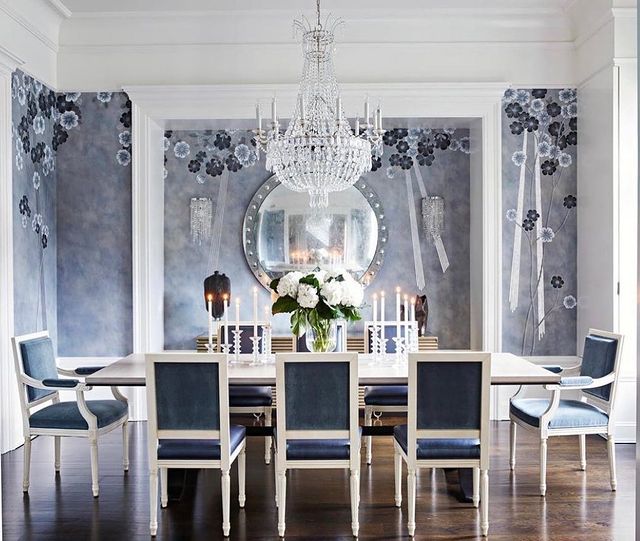
Artistic Frame: Model 2935 Louis XVI Dining Chair
|
|
Artistic Frame: Model 2546 Salo Paolo Dining Chair
|
|
Artistic Frame: Model 2521 Nomad Stacking Chair. Fully Upholstered
Purchasing by THE PARKER COMPANY
|
|
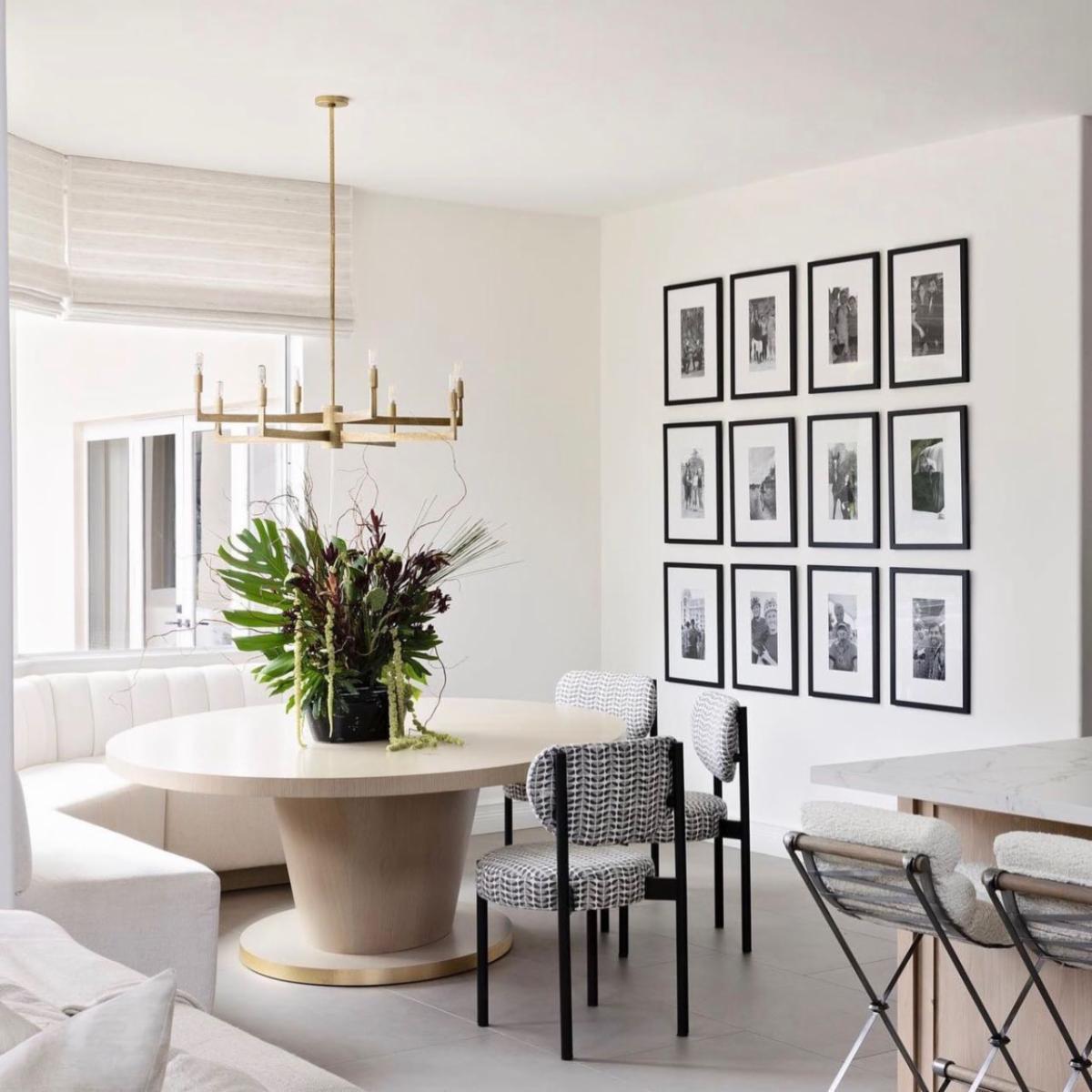
Artistic Frame: Model 5482 Ellipses Sidechair
|
|
Artistic Frame: Model 5450 Jamie Barstool
|
|
How Chef Mario Carbone Built the Most Celebrity-Studded Restaurant on Earth
From Leonardo DiCaprio, Rihanna, and Jay-Z to Kim Kardashian, Barack Obama, and secretive millionaires, it’s as if the rich and powerful simply are not aware that other places exist to get dinner. And it’s all thanks to this man.
VANITY FAIR
|
|
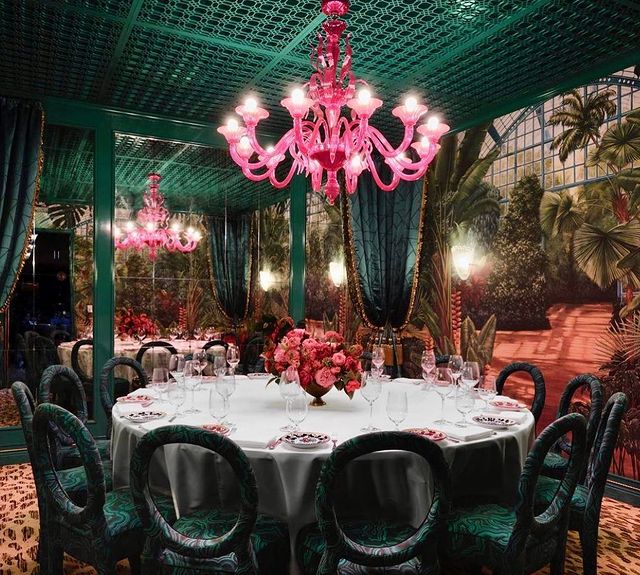
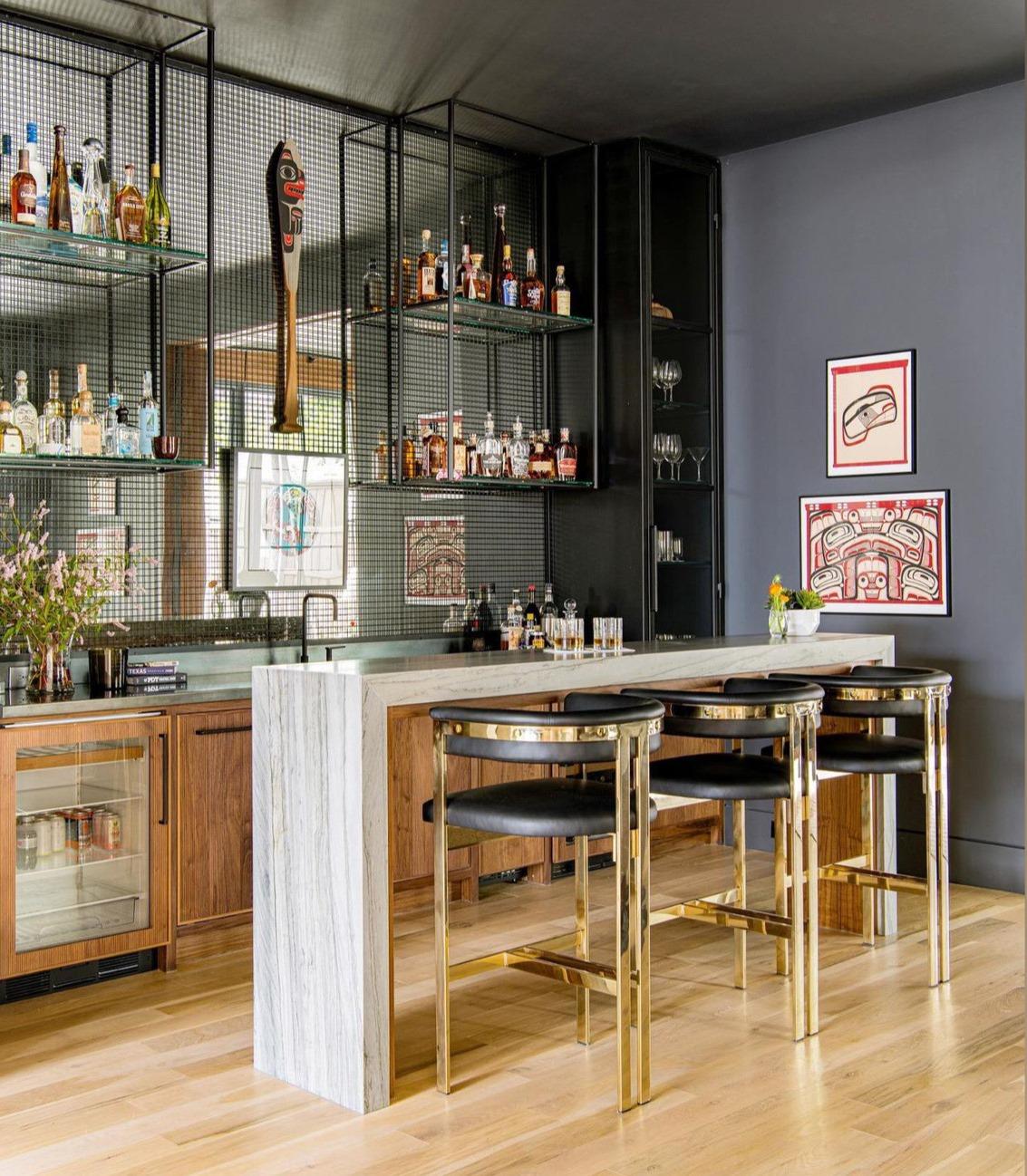
CARBONE MIAMI - Seating by Artistic Frame - Customized 5478 Barstool - By Ken Fulk |
|
How Chef Mario Carbone Built the Most Celebrity-Studded Restaurant on Earth
From Leonardo DiCaprio, Rihanna, and Jay-Z to Kim Kardashian, Barack Obama, and secretive millionaires, it’s as if the rich and powerful simply are not aware that other places exist to get dinner. And it’s all thanks to this man.
During the Formula 1 Miami Grand Prix in May, the owners of Carbone, the decade-old temple to red-sauce dining in Greenwich Village, opened a pop-up underneath a gigantic tent on the beach. Even if this was set to be a huge weekend for the Magic City, this kind of ambition—the kind that prompts one to prop up a cathedral of carbs in South Beach—has been in somewhat short supply since the pandemic crippled large swaths of the restaurant industry. For a lot of reasons Carbone Beach seemed particularly hubristic.
First, there already is an outpost of Carbone in Miami, just a short drive down Collins Avenue, one that’s large enough to pull off close to a thousand covers on a big night. The pop-up went head-to-head not just with itself but with a hundred other global hot spots for customers during the jam-packed race weekend schedule. Then there was the little issue of the cost. To eat at Carbone Beach, the price tag was $3,000 per person. Still, in the days leading up to the races, Jeff Zalaznick, cofounder of Major Food Group, the umbrella company that owns Carbone, was bullish.
“We’ve never seen demand like this,” he said, referring to the restaurant and Miami itself. “It’s going to be a very hedonistic experience.”
Zalaznick knew his market. Over the four-day Carbone Beach pop-up, the guest list was a remarkable cross section of American wealth and celebrity: real estate billionaires Stephen Ross and Richard LeFrak, oil heir Mikey Hess; media mega-dealer Aryeh Bourkoff; Gen Z Marvel hero Hailee Steinfeld; directors Michael Bay and Spike Lee; Derek Jeter; Venus and Serena Williams; Patrick Mahomes; and more. LeBron James alone managed to stop by Carbone Beach on four consecutive nights. Even deposed princelings Ivanka Trump and Jared Kushner were there, enjoying a rare night out insulated from sneering restaurantgoers who can’t afford to drop three stacks to get into dinner.
At 200 heads per night times four, Carbone Beach ostensibly grossed more than $2 million. The brick-and-mortar Carbone down the beach was booked from opening until closing.
At the center of it all is Mario Carbone, a perpetual kid from Queens now approaching middle age, who opened his namesake restaurant in 2013 at the age of 33. All weekend long in Miami—where he relocated with his girlfriend, the powerful TikTok star publicist Cait Bailey, during the pandemic—he was personally plating the rigatoni and flipping the steaks on the grills while also playing politician, greeting VIPs, and introducing the talent onstage.
Throughout the madness, Carbone remained the tastefully five-o’clock-shadowed big shot in chef’s whites, an Italian American culinary god to every foodie with a black card. He wears his restaurant world celebrity with the well-groomed mien of a guy with a few menswear podcasts in the Spotify queue. In fact, his side hustle is a fashion line, Our Lady of Rocco, and like both Carbones—restaurant and restaurateur—it wears its influences—Mean Streets, The Pope of Greenwich Village—on its sleeve. One particular Rocco item might be the key to inner Mario, an item that’s retrograde but forward-thinking, smile inducing, and thoroughly meta-Italian. It’s a simple ribbed white tank for guys that has been called a “wife-pleaser.”
For months, I had been speaking to Carbone in an effort to understand how his name had become shorthand for a very specific kind of luxe dining in the last decade—how he and his cofounders built and are now expanding a supper club that has so consistently lured not just the likes of LeBron and Jeter, Spike and Drake, Jared and Ivanka, but all the various moguls and machers and hypebeasts and influencers in their various wakes. At one point during our series of conversations, I ask Carbone if such extravagance and global influence seemed remotely attainable back when he and cofounder Rich Torrisi decided to open their first Italian joint 13 years ago.
“I don’t think we had any idea how it was going to happen,” Carbone says to me. “But if you would’ve told me and Rich in our late 20s, you guys were going to be fucking big, you’re going to be huge, we would’ve been like, ‘Yeah, you bet your ass.’ ”
Since restaurants gradually started to reopen in the fall of 2020, there’s been no spot on earth more perennially celeb-packed than Carbone. It’s as if the rich and powerful simply are not aware that other places exist to get dinner. This had been building for years; Carbone was the rare room that Leonardo DiCaprio could enter and maybe not be the most famous guy present. But it’s taken on a new dimension of late.
Rihanna’s pregnancy announcement was bookended by visits. Justin Bieber beelined there the day after the Met Gala in September 2021. Kanye West and Julia Fox went on their first date at the Miami outpost on New Year’s Day, and then followed up three days later with another date…at Carbone in New York, as they vamped for the paparazzi. The whole thing bordered on a work of performance art, with Carbone as a backdrop, seen on phone screens the world over. Over the course of a workweek, Page Six wrote no fewer than 17 stories referencing the couple’s dinners there.
The pair could not have chosen a better backdrop, a certain element of metatextual, post-everything exegesis having been baked into Carbone’s ziti from day one. The restaurant delivers its highfalutin versions of classic Italian American comfort food hits—ragu, ravioli, rigatoni, calamari, puttanesca, shrimp scampi, lobster fra diavolo, veal Parmesan—with a side of arch referentiality: the red-tuxedoed captain singing along to Frank while his bazooka arms mix a gigantic Caesar salad; the reddest, spiciest, booziest vodka sauce ever served over noodles on white tablecloth; the courtesy-of-the-chef wink wink nod nod free courses coming out to make you feel like you’re a made man in a mob hang.
The Carbone celebrity complex has been egged on by the dogged pseudo-reporting of the pandemic-era Page Six meets Gawker Stalker that is @deuxmoi, the gossip-spewing Oz of Instagram. In @deuxmoi world, Carbone is akin to this century’s Deux Magots, with Kim Kardashian and Pete Davidson filling in for Simone de Beauvoir and Jean-Paul Sartre.
“I name a lot of different restaurants, and for whatever reason, they just latched on to Carbone, it’s become so synonymous with the account,” one of the founders of @deuxmoi tells me on a phone call. “Does anyone eat anywhere else? I get so excited when someone sends me a picture of their burger or something because I feel like all I post is Carbone.”
Click Image for Link to the full story and images
|
|
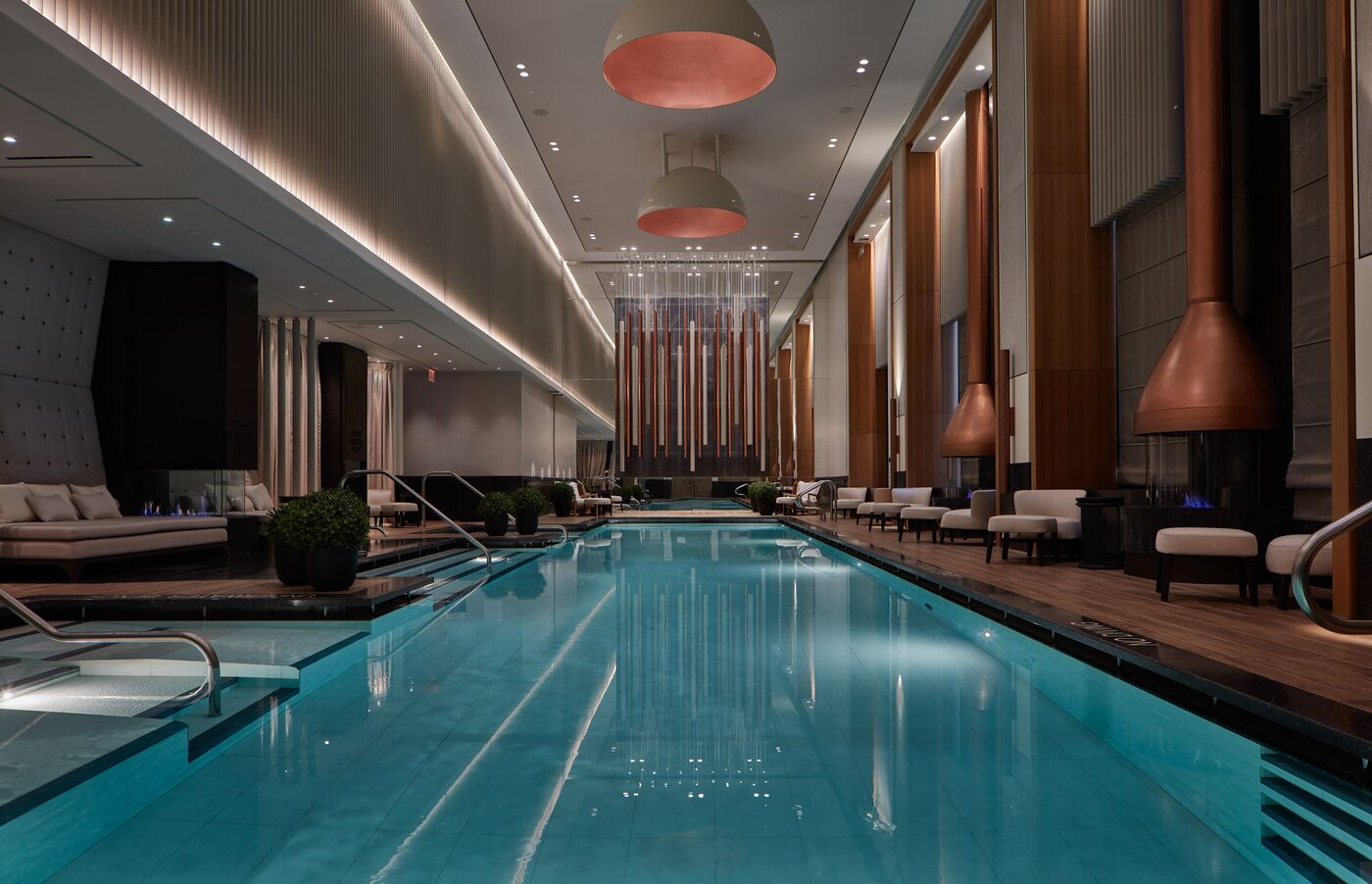
NYC’s Most Expensive Hotel Is Now Aman New York. Here’s a First Look
The most reliable way in is a club membership that costs $200,000. So here’s an exclusive peek inside—it may be the only chance you get.
Bloomberg
|
|
For one thing, the 83-suite hotel, which officially opened on Aug. 2—though it was still halfway under construction that week—has commanded years of hype. The new incarnation of the 100-year-old Crown Building at 57th and Fifth is the most hotly anticipated hotel opening the city has experienced in the past decade.
This is, after all, a brand whose expansive resorts command more than $2,000 per night in any destination. So great is the faith in Aman’s ability to raise New York’s already high standards of luxury that locals ponied up $100,000 initiation fees to become founding members of its world-first Aman Club during a pre-opening period. (The sign-up cost has since doubled, not including $15,000 for annual dues.)
Then there are the nightly rates. If it seemed as if the new Ritz-Carlton NoMad, with its maximalist design and José Andrés restaurants, were pushing a limit by charging $1,400 per night for an entry-level room in a patchy neighborhood, Aman is blowing past.
The hotel’s humblest rooms aren’t even sold on their own; at Aman New York, the 340-square-foot studios can be booked only as an adjoining option for $20,000-per-night corner suites as a way to make them bigger.
Instead, premier suites, which make up the bulk of the inventory and measure 815 square feet, are among the only reservations that can currently be booked through the end of the year. Although the hotel says officially that prices for those rooms will start at $3,200 per night, they’re currently going for $4,200 per night for most weeknights and up to $5,500 per night on weekends through the end of 2022.
That’s not because of their size. A similarly proportioned suite at the recently-renovated Carlyle commands less than half the price on the same dates. This is a product of Aman’s cachet and devoted following. The brand appeals to those who value its take on discreet luxury. It tends to fill architecturally important buildings such as summer palaces in Beijing and monumental Venetian palazzos and make them feel like ultra-private residences for the few guests who can call them temporary homes.
“There’s a big difference between us and everybody else,” says Aman’s chairman and chief executive officer, Vlad Doronin, speaking via a video call from Ibiza. “Not only will our clients be willing to pay luxury money for what we’ve built, but they’re also going to feel very happy with the value they’ve received by the time they check out.”
Doronin could say that about himself. He concedes that he’s “spared no expense” and blown his budget—estimated at around $300 million—partially due to challenges that came with building a six-star hotel amid a pandemic and supply chain crisis. Still, the result is, as he has promised, unlike anything New York has yet seen.
Click Image for Link to the full story and images
|
|
Tour a Stunning New York State Home That Was Inspired by Shingle-Style Residences
Architectural Digest
|
|
When the search for a weekend residence stretches over four years, houses that had not passed initial muster are bound to get reconsidered. That was the case for a New York husband and wife who, with their longtime friend and interior designer Stacey Gendelman, gave a second thought to a turn-of-the-last-century mansion languishing in Westchester on Long Island Sound. Although the client deemed the house’s septic system too ungainly and the interiors too filled with bric-a-brac to be taken seriously at first glance, a year later they focused more on the lot’s inspiring pairing of woods and coastal landscapes—not to mention the opportunity to call off an exhausting quest. The couple purchased the shoreline property in 2018.
AD100 firm Ike Kligerman Barkley (IKB) had joined the familial project team during the house hunt, and all parties quickly set to solving the Georgian-style building’s shortcomings in earnest. The homeowners committed to a half-mile sewer extension that would benefit approximately 30 other homes along its route. IKB spent six months designing and cost-estimating a renovation to suit three grown children who were slowly but surely partnering up, as well as a set of parents who envisioned aging in place.
“People lived very differently back then: The house had a living room that could hold 200 people, but there was no family room,” the mother recalls. “The only garage was located in a detached guesthouse.” Instead of shoehorning a casual multigenerational life into an artifact from another era, the homeowners, with Gendelman’s guidance, eventually decided to table IKB’s construction drawings and allocate their renovation budget to a bespoke ground-up residence by the firm.
Asked whether clients do such a dramatic about-face on a regular basis, IKB namesake John Ike responds, “This was a little different [from the norm], in that we went down the road of an alternate approach. But the decision-making was sound, because even in this circumstance, design fees are just a fraction of the overall project cost—and [the clients] got what they really wanted.”
What they really wanted, the architect recalls, with laughing modesty, “was the IKB shingle thing.” His colleague, principal Ross Padluck, defines that thing as “a contemporary take on the shingle style that is still familiar and comfortable for a family home.”
Ike notes with more seriousness, “The identifying components of our typical house include a plan that’s one room deep, and which is open and flows. We tend to have pretty large windows, and we employ details like flared gables and intricate shingled accents.” To achieve those signatures here, IKB uniquely employed posts and beams made of kiln-dried white oak, and centering the building’s structural load on this timber frame freed up the perimeter for windows. “The system is almost Miesian; the structure and the amount of glass is super modern. And while I can’t say whether our approach has broad applicability, we are producing good work that makes clients happy.”
Gendelman describes her efforts similarly. “They are a super-chic and interesting couple, and they wanted a home where they could invite people but also retreat to a private space,” the Purchase, New York–based designer says of her brief. “Yet to keep everyone happy, the project also was an interpretation of the balance between different ideologies.” To meld the wife’s traditionalist sensibility with the husband’s more contemporary bent, Gendelman says she sourced furniture and fixtures that represented the Arts and Crafts in principle rather than style, and she advocated for a finish palette that was appropriate to the environment and informal lifestyle of Long Island Sound.
Today, delight abounds. Padluck praises the deftness with which Gendelman “amplified the architecture,” while Gendelman herself raves, “IKB was so tremendous architecturally, that I could have gotten away with doing just a decent job.” As for the client? “I feel very lucky to wake up every morning to boats and nature, and to appreciate everything we worked so hard to achieve over eight years,” the wife says. “This is our version of the Hamptons, and we can get here in just half an hour.
Click Image for Link to the full story and images
|
|
It’s Only 4.56 Square Miles, But Sagaponack Is Home to New York’s Priciest Real Estate
About 100 miles east of Manhattan, 11962
is the state's most expensive ZIP Code
The Wall Street Journal
|
|
The most expensive ZIP Code in New York is about 100 miles east of Manhattan in the Hamptons, on Long Island’s eastern end. There, within the town of Southampton, is Sagaponack. The 4.56-square-mile village on the Atlantic Ocean has the priciest real estate in a state known for just that, according to Realtor.com data [News Corp, owner of The Wall Street Journal, also operates Realtor.com under license from the National Association of Realtors]. Established in 1653 with roots in potato farming, Sagaponack has a year-round population of about 350 residents and more than 1,000 part-timers. As in other Hamptons enclaves, Montauk Highway is a main thoroughfare, but it is quieter here, with few commercial outlets. Its one general store was owned by the same family for more than 100 years before it was sold in 2021. There is one post office. The school is a one-room schoolhouse for about a dozen students, in grades K-3. But quaint doesn’t mean small. The ZIP Code is also home to one of the largest single-family homes in the United States: The estate belonging to billionaire businessman Ira Rennert has roughly 100,000 square feet of buildings on 64.8 acres.
Click Image for Link to the complete original story
|
|
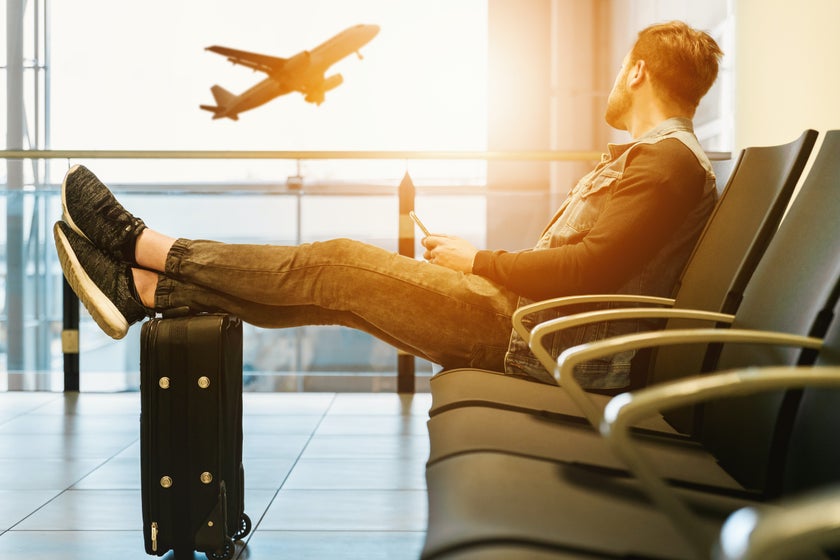
You’re Traveling Abroad.
You Test Positive for COVID.
You Board Your Flight Anyway.
What’s “right” and “wrong” in this situation?
Some travelers aren’t so sure.
SLATE
|
|
In the spring, Brian, a 34-year-old New York–based antiques dealer, took his first big international trip since COVID hit. (Brian isn’t his real name.) He visited the U.K. on business before heading to Croatia to meet up with his girlfriend. All was going according to plan until just before they were set to return home, with a planned stop in Amsterdam, and they got the news that every traveler dreads in 2022: Brian’s girlfriend had tested positive for COVID-19.
“We had this tricky situation,” Brian said. “It seemed like Croatia was probably not going to be a very good place for her to bottle up and stay just because of limited access to all the things that she would need.”
At the time, the United States still required a negative test for entry into the country, but there were no test requirements for intra-European travel. So they decided to board the first flight to Amsterdam together. With no proof of a negative test, she remained there. He feared he might be on the verge of getting sick, too—but decided to travel home to the United States anyway.
“I had a negative COVID test, but I also knew there was a significant likelihood that I had been infected and therefore might be contagious anyway,” he said. “I also thought, ‘Well, I had better get back into the country while I have this negative test, because otherwise I could be stuck in Amsterdam for God knows how long.’ ”
“It turns out, I flew back to the U.S., and the next day tested positive.”
Meanwhile, his girlfriend recovered in Amsterdam, but was still testing positive. She tried to obtain a certificate of recovery, a doctor-approved statement affirming she was safe to fly. But when she ran into problems with that, she decided to just use fake results to get back to the U.S.
“It was absolutely no problem,” Brian said. “In retrospect, I wish we had done that from the very start.”
International travel is back, and COVID entry restrictions are now a thing of the past in much of the world. But the coronavirus hasn’t gone anywhere—or rather, it continues to be everywhere. Every traveler who books a trip this year knows that getting sick is a significant possibility. Many isolate before trips, hoping to avoid expensive cancellations after more than two years of limited travel. But when they test positive on their trips, travelers are taking very different approaches—and the “right” and “wrong” thing to do is proving to be less well-defined than you might think.
Click Image for Link to the rest of the story
|
|
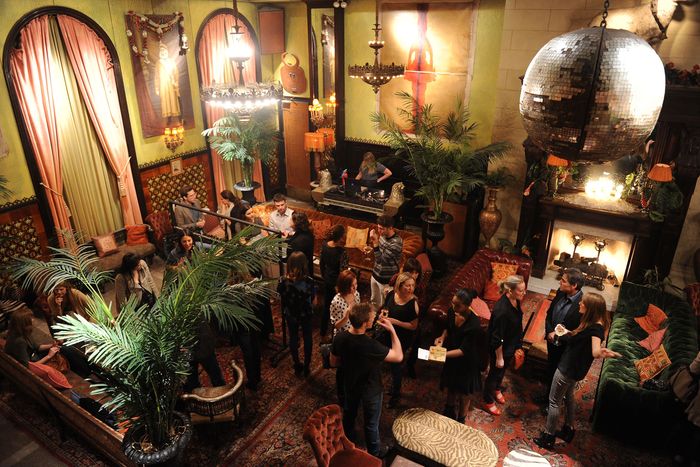
Are You Interesting Enough to Get Into Jeff Klein’s New Private Club? The Jane Hotel Goes Hollywood.
New York Magazine
|
|
How many exclusive members-only clubs can one island hold? The update of the stuffy gentleman’s club, which took off with the arrival of Soho House in the Meatpacking District in 2003, is having another moment right now. (See: Casa Cipriani, Casa Cruz, Zero Bond.) “Private clubs remind me of boutique hotels in the early ’90s when I started learning the industry,” says hotelier Jeff Klein, who got his start working as a bellman in 1993, owns the Sunset Tower Hotel in Los Angeles, and used to run the Monkey Bar with Graydon Carter in midtown (a pandemic casualty.) Now, Klein wants to open an East Coast outpost of his San Vicente Bungalows club, repurposing the somewhat down-at-heels Jane Hotel in the West Village. “They’re serving a real purpose,” Klein says. “The more connected we are with Instagram and texting and emailing, the more disconnected we’ve become as human beings. I think we crave a sense of community that is no longer really available because we’re so connected.” He presented his plans before a crotchety West Village community board last night, who didn’t seem all that impressed.
The capital of Klein’s mini-empire is the Sunset Tower Hotel, a 1929 Art Deco fort on Sunset Boulevard that brims with old Hollywood stardust. (The hotel’s restaurant, Tower Bar, is run by a well-connected former magazine editor, Gabé Doppelt.) The San Vicente Bungalows is nearby, a cluster of low-slung clapboard buildings erected in the late 19th century to house railroad workers. The Bungalows location, down the hill from Sunset and up the hill from West Hollywood’s gay nightlife strip, might have had something to do with the fact that, for many years, it became known as a druggy sex hotel, where, old-timers say, many a man-on-man pornographic video was shot to feed content needs in the age of VCRs.
Klein saved it from all that with a renovation that seemed to give it a less seedy backstory. (This is Hollywood, after all.) He saw an opening to create a retreat that was less glitzy than Soho House, which, with its aggressive IPO-driven expansion plans, has come to seem a bit too ubiquitous for some. (The West Hollywood Soho clubhouse is a five-minute Uber Black away). The Bungalows, with its lush, sun-dappled courtyard and shady recesses, has a Double Indemnity look — “How could I have known that murder could sometimes smell like honeysuckle?” — and Klein cites Preston Sturges’s 1942 The Palm Beach Story as design inspiration. It seems to be a hit with the industry’s players. The last time I was invited to dinner there, I saw, dining separately but all in a row, Larry David, Ari Emanuel, and Clive Davis. I’m probably breaking some kind of privacy policy just writing that; patrons have to sign strict contracts upon entrance and everyone’s cell-phone camera gets taped over with a sticker. (In L.A., tacky as it may sound, it’s become a low-key flex to keep the palm-tree bungalows sticker adhered to the back of one’s phone case.)
And now, Klein wants to bring it here, only blocks from the Soho House’s Meatpacking location.
The red-brick Jane Hotel, like the Bungalows, wasn’t built for the rich. It opened in 1908 as the American Seamen’s Friend Society Sailors’ Home and Institute with 156 rooms that cost 25 cents a night, catering to the needs of seamen when the West Side still was lined with piers. In 1912, it was used to house the survivors of the Titanic. In 1998, its theater was the original space where Hedwig and the Angry Inch was performed. Then, in 2008, it was reinvented the last time, by Sean MacPherson and Eric Goode, as a less expensive but still stylish sister ship to their Bowery Hotel. (The Jane’s club was quite the hot spot for several years.)
Klein says he’ll hire the British designer Rose Uniacke — who’s married to David Heyman (he produced the Harry Potter films) and has been dubbed “the queen of serene” by the Financial Times — to rework the Jane. He promises that she won’t “blanch any of the soul out” of the building while modernizing it so that it doesn’t “feel silly.” “It’s very tricky. I had a similar challenge with Sunset Tower,” says Klein.
Klein has about 300 original members he’ll invite to “SVB NYC,” as he’s calling it, and current members of the L.A. branch can come too. You must be nominated by a current member just to apply. (It’s $1,800 for the year if you’re under 35; $4,200 if you’re old.) “Money doesn’t matter,” promises Klein, “in fact, if you’re a rich person, you probably have less of a chance of getting in than a non-rich person. There are so many billionaires that we have rejected in West Hollywood, because, why are you interesting? Because you’re rich? That doesn’t make you interesting.” In other words, less Wall Street, more art and fashion types, as well as film people who are “such a part of the brand,” he says. “But in a New York way. Indie and documentary filmmakers.” He plans on building two screening rooms.
In the community board meeting, West Villagers raised the specter of the Soho House. “It started off like how you are claiming to start off,” one observed ominously. As pro-Klein neighbors, including Vito Schnabel and the screenwriters Noah Pritzker and Danny Strong, rallied to defend Klein as a smooth operator, I wondered if what really was making them cranky was the normal human fear they’ll not be deemed interesting enough and be left out.
Click Image for Link to the rest of the story
|
|
|
|
Request Artistic Frame's Current Catalog Of Chairs |
Have you received a copy of our new catalog? The most up-to-date standard models and options are available in a convenient, easy to read format. Either download the digital version from our website or request to have a printed version sent directly to your office or home. |
|
To inquire about pricing or receive more information on any of our items, please contact us at:
Tel: 212.289.2100 or
|
|
We are always happy to assist you with any questions or concerns throughout our sales and manufacturing process. Please find the appropriate department and email contact information to help expedite your request:
|
|
|
|
|
|
|
|