| |
Energy, electricity and ICT for Africa
| | News and announcements from EE Business Intelligence | | |
You are receiving this email because of your past interactions with EE Business Intelligence and
EE Publishers. To unsubscribe, please click the SafeUnsubscribe link at the bottom of this email.
| | Roundup of major energy and electricity news and developments: 11 May to 24 May 2026 | |
1. Joburg power crisis becomes financial and political flashpoint ahead of local elections.
2. Municipal electricity debt crisis exposes deeper flaws in local government funding.
3. South African electricity market reform slows amid growing pressure for clarity.
4. South Africa steps up its EV and hydrogen mobility ambitions.
5. New deals and capital flows reshape Southern Africa’s energy market landscape.
6. Renewable energy project momentum continues across South Africa.
7. Regional solar and off-grid projects accelerate beyond South Africa.
8. Nuclear expansion plans at Thyspunt site revive as civil society resistance grows.
9. Corruption concerns resurface at Eskom over diesel supply contracts.
To subscribe to EEBI-News free-of-charge or update your profile, visit: www.eebi.co.za/subscribe
To see an archive of EEBI-News to date, visit www.eebi.co.za/news-archive
To reach 20 000+ energy professionals in the region, visit: www.eebi.co.za/newsletter-advertising
| | |
1. Joburg power crisis becomes financial and political flashpoint ahead of local elections.
The worsening financial and governance crisis at City Power Johannesburg is rapidly becoming both an electricity security emergency and a major political risk ahead of South Africa’s local government elections on 4 November 2026. The crisis has intensified amid escalating disputes over R5.2-billion owed by the City of Johannesburg to Eskom, repeated threats of electricity supply interruptions, mounting technical and non-technical losses, widespread electricity theft, ageing infrastructure and collapsing revenue collection systems. Recent reports estimate electricity-related losses in Johannesburg at more than R20-billion. Electricity and Energy Minister Kgosientsho Ramokgopa has reportedly called for Eskom to assume control of Johannesburg’s failing electricity revenue management systems, reviving debate around Distribution Agency Agreements already being pursued with several distressed municipalities. Under such arrangements Eskom could potentially manage parts of City Power’s distribution business directly, including metering, billing, revenue collection and network operations, while ring-fencing electricity revenues to improve debt recovery and payment discipline. Other possible interventions include placing City Power under National Treasury-led financial administration, provincial intervention under Section 139 of the Constitution, external business rescue-style oversight, accelerated smart-meter deployment, tougher credit control, and tariff reform. Financial pressure on City Power could significantly increase if intergovernmental funding transfers from National Treasury to the City of Johannesburg were used to pay Eskom directly for electricity supplied to City Power. Politically, the crisis appears likely to become the defining issue in Johannesburg’s local elections campaign. Persistent power outages, deteriorating municipal services, allegations of maladministration and rising debt levels are likely to increase voter frustration and further weaken confidence in the ANC governing coalition. Opposition parties are already positioning the City Power and Eskom dispute as evidence of broader municipal governance failure in South Africa’s economic hub.
| | |
2. Municipal electricity debt crisis exposes deeper flaws in local government funding.
South Africa’s worsening municipal electricity debt crisis is increasingly exposing deeper structural weaknesses in the country’s local government funding and service delivery model, with growing concerns that current electricity sector interventions may be insufficient to stabilise the sector. Municipal debt owed to Eskom reportedly now exceeds R110-billion, driven by a combination of weak revenue collection, governance failures, electricity theft, ageing infrastructure, rising bulk electricity tariffs, political instability within local government structures, and declining electricity sales volumes as wealthier customers increasingly adopt rooftop solar PV and battery systems. Efforts to contain the crisis are intensifying. National Treasury is considering plans to begin deducting significant unpaid debts owed by provincial and national government departments to municipalities directly, which would ease municipal cash flow challenges somewhat. Eskom is meanwhile expanding efforts to conclude Distribution Agency Agreements that would allow it to manage electricity distribution operations and electricity revenue collection in distressed municipalities. However, several municipalities and SALGA are reportedly resisting such arrangements, with at least one such dispute heading to court amid concerns over municipal autonomy, constitutional powers and political accountability. At the same time, regulatory tensions continue to grow. NERSA has sought a High Court extension to finalise outstanding municipal tariff applications after missing earlier court-ordered deadlines, further highlighting institutional strain within the electricity pricing framework. The crisis is increasingly being viewed as more than simply a debt collection problem. Analysts argue that South Africa’s municipal electricity distribution model – long reliant on electricity surpluses to cross-subsidise other municipal services – is becoming financially unsustainable amid changing technology, falling consumption growth, rising electricity prices and deteriorating payment culture. Growing calls are now emerging for fundamental reform of municipal financing, tariff design, service delivery models and electricity distribution governance before the crisis deepens further.
| | |
3. South African electricity market reform slows amid growing pressure for clarity.
South Africa’s electricity sector reform programme is entering an increasingly critical phase, with growing pressure on government, regulators and the power sector to provide greater certainty on the roadmap, timing and governance arrangements for the transition to a competitive wholesale electricity market. Energy & Electricity Minister Kgosientsho Ramokgopa recently committed to publishing a sequenced roadmap soon for implementation of the South African Wholesale Electricity Market (SAWEM), amid rising concern over delays, regulatory uncertainty and mixed signals around the pace and scope of reform. The market was originally expected to begin phased implementation from April 2026, but key building blocks remain incomplete. These include the finalisation of electricity trading rules, the market code, market rules, balancing and settlement arrangements, market operator functions and institutional governance structures linked to the future independent Transmission System Operator. At the same time, NERSA has initiated further consultation processes on elements required to support electricity market competition, including revised trading frameworks and market participation arrangements. Industry stakeholders are increasingly calling for a cabinet-endorsed reform roadmap to reduce policy uncertainty and improve investor confidence. Concerns persist that delays and regulatory ambiguity could slow investment decisions, constrain electricity trading activity and weaken momentum behind private generation, wheeling and regional power market development. The debate also reflects tensions between accelerating market liberalisation and maintaining strategic state control over the electricity sector. While reform momentum continues, government appears to be pursuing an overly cautious and highly sequenced transition aimed at preserving system stability and managing political, institutional and financial risks. Analysts warn that prolonged delays could undermine confidence in South Africa’s broader electricity reform agenda and slow the emergence of a competitive electricity market.
| | |
4. South Africa steps up its EV and hydrogen mobility ambitions.
South Africa’s electric and hydrogen-powered mobility sector is showing signs of accelerating, with a series of new vehicle launches, charging infrastructure developments and industrial policy initiatives aimed at supporting the country’s longer-term transport energy transition. Among the latest developments, charging infrastructure company CHARGE has launched what it describes as South Africa’s first off-grid electric vehicle charging network along the busy N3 transport corridor between Johannesburg and Durban. The network combines solar PV, battery storage and backup generation to support EV charging independently of the national grid, highlighting growing efforts to address concerns around electricity supply reliability. At the same time, Toyota South Africa Motors has launched its first fully electric vehicle in the South African market, marking another step in the gradual expansion of local EV offerings as global vehicle manufacturers shift toward electrification. Government is also moving to position South Africa within future EV supply chains. Draft policy proposals aimed at encouraging local electric vehicle battery manufacturing and mineral beneficiation are reportedly under development, reflecting growing focus on leveraging South Africa’s significant reserves of manganese, nickel and platinum group metals. Hydrogen mobility initiatives are also progressing. Toyota and government recently unveiled a locally developed hydrogen refuelling station linked to broader efforts to establish a domestic green hydrogen economy and explore hydrogen applications in transport and heavy industry. Meanwhile, new EV charging records are reportedly being achieved in South Africa as vehicle uptake slowly increases from a low base. Despite continuing constraints around vehicle affordability, charging infrastructure and electricity supply stability, analysts say momentum is gradually building behind electric mobility, battery storage and hydrogen technologies as part of South Africa’s broader decarbonisation and industrial development agenda.
| | |
5. New deals and capital flows reshape Southern Africa’s energy market landscape.
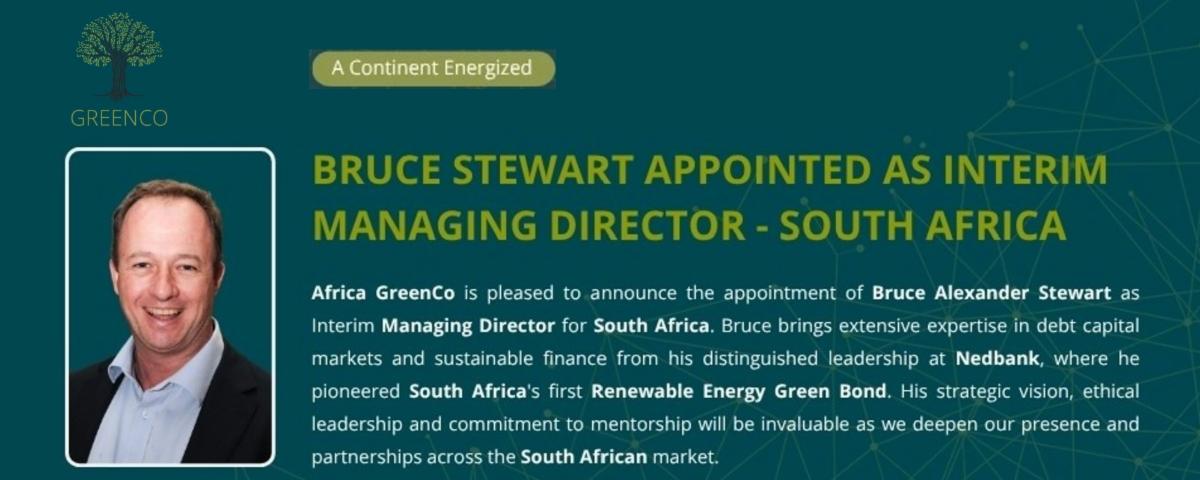
Investment, acquisition and financing activity across the Southern African energy sector continues to accelerate, reflecting growing institutional confidence in renewable energy, electricity trading, wheeling and distributed energy infrastructure across the region. Among the most significant developments, Sanlam Alternative Investments has acquired a 10% equity stake in Africa GreenCo Group through a US $10-million investment, becoming the renewable energy trader and offtaker’s first commercial private institutional shareholder. GreenCo says it has already traded more than 2 TWh of electricity across the Southern African Power Pool (SAPP) and now holds the largest purchase-side market share in SAPP competitive markets. The deal highlights growing recognition of the importance of creditworthy trading, wheeling and market infrastructure platforms in unlocking regional renewable energy investment and cross-border electricity trade. GreenCo is currently licensed in Zambia, Zimbabwe, Namibia and South Africa, with licensing underway in the Democratic Republic of Congo. Meanwhile, billionaire Patrice Motsepe’s African Rainbow Energy has increased its stake in SOLA Group from 41% to 83%, taking majority control of a renewable energy portfolio reportedly valued at more than R20-billion. The combined platform now spans roughly 2 GW of operational and pipeline renewable energy projects, positioning the group among South Africa’s largest independently owned clean-energy businesses. At the same time, SolarAfrica has acquired the 315 MW Nyakallo solar and battery storage project from Norway-based Norsk Renewables, strengthening its utility-scale project pipeline in South Africa. Elsewhere, financing activity is expanding rapidly. Fedgroup has secured additional renewable energy capital to accelerate industrial and commercial energy projects, while WEG and Energy Venture Capital have partnered with plans to finance hybrid energy projects in South Africa. The growing wave of acquisitions and capital deployment reflects broader structural shifts underway in Southern Africa’s electricity sector as private capital increasingly targets generation, storage, trading, wheeling and regional market integration opportunities.
| | |
6. Renewable energy project momentum continues across South Africa.
South Africa’s renewable energy investment pipeline continues to gather momentum, with new solar, wheeling, battery storage and embedded generation developments reinforcing the rapid expansion of private-sector electricity investment across the country. Among the latest milestones, Dubai-headquartered AMEA Power has announced commercial operation of its 120 MW Doornhoek Solar PV plant in the Northern Cape. The project, developed under the REIPPPP programme, adds to growing utility-scale renewable generation capacity feeding into the national grid, and reflects continued international investor appetite for South African renewable energy assets. At the same time, major South African corporates continue to deepen participation in electricity wheeling arrangements. Tiger Brands has signed a renewable electricity wheeling agreement with Apollo Africa as businesses increasingly seek long-term price certainty, lower-carbon electricity supply and improved energy security amid rising Eskom tariffs and ongoing grid concerns. The commercial and industrial embedded generation market also continues to expand rapidly. Property group Growthpoint Properties reportedly now has 62 MW of solar PV installed across the rooftops of its properties, highlighting accelerating investment in decentralised generation and behind-the-meter energy systems by the commercial property sector. Meanwhile, NERSA reported that 112 new generation facilities with a combined investment value exceeding R28-billion were registered during the fourth quarter of the 2025/26 financial year. Total private generation capacity registered since licensing reforms began has now reportedly reached nearly 20 GW, spanning solar PV, wind, battery storage, gas and hybrid energy projects. The growing project pipeline highlights the accelerating structural shift underway in South Africa’s electricity sector, with private capital increasingly driving generation investment, wheeling, distributed energy deployment and decarbonisation as electricity market reform gradually advances.
| |
7. Regional solar and off-grid projects accelerate beyond South Africa.
Outside of South Africa, renewable energy investment and project development activity continues to accelerate across the region, with notable growth in utility-scale solar, battery storage, off-grid electrification, micro-grids and regional power infrastructure. In Zambia, Copperbelt Energy Corporation has commissioned a 136 MW solar PV project utilising Sungrow string-inverters. The project is reported to be among the country’s largest grid-connected solar facilities, and forms part of Zambia’s efforts to diversify electricity supply away from heavy dependence on hydropower, following repeated drought-related generation constraints in the region. Meanwhile, Zimbabwe-headquartered Grid Africa continues to announce new regional partnerships and project initiatives. Offtake agreements of 100 MW each are said to have been secured in Zambia with electricity traders Petrodex and GreenCo, built out in bite-sized 5 MW plants, taking advantage of relatively easy grid connectivity and fast-tracked permitting processes. The company is also set to roll out hybrid solar PV and BESS distributed generation solutions for telcos in Mozambique and Zambia, as well as medium to large embedded commercial, industrial and mining projects in Zimbabwe. Regional distributed-energy and off-grid investment activity is also expanding rapidly. The International Finance Corporation (IFC) and EDF Power Solutions recently secured US $40-million in financing to scale off-grid solar deployment across Africa, supporting broader electrification efforts in underserved and rural markets. The expanding renewable energy project pipeline reflects wider structural shifts underway across the regional electricity sector as governments, utilities, miners and commercial customers increasingly pursue renewable energy investments to improve energy security, reduce diesel dependence, diversify generation supply and support decarbonisation objectives. Analysts say the regional renewable energy market is increasingly being driven by private capital, cross-border electricity trading opportunities and growing demand for reliable electricity supply outside traditional vertically integrated utility models.
| |
8. Nuclear expansion plans at Thyspunt site revive as civil society resistance grows.
South Africa’s renewed nuclear power ambitions are again encountering growing civil society resistance, particularly around Eskom’s preferred proposal to develop a new nuclear power station at Thyspunt in the Eastern Cape. The debate has intensified following release of Eskom’s draft environmental scoping report for a proposed 5200 MW nuclear expansion programme. The utility has extended the public comment deadline to 25 May 2026 following strong public interest and criticism that communities were initially given insufficient time to assess the more than 2700 pages of technical documentation. Environmental groups, civic organisations and local tourism stakeholders have raised concerns over environmental impacts, coastal ecology, seismic risks, emergency planning, water use and possible effects on the region’s tourism and agricultural economy. Critics have also questioned how meaningful environmental assessment can proceed while reactor technology choices, project costs, financing structures and ownership models remain unresolved. The controversy comes as Eskom confirmed it is holding exploratory discussions with the World Bank and other development finance institutions regarding funding options for a future nuclear build programme. Eskom is reportedly considering up to 4800 MW of conventional nuclear capacity together with 400 MW of small modular reactors as part of a broader long-term baseload generation strategy. Government continues to position nuclear energy as part of South Africa’s future low-carbon electricity mix, particularly as ageing coal-fired power stations are retired. However, memories of the politically contentious and ultimately abandoned R1.2-trillion nuclear procurement programme under former president Jacob Zuma continue to shape public scepticism. Analysts say the Thyspunt process could become a major test of transparency, public participation, affordability and governance in South Africa’s next phase of electricity infrastructure planning.
| |
9. Corruption concerns resurface at Eskom over diesel supply contracts.
Fresh allegations of irregularities in Eskom’s diesel procurement processes have again raised concerns about governance, transparency and procurement controls at the power utility, despite broader improvements in operational performance and reduced load shedding. The controversy centres on a R21-billion diesel supply and storage contract linked to Eskom’s open-cycle gas turbine (OCGT) fleet, particularly the Ankerlig power station in the Western Cape. Investigative reports have alleged irregular tender awards, questionable supplier selection processes, abnormal prepayments and possible procurement non-compliance involving several suppliers. According to Eskom, an independent forensic investigation commissioned through its Group Investigations & Security division has identified breaches of procurement processes and internal governance requirements. The utility has confirmed that disciplinary proceedings against several employees will now commence, while further action against implicated suppliers is also under consideration. Eskom has indicated that criminal charges have not been ruled out once the final report is completed. The matter has again highlighted long-standing concerns around diesel procurement at Eskom’s OCGT plants, which consume large volumes of diesel during periods of generation shortfall and grid stress. Diesel expenditure escalated sharply during the severe load shedding periods in recent years, placing procurement systems under intense operational and financial pressure. The controversy also follows a recent Supreme Court of Appeal ruling compelling Eskom to disclose major coal and diesel supply contracts in the public interest, reinforcing growing demands for greater transparency in state-owned enterprise procurements. Analysts warn that while Eskom has made progress stabilising generation performance, governance weaknesses and procurement irregularities continue to pose significant reputational, financial and institutional risks for the utility.
| | |
Independent Energy Pool (IEP Global)
Independent Energy Pool (IEP Global) is a business-to-business energy pool, allowing energy users and energy traders to buy and sell electricity. IEP's ecosystem allows transacting of electricity in a balanced and standardised environment. The pool incorporates the ability to trade renewable energy certificates, as well as the tracking and reporting of ESG criteria.
| | |
EE Business Intelligence
EE Business Intelligence strives to be a positive formative influence on policy, economic, social, regulatory, standardisation, training and business development in the energy, electricity sectors of Africa. Its activities and services include thought leadership, analysis, research, consulting, special assignments, business intelligence, strategic event facilitation and management, and public, corporate and media speaking engagements and commentary.
| | SHARE THIS ON SOCIAL MEDIA | | | | |