|
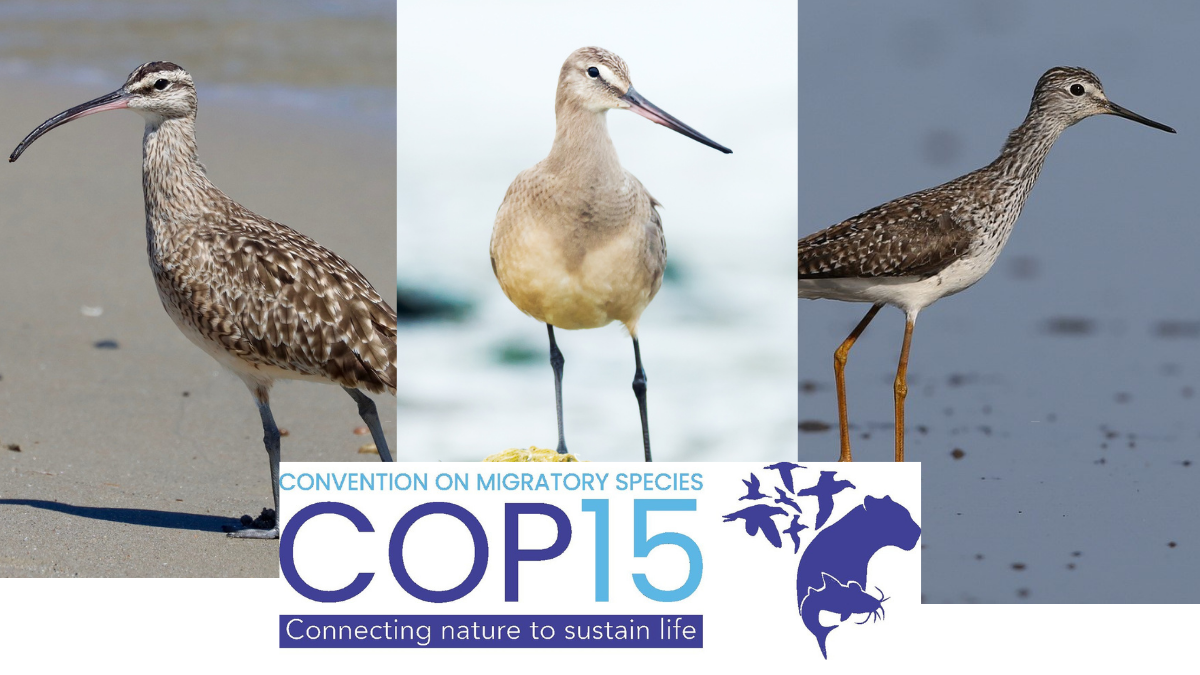
Hudsonian Whimbrel, Hudsonian Godwit, and Lesser Yellowlegs.
Photos: Alan Kneidel, Paul Reeves, Brad Winn.
| | |
Government representatives from around the world will gather in Campo Grande, Brazil (March 23–29, 2026) for the 15th Conference of the Parties (COP15) to the Convention on the Conservation of Migratory Species (CMS), a global treaty meeting that helps coordinate international action for migratory wildlife. For shorebirds in the Western Hemisphere, the stakes are high. These birds depend on a chain of habitats stretching from Arctic breeding grounds to southern South America, and conservation in any one country affects the entire flyway.
Several proposals affecting species in the Americas are on the agenda, including potential listings for species experiencing significant population declines.
LEARN MORE HERE >>
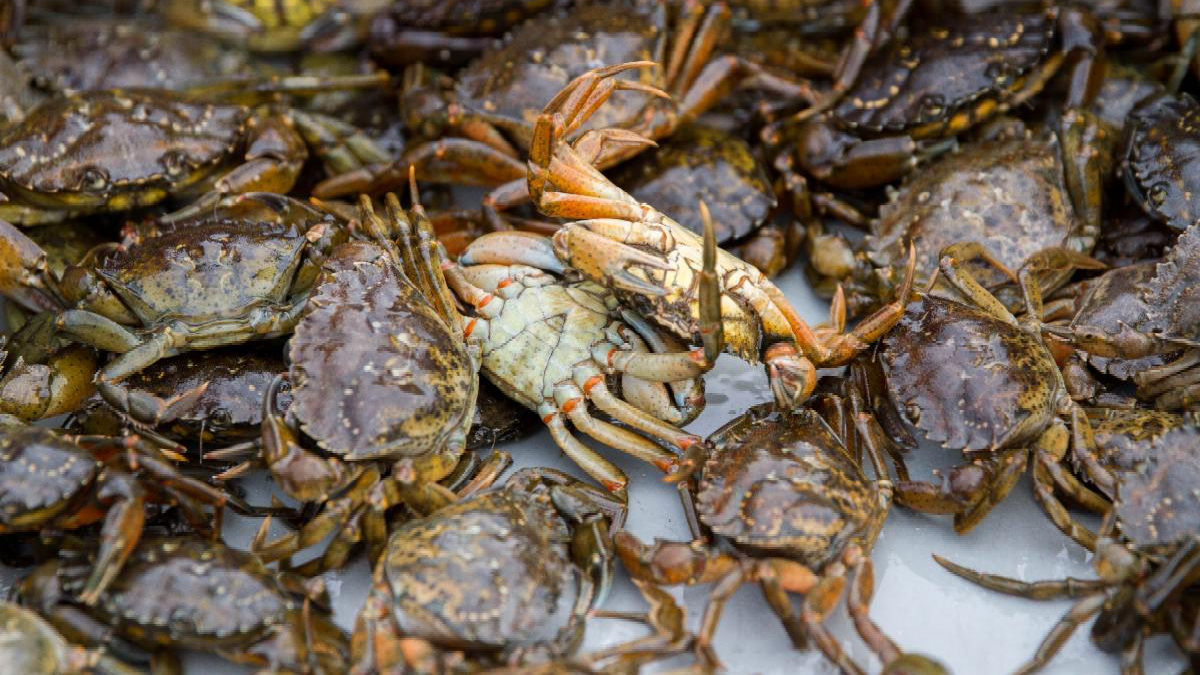
| European Green Crab. Photo: P. McAleenan | |
New Data to Inform Action on Invasive Green Crabs
A new open-access dataset can help scientists and coastal communities better understand the spread of the invasive European Green Crab along Maine’s coast. Developed by Manomet’s Fisheries Program and released through the Environmental Data Initiative, the dataset compiles standardized monitoring data collected between 2018 and 2025 across rocky intertidal sites in Midcoast Maine. This information is critical for predicting impacts on shellfish fisheries and coastal habitats such as eelgrass beds, and for guiding management responses to one of the world’s most damaging marine invasive species.
READ THE FULL STORY >>
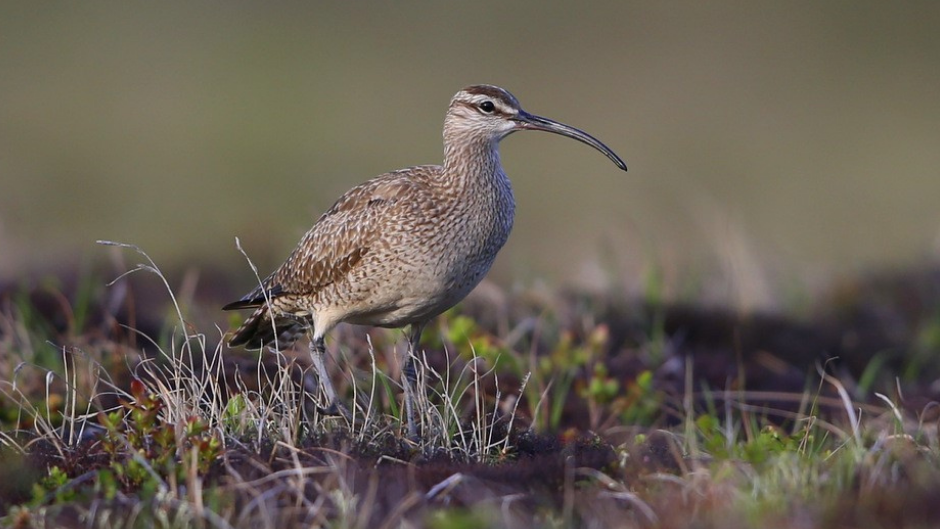
| Hudsonian Whimbrel. Photo: Manomet/Brad Winn | |
A New Name, A New Chapter for the Hudsonian Whimbrel
Scientists have officially recognized the Hudsonian Whimbrel as a species distinct from the Eurasian Whimbrel. The change reflects new genetic evidence and highlights an urgent conservation reality: populations of the Hudsonian Whimbrel in the Americas may have declined by nearly 70%. Learn how taxonomic discoveries can reshape conservation priorities.
READ THE FULL STORY >>
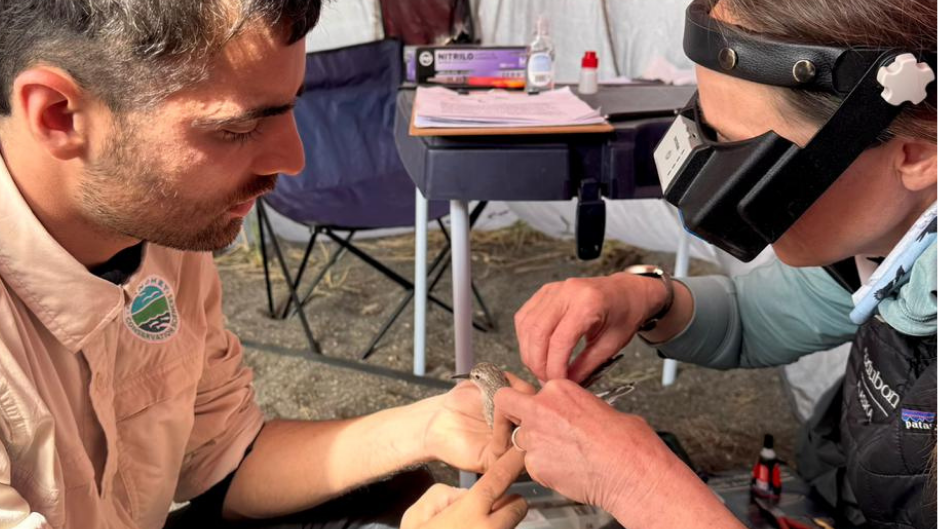
| Pablo Gigy Gregoret (Manomet) and River Gates (Audubon Alaska) tagging a White-rumped Sandpiper. Photo: Courtesy | |
At the WHSRN Atlantic Coast Reserve in Tierra del Fuego, Argentina, government technicians and conservation practitioners gathered for a hands-on training to strengthen regional capacity for shorebird monitoring. Organized by Asociación Ambiente Sur, Manomet Conservation Sciences, WHSRN, Fundación Avina, and partners, the workshop combined field practice and technical sessions on bird capture, banding, and emerging tracking technologies.
READ THE FULL STORY >>
| |
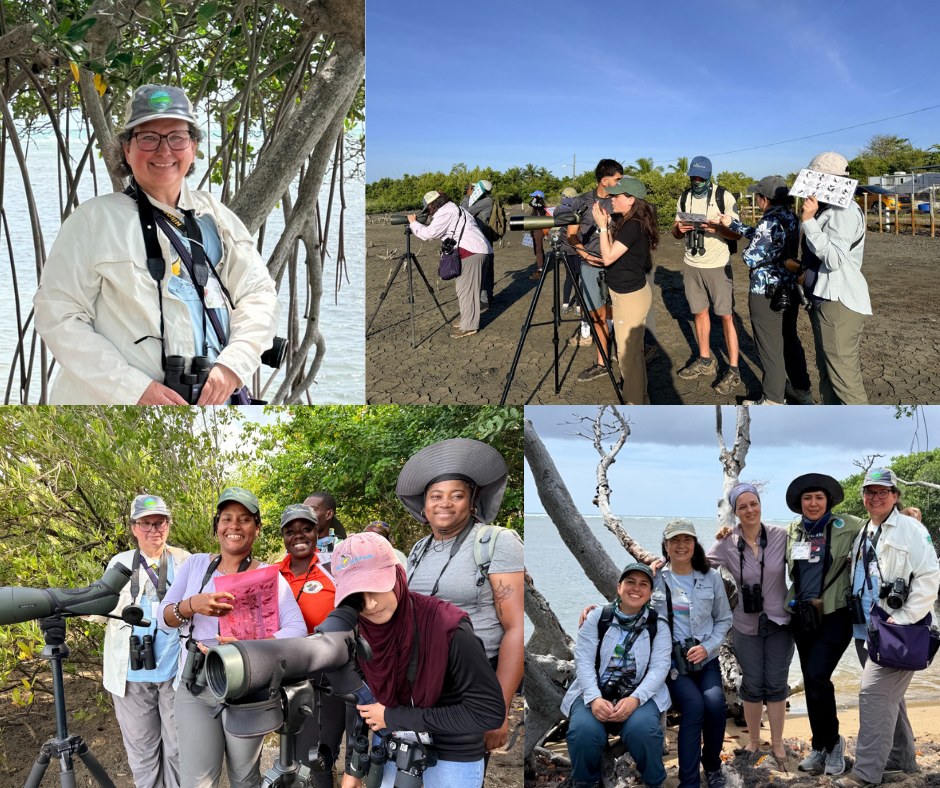
Waterbird and Shorebird Workshop in Puerto Rico
Lisa Schibley (North American Coordinator of the International Shorebird Survey) and Juanita Fonseca (Shrimp and Shorebird Conservation Specialist) traveled to Puerto Rico for the Conserving Caribbean Wetlands—Waterbird and Shorebird ID and Census Workshop hosted by BirdsCaribbean. The five-day training focused on shorebird and waterbird identification and survey methods, outreach strategies, funding for conservation, and how to gather and process monitoring data, and much more. The event brought together 27 participants from 10 island countries.
Lisa led sessions introducing the work of Manomet Conservation Sciences, the International Shorebird Survey, and flock estimation techniques. Juanita led a session on the Western Hemisphere Shorebird Reserve Network (WHSRN) and shared how sites can become designated WHSRN Sites. As a case study, she introduced the Cargill Salt Ponds Bonaire WHSRN Site and the process behind achieving its designation.
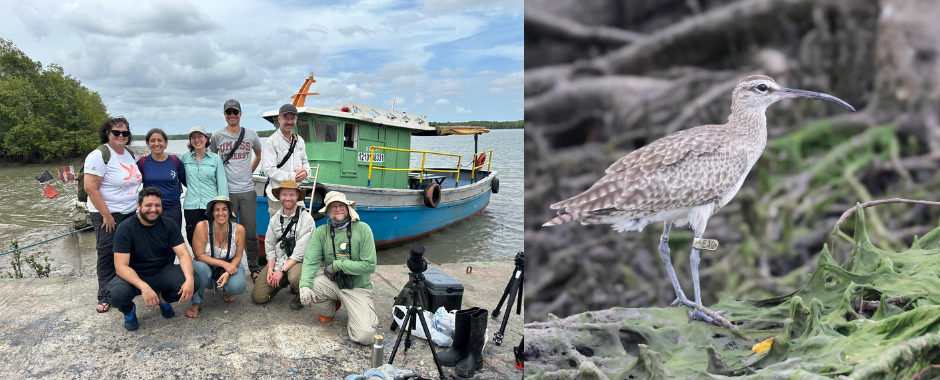
| | Left: The 2026 Expedition Team. Photo: Courtesy. Right: Whimbrel #EA2. Photo: Manomet/Brad Winn | |
Spotted: Texas - Arctic Canada - Brazil
During a recent expedition to Brazil’s northern coast, our team spotted a familiar traveler resting on exposed roots, a Hudsonian Whimbrel first tagged in Texas in 2022 through a collaboration between Manomet Conservation Sciences and the University of Oklahoma. Each year, #EA2 nests in the western Canadian Arctic, migrates south through coastal Massachusetts, and spends much of the non-breeding season near São Luís, Brazil, returning to the same mangrove and mudflat habitat year after year. When April arrives, it begins the return trip, with a non-stop flight crossing the north coast of South America, then flying over the entire Caribbean, continuing over the Gulf of Mexico, and eventually reaching the Texas coast - about 4,000 miles from where it was originally tagged.
Since 2021, Manomet and SAVE Brasil have identified priority sites and monitored Whimbrel populations in Maranhão and Pará. Together with the University of Massachusetts, Amherst, the team is now estimating survival rates and developing a demographic model.
Group photo: The team for the 2026 Expedition, including members from SAVE Brasil, Massachusetts Audubon Society, Cornell's Conservation Media, Mass Audubon, Secretaria Medio Ambiente, Secretaria de Estado do Meio Ambiente e Recursos Naturais, and Manomet Conservation Sciences.
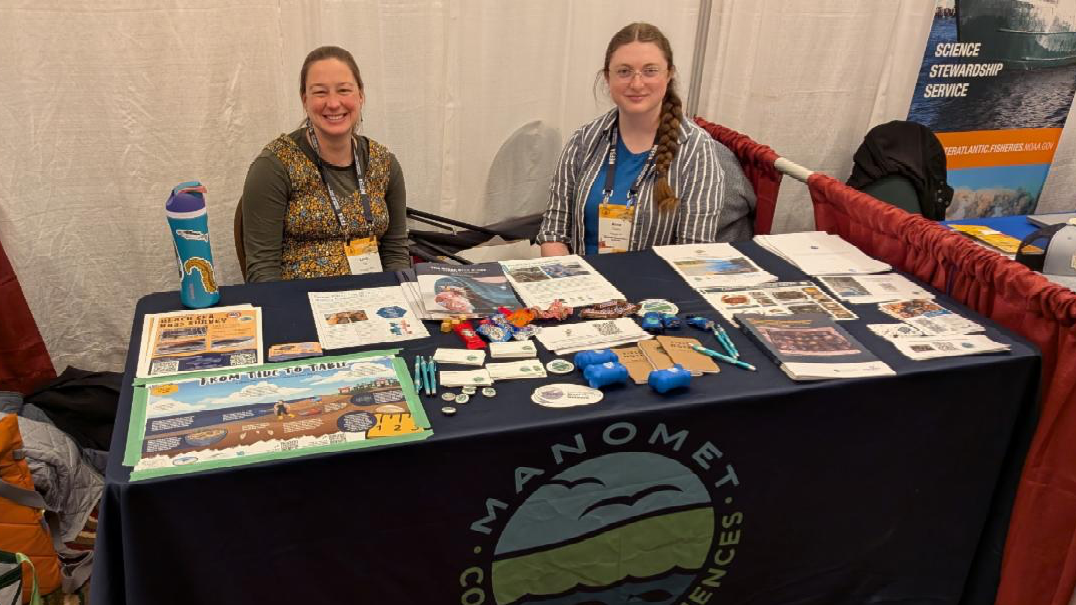
| | Photos: Manomet /Fisheries | |
Maine Fishermen’s Forum
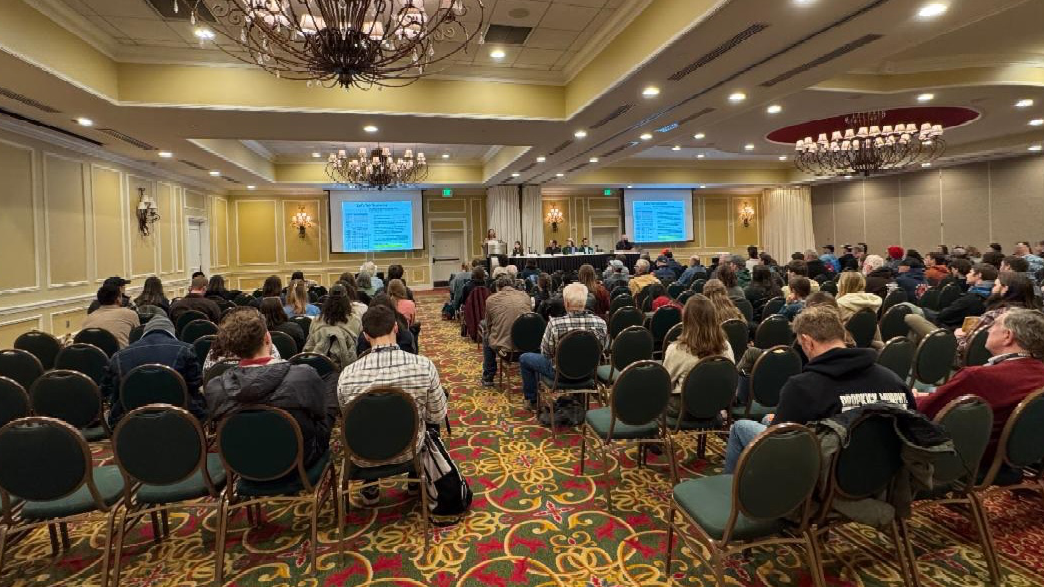
The Fisheries team recently attended the 51st Maine Fishermen’s Forum in Rockland, Maine. This three-day event brings together fishermen, sea farmers, gear suppliers, state and federal scientists and regulators, and other stakeholders for education, collaboration, commerce, and more. The Fishermen’s Forum is always a much-anticipated event, and this year did not disappoint. It was a busy three days and highlights included the Manomet team moderating a panel discussing updates and priorities for the Maine Shellfish Advisory Council, and presenting on recent trends in green crab populations as part of a packed session focused on opportunities and challenges in the green crab fishery. The whole team hosted a poster and networking session to close out Shellfish Focus Day.
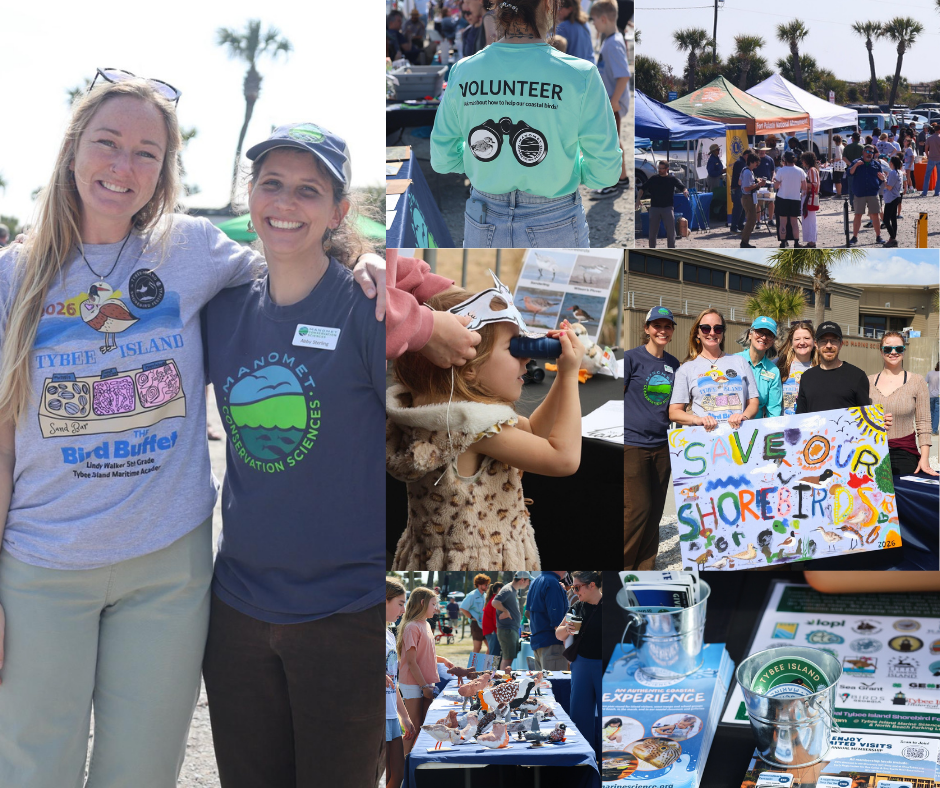
| Allie Hayser, Manomet's Shorebird Biologist, and Abby Sterling, Manomet's Director of Shorebird Initiatives for the Southern United States, at the Tybee Island Shorebird Festival. Photos: Courtesy |
The 2nd Annual Tybee Island Shorebird Festival
Each spring, Tybee Island becomes a vital stop along one of the greatest wildlife migrations on Earth. These birds are our neighbors, sharing the same beaches we love. The event is sponsored by the City of Tybee Island and hosted in collaboration with Tybee Island Marine Science Center and Manomet Conservation Sciences. Manomet brought together 14 partner organizations that set up tables specifically tailored for shorebird educational games and activities.
| | March Small Sit Webinar: Using High-Tech Drones for Shorebird Surveys in the Caribbean | | Thank you to our recent corporate partners for helping Manomet deliver its mission of improving the health of flyways, coastal ecosystems, and working lands and seas. | | | | |