Top Stories

Amid a tumultuous period in health care, Vermont hospitals request annual revenue and rate increases

VTDigger


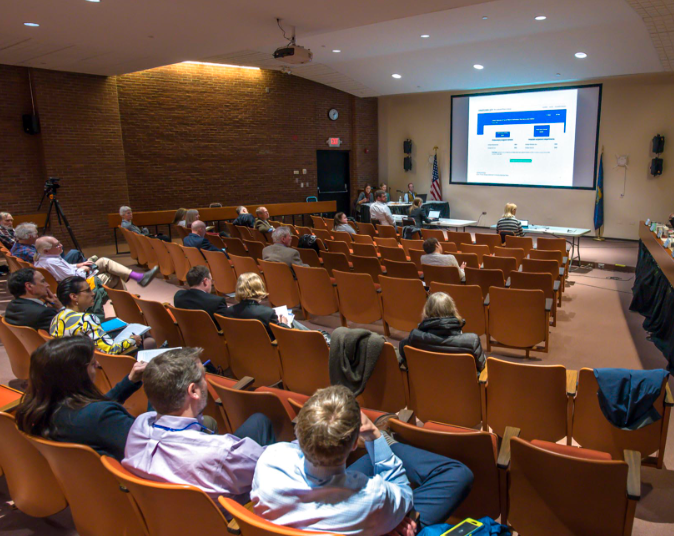
Vermont hospitals are seeking the Green Mountain Care Board’s permission to increase commercial insurance charges and their revenue from patients, an annual process that comes amid widespread concern over hospitals’ financial health.


Each year, hospitals request increases for the next fiscal year in their net patient revenue — revenue brought in by caring for patients — and in how much they can bill commercial insurance companies for that care. The Green Mountain Care Board, a key health care regulator, can sign off on those requests, or allow smaller increases. 


The board sets non-binding benchmarks to signal their goals for hospital budgets. For patient revenue, the benchmark — 3.5% growth — is based on state health care reform goals. The commercial insurance price benchmark — 3.4% growth — is based on medical inflation indices, according to Green Mountain Care Board chair Owen Foster.


“As we are all deeply familiar, our hospitals have been under great pressure over the last few years, and intensely understand the pressures facing Vermonters and the health care delivery systems,” Vermont Association of Hospitals and Health Systems president and CEO Mike Del Trecco said at a Green Mountain Care Board hearing Wednesday. 


Read more

Green Mountain Care Board reports hospital financial woes are not improving

WCAX


Vermont hospitals Wednesday begin their budget presentations to Vermont regulators and one conclusion was clear -- there was no show of improvement in the hospitals’ financial strain.


Rutland Regional Medical Center, Southwestern Vermont Medical Center and Copley Hospital all asked the Green Mountain Care Board to approve their 2024 fiscal year budgets.


According to GMCB Chair Owen Foster, all reports showed a continuation of concern regarding hospital cash on hand and staffing pressures. He adds there’s increasing worry as hospitals report an uptick in visits and pharmaceutical use. While an increase in patients and meds isn’t necessarily a detriment to hospitals, the costs fall on the shoulders of commercial insurance payers, who tell the board that they’re struggling financially. “Hospital budget submissions, again, highlight the need for hospital system redesign and transformation. The difficulty we’re seeing at the financial level for hospitals and insurers continues to persist, and the headwinds are not abating,” said Foster.


Budget presentations continue on Monday and will end in late August. Budget approvals will be made in September.

Watch

Consultants say Vermont’s health care system needs to change, but exactly how is not yet clear

Peter-Pic image

VTDigger


For months, Bruce Hamory, a physician and consultant with the firm Oliver Wyman, has been engaged in a fact-finding process to determine what is and isn’t working in Vermont health care. In a series of public meetings across the state, Hamory has repeatedly highlighted the fragility of the state’s health care institutions and the need for change.


“Vermont’s health system is failing and needs urgent fixes,” he told attendees at a Monday evening virtual meeting. “You experience this daily.”


But despite the dire prognosis, the initiative has yet to release many specific recommendations — offering only a few hints as to the scope of its final proposals, which are scheduled to be released later this month or early September.  


“I’m eager to be part of the solution, but I’m not seeing many solutions presented tonight,” Katherine Williams, who introduced herself as a registered nurse case manager and recent health policy graduate, said at the meeting. “I think we’ve identified and labeled the problems, but I’m not seeing what the solutions are.” 

Read more

From St. Johnsbury to Lyndonville, state and federal officials visit flood-ravaged communities to discuss health and mental health challenges

welch-levine-flood-11-20240805 image

VTDigger


In a region hit with multiple bouts of flooding last month, workers at Northern Counties Health Care have struggled to reach vulnerable residents — from those who were marooned at home to those who couldn’t get their prescriptions or had to reschedule surgeries.


As hard-hit communities continue to dig out after the latest round of devastating floods last week, a variety of health care workers met with state and federal leaders Monday in St. Johnsbury to outline their ongoing plight.


Home health professionals continue to triage every day to prioritize who they can help from among the 400 patients they serve in the Northeast Kingdom, said Treny Burgess, director of home health and hospice at Northern Counties Health Care. To do so, they have to navigate longer routes to get to patients who can’t go out, which takes time and leads to a backlog of folks not receiving care, as well as worker fatigue.


Burgess and others addressed Admiral Rachel Levine, assistant secretary for health for the U.S. Department of Health and Human Services, who was visiting Vermont in the aftermath of the latest disaster.

Read more

Other News


The William B. DeLaney Infusion Center opens at Copley Hospital


Rural Northeast health system CEOs seek federal support


Having fun for a cause


Brattleboro Retreat Signs for Expanse to Elevate Community Care


Cheyenne Holland named new CFO at Gifford Health Care


Shalina Nair chair of the Department of Family Medicine at UVM med school


Mark Your Calendar 


2024 Vermont Suicide Prevention Symposium


VAHHS ANNUAL MEETING

Join the Voyage Sept. 19 and 20: Registration Now Open!

Facebook  LinkedIn  X  Web