|
|
School Wellness Weekly
November 14, 2022
|
|
How Do We Prioritize Student Mental Health? Start With Health Education
|
|
In health education class, students learn what mental health is and the impact it can have on their minds, bodies, and relationships. Health education teachers do not need to be experts in mental health, but they can be an important bridge to mental health services in the school or community.
To support teachers and school administrators in meeting the State requirement and students’ needs, NYCDOE recommends specific lessons in grades K-12 that include:
- identifying, expressing, and managing stress, anger, loss and other emotions;
- how to find help when faced with mental health challenges;
- how to practice positive self-talk;
- how to enhance relationships, including conflict resolution and other communication skills.
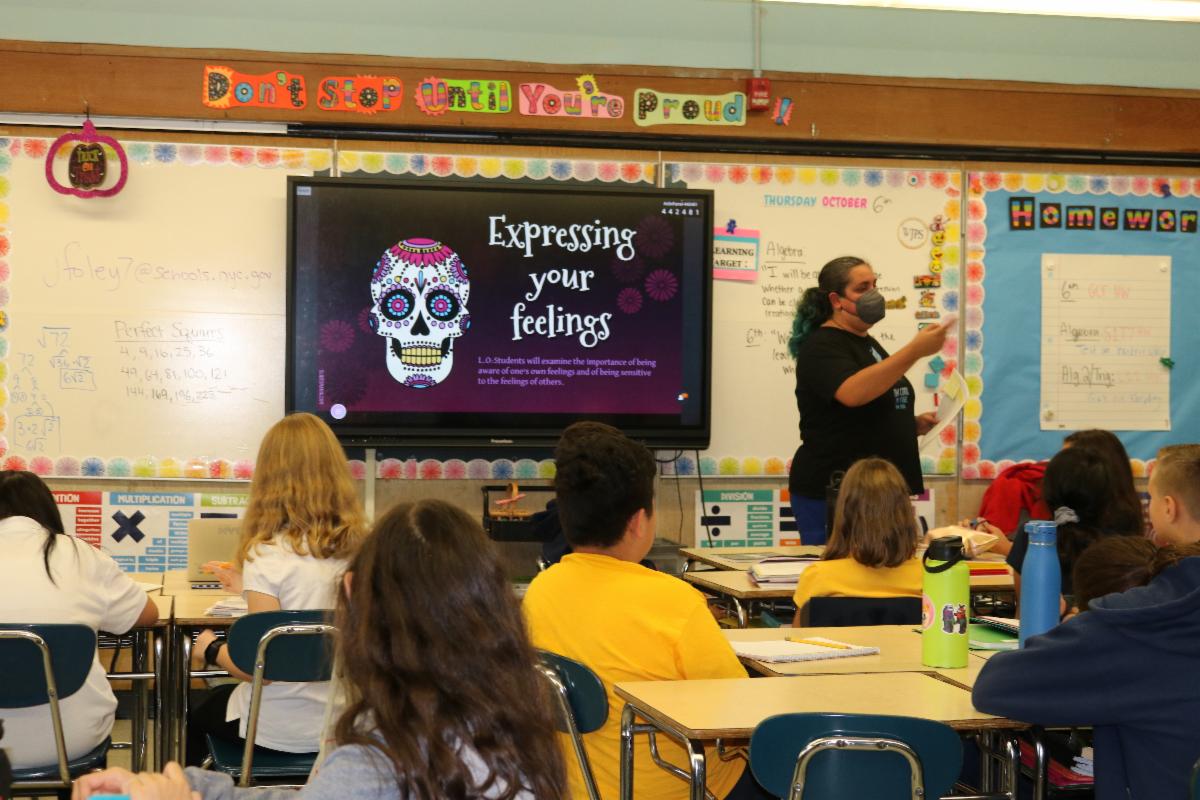
Photo: Students practice identifying feelings in small groups during Health Education class at World Journalism Preparatory School (25Q285). Photo by Amy Dawson.
|
|
A Focus on Mental Health in Health Education at World Journalism Preparatory School (25Q285)
Ann-Marie Smith, a health education teacher at World Journalism Preparatory School (opens in new window) in Queens, understands the importance of equipping her students with strategies to manage their emotions. We recently spoke with Ann-Marie to learn more about the value of mental health education. In teaching comprehensive health ed, she empowers her students with the vital skills needed to promote their mental health and well-being.
How do you think health education helps students to achieve?
It comes back to connections. Students often say, “I’m tired,” but what is causing that? How can we address it? There are so many emotions that students are dealing with, especially after COVID. For so long, students weren’t face-to-face. When students understand how to relax, make time for themselves, and how they need to communicate with family and friends, it can have an impact on their ability to achieve academically. Health helps normalize these things for students.
How do your mental health education lessons impact your students?
I start the year with the mental health unit because I want students to learn how to express themselves, to communicate with one another, to manage stress, and more. These skills help set students up for success academically and are so connected to the middle school experience. Students are going through so many different transitions and experiences—from elementary to middle school; from dependence to independence; learning how to deal with many new emotions and stressors; recognizing when they need to take a break and talk to someone before reaching their limit. Health education makes these connections for students.
Students can then feel empowered to take on the changes associated with hormones, puberty, and new interactions with classmates. It’s normal to get frustrated, angry, happy, and sad all in the span of three minutes. It’s okay to have these feelings. It's how we react to the feelings that will determine how others respond. In health education, we can teach students that there are healthy things they can do to feel better.
Any final thoughts or words of advice for other teachers who are teaching health or want to do something similar?
Don’t be afraid to reach out and find your group so that you can exchange ideas. You don’t have to be alone. There weren’t Professional Learning Communities for health many years ago. You can share your knowledge, experiences, and challenges there. If you’re open, you can learn a lot.
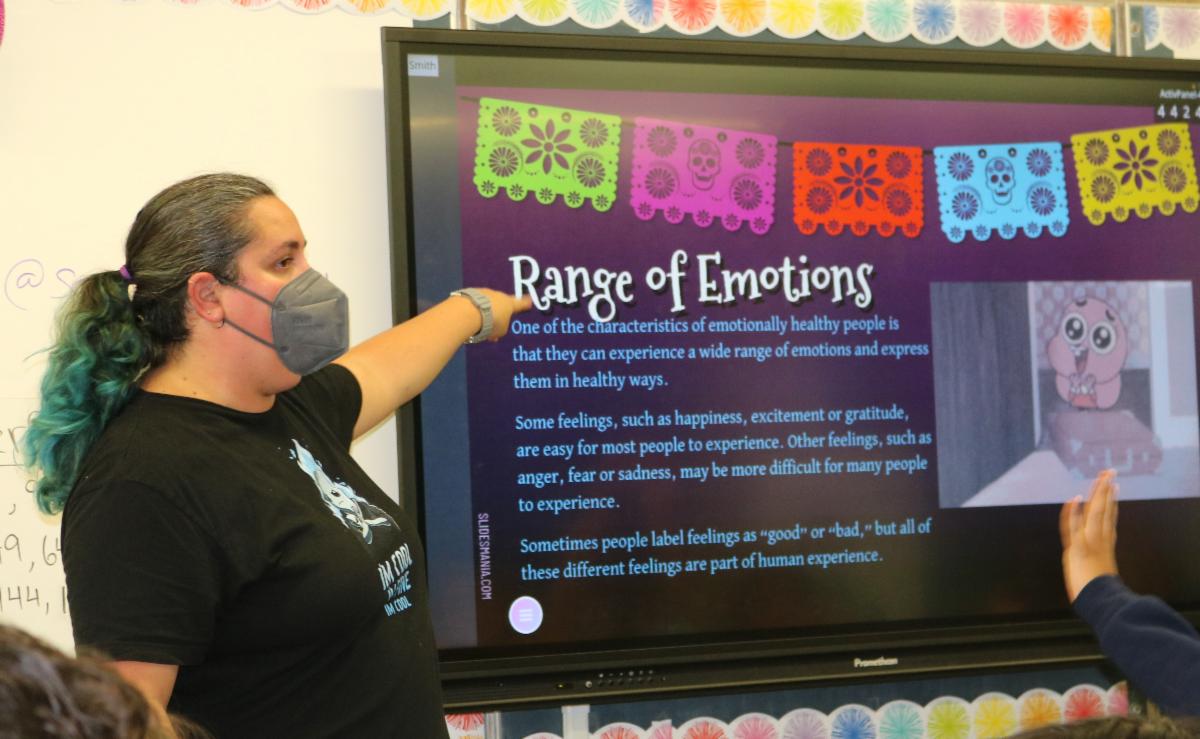
Photo: Health teacher Ann-Marie Smith teaching class at World Journalism Preparatory School (25Q285). Photo by Amy Dawson.
|
|
School Wellness Programs Tips:
-
If you're teaching health this year, join our monthly Online Professional Learning Community sessions to connect with other health educators. Register (opens in new window) for the next meeting on Monday, November 28.
|
|
K-12 Educators: Resources for Incorporating Social Emotional Learning in PE
-
Through effective physical education programs, students can learn and practice physical and social and emotional behaviors that help them succeed in life. Download the free resource Crosswalk (opens in new window) to incorporate social and emotional learning in PE. This document is for those interested in learning about CASEL’s (opens in new window) SEL competencies and related skills, along with SHAPE America’s (opens in new window) National Standards and Grade-Level Outcomes for K-12 Physical Education.
|
|
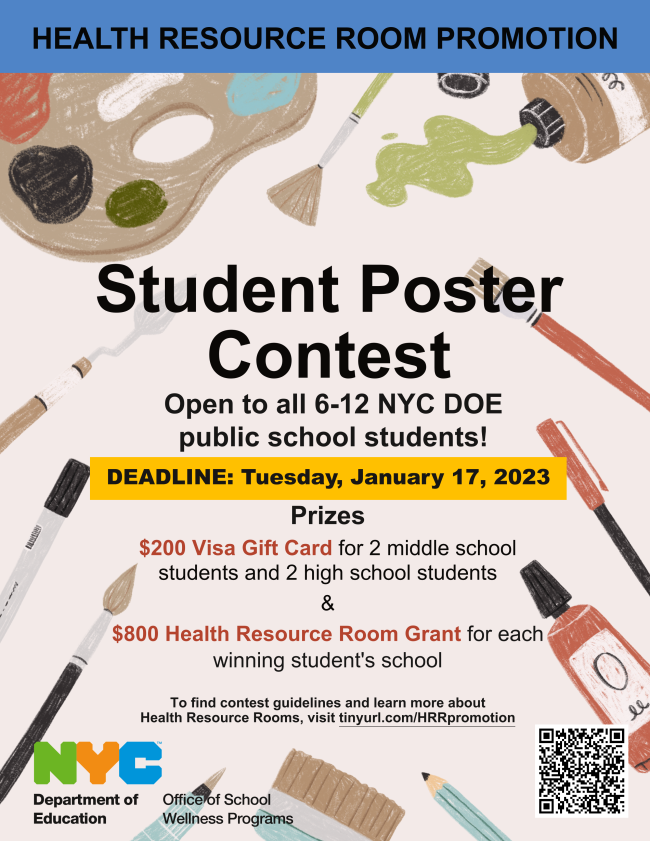
Health Resource Room Student Poster Contest: Student Winners Receive $200 Gift Cards!
Health Resource Rooms are safe, supportive, inclusive places where students in grades 6-12 can receive confidential support and services from trained DOE staff. Students can go to their school’s Health Resource Room to request free:
- information about reproductive and sexual health and other health topics, including puberty and healthy relationships
- referrals to health services, including sexual health services, inside and outside the school building
- condoms (for students in grades 9-12 only)
Prizes: Two winners from middle school and two winners from high school will each receive a $200 Visa gift card in spring 2023; their school will receive an $800 grant in fall 2023 to start or sustain its Health Resource Room. Winning posters will be printed and made available to secondary schools Citywide starting fall 2023.
Encourage your middle and high school students to submit entries via the entry form (opens in new window), which includes contest guidelines and frequently asked questions. Submission deadline is Tuesday, January 17, 2023. Students may choose to submit artwork on their own, or a school staff member may submit artwork on the student’s behalf. Promote the contest in your school using this flyer (opens in new window). Questions? contact CAP2@schools.nyc.gov.
|
|
Building the Wellness Community |
|
High School Students Leadership Opportunity:
Be a DOE Student Wellness Advocate
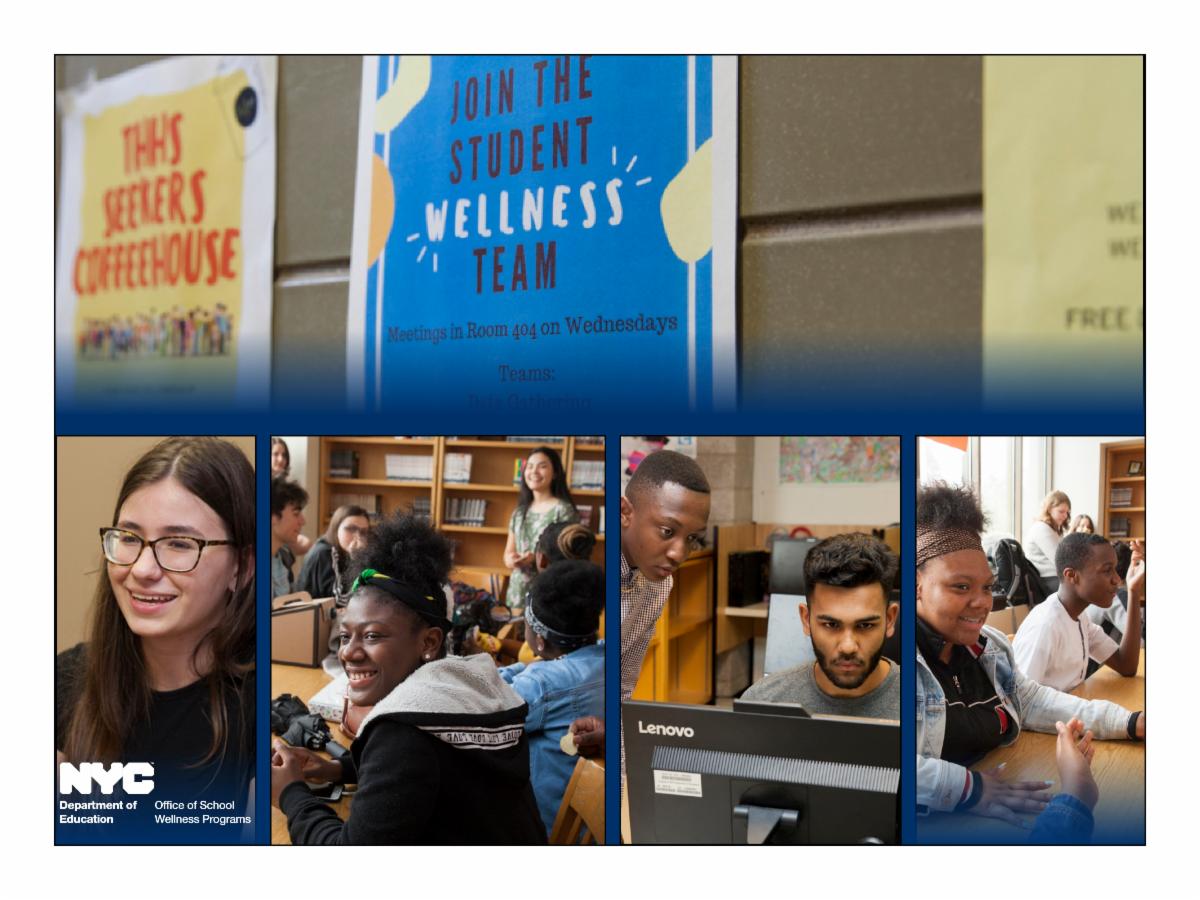
Do you know high school students with untapped potential who want to improve Citywide wellness policies? If you know aspiring advocates, especially from communities that have been historically marginalized, underserved, and underrepresented, check out the 2022-2023 Student Wellness Advocates flyer (opens in new window). Student Wellness Advocates will engage with City leaders in Spring 2023 to learn more about the DOE Citywide Wellness Policy (opens in new window) and share ideas and experiences on policy improvements. Access the flyer for a link to the application (opens in new window) on the Youth Leadership Council (YLC) website, and apply by the deadline of Tuesday, December 6th, 2022.
Meetings will start in February 2023 and run every two weeks until May 2023. The first and last sessions may be in-person at a central meeting location; all other meetings will be conducted virtually.
Educators and School Wellness Councils: Win An Indoor/Outdoor Garden Grow System With the Grow With Us Grant
Connect students with growing food in their schools and understanding the connection between the food they eat, where it comes from, and how to keep themselves and the environment healthy. New York Agriculture in the Classroom is awarding garden grow towers and racks valued at up to $2,700 through the 2022-2023 Grow With Us Grant (opens in new window).
Free Mental Health Tips for Teens from the Child Mind Institute
Mental health challenges are common among teenagers, but many adolescents have trouble getting support when they need it. The Child Mind Institute (opens in new window) rounds up expert advice for supporting teenagers who are dealing with mental health issues. Check out:
|
|
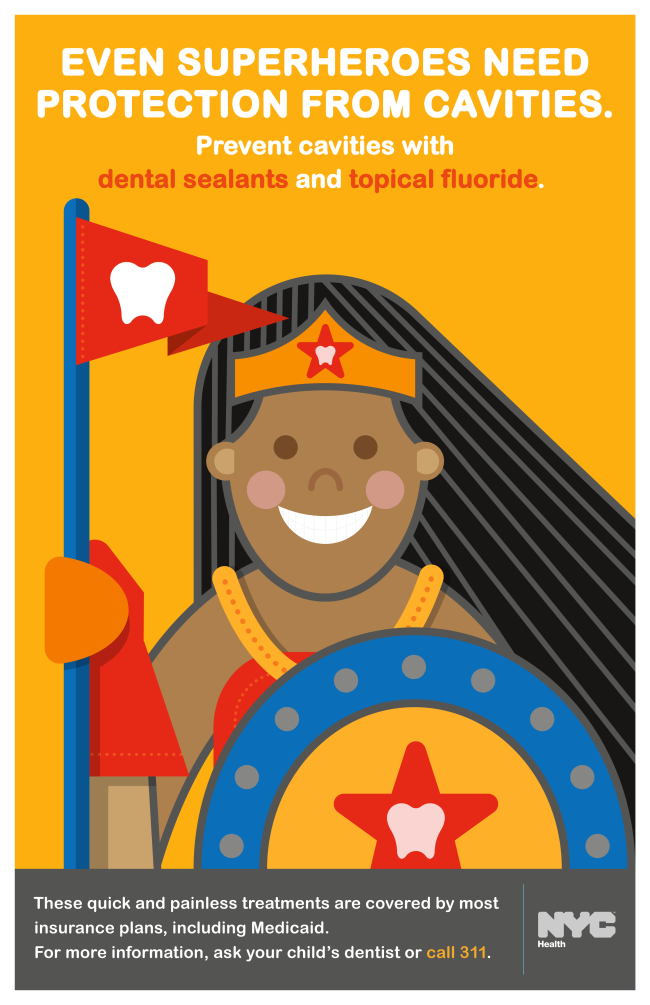
Help Prevent Children's Tooth Decay: Free and Low-Cost Dental Services in Schools
The NYCDOE, in partnership with NYC Department of Health and Mental Hygiene (DOHMH) (opens in new window), offers dental services to students in schools—with parental consent—regardless of whether they have dental insurance, all at no cost. This includes services that take place at fixed clinics located in buildings with School Based Health Centers (SBHCs), and services provided by portable/mobile providers who bring services on-site to buildings throughout the city.
Did you know:
-- Over 900 NYC schools have an approved school-based dental provider.
-- Of the children examined in schools last school year, 35% had untreated cavities.
Students with signed parental consent forms will receive:
- Preventative dental treatments
- Referral for restorative care or, in some programs, provision of restorative care such as fillings at the school
Contact: If your school does not have a dental program or you want to learn more about how you can prevent dental disease, contact NYCDOHMHDental@health.nyc.gov for further assistance.
Find low-cost dental providers throughout the five boroughs:
|
|
|
|
|
|
|