|
| |
IN THIS ISSUE
Policy Corner
News Feed
Training & Events
Resources
Job Announcements
| | |
Hear from 2025 Training Institutes faculty Johanna Bergan who is leading a session on adaptive leadership and the foundational principles of systems of care.
We're bringing together the boldest minds, biggest challenges, and brightest solutions in the field—and you don't want to miss it!
Learn more & register!
| | | |
Policy Corner
Community-Based Opportunities to Prevent Youth Violence
| | |
Our thoughts are with the Florida State University community in the wake of the recent deadly shooting and with all those impacted by community violence. Resources on responding to and preventing community violence, including from the National Child Traumatic Stress Network, are provided below.
Homicide is one of the top five leading causes of death for youth in the U.S., and 23% of high school students have seen someone physically attacked in their neighborhood. National Youth Violence Prevention Week is April 28- May 2, 2025, providing an opportunity to collaborate with youth to lead communities on effective strategies to prevent youth violence.
In 2024, the Centers for Disease Control and Prevention (CDC) released a Community Violence Prevention report that outlines the evidence to help support community violence prevention and promote health and safety. They recommend a public health approach to community violence prevention focused holistically on social determinants of health. They highlight the many policy levers that states can use to reduce youth violence and its impacts, including:
In 2024, 13 states and Washington D.C. appropriated over $520 million towards community violence intervention, including new funding initiatives in Florida and North Carolina. Locally, communities are implementing comprehensive violence prevention plans, with cities like Baltimore attributing significant decreases in fatal and non-fatal shootings and other violent crimes to the implementation of their plan and youth engagement strategy. Contact Innovations Institute to learn more about community-led strategic planning, financing for well-being and violence reduction initiatives, and more.
Resources
Authored by Kate Dormont, MSW candidate, UConn School of Social Work & JD Candidate, UConn Law; MSW Practicum Student, Innovations Institute
| |
April is Second Chance Month
Second Chance Month is a yearly opportunity to to raise awareness about the importance of second chances and the need for systemic changes in the criminal justice system. Join the social media conversation with #SecondChanceMonth and #ReentryMatters to understand the barriers faced after incarceration and the importance of effective reentry programs and policies.
| | | | |
CIBHS Seeks DEIB Consultants
The California Institute for Behavioral Health Solutions (CIBHS) is seeking proposals from qualified consultants or firms to assist in developing and implementing a strategic Diversity, Equity, Inclusion, and Belonging (DEIB) framework. Learn more and submit a proposal by April 30, 2025.
| |
Community Corner*
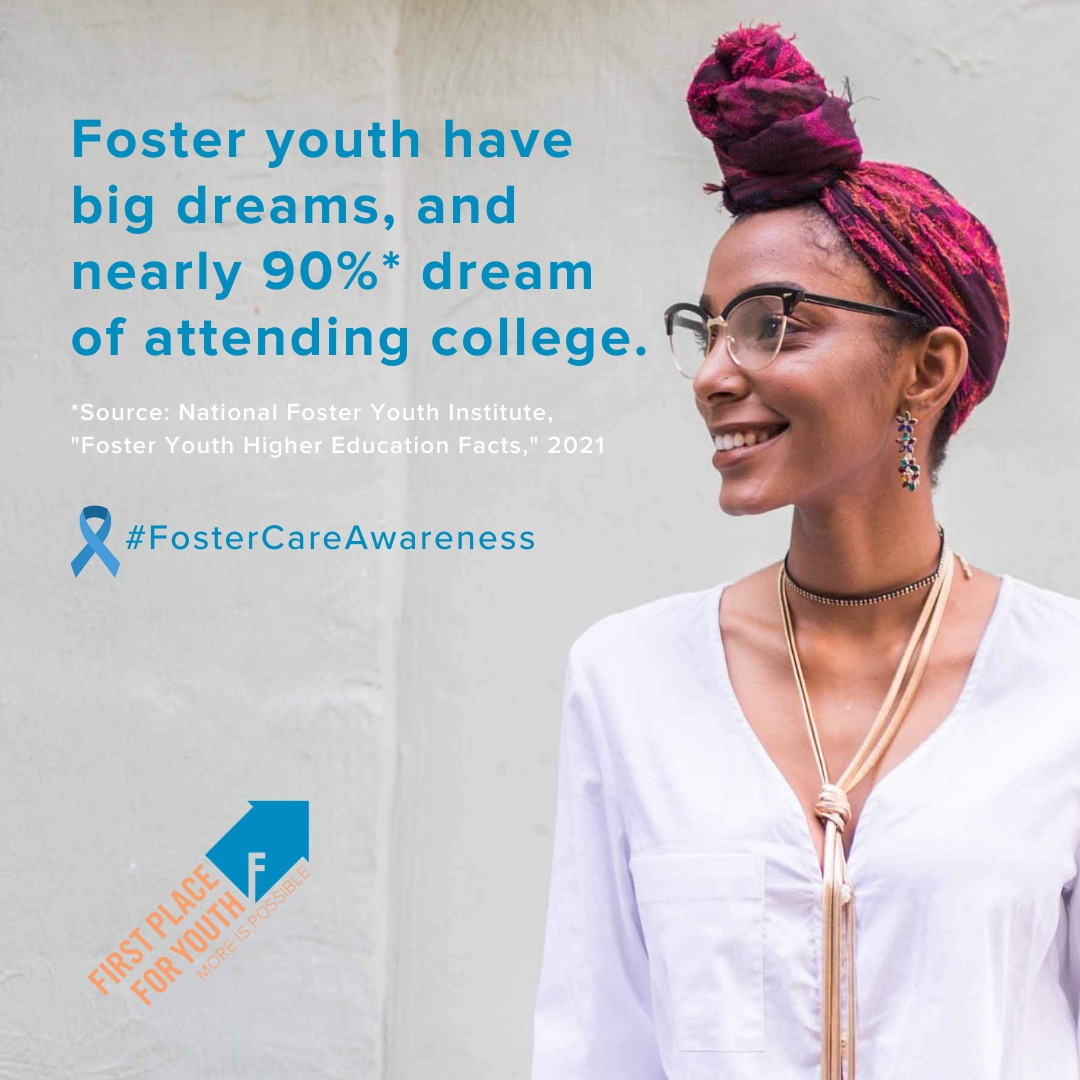
A Trauma-Informed Approach to Empowering Foster Youth
| | The world of business often talks about disrupting industries and breaking cycles, which some nonprofits are now applying to supporting foster youth transitioning to adulthood. A trauma-informed approach is changing lives for foster youth who have experienced significant instability and adverse childhood experiences. Traumatic experiences profoundly impact emotional well-being, cognitive development, and self-esteem well into adulthood. Yet, the results of a trauma-informed approach can be compelling. When implemented effectively, such programs can lead to significant improvements in a foster youth’s life. First Place for Youth, a trauma-informed care program for transition-age youth, employs motivational interviewing and positive youth development to provide tailored support, resources, and strategies to their programming. Fiscal year 2024 data showed after one year 97% of youth are stably housed; 82% are enrolled in education programs; and 85% have obtained employment. According to CEO Thomas G. Lee: “Investing… early can prevent far costlier interventions down the line… It’s about building human capital, strengthening the workforce where everyone contributes.” | | |
*Community Corner features innovative work that transforms child-, youth-, and family-serving systems and services. Send us information about your program or project to be highlighted here by emailing us at TAtelegram@uconn.edu. | | | |
SchoolHouse Connection Webinar
Join to learn about all things Title I, Part A, including creative uses for these funds, strategies for supporting students and staff, practical funding tips, and real-world examples.
Making the Most of Title I, Part A Homeless Set Aside
Tuesday, April 22
2:00 – 3:00 PM ET
| | |
Substance Use Disorder Integration
The 988 Crisis System Response Training and TA Center is hosting a webinar to discuss ways to advance the integration of substance misuse prevention and crisis care.
Advancing Integration Efforts in the Crisis Care Continuum
Thursday, April 24
1:00 – 2:30 PM ET
| | | | |
CTRJJ Webinar
Join the Center for Trauma Recovery and Juvenile Justice (CTRJJ) for an overview of Multidimensional Group Therapy (MGT) and learn about an upcoming learning collaborative opportunity for mental health professionals working with youth in juvenile justice settings that will begin July 2025.
Introduction to MGT
Tuesday, April 29
12:00 – 1:30 PM ET
| |
Free Virtual Conference on Psychosis
This annual virtual event features breakout sessions led by speakers who are experts in the field of psychosis. Attendees can expect to learn more about early identification of psychosis, resources for supporting individuals experiencing symptoms of psychosis, and resources for psychosis care
Psychosis CARE 2025
April 29 & 30
11:30 AM – 3:30 PM ET
| | | | |
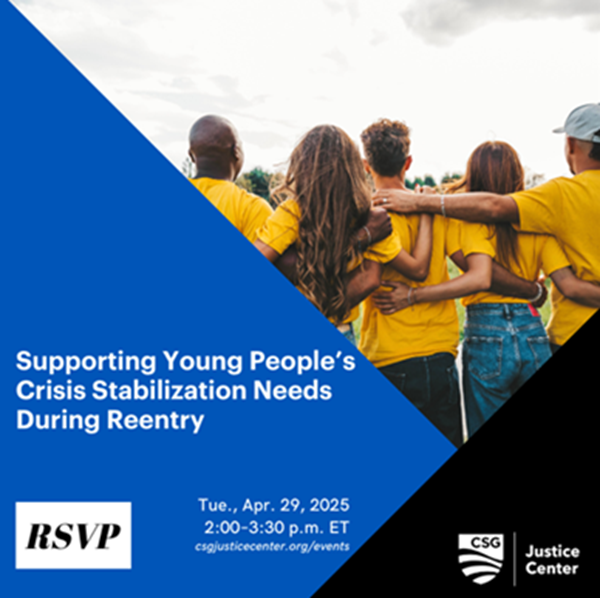
Second Chance Month Webinar
Young people who have been incarcerated and have behavioral health needs face unique reentry challenges. Join the Council of State Governments to hear about effective cross-system collaboration, crisis stabilization, and reentry planning that are contributing to better outcomes.
Supporting Young People's Crisis Stabilization Needs During Reentry
Tuesday, April 29
12:00 – 1:30 PM ET
| |
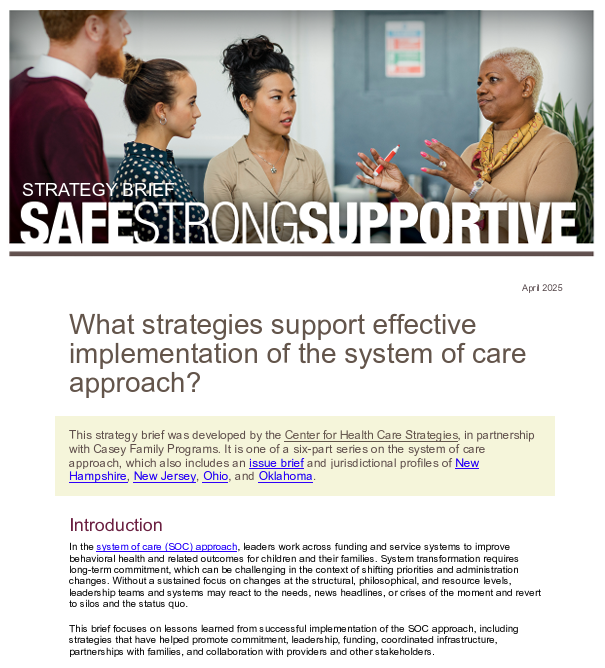
Advancing the System of Care Approach
A new strategy brief developed by the Center for Health Care Strategies with input from Innovations Institute and in partnership with Casey Family Programs, highlights implementation lessons from successful system of care (SOC) efforts across the country. The brief is one of a six-part series on the SOC approach that also includes an issue brief and jurisdictional profiles of New Hampshire, New Jersey, Ohio, and Oklahoma.
| | | | |
National Prevention Blueprint
Existing infrastructure to address mental, emotional, and behavioral (MEB) disorders is fragmented and focuses more on crisis rather than prevention. A new report from the National Academies offers recommendations for addressing this, focusing on building the MEB disorder prevention workforce, ensuring adequate data to support prevention efforts, securing sustainable funding, and providing needed interventions in varied settings.
| | |
Do you have a job opportunity you would like to share with the field?
Be sure to indicate any applicant deadlines.
| | | | |