|
She is alone and helpless.
A mother sits on the floor of her small apartment, holding her baby close as she counts the last few diapers left in the package. Nearly half of U.S. families with young children struggle to afford enough diapers to keep their babies clean, dry, and healthy.
She never thought her life would turn out this way.
Diaper need is often invisible. Unlike food, clothing, or toys, diapers are something families rarely talk about. But they are as essential as they are expensive. Infants need 10 to 12 diaper changes a day, adding up to around $80 to $100 a month. For some parents, any slight change in income—a reduced shift, a sick day, an unexpected bill—can turn an already tight budget into a crisis.
And here’s she is. Regretting past decisions, working for a more disciplined future.
When parents run out of diapers, they improvise. Some stretch the time between changes; some reuse diapers; some skip meals to afford another pack. One in three mothers report cutting back on essentials just to buy diapers. And nearly half of parents experiencing diaper need delay diaper changes because they simply don’t have enough. These small acts of survival come with big consequences: painful rashes, more doctor visits, and overwhelming guilt.
Gazing into the eyes of her little infant melts her heart; her eyes glisten with tears.
And it isn’t just physical health at stake. Parents experiencing diaper need are twice as likely to report feeling depressed nearly every day. Imagine the emotional toll of standing in the baby aisle, doing the math, realizing you must put the diapers back.
She feels the staggering weight of failure closing in on her.
Bottoms Up Diaper Bank collects, stores, and distributes free diapers to families who need help—often providing the only supply moms will receive that month.
And the need is massive. National estimates show it would take over 4.8 billion diapers a year to meet the gap for families with young children living below the poverty level. That number is daunting, but the impact of community giving is undeniable. Each diaper or dollar donated is one that keeps a child dry and represents one less worry for a parent deciding between diapers and dinner.
But here’s the truth: this is not a personal failure. This is a community opportunity.
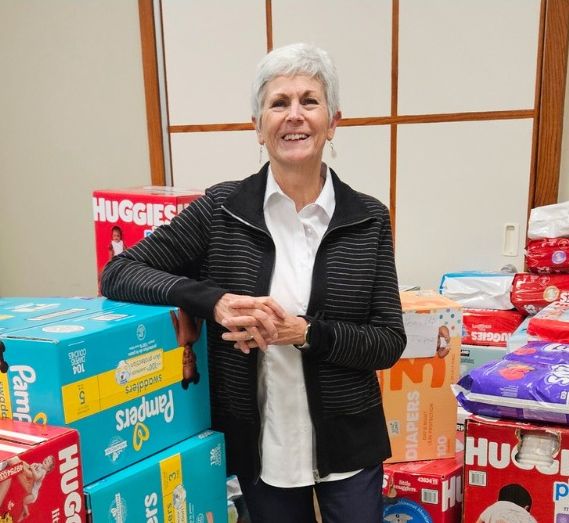
In local neighborhoods, you’ll find countless stories of hope born from simple acts of charity. Volunteers sorting donations, families organizing diaper drives in their schools, coworkers pooling funds, churches filling their lobbies with packs of diapers. Every small gesture becomes part of a larger safety net—one woven not by policy, but by compassion.
As she lays her baby down for the night, she tries not to think about what tomorrow will bring.
Because of Bottoms Up, a mother who once stretched a pack of diapers for days too long now has enough to get her through the week. A father who avoided childcare because he couldn’t provide the daily required supply can return to work. A grandmother raising her grandchildren on a fixed income can breathe a little easier knowing she isn’t alone on this journey.
This mother holds on to hope as she drifts off to sleep. It’s all she has.
Diaper need may be a widespread issue, but the solutions start small: one pack, one donation, one caring neighbor at a time. Bottoms Up lifts families not through everyday kindness—the kind that reminds mothers that their community sees them, supports them, and stands with them.
And no mother should ever sit on her floor, alone and helpless, wondering how she will make just a few diapers last all day.
As she sleeps, she dreams.
In her dreams, she’s not alone.
She’s not helpless.
It’s a dream you and I can make a reality.
|