Weekly News From Los Alamos County
October 28, 2022
|
|
Inside this newsletter, you will find...
The Epidemiology Corner - COVID-19 Update, NMDOH Requests At-Home Positive Tests Reported, WHO on New Variants, COVID-19 data, and more.
|
|
|
|
COVID-19 Update:
New Variants BQ.1/BQ.1.1 Continue Rapid Emergence
as Transmission in County Children Appears to be Increasing...
|
|
Highly Immune Evasive Omicron Variants BQ.1 / BQ.1.1 Continue Their Rapid Rise in US
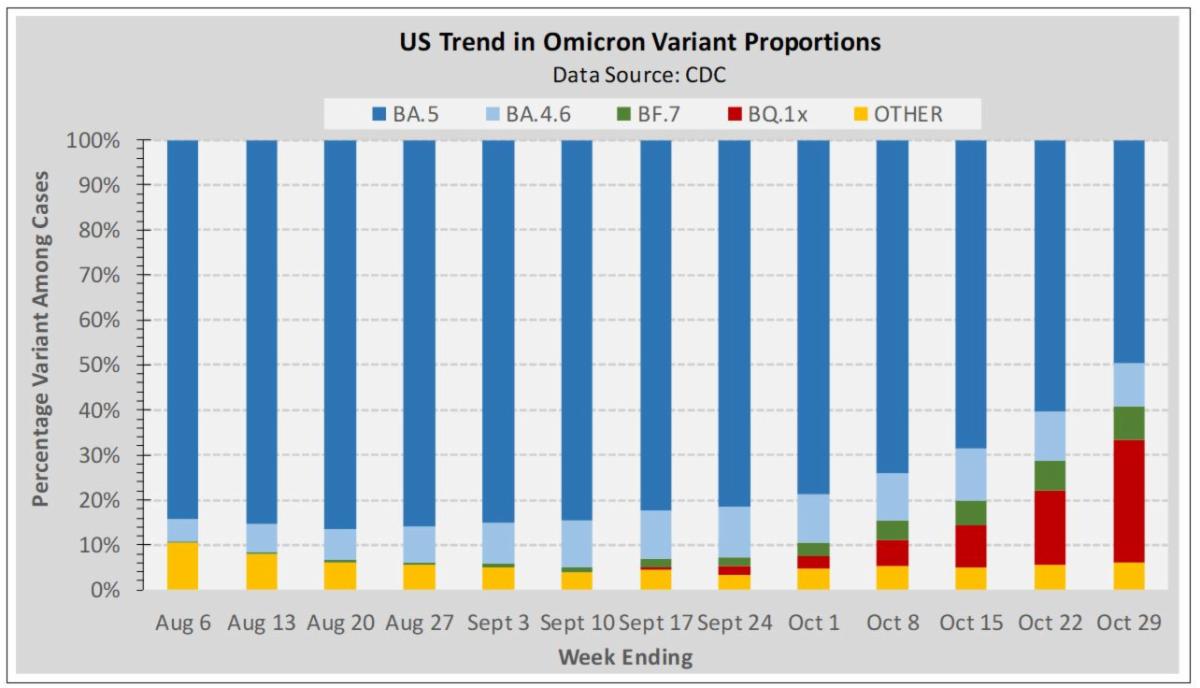
For the week ending October 29, CDC reports that Omicron variants BQ.1 and BQ.1.1 (BQ.1x) roughly doubled again in prevalence from the prior week, and are now clearly outcompeting all other Omicron variants, accounting for 27% of cases nationwide. See HERE A similar pattern of spread is being seen in Europe, where BQ.1x variants are projected to predominate sometime in November and then account for most infections by the beginning of 2023. Current data suggest that the BQ.1x growth advantage is being driven mainly by mutations that enhance resistance to neutralizing antibodies raised by natural infection or vaccination. Early clinical data continues to suggest that BQ.1x infection is not associated with more disease severity than the still widely circulating BA.5 variant. See HERE The CDC highly recommends that all eligible adults and children 5 years and older receive the new COVID-19 bivalent booster, a message echoed by many US health experts. See HERE
|
|
COVID-19 in the County: Gradual Rising Trend in Reported Cases and ED Visits Remains Intact
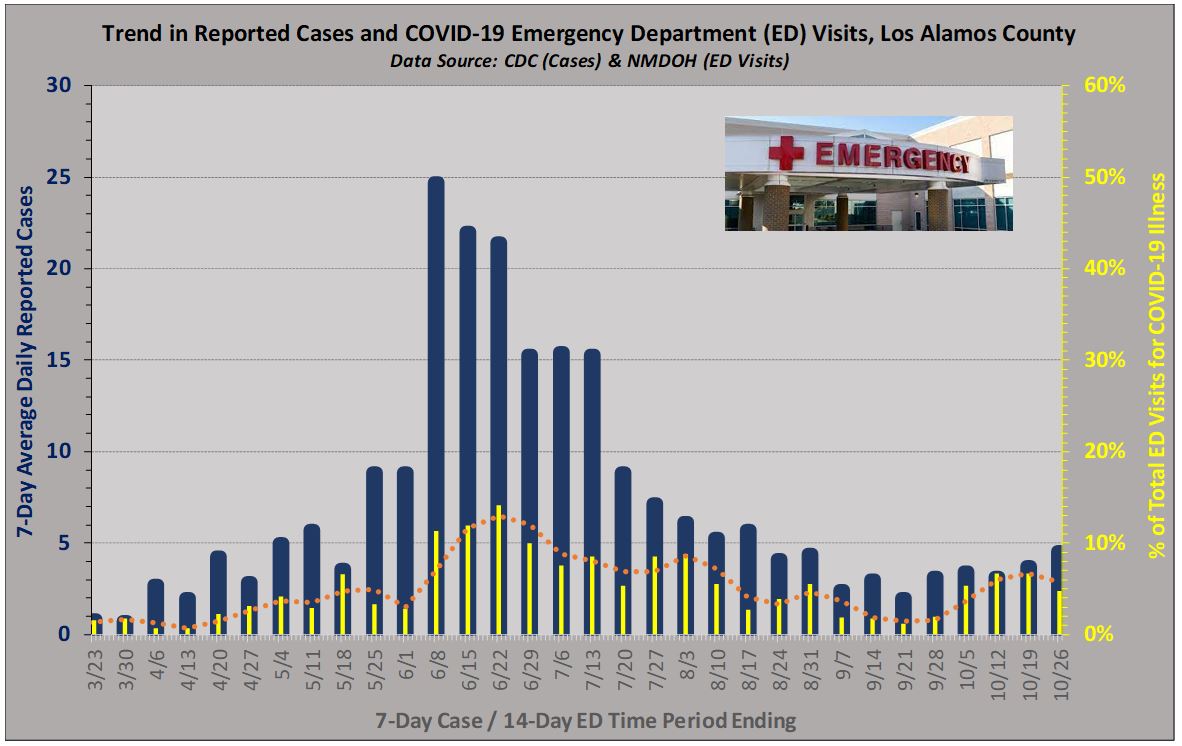
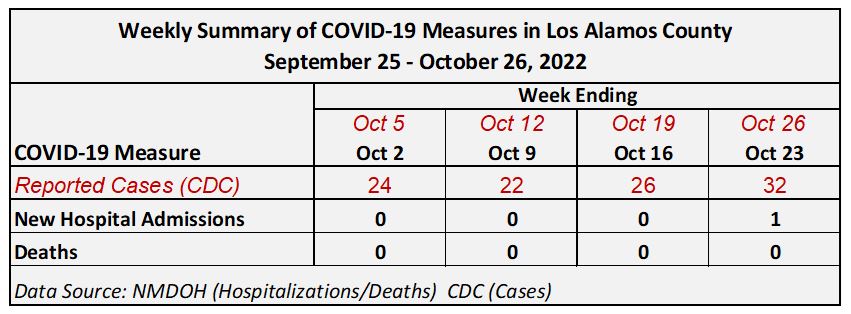
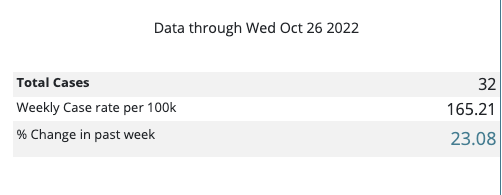
An average of 4.6 cases per day were reported for the week ending October 26 compared to 3.7 cases per day for the immediately preceding week. A sustained pattern of increasing case transmission has been observed since mid-September, which may mark the beginning of the Fall/Winter COVID-19 case wave anticipated by many health authorities. According to the NMDOH, the percentage of ED visits in county residents for COVID-like symptoms decreased modestly from 6.7% to 4.8% for the week ending October 23. See HERE Both disease occurrence measures continue to reflect a higher burden of COVID-19 disease than that observed during the lower burden period of early- to mid-September. As discussed below, children and early teens (0-14 years) are mainly fueling the rise in cases seen in the county in October.
|
|
Wastewater Surveillance Reflects Ongoing Case Transmission in the County
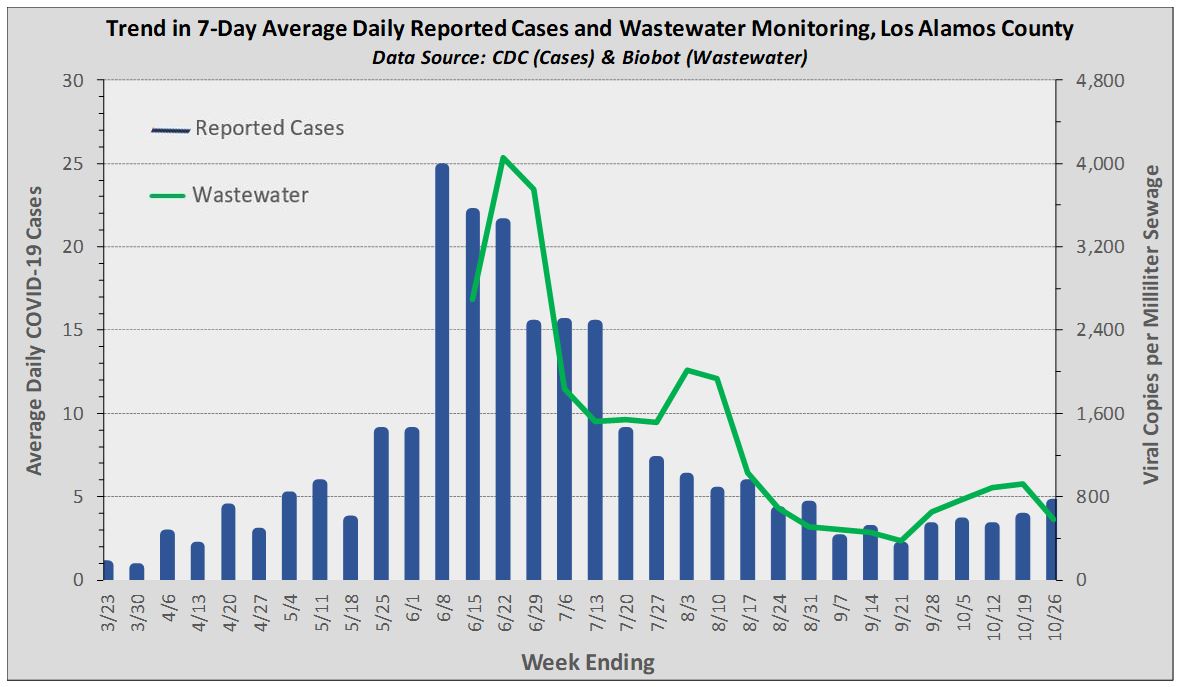
SARS-CoV-2 virus continues to be detected in county municipal wastewater at levels consistent with low level endemic disease. Genomic sequencing of virus detected during the week of October 10 gave the following distribution of variant types: BA.5 (50%) -- BA.2/BA.2.12/BA.2.12.1 (46%) -- BA.4/BA.4.6 (4%). The 50% prevalence of the BA.5 variant in the county is roughly consistent with current nationwide prevalence, and indicates that multiple variants are likely now circulating in the county at measurable levels. See https://biobot.io/data/
|
|
CDC Community Level Remains at LOW for Los Alamos County
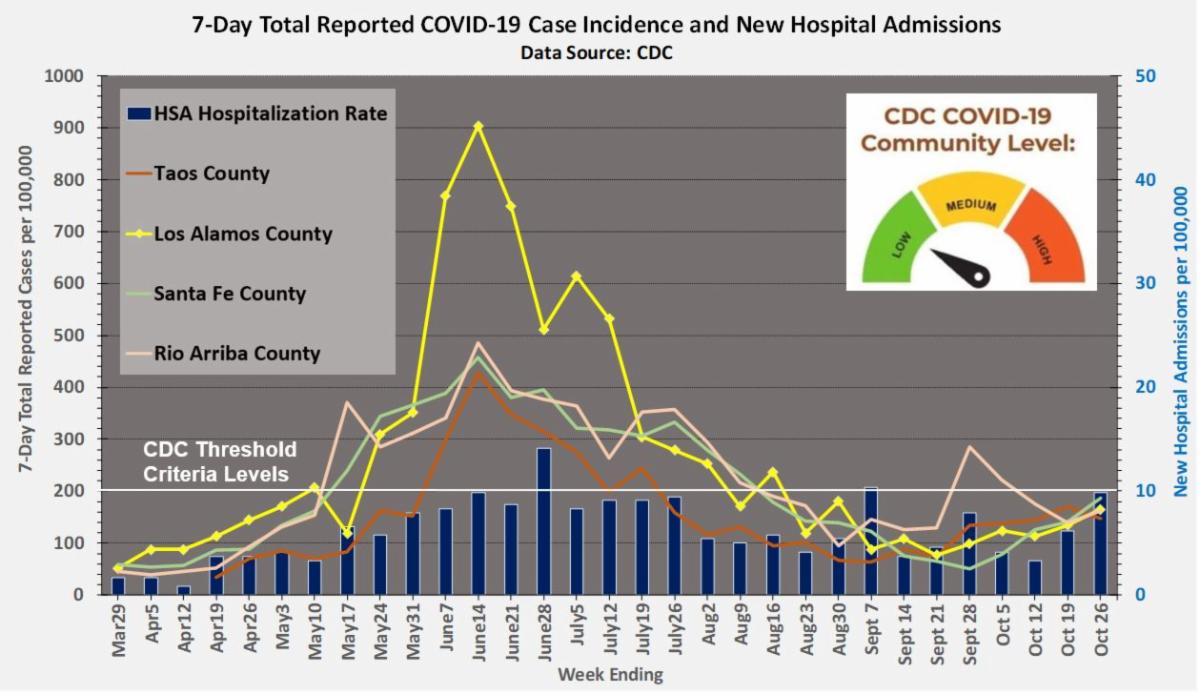
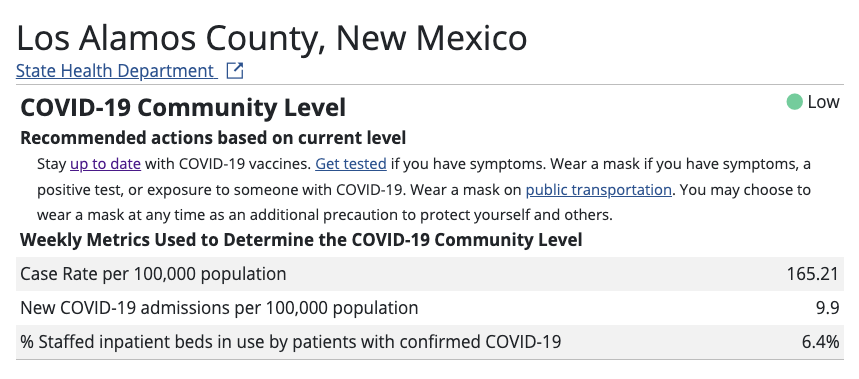
For the week ending October 26, the CDC Community Level for the county remains at LOW. However, new COVID-19 hospital admissions per 100,000 notably increased to 9.9 from the prior week’s value of 6.7 -- indicating that severe disease is still prevalent and may be increasing in the four-county Health Services Area (HSA) population. Weekly case incidence rates in all four HSA counties currently range from 147 to 186 cases per 100,000 and appear to be on a trajectory to soon exceed the CDC threshold level of 200 per 100,000, thereby changing risk classifications to Medium. A concurrent rise in new COVID-19 hospitalizations above the 10 per 100,000 criteria level would result in a classification of High risk.
|
|
COVID-19 Transmission Appears to be Increasing in County Children and Early Teens
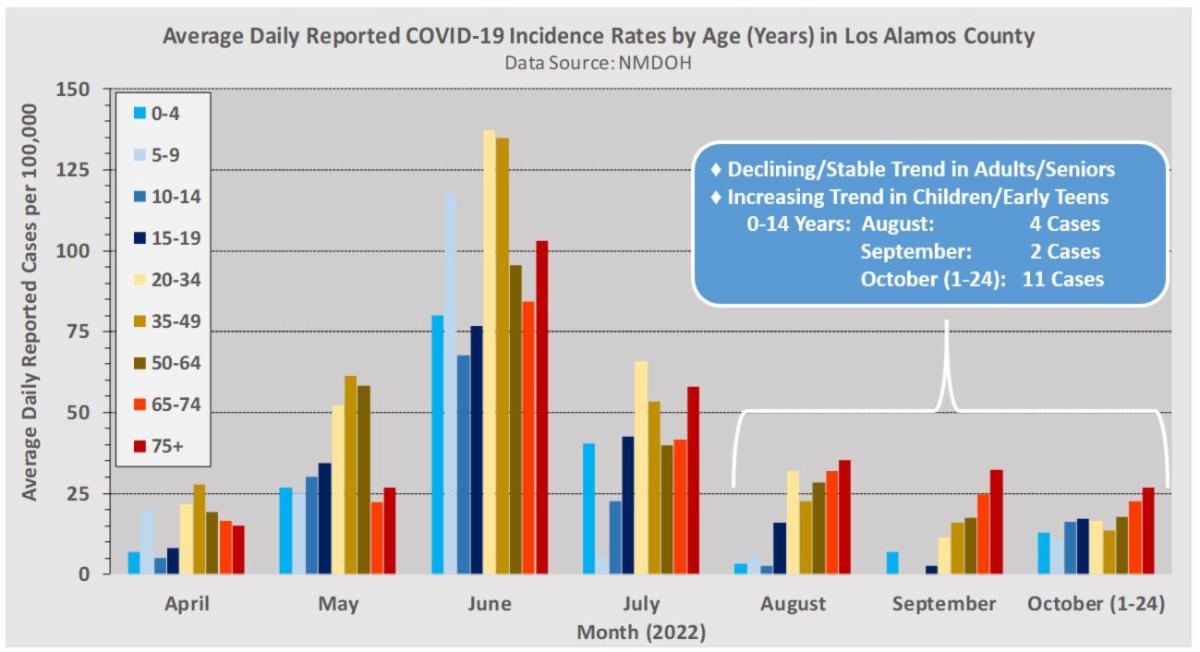
While case transmission in county adults and seniors has been stable or slightly declining since August, cases have been increasing in children and early teens (0-14 years). Whereas 2 to 4 cases were reported in August/September, this jumped to 11 cases for the first three weeks of October. This increased case reporting in the young is mainly what’s fueling the overall rise in case transmission seen in the county going into October. As temperatures have been falling and the cold/flu season is getting well underway, it’s possible that increased COVID-19 PCR testing in response to respiratory symptoms from either cold, flu, or COVID-19 might underlie the rising trend. The widespread availability of at-home rapid COVID-19 antigen testing creates uncertainty and presents a challenge to data interpretation, particularly for short-term trending effects.
|
|
NOTE: The COVID-19 incidence data reviewed here are based on PCR-confirmed testing results compiled by CDC and NMDOH and do not include data on positive at-home antigen tests. As such, case counts are likely underestimated, but how much cannot be determined at any given time point.
To assist with more complete case monitoring in New Mexico, NMDOH provides for online reporting of positive at-home antigen results HERE.
|
|
New Mexicans encouraged to use NM Notify app to report positive COVID-19 home tests
The New Mexico Department of Health (DOH) encourages residents to download the NM Notify app and to report positive COVID-19 home tests on the app. Approximately 760,000 New Mexicans are already using the app to be notified if they’ve likely been exposed, allowing them to reduce the risk for their loved ones, seek timely medical attention, and stay home.
The app uses Bluetooth technology to communicate with other phones that have activated the app. Then, if one of the users verifies an infection of COVID-19, all users that have been in contact with the infected person within a 14-day period will receive a notification of possible exposure. The app then directs users on next steps to prevent additional spread of COVID-19.
The NM Notify app is completely safe and anonymous, and fully protects users’ privacy. No personal data is collected through the app. The app is in wide use in many states and around the globe. According to Google and Apple data, every two downloads of the app can prevent one infection.
To learn more about the NM Notify Exposure Notification app, go to NMNotify.com.
In addition, effective this week, DOH will no longer be using the online self-reporting tool for COVID-19 rapid home tests on its website. The self-reported data represents what we believe to be an exceedingly small fraction of the total positive COVID-19 home tests in the state. Self-reported cases do not meet the CDC definition of a confirmed case and as such, DOH has not been able to submit these to the CDC. Therefore, we are unable to include these cases in our epidemiologic weekly reports found here: https://cv.nmhealth.org/epidemiology-reports/.
Continue to follow CDC guidelines
If you test positive for COVID-19 it’s still important to follow the self-isolation instructions from the Centers for Disease Control and Prevention (CDC). The CDC recommends wearing a mask indoors in public and taking additional precautions if you are at high risk of illness. Please stay home if you have symptoms or an exposure to the virus.
DOH strongly recommends getting vaccinated for both the flu and staying up-to-date on COVID-19 vaccinations and boosters. It is safe to receive both the flu vaccine and the Omicron booster at the same time. Public Health Offices and pharmacies will be offering the vaccines free of charge.
You can check the spread of COVID-19 in the United States as well as in each county in New Mexico by visiting COVID.gov. Let’s all do our part to keep our communities as healthy as possible in New Mexico.
Read the full news release HERE.
|
|
Omicron keeps finding new evolutionary tricks to outsmart our immunity
Throughout the pandemic, the virus that causes COVID-19 has been evolving fast, blindsiding the world with one variant after another.
But the World Health Organization hasn't given a SARS-CoV-2 variant a Greek name in almost a year, a move that's reserved for new variants that do or could have significant public health impacts, such as being more transmissible or causing more severe disease.
That raises the question: Has the evolution of the virus finally started to ebb, possibly making it more predictable? The answer — according to a dozen evolutionary biologists, virologists and immunologists interviewed by NPR — is no.
Instead, the most consequential evolutionary changes have stayed confined to the omicron family, rather than appearing in entirely new variants.
Whereas alpha, beta, gamma and the other named variants sprouted new branches on the SARS-CoV-2 family tree, those limbs were dwarfed by the omicron bough, which is now studded with a plethora of subvariant stems.
"We seem to be seeing for the first time evidence of widescale convergent evolution," Ragonnet-Cronin says. "We have what people are calling a swarm of omicron viruses, which have different ancestries within omicron, but which have the same set of mutations."
Those mutations endow these omicron offspring with the one power they need most right now: the ability to sneak past the immunity that people have built up from getting infected, vaccinated, or both.
Those mutations in the virus's spike protein have been increasing its ability to evade protective antibodies and continue infecting massive numbers of people.
Fortunately, the immunity people have built up from vaccination and infection still appears to be protecting most from serious illness and death.
But the newer highly contagious omicron subvariants could help drive yet another surge. They also give the virus many chances to reproduce, mutate and evolve even more.
A family tree still full of surprises?
While all this sounds dire, omicron's long period of dominance is giving some scientists some hope.
The virus could, in one relatively optimistic scenario, keep evolving this way for a long time, drifting in more subtle evolutionary directions like the flu, without sudden shifts in how it behaves that make it more dangerous.
"The fact that we've perhaps stepped out of a phase [in the pandemic] where we're getting completely new viruses from different parts of the tree sweeping in and dominating might be a sign that we're moving towards a more kind of stable future for the virus," Hodcroft says.
But that would mean large numbers of people would still catch the virus. Many would still get seriously ill, die, or be left with long COVID. And because the virus is still so new, it's impossible to know how the virus might evolve in the future, experts tell NPR.
There's no way to rule out, for example, the possibility that a dramatically different variant might emerge yet again, perhaps after simmering inside someone with a compromised immune system that can't drive out the virus. That lets the virus extensively interact with the human immune system and find even more advantageous mutations.
To read the full article, click HERE.
|
|
WHO advisers weigh in on Omicron XBB and BQ.1 subvariants
After meeting earlier this week to review Omicron developments, the World Health Organization (WHO) SARS-CoV-2 virus evolution advisory group held off on designating XBB and BQ.1 sublineages as variants of concern.
In an announcement yesterday, the group said it will reassess the situation regularly. The group's announcement comes as BQ.1 proportions are rapidly rising in Europe and the United States.
Possible reinfection risk, but no sign of severity increase
The WHO advisory group said XBB and BQ.1 don't currently diverge sufficiently from each other or from other Omicron lineages that have extra immune escape mutations to warrant a variant of concern designation or a new label. "The two sublineages remain part of Omicron, which continues to be a variant of concern," the group said.
So far, XBB—a recombinant of the BA.2.10.1 and BA.2.75 subvariants—has been detected in 35 countries and has a 1.3% global prevalence. The group said XBB hasn't been consistently linked with an increase in new infections, but they added that early evidence suggests a higher reinfection risk, especially to people infected before the Omicron variant began circulating. XBB's potential to drive new infection waves might depend on both the size and timing of earlier Omicron waves and COVID-19 vaccine coverage.
BQ.1 is a BA.5 subvariant, and BQ.1.1 has an additional spike mutation at a key antigenic site. Between them, 65 countries have detected the viruses, which have a 6% global prevalence.
The WHO group said BQ.1 viruses have a growth advantage over other Omicron lineages in many settings, including Europe and the United States, which requires close monitoring and may pose a greater reinfection risk.
So far, there is no evidence of an increase in disease severity with either XBB or BQ.1 viruses.
European cases now declining
In a weekly update today, the European Centre for Disease Prevention and Control (ECDC) said COVID cases and deaths declined slightly last week, with hospitalization levels remaining stable. Infections in people ages 65 and older, which had been increasing over the past few weeks, declined by 2%.
The ECDC said it has reclassified BQ.1 as a variant of interest and that it represents a rapidly increasing proportion of variant detections over the European region.
Meanwhile, the United Kingdom's Health Security Agency (HSA) said yesterday that most COVID indicators decreased last week compared to the previous week. Hospitalizations are still highest in people ages 85 and older.
Mary Ramsay, MBBS, director of the HSA's public health programs, said the drop in COVID cases and hospitalizations is encouraging and points to the success of the country's autumn booster program, during which 10 million have already received their shots. However, she warned the public not to become complacent, given that cases could rise quickly again throughout the winter.
US markers stable, with rising BQ.1 proportions
In its updated variant proportion estimates today, the US Centers for Disease Control and Prevention (CDC) reported another steady rise in BQ.1 and BQ.1.1, which together make up 27.1% of subtyped lineages.
The proportion of BA.5 viruses continues to drop steadily and is now at 49.6%, down from 60.3% the week before. Region 2, which includes New York, New Jersey, Puerto Rico, and the US Virgin Islands, has the highest proportion of BQ.1 and BQ.1.1 viruses.
Currently, US cases have been declining slowly since July, with the US 7-day average for new daily cases at 38,167 today, according to the Washington Post tracker. Deaths have held steady since July, with the 7-day average for new daily deaths at 461 today, according to the Post data.
So far, 22.8 million people have received the updated COVID booster, according to the CDC's latest data.
|
|
|
Do you still consider COVID when making holiday plans?
|
|
Yes. I don't do things I used to do.
|
|
|
|
|
Yes. I do the same things, but take precautions.
|
|
|
|
|
No. I get vaccinated so I don't have to worry.
|
|
|
|
|
No. I carry on like normal and don't worry about it.
|
|
|
|
|
|
|
Los Alamos Vaccine & Booster Information |
|
How do I know if I'm eligible for a vaccine or booster?
Follow these links to review the CDC eligibility guidelines:
|
|
Los Alamos County COVID Vaccine/Booster Resources
Visit the County COVID Page for information regarding vaccinations/boosters, click below:
|
|
CDC COVID Data Tracker - October 28, 2022
To get today's break down of positive case data, demographics information, vaccine status and more for Los Alamos County or other counties across the United States, click HERE
|
|
NMDOH Epidemiology Reports - Daily and Weekly Data
As part of the COVID-19 pandemic response, NMDOH collects and analyzes statewide data for COVID-19 positive cases, hospitalizations, and deaths. The reports reflect these critical data and are updated weekly - click HERE
|
|
We are listening to you!
Your feedback is helping to shape future newsletters, inform decisions regarding services, and make Los Alamos County healthier and safer. Make sure to participate each week to be heard!
|
|
Remember, we appreciate your questions! We always try to respond in a timely manner, and if appropriate, we will include those Q&As in future newsletters.
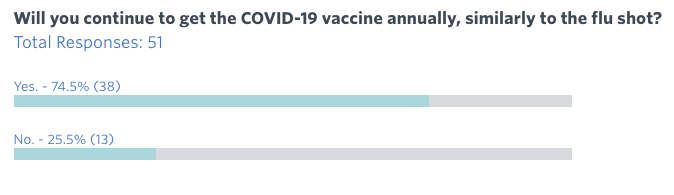
Take a look at these results from the last survey:
|
|
Have a question? Email us. |
|
Los Alamos Testing Information |
|
Los Alamos County COVID Testing Resources
Visit the County COVID Page for information regarding testing, click below:
|
|
Los Alamos Treatment Information |
|
Los Alamos County COVID Treatment Resources
Visit the County COVID Page for information regarding treatments, click below:
|
|
What else would you like to see in this newsletter?
Click below to email us your feedback and questions!
|
|
|
|
|
|
|