|
Cass Named 2023 Volunteer of the Year
by Saluda Business Association
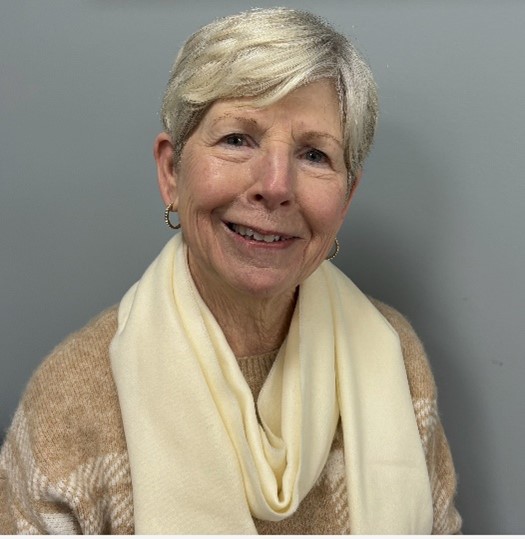
Lynn Cass has been named the Cathy Jackson Volunteer of the Year for 2023 by the Saluda Business Association. A social in her honor will be held from 3 to 5 pm, Sunday, January 28, at Saluda Studios, 144 US-176.
Since moving to Saluda in 2009, Cass’s efforts have resulted in the founding of the nonprofit Saluda Downtown Foundation, Inc., the founding of Saluda Living in Place (SLIP), the creation of the healthy living program On Track Saluda, historic preservation, and the encouragement of communications between social service organizations through Saluda Connections.
“Cass’s ideas, leadership and organization have led to the founding of many programs that have had profound impact on our community,” said Stephanie Winterrowd, president of the Saluda Business Association. “Her work and dedication have laid the groundwork for these efforts to continue in the future to serve Saluda and help preserve this wonderful community.”
After retiring and moving to Saluda from Macon, GA, Cass attended a meeting about preserving Saluda’s history and historic preservation. Cass had served on historic preservation committees in Macon and Georgia and was drawn to Saluda’s history and Main Street. The Historic Saluda Committee was formed by the Saluda Board of Commissioners and Cass served as the first chairperson of the committee. A year later she ran for the Board of City Commissioners and served for four years. City Hall was renovated during her time on the board to help preserve the historic building.
As a commissioner, Cass and the city worked with the State of North Carolina to get a Small-Town Main Street designation for Saluda. Public meetings were held to gain insight from residents about economic development, marketing and promotions for the town’s future, and beautification of Main Street. As a result of Small-Town Main Street, the 501(c)3 charitable organization Saluda Downtown Foundation, Inc., was created to promote the arts, cultural development, beautification, historic preservation and economic development in its downtown. Cass served as the first president of the foundation, which was responsible for Saluda’s branding, creation of a community concert series, and promotion of Saluda’s small businesses through grants and programs. She currently serves as its treasurer.
In 2015, Cass read the book Being Mortal and learned of the nationwide movement to help people stay in their homes as they age. She discussed the book with the Outreach Committee at the Church of the Transfiguration. The discussion led to the founding in 2016 of Saluda Living in Place (SLIP).
“We knew Saluda had so many aging people who did not want to leave this place. They wanted to stay in Saluda,” said Cass.
SLIP offers social programs, educational programs, and seminars. Volunteers take residents to doctor appointments and to events to help get them out of the house. The organization also does assessments of homes to improve home safety and accessibility. Cass served on the first board of SLIP and as chair for five years. In 2017 it received its 501(c)3 nonprofit status from the IRS.
During the organization of SLIP, Cass and other founding members realized the importance of healthy eating, exercise and social interaction. They read about Blue Zones, an organization that was based on the habits of the world’s communities with the greatest longevity. The City of Brevard became a Blue Zone and initiated healthy living habits. Cass organized a meeting with Brevard’s Blue Zone representative and from there Saluda volunteers got organized and created On Track Saluda, a program under SLIP. A kickoff for the program was held in June 2023 with more than 200 residents attending to eat healthy food, learn about group exercising initiatives, and how to be more involved in the community through volunteering.
Cass observed that many of Saluda’s social service organizations were working to accomplish many of the same goals and proposed a monthly meeting of representatives from churches and Saluda nonprofits called Saluda Connections. More than 25 representatives from nonprofits and churches attended the first meeting. Saluda Connections continues meeting each month at 9:30 am on the first Thursday of each month at the Church of the Transfiguration.
“It’s important for us all to take care of each other and be there for each other,” Cass said.
The Saluda Business Association began awarding the Cathy Jackson
Volunteer of the Year in 2021
with Cathy Jackson as the first recipient.
| |
art...beauty...theatre...poetry...life | |
|
A RETURN TO ZORO’S FIELD:
Saluda’s Walden for the Modern Age
by Jeanne Ferran
In the 1970s, a young poet wandered into Saluda. Years later he returned, established a homestead, and lived a contemplative farming life on the edge of the Green River Gamelands, living off the land for over 4 years. This is the story of his experiment, his famous book, and his friendship with Saludian Paul Rhodes.
”For almost four years this has been my home, where I am again amongst the familiar faunal faces of my youth: black bear, wild turkey, hedgehog, peregrine falcon, gray fox, ruffed grouse, blacksnake, copperhead, and the everpresent crows. With the gift of a roof over my head, enough cleared land to garden, and few interruptions or temptations from the outside world, I have set up house and garden to take Thoreau’s Walden experience even more self-sufficiently into the deep woods. To try to discover firsthand the organic and natural rhythms of the God-given world, as well as the ritual essences of self-sufficiency, self-confidence, and the purging of psychological fears. Where on full-moon nights I sit by the fire in deep thought, contemplating a physics of wildness based on commonsense familiarity and observation borne of a life lived at the (true) speed of life. A speed borne of wilderness. A life lived doing the wild work.”
--Thomas Rain Crowe, Zoro’s Field
| |
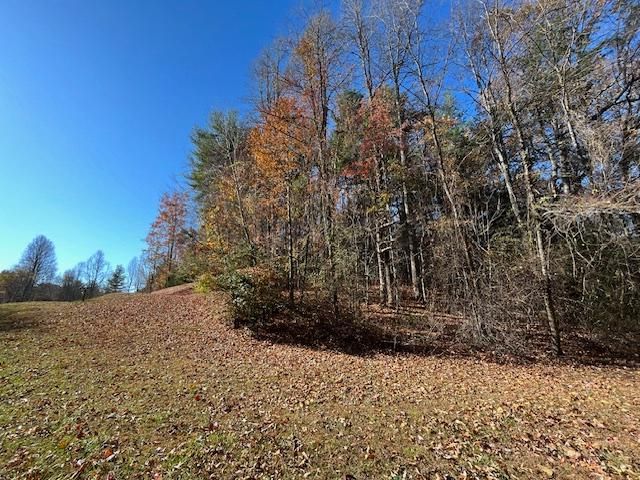
On a sunny Sunday morning in late October, Paul Rhodes, 5th generation Saludian, local historian, avid reader, and my guide for today’s quest, climbs into my truck. We are not going geographically far: within a few minutes the paved road turns to dirt, a cloud of dust billows in the rear-view mirror,and we cut under the Interstate as we head toward the Gamelands. We can barely hear the Green River roaring through the gorge below us over the roar of interstate traffic. But soon, we are back in the quiet on a narrow gravel road where birds flicker through branches of trees that have nearly lost all their foliage for the coming winter.
| |
“That’s where Walt Johnson’s home place was,” he tells me, and points to a jade-green pond on the side of the gravel road, catching and casting the trees that bow over it in its reflection. The embankments rise on the sunken road, worn down from hundreds of years of use as an old trading route, then rises again and breaks out of the woods. “And here,” he points past a terraced orchard and a row of towering hemlocks to a little clearing. “Here’s Zoro’s Field.”
| |
In the early 1970’s, a young poet named Thomas Dawson, then a student at Furman University, visited Saluda to see the Guice Bridge before the interstate was complete. He got lost at the end of a dirt road and ended up in Walt Johnson’s Mountain homestead. Walt introduced him to his neighbor Gelolo “Mac” McHugh, who became a father-figure, a teacher, and a friend, and the pair developed a relationship “akin to Emerson and Thoreau.” Dawson visited Saluda more frequently than he attended his college classes, eschewing lectures for farm chores with the Guice family and, with Walt Johnson, renovating the one-room cabin on the edge of Zoro’s field that he would eventually call home.
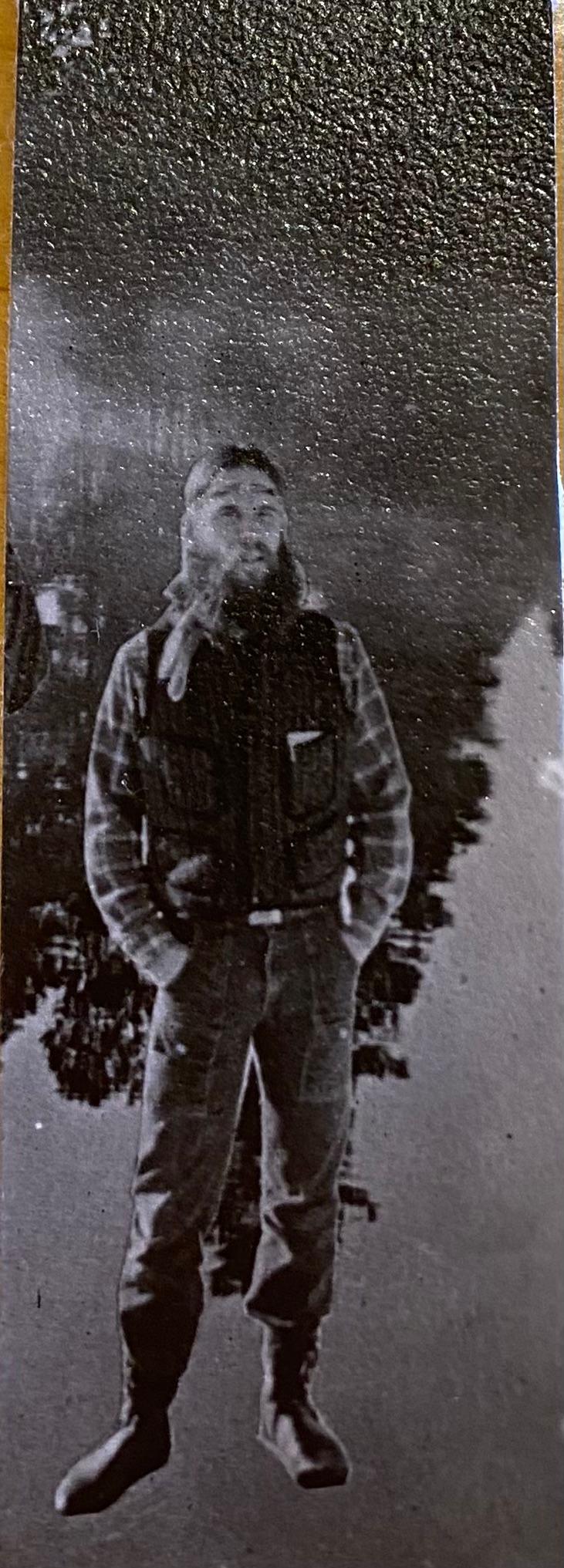
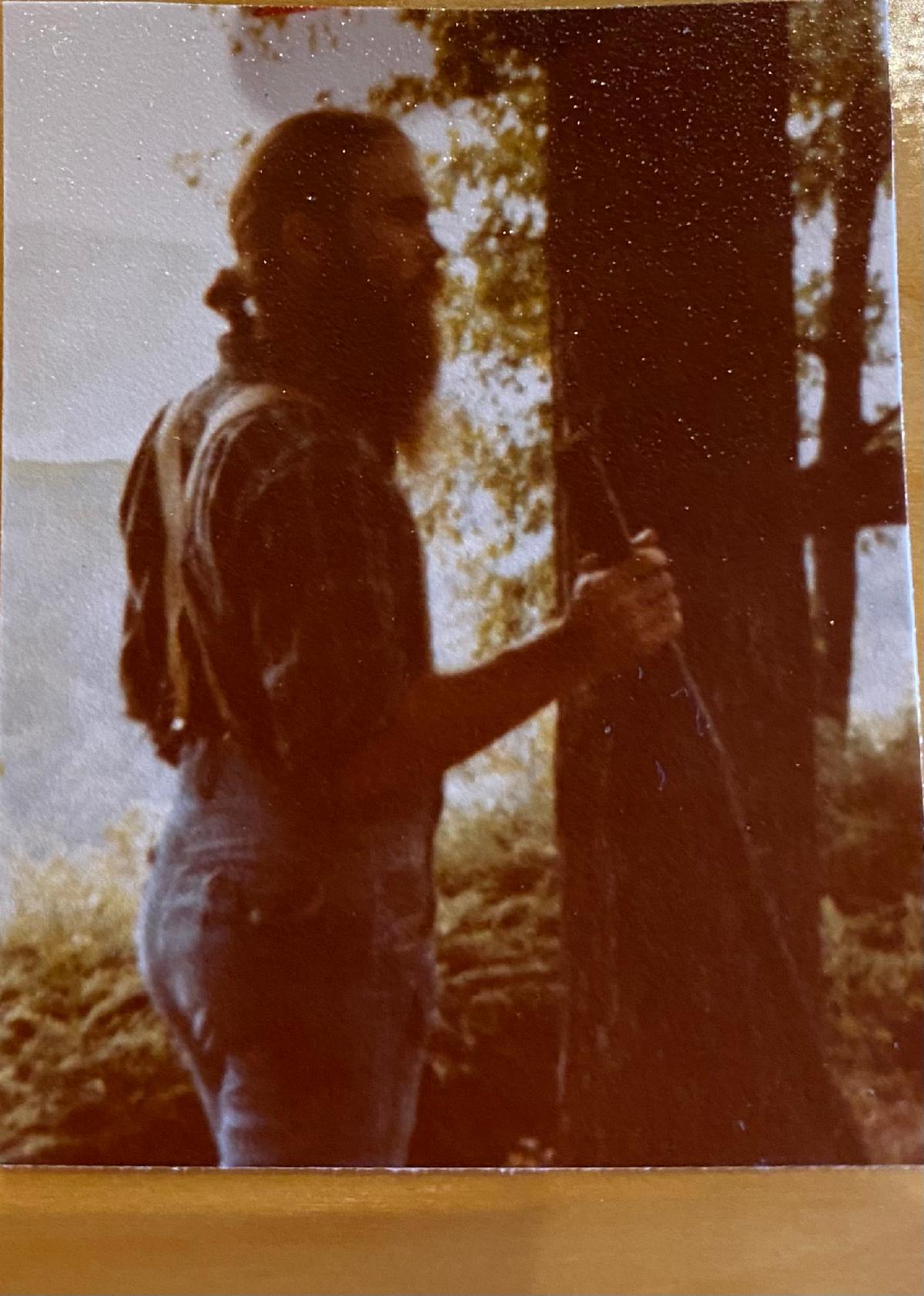
“This is where I met Tom,” Paul smiles. We are on the edge of the field where the cabin used to be. “I was housesitting for the McHughes, and when I showed up, this guy with long hair and full beard wearing white leather buckskins opened the door. The McHughes had given him permission to homestead what was once the old Guice property. I was about 26 at the time, getting ready to do my student teaching at Cherokee High School. When Tom moved in, he didn’t have a car, so I would bring him to get supplies. We became good friends, exchanging books and ideas. I was even there when he changed his name. He had hitchhiked to Robbinsville to see his Cherokee friend David Crowe and help him with a fence when he heard a yellow-billed cuckoo. Thomas asked what it was and David told him it was a raincrow. And that was that.”
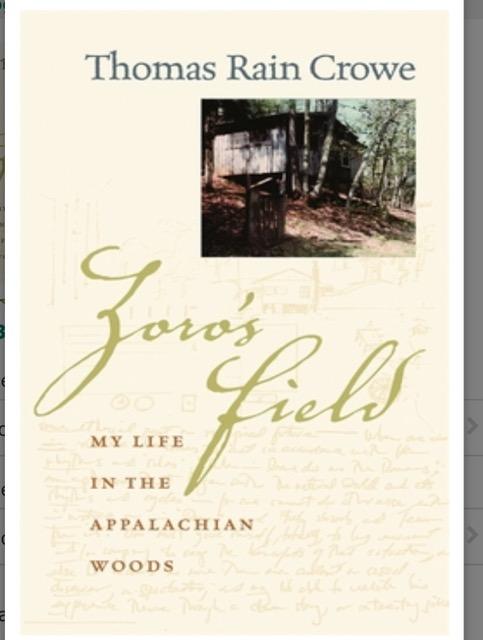
After traveling the world, cutting his literary teeth in France and San Francisco, Dawson returned to Western North Carolina under the urging of poet Gary Snyder to “do the work.” That “work,” as it turned out, was the start of a cultural movement that is a foundational principle of Saludians today and was the subject of Thomas Rain Crowe (nee Dawson)’s famous book, Zoro’s Field.
| |
Zoro’s Field begins with the following paragraph:
“While sitting on his front porch looking out over the hills surrounding the Green River Gorge where his kin had farmed and fought the landscape and the elements for generations, local legend and mountain sage Zoro Guice turned to me and said, ‘The best way to learn about life, nature, and these mountains is just to go out into the woods and set down in one spot and let the nature and the teachings come to you…. Then all of nature and everything he needs to know will pass before him like a parade.’”
In the book, Crowe states, “I never meant to come here. It all happened rather serendipitously- a lark that led to something stronger, more compelling, profound. I did what Joseph Campbell has called following your bliss - which led me here to the outskirts of a mountaintop farm and a small clearing surrounded by poplars and pines… scratching out an existence from the field that once fed the Zoro Guice family with rhubarb, mustard greens, Irish potatoes, and pole beans, and that now feeds me.” These friendships between Crowe and Saluda’s mountain- wisdom bearers, young and old, including Rhodes, are chronicled in the book. For four years (twice as long as Thoreau’s experiment at Walden Pond) Crowe lived by the signs and seasons in the off-the-grid cabin on the edge of the old Howard Gap Road trade route that he had helped Walt Johnson build years prior as a “new native,” and diligently logged meditations on carving a life out of the soil and the lessons he learned about the contemplative, deliberate life, free from the burdens of modern living. These musings eventually became Zoro’s Field, undoubtedly, the most famous book to ever be written about Saluda, and it has won numerous awards, including the Phillip D. Reed Memorial Award for Outstanding Writing on the Southern Environment.
| |
On a rainy November day not long after Paul and I ventured to Zoro’s field, my fiancé and I drove to the 150 year old farmhouse overlooking the Tuckasegee River where Crowe now lives with his partner Nan. Large cords of fresh split firewood were stacked neatly next to a 1980s model Tacoma.
“I got a splitter now,” Crowe laughs. He is dressed warmly in a wool sweater, his brown hair framing his tanned face. “I don’t do everything the hard way anymore.”
The house is warm and cozy. We settle in a sun-drenched living room, the scent of freshly baked gingerbread wafts from the kitchen. As one can imagine, books and memorabilia from a life of purpose cover the walls and shelves. Birds, dozens of them, flit around the feeders in the yard. “I got really into the birds during my years in Zoro’s field,” he says. “I got to know them as individuals, not as a species.” He settles into an armchair next to the woodstove, his warm, lively eyes dancing as we recall mutual friends, stomping grounds, and fishing spots (and the Sticky Buns from Wildflour Bakery). Even though Crowe’s experiment happened almost 50 years ago, it is not hard to imagine this still-youthful man carving out his existence with nothing but handheld tools, his own will, and guidance from a few dry-humored mountain men in a field in Saluda.
In the early 1950s, the Dawson family moved to Memphis, Tennessee, where as a young man, he would play in the woods and cotton gin of the old plantation that became Graceland. When Thomas was in the second grade, the family moved to Robbinsville, where he spent his formative years exploring the Nantahala Forest and befriending the children in the Snowbird Cherokee community. In high school his family moved again to Waynesboro, Virginia, where he would explore the Charlottesville music scene, followed by a short stay in Bethlehem, Pennsylvania. At the time of his high school graduation, the shadow of the Vietnam War and the draft cast heavily before him, Thomas made the choice to enroll in college at Furman University, where he stayed in school as a conscientious objector. He organized anti-war protest marches and was joined at the South Carolina capital by Allen Ginsberg. But he spent most of his time exploring the Appalachian foothills, eventually finding Saluda. “This was the best thing that came out of that time,” he says.
| |
After Crowe graduated, he chased a dream of being a poet to France. He worked at a convent, then at a farm but contracted undulant fever. He visited Mont Saint Michel and looked East over the Atlantic Ocean and felt the tug to go back to America. He moved to a farm in Fort Wayne, Indiana, because he wanted to understand the bottom line of American culture and economy. “I wanted to get to know the experience of the American farmer and how the government and corporations are changing the farming industry, which is the bedrock of our culture,” he says.
| |
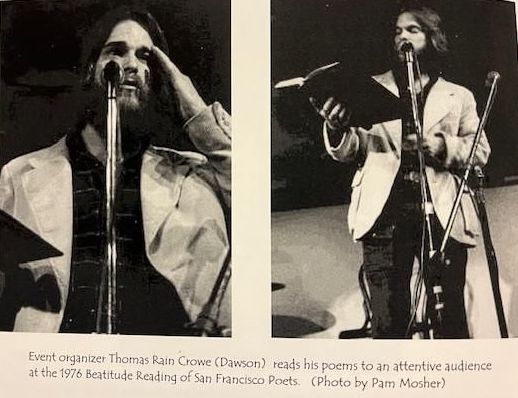
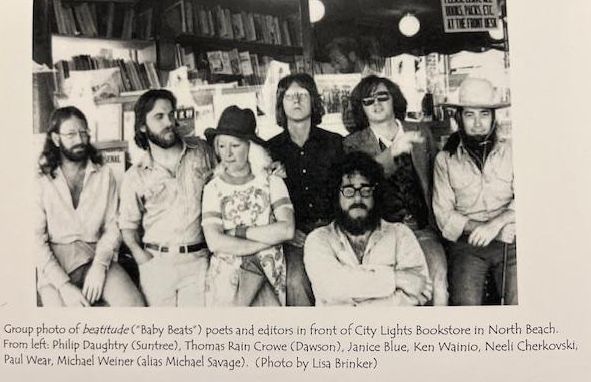
By the time Thomas Rain Crowe moved to San Francisco in the 1970’s, the Beats were “raising” a new generation of poets. Alongside predecessors Allen Ginsberg, Bob Kaufman, Lawrence Ferhlengetti, Diane diPrima and others, Crowe and the “Baby Beats” revived Beatitude literary magazine, a cultural force which helped usher in San Francisco’s second renaissance. Writing and working alongside his idols, Crowe helped stage literary festivals and political protests.
But it was poet and mentor Gary Snyder who told Thomas to go home. “I was in my mid-twenties, living in a tipi in the Sierras, when Gary Snyder told me to go home and do the work!” Thomas laughs heartily. “I felt like he was kicking me out!” But he wasn’t. He was urging Crowe as a disciple: to replicate the experiment of bioregionalism and intentional living that began in the tradition of Henry David Thoreau. And so, Crowe left the intentional Buddhist and Native American community at an old Maidu ceremonial village in northern California where he was “riding a wild stallion bareback…to tend fields of comfrey…and make cheese and yogurt from goats” to settle in Saluda, on the cusp of winter, in a little cabin he had helped an elder mountain man build years before, without power or water.
| |
“Thoreau lived at Walden Pond for two years and two months. I lived at Zoro’s Field for 4 years and four months,” he grins. “The Sierras in California reflect the energy of the people- it’s young and frenetic. But the Appalachians are old and so you reflect on yourself.”
Crowe’s meditations describe the hard work required to carve an agrarian life, but he takes us with him on the journey. From Zoro Guice scolding him for not keeping his tools sharp to Walt Johnson tricking him in eating a “red okra,” Crowe reflects on his lessons about self-reliance, teamwork, companionship, and the unity that is created when people are doing hard work side by side. Crowe’s musings are humble and honest, blending Eastern philosophy and Western energy, as he shows deference to his mentors and the patience to slow down and pay attention– two of our 21st century deficits. For example, he writes of learning how to use a woodstove, delivered by Saludian Gary Pace, “The use and maintenance of a woodstove demands more than the usual amount of diligence, not to mention sensitivity and skill... Over time, however, one learns to run it almost on instinct- albeit with a healthy dose of respect.” Throughout the book, Crowe shows how “doing the work”- from digging his root cellar to hand- breaking the half-acre garden to collecting and splitting wood- is a meditation in itself, and it is the work our minds and bodies are meant to do.
Crowe makes a call to action for everyone to live as a new native- that is, to “come to live in a place, either physically or mentally, for the first time and yet feel it is truly home. New natives are caretakers of the old as well as heralds of the new. They come to a place with a sense of reverence and responsibility, recognizing that it is their inherent duty to respect the past, enjoy the present, and safeguard the future.” Because America’s culture is breaking away from the natural world, it is our work to live more at the pace of nature. But we cannot do it alone. At the core of this belief is to work with your community. He says,“It’s important that we build relationships with other people. Instead of working in opposition, we must work with our neighbors. In hard times we help each other.”
Crowe spent the majority of his time in Saluda planning, growing, tending, maintaining, and harvesting his half-acre, and in this task, he learned a great deal from his mentors, even when to break the rules. “Tom’s garden was a work of art,” Paul affirms. “He had plants everywhere.” Scattered through the garden were also a woodshed, a greenhouse, an arbor, a compost pit, trellises, heirloom rhubarb from Zoro Guice, beehives, and a sweat lodge. “It was beautiful, but it was also functional. He just knew intuitively where to put things. Tom threw himself into this labor.”
In the book, Crowe describes how, by living in balance with the natural world, he was able to live a life of peace and security and was able to avoid many of the ailments of modern living. Despite long periods of isolation, Crowe avoided depression and sadness. His cultivated life had given him time and energy to be productive and creative. “I kept a daily journal for gardening and harvesting. I wrote down when birds returned, looking for cyclical relationships. I could recognize individual birds- that’s how far removed from the world I was,” he smiled. “Living at Zoro’s Field was one of the most important periods in my life. It changed the way I wrote, thought, and lived. I learned how to be self-sufficient. I’ve tried to hang on to as much of that life as I could.”
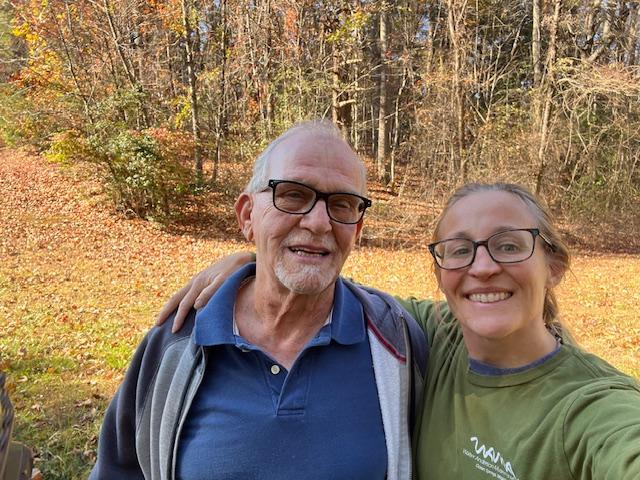
Paul Rhodes of the Fork Creek Rhodes family is a kind and gentle man whose black rimmed glasses frame eyes with a depth of wisdom and understanding. You may know Paul if you are a patron at the Saluda Library, where he (very fittingly) works. Within a recent ten-minute conversation, Paul quoted Bradbury, Shakespeare, and Yeats as well as explored the origin of the Cherokee people based on genetic research. “I’ve always loved to read,” Paul said, “and I was fortunate to have people in my life to foster that.” In a chapter about community and friendship in Zoro’s Field, Crowe praises Paul’s woodsman, storytelling, and linguistic skills. He writes, “Paul is not only one of the best-informed people I’ve met in my stay in Polk County, but one of the best read.and not just on the subject of history. ‘You ever notice that your beard grows faster during a new moon?’ he asked me one day recently, after we’d spent the better part of an hour discussing the economic theories of Karl Marx. These kinds of leaps of mind in conversation are comparable to, for me, what happens in the best poems. What the long jump is to a track athlete, ideas and images are to a poet. In Paul Rhodes, rapid fire associations are made in thought and are vocalized in speech patterns that are a wonderful union of past, present, and future. From Boris Spassky and international chess matches to bee balm and booby owls in a heartbeat.”
Paul says, “Meeting Tom was like meeting a kindred spirit. We constantly shared knowledge and literature. He was motivated by ideas and publishing his writing. We were energetic, idealistic young men, and we loved exchanging ideas. We would discuss science fiction, especially Asimov, because science fiction offered new possibilities. We loved discussing Cherokee culture. On one trip we went out to explore Judaculla Rock. We would point that old Green Ford Truck and head out.” He continues, “I think Tom’s time in Saluda helped him find himself. It changed him. Before he came to Saluda, he was a wanderer. But now he is sedentary. And he wasn’t serious all the time. Once, we went to Cherokee, and he wore his buckskin. A rowdy looking guy asked him if he was from Jerusalem. He replied, “Nope! But close! San Francisco!” Tom and the Cherokee immediately became friends. Tom was like that. He could become friends and relate with everybody. And he could talk to anybody.”
| |
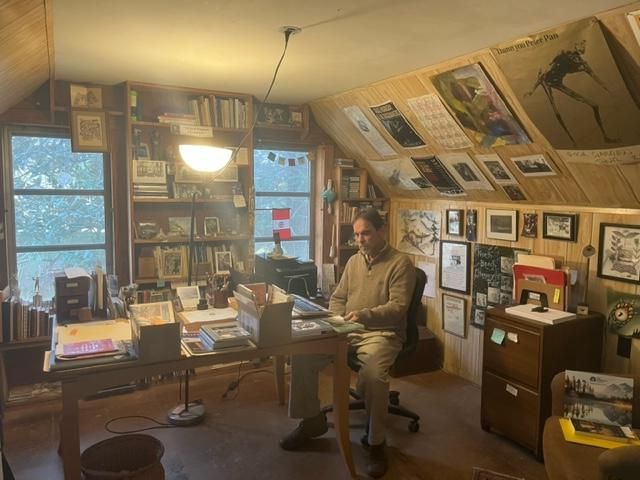
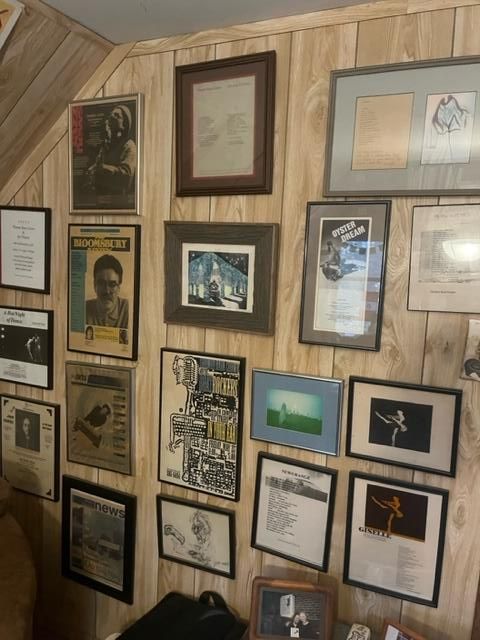
In Crowe’s office, music posters from previous shows, framed copies of poems, watercolors, Native American prints, newspaper clippings, and awards line the slanted walls, and Crowe takes a seat at his writing desk, stacked with books and papers and projects he is currently working on. An image of Thoreau with the words “All good things are wild and free” hangs in the center of the room. “This looks like Carl Sandburg’s office,” I say.
“I used to get my manure from the goats at Connemara,” he replies. “I would clean the stalls on non-visitor days. They would even let me go up into his office. So, I would wear his visor and sit at his desk and read through his papers!” A boyish grin spreads across his youthful face. “I’ve had a good life. I’ve always just done what feels right. I think with the body and the heart, with intuition. There’s a plan or a destiny for all of us when we arrive in these bodies. I’ve just followed my bliss, as Joseph Campbell says.”
Zoro’s Field is no longer a garden mosaic brimming with life. Now it is grounds for a gravel parking lot and an industrial shed. And Thomas Rain Crowe no longer lives in Saluda. When his mentors passed away and the land was considered for development, he moved to an intentional community in Mars Hill, but a near- fatal automobile accident rendered him unable to farm and with mounting bills. “I had a real hard time adjusting to the real world,” he said. But he began working at a local newspaper. He moved to Webster, then to Cullowhee, where he met his current partner Nan in the early 1990s. “We had just met, and we were both working for the University. But we both needed a place to live. So, what did we do? We went to Wales and traveled, and I was given permission to write each day in Dylan Thomas’s house!”
When they returned to the States, he began writing features for the Smoky Mountain News, and for whom he still writes book reviews. He compiled his journals and notes from his experience at Zoro’s Field and published an article in the paper, and the response was so overwhelming, the articles became featured. And so, once a month for two years, the chronicle of life at Zoro’s Field came to be. Poet and writer John Lane urged Crowe to send it to the University of Georgia Press, and the book was published in 2006 to critical acclaim.
|
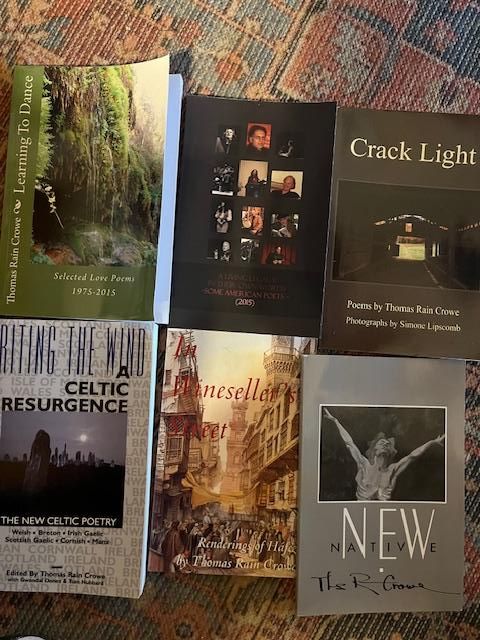 |  | Crowe’s work in bioregionalism has taken him in other directions as well. He founded the Project to Identify and Protect Native American Sacred Sites in the Southern Appalachians project, he also helped create a bioregional journal and worked with the Muddy Sneakers program, which engages elementary students across the state to explore the ecosystem through experiential learning. He also started New Native Press, which gives voice to indigenous and threatened languages, and for a time he performed with his band The Boatrockers, which put his spoken word poetry to music. Throughout his life, among other things, he has written and published poetry. Some of these original works include the Laugharne poems (published from the experience at Dylan Thomas’s boathouse), New Native, Crack Light, and Learning to Dance. He has also edited a Celtic anthology (Writing the Wind: A Celtic Resurgence) and The Inner Trees: selected poems of Yvan Goll, and Drunk on the Wine of the Beloved, a translation of Sufi mystic Hafiz.
“These days I participate in bioregional and dialoguing computer zooms,” he says. “I, also, in my advanced age, share poetry and writing with young people. Gary Snyder, Thomas Berry and other poets and thinkers did the same for me, so now I have to pass it on, too.”
| |
May it Continue, by Thomas Rain Crowe
May the brown earth and the green leaves
Thrive in color and in grace.
May it continue.
May the clear air and the cumulocirrus clouds
Be there in the sky and in each breath, always.
May it continue.
May the water made of sweet minerals and salt
In small streams and large rivers
Flow forever and forever flow to the seas.
May it continue.
May the sun shine warm and bright
And the moon give light at night- shining from shook foil.
May it continue.
May the beautiful birds of Hawaii and
The luminous parrots of Peru fly far and fast
And may their number grow.
May it continue.
May the deer and the eld, the antelope and the ibis
Move and migrate, leap and lope across plain
And wooded plateau.
May it continue.
May the whale and the dolphin and the manatee
Swim deep in dark oceans and lagoons and sing.
May it continue.
May the elephants forever in families roam,
Trunk to tail, trumpeting bliss.
May it continue.
May waves of warm frost linger in bush and blaze
That puts fire in the peat or loam.
And let lick cry from ripe vine.
May it continue.
May the rose climb through
The cold murmur of morning dirt.
May dark mulch coax tendrils from sleep.
May it continue.
May wild words come flying on green coils and
May juice in rock rustle with blue moss
In the sound of song.
May it continue.
Thomas Rain Crowe is hoping to visit Saluda sometime in the near future.
Do you have a question or a topic you want to explore about Saluda’s flora and fauna?
Please email jmferran1@gmail.com.
| |
|
JIM CARSON AIS OPA
WORKSHOP: MASTERING THE LIGHT AND SHADOW FORMAT
SUNDAY-TUESDAY. FEBRUARY 18-20, 2024
9:00 AM-4:00PM
JIM CARSON STUDIO/GALLERY. 20-2 MAIN STREET. SALUDA, N.C.
COST: $450
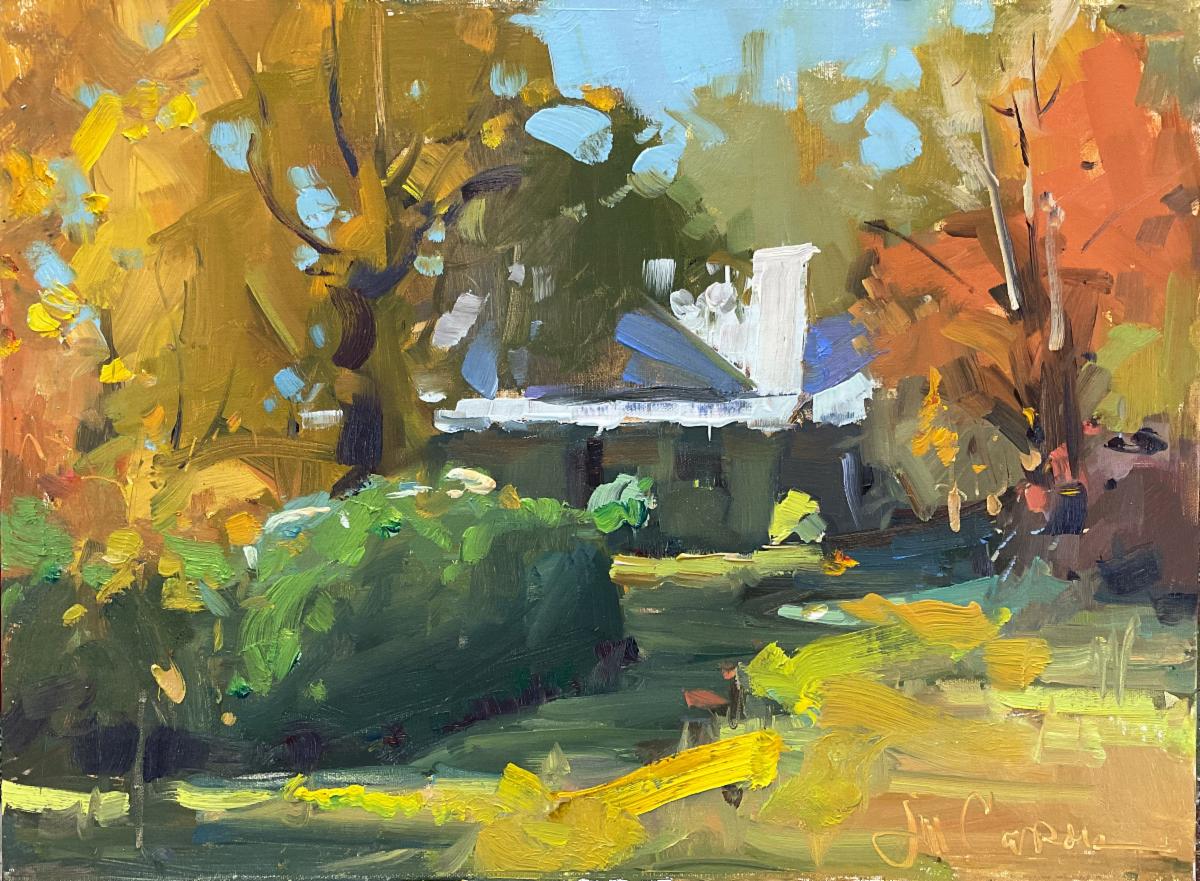
This indoor oil/acrylic workshop will focus on the Impressionist Painter’s favorite painting format: Light and Shadow.
The student will discover how to see the unique patterns of light and shadow in a scene , and then learn how to block those patterns in on the canvas. Discovering these patterns both in the scene and then on your painting will give your paintings a new solidity, structure, and pop.
Remember, you cannot learn how to finish a painting until you learn how to start one, and this process is helpful for making great starts.
The accompanying painting, titled “A Saluda Fall” 12x16, is an example of using these patterns.
The workshop is limited to eight (8) students, so as to give both students and the teacher more access to each other.
To sign up and hold a place, send a deposit of $200 by way of the payment method on my web site at www.jimcarson.net, or if not available, use Venmo ,Jim Carson 16, or send a check to 151 Archer Rd., ,Saluda, N.C. 28773. The balance is due by February 5.
You will receive a materials list and instructions after registration.
Jim’s Studio/Gallery at 20-2 Main St., in Saluda, N.C. is open, in the Winter, on Friday-Sunday, 11:00 AM-5:00 PM, and Monday-Thursday by appointment or chance.
For more information, email jimcarson151@gmail.com,
call 828 7493702(studio), 828 8173376 (cell), or visit www.jimcarson.net.
| |
|
The Saluda INNsider Scoop
Lauren Ketwitz and Natalya Arkell
In this month’s Saluda business owner highlight, we had the pleasure of sitting down with Joel Kirby and Jay Burriss, the owners, and rescuers, of the Saluda Inn. As many may remember, the Inn stood unoccupied for years before Joel and Jay decided to completely transform it into the architectural and stylistic masterpiece that it is today.
Joel and Jay’s tasteful attention to detail paired with their extensive experience as large-scale event planners created a little slice of heaven for those looking to connect with a unique piece of Saluda’s history, while also enjoying modern luxurious comfort.
Reinventing the Inn required the two to pour their energy, love, and care into every decision they made, and also plenty of trust in the process. Even from the outside, it’s clear their vision materialized into what Joel accurately described as “a feast for the eyes”.
While perfecting the Inn itself was important, Joel and Jay had so much more in mind for what their efforts would mean for the residents, businesses, and namesake of Saluda in the years to come.
“
We are the temporary guardians of the Inn because we believe this place was meant to be here forever,” Joel said. “When the time comes for us to pass the baton we hope it continues to give back to Saluda.”
For the two owners, the Inn is all about bringing the community closer together. The other bars and BnBs in town are the opposite of competition for the Inn; without them, Saludians and visitors would lose the important power of choice.
“We’re all supporting each other,” Jay said. “We each provide different atmospheres for our guests, and the important thing is to ensure people are finding a place where they’re comfortable.”
Just like fostering the connection between businesses, Joel and Jay also believe that lasting personal connections play a huge role in Saluda’s upkeep. With such a small population, familiar faces appear everywhere you go. It’s those relationships that are made over time and trust that truly are the heartbeat of this town.
“Friends are the family you get to choose,” Joel said. “If you know someone you care about here, keep them close, because they’ll always be there to support you.”
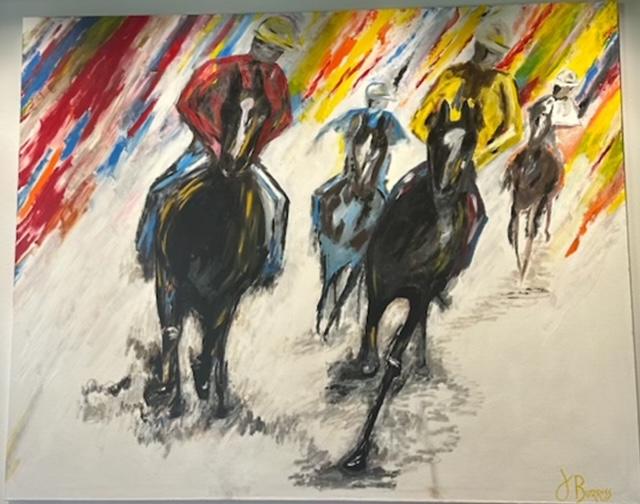
Now that the Inn has been completed, Joel and Jay have more time to embrace their favorite things outside of work. They both love the outdoors, whether it be taking their two Cavalier King Charles Spaniels, Bodie and Cooper, on a stroll around town, or a hike around the Carl Sandburg home in Flat Rock. Additionally, Jay loves to paint, although he joked his creative streak is entirely dependent on how much rest he’s been getting.
“Sometimes I’ll go into my studio just to sleep,” Jay laughed. “Joel is also extremely talented so I have to explain to him that I can’t just throw something on the canvas all willy nilly.”
Nonetheless, Jay’s artistic affluence can be seen showcased around the Inn, as most of the paintings there are his original work — so take an extra look around the next time you stop by.
As for Joel, he prides himself in being a true explorer everywhere he goes; trying restaurants and shops in the area has led him to several hidden gems, one of his favorites being ‘The Garage on 25’, an artisan vendor space for furniture and home decor in Fletcher. He also stressed the importance of slowing down and making time to recharge.
“Sometimes I just need to go off and do stuff by myself,” Joel said. “It helps me to think and reflect on what’s happened over the past few days so that I can learn from it and better myself in the future.”
Joel and Jay have also branched out into town by supporting Saluda’s culture and business community with their new pop-up shop right on Main Street! Nestled in the little barn between the Wildflour Bakery and the Edward Jones office, the shop includes a wide selection of like-new home and event decor at a fraction of the retail cost, as well as a small studio in the back where some of Jay’s eye-catching works have come to life.
In the future, Joel and Jay will also host their annual “Art behind the Wall” showcase the Thursday before Memorial Day. Mark your calendars to enjoy a beautiful walk-through collection of art, while also grabbing a drink or two downstairs in the Wine Cellar!
To keep up with Joel and Jay’s plans for the Inn and their pop-up shop,
you can find them at ‘The Saluda Inn’ on Facebook and @thesaludainnnc
on Instagram, or their website, www.thesaludainn.com.
|  | |
|
Up Next at Mountain Page Theater: The Little Mermaid!
>>> Final Open Audition Date: Tuesday, January 16th 4:00-7:30
An Interview with Mountain Page Theater’s Executive Director, Corrine F. Gerwe:
What made the theater choose The Little Mermaid?
We had just completed a successful production of Mary Poppins and the audiences were delighted with our casting, which included all ages from two to eighty. At present, we have a very young group of children in our Young Acting Krew (YAK). We also have adolescent apprentices (older members of YAK), and the adult group, the Mountain Page Players. Having decided to continue with another musical that could encompass all our players, we returned to Disney and chose the one most suited for our next production. The Little Mermaid has roles for our most talented and accomplished actors and roles for the little ones as they learn to sing and dance in a magical world below the sea. This play has enough drama and fun for everyone, including an array of colorful costumes and scenery ideal for the Spring season.
Who are some of the creative team behind the production? Do you need any additional crew?
We are fortunate to have a dynamic production team made up of several semi-retired and retired professionals from the field of acting, directing, AV engineering, building and construction, and education in addition to those still working who are skilled in marketing, fundraising, choreography, and music instruction. We are always looking for new volunteers and welcome newcomers with open arms.
What’s made previous musicals successful for MPT? How has the community responded?
Although we are a small theater, from the beginning we decided not to be limited by space. Our musicals fill the theater to capacity in every way, creating an interactive experience that pulls the audience into the production. We use the aisles and off-stage spaces as creatively as possible. For example, when we did “The Sound of Music” we had a mini- Salzburg Festival going on outside under our Pavilion shelter for the audience to enjoy before, during intermission, and after the show. The community has responded enthusiastically. We sell out every performance and people often remark how surprised they are to see such quality plays in a theater situated on the outskirts of town nestled between two cow-inhabited pastures.
What should first-time auditionees know? What does the rehearsal process look like?
We invite performers from ages 3 to 103 to audition for The Little Mermaid. Whether you're a budding talent or an experienced actor, there's a place for you in our production! To accommodate our diverse cast, we have several rehearsal schedule tiers. You can choose to rehearse 1, 2, or 3 days a week based on your availability. We understand that everyone has different commitments and strive to make it work for everyone. For this production lead and most supporting adult roles will be rehearsing on Tuesdays from 5:30-8:00 and Saturdays from 11:00-1:00. YAK rehearses on Thursdays from 3:15-6:00.
Though we are already well into the audition process for this show, it isn’t too late! If you would like to audition, please reach out to Ashley Sandahl, our Production Coordinator, at ashleyonstage@gmail.com or (828) 817-6515, or join us on Tuesday, January 16th any time after 4:00pm.
| |
|
CALLING ALL SINGERS
ABLE TO SING THEIR PART IN FOUR-PART CHORUS MUSIC!
- Come join Mountain Song Community Chorus and find your place in our musical family.
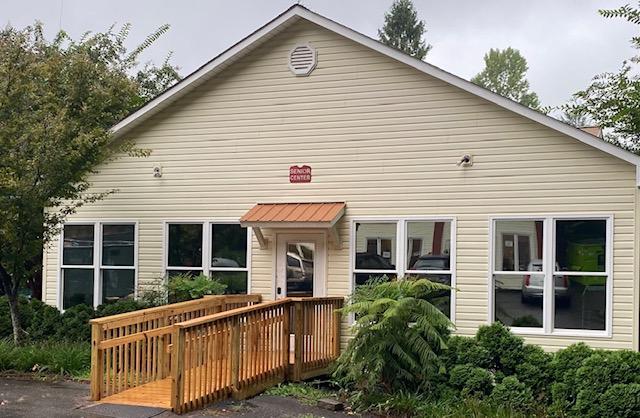
- Rehearsals begin Monday, February 12 for our Spring Season and continue each Monday 6:30 to 8pm at the Saluda Senior Center.
- Spring concerts presented during the first week of May plus sing for the Saluda Arts Festival, Saturday May 18.
Go to www.MountainSong.Info to enroll or
access more info about our chorus.
COME JOIN US, WE'D LOVE TO HAVE YOU!
| |
|
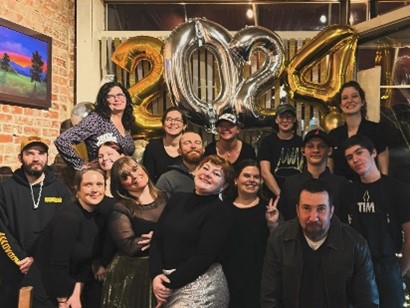
Happy New Year! We hope the end of this past year was cathartic, renewing, and gracious in its transition. We offer you encouragement as you find your balance and wish you well as you embark on this new cycle.
As the first month of year, January has a lot to live up to. A new beginning, the next phase, a revitalization. With all the bolster of the Holidays as its next door neighbor, it may seem daunting to live up to the hype.
Well, we’re up for the challenge. A cleansing breath in our crisp mountain air, gives us the impetus to do, be, shift, and continue. The coldest months inspire us to seek out those rich flavors of winter and gather with great company. We hope to see you soon and have the opportunity to welcome you and delight you as you come to our doorstep.
|  | |
~ Winter Schedule ~
Closed Monday, January 1st - Thursday, January 11th
for rest and repairs.
Thank you for all of the support through 2023. We’ll see you all in the New Year, bright-eyed and bushy-tailed.
Saturday Night Live music is back at The Purple Onion!
Come join us for live music every Thursday and Saturday starting January 20th with the Get Right Band Summer in the Winter Beach Bash. Music begins at 7:30 pm on Thursdays and 8 pm on Saturdays.
The Purple Onion Hours
Monday 11 a.m. - 3 p.m. and 5 p.m. - 8 p.m.
Tuesday - Closed
Wednesday Closed
Thursday 11 a.m. - 3 p.m. and 5 p.m. - 8:30 p.m.
Friday 11 a.m. - 3 p.m. and 5 p.m. - 8:30 p.m.
Saturday 11 a.m. - 3 p.m. and 5 p.m. - 8:30 p.m.
Sunday 11 a.m. - 3 p.m.
| |
|
The S.P.O.T.!
Meet us at the S.P.O.T. and indulge in some mouthwatering tacos and refreshing margaritas.
#meetusatthespot
http://www.thespotsaluda.com
The S.P.O.T. Themed Nights!
The year is fresh with opportunity and new beginnings, but January leaves us in a lull after all of the bustle of December. Fear not, though! The SPOT has just the thing. Themed nights!
Thursday Tequila Play
where we tantalize your taste buds with a fun new tequila inspired cocktail.
Friday Fire Pit
the warmth of an open fire and good tacos.
Saturday Movie Night
* outdoor projector movie night playing a different movie every week (weather permitting)
Sunday Funday with Family Game Night
grab a bite and reconnect with the family with one of our provided board games!
The S.P.O.T. Hours
Monday - Closed
Tuesday - Closed
Wednesday Closed
Thursday 3 p.m. - 8 p.m.
Friday 3 p.m. - 8 p.m.
Saturday 12 p.m. - 8 p.m.
Sunday 3 p.m. - 8 p.m.
| |
Upcoming Live Music Calendar
Thursday Evening @ 7:30 p.m.
*Cover Charge*
January 20th, Saturday ~ The Get Right Band Summer in the Winter Beach Bash - $17
Rock Away the Winter Blues! Dress in your favorite Hawaiian shirt or hula skirt and join us for a night of summer-themed festivities. Enjoy tropical cocktails, seasonal dishes, and vibrant summer decorations as we turn up the heat and dance the night away.
The Get Right Band is a psychedelic indie rock power trio from Asheville, NC. They are a band focused on following their muses to honest self-expression, to whatever excites them and pushes them into unexplored territory. Proudly carrying the torch for a long line of genre-bending power trios from Cream to The Jimi Hendrix Experience to The Police. It’s the space between the notes, the rawness and the maneuverability, that makes a power trio, well, so damn powerful. The Get Right Band has tight and diverse jams along with a distinctive, intellectual - but accessible - worldview.
Tickets
Jan 25th, Thursday ~ Zoe & Cloyd - $13
Klezgrass. This one word may best describe the vast musical world of Asheville, NC duo Zoe & Cloyd. Springing from rich and complementary traditions, the artistic stylings of fiddler/vocalist Natalya Zoe Weinstein and multi-instrumentalist/vocalist John Cloyd Miller fit together in a harmonic dovetail. Zoe & Cloyd delight audiences with soaring harmonies and heartfelt songwriting, seamlessly combining original bluegrass, klezmer, old-time and folk with sincerity and zeal.
Tickets
Jan 27th, Saturday ~ Lazybirds - $10
A classic American roots band, the Lazybirds Band specializes in good time music, impossible not to move to. Pulling from blues, jazz, and good old ragtime, this band has a hillbilly flare that gets your toes tapping. With a talented ensemble that plays strings, piano, and harmonica, they cover all of the great sounds rooted in Rural America. Gritty Mississippi blues to Dylan classics, with some early American string band thrown in, the Lazybirds are just as comfortable vibing out with an original to covering one of the greats. Founded back in 2000, the Lazybirds have been showing audiences a good time for over 20 years.
Tickets
Hiring
Immediate positions available at The Purple Onion and The S.P.O.T. Come work in a team-oriented, high-volume, fast-paced, environment to deliver the best dining experience to our guests. MORE INFORMATION HERE
| |
|
Winter Hours at Saluda Studios
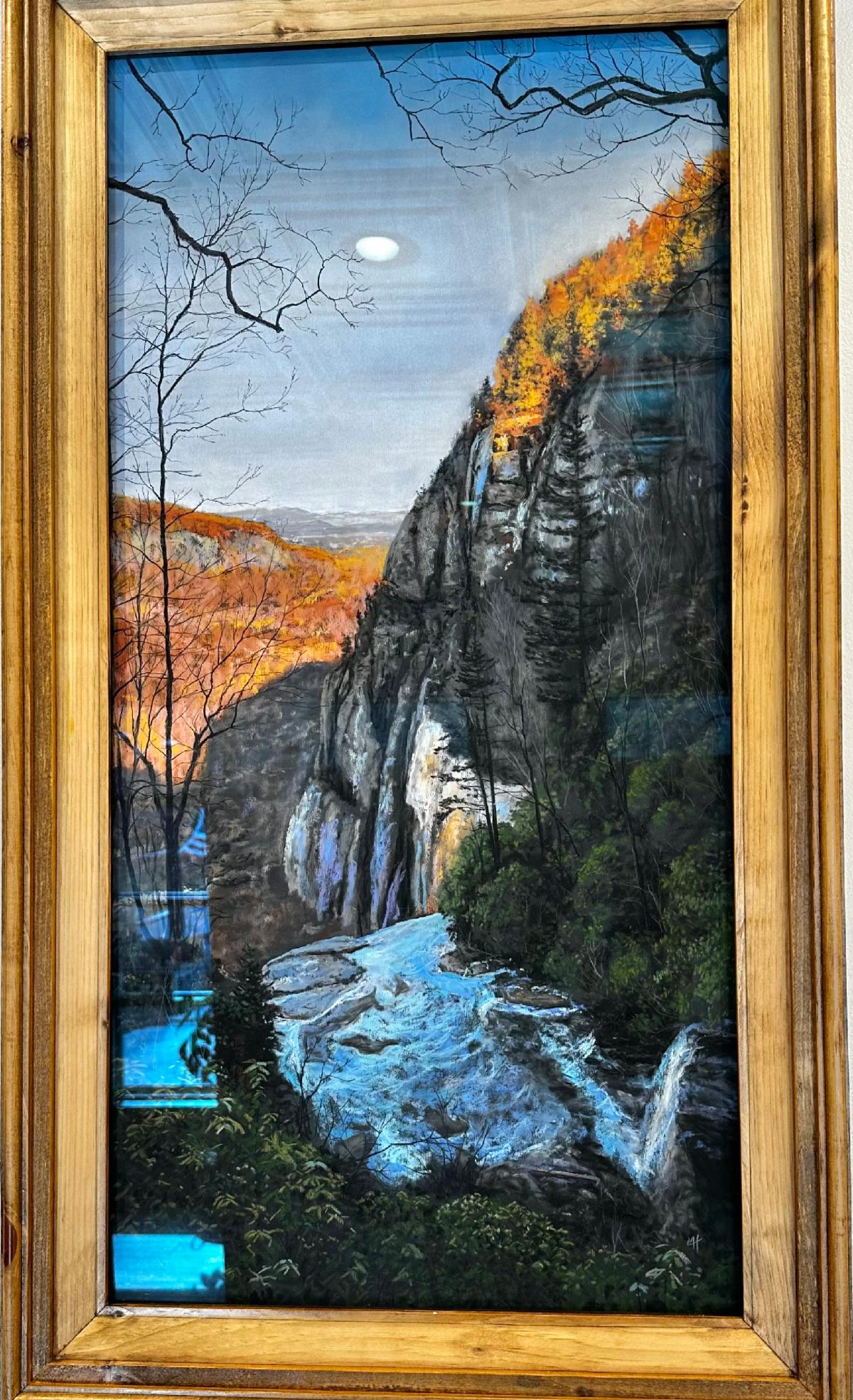
The Preserving A Picturesque America Gallery will be reopening on Friday, January 19th. Our winter gallery hours will be Friday to Sunday from 11:00 am to 4:00 pm.
You can also visit by appointment by calling (828) 273-5383 or (828) 713-213
We’re excited to present “Top of the Falls” as this month's featured painting. This incredible pastel landscape piece beautifully depicts the top of Hickory Nut Falls in Chimney Rock State Park. Artist Mark Henry created this piece. Drop by the gallery to see it in person and to hear the story behind the artwork!
| |
|
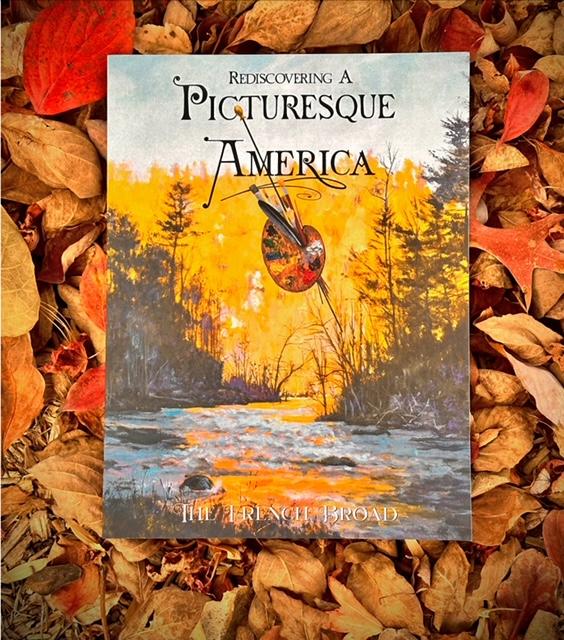
Looking for something adventurous and historic to read around the fire this winter? This book tells the tale of art and exploration on the famous Buncombe Turnpike from the 1800s and today. Books are for sale in the gallery and all proceeds go to support conservation efforts in WNC.
| |
|
Sonnet for Her
Kara van de Graaf
There is a brief hour
before I cover the nakedness of my head
when I am myself alone, the angles
of my face strange and warped
in the mirror. I don't recognize
who I am without the camouflage
of a wig anymore. I touch her hair,
I am wooed by the softness of what
was grown for me by another host,
something dead still merging
me with another—the one who was
my surrogate, eating in a different room,
wrapping her newly bare skull
with a printed cloth. I dress in darkness, then
stitch another woman to my body.
| |
Featured Poet
Kara van de Graaf is the author of Spitting Image, winner of the Crab Orchard First Book Award in poetry.
Her poems appear in Poetry, The Adroit Journal, AGNI, New England Review, and elsewhere.
She an Associate Professor of English at Utah Valley University.
| |
|
Saluda Living in Place Helps Us Learn about Supplements
Supplements Program
Wednesday, January 17, 2023
10:00 am
Saluda Senior Center
64 Greenville Street, Saluda, NC 28773
SLIP and OnTrackSaluda announce Dr Lisa Broyles will be the guest speaker for SLIP on Wednesday January 17 at 10am at the Saluda Senior Center. Dr. Broyles is a specialist in functional medicine, which is a systems biology–based approach that focuses on identifying and addressing the root cause of disease. Each symptom or differential diagnosis may be one of many contributing to an individual's illness.
Her topic for our gathering will be, "Supplements, the Good and the Bad", discussing how to choose quality supplements.
We hope you can make it!
| |
|
THANK YOU, SALUDA! The Center has paid off our mortgage and we are debt-free! We had a year of growth in 2023 and we have exciting events planned in 2024. We hope to continue to expand our offerings this year – If you have a great idea, let us know! Though “senior” is in our name, the Center’s activities serve the entire community! To schedule an event, call Louisa Williamson at 803-707-8747.
The Saluda Winter Market will be open at the Center Saturday January 13 and again January 27 from 10 a.m. to 1 p.m. Plan to get there early for the best selection!
Pot Luck & Bingo will be resuming Monday January 29 at 6 p.m. No charge -- bring a side or dessert if you are able -- and meet your Saluda neighbors! Fun for all ages.
And a reminder: the Thrifty Barn Basement is closed this month and not accepting donations. We reopen Saturday February 3. To volunteer, call Cindy Keeter at 828-551-1039.
| |
|
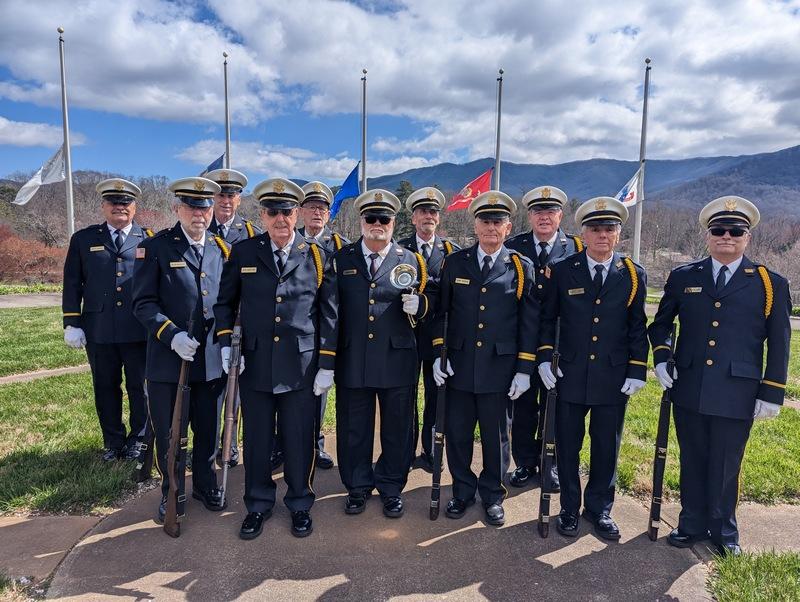
Polk County Memorial Honor Guard
Schedule 2024
(Subject to change)
January
New Year’s Day-1st
Martin Luther King Jr. Day-16th
February
Four Chaplains Day, 3rd
President’s Day, 20th
March
K-9 Veterans Day, 13th
Medal of Honor Day, 25th
National Vietnam Veterans Day, 29th
April
National Former POW Recognition Day, 9th
Gold Star Spouses Day, 5th
Air Force Reserve Birthday, 14th
Army Reserve Birthday, 23rd
May
National Military Appreciation Month
Silver Star Banner Day, 1st
Military Spouse Appreciation Day, 12th
VE Day, 8th
Children of Fallen Patriots Day, 13th
Armed Forces Day, 20th
Memorial Day, 29th
11:00 am-Wreath Laying Columbus,
3:30 pm-Saluda
June
U.S. Flag Day 14th Flag Disposal Ceremony at House of Flags, Columbus, NC
Army Birthday, 14th
Juneteenth-19th
PTSD Awareness Day June 27
July
Independence Day July 4
Fab 4th Celebration, Columbus, NC
Coon Dog Day Parade, Saluda NC, 6th
Korean War Veterans Armistice Day, 27th
August
Coast Guard Birthday, 4th
Purple Heart Day, 7th
September
National Suicide Prevention Month
Patriot Day, 11th
POW/MIA Recognition Day, 16th
Constitution Day/Citizenship Day, 17th
Air Force Birthday, 18th
Gold Star Mother’s and Family’s Day, 25th
October
Navy Birthday, 13th
November
Military Family Month, Warrior Care Month
Marine Corps Birthday, 10th
Veterans Day, 11th
10 am-Parade/Wreath Laying Ceremony, Columbus,
3:30pm-Wreath Laying Ceremony, Saluda, NC
December
National Pearl Harbor Remembrance Day 7th
National Guard Birthday, 13th
Space Force Birthday, 20th
Columbus NC Christmas Parade (TBD)
Tryon Christmas Parade (TBD)
Christmas Day, 25th
Contact Mike Collins (mc3115@aol.com) or
David Fleming (cob.seahorse@yahoo.com) for additional information
| |
|
Calling All Saluda Teenagers 13 to 18 Years Old
You are eligible to compete in the Sister Cities International 2024 Young Artists and Authors Showcase. The medium may be artwork, literature, photography or music. Submissions are judged around an annual theme and judged based on creativity, composition and theme interpretation. This year’s theme is “Climatescape: Resilient Cities for Tomorrow’s Climate. Prizes range from $1,000 for first place down to $100 for third place. Art may be oil, acrylic, watercolor, charcoal or colored pencils. Digital art is allowed but is a separate category. In literature, students may submit essays, anecdotes or other written work. Poetry is a separate category. The deadline for entries to Sister Cities International is May 1, 2024. Students who are interested in participating must contact Saluda Sister City by January 15, 2024. If interested, please contact Judy Thompson at address below. Depending on the level of interest, we may hold a local competition to narrow entries as only 5 can be submitted in any one category from Saluda. More detail is available at https://yaas2024.org/wp-content/uploads/2023/11/YAAS-2024-ONE-PAGER.pdf and at https://yaas2024.org.
| |
|
Lasagna Competition and Dinner
Saturday, February 3 at the Saluda Senior Center. All you can eat lasagna, salad, bread, beverage and dessert. Adults will receive ticket for one glass of red wine. The Mountain Page Payers will entertain with Italian songs and more. This event is a gift to the Saluda Community to show what we are doing here and in Carunchio. We hope you will come, have a great time, eats lots of amazing food, and support our efforts.
Tickets can be purchased on the Sister City website at https://www.saludasistercity.org or at Saluda Moon Glass Gallery or by contacting Sister City at the contact below.
| |
|
Italian Dinner at Orchard Inn
Mark your calendars to hold the date for a gala Italian Evening on March 14,2024, at the Orchard Inn. The chef is creating a classic Italian dinner, and the Mountain Page Players will be there to bring a festive note with some well-known Italian songs and more.
Let’s Travel in 2024
Several trips are open (Contact Sister City for details):
*One room available due to a cancellation for June 1, 2024, for Flower Festival in Carunchio. All-inclusive experience except for your airfare. 2,400 Euros if paid in cash (slightly more for credit card).
*New trip for September 8, 2024, which should catch the grape harvest. Same price as above. You will experience amazing food, cooking lessons, touring… fabulous experiences.
*Want to make your own trip to Italy? Sister City will help Members plan trips at no cost to you. Tuscany, Chianti, Rome, Naples, Puglia (the southern “boot” area), Sicily, offshore islands; guides, tours to study art, history, Etruscan culture, ceramics, wine, whatever. We are here for you to help you plan.
For further information, contact Judy Thompson at JDT@JDThompsonLaw.com 828-489-6578
| |
|
Some Things to Know About This Publication
It is what it is.
Saluda Lifestyles makes an effort to verify information and does its best to edit for spelling and grammatical errors but some just slip through.
If you know someone who would like to receive this e-version, have them send an email request to saludalifestyles@gmail.com
All material contained in Saluda Lifestyles is original work by Saluda residents and others with an interest in Saluda unless otherwise specified. None of the material may be reproduced in whole or in part except by written consent of the editor or by the originator of the material.
To submit articles to Saluda Lifestyles, please email greg @ saludalifestyles@gmail.com
Saluda Lifestyles is currently being published by
Greg Bryant, PO Box 48, Saluda, NC 28773
saludalifestyles@gmail.com
The paintings used to create the Saluda Lifestyles Masthead, are the work of local award-winning painter and painting teacher Jim Carson. Jim generously donated pictures of his work depicting Saluda for the masthead.
| |
|
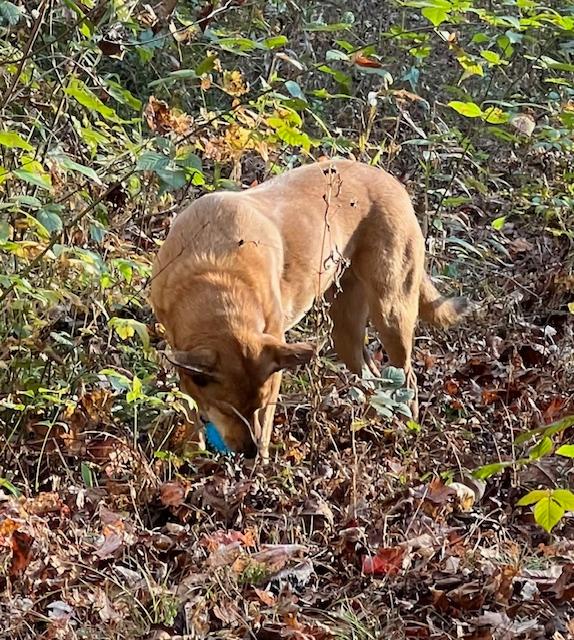
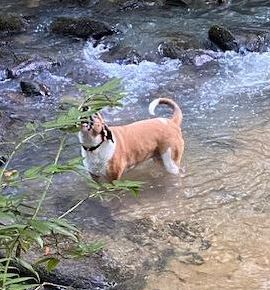
Watching Kaya just being in the woods,
reminds me to breath, and be.
In that moment...
being is enough.
| | | | |