How to Negotiate your
$$ Best Price $$
|
|
“What’s your Price?”
As business professionals, it is a dead certainty that we will be asked this question early in the sales discussion and we should be prepared to respond appropriately. Yet, many of us stammer or stutter, get flustered, and sometimes even get embarrassed. What is it about this question that throws us off, or puts us on the defensive? More importantly, how should we respond?
In today’s newsletter, we’ll be reviewing exactly how you should respond to this question and what are the best strategies to ensure you successfully negotiate the best price. Read on….
|
|
Avoid Premature Disclosure
Sales is like romance. Without the appropriate amount of foreplay, you’re unlikely to achieve the result you’re looking for. So, if they ask you the critical question “What’s your Price” you need to calculate if this is the right time to respond. For example, if you haven’t spent time asking discovery questions, learning about this company or prospect and their business, you’re just flying blind. For a list of the questions you should be asking, read my July 2014 Newsletter “Fools Rush In.”
If you did ask the right questions up front, you learned the critical facts about their business (Revenues, # of employees, # of locations, years in business etc.) You also probably learned about their needs, wants, and issues and have some understanding of their buying cycle and the urgency of their request. Finally, you should find out if they’ve hired anyone in the past or bought products to solve their problem and what results were achieved. NOTE: if they are talking to you, they probably didn’t solve their problem with the previous vendor!!!
If the right discovery (foreplay) has occurred, you’re able to address their question. Conversely, if you haven’t spent enough time asking questions and listening, you need to defer the question until you are better prepared. Tell them “I’d be delighted to respond to your question, but before we get to that do you mind if I ask a few questions about your business?”
Never just cave and give them a number. Without the proper context and timing, whatever you say is almost guaranteed to lose your potential client.
|
|
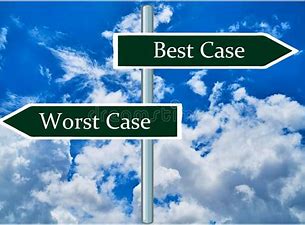
Prepare Best & Worst Case in Advance
Traditional negotiating workshops have been driven by discovering your BATNA (Best Alternative to a Negotiated Agreement), explained in the 1981 bestseller “Getting to Yes” by R. Fisher and W. Ury. This is your last resort, or when you will walk away from the deal instead of negotiating. If you’ve already been offered $10,000 for your car, there’s no reason to take anything less, so that’s your BATNA.
The latest Negotiation tactics were brilliantly revealed by Chris Voss in his NY times bestseller, “Never Split the Difference.” He recommends a more effective negotiating strategy, which is based on developing a Best/Worst Case Scenario. He argues that holding onto a BATNA sets the bar excessively low and encourages the negotiator to settle for the worst case instead of driving toward the best case. He encourages setting a range of acceptable options, and then shooting as high as possible in the range. In my experience, this is a superior strategy and will always yield better results.
If you are a service provider, for instance, and you’re pricing a consulting engagement that will take 40 work hours, you might be offering this service for as little as $8000 or as high as $20,000. Since you are a professional, you might ask your prospect what other professionals they hire in their business and what they charge. For instance, if they are paying their corporate attorney $400/hour, you now know what pricing they are used to. From that base point, you can do the math and then figure out a best/worst case price structure. Of course, if you didn’t ask the right questions, you’re flying blind and will crash and burn.
|
|
Your Top Three Negotiating Strategies
Let’s assume you’ve followed our advice, have avoided Premature Disclosure and have prepared in advance with your Best/Worst Case Scenario. What then?
There are now 3 Powerful Strategies you need to follow to negotiate your best possible price and close the deal. Here they are:
|
|
1.Lose your Assumptions
Don’t assume anything about your prospect. Whenever we make assumptions or judgements about them or their company, we can easily fail. In my corporate career, I remember leading a negotiating team on a call to a huge multinational company headquartered in Bentonville, AR. We were proposing a $3.5 MM Mainframe computer and they were trying to beat us down on the price. For context you need to understand that no company in the world can “out cheap” this company. They prided themselves on grinding their vendors down in price and getting the lowest possible price.
The corporate board room we were invited into featured a used wooden table, ratty old tin chairs, stains on the floor (no carpet), and bare walls. All designed to intimidate us into feeling guilty about asking for our price. Never mind that they were the richest company in the world, worth over $300 Billion at the time. The setting was designed to create in our minds the assumption that they couldn’t afford our price, and to have us agree that we shouldn’t be asking for our price! Since we were prepared in advance, we didn’t fall for that tactic. Making assumptions or judging your prospect becomes a self-fulfilling prophecy, so stick with the facts and not the judgements.
|
|
2.Be Flexible
During the price negotiation, remain flexible and don’t get stuck on “hard positions.” Everything is on the table; everything can be discussed. Also, avoid negative emotions. You will often hear ideas or thoughts that challenge your viewpoint. DO NOT REACT. If you take the position that everything is up for discussion you will not suffer from negative mind games.
The key to success is to remain flexible, be willing to pivot. Negotiation is a game of give and take, so you need to understand the common ground you share and what needs to be negotiated. One of the best strategies in a price negotiation is to review the benefits and value you plan to deliver, line by line, and make sure they fully agree with each point. Don’t put a final price on anything until they understand, appreciate, and agree with the return-on-investment (ROI) of your product or service. Be flexible yet firm during this discussion and be willing to accept their point of view as needed.
|
|
3.Pan-Determinism
If you are playing a game of chess, you normally select white or black and play those pieces. You are taking one side or the other, so you are being self-determined. The other side is other determined. However, if your viewpoint was pan-determined, you could see both sides at the same time. You are the disinterested third party, observing everything at once from an outside viewpoint. Since you can play both sides simultaneously, you never lose!
Chess masters are remarkably adept in this valuable skill. If you watched the Netflix series “The Queen’s Gambit” (2020) you observed how the heroine, the child chess prodigy Beth Harmon, practiced entire chess matches in her head over and over again, trying out different tactics and scenarios and observing the results. To perform at this level, she needed to assume the other viewpoint and play the game as if she were them!
To be pan-determined you need to get outside of yourself and see the world from the opposite viewpoint. You need to listen to and understand what drives them, what objectives they have and why they are insisting on a different price than yours. If you’re only playing from your viewpoint (self-determined) you will lose the negotiation.
For example, I once had a client “Ted” who failed when negotiating a salary raise with management. While coaching him, I discovered that he only demanded a raise (self) and didn’t ask what else the company could do for him or appreciate their contingencies. After some coaching, he went back to his boss and asked a few additional questions which uncovered the fact that this company had a budget cycle which began in the following year. They WERE able to grant a raise early in January, just not at the exact time Ted was demanding. Because Ted failed to see the other side, he didn’t even ask if there were other options! Problem solved!
|
|
Finally
Your skill as a negotiator is to walk away feeling you both achieved success. If you “won” and they “lost” they might become bitter, and you could risk losing the opportunity to build a long-term relationship.
There are dozens of books that have been written on the topic of Negotiation, but these are some of the best tips I’ve learned and used in my career at the negotiating table. Use them wisely, and here’s to your success!
|
|
If you’d like to learn more about how to Negotiate with Success, you're invited to watch my presentation on this subject, delivered with my partners at Lighthouse Consulting Services. Click here to watch the webinar.
For more about "How to Sell during these Challenging Times" you're welcome to view my complimentary 20-minute Zoom presentation, available on my YouTube channel. Click on this LINK for the recording.
|
Click on the video below to learn about the Connexia Group, and the value we deliver for our clients. |
Quick Links
My social media and video links are below. Please view, join, connect or follow where appropriate. Here's to your Success!
Maximum Sales Results
|
|
|
|
Connexia Group | (949) 858-0755 | www.ConnexiaGroup.com |
|
|
|
|
|
|