Adult and Family Literacy Today
Volume 19: August, 2025
| | Updates on adult and family literacy research, policy, and practice | | Environmental & Climate Literacy in Adult and Family Literacy | | |
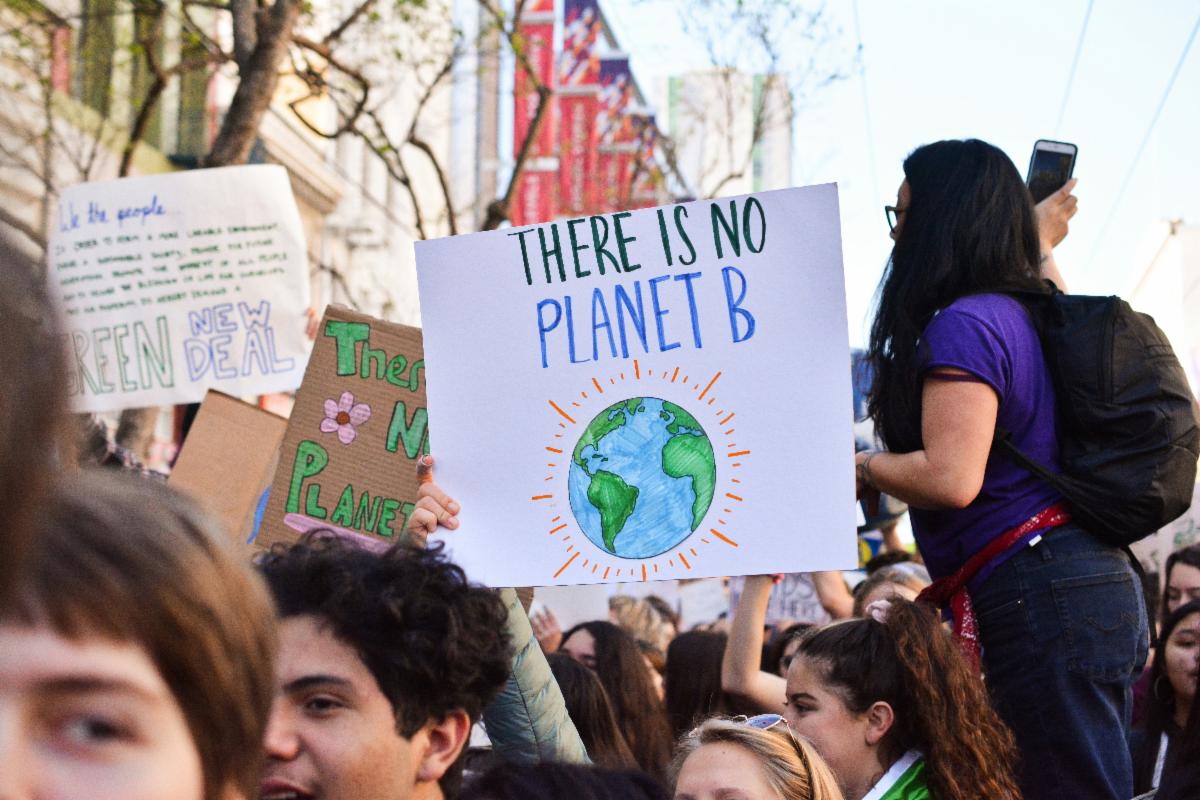
As climate change increasingly affects our communities, adult and family literacy programs have a unique opportunity to support the development of environmental and climate literacy alongside foundational reading, writing, and numeracy. Research indicates that adult learners are more motivated when lessons connect to their everyday lives and community concerns, and literacy instruction is most effective when it links to real-world applications meaningful to learners’ lives and goals (Merriam & Bierema, 2014; Stein, 2000). This makes environmental topics especially relevant for engaging diverse learners.
What is Environmental/Climate Literacy?
Environmental literacy encompasses “the capacity to perceive and interpret the relative health of environmental systems and take appropriate action to maintain, restore, or improve the health of those systems” (Disinger and Roth, 1992, p. 3), while climate literacy specifically focuses on “understanding of how the climate system works, how human actions influence climate, and how climate influences people and other parts of the Earth system” (USGCRP, 2024, p.2). For adult learners, these ideas become meaningful when connected to everyday situations they encounter in their lives. This can include understanding utility bills, knowing ways to save energy (Atabek-Yiğit, E et al., 2014), navigating climate-related health concerns, and preparing for extreme weather that can affect their families.
Research-Based Integration Strategies
Contextualize Learning: Environmental and climate topics provide rich opportunities to practice reading, writing, speaking, and problem-solving. For example:
- Reading and discussing local news articles about environmental health concerns.
- Practicing math by reviewing and comparing utility bills.
- Reading short, accessible explanations of climate science from credible sources.
- Reading storybooks about nature and the climate crisis with children for the family literacy programs.
Use Games to Teach: Games can make climate topics more engaging and memorable. Research shows that games, especially those combining digital and hands-on activities, help people understand climate change and think about actions they can take (Kuster and Lim, 2025). Examples of games for adults include Chill City, Climate Connected: Outbreak, Stop Climate Change game, EcoChains: Arctic Crisis).
Support Action: Environmental and climate literacy connect naturally to civic engagement (Clair, 2003, Hill, 2012). Giving learners opportunities to take action also helps them apply what they learn and see the relevance of their literacy skills. Examples include:
- Writing letters to local leaders about environmental concerns.
- Partnering with community or environmental organizations for projects.
- Creating community-based activities such as recycling campaigns or energy-saving challenges.
Looking Forward
As climate impacts grow, teaching environmental and climate literacy in adult education is not just about science. It’s about preparing learners to navigate the world, make informed decisions, and participate in community life. For adults who struggle with reading, these lessons can build both essential skills and the confidence to take part in conversations and actions that shape a more environmentally sustainable future. These strategies can also be extended to children and other family members through family literacy programs, creating opportunities for shared learning and action at home.
Resources
UNESCO continues to champion environmental literacy in adult education through diverse, high-impact initiatives. UNESCO and UNFCCC have launched the fourth installment of their COP-aligned Climate Change Education for Social Transformation series (May–December 2025), this time focused on "greening communities" through lifelong, non-formal, and community-driven education to build climate-resilient societies. Don't miss the upcoming webinar on September 2nd, 2025, 10:00 CEST.
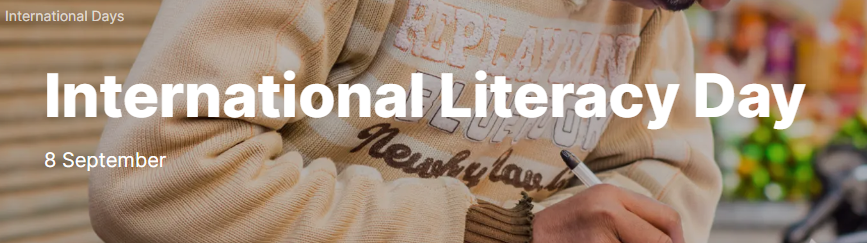
| | Literacy Around the World | | UNESCO International Literacy Day - September 8 | Since 1967, every year on September 8, UNESCO leads the global observance of International Literacy Day, spotlighting literacy as a fundamental human right and driver of social inclusion. The 2025 theme – “Promoting literacy in the digital era” – emphasizes the need for critical digital, information, and media skills in today's interconnected world. On this day, communities, schools, and organizations around the globe host events ranging from book distributions and reading campaigns to workshops and policy discussions, all aimed at bridging literacy gaps and fostering equitable learning opportunities. Wherever you are, this is a chance to celebrate the power of literacy—and to take action in building a more informed and inclusive future. | | What's New at the Institutes? | | |
Family and Intergenerational Literacy and Learning
PSU - UNESCO Book Launch
| | | | |
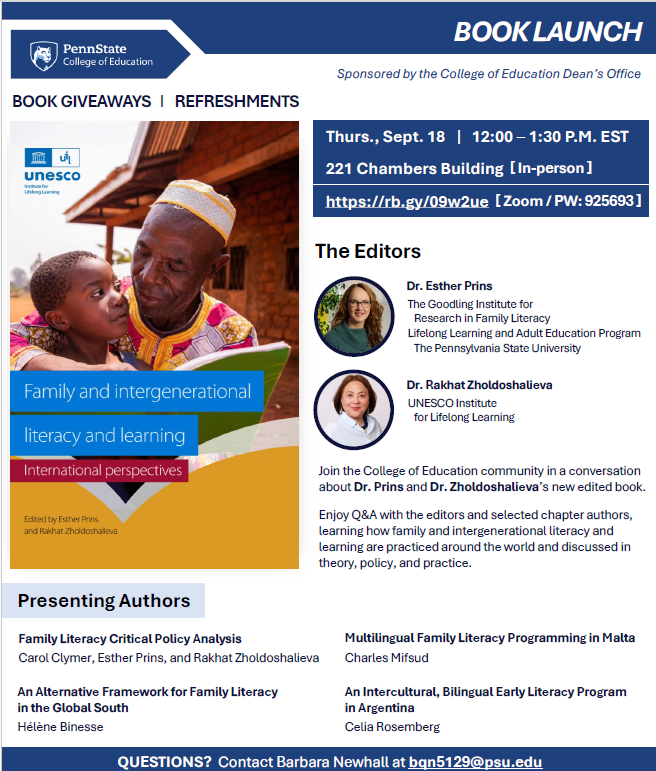
Please join co-editors Dr. Esther Prins (Penn State College of Education and Goodling Institute for Research in Family Literacy) and Dr. Rakhat Zholdoshalieva (UNESCO Institute Lifelong Learning), along with selected chapter authors, on Thursday, September 18, at 12 pm in 221 Chambers (and via Zoom PW: 925693) as they launch and engage in a conversation about their groundbreaking new book, Family and intergenerational literacy and learning: International perspectives.
Family and intergenerational literacy and learning (FILL) programs have spread across the globe, yet practices, models, and policies in low- and middle-income, non-Anglophone countries have received little attention. We also need deeper insights into how families around the world use print, oral, and digital literacies informally in their everyday lives. An open-source publication published by UIL, this edited volume is the first to examine FILL exclusively outside of high-income, English-speaking countries.
| |
Climate Science Literacy in Asia and the Pacific
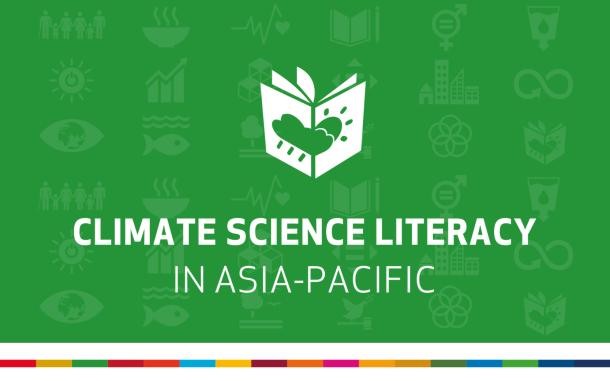
To advance Climate Science Literacy across Asia and the Pacific, the United Nations in Asia-Pacific has developed a series of posters, social media graphics, and videos. The following United Nations Agencies have jointly developed the climate science literacy materials: UNESCO, ILO, IOM, UNDP, UNDRR, UNEP, UN ESCAP, UNFCCC, UNICEF, and UNOSSC. The materials are available free of charge for public adaptation and distribution under Open Access CC-BY-SA 3.0 IGO. Please click here to download the high-resolution version.
| |
|
The Urban Alliance for Adult Literacy
The Urban Alliance for Adult Literacy is a national network that supports the development of adult foundational education (AFE) coalitions (collaborative networks, consortia, etc.) in large and smaller urban communities. The Alliance provides regular “Greenhouse Meetings” (webinars), a website containing resource materials and recordings of past Greenhouses, an online discussion group, and other supports. The goal is to help adult education providers build effective partnerships with each other and with other community stakeholders.
| | | | Upcoming Events and Conferences | | |
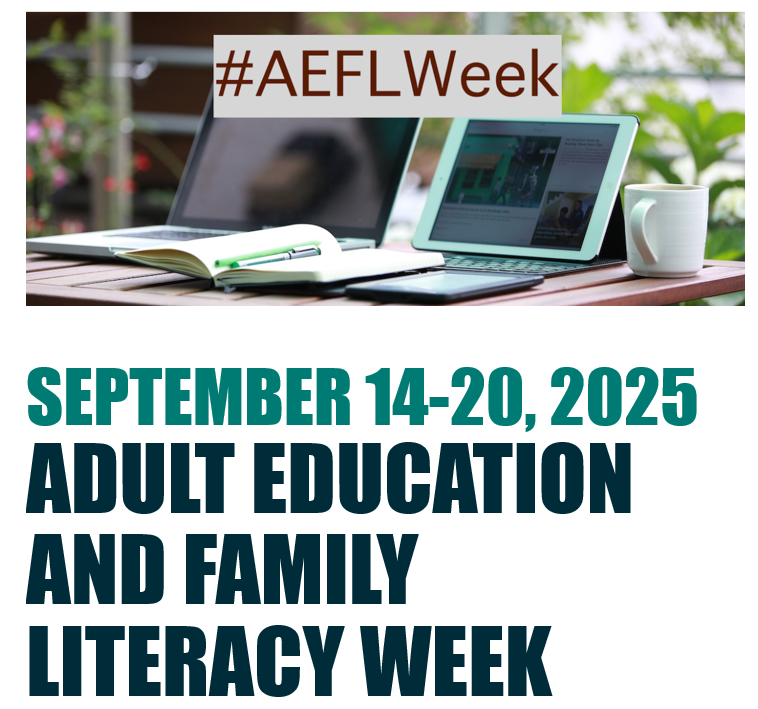
Join the National Coalition for Literacy (NCL) in celebrating Adult Education and Family Literacy Week with activities that highlight the power of learning. From sharing student success stories and welcoming local representatives into classrooms, to spreading inspiring messages in public spaces and showcasing learner dreams, this week is a chance to shine a light on the impact of adult education. To support this, ProLiteracy provides a media toolkit with resources to help promote your program and adult literacy efforts during AEFL Week and International Literacy Day.
| |
Join educators, adult learners, community partners, and advocates across the country for National Adult Education and Family Literacy Week, September 14–20. COABE offers a full calendar of events and resources to spotlight the impact of adult learning. Among them, the national advocacy event: Flood the Hill, in Washington DC.
| |
|
AAACE 2025 Annual Conference: Bridging the Generational Divide
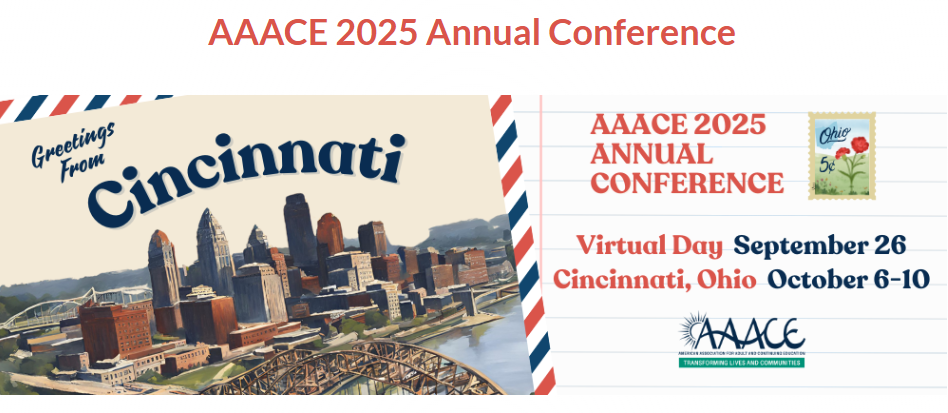
This year’s American Association for Adult and Continuing Education (AAACE) Conference kicks off with a virtual session on September 26, followed by in-person gatherings in Cincinnati, Ohio, from October 6–10. Centered on the theme "Bridging the Generational Divide – Recognizing the Roots and Branches of the Field of Adult Education," the conference will offer opportunities to reflect on the field’s legacy while exploring its evolving future.
Join us for these presentations:
Unlearning and deradicalizing from White Christian nationalism: Implications for adult learning and education.
Dr. Esther Prins.
Wednesday, October 8, 2025, 9:35 AM–10:00 AM
Informal intergenerational learning in the workplace: A systematic literature review.
Hyeon Kang and Dr. Esther Prins.
Wednesday, October 8, 2025, 10:10 AM–11:00 AM
| |
Penn State is an equal opportunity, affirmative action employer, and is committed to providing employment opportunities to all qualified applicants without regard to race, color, religion, age, sex, sexual orientation, gender identity, national origin, disability or protected veteran status. | | | | |