Welcome to the University of Oklahoma Carceral Studies Consortium Newsletter. The Carceral Studies Consortium strives to build a community for intellectual exploration that includes faculty, staff, graduate students, community members, practitioners, and organizers.
Carceral Studies is concerned with the independent function and nexus of the political and social systems that organize, shape, sustain, and entrench practices of punishment, surveillance, incarceration, and harm.
|
|
The Las Vegas Police Department is attempting to recruit officers from across the nation as they have difficulty filling open positions. According to the department, the recruitment process is particularly targeted towards places where there does not appear to be much support for law enforcement. For example, Facebook posts and highway billboards advertise the department with phrases like “come work in a community that supports law enforcement” and “Las Vegas supports first responders.” Las Vegas Metropolitan Police Department Lieutenant Richard Meyers confirmed that the list of recruitment cities includes Portland, Seattle, Austin, Minneapolis, Chicago, and New York City. Meyers summarizes the reasons for selecting these locations is due to how “the climate is difficult for our brothers and sisters in those cities right now, so we’re targeting not only current police officers that are interested in transfer for our lateral academy mid next year, we’re also targeting people like me that wanted to be police officers their entire life but are concerned about doing it in those cities.”
|
|
Minneapolis Police Department / AP |
|
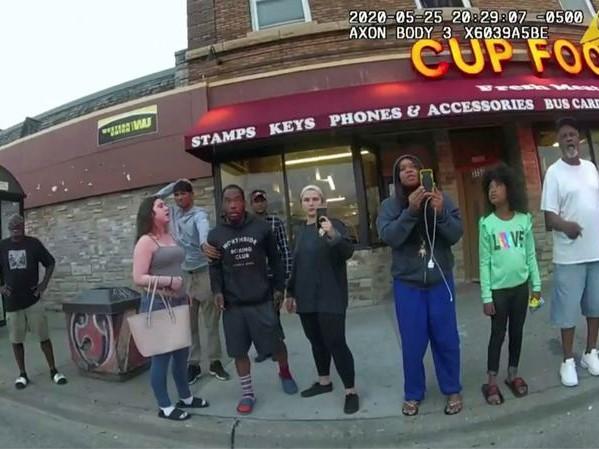
A recent post in the Jersey Journal Editorial summarizes a directive by acting New Jersey Attorney General Andrew Bruck to law enforcement agencies and county prosecutors. The directive clearly states the rights and limitations of recording law enforcement officers during their activities as well as crime scenes. These rights included actions such as refusing to turn over recorded images while limitations extended to preventing bystanders from crossing emergency scene tape. The collection of rights and limitations are an acknowledgment of the ability for bystanders and journalists to film public incidents. The Jersey Journal Editorial believes the knowledge of these boundaries are paramount as those in the past that “didn’t know the law, were too intimidated or feared for their own safety would have complied [to police demands to hand over their recordings], forever losing pictures they’d lawfully taken.”
|
|
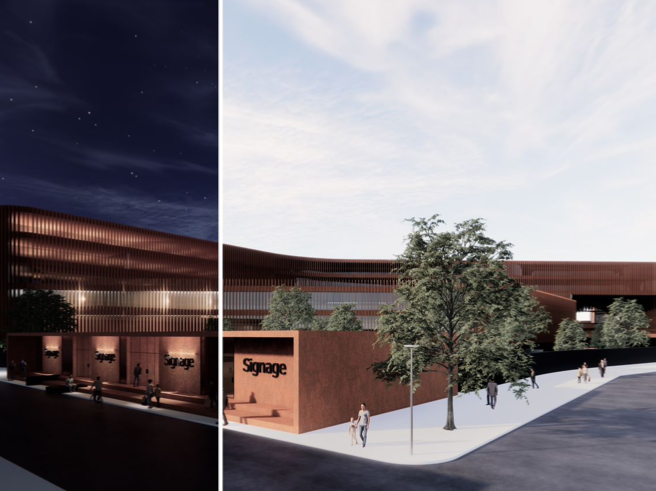
At the end of the 2021 Fall semester, students at the University of Oklahoma presented their redesign of the Oklahoma County Detention Center. According to Peggy Dodd, the project centers on how the architecture of incarceration can negatively affect the mental health of its inhabitants. The proposed architectural redesign facilitates a more natural living space by including greater access to sunlight, increased space for activities, and additional communal amenities. Marjorie Callahan, OU professor and Carceral Studies Consortium member, has led a dream course related to this project of re-imagining carceral spaces. Callahan is also working with the Oklahoma Jail Trust to represent how architecture influences significant social change. J. D. Zogg, the project lead, believes in the importance of redesigning these spaces while maintaining the desire to improve conditions by recognizing that it's also "about the principles that we're doing bad things and principles that we're missing that we need to work on."
|
|
Gary Coronado / Los Angeles Times |
|
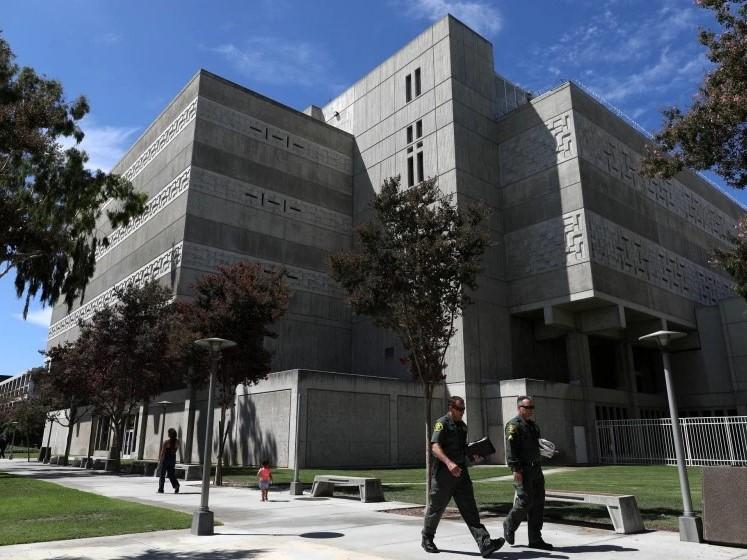
Ben Brazil reports that the food in Orange County Jails has been considerably worse since the start of the pandemic. According to a report by the Stop the Musick Coalition, the diets offered in these jails show high levels of processed foods, carbohydrates, fat and sodium, while also being combined with Covid restrictions that limit opportunities for exercise. The poor food options become further exacerbated as the report notes that hot meals have not been offered in nearly two years. The report states that “inmates have been eating three bagged, cold meals every day for almost two years. They generally consist of bologna sandwiches, and sometimes an apple or carrots,” but the meals are “frequently spoiled” or infested with bugs. The Stop the Musick Coalition, a combination of social justice organizations, continues to argue that the injustices in the Orange County jails are exceedingly egregious as they have saved money through the closure of jail kitchens and the reduction in the county jail population. The report also comes at a time when the ACLU of Southern California is putting pressure on the county to reinstate hot meals. Still, there appears to be little progress as bagged sandwiches remain the norm and jail officials claim to be providing hot meals in the form of oatmeal or grits.
|
|
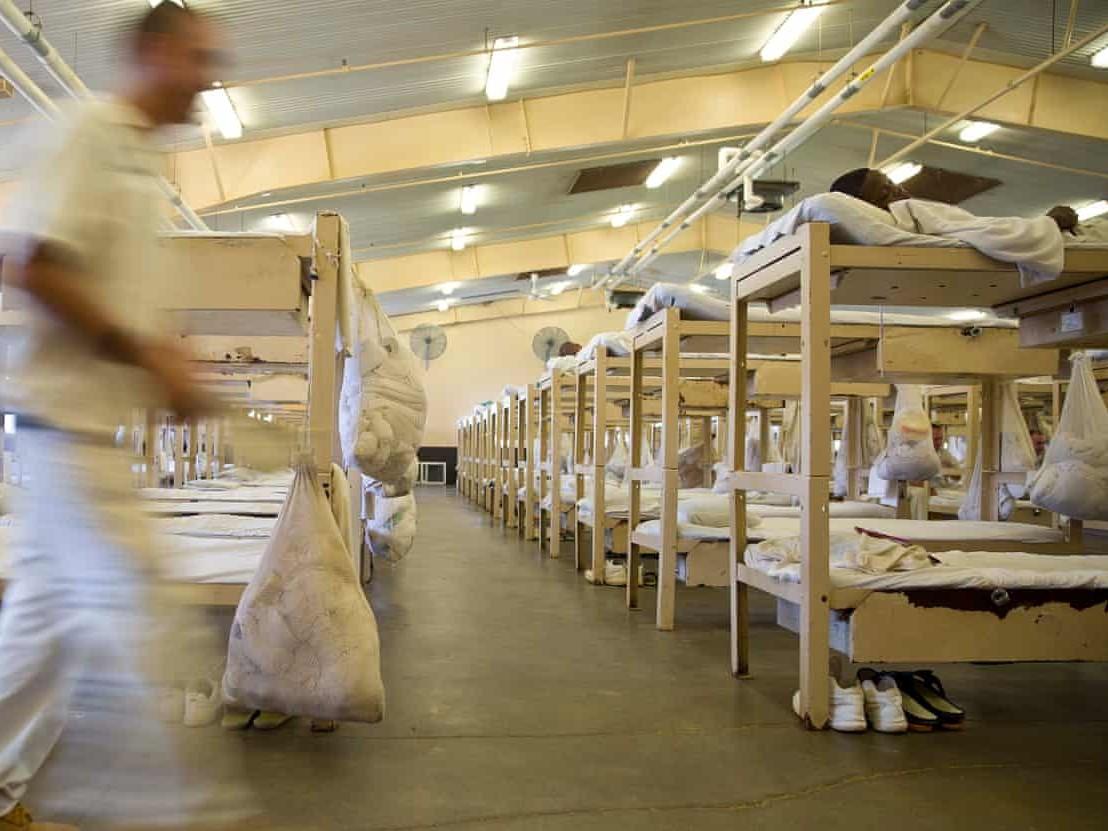
Even as vaccines and social distancing practices reduce the pandemic restrictions on daily life, incarcerated Americans are still facing restrictions similar to those from April 2020. Victoria Law reports that many prisons are still operating in a “phase one” set of protocols such as restricting showers and phone calls to a single hour. According to Law, many of these policies also reduce in-person visitations to shorter video calls or eliminated visitation rights entirely. For prisons that have moved to “phase two” plans, incarcerated individuals might experience partially reinstated in-person visitation or slightly more time out of their cells. Some incarcerated individuals feel like the early stages of the pandemic are still in effect due to mismanagement in protecting their population. Law explains that incarcerated people are “stuck in cramped cells and crowded dorms with little access to PPE, soap, or other cleaning supplies, among prison staff who flout masking protocols with little consequence.” As conditions continue to show little sign of improvement, one incarcerated person stated, “at this point, prisons are using the utter mismanagement of Covid as an excuse to not reinstate normal operations.”
|
|
Please share recent research you would like to see featured, including your own!
Send it to carceralstudies@ou.edu
|
|
ABSTRACT: I assess a contingency model of representative bureaucracy, suggesting the effect of minority representation, if any, on police use of force is likely to be stronger with external oversight of police. I use OLS regression to examine main and interactive effects of minority representation and the presence of civilian review boards on police use of force in the U.S. I find that representation on the police force is negatively associated with police use of force. However, there is a stronger effect of minority representation on use of force when the department also has a civilian review board, supporting contingency effects.
|
|
ABSTRACT: In 1921, American prison administrator and reformer, Spencer Miller, was invited to describe America's recent penal developments to the Howard League for Penal Reform. This article reviews the context of Progressive Era American prisons to better understand Miller's remarks and their lessons for prison administrators and reformers today. It briefly describes the history of American prisons into the Progressive Era as well as some developments that were most relevant to Miller, viz., the reforms at Sing Sing under famed penal reformer and warden, Thomas Mott Osborne. Next, the article reviews Miller's statement to the Howard League for Penal Reform, including his inaccurate description of prison history, which can be read as a means of emphasising the extraordinary progress made by Osborne and, implicitly, by Miller at Sing Sing and as an example to the nation. Finally, it discusses Miller's abolitionism in the context of similar discussions taking place today.
|
|
ABSTRACT: Few researchers have considered fear of crime as a context-specific experience. This article promotes a place-based theoretical framework for studying crime perceptions through presenting app-based and crowdsourcing measures of perception of crime and place as a robust methodological framework. A systematic review of published studies that use crowdsourced or app-based measures to explore perceptions of crime was conducted. From the 27 studies that met our inclusion criteria, reported strengths and limitations were synthesized to determine key developments and common issues, illustrated with data from three app-based studies. We found consensus that app-based and crowdsourcing measures of fear of crime capture more precise spatial and temporal data alongside auxiliary information about the individual and the environment. Practical benefits, such as reduced cost of data collection and implementable outputs that are useful to practitioners were also highlighted. However, limitations around sampling biases, generalizability of findings, and the under-representation of certain areas persist.
|
|
ABSTRACT: The aim of this article is to examine incarcerated women’s cooking and eating practices in a Danish open prison to gain insight into the Nordic penal exceptionalism debate. Self-catering and the policy of normalization, which dictates that prison conditions be as similar as possible to conditions outside the prison, have been seen by some as evidence of humane prison conditions. This article draws on three months of ethnographic fieldwork to argue that incarcerated women in a mixed-gender Danish open prison use cooking and eating to display family, articulate allegiance, and negotiate relations of exchange. Incarcerated women used food preparation to maintain relationships with family and negotiate relationships with other prisoners, yet data also reveal the ways in which incarceration and turnover profoundly strained these relationships. I argue that self-catering is worth emulating while emphasizing the limitations of labelling it humane and propose that turnover deserves further research.
|
|
Updates, Events & Opportunities |
|
New Carceral Studies Board Member
The Carceral Studies Consortium is pleased to welcome our newest board member:
|
|
|
OU Libraries and Carceral Studies Consortium Assemble “Racial Capitalism” Library Guide
In a collaborative effort between OU Libraries and the Carceral Studies Consortium, a library guide on “Racial Capitalism” is now available for all students, staff, and faculty. Racial capitalism contends that racist oppression is central to how capitalism operates. Racial subjugation is not one specific manifestation of a larger capitalist system, but rather, capitalism itself is a racial system. The guide includes resources (written, audiovisual, and contacts) for information about the carceral state, crimmigration, and race and labor.
|
|
|
2021-2022 Carceral Studies Consortium Student Work Prize
The Carceral Studies Consortium is inviting original student essays or creative works developed as part of any course in any discipline during the 2021-2022 academic year that engages the topic of Carceral Studies, broadly conceived. Submissions are not limited to essays, but may be in any creative or scholarly format, including but not limited to art in any medium, story maps, and more.
|
|
|
ABOUT
The Consortium Newsletter will offer a roundup of a few selected articles that reflect today’s news, organizing, and thinking related to the carceral state. We understand that freedom work is built on education and engagement. Education requires an understanding of contemporary issues informed by their historical context. We hope that these curated articles will help you analyze the issues that we face and understand the community that we strive to construct.
Join the conversation!
We encourage feedback, suggestions, and article suggestions. Please reach out to carceralstudies@ou.edu with any ideas, thoughts, or recommendations.
If anyone you know is interested in receiving this newsletter and other information from the Carceral Studies Consortium, please forward them this email and they may click this link to subscribe.
|
|
Land Acknowledgment
The University of Oklahoma is on the traditional lands of the Caddo Nation and the Wichita & Affiliated Tribes. This land was also once part of the Muscogee Creek and Seminole nations. It also served as a hunting ground, trade exchange point, and migration route for the Apache, Cheyenne, Comanche, Kiowa, and Osage nations. Today, 39 federally-recognized Tribal nations dwell in what is now the State of Oklahoma as a result of settler colonial policies designed to confine and forcefully assimilate Indigenous peoples.
|
|
The University of Oklahoma is an equal opportunity institution. ou.edu/eoo |
|
|
|
|
|
|