DECEMBER 2025 | VOLUME 2 ISSUE 6 | | |
Gwendolyn Clegg
Oklahoma law demands children’s "individualized service plans” must be individual, specific, and address the strengths and needs of children who have been adjudicated deprived. A child’s individualized service plan is designed to heal the trauma substantiated by the department and adjudicated by the Court for why the child was removed from their parents’ custody. Ignoring this requirement under Oklahoma law that every child in juvenile deprived cases shall have an individualized service plan is ignoring the very intention of and namesake of the system in which we operate, “the child welfare system.” The welfare of the children in our cases is paramount. The one and only document that is centered on the child’s wellbeing is the child’s individualized service plan.
“The Department of Human Services or a licensed child-placing agency shall prepare and maintain a written individualized service plan for any child that has been adjudicated to be a deprived child.” O.S. Title 10 A Section 1-4-704(A)(emphasis added).
“The individualized service plan shall be based upon a comprehensive assessment and evaluation of the child and family and shall be developed with the participation of the parent, legal guardian, or legal custodian of the child, the attorney for the child, the guardian ad litem for the child, if any, the child’s tribe, and the child, if appropriate. The health and safety of the child shall be the paramount concern in the development of the plan.” O.S. Title 10 A Section 1-4-704(C)(1)(emphasis added).
“If any part of the plan is disputed or not approved by the court, an evidentiary hearing may be held and at its conclusion, the court shall determine the content of the individualized service plan in accord with the evidence presented and the best interests of the child.” O.S. Title 10 A Section 1-4-704(C)(2)(emphasis added).
“When approved by the court, each individualized service plan shall be incorporated and made a part of the dispositional order of the court.” O.S. Title 10 A Section 1-4-704(C)(3)(emphasis added).
The practice tip below provides invaluable guidance to assist you in your advocacy for making sure each child you represent is provided an individualized service plan as well as to make sure each Court is ordering every child their own individualized service plan.
| | |
Shoutout to Holly Cinocca!
Shoutout to Holly Cinocca for successfully preventing the admission of hearsay statements contained in an ISP report by objecting during Jury Trial.
And a shoutout for her first OFR jury trial, where she fought hard on behalf of the child's expressed interests against termination.
| |
Shoutout to Megan Wagner!
Shoutout to Megan Wagner for great work on her very first jury trial! The jury deliberated until 7pm on an immediate termination.
| |
Best of luck to Clayton Baker!
Clayton is running for an associate judge position in Delaware County.
| |
Shoutout to Daniel McClure!
For fighting the good fight! Daniel has been a relentless advocate in the face of some difficult cases!
| | |
Shoutout to Lexie Allen and Yvette Hart!
BIG shout out to Lexie and Yvette! A family was able to take their baby home due in large part to Lexie’s preparedness. The emergency custody hearing had started, but the State stopped it part way through upon realizing there was no imminent safety risk to the baby. Lexie represented the mother and Yvette represented the father. Congratulations to you both on this huge win!
| |
Shoutout to Chris Morris!
Shoutout to Chris Morris for his work assisting his teenage client in seeking Social Security Benefits.
| |
Shoutout to Courtney Cagle!
For her SPECTACULAR use of motion practice! Check out our motion bank on our practice resources page for some examples she has provided for reference.
| | Have you done something awesome? Do you have a good story? Share it here! | | |
The Child’s Individualized Service Plan (ISP)
Timothy Michaels-Johnson, Managing Attorney for Child Representation, Region 5
A well-written Individualized Service Plan (ISP) is the roadmap for your child client’s safety and permanency, not just a DHS form to skim. Oklahoma law places the child’s welfare at the center of deprived proceedings and requires an individualized plan for the child that, once approved, becomes part of the dispositional order. 10A O.S. 1-4-704(A) and 1-4-704(C)(3). Every vague sentence is a missed advocacy opportunity.
As the child’s attorney, you should be a participant in ISP development. 10A O.S. 1-4-704(C)(1). If DHS does not invite your participation, interject it. Invite yourself to each of their ISP meetings and treat them like a mini-hearing on services. Insist that the plan be truly individualized: Does it reflect the child’s expressed wishes, the family’s work schedules and transportation limits, cultural considerations, and the realities of distance to providers? 10A O.S. 1-4-704(D). Push for clear, measurable tasks (“weekly trauma-focused therapy with Provider X”) instead of generic language (“counseling as needed”). If your attempts at advocacy outside the courtroom are unsuccessful, be prepared to advocate clearly with appropriate evidence at the disposition hearing. 10A O.S. 1-4-704(C)(2)
When you review or negotiate an ISP, focus on:
-
Safety & Specificity: Are concrete safety precautions identified in the home or placement, and are responsible persons and timelines clear?
-
Child & Family Services: Are specific services listed for the child (medical, behavioral health, educational, vocational) and for the parent, with frequency, provider, and goals spelled out?
-
Special Needs & MINT: If removal is tied to behavioral, medical, or substance-use issues or the child is a minor in need of treatment, does the ISP incorporate diagnostic information, inpatient plans, and a detailed discharge/transition plan with community linkages?
-
Educational Stability: Does the plan address school of origin, transportation, special education needs, and supports to prevent unnecessary school moves?
-
Denied Requests: Are services requested by the child or parent documented, along with written reasons for any denial?
Remember that the ISP is dynamic and should be modified as necessary throughout the case. This includes any change in permanency plan (e.g., to adoption, guardianship, or APPLA) should trigger a revision detailing child-focused reasonable efforts and new services needed. Beginning at age 14, the ISP must include a successful-adulthood plan, and in the 90 days before age 18, a youth-driven transition plan addressing housing, insurance, education, and employment. When you treat the ISP as a core advocacy tool, you turn a bureaucratic form into a powerful vehicle for your client’s safety, voice, and future.
| | |
Caring Through the Holidays: Grief, Hope & Suicide Prevention in Our Work
Priscilla Minor-Thoms, Region 5 DSW
The holiday season can bring joy, celebration, and connection; but for many of the families we serve, it can also intensify grief, loneliness, and feelings of heaviness. As professionals and mentors, we witness these layers every day. We hold space for parents who are missing their children, youth who feel disconnected, and families navigating trauma during a time when the world tells them they should feel “merry.”
But the truth is: the holidays can be hard.
And yet—you keep showing up.
Grief Is a Quiet Companion in Our Work
Grief doesn’t always look like tears. It can show up as frustration, silence, anger, or withdrawal. It can surface around court hearings, missed visits, anniversaries of loss, or simply the weight of the season.
Our clients are not the only ones impacted.
We, too, feel the heaviness—whether through secondary trauma, our own lived experiences, or the emotional labor of this work.
Suicide Prevention Begins with Presence
During a season that can deepen despair for many, the simple act of being present matters more than we realize.
Attorneys who show patience.
Social workers who offer grounding and clarity.
Mentors who bring lived experience, hope, and nonjudgment.
These moments can interrupt hopelessness and restore someone’s belief that they’re not alone.
Suicide prevention isn't only about crisis intervention, it’s also about daily moments of connection, stability, and care.
For the Holiday Season, a Few Gentle Reminders
-
Your work matters: even when you don’t see the outcome immediately. Small acts of compassion often carry families through their darkest moments.
-
Pace yourself. You cannot pour into others if you’re drained. Take breaks, set boundaries, and protect your own peace.
-
Check in: with clients and with yourself. Ask, “How are you holding up?” instead of “How are you?” This small shift invites honesty.
-
Acknowledge grief, but don’t forget hope. The families we serve are rebuilding, healing, and learning to trust again. You help make that possible.
-
Lean on your team. Teamwork exists for a reason and no one is expected to carry these stories alone. Reach out for support through your Managing Attorneys and Director of Social Work.
A Thank You for the Work You Do
This season, in the midst of court dates, family time sessions, safety planning, and system challenges, I hope you remember:
- You are a lifeline.
- You are a stabilizing force.
- You are helping families move from crisis to possibility.
Even on days when the work feels heavy, you are planting seeds of connection, safety, and resilience that will grow long after the holidays are over.
Thank you for the compassion you bring, the boundaries you hold, the courage you model, and the hope you carry into every home, courtroom, and meeting.
May this season bring you moments of rest, renewal, and joy—and may you feel the same support and encouragement you so faithfully offer to others.
| | Click the image below to be taken to The Columbia Lighthouse Project for more information on suicide prevention. | | |
In The Matter of G.D. and Z.S., Alleged Deprived Children
Mother and Father appeal from judgement terminating their parental rights following a jury trial.
Mother: Jury found termination was in the children's best interests based on a recurrence of the same conditions that led to a deprived adjudication in a previous proceeding. Mother first argues the trial court committed fundamental error in using a verdict form which did not list the specific conditions Mother was alleged to have failed to correct in prior proceeding. COCA finds that no authority requires that the verdict form to list the specific conditions that have recurred. COCA finds sufficient evidence to support termination and affirms. Read full opinion
Father: Jury found termination was in the best interests due to shocking and heinous abuse or neglect. Father argues State failed to prove heinous or shocking abuse or neglect as those terms are defined in the jury instructions. The transcript shows the State presented clear and convincing evidence to support termination based on heinous and shocking abuse or neglect, as those terms are defined by statute, and that termination was in Children's best interests. COCA affirms. Read full opinion
| |
In the Matter of the Adoption of S.L.M.W.
REVERSED: After a hearing, the trial court determined the minor child eligible for adoption without Father's consent. The appealed order was silent as to the best interest of the child, and the transcript suggests the hearing was conducted under the assumption that the child's best interest was only relevant in a subsequent hearing. Reversed for further proceedings, with trial court to consider the child's best interests. Read full opinion
| | |
In the Matter of R.H., Alleged Deprived Child
Mother appeals the termination of her parental rights. Mother argues that DHS did not provide reasonable efforts to assist her because she has diminished mental capacity and that the State did not demonstrate termination was supported by clear and convincing evidence. Mother asserts that many states recognize that when a parent has cognitive disabilities, "services must be specifically designed to address those needs and tailored to the appellant's cognitive and intellectual limitations." State argues, in response, that Douglas lacks any statutory or constitutional basis to appeal a trial court's reasonable efforts findings when the Indian Child Welfare Act ("ICWA") is not implicated. As reasonable efforts are required to be made regardless of ICWA status, and active efforts are required to be made in ICWA cases, State appears to be confused. COCA states that though the issue of whether reasonable efforts have been made is not a jury question, it must still be addressed by the trial court and the issue is reviewable. COCA ultimately found that clear and convincing evidence supported termination and affirmed. Read full opinion
| |
In the Matter of G.K. and J.D.K., Alleged Deprived Children
Mother appeals a trial court order upon jury verdict terminating her parental rights. Mother asserts State failed to meet its burden to prove by clear and convincing evidence that her parental rights should be terminated and that termination is in the children's best interest. Mother contends her parental rights should not have been terminated based on length of time in care. Finally, Mother argues DHS did not make reasonable efforts to reunify the family. COCA finds that there was clear evidence of malnutrition and subsequent weight gain upon removal from the home, suggesting threat of harm due to insufficient feeding. State did fail to meet the requirement to use the 6/12 months in foster care for the eldest child, as they were older than 4 years old at the time of placement. State did meet the requirements for the younger child to be terminated for length of time in care. Finally, they find that reasonable efforts were made by DHS. COCA affirms. Read full opinion
| | Interested in being notified as appellate decisions are made? Sign up for OSCN's mailing list using this link. | | |
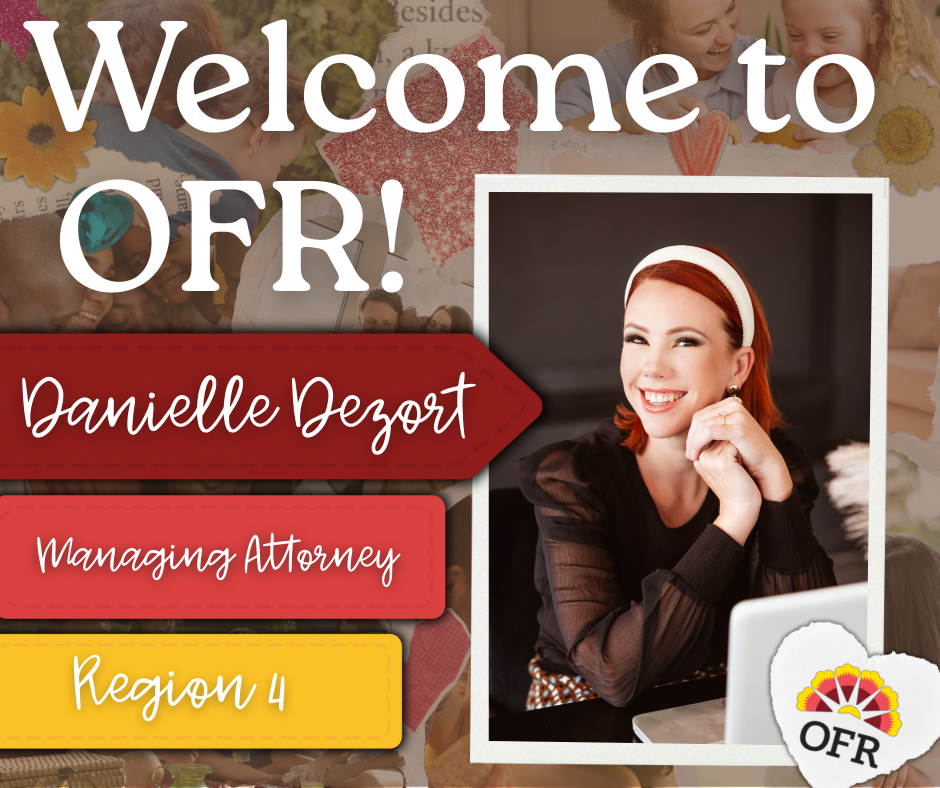
Danielle Dezort - Managing Attorney, Region 4
Danielle “Dani” Dezort is an attorney dedicated to child welfare and family restoration work. She formerly owned True Restoration Legal, which she founded in 2023. For five years, Dani represented parents on the juvenile deprived docket, holding parent-representation contracts in both Oklahoma County and Muskogee County.
Her practice has included juvenile deprived and delinquent matters, adoption, and guardianship law, with a particular focus on advocating for parents navigating the child welfare system. Dani has a deep passion for family reunification and is committed to ensuring that both parents and children receive the highest quality legal representation possible.
Before establishing her firm, Dani served as an associate attorney at Linque Hilton Gillett Law Office, where she concentrated on adoption law. She earned her J.D. from Oklahoma City University School of Law in 2018 and was admitted to the Oklahoma Bar that same year.
In 2024, Dani received the Alana M. Hughes Award for Outstanding Parent Advocacy from the Oklahoma Juvenile Law Section in recognition of her dedication to supporting families.
Dani lives in Oklahoma with her husband, Noah, and their three children—Sage, Lola, and Millie.
| |
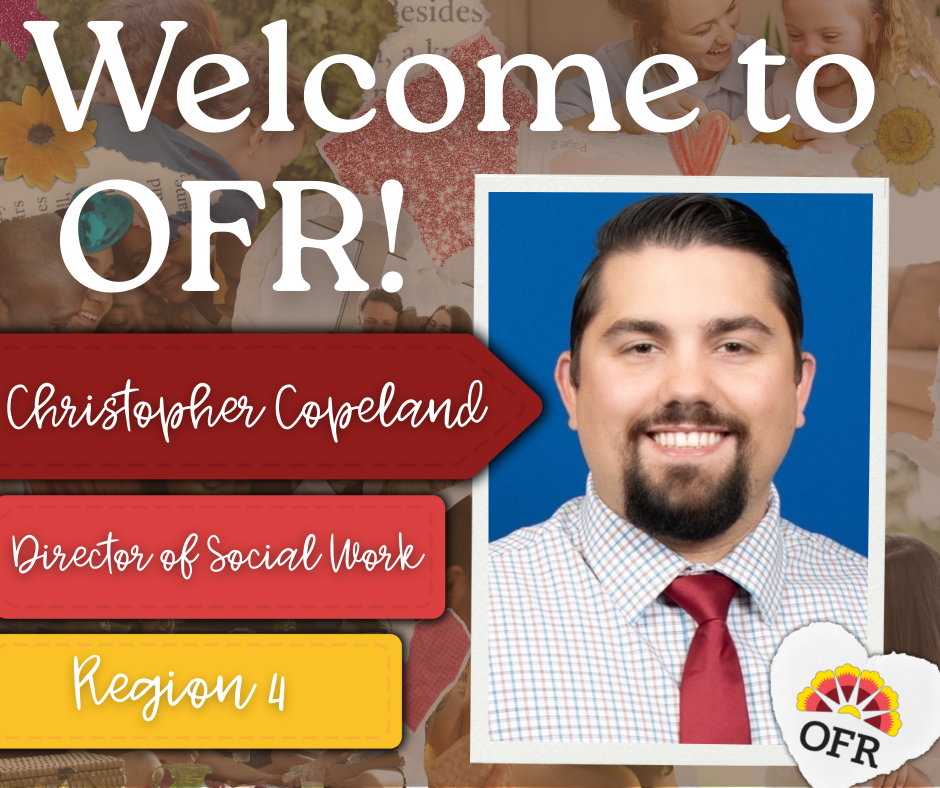
Christopher Copeland - Director of Social Work, Region 4
I'm thrilled to step into the role of Director of Social Work for Region 4. As a resident of Tahlequah, Oklahoma, this region is truly home to me.
I have over 11 years of experience dedicated to public service, primarily focused on Child Welfare at OKDHS. I have served in many different roles in my tenure with the state, including as a District Director of Child Welfare for Muskogee and McIntosh Counties. I serve on the board of Healing and Wellness court with Cherokee Nation working with youth who struggle with substance use.
My academic background includes a bachelor’s degree in public administration with minor in Military Science from Northeastern State University and a Master of Social Work (MSW) from the University of Oklahoma. I am also a Licensed Master Social Worker (LMSW) with Oklahoma.
I live near Tahlequah with my wife, our three wonderful children, and our two dogs.
I look forward to collaborating with all of you to continue serving the communities in Region 4.
| |
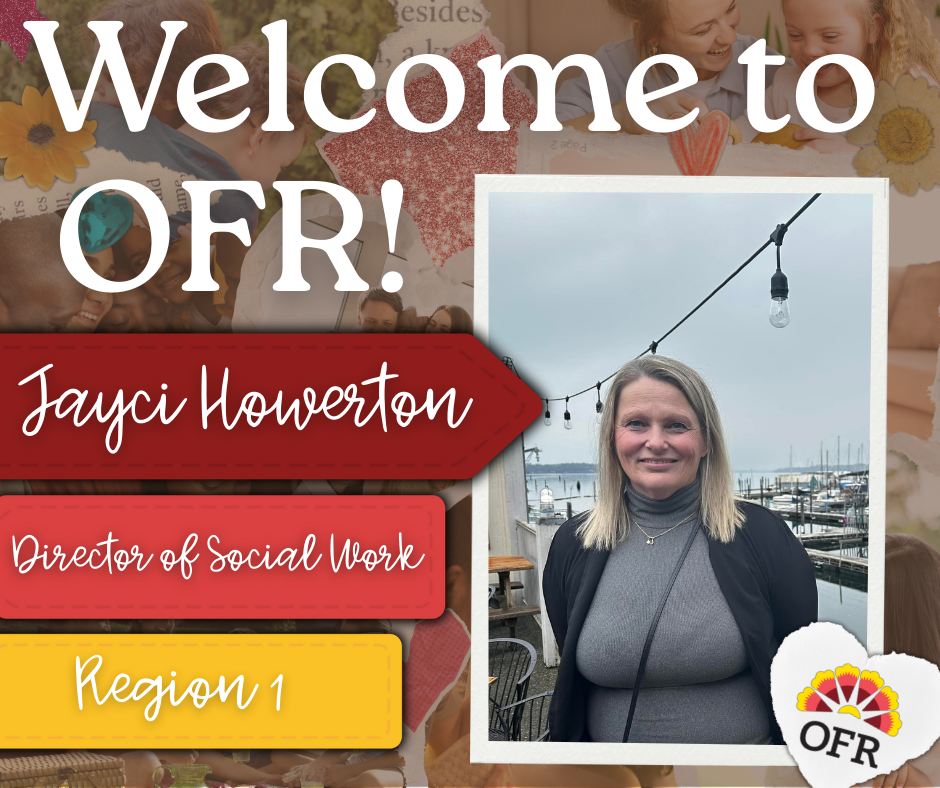
Jayci Howerton - Director of Social Work, Region 1
Jayci Howerton is the Director of Social Work for Region 1, bringing 23 years of dedicated experience in the Child Welfare field, including over a decade of leadership. Recognized for her deep commitment to equitable child and family services, she has cultivated a dedicated interest in the Indian Child Welfare Act (ICWA), ensuring compliance, cultural sensitivity, and best outcomes for Tribal families and communities.
Her leadership tenure, spanning over 13 years, has been defined by a focus on systemic reform, operational efficiency, and staff development. Jayci is responsible for overseeing complex regional cases, implementing state-wide policies, and driving cross-jurisdictional collaboration to protect vulnerable children. She remains passionate about mentoring future leaders and fostering a practice environment that prioritizes child safety, family preservation, and cultural integrity. Jayci holds a Bachelors of Social Work from Northwestern Oklahoma State University and a Master's of Social Work from the University of Oklahoma and holds her LMSW.
Jayci enjoys running and golfing with her husband and son. She is a member of the Fairview Ladies Golf Association and is on the board as an at-large member. She also enjoys reading and hanging out with her 4 dogs; Mia, Kody, Alice, and Fred. Jayci has been married for 26 years to her husband, Kenny. She has three children; Kaycee, Kendra and Karson along with three grandchildren; Elijah, Parker, and Cooper.
| |
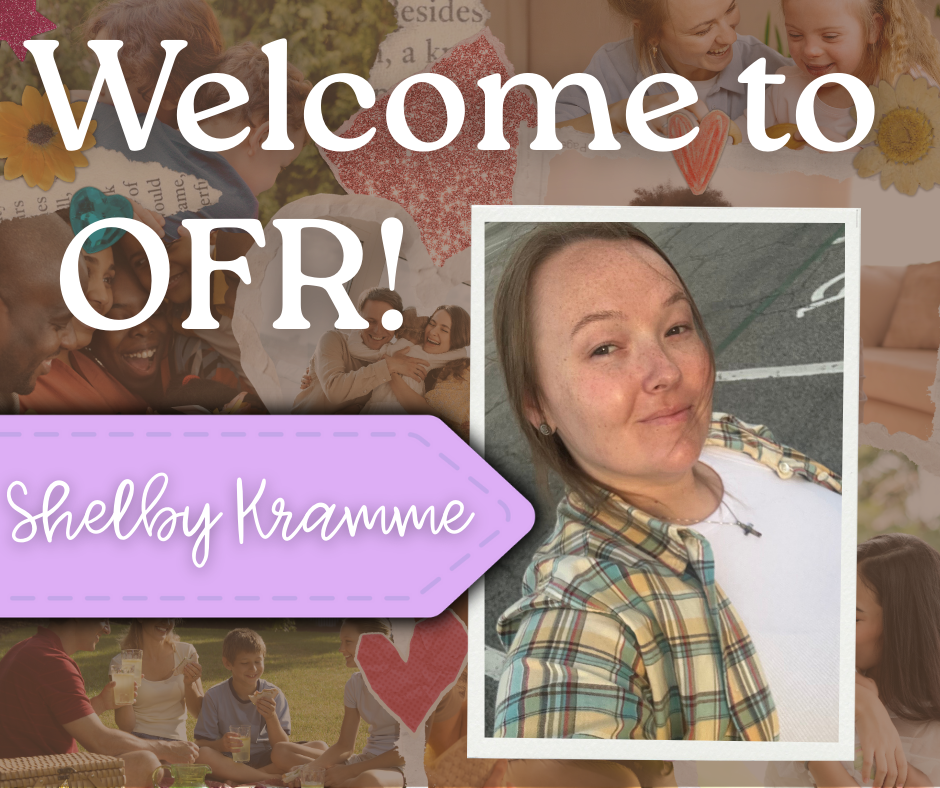
Shelby Kramme - Parent Mentor, Region 2
I’m Shelby Kramme. A mother, aunt, sister, and granddaughter. Life hasn’t been easy, and I’ve faced challenges that has shaped who I am today. My children were removed from me for 18 months due to domestic violence, and that moment changed everything. I followed every instruction from the judge and CPS because I had to! These are my babies. I had only my Papa to guide me, and his support carried me through.
That experience taught me resilience, patience, and the importance of showing up, even when it’s hard. I earned my bachelor’s degree in criminal justice and human services and have worked for CPS.
| | |
"Stipulations are solemn admissions. Unless a court, upon request, finds a tenable legal ground for relieving one from the legal effect of a stipulation, such judicial admissions are generally binding and conclusive on the parties as well as on the court."
Bonner v. Oklahoma Rock Corp., 1993 OK 131, n.15, 863 P.2d 1176, 1181 (citations omitted).
Remember: Ensuring that a stipulation is narrow and true is essential to protecting your client. For example, on appeal, COCA treats each element of the stipulation as fact and this can serve to justify their affirmation of a termination. Don't let your client stipulate to facts they dispute.
| |
| How did you like this email? | | | | | | |