|
The Nature of Redbuds, Insects, and People
by Catherine Smith
| | Entomologist Doug Tallamy’s talk at the 2026 ChicoryLane Foundation Symposium about vital relationships among insects, breeding birds, and oak trees inspired me. I am not an entomologist. But I want to know much more about the insects where I live. | | |
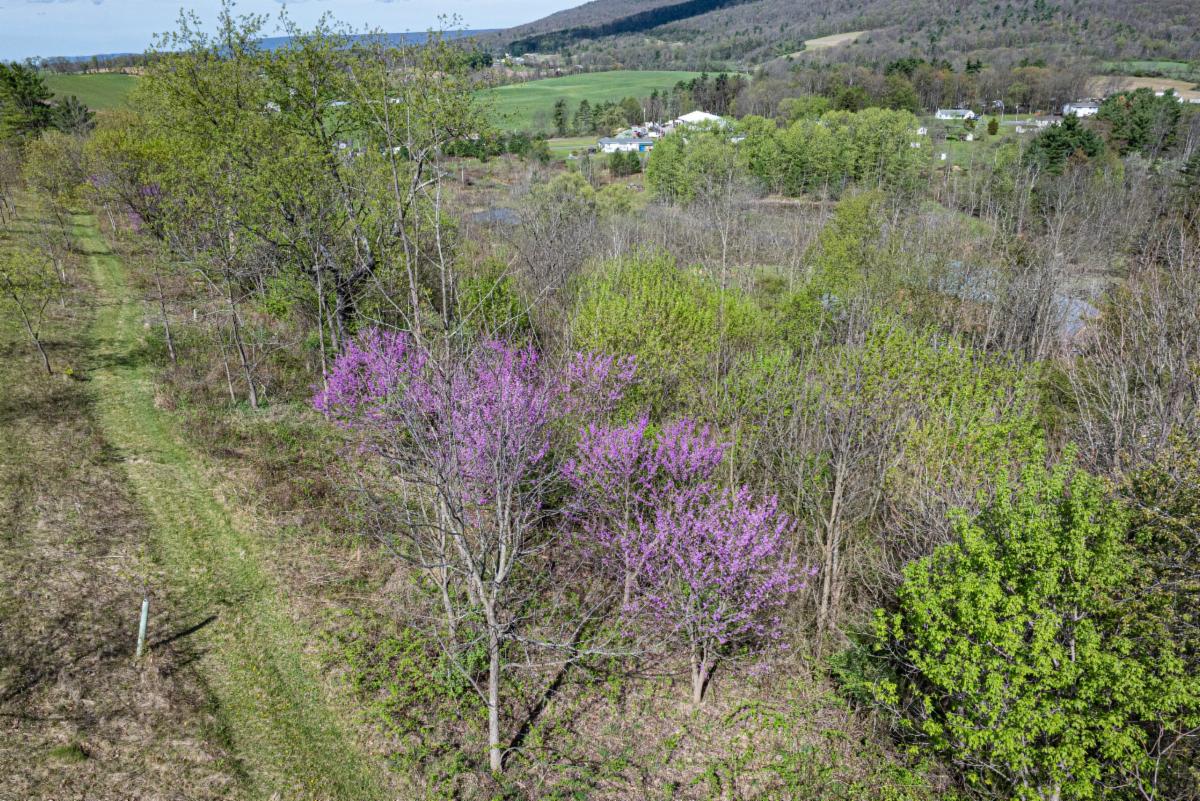
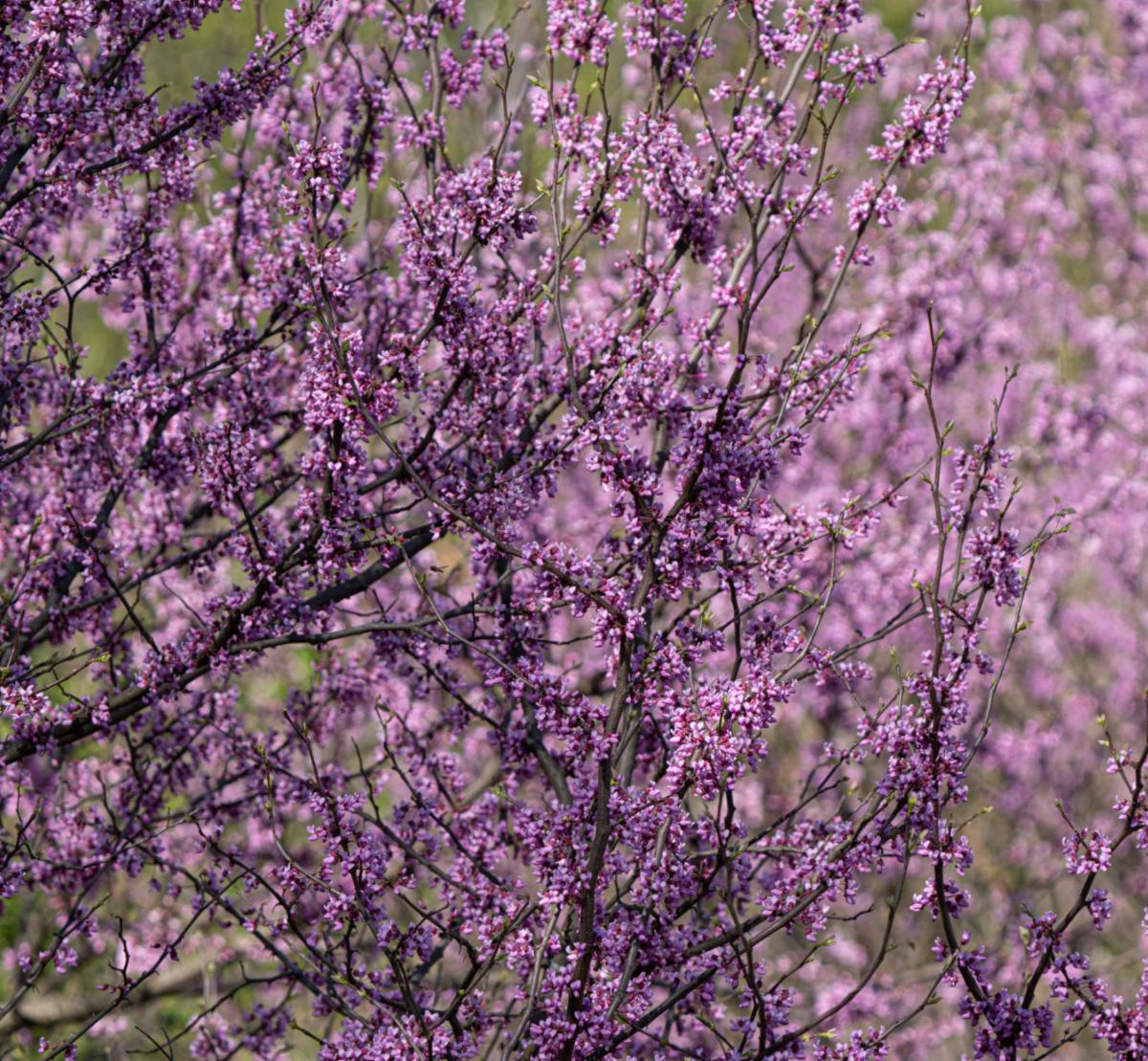
When redbud trees bloomed in late April at ChicoryLane I walked (or rode in the Gator with John, my husband) daily to check on the 40 or so we have planted here over years. Slowly the redbuds’ dark purple buds broke into bright pink flowers along bare branches.
Bill Rathfon came with his photographic kit to capture drone views as well as close-ups of what was happening in the redbud trees. In this newsletter you will see some of what his cameras saw. You will also read my stories about redbud flowers’ significance for pollinator insects in early spring.
| | |
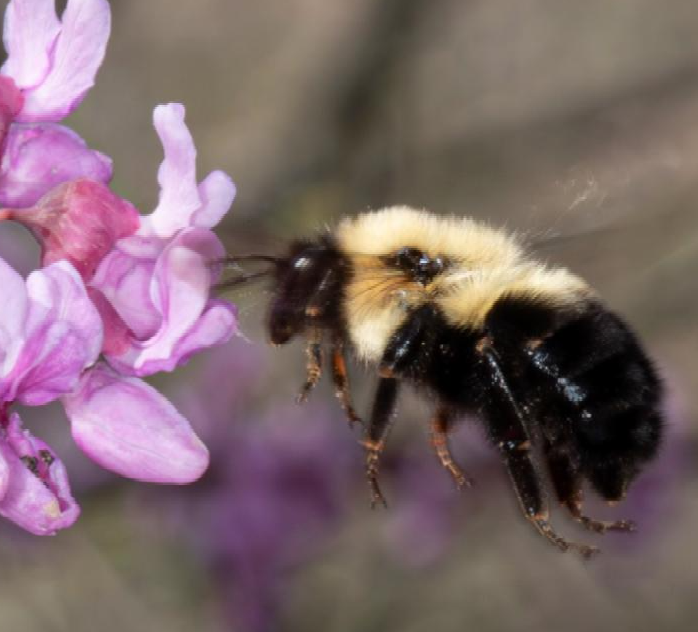
Common Eastern Bumble Bee
(Bombus impatiens)
I’m a social bee, a queen. My colony died from cold in winter, except for me. In April I emerge from hibernation in leaf litter on a mission to start a new colony. In my first foraging flight I sense electric fields around flowers. Food! I hone in on the only blooming thing in the landscape, redbud trees. With ultraviolet vision I see dark marks indicating pollen in gray-colored blossoms (I don't see pink). I land on a blossom, shake my buzz muscles to release protein-rich pollen, sip energizing nectar, then fly on. I might visit 6,000 flowers today. I need lots of energy to start the new colony.
| |
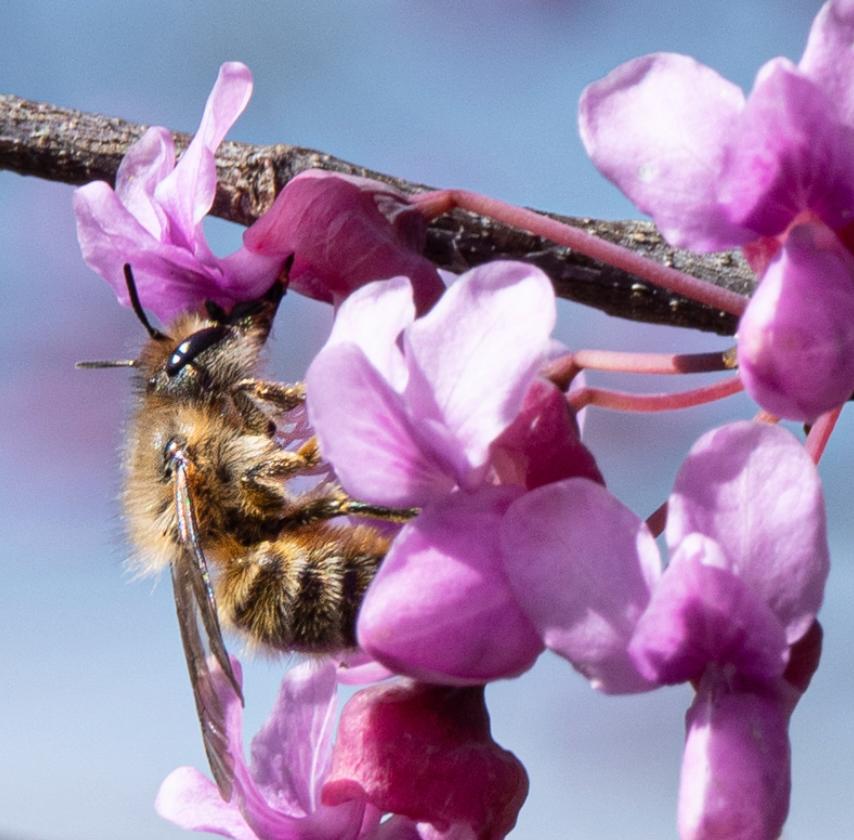
Horn-Faced Mason Bee
(Osmia cornifrons)
I can fly in cooler temperatures and later in the day than bumble bees. I might visit up to 2,500 flowers a day foraging for food. I’m a female solitary bee. I nest in tunnels that I build on wood. I use two small horns on my face to shape a mud nest or to fight off competitor females and predators. My world has no hives, workers, or queens.
| |
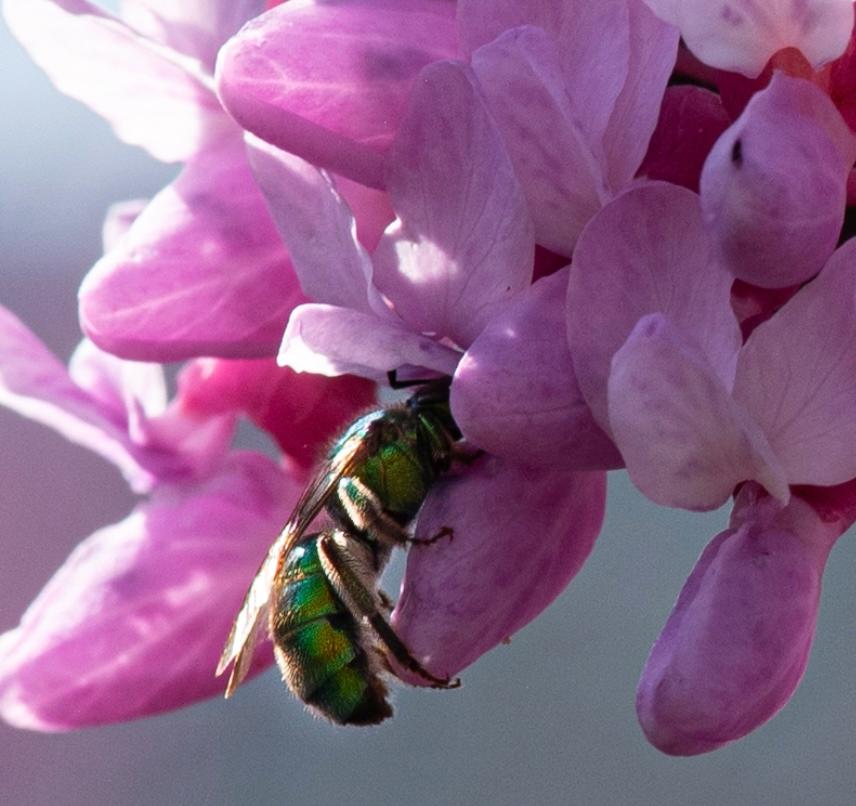
Green Sweat Bee
(Augochlora pura)
Redbud tree flowers mean food and sex to me. Other flowers mean the same; I don’t specialize. While my forked tongue gathers pollen and nectar from a redbud blossom, I mate. My scent attracts swarming males; they connect with me for a few seconds while I feed. After visiting thousands of flowers, I’ll return to a rotting log or tree where I nest, alone, and lay my eggs.
| | |
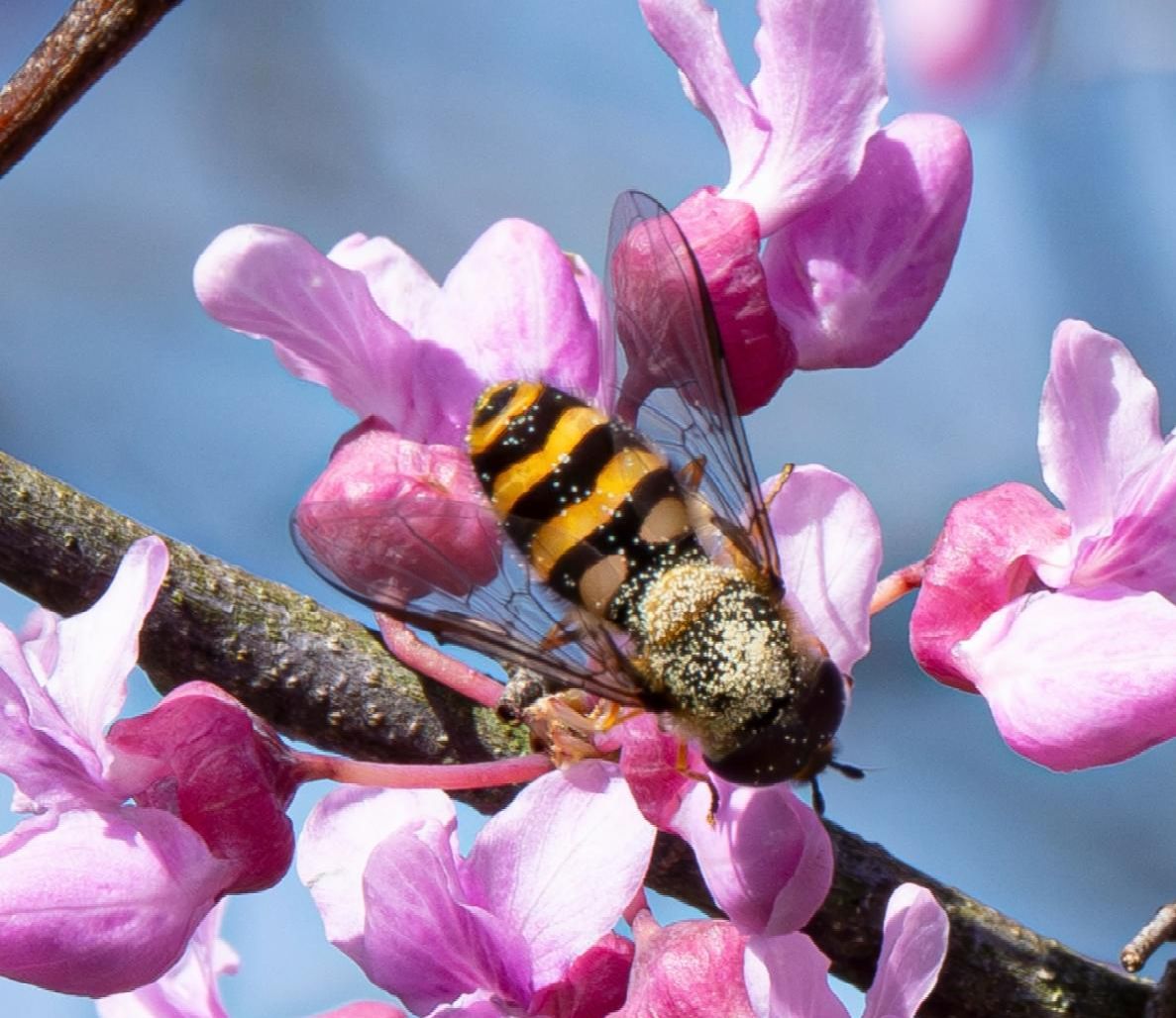
Hairy-Eyed Flower Fly
(Syrphus torvus)
I look like a bee, but I’m a fly. Dense hairs ring my big eyes, hence my common name. (If you sketch my portrait, be sure to show my eyelashes.) Like bees, I feed on flowers. Because I fly faster than bees, I can visit more flowers per day. Some entomologists say flies are better pollinators than bees, but I don’t know about that. If I’ve mated along the way, I lay eggs on the leaves. At night, I don’t nest. I sleep on the undersides of leaves or in tall grasses.
| (Redbud trees are native to North America. All insects described here are native to eastern North America, except the horn-faced mason bee. Identifications are by iNaturalist. Corrections of any errors in the stories are welcomed.) | | |
My Story
I am a non-native (originally South Carolinian) living in central Pennsylvania. The lingering cold and slow springs here can get me down. Winter grays and browns satisfy well enough, until they don’t anymore. When redbud trees flower in April, I perk up. I celebrate bright pink and lavender blooms popping out of leafless branches.
Other people feel the same, according to Marsha Bonta’s essay Redbud Valley. Bonta says:
| | |
We live just above the redbud line that stretches across the middle of Pennsylvania. But we only need to descend our mountain road and head south a few miles into the rich limestone valleys to see field edges and hillsides of redbud covered with clusters of pea-shaped lavender blossoms that have sprouted along their branches and even their trunks. To me, these small, native, flowering trees represent the most lavish display of spring color, and so late every April we take at least one trip into redbud country.
Last April we were lured by the name to Redbud Valley, a 514-acre tract of land in Buchanan State Forest near Big Cove Tannery in Fulton County. During our 78-mile trip, every valley was a lavender paradise of redbuds. I had never seen so many of them, and I’m sure my husband, Bruce, was heartily tired of hearing me exclaim for the umpteenth time, ‘Oh look at those gorgeous redbuds.'
| | Bonta adds 'redbuds feed our spirits if not our bellies.' | | |
Food for Thought
Human life depends on insects as pollinators, debris eaters, bird food, and more. Doug Tallamy and other entomologists warn that if insects go extinct, people will go with them. People can help insects (and humans) to survive by growing native trees, shrubs, and herbaceous plants that provide essential resources for insects. At ChicoryLane, we do that. We are rewarded by pleasurable opportunities to observe local ecology. And experts tell us that insect populations that have been sampled at ChicoryLane seem strong.
In this newsletter I focus on pollinator insects, trying to understand their existence in our shared world. I am learning that they differ from us in astonishing ways. Simple but important examples include:
- bees have 300-degree vision and see a wide range of colors including ultraviolet
- bees taste, smell, hear, and sense electromagnetism to navigate and to interact with objects in the landscape
- bees feed only on flowers; each day they eat thousands of tiny meals found miles apart while dodging competitors and predators
People and bees live together as aliens. Maybe, with awareness of our differences and dependencies, people begin to understand co-existence with insects. We are all earthlings.
| | |
Symposium Highlights
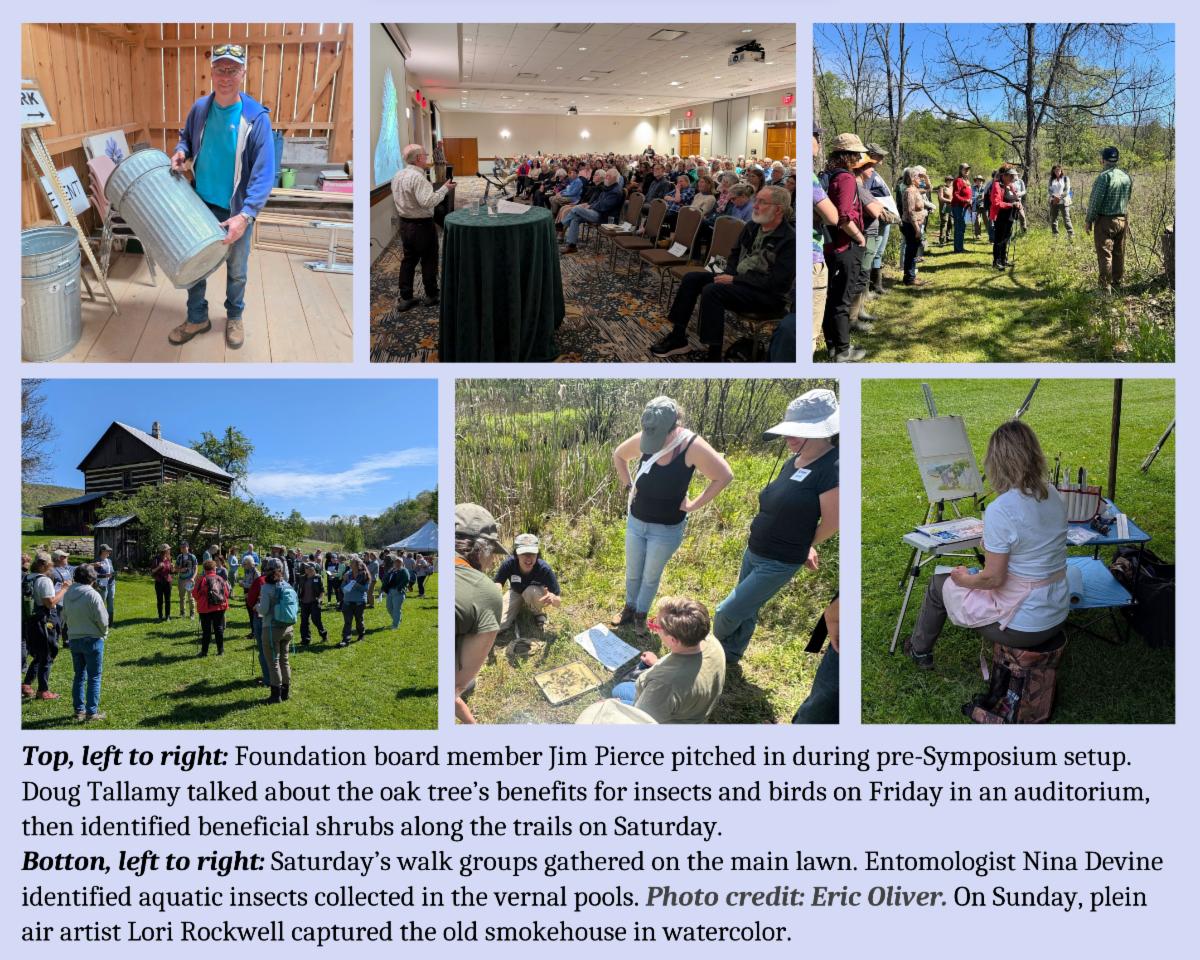
Over one weekend in mid-May, 400 or so people engaged the natural world during the first ChicoryLane Foundation Symposium.
| | On Friday evening in a darkened auditorium, ecologist Doug Tallamy got our attention. We (300+) sat enchanted as he talked about and visualized a year in the life of a food web – an oak tree, its insect dependents, and birds that depend on the insects. On Saturday we (100+) walked in sunshine at the conserved old farm now called ChicoryLane, an ecological reserve near Spring Mills, Centre County, Pennsylvania. Expert guides led us along grass paths through shrubby wetlands, along the edges of regenerating woodlands, around vernal pools, and beside shady streams. We stopped to observe plant and animal life in those habitats. Nest-building orioles, water beetles, and red Canada lily sprouts caught our attention. On Sunday we (10+) meandered alone to see what there was to see. Or we sat quietly somewhere to paint, photograph, or just look and listen. | | |
SAVE THE DATE!
Fall Bird Walk and Open Day
Saturday, September 12, 2026
more information coming soon
| | | | |
ChicoryLane is a reserve near Spring Mills protected by a conservation easement. Its 68 acres are actively managed for ecological enhancement.
The landscape is natural and scenic. It includes wetlands and meadows, streams, remnant and successional forests, and a grassland. This diversity of habitats is especially inviting to birds and insects. A system of mowed trails and boardwalks make most of the property accessible to walkers.
| | | | |