Accessibility & Health


March 2026

 
Image of a person propelling themselves in a wheelchair with wide space ahead of them.

Join our April 2026 Training!

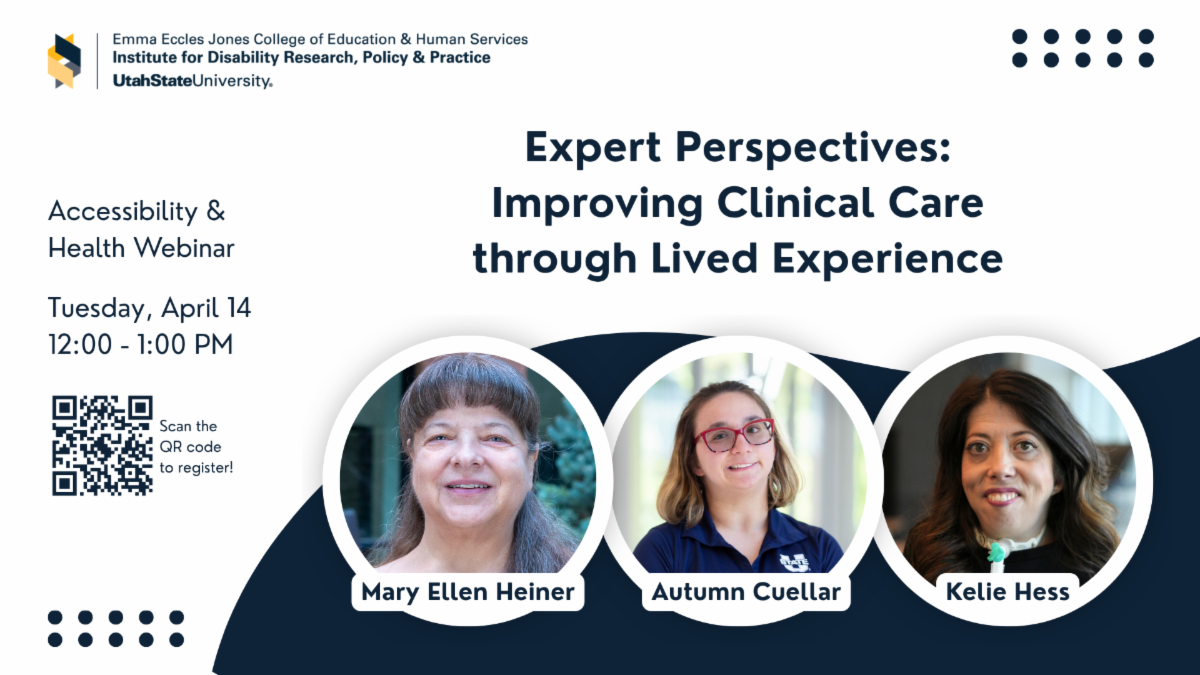
Expert Perspectives: Improving Clinical Care through Lived Experiences

Expert Perspectives: Improving Clinical Care through Lived Experience


Join us for an insightful panel discussion centered on the lived experiences of individuals with disabilities within the healthcare system. This webinar features three self-advocates who will share first-hand accounts of the hurdles they face when seeking accessible and appropriate medical care.


Beyond identifying challenges, our panelists will provide actionable recommendations designed to help healthcare professionals, public health workers, and advocates bridge the gap in service delivery. This session is a vital opportunity for providers to learn how to more effectively meet the diverse needs of their patients.

Panelists:

Mary Ellen Heiner, Autumn Cuellar, and Kelie Hess


Date:

Tues., April 14, 2026


Time:

12:00 - 1:00 PM MDT

If you have missed any of our previous trainings, you can still catch them as Canvas courses listed on our website. Got some extra time? Check them out!

 
Woman typing on a computer

Training Topics?


We are working to provide trainings and learning resources that you will find valuable, but we would love to hear your insights.


Please let us know what you are interested in learning more about!


ADA Highlight:

Importance of Staff Training

Building Accessibility into Everyday Public Health Practice

For local health departments, delivering equitable and effective services depends on more than well-written policies—it requires staff who understand how to apply them in real-world situations. One of the most important, yet often overlooked, components of success is ongoing, practical staff training. This can help avoid situations like this:

"The Office" Disability Awareness Meeting clip

From Policy to Practice in Public Health Settings

Health departments frequently serve diverse populations with varying needs. Front-line staff—such as receptionists, clinic assistants, outreach workers, and call center teams—are often the first point of contact. Without proper training, even strong accessibility policies can fall short.


Staff should feel confident in their ability to:

  • Adjust standard procedures when necessary to ensure access
  • Communicate clearly and respectfully with individuals of all abilities
  • Handle calls through relay systems and other assistive communication tools
  • Identify alternative ways to deliver services when physical or procedural barriers arise

What This Looks Like in Real Life

Consider these common scenarios in a local health department:


  • Clinic Access: A patient who uses a wheelchair arrives for a vaccination clinic, but the exam tables are not height-adjustable. A trained staff member quickly adapts by offering the service in an accessible space and ensuring the patient receives care without unnecessary barriers.


  • Communication Support: A deaf resident calls to schedule an appointment using a relay service. A staff member unfamiliar with relay calls might mistakenly hang up. With proper training, staff recognize the process and complete the scheduling smoothly.


  • Public Health Outreach: During a community vaccination event, staff encounter an individual with limited mobility who cannot stand in long lines. Trained staff implement an alternative process—such as curbside service—to ensure equitable access.


  • Policy Flexibility: A standard intake process requires written forms, but a patient with limited dexterity cannot complete them. Staff step in to assist verbally or provide alternative formats, ensuring the individual can still receive services.


Picture of someone in nurse's scrubs speaking

Leveraging Community Expertise

Local health departments don’t have to build training programs from scratch. Community partners, such as Centers for Independent Living, offer hands-on ADA training tailored to real-world service environments. Additional support and guidance are also available through agencies like the Department of Justice and the National Network of ADA Centers.


Takeaway

Accessible public health services depend on staff who are prepared, adaptable, and informed. By investing in ongoing training and real-world application, local health departments can ensure their services truly reach—and serve—everyone in their communities.

External Trainings & Resources

 
ADA National Network logo

ADA National Network Learning Session:

Enhancing Disability-Competent Care through the Nursing Guide to the Americans with Disabilities Act (ADA)


Thursday, April 30, 2026 

12:30 PM MDT

Via Zoom


Nurses spend more time with patients with disabilities than most other health care providers, yet they are not often trained on evidence-based practices for caring for this patient population. In this webinar, Dr. Erin Vinoski Thomas will describe a newly developed training for nursing students intended to improve their knowledge of the Americans with Disabilities Act and best practices for providing disability-competent care.


Share with your connections!


We encourage you to share these emails and Accessibility & Health content with other in your networks who may be interested to learn more with us!


We are always creating new learning opportunities for people working in public health settings to better serve people with disabilities in their communities.


If you received this email from a friend and would like to sign up to receive them to your own inbox, please use the button below!


Institute for Disability Research, Policy & Practice logo
 

CONTACT US

(435) 797-1981

 
Facebook  X  Instagram  LinkedIn