Weekly Digest Number 31 - August 3, 2021 |
|
Editor's Note: While this ruling is a setback for rail labor, it comes as no surprise. The arbitrator's ruling simply mandates that the unions bargain over the question of train crew size. Now is the time to stand strong and united and we can prevail with the standard two-person crew remaining intact. And we also have strong support for two-person crew legislation at the state and federal levels. We must keep up the fight on ALL fronts, brothers and sisters! |
|
ARBITRATOR FINDS THAT SECTION 6 BARGAINING REGARDING CREW CONSIST CAN BEGIN |
|
On July 28, 2021, a Neutral appointed by the National Mediation Board issued his ruling finding that on certain railroad properties, the current moratoria in those crew consist agreements do not prohibit the railroads from serving a Section 6 Notice regarding crew size. The properties affected or having no current moratorium include certain properties at BNSF, UP, NS and CN Railroads. Other properties not currently affected or involved may also be included in the future as moratoriums naturally expire. Please contact your local chairperson or general chairperson for specific details regarding your terminal or district.
The ruling comes after a nearly two-year battle between SMART-TD and the National Railway Labor Conference over the moratoria provisions and their effect. The arbitration was one of the largest conducted by SMART-TD and its predecessor union, UTU, in decades.
The ruling does not eliminate any current crew consist provision or requirement. The only thing it does is to open the door for bargaining to occur. The moratoria that previously prevented any mandatory bargaining on crew consist were predicated on the last remaining employees having hired on the railroad previous to the 1980’s. Today, less than 100 of these employees remain nationwide, and most are at, or near retirement age.
Once a Section 6 is served, the Railway Labor Act requires both parties to engage in mandatory bargaining. The Act, however, does not mandate any particular outcome in such negotiations, it merely provides a process. In the event parties reach an impasse, the Act contains methods to avoid disruption to commerce through mandatory mediation and possibly intervention from the President of the United States and the U.S. Congress.
|
|
Editor's Note: Once again, this guy DeFazio stands up for what is right and stands firm against the Class One railroad BS ... |
|
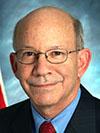
House Transportation Chair DeFazio opposes CN-KCS voting trust plan |
|
U.S. Rep. Peter DeFazio (D-Ore.), who chairs the House Committee on Transportation and Infrastructure, yesterday submitted to the Surface Transportation Board (STB) a letter in opposition to CN's request to use a voting trust in its merger proposal with Kansas City Southern.
DeFazio expressed concern that the proposed trust was not in the public interest, which would reduce competition and prejudice the outcome of the STB’s merger proceeding.
He cited the U.S. Department of Justice Antitrust Division, which explained in a May 14 submission to the board how voting trusts reduce competition both in general for railroad mergers and in particular to the consideration of a voting trust for CN and KCS.
"In general, putting two formerly competitive businesses under a single holding company immediately reduces the parties’ incentives to engage in competition. While the Surface Transportation Board regularly allowed railroad trusts throughout the many railroad consolidations of the 1980s and 1990s, the board has made the requirements to approve a voting trust more stringent since 2001 as part of an overall reform of merger rules," DeFazio wrote.
Now, according to federal procedures, applicants must show that trusts would be in the public interest, he noted.
"Approving a CN-KCS trust would signal to the rest of the rail industry that the STB is engaging in business as usual, despite the requirement to consider the public interest, and could launch a new round of mergers," the letter stated.
|
|
Editor's Note: Last week we reported on CSX, UP and CN. This week CP and NS have released some more glowing numbers. The rail carriers continue to deliver for their stockholders, if nobody else. This of course is unsustainable, and the carriers will be forced to face the music in the end. For now, the orgy of profiteering continues.... |
|
Despite Service Disruptions, Class One Carriers Continue to Rake in Record Profits |
|
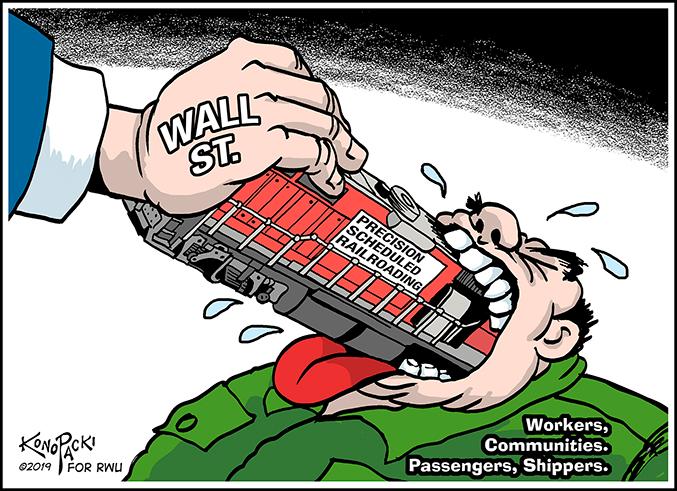
PSR: Can We Please Be Honest Here? |
|
An Oct. 3, 2018 article in The Daily Aztec was titled “Honesty is a Virtue That is Slowly Fading from Society.” Nowhere might that ring truer than in the rail industry, particularly with regard to its treatment of Precision Scheduled Railroading (PSR). In support of this statement, I offer the following observations from the field in the region where I live and work.
Focus on Moving Cars: Fuzzy, at Best
A favorite claim of the industry regarding PSR is that it shifts the focus from moving trains to moving cars. When looking at how cars are actually being handled in the field, whether any element of truth within that claim exists is unclear.
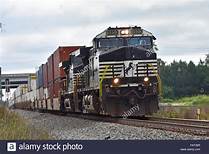
To wit, one of the practices most common where I am located is the arrival of trains bringing into satellite yards blocks of cars that then sit in those yards for hours waiting to be picked up by a following train. This lengthens the following train to the 11,000-plus-foot range, which the industry views as favorable.
Another practice frequently observed is the combining of two trains into one very long train. This does not typically happen as the result of circumstance. Rather, I frequently see cars on a train sitting for hours in a terminal waiting for the arrival of the train with which they are being combined. Add in the delay in the time it takes to actually make these two trains into one, and then split them back up for final delivery.
A third practice involves the railroad’s choice to not provide hours of service relief for local freight trains as a cost-cutting measure. The cars on those local trains subsequently sit out on line, sometimes for long periods, until the railroad incidentally has another crew or train available to move the cars into their next scheduled terminal. This delays the forwarding of these cars to their final destinations.
and for those of you who missed this important article from last week's RWU Weekly News Summary ...
|
|
Editor's Note: This is just one more group of shippers who are dissatisfied with the service by the Class One railroads in recent years. |
|
Agricultural Shippers Call on STB to Adopt Competitive Rail Measures |
|
In a July 20 letter to the STB, the ag shippers asked the STB to adopt measures such as competitive switching to enhance competition "and prevent railroads from abusing their market dominance." Increasing competition among freight railroads "is an important vehicle through which the board can address pervasive challenges faced by rail shippers, including poor rail service and unreasonable rail rates and practices," the letter stated.
The ATWG includes a diverse array of agricultural producers and agribusinesses that rely heavily on freight-rail service. Due to rail industry consolidation over the past 40 years, the number of Class Is has been reduced from 33 to seven, “and two major duopolies” have formed in the eastern and western halves of the United States, the shippers noted.
|
|
Draft Text of Senate Bill Reveals Full Scope of Rail Funding
|
|
Rail Passengers reported yesterday that the Bipartisan Infrastructure Framework (BIF) was “a welcome first step,” but well below what was outlined in President Biden’s ambitious plan to transform passenger rail based on a review of summary documents. However, I’m happy to report that the release of the draft bill text suggests our original analysis was too pessimistic.
Having reviewed the draft bill text integrating the BIF and the Senate’s Surface Transportation Investment Act (STIA) of 2021, it appears that Senate has combined the two investment bills to create a truly ambitious investment program in passenger rail in the U.S. Combining both the BIF and STIA 2021, the draft bill outlines $102 billion in rail investment over the next five years – a transformational figure. (NB: the final text of the bill is expected to be filed in the Senate tomorrow, so this analysis is based on a discussion draft Rail Passengers received earlier today.)
It’s important to note that future appropriations aren’t guaranteed in the absence of a passenger rail trust fund. That means only $66 billion of the rail funds are guaranteed, with the remainder at the discretion of appropriators. There’s no assurance that the additional $36 billion in investment will ever fully materialize. This creates uncertainty in how the guaranteed funds would be used, hindering the ability of States and Amtrak to effectively execute multi-year capitalization plans.
However, it is also true that the draft text of the Senate’s bill reveals a more ambitious vision for passenger rail than we first credited it with. It provides Amtrak with $22 billion in dedicated capital funds, allowing it to address maintenance backlog of rolling stock, facilities, and stations; acquire trainsets to replace obsolete equipment – including on Amtrak’s long-distance and state-supported services; and upgrade reservations, security, training centers, and technology.
|
|
Brotherhood of Maintenance of Way Employees (BMWED) News |
|
Union Pacific Discloses $7 Billion For “Share Repurchases” |
|
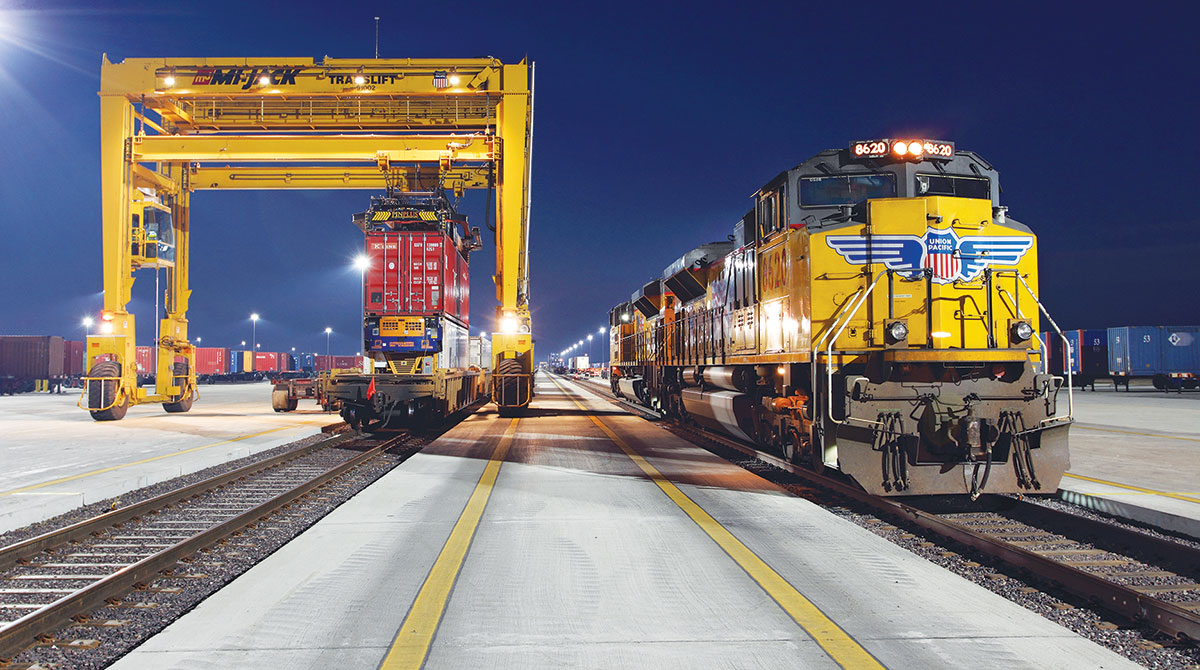
Under fire from importers and exporters for service cutbacks and from rail employees for lay-offs and followed by a seven-day rail service suspension from West Coast ports in July, Union Pacific disclosed that it has accumulated approximately $7 billion for “share repurchases.”
According to the July 22, 2021 transcript of a call with analysts discussing Union Pacific’s second quarter 2021 earnings announcement, and provided by seekingalpha.com, Jennifer Hamann, chief financial officer, Union Pacific, disclosed: “With that strengthening outlook, cash generation is growing as is our plan for share repurchases, which we would target at approximately $7 billion or $1 billion more than we had originally planned.”
During the same July 22nd call, Lance Fritz, chairman, president and CEO told analysts: “Union Pacific is reporting 2021 second quarter net income of $1.8 billion, or $2.72 per share. This compares to $1.1 billion, or $1.67 per share in the second quarter of 2020. While comparisons to the second quarter of last year are skewed by the COVID impact, a comparison to 2019 further demonstrates the impressive results we achieved during the quarter. Our quarterly operating ratio of 55.1% is an all-time record.”
Asked about the $7 billion for share repurchases, a UP spokeswoman told AJOT:
“Union Pacific has worked proactively to help ease congestion in the international intermodal supply chain, despite the impact to our own service metrics. We recently temporarily paused West Coast port shipments moving east to address congestion at inland terminals and have and will continue to work closely with the ocean carriers and other stakeholders to address global supply chain challenges.
In addition, Union Pacific has spent roughly $66 billion in our network over the past two decades and will invest $2.9 billion dollars this year in capital improvements, including improvements to our infrastructure, equipment and commercial facilities.”
However, there are a growing number of complaints from shippers, freight forwarders and railroad workers that cutbacks on service, workers and equipment are motivated by so-called ‘precision scheduled railroading’ (PSR) practices. Critics say these practices focus on major cutbacks and lay-offs. The result is that rail resources are directed at profitable routes and conversely reduce and eliminate services on less profitable routes at both the Union Pacific and Burlington Northern Santa Fe railroads and other Class 1 railroads.
|
|
Analysis: Former BNSF Executive Matt Rose’s 2019 Warning Comes True |
|
The railroad industry’s chickens have come home to roost. Before he retired in 2019, BNSF Railway Executive Chairman Matt Rose warned that the other Class I railroads were inviting regulatory risk by adopting Precision Scheduled Railroading, reducing service, and demarketing some types of traffic in pursuit of higher profits.
“We have this common-carrier obligation to provide freight service to all customers in all markets,” Rose told an industry conference in January 2019. “And what we’re doing in PSR is we’re redefining what we’re willing to accept in the freight railroad industry on certain lanes. And I really do believe we’re going to get in a lot of trouble by doing that.”
“When you start redefining markets,” Rose warned, “I think then the federal policymakers will look at this, and quite frankly, they will not be happy with us.”
That day of reckoning is here.
Last week, Surface Transportation Board Chairman Martin J. Oberman questioned whether railroads are shirking their common-carrier obligations due to pressure from Wall Street. “I have wondered … whether the combination of the reductions in workforce, the interruptions in service, the demarketing all implicate the common-carrier obligation that railroads have and have had really since the beginning of the railroad industry,” Oberman told the Midwest Association of Rail Shippers. “And it’s something that I continue to focus my attention on.”
|
|
CSX: Pan Am Merger Application Moves Forward, Support Builds |
|
The Surface Transportation Board (STB) has accepted for consideration CSX’s amended and re-filed Pan Am Railways acquisition application, and set a procedural schedule, with a final decision to be rendered April 1, 2022. The proposed merger is also gaining support, CSX reported.
|
|
NTSB Releases Public Docket of Train Derailment and Fire in Tempe, Arizona |
|
The docket for this investigation includes more than 1,300 pages of factual information, including reports on operations, mechanical, track and engineering, metallurgical testing, hazardous materials, risk assessment, bridge and structures, and emergency response efforts. The docket also includes interview transcripts, photographs, and other investigative materials.
The docket contains only factual information collected by NTSB investigators; it does not provide the final report, nor does it contain analysis, findings, recommendations, or probable cause determinations. As such, no conclusions about how or why the derailment happened should be drawn from the information within the docket. The NTSB will issue a final report at a later date that will include analysis, findings, recommendations, and probable cause determinations related to the derailment.
The derailment happened when a westbound Union Pacific Railroad freight train traveled over a wooden trestle leading up to a steel superstructure bridge over Tempe Town Lake. Twelve cars of the train derailed, and the train struck the bridge, which then collapsed. Three cars carrying hazardous material released about 2,200 gal of flammable material but did not catch fire; however, lumber spilled from the derailed equipment did ignite. No injuries were reported in connection with the accident.
|
|
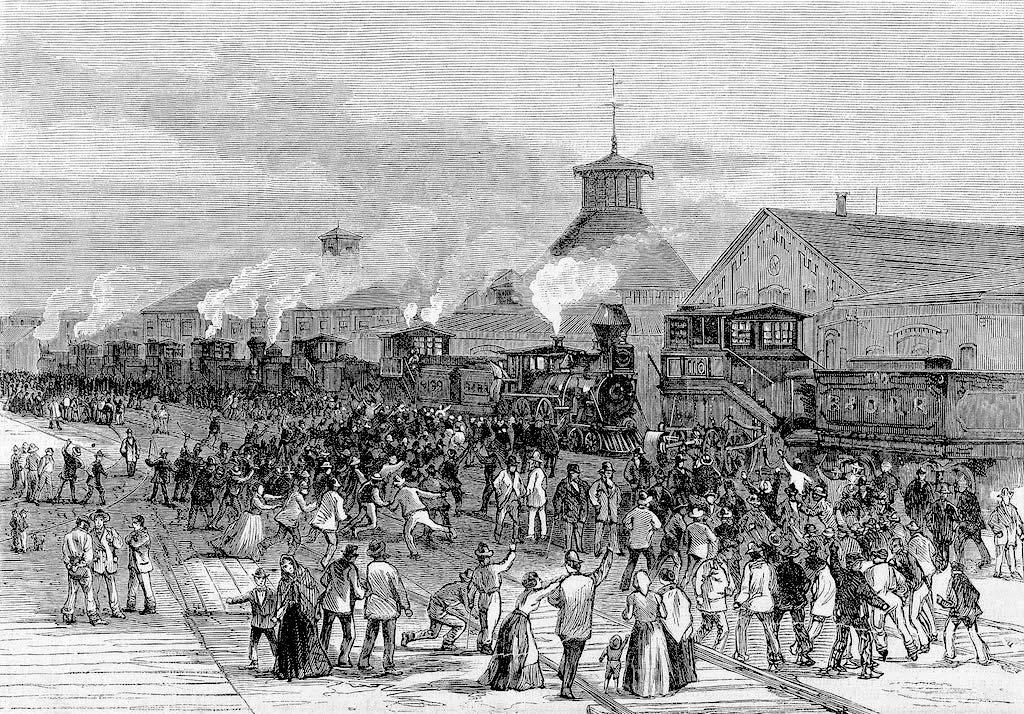
Editor's Note: This is a fascinating account of the first great national strike in the U.S., led by railroad workers. It was cross-craft and was aimed at all rail carriers, included all rail workers and countless others from various industries who joined in as well. This was a generalized uprising against corporate power and exploitation. |
|
Every July, We Should Celebrate the St Louis Commune |
|
On Saturday, July 21, 1877, the Workingmen’s Party organized in an industrial section of St Louis where the Union’s ironclad steamships were fitted with their namesake paneling. On a flat carriage, an agitator named Peter Lofgreen mounted the stage to draft resolutions with an audience of five hundred. There was going to be another wage cut. Negotiations with the rail companies had failed. “The capitalists was trying to starve the workingmen,” Lofgreen said, “and was educating his children to look down on them, despise and grind them under foot at every chance.”
A vote carried that all workers go out on strike: engineers (the aristocrats of the profession), trackmen, platform men, brakemen, firemen (who stoked the fires of train engines), wipers, and everyone else employed by the railroads. Albert Currlin, a German immigrant and baker by trade, coaxed the crowd into marching order, and they took the ferry across the Mississippi singing “La Marseillaise.” On the other shore, a crowd of rail workers greeted them. They “mingled in the general throng,” Foner writes, and marched toward the Relay Depot.
Sunday, shortly before midnight, Engine 53 of the Indianapolis & St Louis railroad came into the yard to haul freight. Preceded by a drum and fife corps, the strike’s executive committee approached and requested that the crew leave. They did. The engineer took the train back to the roundhouse. A hundred workers “moved with an orderly and undemonstrative air, firm, determined that no trains should pass” and kept watch over the depot that night. The saloons within six blocks of the depot were closed.
|
|
|
|
|
|
|