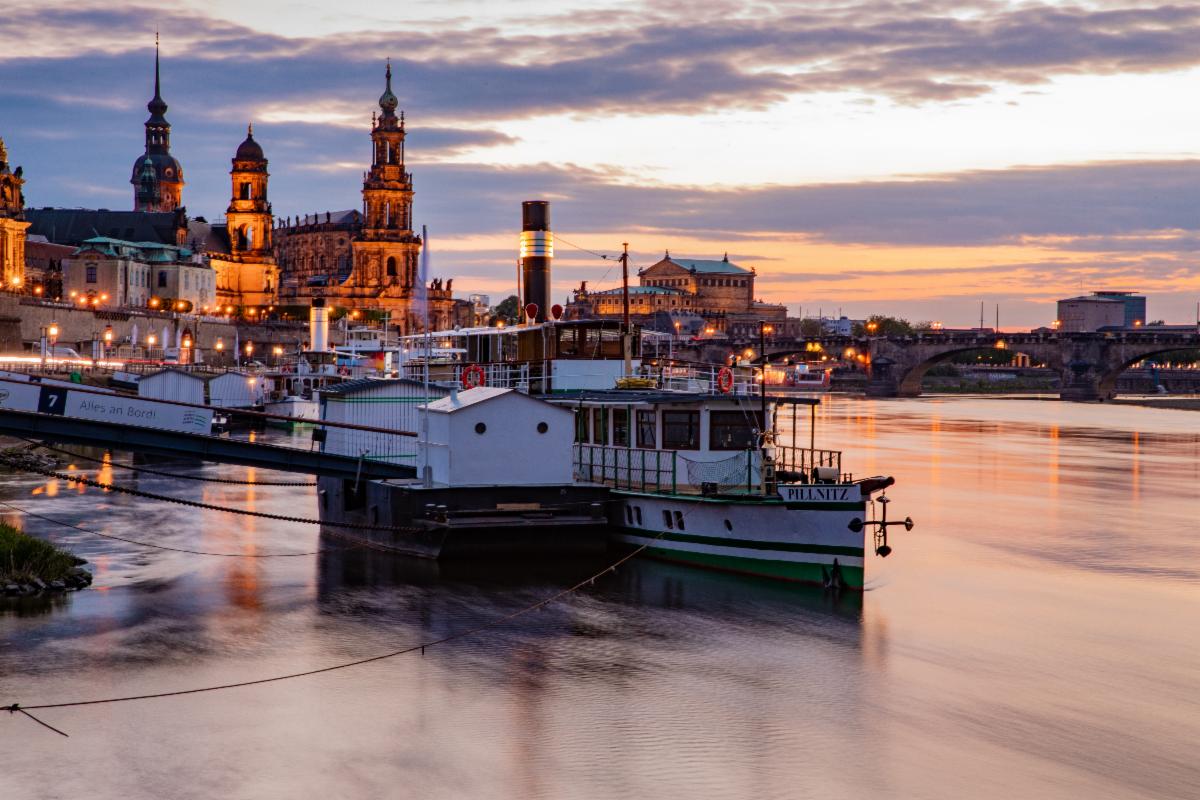
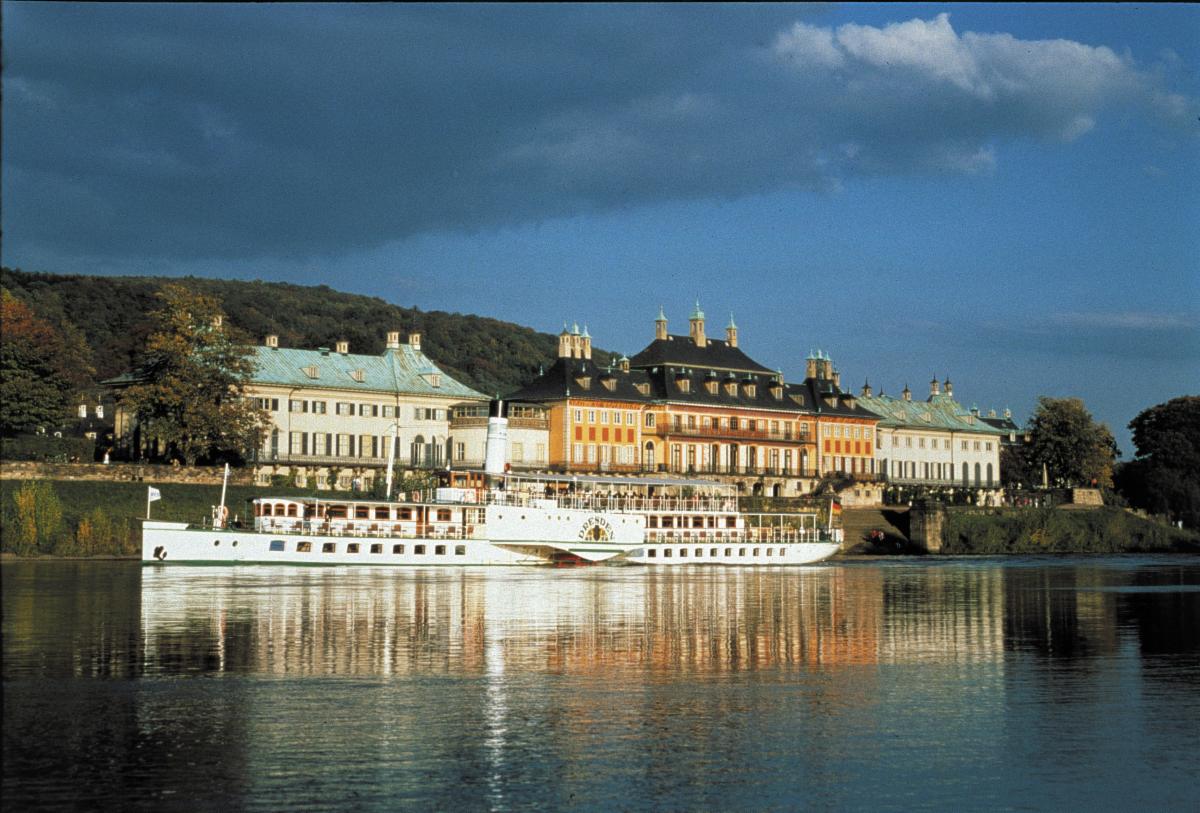
One of Dresden's traditional steamships docked in the city harbor on the River Elbe at sunset. You see the Royal Palace and church and the old town in the background. © Saxony Tourism, Sebastian Rose | | |
Dear Travel Colleagues,
For nearly two centuries, paddle steamers have glided along the Elbe River, connecting travelers with some of Saxony’s most beautiful landscapes and cultural treasures. In 2026, the Saxon Steamship Company celebrates its 190th anniversary, at the same time its flagship Dresden marks an impressive 100 years in service. Explore the remarkable legacy of the world’s oldest and largest paddle steamer fleet, discover a surprising connection to North Korea, cruise through the scenic Elbe Valley, visit Augustus the Strong’s summer residence at Pillnitz, and uncover the enduring appeal of Meissen, the cradle of Saxony and home of Europe’s first porcelain manufactory.
Best wishes,
Victoria Larson
| | |
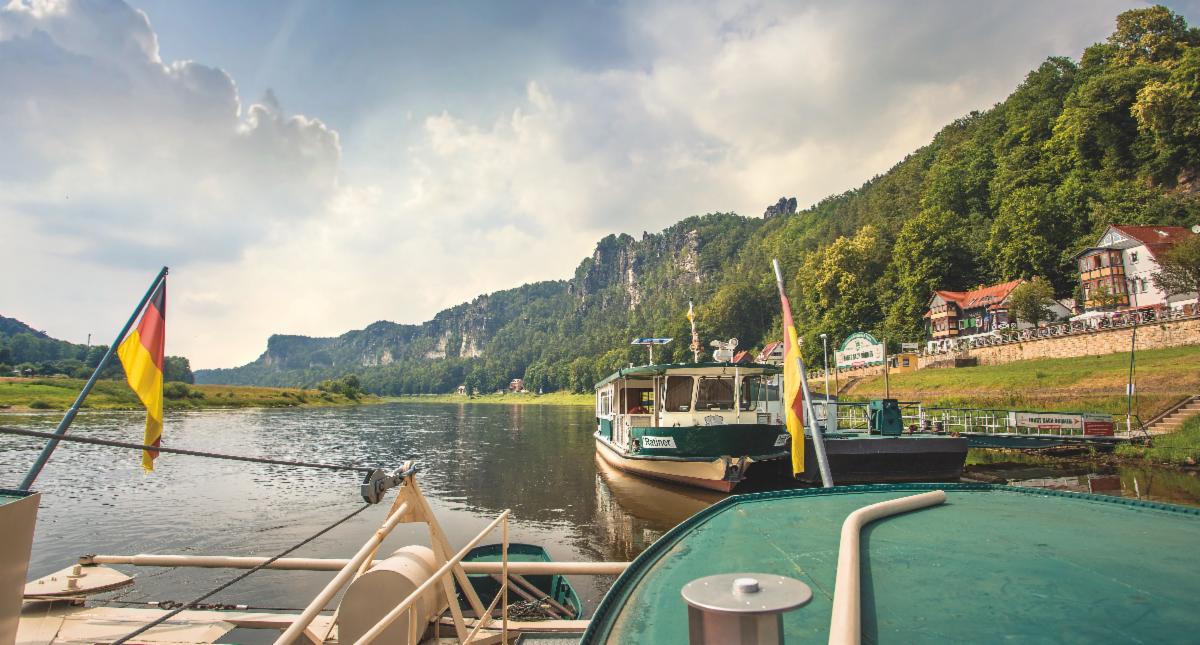
Shipping pier on the river Elbe in Rathen with the Elbe Sandstone Mountains. The historic steamers of the Saxon Steamship Society belong to the world´s largest and oldest steamship fleet. They ply the Elbe between Riesa and Schöna and on to the Czech Republic through the scenic countryside of the Elbe and Saxon Switzerland. A special highlight is the great naval review: The historic steamers and salon ships sail between Dresden and Pillnitz accompanied by live-music. © Saxony Tourism, Katja Fouad Vollmer
| | |
Celebrating 190 Years of Steamship Tradition
Since 1836, the Saxon Steamship Company has welcomed passengers aboard the Elbe River, earning its place as the operator of the world's oldest and largest paddle steamer fleet. Today, nine historic paddle steamers continue to navigate the river, preserving a tradition that has survived wars, political change, and technological revolutions. The fleet is a living museum of engineering and craftsmanship. Among its most beloved vessels are the Kurort Rathen, celebrating 130 years in service, and the Pillnitz, which reaches the remarkable age of 140. Even more impressive is the steam engine aboard the Diesbar, which has been operating for 185 years and is considered one of the oldest functioning steam engines in the world. For travelers, stepping aboard these beautifully restored ships is like stepping back into another era, where polished wood interiors, elegant saloons, and the rhythmic turning of paddle wheels create an unforgettable experience.
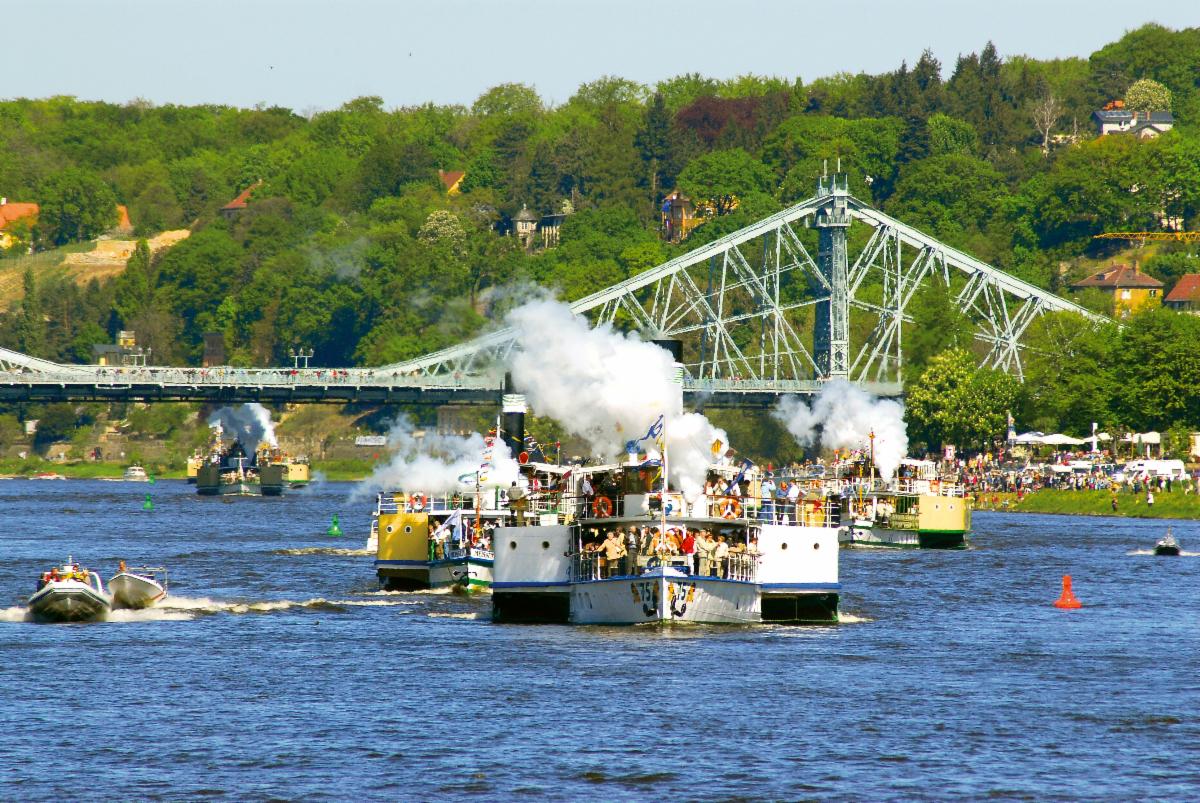
| | Steamer parade in Dresden. Traditionally, at the start of the season on May Day, all 9 historic paddle steamers as well as the two saloon vessels of the fleet form a decorated parade with live music on the steamers. The parade starts at Terrassenufer Dresden, drives along the three Elbe castles to the Blue Wonder and on to Pillnitz Castle. Thousands of Dresdeners and guests gather on both sides of the Elbe to watch this spectacle. It is a great spectacle when the paddle steamers cruise past the spectators with loud signals. At the Elbe Island, the turning maneuver takes place. Without stopping it goes back to the terrace bank. © Saxony Tourism, Katja Fouad Vollmer | | |
A Century of the Flagship Dresden
This year, the paddle steamer Dresden celebrates its 100th anniversary. Built in 1926, the vessel remains the flagship of the Saxon fleet and continues to delight passengers with its elegant design and historic charm. The ship's story extends far beyond Germany. During the era of North Korean leader Kim Il-sung, a replica of the Dresden was constructed after he reportedly became so impressed by the vessel that he requested its original blueprints. Today, the existence of a sister vessel on the other side of the world remains one of the most fascinating and unexpected chapters in the ship's history. As the Dresden marks its centennial year, it serves as a reminder of how engineering excellence and timeless design can capture imaginations across generations, and even across continents.
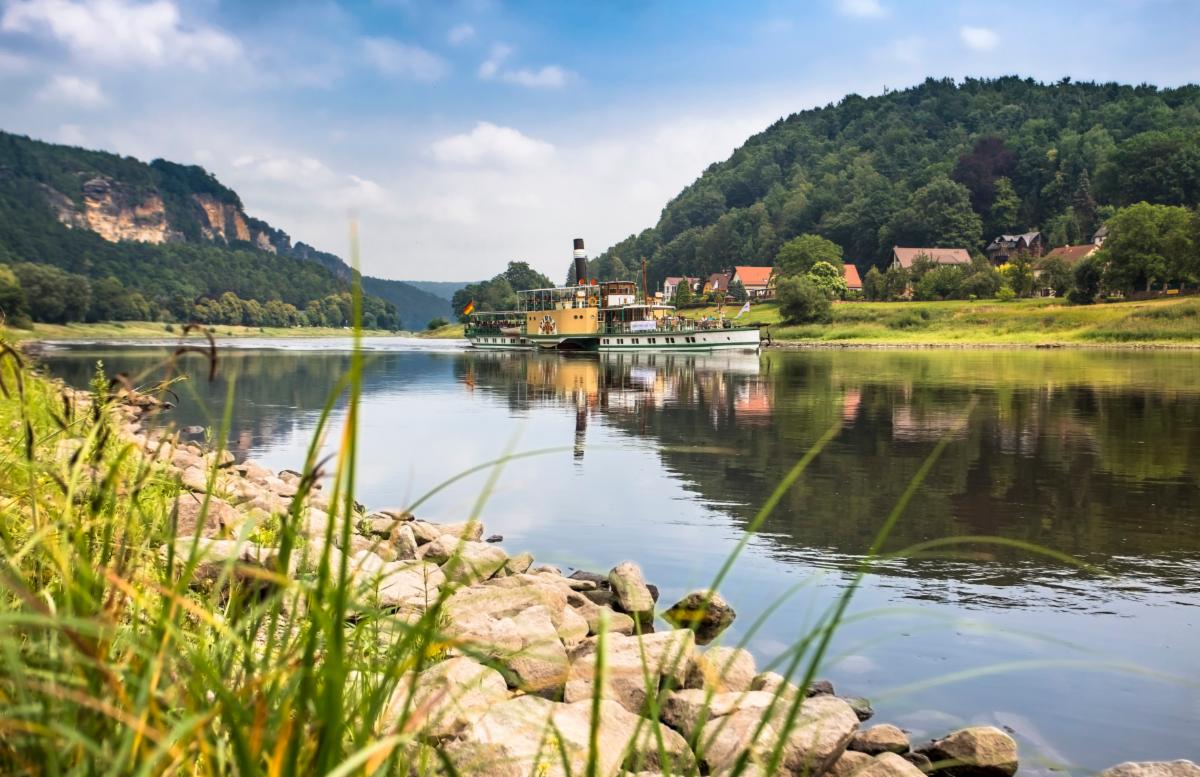
| | Paddle steamer on the river Elbe travels through Saxon Switzerland. Small but nice is the selection of water-related activities in Saxon Switzerland. Along the river Elbe, there are several boat rentals and tour operators. The water perspective offers impressive panoramic views of the majestic rocky realm. Conquering the Elbe under your own steam can be strenuous, but doesn't have to be. Whether you pull the paddle powerfully through the water or simply let yourself drift with the current is something everyone can decide for themselves. The more leisurely ones simply decide to take a boat trip on the upper lock in Hinterhermsdorf or let the landscape pass by on a tour of the Elbe on a historic paddle steamer. © Saxony Tourism, Katja Fouad Vollmer | | |
Cruising Through Saxony's Most Beautiful Landscapes
The steamships themselves may be the stars of the show, but the scenery along the Elbe is every bit as memorable. As the paddle steamers depart Dresden, passengers enter one of Saxony's most beautiful cultural landscapes, where royal palaces, vineyard-covered hillsides, historic villages, elegant nineteenth-century villas, and broad riverside meadows line the banks of the Elbe. The journey to Pillnitz features sights like the Blue Wonder Bridge, Dresden's hillside railways, and historic riverside wine communities. Along the way, walkers and cyclists can be spotted following the popular Elbe Cycle Route, one of Germany's most beloved long-distance trails. Nearly 190 years after the first steamships began navigating these waters, the experience remains remarkably unchanged, offering visitors a unique opportunity to discover the history, architecture, and natural beauty that make the Elbe Valley one of Germany's most captivating destinations.
| | The grand castle and park grounds directly situated on the banks of the Elbe River are considered a perfect blend of the architecture of the Far East with the Western Baroque style. The English, Dutch and Chinese gardens on the extensive garden grounds invite the visitor to take a stroll and enjoy the exotic treasures, as the famous 250-year-old Japanese camellia, of Pillnitz Castle and Park. © SDS Sächsische Dampfschiffahrts GmbH | | |
Pillnitz: Augustus the Strong's Riverside Retreat
One of the highlights of any Elbe cruise is Pillnitz Palace, the striking riverside summer residence of Augustus the Strong, Elector of Saxony and King of Poland. Located directly on the banks of the Elbe, the palace ensemble is actually made up of three main buildings: the Riverside Palace, the Upper Palace, and the New Palace. They are linked by elegant courtyards and framed by meticulously designed Baroque gardens. Its architecture is particularly distinctive for its rare blend of European Baroque grandeur and chinoiserie elements, reflecting the 18th-century fascination with East Asian art and design that Augustus the Strong actively promoted at his court. Once a seasonal retreat for Saxon royalty, Pillnitz was also a stage for court life, leisure, and ceremonial arrivals by river, with the Elbe serving as the “royal approach” to the palace. Today, the surrounding parkland, featuring formal gardens, exotic plants, and the famous palm house, creates a striking contrast with the vineyard-covered slopes beyond. Arriving by paddle steamer still offers visitors the most authentic and atmospheric perspective as the palace gradually unfolds from the riverside greenery exactly as it was meant to be seen.
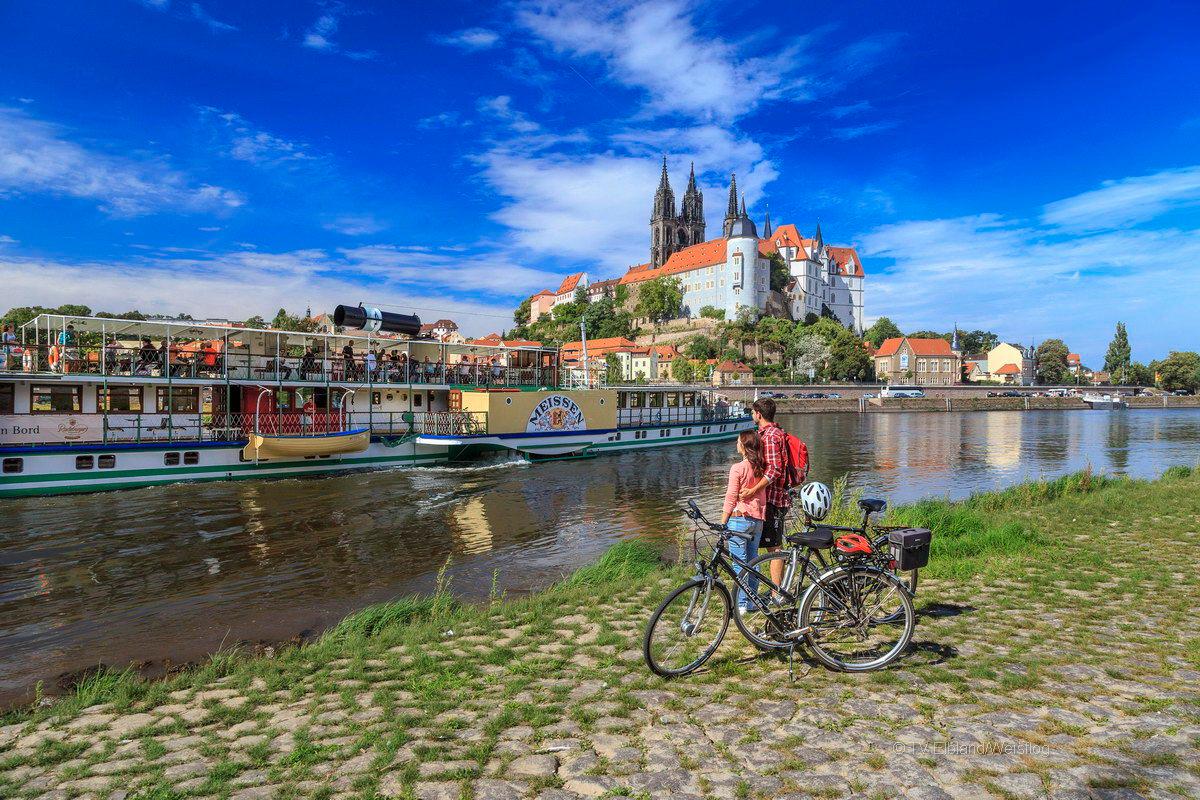
| | Albrechtsburg Castle in Meissen is Germany's oldest castle, Albrechtsburg Castle Meissen was already a trendsetter when it was built. Impressive exhibits in the castle rooms, presented in a modern and interactive way, remind us today of the genius of western inventiveness. The first European porcelain was produced here for more than 150 years. © Saxony Tourism, Rainer Weisflog | | |
Meissen: The Cradle of Saxony and Birthplace of European Porcelain
Further downstream lies Meissen, one of Saxony's most historic and charming towns. Its story began in 929, when King Henry I established a fortress high above the Elbe. Over time, the town became a residence of the Saxon rulers and earned its reputation as the "Cradle of Saxony." Dominating the skyline today are the Gothic cathedral and Albrechtsburg Castle, widely regarded as Germany's first castle built specifically as a royal residence.
Meissen's international fame, however, rests on another achievement. In 1709, Augustus the Strong established Europe's first porcelain manufactory here, unlocking the secret of producing what was once known as "white gold." More than 300 years later, the famous crossed blue swords of MEISSEN® remain a symbol of exceptional craftsmanship and artistry. Visitors can tour the workshops, watch artisans at work, and gain fascinating insight into a tradition that transformed Meissen into a household name around the world.
| | |
For further information, please contact Victoria Larson at victoria@vklarsoncommunications.com
https://visitsaxony.com/
| | | | |