|
Welcome Back Feathered Friends!
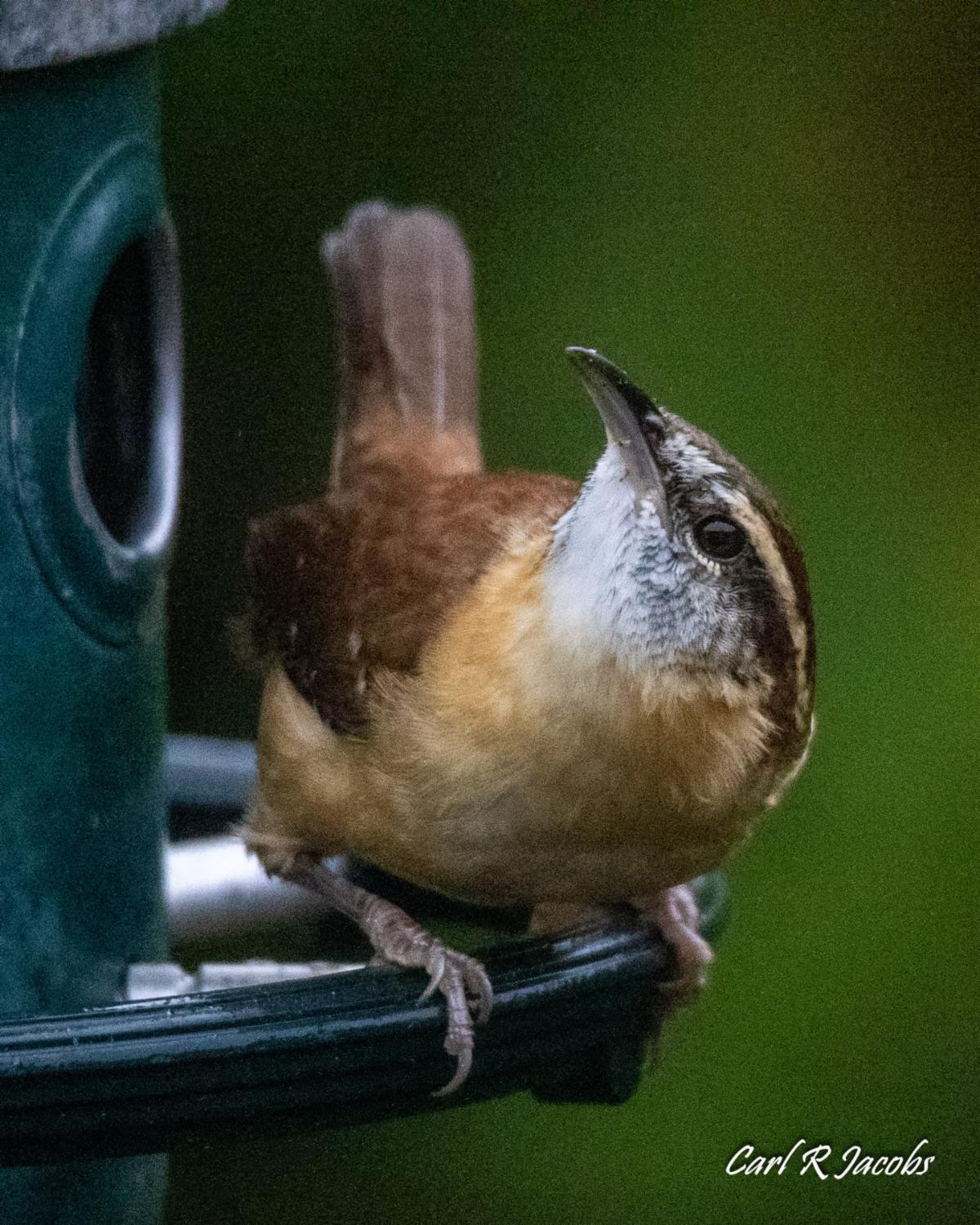
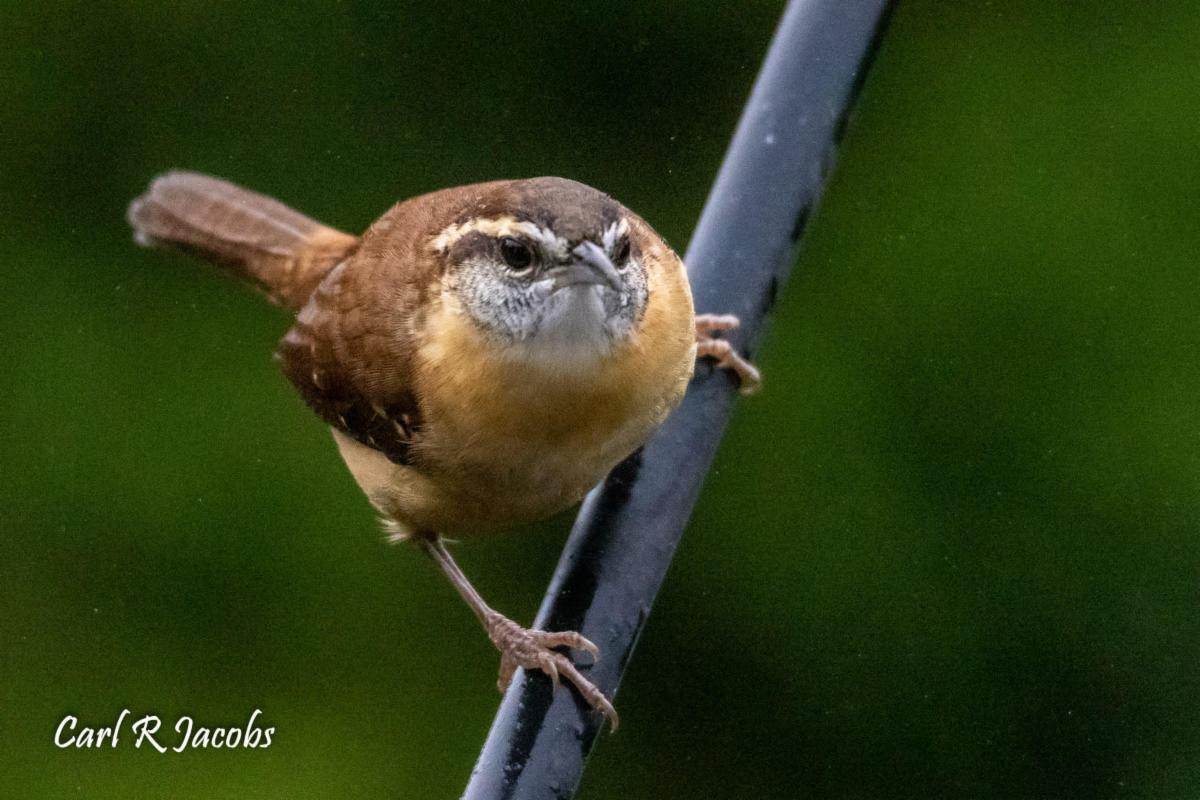
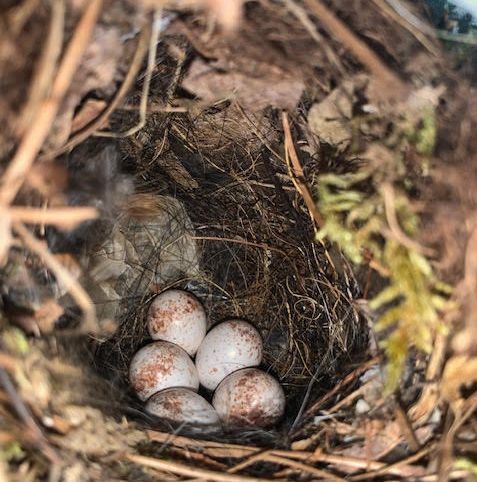
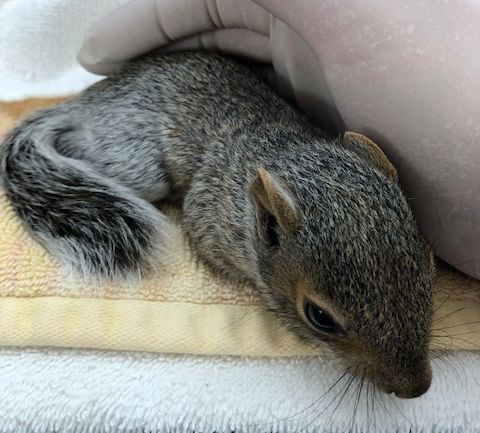
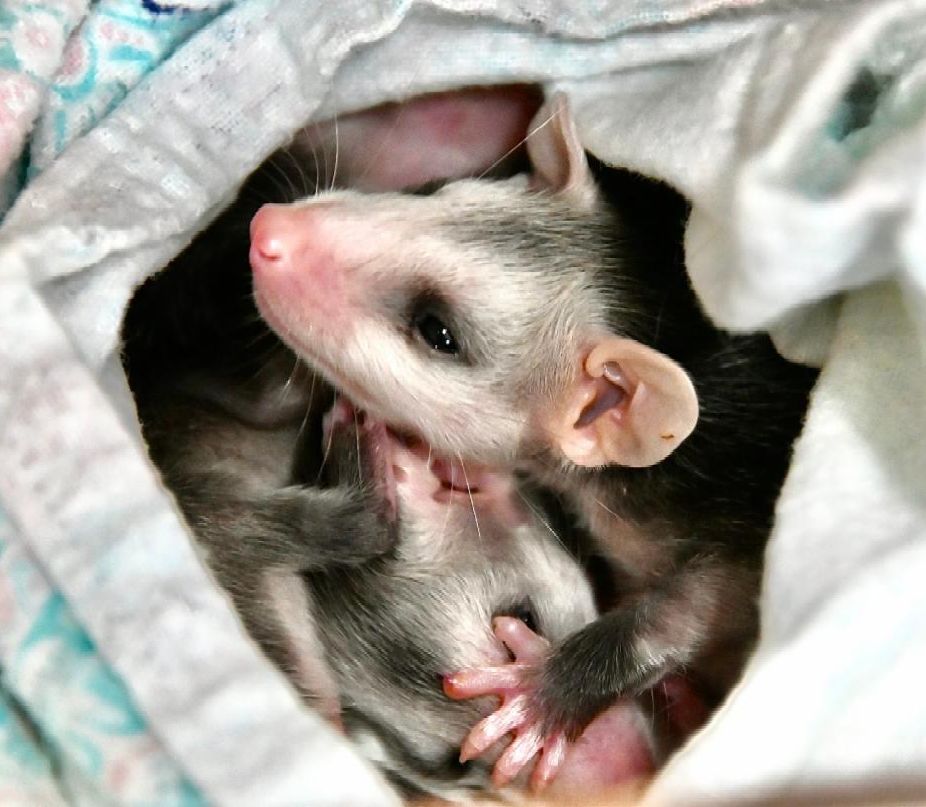
SPRING HAS SPRUNG: The weather is feeling spring-like, and our Wildlife Clinic and Nursery is filling up with baby animals including squirrels and oposs, a sure sign of the season. Some of our resident birds like Carolina Wrens and House Finches, have begun nesting. These two species love to nest near human dwellings, especially in door wreaths, hanging plants, and under the shrink wrap of dormant boats. Discourage the commencement of boat nesting activity by sealing up shrinkwrap and placing pool noodles into trailer kingpin boxes.
Migratory songbirds are beginning to arrive. There are many ways you can protect their journey. Follow our tips for preventing WINDOW STRIKES. Avoid unnecessary outdoor lighting which disorients birds while migrating. Keep your bird feeding stations clean, (1/10 bleach to water solution weekly, rinse and dry thoroughly) and change your hummingbird nectar frequently - every 2 to three days during warm weather.
The the most effective ways to welcome back our songbirds is to plant native plants that provide food, shelter and nesting options throughout the season. Keep cats indoors. Go pesticide free in your backyard, and "leave the leaves". Leaves are natures compost pile - filled with invertebrates that birds and other animals depend upon especially in the spring. These simple actions can save many lives. Skip the yard work this spring. It's for the birds!
Stephanie Ellis,
Executive Director
| |
|
BABIES! BABIES! BABIES!
Here are a few of the recent babies in our nursery...
| |
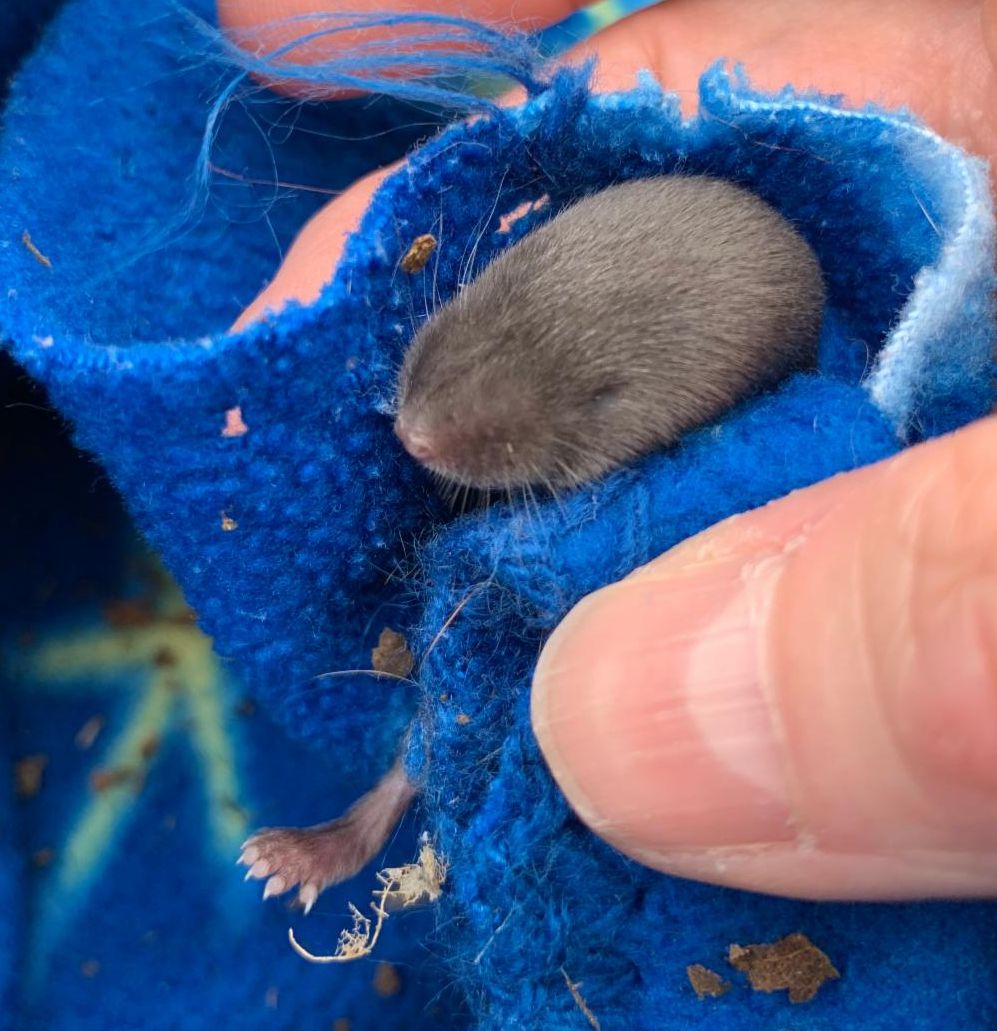
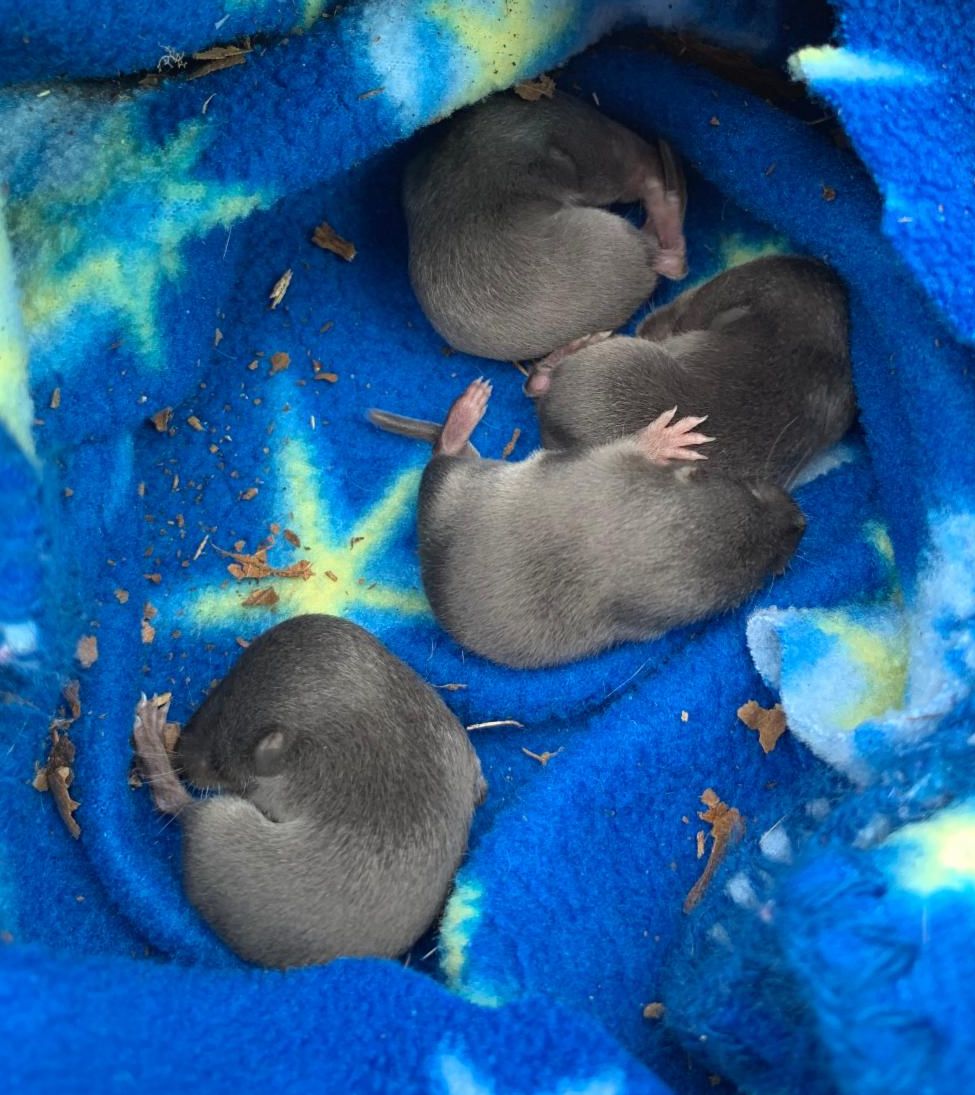
Weaning of the Shrew(s)
We recently received a call from a homeowner in Harwich after he accidentally raked up a nest of five baby Short-tailed Shrews while doing yard work. The homeowner helped us attempt to re-nest the babies, but unfortunately, after 3 hours, the mom did not return.
Short-tailed Shrews are the only venomous North American mammal. Their venom is not enough to hurt a human, but immobilizes their earthworm and insect prey, and is enough to kill mice, which they also eat in the winter. Shrews are not rodents. They are related to moles and are in the Order Insectivora. Short-tailed Shrews must eat more than 90% of their body weight in calories every day to sustain themselves. It took quite a bit of work feeding them, but thankfully they are now weaned and growing like weeds!
Thank you to Russ for being such a kind and compassionate person. Special thanks to Sherry of Nutmeg Acres Wildlife Rehabilitation in CT. Sherry provided us with shrew consult, every step of the way. Thanks also to Dr. Rob Adamski of Unity College for vole GI consult. Sometimes it takes a village!
| |
|
|
If you love baby animals, you'll want to listen to
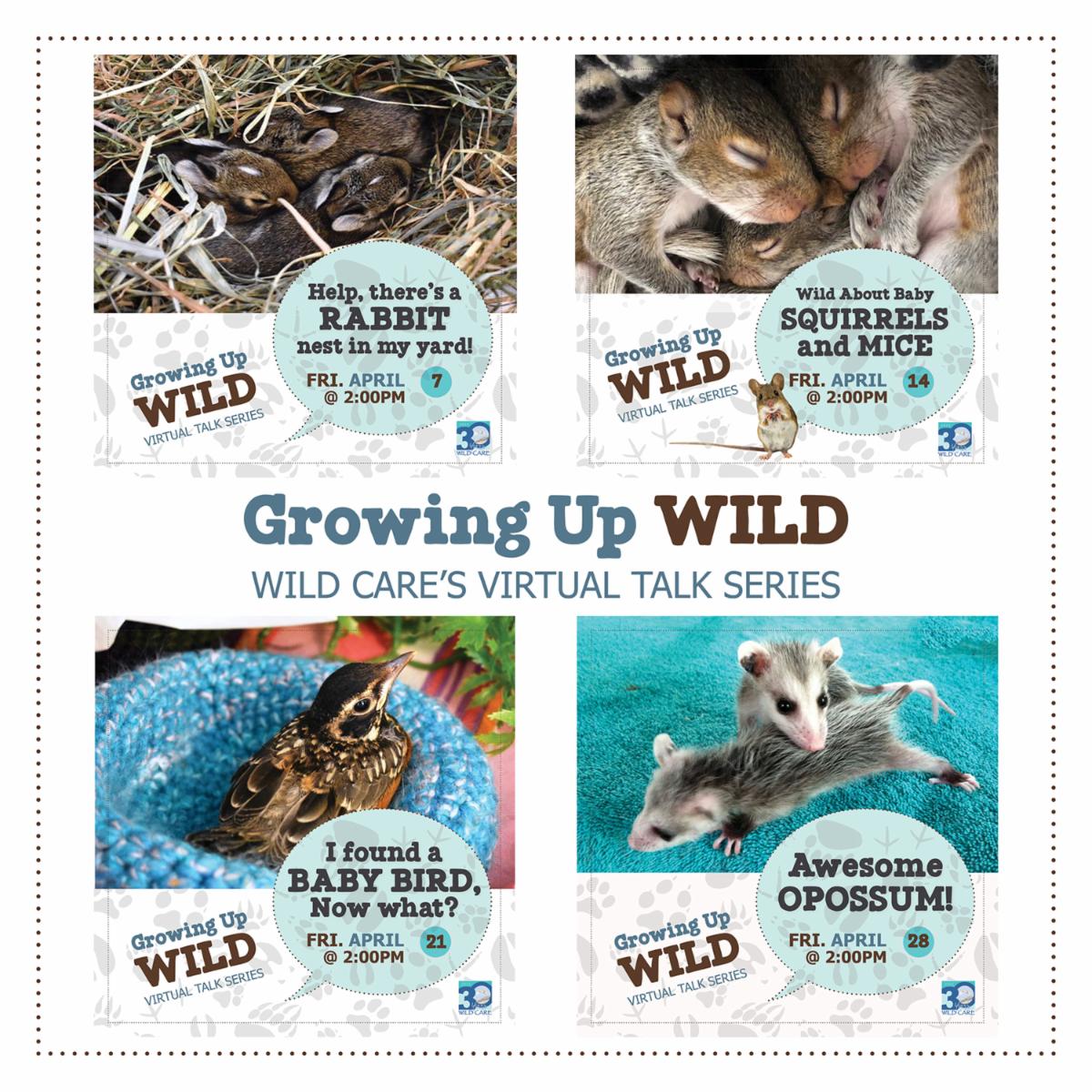
Wild Care’s four-part talk series “Growing Up Wild"
| | |
|
|
Executive Director Stephanie Ellis hosts Wild Care's virtual talk series "Growing Up Wild" This series includes talks about baby rabbits, birds, squirrels and mice, and Virginia Opossums. Hear all about what makes each of these baby animals so unique, learn all about their different nesting habits, how you can help keep them wild, and more. Each talk is full of fun, useful, and interesting information. We have one more live talk coming on Friday, April 28th at 2pm - "Awesome Opossum!".
Just in case you’ve missed them, all talks will be posted on our Events YouTube Channel to watch later.
| |
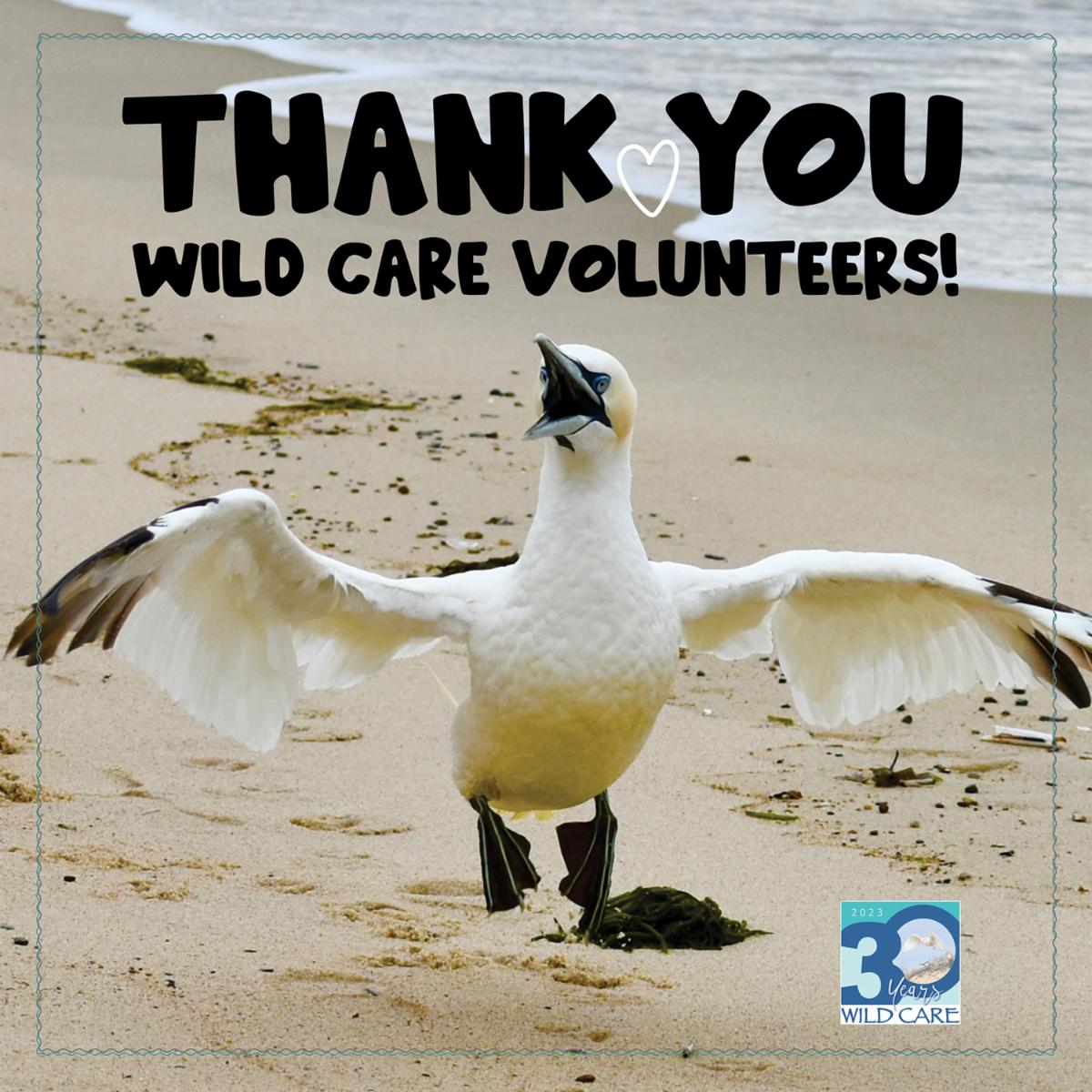
Hurray for Wild Care's Amazing Volunteers!
April 16th - 22nd was National Volunteer Appreciation Week. In our eyes every day is Volunteer Appreciation Day! Our volunteers are appreciated beyond measure. They keep our doors open. They provide enough respite from the clinic tasks that we can take tiny babies home and feed them overnight, and get all the medical procedures done that we need to make our patients lives as good as they can be while recovering from illnesses, injuries and trauma. They provide community outreach. They build cages and roofs, and fix steps and install timers on lights. They feed youngsters and clean up their poop. They collect enrichment items, and caging items, and staff fundraisers. They direct traffic. They make donations. They save lives, literally, though they don't always see it. A HUGE THANK YOU to all of our volunteers, every single day!
READ Volunteer Coordinator Amy Sanders entire message to Wild Care volunteers
| |
Lower Cape TV Presents "Wild Care - Every Animal Matters" | | |
|
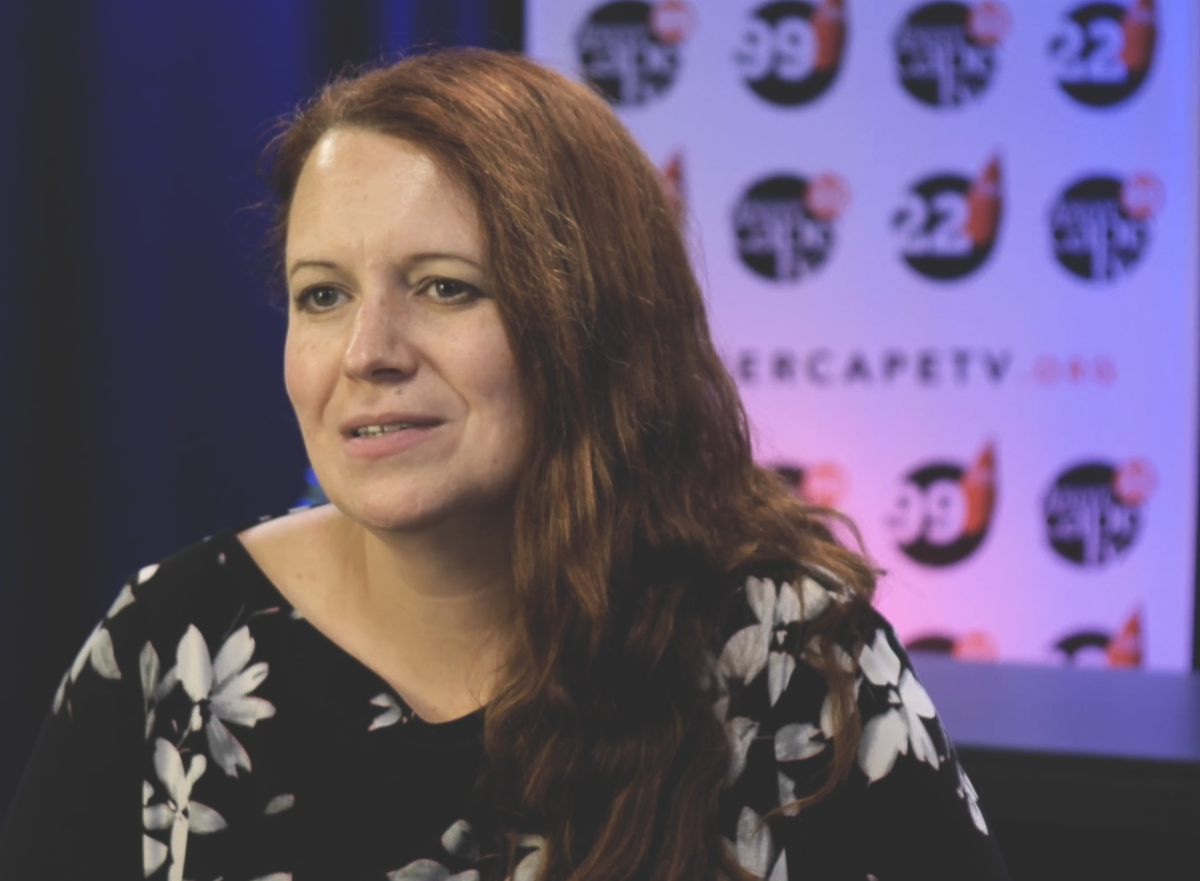
Thank you to our friends from Lower Cape TV for creating Wild Care's PSA - “Wild Care - Every Animal Matters”. We wish them well in their new space in Orleans, and welcome them to the neighborhood!
WATCH HERE
| |
Rat Poison Has Harmful Effects
on Wildlife, Pets, and Children.
Learn How You Can Help.
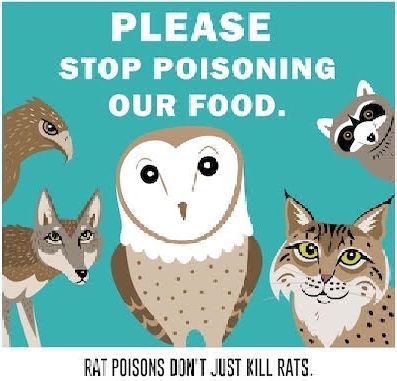
You may have seen the recent news of a local Bald Eagle ingesting prey food contaminated with rat poison. Unfortunately this is not an isolated case. Nearly every hawk and owl we receive at Wild Care have some level of SGAR exposure. (Second Generation Anticoagulant Rodenticides). The use of these poisons kills the many animals that rely on mice for survival through secondary poisoning including large mammals. The irony? These animals are some of the best natural rodent control there is!
Aside from the harmful impacts that SGAR's have on wildlife, tens of thousands of children (under the age of 6) and pets are poisoned every year in the United States by ingesting SGAR's. Poison is never the answer for deterring or controlling rodent populations.
View Wild Care's Fact Page for controlling rodents humanely and safely.
Please share!
On May 10th at the MA State House, there will be a Hearing on three important Bills related to rodenticides (below). It's possible to attend this hearing virtually. More details to come.
ACTS RELATED TO PESTICIDES:
https://malegislature.gov/Bills/193/H825
https://malegislature.gov/Bills/193/S487
https://malegislature.gov/Bills/193/H814
Learn more about these important Bills and make some noise by contacting our Federal Senators (MA - Warren and Markey) as well as your local Congressional Representatives. Ask them to support these Bills. Letters to editors of local and national news publications are also a worthwhile effort.
When choosing a way to keep unwanted wildlife from nesting in your home, there are many preventative actions you can take and alternatives to poisons. Be sure to ask questions before using a local pest control company.
| |
|
Update on Wild Care's Expansion Project -
American Chestnut Tree Will Move to Town Hall
Plans for our Expansion Project are moving along nicely, and we are looking forward to breaking ground in September. We are thrilled to say that after a several months long quest we have found a permanent home for our beautiful twenty year old American Chestnut Tree. It will be moved and transplanted to the Eastham Town Hall where people can enjoy it for generations to come.
Wild Care has grown so much since we started serving our community 30 years ago. We treat over 1,800 animals each year from our antique home on the Orleans Rotary. We are bursting at the seams! This much needed expansion will help our staff and volunteers work more efficiently by giving us a designated place to clean all of the things necessary to care for our animal patients, and an accessible reception area for animal in-take.
| | |
|
|
Be on the Lookout for Stowaways When Unwrapping Your Boat
It’s that time of year when the weather is getting warmer and you are thinking about getting the boat back in the water. If you are unwrapping your boat, be on the lookout for stow-aways! House Finches frequently make their nests on boats inside the shrink wrap. Wild Care is working with local marinas to place nesting boxes nearby to offer an alternate space that give parent birds a chance to reunite with babies in the nest once the boats are no longer there.
If you come across a nest when unwrapping your boat PLEASE CALL US: 508-240-2255. We will try everything to keep these families together.
LEARN more about House Finches
| |
|
Make a Mother's Day Donation, Receive a Personalized E-Card
and Chance to Win a Beautiful
Dune Jewelry Necklace
| |
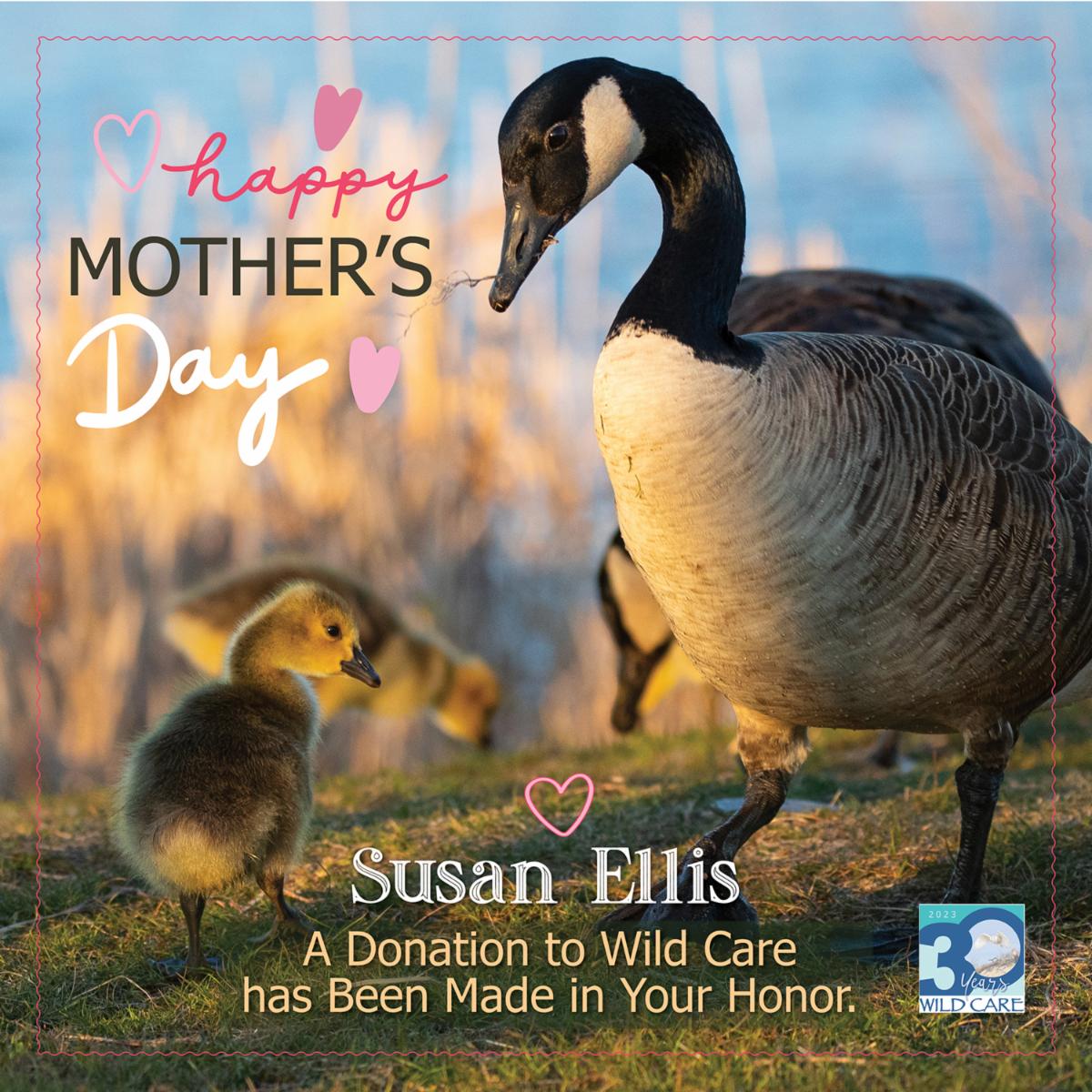
Mother’s Day is May 14th. We’ve made this easy… there’s no need to run to the store - Make a donation to Wild Care in honor of Mom, Grandma, or someone special you'd like to recognize this Mother's Day and
we'll send you a personalized
e-card to share and show your love of
Mom and wildlife.
All honorary donations received by May 13th at 8pm will be
entered to win a beautiful necklace donated by Dune Jewelry & Co.!
| | | |
*Suggested donation $10 for each e-card. One entry for the necklace drawing per donation made by May 13th at 8pm. Please include the name of your honoree in the "what is this payment for" field when you make your donation. You will receive your personalized e-card by email. Drawing will take place on May 14th. Winner will be notified by email. | |
|
Wild Care will be at the Lemon Tree Shops for Brewster in Bloom Saturday, May 6th
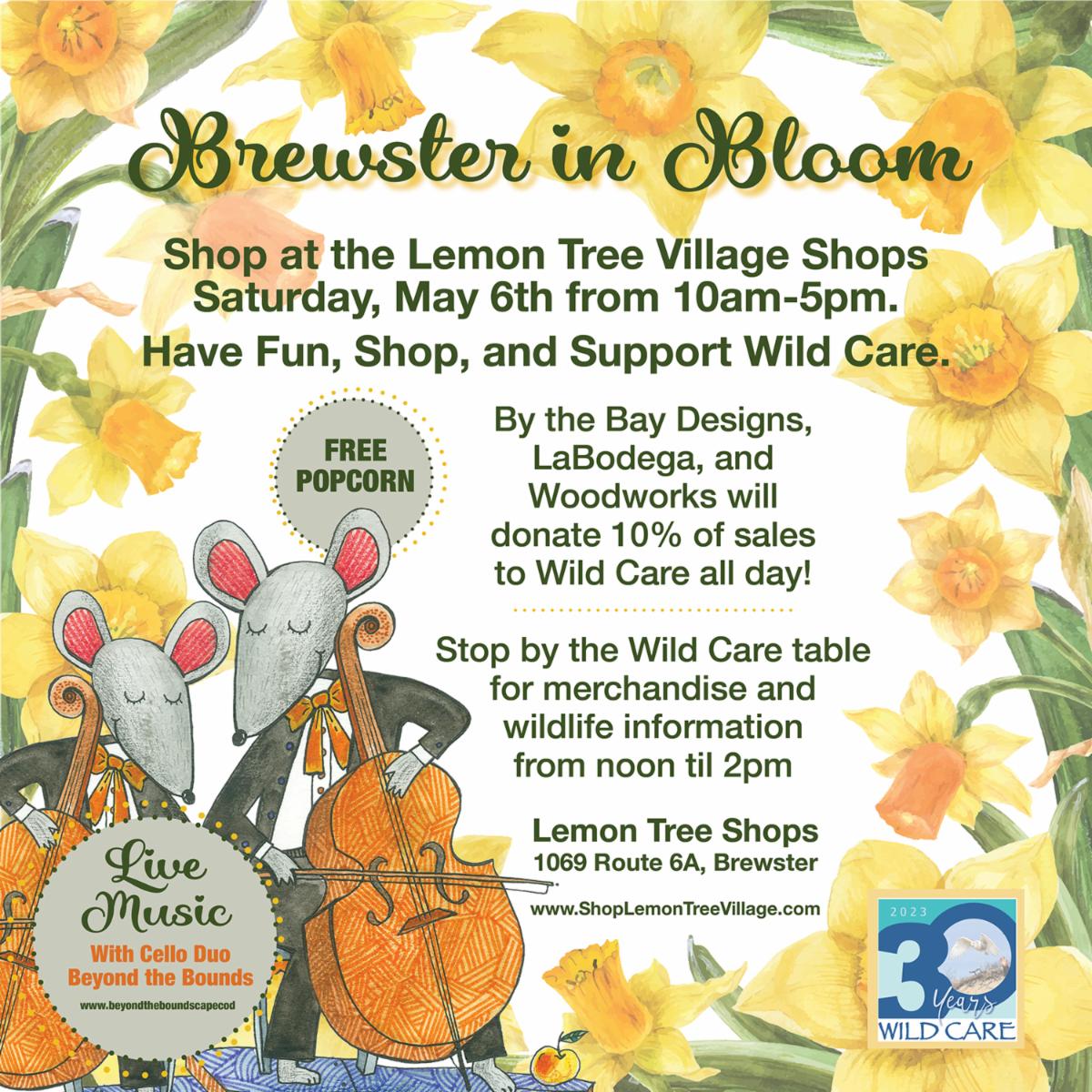
Join Wild Care on Saturday, May 6th from noon til 2pm at the Lemon Tree Shops on Route 6A in Brewster for wildlife information and merchandise. Shop at By the Bay Designs, LaBodega, and Woodworks and they will donate 10% of sales to Wild Care all day. Shop, have fun, and enjoy live music with cello duo Beyond the Bounds.
| |
|
|
Follow This Guide to Keep Baby Rabbits Safe From Pets in Your Backyard.
It’s that time of year when you and your pets will be spending more time together outdoors. Did you know that rabbits like to make their nests close to human homes? It’s thought that the reason they do this is because our scent (and your pets) keep predators away. Their nests are just a shallow depression and can be found in grass, under bushes, in garden beds and even flower pots, making them very easy for pets to get into. Baby rabbits usually leave the nest and are independent within just a few short weeks. Until then, we’ve put together a helpful guide with tips on what you can do if there are nests in your yard and you have pets.
| |
|
Check out our Amazon and Chewy WISH LISTS and donate much
needed supplies to help the animals being cared for at Wild Care.
| | | | |