|
|
TAKING PRIDE IN RESEARCH, CREATIVITY, AND INNOVATION |
|
THE IMPORTANCE OF PRIDE IN RESEARCH |
|
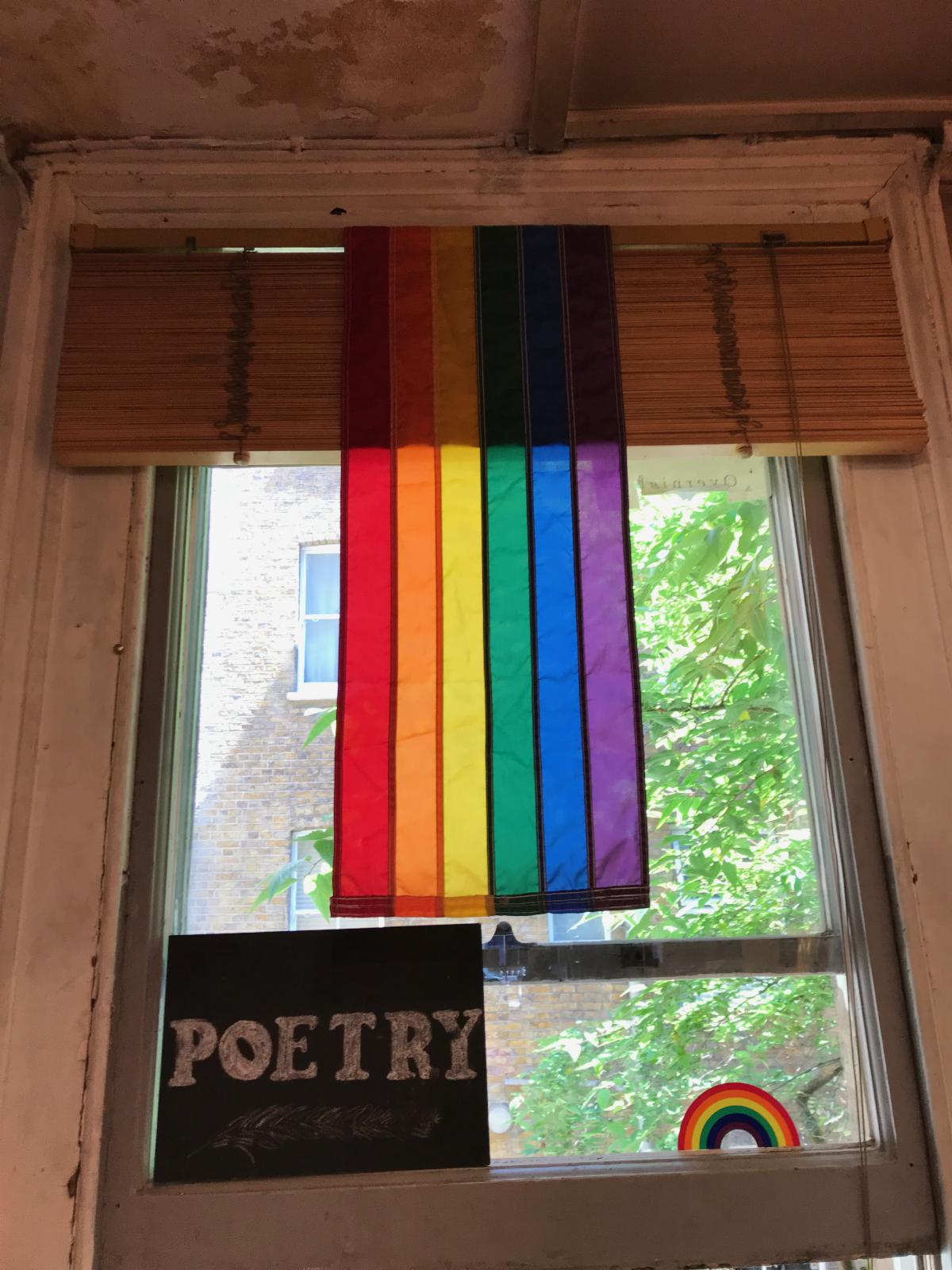
At CRE, we are committed to promoting equity, diversity, and inclusion not only at CRE and FSU through an intersectional approach to research programming but more systemically within the world around us. While we accomplish this through our programs, we also want to provide more ways to empower our traditionally underrepresented students--including our BIPOC and LGBTQ+ students--to craft their narrative, to tell their story, to not only have a seat at the table, but to be able to speak their truth and essence and to have that be heard. Especially during Pride Month, we reaffirm that we stand with our LGBTQ+ and BIPOC students and pledge our support in creating a more equitable, diverse, and inclusive space for our students--not only in our office but at the university as a whole.
Also central to our understanding of Pride Month is the belief that our personal identities frequently intersect with the world around us, impacting our work, our research, and our every day interactions. We bring these identities everywhere we go and having them heard and represented is incredibly impactful.
With this in mind, the remainder of this newsletter will give an overall history of Pride, share some stories from LGBTQ+ students at an intersection with CRE research programming, and provide resources to support our LGBTQ+ students throughout Pride month and beyond.
|
WHAT IS THE HISTORY OF PRIDE? |
June is recognized as Pride Month as a way to commemorate the Stonewall Riots that took place in June 1969. The UK Research and Innovation Consortium has a great overview of the history of Pride here:
"The centrepieces of the Pride month calendar are the Pride marches, which take place in towns and cities across the world.
Many of us will recognise the modern Pride march as a colourful celebration, but Pride marches were first started to commemorate an important act of civil unrest.
When the Public Morals Squad of the New York City Police Department raided an LGBTQ+ bar called the Stonewall Inn on 28 June 1969, the patrons refused to go quietly.
Instead, they called for support from their neighbourhood and began three nights of resistance now known as the Stonewall Riots, led by people who were then some of the most marginalised in society – trans people, street hustlers, homeless youth, effeminate men and butch women.
The aftermath of these riots saw the creation of activist organisations and newspapers promoting gay rights and sparked the modern movement for LGBTQ+ equality."
|
"On the first anniversary of the Stonewall Riots, the first Pride marches took place.
Initially marching under the banner of “Gay Liberation” and “Gay Freedom”, the tradition of Pride marches grew and spread around the world, with the first UK Pride taking part in London in 1972.
Early Pride marches primarily fought against oppressive legislation and the poor treatment of the LGBTQ+ community, but as some countries have embraced equal legal rights for LGBTQ+ people, their Pride marches have taken on a more celebratory tone.
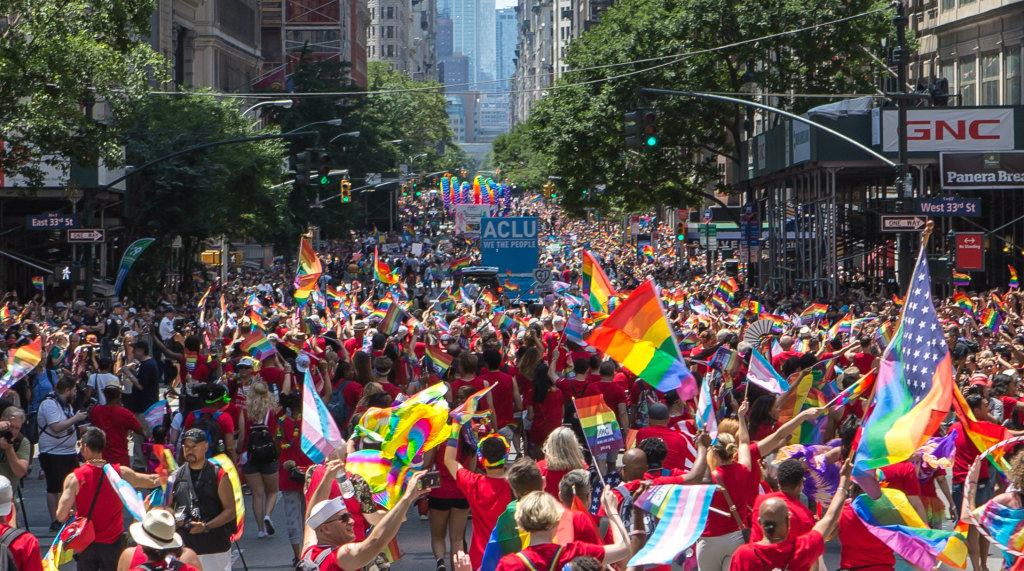
In the UK, modern Pride events are often colourful parades, featuring floats, costumes and music, where LGBTQ+ people and their allies march with representations from local businesses, government organisations and community groups.
...each LGBTQ+ person taking part in a Pride march is making the revolutionary statement that they are proud of their identity, in the face of a world that often teaches us to be ashamed.
We march in solidarity with other parts of the world where Pride marches are still profoundly political and participants may risk their lives in taking part.
We draw strength from our communities and learn from each other’s experiences.
We remember our history, celebrate our present and fight for the kind of future we can all take pride in."
Clearly, in this celebration, filled with parades, events, and an overall feeling of love and celebration, there is also a vein of self-acceptance, a reaffirmation of personal sexual and gender identities.
|
SHARING THEIR STORY: DAVID ADVENT |
Growing up gay in rural Western North Carolina meant that I grew up in a space and a place that was intent on my erasure. "People like me" weren't accepted or even talked about. We weren't really even considered people because the majority of the population held strongly to the belief that there was "something wrong with us." We were "misguided," we were encouraged to "stay on the narrow path," which meant to be straight and religious--not to talk about and express ourselves for who we really are. We weren't allowed to be ourselves, allowed to love, or allowed to be accepted.
I knew from a very early age that there was something that separated me from my friends--not in a way that "I'm so special and important" but that I didn't have the same discussions, the same interests, the same interactions as other boys growing up. My family knew this, too, but with the level of repression and suppression present where I grew up, no one talked about it. No one encouraged me to talk about how I was feeling. I was forced to convince myself that I was straight because any form of dissidence was equivalent to the denial and erasure of my existence. I didn't even have the language to know what being gay meant until I went to college, which was when I came out to my family in July 2017.
Coming out was extremely liberating. I felt that I had crawled out of dark and cavernous space and entered into the world for the first time. My senses were in overdrive; the air was crisp, the birds fluttered and chirped, colors popped in bright and radiant hues. I felt alive for the first time. My head was buzzing with thoughts of: "this is truly what it's like to live. I had been dead for so long."
That's not to say that coming out as gay didn't have its own problems, particularly with my family and some friends from back home, many of them convinced that I had entered into a world of pain, misery, and sin by reclaiming my existence. The countless fights with my family, contending over something as basic as my existence, still ring in my head. Why is my own essence up for debate? Why am I having to fight just to exist? These questions plagued me for a long time in my life, even to this day, but I continue to push on, which requires enormous amounts of strength and energy.
|
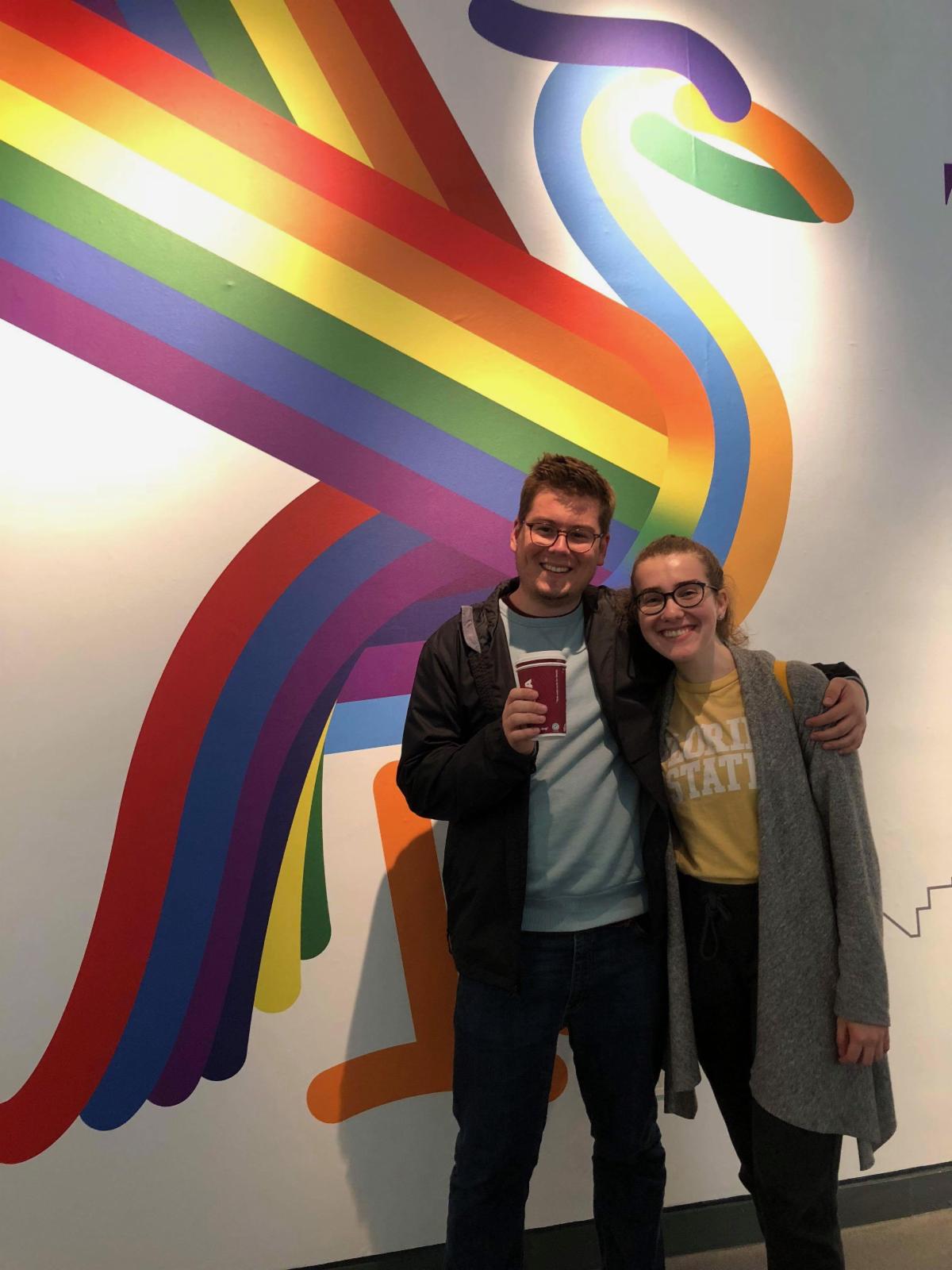
I draw a lot of my energy and my understanding of my identity from the experiences that I have had in seeing "people like me" represented positively, in a vein of acceptance and understanding. Studying abroad and completing an IDEA Grant experience in London during June 2018 (Pride Month), thousands of miles away from my home, helped me realize that there was a world outside of my homophobic family but also outside of myself. For the first time, I found that there were people who had the language and vocabulary that I had been missing for so long. Bookstores, museum exhibits, bars, and community events and parades showed me that there is a place for me, not just to exist but to thrive. There is an entire history and collection of LGBTQ+ stories that I now had access to by simply learning, reading, and seeing myself represented in exhibits, stories, memories, and other places in London. |
Having to leave that space to return to North Carolina felt crushing. But armed with the experiences and language that I cultivated in London, I felt better able to stand up for myself, to create a life for myself rooted in authenticity and radical self-acceptance. I realized that my identity intersects with everything that I do and is part of all the facets and intersections that I contain. Whether its research, academic work, personal writing, general conversations, or anything, I carry these experiences, this language, with me wherever I go. I told myself that I no longer would be subjected to the whims and thoughts of people who were actively seeking my erasure as a Queer person.
I carry this mission everywhere I go. It's part of what drives my mission at CRE--to empower the students that I work with to share their stories and to have their experiences represented and heard and validated because there was such a long stretch of time in my life where I was not validated or heard. I don't want anyone, particularly my LGBTQ+ and BIPOC, to ever experience that level of invalidation or pain. Ever.
|
SHARING THEIR STORY: MILES KELSEY |
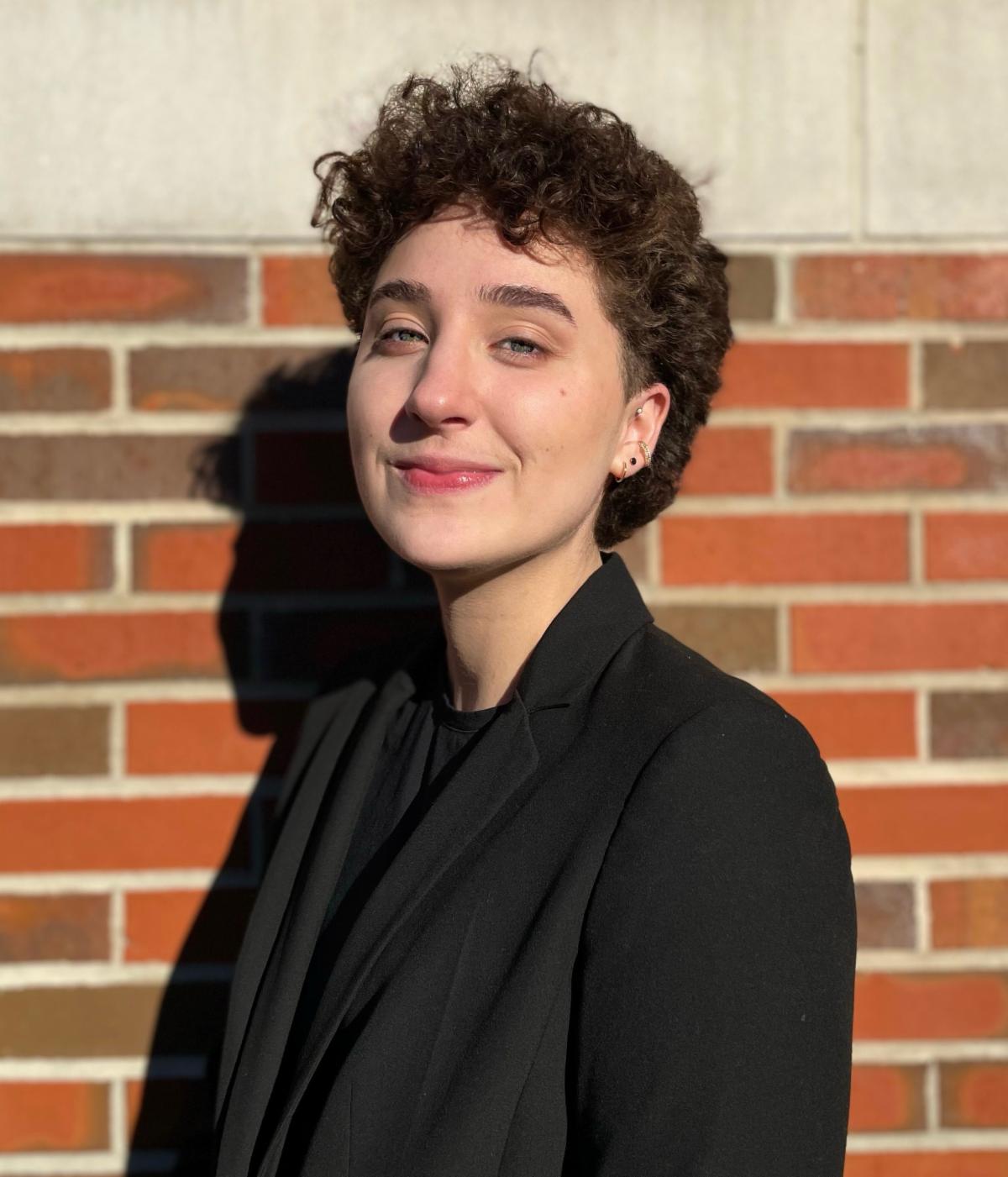
We asked one of our CRE students to share their thoughts, experiences, and feelings about Pride Month and how that intersects with their research and academic interests. Miles Kelsey is a rising junior at FSU and uses she/her pronouns. Miles helped CRE with the LGBTQ+ Community Connections portion of the 2021 Florida Undergraduate Research Conference hosted by CRE and FSU. In talking about her experiences, Miles wants to note that: "I use the word Queer because it is my personal preference, but I want to be mindful that this is not everyone's preference."
What was your undergraduate research experience like at FSU? What did you research and how did that shape your understanding of LGBTQ+ issues/research?
I would say my research experience at FSU was pretty untraditional. I took a paper I had written for a class project and transformed it into my FURC submission. My topic, "An Analysis of the hypoxic zone formation in the Gulf of Mexico," was not directly connected to LGBTQ+ issues. Yet, like most things in my life, the experience of research was certainly shaped informally by my identity as a Queer person.
What does Pride month mean to you? What are some of the first things you think of when talking about Pride month?
Pride month is always a difficult topic to articulate. Because on the one hand, It is revitalizing to connect to both Queer history and the people who inspire me. Taking time to learn about the revolutionaries who often risked their lives to live authentically makes me feel seen and proud to be a part of this community. And yet, on the other hand, Pride month can also be a painful reminder of the reductionist views many people hold. Our rich and diverse community is often reduced down to various rainbow imagery. Pride month can also be a lonely time. I think for me, at least I often feel like my life is on a different timeline than my peers, and it's easy to get caught up in that feeling, especially during Pride when I see so many people who are what feels like eons ahead of me. Overall, I think Pride is less of a moment in the year but more a goal that I strive for. To live authentically, honor those before me, and work towards a better future. That, to me, is what Pride means.
If applicable, do you feel that your own personal identities intersect with your undergraduate research experience? Why or why not?
My identity as a Queer person didn't interact directly with my chosen topic. However, I facilitated a small group meeting for LGBTQ+ researchers, and that experience was immensely fulfilling. I have often felt pressure to hide my identity when conducting research. So being able to be in a safe space that I helped to create was a relief. It's funny because I think it's such a common Queer theme to find home and comfort around other Queer people. And the beauty is that those people exist in just about every social circle there is, including research. My research topic may not have had anything to do with my identity, but the act of building a safe space and seeking out other people who make you feel seen is something that I think is deeply Queer.
What do you see as the future of undergraduate research engagement intersecting with LGBTQ+ issues?
I think the future of undergrad research is a Queer one. Queer communities are often built on mutual aid, collaboration, and celebration of individuality. These ideals would serve us well in research. If we celebrate our unique thought processes while also supporting newcomers and collaborating with others, we can accomplish unlimited things.
|
|
THE IMPORTANCE OF ADVOCATING FOR PRIDE AND HOW YOU CAN |
|
We want to acknowledge here that the two stories above are not the only stories that are representative of the Pride movement; there are so many other facets, intersections, and stories that need to be represented, heard, and acknowledged, which is why we need to be supporting groups and agencies that support these intersections. Joining the Pride Student Union at FSU (if you are a student) or the LGBTQ+ Faculty and Staff Network is one great way to work toward this goal. But there are lots of other ways to advocate for Pride--both during and outside of Pride month! We've listed a few here, but please note that these are not all the ways and opportunities. We also encourage you to take a look at what other institutions are doing to celebrate EDI and LGBTQ+ efforts in undergraduate research!
At FSU:
Donation and Advocacy:
Learning More about Pride in Research and Innovation:
|
|
SUMMER 2021 RESEARCH ADVISING |
|
CRE provides general research advising to help you get started on your research journey at FSU and to connect you with relevant campus partners.
One our staff members who coordinates Drop-in advising, David Advent, conducted humanities-based research (specifically in English) during his time at FSU and is more than happy to help fellow Humanities and Creative Arts researchers start their journey at FSU!
With that, our Summer 2021 Drop-In Advising Hours are now officially open! Times and links to register will be updated at the link at the bottom. Once you click on the link, there will be instructions on how to register. We look forward to helping you find your passion in research!
|
|
APPLY FOR THE UNDERGRADUATE RESEARCH OPPORTUNITY PROGRAM (UROP) AS A TRANSFER STUDENT |
|
Join us for an info session about being in UROP as a transfer student on June 16, 2021 at 3pm! Register for that info session here: https://fsu.zoom.us/s/93507938444
|
|
Join a community of hundreds of first and second-year student researchers and UROP alumni, including discipline-specific, transfer, and student-veteran cohorts through UROP:
- Explore academic and career interests through faculty and graduate student mentorship, all while learning to think in creative and innovative ways
- Choose from hundreds of projects representing all areas of study, including fine arts, humanities, sciences, medicine, engineering, business, and social sciences, including the freedom to engage research outside of your proposed, or declared, field of study
- Join an established researcher or team, with the ability to collect and analyze data, co-author, present findings at conferences, and make other important contributions
- Gain hands-on knowledge and application of research principles, a competitive and tangible asset for graduate and professional school applications, and an attractive skillset for future employers.
Program Components:
- Conduct research 5 -10 hours per week assisting a faculty member, graduate student, or startup company;
- Meet bi-weekly with a UROP Leader and fellow UROP students;
- receive personalized guidance about research and campus resources
- Present at the 22nd annual Undergraduate Research Symposium
Deadline to apply: Thursday, July 1, 2021 for transfer students
|
|
UROP RESEARCH MENTOR PORTAL OPEN |
|
When you are ready to upload a research or creative project to request research assistants, make sure to submit your project by August 16th, 2021 to the database using SurveyMonkeyApply: https://fsu-cre2.smapply.us/
Facilitated by the Center for Undergraduate Research and Academic Engagement (CRE), UROP is a nationally recognized, yearlong program in which 400 high-achieving underclassmen, transfer, and veteran students serve as research assistants to faculty, post-docs, graduate students, and campus partners.
Faculty, post-docs, graduate students, and campus partners who have submitted research projects to the portal will be contacted by UROP students the first few weeks of fall semester to schedule interviews. After finding a good match, research mentors and UROP students sign a contract outlining the expected duties and hours for the assistantship, which runs through spring semester. In addition, all UROP students enroll in a yearlong research colloquium and present a poster of their contribution to the research mentor’s project at the annual FSU Undergraduate Research Symposium.
The eager and talented students who have applied for UROP will be excited to start working as research assistants—but we still need more research proposals from all of you! Your participation will enable more students to participate in undergraduate research, while continuing to build our nationally recognized undergraduate research portfolio at FSU.
Benefits for research mentors submitting a UROP project include:
- Undergraduate research assistance
- Materials grants and recognition: faculty can receive a materials grant of up to $1,000 ($500/student, up to two students) and be eligible for a $2,000 Undergraduate Research Mentor Award
- Post-docs can receive materials grants of up to $500 ($500/student, up to two students) , while Graduate students can receive materials grants of up to $250
- Graduate students/Post-docs can be eligible for a $500 Undergraduate Research Mentor Award, while acquiring mentoring experience through a structured program
Please remember, by posting a project to the portal, there is no obligation to accept a UROP student if you do not find a good match. Feel free to contact CRE Associate Director, Alicia Batailles, with any questions you might have at alicia.batailles@fsu.edu.
Since the COVID-19 crisis may affect our ability to have in-person research opportunities for students, students can start by working on background research and continue with in-person research once it is appropriate conduct in-person research again.
Thank you for supporting undergraduate research at FSU!
|
|
UROP RESEARCH MENTOR INFO SESSIONS |
|
The CRE is hosting virtual info sessions for faculty, postdoctoral researchers, graduate students, and campus partners to learn more about becoming a Research Mentor as part of the Undergraduate Research Opportunity Program (UROP)!
Come learn more about becoming an Undergraduate Research Opportunity Program (UROP) Research Mentor! At this session, you will hear about the benefits of working with a UROP research assistant as well as associated funding and awards, including perspectives from previous UROP Research Mentors and UROP students in the program. UROP Research Mentors who are currently working on a project and need help with their research can have student research assistants on their projects for an academic year at no cost as part of UROP.
Information sessions will be from 3-4 pm on the following dates:
Info sessions will be held on Zoom and will be recorded for later access if you cannot attend.
If you have any questions about UROP or submitting a project proposal, please contact Alicia Batailles, CRE Senior Associate Director and UROP Coordinator, at alicia.batailles@fsu.edu.
|
|
We're actively adding content to our UROP Leader and Student Spotlight Blogs on the HSF House Blogs site! Keep up with the UROP Leaders and Students over the summer using the link below! |
|
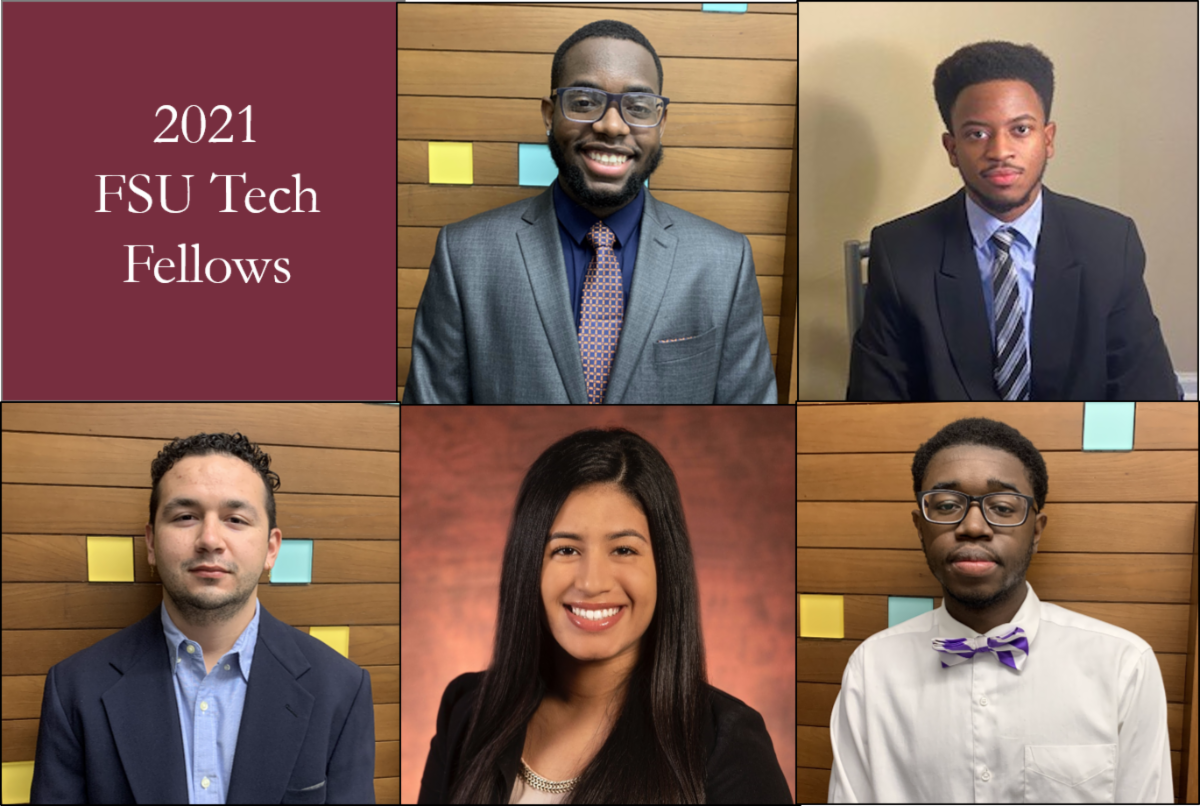
Keep up with what the Tech Fellows are doing over the summer using the Tech Fellows Blogs, which are also being featured on the HSF House Blogs site! Use the link below to read those blogs! |
|
Our 2021 Global Scholars are also writing about their summer experiences, but this time on the Omprakash website! They'll be discussing where they are working this summer and what they internships/projects will look like. Read those blogs below! |
|
The 2021 IDEA Cohort is already putting up content to document their experiences for their research projects! Read those blogs below! |
|
We'll be taking a break in July from sending out our newsletter, but be on the lookout for our August edition! |
|
CRE VIRTUAL ADVISING
Please set up a meeting through Campus Connect, use the instructions on the “Getting Started” page, and we will respond to you with a link to a Zoom appointment.
|
|
FOLLOW US ON SOCIAL MEDIA |
|
CRE SPOTLIGHTS WANTS TO FEATURE YOUR NEWS!
We are constantly amazed by what our current students and alumni are working on, so share your success stories with us to be featured in our monthly newsletter and weekly social media posts. Fill out this form to share your news!
|
|
|
|
Engaging students in research, innovation, and scholarship is the hallmark of a great research university. Through this engagement, students become better thinkers, innovators, and problem solvers, cultivating a depth of understanding needed to make a positive difference in the world. |
|
|
|
|
|
|
|
|
|