Weed Watch!
Colorado Weed Management Association
2nd Quarter Newsletter 2021
|
|
Springing into Weed Season
Spring training has came and went which means it is weed season for nearly all of Colorado! Thank you to our sponsors, speakers, and participants for making the Spring Training possible! We are looking forward to seeing you all again (in person this time) at the CWMA Winter Training on Dec 8-9th!
The Colorado Weed Management Association board of directors and volunteers have been busy this off-season and are looking forward to keeping up the momentum this summer. We can't do it without our members and would like to thank everyone who has volunteered to be on a committee both currently and in the past. If you haven't volunteered in the before, now is a perfect time to start!
If you missed our Gold Sponsor Videos at Spring Training, you can check them out below.
|
|
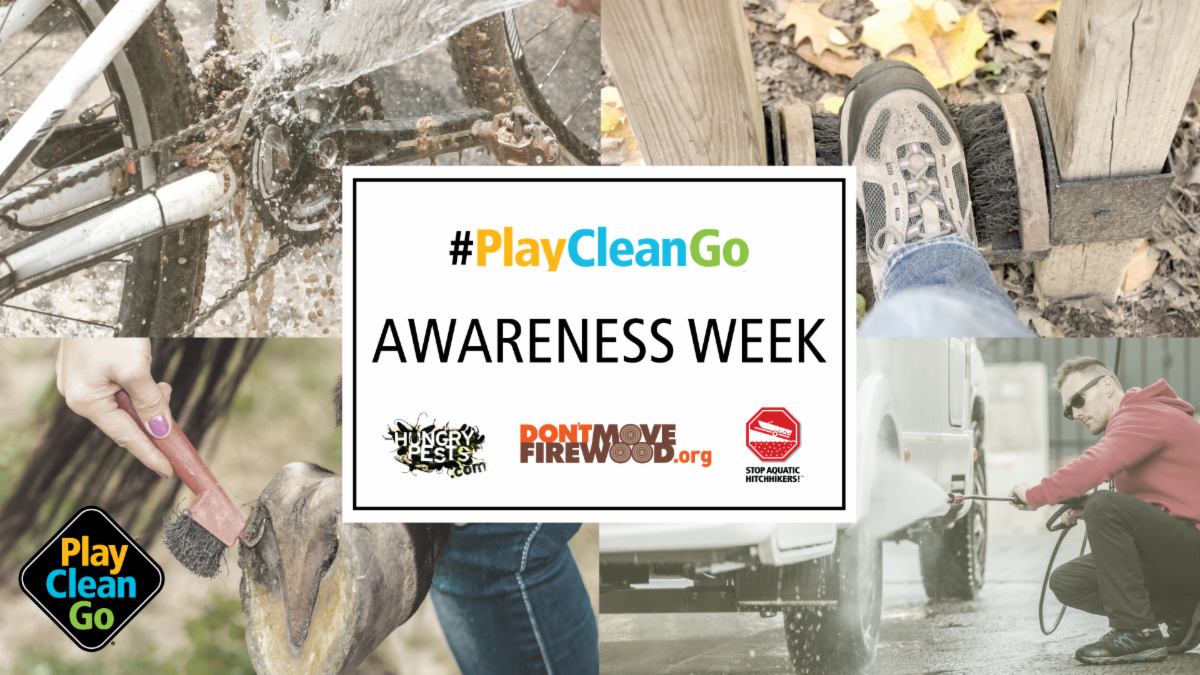
Show outdoor enthusiasts how they can stop invasive plants and pests from spreading while enjoying the great outdoors!
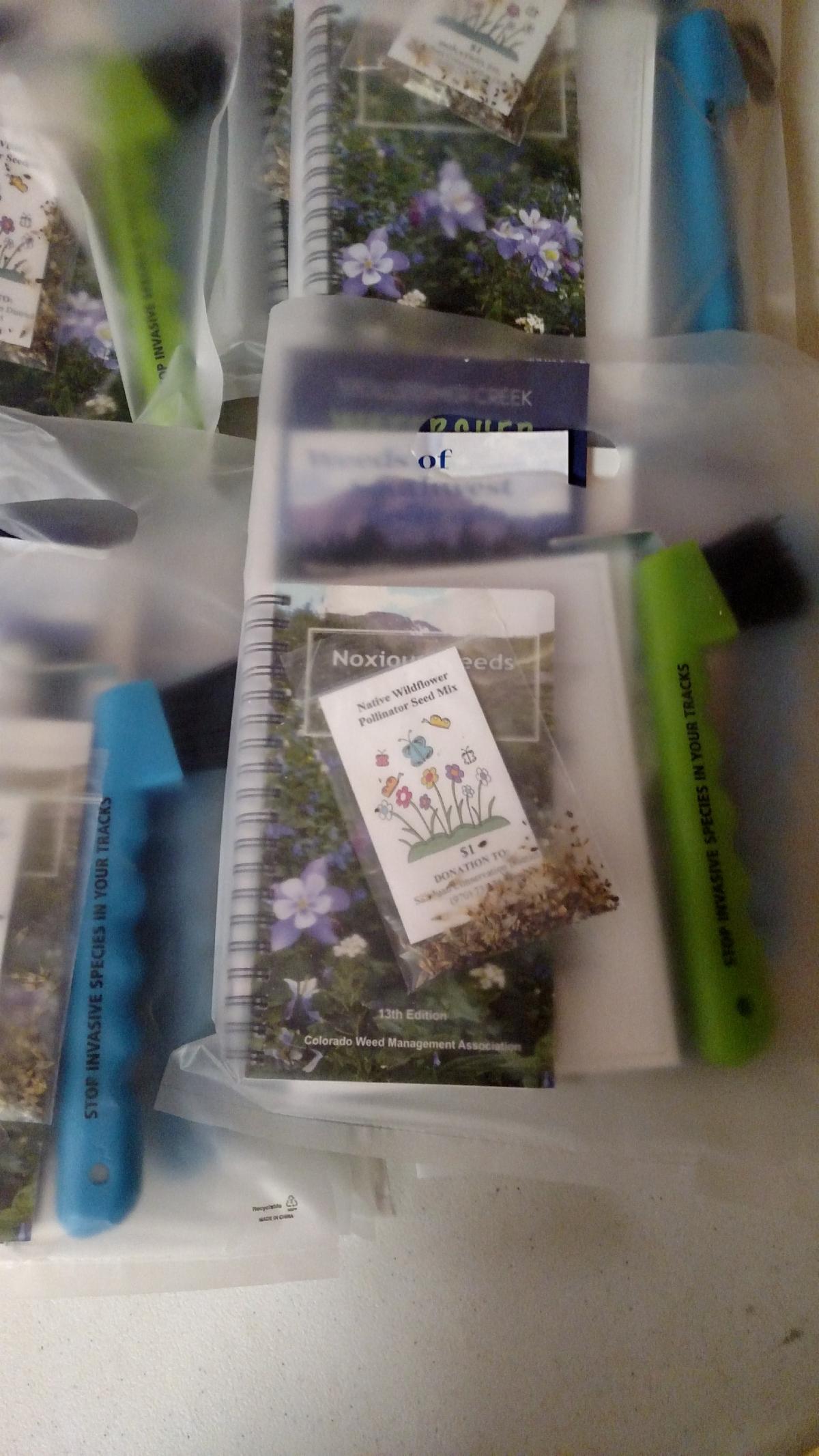
PlayCleanGo has a toolkit for land managers to help spread the word on not spreading invasive species that range from pocket bootbrushes to give away at educational events, bootbrush station plans and graphics to install at your local trailhead, as well as a graphic library for social media.
The second annual PlayCleanGo Awareness Week reached over 500,000 individuals, participate this year and help spread the word on the most important invasive species control method: prevention!
|
|
May 2021 Legislative Committee Report
Joe Swanson, Boulder County Parks and Open Space Resource Specialist
CWMA Legislative Committee Members: Casey Cisneros, Chair, Joe Swanson, Co-Chair, Alicia Doran, Kayla Malone, Elizabeth Brown, Tina Booton, Tina Travis, Ron Mabry, John Coyle, Brett Moore, Sol Malick
The 2021 Colorado Legislative session, while being affected by COVID-19 restrictions, has been a busy one. Currently, the Colorado Weed Management Association (CWMA) Legislative committee is tracking 13 bills that have been introduced during the 2021 session that could directly or indirectly impact CWMA members and partners.
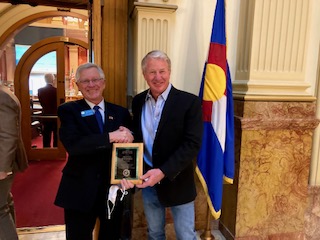
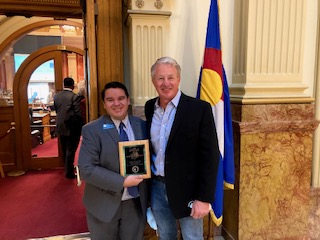
This session began in March. CWMA was finally able to hand out its 2019 Legislator Awards. The recipients, Sen. Rankin (Dist. 8, NW CO) and Sen. Moreno (Dist. 21, Adams Co.) were given the awards for the great work they did during the 2019 session in support of CWMA and its members' interests. The Senators were pleased to receive the award and look forward to future collaboration with CWMA.
So far during the 2021 session, which is scheduled to end June 12th, CWMA has supported 3 bills while monitoring 10 others.
Early in the session, CWMA collaborated with the Colorado Department of Agriculture (CDA) onHB 21-1045 Invasive Pest Control Administration. The focus of this bill is to create an emergency invasive pest response fund to allow for a more complete and expedient response to new pest threats within the state. CWMA’s primary contribution was to help clarify the language within the bill and provide testimony to the committee. The bill passed the House and Senate and is currently awaiting the Governor’s signature.
Working with other invasive species groups, CWMA is supporting Colorado Parks and Wildlife’s in HB21-1226, More Robust Check Station for Aquatic Nuisance Species. This legislation concerns aquatic invasive species and expands the 2008 Aquatic Species Nuisance Act to allow for watercraft inspection and decontamination stations to be implemented on highways or other checkpoints near the state borders to help mitigate the rapid increase of infested mussel boats coming from Lake Powell. This bill will enhance Colorado’s ability to fend off invasive species that come from other states by means of watercraft, including aquatic invasive plants.
HB21-1242 creates the Agricultural Drought and Climate resilience Office, within the Department of Agriculture. This bill did receive the support of CWMA and many of its partners to make sure invasive species control has a place at the table with future legislation and funding. Legislative Committee volunteers submitted amendments to the bill to better reflect our concerns and the inclusion of invasive species interaction with climate change.
In addition to state legislative efforts, CWMA partnered with the North American Invasive Species Management Association (NAISMA) and 35 other organizations by signing onto a letter to the Congressional Appropriations Committee leaders, members, and staff in the U.S. House of Representatives and Senate. The letter advocated for broad increases in federal funding for all taxa invasive species management, in addition to improved coordination among federal agencies.
CWMA also partnered with NAISMA, the Wyoming Weed and Pest Council, and other organizations by signing onto a letter to the U.S. Department of the Interior’s Bureau of Land Management urging them to fund and initiate a programmatic Environmental Impact Statement for the use of the active ingredient indaziflam in the 17 western states for the management of invasive annual grasses on BLM managed lands.
The CWMA Legislative Committee takes pride in its involvement in the legislative process. By being proactive in this process and partnering with other like-minded organizations, we have greater opportunity to shape our own future and the future of our members in advancing the tremendously important work of managing invasive species. CWMA also takes pride in building strong legislative coalitions with groups like NAISMA, Colorado for Responsible Pesticide Application, CDA and Colorado Counties Incorporated, Wyoming Weed and Pest Council, and others.
The Legislative Committee would like to thank Brett Moore and Sol Malick of, On the Ballot Consulting, for the great work they do keeping us apprised of proposed state legislation and potential impacts to our members.
As always, if you are a member in good standing and have an interest in serving on the Legislative Committee or any of the many others committees within the CWMA organization, please reach out to us at, info@cwma.org.
|
|
CWMA Online Training for Continuing Education Credits!
Need credits? CWMA has you covered year round with online trainings approved by the Colorado Department of Ag!
Attend a live webinar or take an on-demand course that offer CEC’s, only $35 for members!
On-Demand Online Courses Available Now:
-Long-Term Invasive Winter Annual Grass and Noxious Weed Control Facilitates Ecosystem, Pollinator, and Wildlife Habitat Restoration (107 Rangeland Pest Control)
-Aquatic Invasive Species Identification, Ecology, and Management (108 Aquatic Pest Control)
Click Here for the Complete Course Listing!
|
|
Not All EDRR is Created Equal
by Ethan Proud, Archuleta County Weed and Pest Supervisor
|
|
As land managers, most of us know that Early Detection and Rapid Response is a necessity to stop early invaders from becoming a prevalent and costly problem. We also know that EDRR is not always so simple as 'kill it quickly'. When crossing property lines and jurisdictions we encounter contracts, permissions, and can lose that much needed haste. Not to mention, we may forget to do surveys on adjacent properties to ensure that that localized patch of weeds is indeed localized.
Looking at EDRR frameworks, there are three kinds of EDRR approaches, EDRR 1.0, 2.0, and 3.0.
EDRR 1.0 is a single agency led approach and relies on the new invader to be either on a single agencies property or fall under laws that allow an agency to quickly enter and contain and eradicate the problem.
EDRR 2.0 is defined as a cooperative weed management area where local agencies come together to manage an invasive species in a certain geographic region. Cooperative weed management areas are shortened to CWMAs, not to be confused with our own Colorado Weed Management Association!
EDRR 3.0 is likely the dream of all land managers. It involves buy in from all landowners, not just agencies and creates a concerted effort between private citizens and agency land managers. At the county level this could include home owner associations, ranchers, the county, federal agencies, and more. By involving more parties, the resources lent to the eradication increase, sometimes exponentially.
While all of the EDRR approaches have their place in invasive species management, EDRR 3.0 fosters a sense of stewardship in a community and makes the goal of total eradication more feasible. Sometimes more chefs do not ruin the soup.
|
|
Weed Awareness Campaign
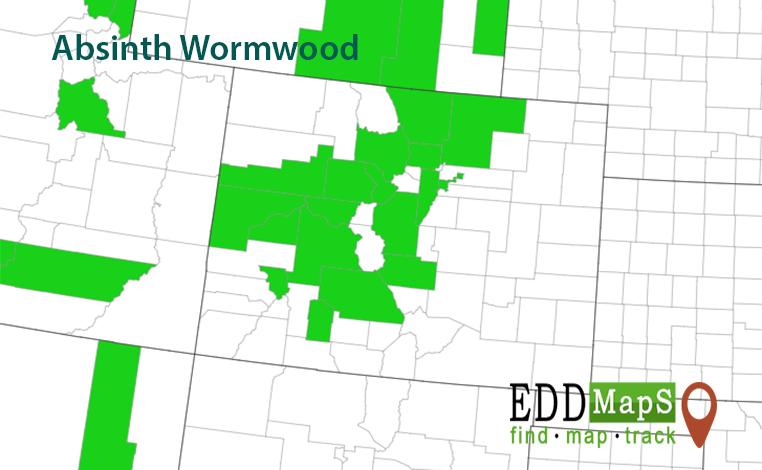
May Weed of the Month: Absinth wormwood (Artemesia absinthium)
prepared by Alicia Doran, Jefferson County Invasive Species Management Coordinator
|
|
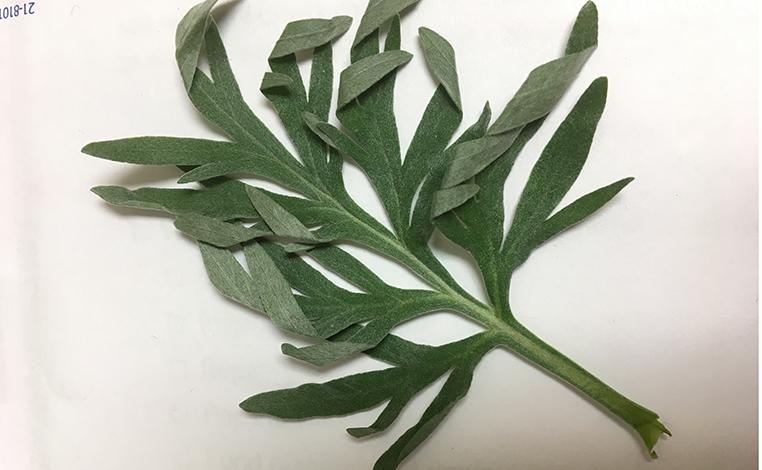
Absinth wormwood is a Colorado List B member of the Sunflower family (Asteraceae). This aromatic perennial grows to 3-5 feet tall. It has drooping drab-yellow disk (rayless) flowerheads that grow in the axis of leaves at the ends of its many branches. It flowers mid to late summer.
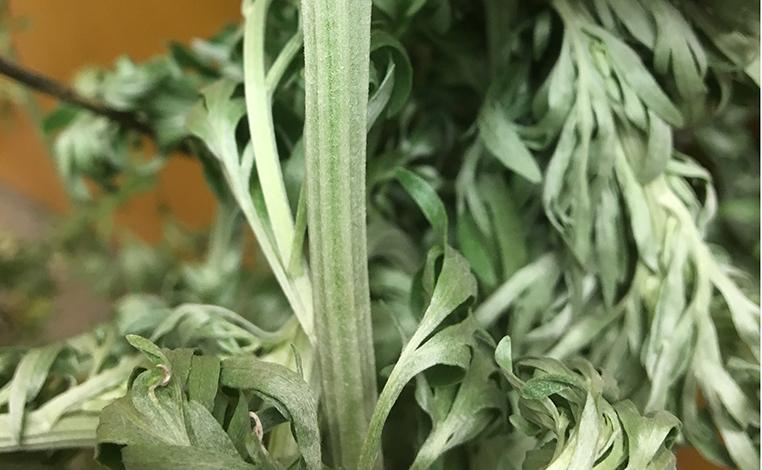
Ridged stems grow from the crown of its taproot. The stems dry out in the fall and persist through the winter. The dried stems help to more easily spot infestations in the spring as new growth starts at the base.
Both the leaves and stems are covered with fine hairs giving the plant a grayish appearance. The leaves are up to 5 inches long, deeply lobed, olive green above and white below. Leaves attach directly to the stem and are arranged alternately. The leaves towards the ends of the stems are smaller and linear.
It reproduces by seed and each plant can produce up to 50,000 seeds a year. The seed last in the soil for 3-4 years, or longer.
Absinth wormwood invades range, pasture, and disturbed areas. It is toxic to wildlife and livestock. Maintaining a healthy site can be effective in preventing its establishment.
Originally from Europe, Absinth wormwood has been used to make Absinthe, a spirit popular in the 19th and early 20th century. It had been thought to cause hallucinations and madness so was banned in many areas of the world. More recent studies have shown that the level of thujone, the absinth wormwood compound found in Absinthe, was probably not high enough to cause the effects which were due instead, to effects of alcohol over-indulgence.
The Weed of the Month is part of the Weed Awareness Campaign and is prepared by Alicia Doran and Tina Travis who are on the committee.
|
|
Promoting CWMA Membership:
How Can We Help?
Do you know someone that should be a member of CWMA? Learn all about CWMA benefits and membership types at www.cwma.org/membership. Use this information as talking points to encourage colleagues to join and get active with CWMA.
Or, perhaps you are unsure whether someone you know is already a member? Search for them in our directory located in the members-only online portal. You can also use this site to renew your membership, register for CWMA events, and update your contact information.
Need help promoting CWMA? Let us know how we can assist you.
Monica Groh, CAE
Colorado Weed Management Association
|
|
Jefferson County Invasive Species Management: Bee of the Month
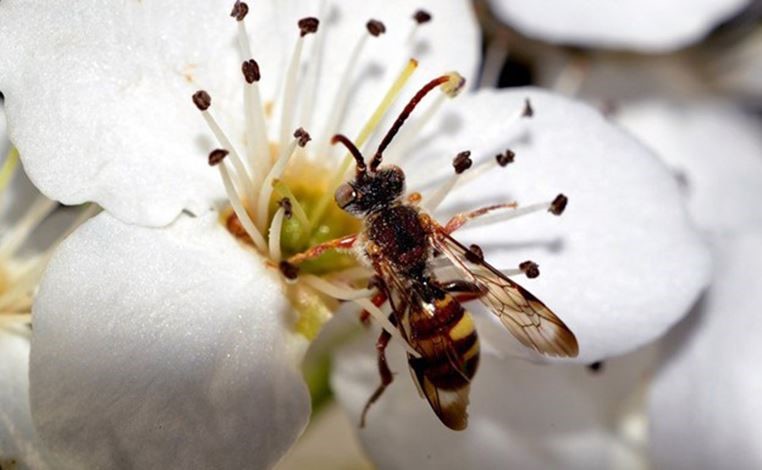
Cuckoo Bee
By Liam Cullinane, former Jeffco ISM Specialist
Photo by Penn State Extension
|
|
Nomada is a genus of bees that includes over 850 species worldwide. They are some of the most unique bees in terms of appearance and behavior. Bees in this genus are very colorful, ranging from red, to yellow, to black, to metallic or any combination of those. Their wings are also very distinct with a smoky glean near the tops and tips of the wing. Nomada species vary greatly in appearance but are some of the hardest bees to identify to species, and new species are still being discovered and described.
These bee species also lack hairs that are a common feature of bees. Because of this, their appearance is similar to wasps, and they are often misidentified as such. In addition to their unique appearance, Nomada species also have a unique life history.
They are parasites of other bee species and have the common name cuckoo bees. They do not provision nests, which is why they are known as nomadic bees (in Latin, Nomada). These bees will travel around looking for their host bee species foraging on flowers. Once they locate them, they follow them back to their nest and lay eggs in the nest of the host bee. The eggs of the cuckoo bee hatch first, and if the adult bee had not already eaten the larvae of the host bee, the newly hatched cuckoo bee will do so.
Many bee species in the Andrena and Agapostemon genera are hosts of Nomada species. Bees in this genus are active when their host bees are active, so many of them emerge in the early spring. Be sure to look out for them lurking on early flowering shrubs and trees.
|
|
Call for Submissions: Are You a Writer or Have a Story to Tell?
If you have a success story or event you'd love to share...we want to help!
Colorado Weed Management Association is always looking for new content, exciting stories in integrated management, and alerts on new weed species!
Send in an article, write up, or pictures and we can share them in our quarterly newsletter.
All submissions are subject to review.
Newsletter contributors have to be CWMA members.
|
|
President
Kayla Malone
President Elect
Casey Cisneros
Secretary/Treasurer
Ethan Proud
Board of Directors:
Tina Travis
Curtis Marshall
Derek Sebastian
Mike Auciello
Joe Swanson
Marisa Neuzil
Montana Cohn
Jennifer Cook
|
|
Ex-Officio Members:
Steve Ryder
Mark Eike
Elizabeth Brown
Executive Director:
Monica Groh
7187 W. 79th Drive
Arvada, CO 80003
(303) 210-7077
|
|
|
How can CWMA work for you?
Do you want to make a difference with CWMA? Would you like to influence the direction that CWMA is leading? Join a committee by reaching out to the chairs and co-chairs listed below.
Training and Education
Casey Cisneros
Alicia Doran
Communications and Social Media
Ethan Proud
Kayla Malone
Colorado 4 Healthy Landscapes (C4HL)
Tina Travis
Legislative
Casey Cisneros
Joe Swanson
Membership, Nominations and Scholarship
Mike Auciello
Publications
Tina Travis
Alicia Doran
Strategic Plan Task Force
Casey Cisneros
Want to join a committee but don't know where to start? Contact us for more info!
|
|
Job Opportunities:
Looking to further your career in stewardship, conservation, and natural resources? CWMA shares job postings from natural resource employers!
To view job listings and descriptions, click here.
To post a job, click here.
|
|
|
|
|
|
|