Fall 2022
Quarterly Newsletter
|
|
|
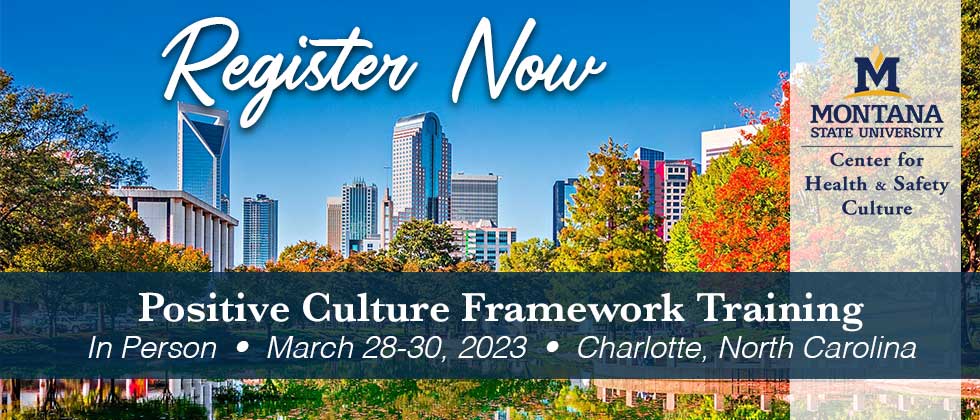
In-Person Positive Culture Framework Training Returns This Spring in Charlotte, NC |
|
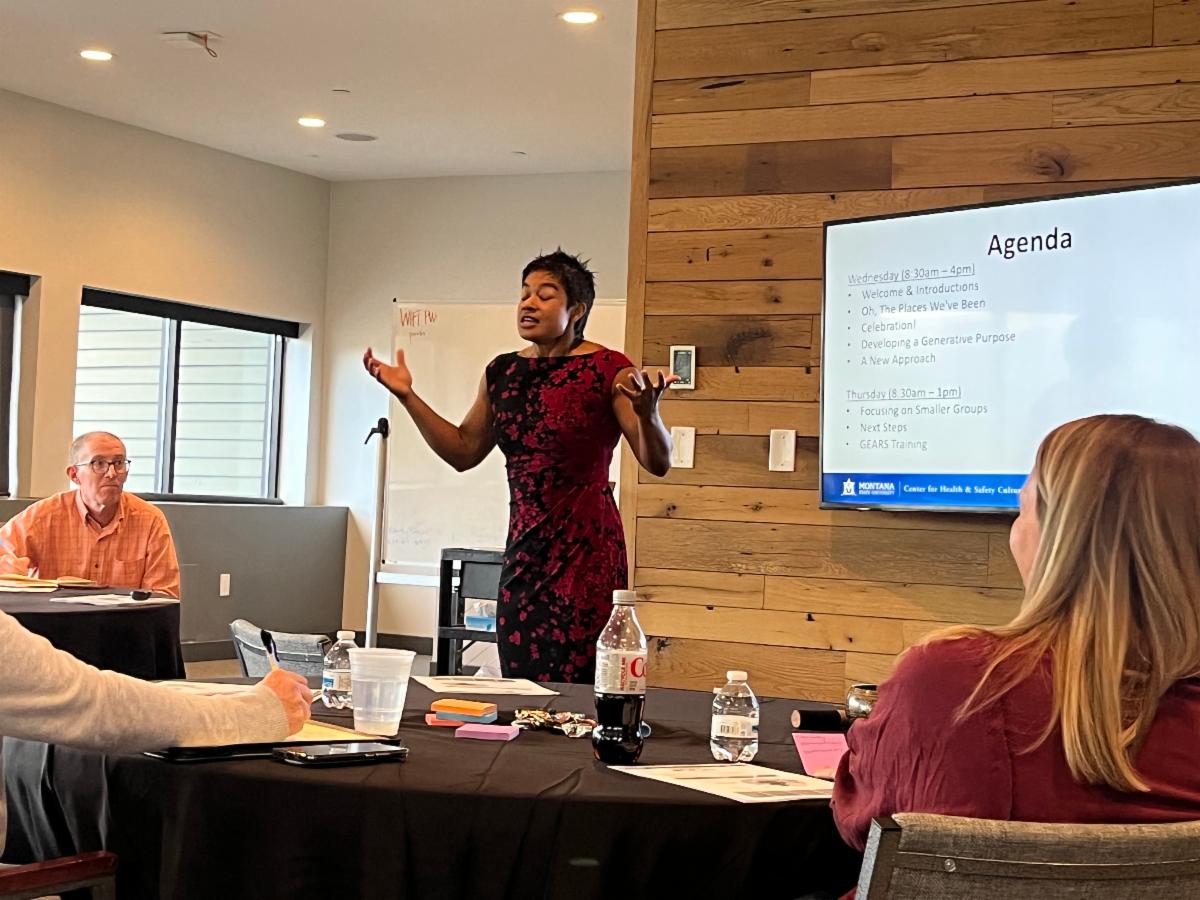
We are excited to announce Katie Dively will be back in person for our popular 2.5-day Positive Culture Framework Training, which provides a foundation for efforts to improve health and safety that address a wide variety of complex social issues. Training attendees will:
-
Learn how culture influences behavior
-
Develop and refine skills in three critical areas: leadership, communication, and the integration of effective strategies
-
Gain specific next steps for transforming culture to improve health and safety
The Positive Culture Framework Training is an excellent opportunity to engage with others across the country and move toward cultivating a culture that supports and sustains health and safety.
|
|
Who should attend?
The Training is designed for anyone working to improve health and safety such as (but not limited to) prevention specialists, traffic safety professionals, substance misuse prevention professionals, violence prevention advocates, coalition members, government personnel, and law enforcement officers.
Important Dates
-
Early bird registration closes December 16, 2022 at 11:59 PM (MDT)
-
Standard registration opens December 17, 2022 at 12:00 AM (MDT)
-
Room block closes on February 25, 2023
-
Registration closes March 3, 2023 at 11:59 PM (MDT)
-
Last day to cancel and receive a refund (less a $25 admin fee) February 24, 2023 at 11:59 PM (MDT)
-
Final due date for registration fees is March 10, 2023 at 5:00 PM (MDT)
|
|
Join Us for This FREE Webinar
What Is the Positive Culture Framework (PCF)? with Katie Dively
|
|
Join us to learn more about this way of organizing your work to improve health and safety. This is also a great “sneak peek” into the three-day PCF training we are offering in March 2023.
|
|
You can view a recording of another recent webinar given by Jay Otto: Impulsivity, Emotional Intelligence and Safe Driving, via our website. See a recording of this webinar and more HERE.
|
|
Together for Life Project Training in Park City, Utah |
|
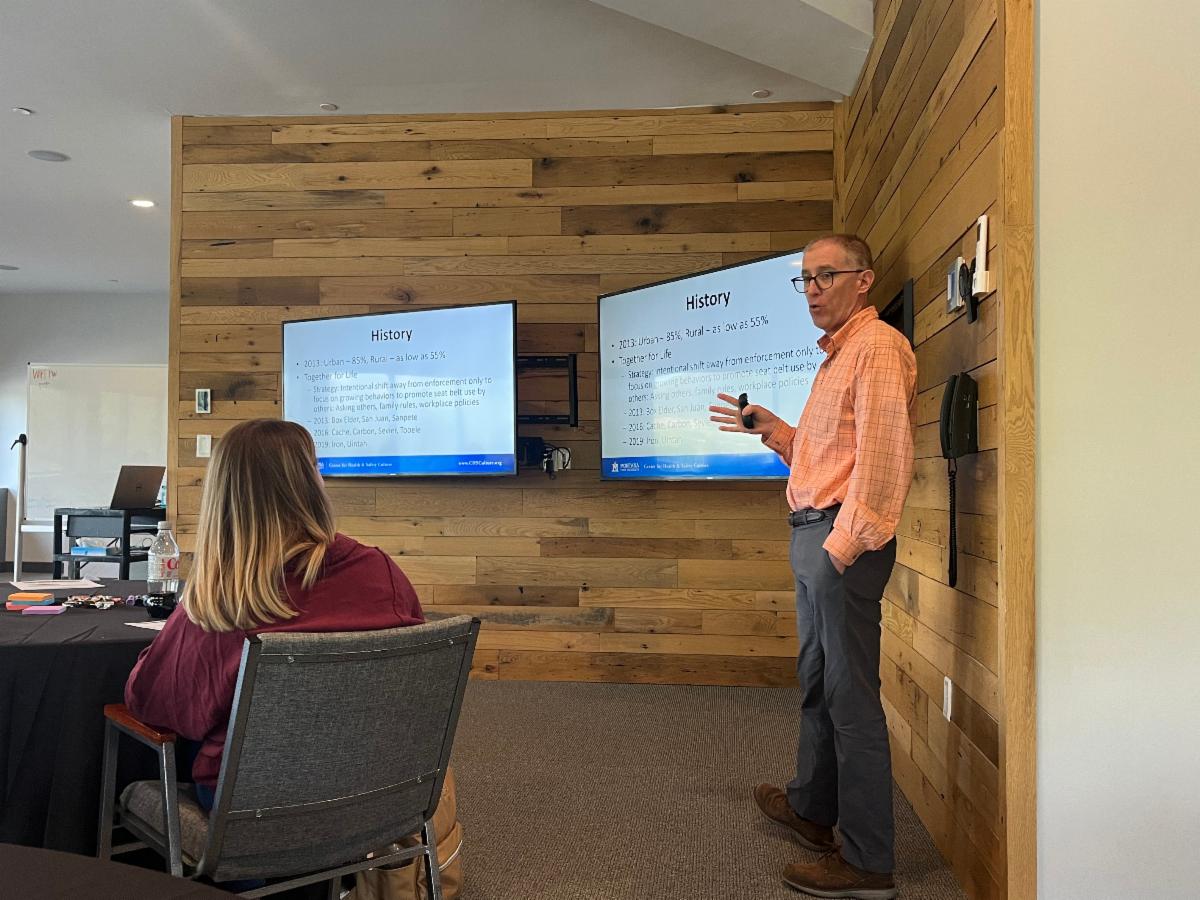
Jay Otto, Annmarie McMahill, & Katie Dively of the CHSC were joined by Dr. Anjali Nandi (one of our sponsored researchers) in Park City, UT, this September to lead a training for the Utah Together for Life project coordinators and law enforcement liaisons. It was a great week learning and connecting around the generative purpose of keeping rural Utahns healthy and safe by always using their seat belts.
You can learn about how the Together for Life project has been getting more Utahns to wear a seat belt and encouraging citizens to ask others to wear their seat belts HERE.
|
|
Annmarie McMahill and Jay Otto Recently Attended the 8th International Congress on Emotional Intelligence in Palermo Italy |
|
Annmarie and Jay attended this four-day (Aug 30 – Sept 2) conference where leading researchers and scholars of Emotional Intelligence (EI) from around the world convened to share and discuss the latest findings and innovations surrounding EI. Key topics included ways to assess EI, EI in workplaces, and emerging topics in EI research.
The Center has been immersed in the application of EI and social and emotional development on several of our projects involving child development, substance misuse prevention, and traffic safety. Annmarie is the Principal Investigator on ParentingMontana.org -- an online resource for parents and those in a parenting role to address everyday issues with their children while also developing their social and emotional skills. Jubaer Ahmed, Ph.D., a recent graduate student working with the Center, completed his dissertation on developing a tool to assess EI among drivers and explored the relationship between EI and traffic safety-related behaviors. Jubaer is now continuing his research as a post-doc at Colorado State University. Jay and Annmarie came back from the EI Congress with new inspiration and stronger resolve about the role of EI in improving health and safety.
|
|
Three Recent Publications From Center Staff |
|
Bridget Hanson, Ph.D., Kari Finley, Ph.D., Jay Otto, M.S., and Nicholas Ward, Ph. D., with the Center for Health and Safety Culture (CHSC) at Montana State University published the article: “Role of Trusted Sources and Behavioral Beliefs in Promoting Mitigation Behaviors During the COVID-19 Pandemic” in the journal, JMIR Human Factors. This article shares findings from a study that sought to identify relationships between trust in various sources of health information and beliefs related to vaccination and mask wearing. Results support the need to bolster the public’s trust in health care agencies as well as enhance trust and respect in health care providers to increase people’s adoption of mitigation behaviors and prepare for future pandemics.
This work was supported by the Office of Research, Economic Development, and Graduate Education at Montana State University.
|
|
Jay Otto, M.S., Nicholas Ward, Ph.D., and Kari Finley, Ph.D., with the Center for Health and Safety Culture (CHSC) at Montana State University along with Shelly Baldwin and Wade Alonzo with the Washington Traffic Safety Commission published the article: “Increasing Readiness to Grow Traffic Safety Culture and Adopt the Safe System Approach: A Story of the Washington Traffic Safety Commission“ in Frontiers in Future Transportation Journal’s special edition on Vision Zero. This article shares insights the Washington Traffic Safety Commission learned from their engagement in a change process that focused on growing traffic safety culture and adopting the Safe System approach over multiple years.
|
|
Eric Austin, Ph.D., and Holly Watson with the Department of Political Science along with Nicholas Ward, Ph.D., Jay Otto, M.S., and Kelly Green, M.P.A., with the Center for Health and Safety Culture at Montana State University published the article: “Assessing the Impact of Culture: A Systemic Analysis of Culture-Based Interventions and Evaluations” in Frontiers in Future Transportation Journal's special edition on Vision Zero. This article describes a systematic analysis of published, peer-reviewed evaluations of culture-based interventions designed to enhance traffic safety, safe workplaces, and effective practices to build a clearer picture of the robustness of current models and evaluation designs. In addition to building an understanding of the current field of evaluation in culture-based interventions, the article begins examining the relationship between safe systems and traffic safety culture.
This research was funded by the Montana Department of Transportation and the Federal Highway Administration. This research has concluded, and Montana Department of Transportation has accepted the final report.
|
|
Center Bulletin Board: Here’s some of what we’ve been up to the past few months |
|
- Project Training – Together for Life Utah, September 27-30, Park City, UT. Jay Otto, Annmarie McMahill, Katie Dively, and Anjali Nandi held a training for project coordinators and law enforcement liaisons.
- Webinar: Impulsivity, Emotional Intelligence, and Safe Driving, September 22. Jay Otto presented on how well drivers understand and manage their emotions contributes to driving safety. The webinar introduced impulsivity and emotional intelligence research including a new scale the Center has developed to measure driver emotional intelligence. Growing emotional intelligence among drivers is a new opportunity to improve traffic safety.
- 8th International Congress on Emotional Intelligence, August 29 – September 2, Palermo, Italy. Jay Otto and Annmarie McMahill attended this conference intended to promote research in the field of Emotional Intelligence (EI), bringing together leading researchers and scholars from around the world to collaborate, exchange and share theoretical and empirical research findings and innovative applications of EI.
- National Transportation in Indian Country Conference, August 22-26. Jay Otto presented a breakout session on Traffic Safety Culture / Proactive Traffic Safety.
- Annual (virtual) Positive Cultural Framework (PCF) Training, August 23-25. Katie Dively led this three-day virtual event that details the framework the Center uses to improve health and safety in communities and organizations.
- Science of Stigma Training – Rocky Mountain Tribal Leadership Council, August 16. Kari Finley presented this Science of Stigma preconference workshop session in Billings, MT for the Tribal Council.
- Impulsivity, Emotional Intelligence, and Safe Driving presentation -- American Driver & Traffic Safety Education Association, July 27, Vancouver, WA. Jay Otto presented on how well drivers understand and manage their emotions contributes to driving safety. Jay introduced impulsivity and emotional intelligence and discussed research including a new scale the Center has developed to measure driver emotional intelligence. Growing emotional intelligence among drivers is a new opportunity to improve traffic safety.
- Project Training – Washington Traffic Safety Manager Training, July 18. Jay Otto and Katie Dively lead this virtual workshop on improving logic models with a focus on goal statements.
- Webinar: Tips to Grow Traffic Safety Culture, July 14. Jay Otto and Katie Dively presented how growing traffic safety culture can seem daunting, but there are actions everyone can take right now to grow a safer traffic safety culture. They explored tips to grow traffic safety culture and participants left with specific actions they could immediately put into practice.
|
|
The Center for Health and Safety Culture is an interdisciplinary center serving communities and organizations through research, training, and support services to cultivate healthy and safe cultures. We are dedicated to applying research to develop sustainable solutions to complex social problems. Our research focuses on understanding how culture impacts behavior – especially behavior associated with health and safety. Some of our services include: |
|
- Conducting, Exchanging, and Applying Research
- Cultural Assessments, Surveys, and Evaluation
- Positive Culture Framework
- Integration Skills
- Stigma Training
- Instructional Videos
- Communication & Leadership Skills
- Moving From Knowledge to Practice
|
|
Feel free to contact us if you are interested in our services. |
|
|
|
|
|
|