|
|
Defending wildlife and habitat through:
Advocacy
Conservation
Education
|
|
|
News & Updates: March 2022 |
|
In this issue:
- A setback for water in Kansas
- Time to spread native seed
- Last chance to sign up for Kansas Lek Treks Prairie-Chicken Festival - Deadline is March 14
- Chapter Highlight: Burroughs Audubon Society pushes KC to adopt environmentally-friendly lights
- AOK Nature Walk Recommendations
|
|
|
A setback for water in Kansas |
|
On February 10, HB2686 was proposed in the Kansas Legislature. This remarkable bill would have been a bold step toward giving water in Kansas the priority it deserves. This bill would have created a single, cabinet-level focus for water regulation in the state, increased funding for the perpetually under-funded State Water Plan, and sought to make water institutions in the state more democratic and representative. These recommendations were made after the House Water Committee spent two years studying water issues and agency responsibilities across the state.
One of the bill’s opponents testified that this bill is a “solution in search of a problem.” One need only look at the maps of annual water level declines in the Ogallala aquifer in western Kansas, or the reports on reservoir sedimentation in eastern Kansas, to see that our current approach to water regulation is not sufficient. This bill was an attempted solution to solve those and other water problems.
The original bill drew significant opposition from major farm organizations and commodity groups as well as the Groundwater Management Districts (GMDs). On March 1, a substitute bill (Sub HB2686) was passed out of committee which eliminated most of the forward-thinking changes the original bill proposed. The substitute bill removed the cabinet-level position so there will be no one advocating for water. The substitute bill also removed the ability of non-water right holders to serve on GMD boards. Although the substitute bill identified a funding source for the State Water Plan via a statewide sales tax, the funding burden would fall largely upon the urban populated areas of the state instead of a more equitable funding plan which would have spread the cost across uses as was outlined in the original bill.
-Written by Jackie Augustine with excerpts from the Kansas Rural Center and personal communication with AOK board members
|
|
Time to spread native seed |
|
At this time of year in Kansas, we can expect anything from beautiful sunny days in the 70s to frigid winds howling at 20 degrees. On the cold days, I'm content to stay inside and get work done. The beautiful days make me find excuses to get outside. Most of the time, my excuse is to do something in the flower beds outside my house.
Gardening in early March? Without a greenhouse? Yes!! March is the perfect time to plant native seeds. Native seeds can withstand freezing - in fact, some plant seeds require a period of time at low temperatures to germinate. By spreading these seeds now, there is still adequate time (for most) to receive a sufficient number of cold days to promote germination.
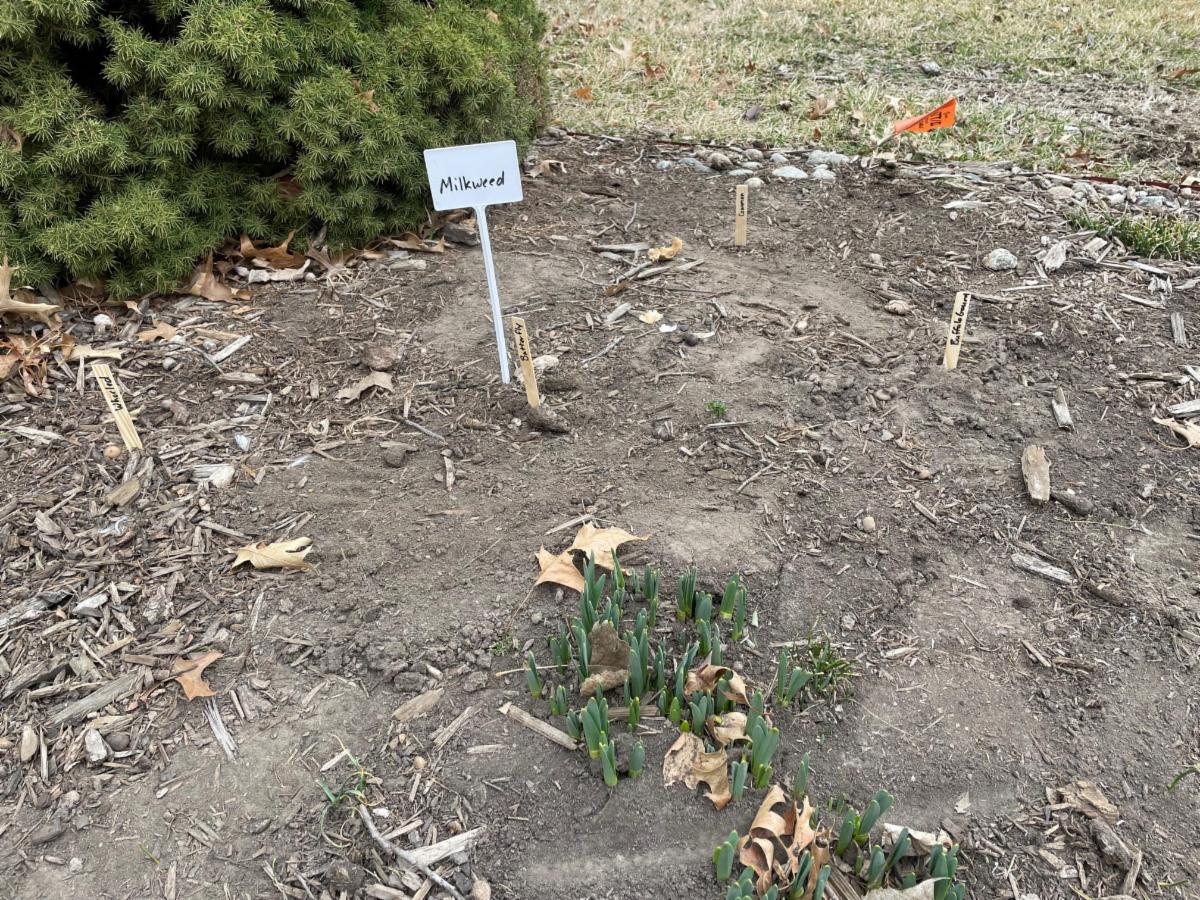
All that is required to spread native seed is to ensure it touches soil (bare ground is best). As you can see from the photo, the wind storm last month blew all my mulch away, so I had plenty of bare ground to work with. I removed the weeds, loosened the top half inch of soil, and spread the seed. Because it was windy the day I spread seed, I put a thin layer of soil on top of the seed to prevent them from blowing away. Some seed still remained on the surface, and that is OK. Some plants require exposure to UV radiation (sunlight) in order to germinate. (It is hard for me to keep track of which seeds require freezing, and which require sunlight, so I just treat all native seeds the same and have had pretty good luck.) I usually spread seed when I expect rain or snow in the next day or two. Not only is the moisture helpful, the seed also gets good contact with the soil and the rain/snow discourages birds from eating the seeds before they get a chance to germinate!
Once the plants germinate, I usually spread mulch around the germinating plants. This keeps moisture in the soil and adds nutrients to the soil as it decomposes. Be careful NOT to buy mulch that advertises 'suppresses weeds' as it might be laced with an herbicide which will kill native plants. I also don't like the colored varieties as I am not sure what chemicals are used to color the mulch and if they are compatible with native plants. I don't care for rocks as they are harder to move, don't add to the soil, and make it hard to pull weeds. For me, ~3 inches of natural mulch does the trick. This is usually enough to suppress weeds, or it makes the weeds easy to pull if they do grow. Just be careful to NOT cover your sprouting native plants.
Where to get seed? If you have any friends that are into native gardening, they probably collected seeds last fall and are willing to share. You may be able to find seed still connected to the plant in a native planting, but make sure it is OK to collect seeds before you do so on public land. You can also purchase seed from a company that focuses on natives. In Kansas, try Taylor Creek Nursery. I also order seeds online from Prairie Moon Nursery. They have an amazing website that allows you to sort seeds by color, timing of blooming, sun exposure, range, soil wetness, etc. It is easy to get the exact flower that will do well in your yard.
I collected my seed last fall. I have a site with full sun and moderate moisture. I planted three kinds of milkweed (common, butterfly, and whirled), upright coneflower, purple coneflower, wild senna, Joe Pye weed, a late-blooming aster, compass plant, and buffalo gourd. I can't wait to see them emerge in a couple of months and bloom this summer.
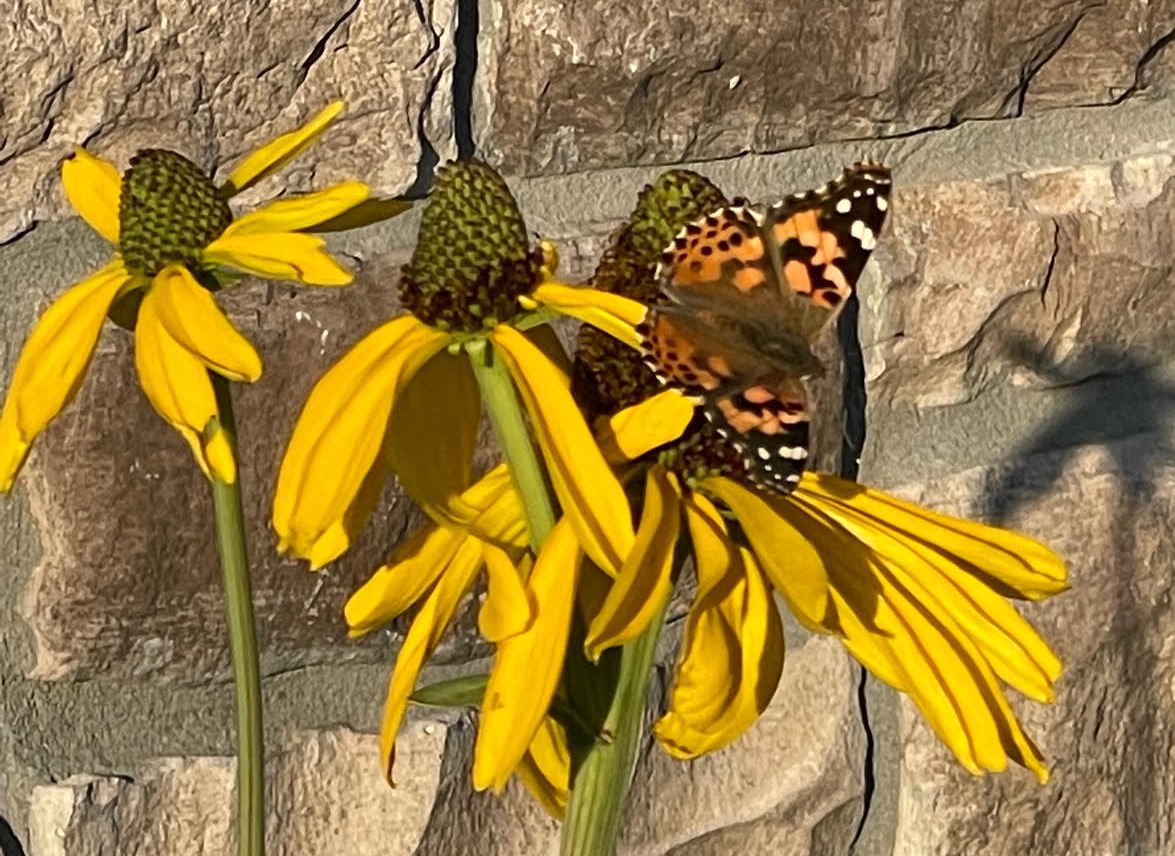
I love talking about native plants almost as much as I love talking about prairie-chickens. If you have questions or need advice, contact me. The photo above shows a portion of my flower bed after the seeds have been planted; above and to the right is a painted lady butterfly on giant coneflower in my yard last summer.
|
|
Deadline to register
or modify your reservation for the
Kansas Lek Treks Prairie-Chicken Festival
is March 14
|
|
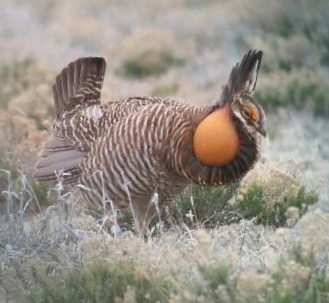
Over 80 people are already registered for the first annual Kansas Lek Treks Prairie-Chicken Festival. Most of the spaces in blinds are full, but there are still opportunities to see prairie-chickens from vans, to sign up for field trips to great places in western Kansas, and to attend fun social events. The last day to register or modify your existing reservation is March 14. Click the link above to register or contact Kelley Hurst to modify your reservation.
|
|
|
New Lek Treks and AOK Merchandise Available |
|
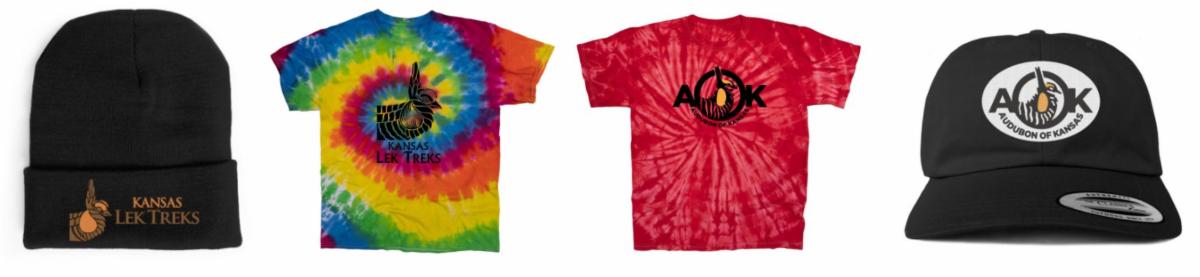
We are now offering tie-dyed t-shirts and hats with both the AOK and Kansas Lek Treks logos. Order today to get it before the festival! We will have sample t-shirts and hats at the festival if you want to see and feel the merchandise before ordering, but all purchasing will be done online. |
|
Chapter Spotlight:
Burroughs Audubon Society pushes KC to adopt environmentally-friendly lights
|
|
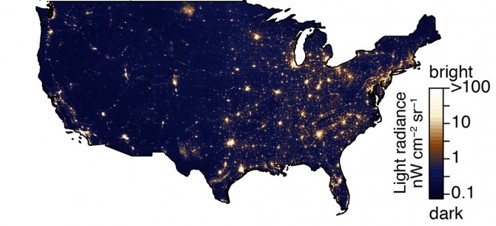
Kansas City was starting to replace sodium lights with super-bright LED lights. Although the switch to more energy efficient lighting was a good idea, the type of LED lights initially selected were too bright for a number of reasons. Mary Nemecek, conservation chair for the Burroughs Audubon Society of Greater Kansas City, said that they were so bright, that it was like "driving on the surface of the sun" when the streets were wet and reflecting the light. Before the new lighting, a recent study from Cornell ranked KC seventh in spring and eighth in fall as most dangerous for migrating birds because of the light pollution which disrupts migrating birds' ability to use the stars to navigate. The map from this report (pictured above) shows the light impact of cities in the United States. Burroughs Audubon Society joined other environmental and dark sky advocates to voice its concerns to city leaders. Now, the city will move forward with a LED bulb that is less bright and emits a warmer color.
AOK would like to congratulate Burroughs Audubon Society for its successful advocacy on behalf of birds!
|
|
|
|
|
Burroughs is hosting a prairie-chicken talk by AOK Executive Director, Jackie Augustine |
"Home on the Range: Breeding Biology of Prairie-Chickens"
by Jackie Augustine, Ph.D. – Audubon of Kansas Executive Director.
Tuesday, March 15, 2022 at 6:30pm
|
|
|
Jackie will discuss the biology of Greater and Lesser Prairie-Chickens, species that she has studied for 15 years. These charismatic birds perform impressive displays to gain mating opportunities. Come hear about the rolling prairie, the antics of prairie-chickens, and the challenges of studying the declining Lesser Prairie-Chicken. Join with Facebook Live or Zoom. To join by Zoom, send request for meeting link via email: zoom@burroughs.org.
|
|
|
AOK shares favorite walks, hikes and birding spots! |
|
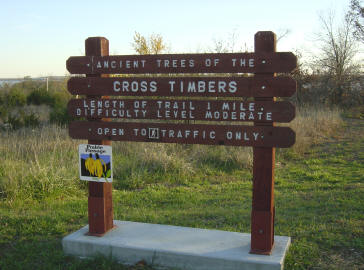
The Ancient Oaks Trail starts near the Toronto Point Permit station located at 406 S Point Rd, Toronto, KS 66777.
|
|
Both the 2800-acre Toronto Reservoir and 1075-acre Cross Timbers State Park are worth visiting with over 200 bird species recorded in the area. Now is a good time to look for migrating ducks on the reservoir. On land, you will be walking through the boundary between the forested east and the treeless plains. On the Ancient Oaks Trail, you will see gnarled, slow-growing post and blackjack oaks. Despite their rugged appearance, these oaks are over 200 years old. Soon, redbuds interspersed with the oaks will be displaying their bright pink-purple blooms. |
|
|
|
Lana Arrowsmith - Hutton Niobrara Coordinator - Hutton Sanctuary Management & Reservations lanamicheel@gmail.com
Audubon of Kansas
PO Box 1106 - Manhattan, KS 66505
785-537-4385
|
|
|
|
|
|
|