Quick, Timely Reads
On the Waterfront
|
|
Our Biggest Friends: Neighborhood Trees |
|
Dr. David Frew, a prolific writer, author, and speaker grew up on Erie's lower west side as a proud "Bay Rat," joining neighborhood kids playing and marauding along the west bayfront. He has written for years about his beloved Presque Isle and his adventures on the Great Lakes. In this series, the JES Scholar-in-Residence takes note of life in and around the water.
|
|
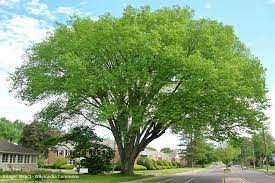
Almost 80 percent of America’s elm trees fell victim to disease after the infection spread west from New York City during the 1940s and reached Detroit in the early 1950s. |
|
These days I make frequent trips through the old bayfront neighborhood, taking in what is left of vistas from my youth. As I revisit the old haunts, I sometimes shudder to see what seems to be a slow deterioration. What once seemed to me to be a vibrant, working-class neighborhood is beginning to look tired. During the last time through, I began to wonder about some of the trees that were there when I was a kid. I wondered, looked, and then realized that most of them were missing. Not just some of them. The huge maple that once graced the front lawn of my old home is gone. I wondered when that happened. The horse chestnut (buckeye) tree down the street that had provided thousands of exciting hours of fun as we collected bags full of dark brown chestnuts is also missing (Why did we do that?). Long gone.
A few weeks ago, I walked along West Fourth Street and carefully scanned the backyards that once contained lovely mature trees. I knew most of them from climbing, a relentless activity for us kids. But like the verge trees (the area between the sidewalk and curb) at the fronts of our houses, they are almost all missing. Did people remove their backyard trees? Were they old and decaying? In need of removal? As I scanned for trees it suddenly dawned on me. The reason that the old neighborhood looks so tired and beat up has as much to do with the denuding of its trees as it has with the deteriorating homes. One tree problem that I vaguely recall was the epidemic of Dutch elm disease that attacked Erie as well as other cities in the 1940s and 1950s. We lost scores of stately elms over the years, and they were not replaced.
Urban planners have noted that inner-city residents in deteriorating neighborhoods (like my old block) that have suffered from the loss of trees have neither the resources nor the will to replace lost trees with new ones. And the loss of trees has economic consequences that are related to the reduction of the canopy. Average canopy coverage in the United States has fallen from 30 percent to about 27 percent over the past few decades and urban foresters suggest a minimum of 40 percent. Like many overall statistics, the averages do not explain the problem. An analysis of individual neighborhoods reveals that decaying inner-city neighborhoods suffer from having canopy coverage that is much smaller than the average while upscale areas benefit from larger-than-average canopies. Urban planners also note the relationship between the size of a city’s canopy coverage and many modern urban ills.
Earliest reports of Erie, written by settlers who arrived in the late 1700s and early 1800s, describe an area that was thickly forested with mature trees. One of the original problems in developing the city was thinning out enough trees to create building lots and streets. That process seems to have led to a long and systematic reduction of the tree canopy. With the exception of parks and the few undeveloped areas, trees were systematically eliminated and, until recent years, there has been no plan to replace them.
In my current neighborhood, where I have lived for more than 50 years, mature trees have disappeared at an alarming rate. During our second year on Erie’s west side, a committee of neighbors dropped by to request that I join them in a plan to remove all of our backyard trees. Our neighbor on the north and three who lived on the street behind us had contacted a person who had offered a large discount to remove the five huge hardwood trees at once. If I had joined the group effort the discount would have increased. When I asked why these otherwise sensible people wanted to remove beautiful, mature trees they cited the nuisance of leaf removal as well as the fact the shade created by the trees was making it difficult to grow lawns.
I was probably not polite when I refused. I suggested that what they were planning was much less than environmentally sensible. Two of those people have not spoken to me since (it has been 50 years), and our neighbor to the north moved after calling me “an environmentalist devil.” During the tree removal period, another neighbor to the north had a verge tree on the front of his house cut down, an action that prompted me to call the city to complain. The call was not a success, however. Even though the lovely, mature oak tree was on city property, it was cut down and hauled away while city workers tried to decide if they had the legal right to stop the slaughter. Naturally, I responded to that event by planting a new mature tree on the front of my house, in the city verge space. With permission, of course.
Since those days in the early 1970s, there has been substantial research into the importance of urban forestry. Study after study has concluded that the density of a city tree canopy predicts dozens of epidemiological measures of physical and mental health. Recent research has linked the density of a city’s tree canopy (the rate of loss of trees) with physical health, depression, disease, crime, and other urban maladies. As if to “jump on an urban renewal bandwagon,” several of these studies have also linked changes in urban tree canopy coverage with poverty and housing decay. A lack of canopy cover has been shown to correlate significantly with housing values, crime, and other quality of life issues, including several epidemiological measures of human health. Diabetes and metabolic disease have been linked to urban tree canopy coverage. Critics of these studies suggest they are correlation studies rather than controlled experiments and that there may be a statistical confound associated with attempts to blame shrinking tree coverage for the economic ills of American cities. But modern analytical techniques are able to partially sort out the various causal effects within data.
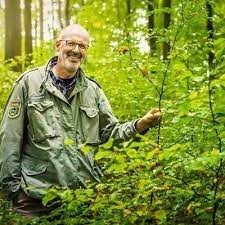
A few years ago, I blundered into a wonderful book called “The Secret Lives of Trees,” which contained some theoretical explanations for the power of trees. The author, Peter Wollhenben, is a German forester who had been in the business of harvesting lumber for several large companies. Wollhenben was also in charge of replacing harvested trees with new plantings after a previously forested area had been clear cut. Eventually, he became disenfranchised with re-planting programs and concluded that ongoing approaches to industrial lumber harvesting were dysfunctional to the Earth, responsible for increasing climate change, and degrading the environment. He now argues that ongoing re-planting programs, which have been done with no regard for species diversification or location appropriateness, are effectually worse than doing nothing in clear cut areas.
|
|
Wollhenben quit his forester job and became obsessed with making up for the harm that he had previously done to trees by warning the world of the dangers of disregarding the world’s shrinking forests. His new position as protector of forests provided a platform from which he began to explain his evolving awareness of trees as living organisms. In his new role, he hypothesized that trees were unappreciated sentient beings, the largest and most influential creatures on the planet, and that mankind’s relentless destruction of them had been tantamount to self-destruction. Noting that the largest part of a mature tree is the root system, an organic but essential part of the tree that is largely unseen and misunderstood by modern humans, he began to argue that trees live in forest communities where their roots are interconnected and constantly communicating with each other. He feels intuitively that they feel each other’s presence, care for, and protect each other. Wollhenben noted, for example, that if one member of an interconnected tree community is experiencing distress or disease, the others work together to send it extra energy via their root systems. |
|
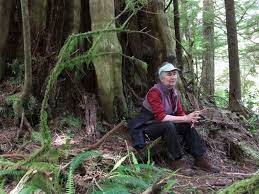
Professor Susan Simard, University of British Columbia |
|
While this sentient tree community hypothesis may have seemed a bit far-fetched to some skeptics, it attracted the attention of a number of botanical researchers who wondered if Wollhenben’s suppositions could be tested. Would it be possible to test these hypotheses; to isolate trees either in their forest environments or controlled laboratory settings and make scientific measurements? Eventfully, Dr. Suzanne Simard from Canada’s University of British Columbia began to design research projects both in the field and at university laboratories, and her findings supported Wollhenben’s conclusions. Calling her approach to tree research the “Tree Web Theory,” she was able to demonstrate and measure the constant communication that connects trees at the molecular level. Professor Simard eventually posited that the largest and most mature trees in forest communities seemed to take on the role of “mother,” helping to assure the flow of essential nutrients for smaller, younger, newer, or threatened tree community members.
UBC and its large botany staff dedicated to forest management have taken on the role of protector of North America’s reaming tracts of virgin trees. This initiative is connected to the university’s location near the epicenter of North America’s remaining untouched forest. And recently there seems to be a new and exciting entrant in the forestry literature. Another Canadian, this time from eastern forests of Ontario and Quebec, is being recognized. Diana Beresford-Kroeger was a seeming voice in the wilderness until lately.
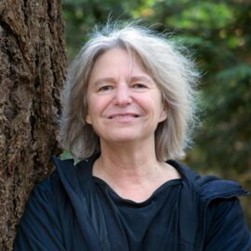
Born in Ireland, Beresford-Koreger moved to Canada, where she completed a doctoral degree in botany, worked as a university professor and researcher, and recently created a private forest preserve in Ontario. There she is struggling to find, plant, and care for threatened tree species. After an early exposure to the world of Celtic mysticism in Ireland, which centered on forests and trees, she found herself attracted to Native North American (Huron) beliefs regarding trees and their importance. Beresford-Kroeger has slowly evolved a body of work that includes seven books as well as dozens of important journal articles that argue for the power and ecological importance of trees.
|
|
Diana Beresford-Kroeger at her garden preserve in Ontario |
|
In her 2019 book, “To Speak for the Trees: My Life’s Journey from Ancient Celtic Wisdom to a Healing Vision of the Forest,” Beresford-Kroger argues that our ability to save the world’s trees from annihilation and extinction may be the final opportunity to save the Earth from the destruction that is being threatened by climate change. Her work complements research from British Columbia that suggests the importance of the mother trees, which defined and protected northern forest communities until European arrival. Like the ancient Celts, native people understood the spiritual power of trees and protected them, especially the mother trees. This was a natural instinct for native people whose societies were matriarchal.
Sadly, critical mother trees were the first to be cut as Europeans spread across North America. And North American forests have suffered accordingly. Europeans generally regarded Indians as naïve and ignorant and disregarded their warnings about trees (and other natural phenomena). It is now becoming apparent, however, that native Huron people, who lived near Beresford-Kroger’s adopted Ontario forests, knew better. Why did it take so long for modern science to catch up?
|
|
Glimmers of hope: Erie Mayor Joe Schember has announced a plan to increase the size and diversity of Erie’s tree canopy. Meanwhile, the grand maple tree that neighbors tried to persuade me to remove from my backyard is happy, healthy, and budding in anticipation of spring. According to the arborist who examined it last year, it is almost 90 years old. |
|
Accidental Paradise Available at TRECF!
Accidental Paradise
by Dr. David Frew and Jerry Skrypzak
|
|
The beautiful book on Presque Isle published by authors David Frew and Jerry Skrypzak – “Accidental Paradise: 13,000-Year History of Presque Isle” – is on sale at the Tom Ridge Environmental Center’s gift shop and through a special website, AccidentalParadise.com.
The book, priced at $35 plus tax and shipping, can be ordered now through the website sponsored by the TREC Foundation, AccidentalParadise.com.
Presque Isle Gallery and Gifts on the main floor of TREC, located at 301 Peninsula Drive, Suite #2, Erie, PA 16505 will also handle sales daily from 10 a.m. to 4 p.m.
For more information, send an email to aperino@TRECF.org.
To watch "Accidental Paradise: Stories Behind The Stories" click here.
|
|
ABOUT THE AUTHOR
Historian and author David Frew, Ph.D., is a Scholar-in-Residence at the JES. An emeritus professor at Gannon University, he held a variety of administrative positions during a 33-year career. He is also emeritus director of the Erie County Historical Society/Hagen History Center and is president of his own management consulting business. Frew has written or co-written 35 books and more than 100 articles, cases, and papers.
|
|
|
|
|
|
|