|
Early Fall Findings
by Catherine Smith
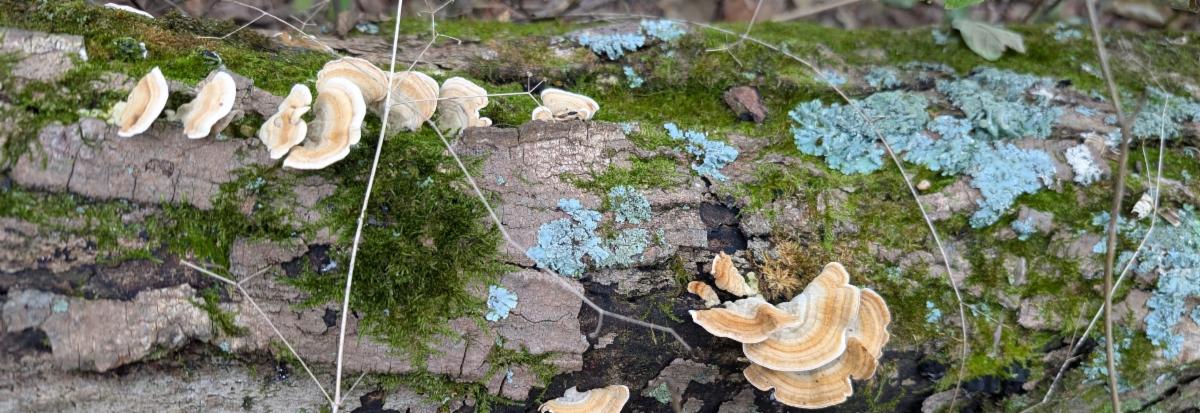
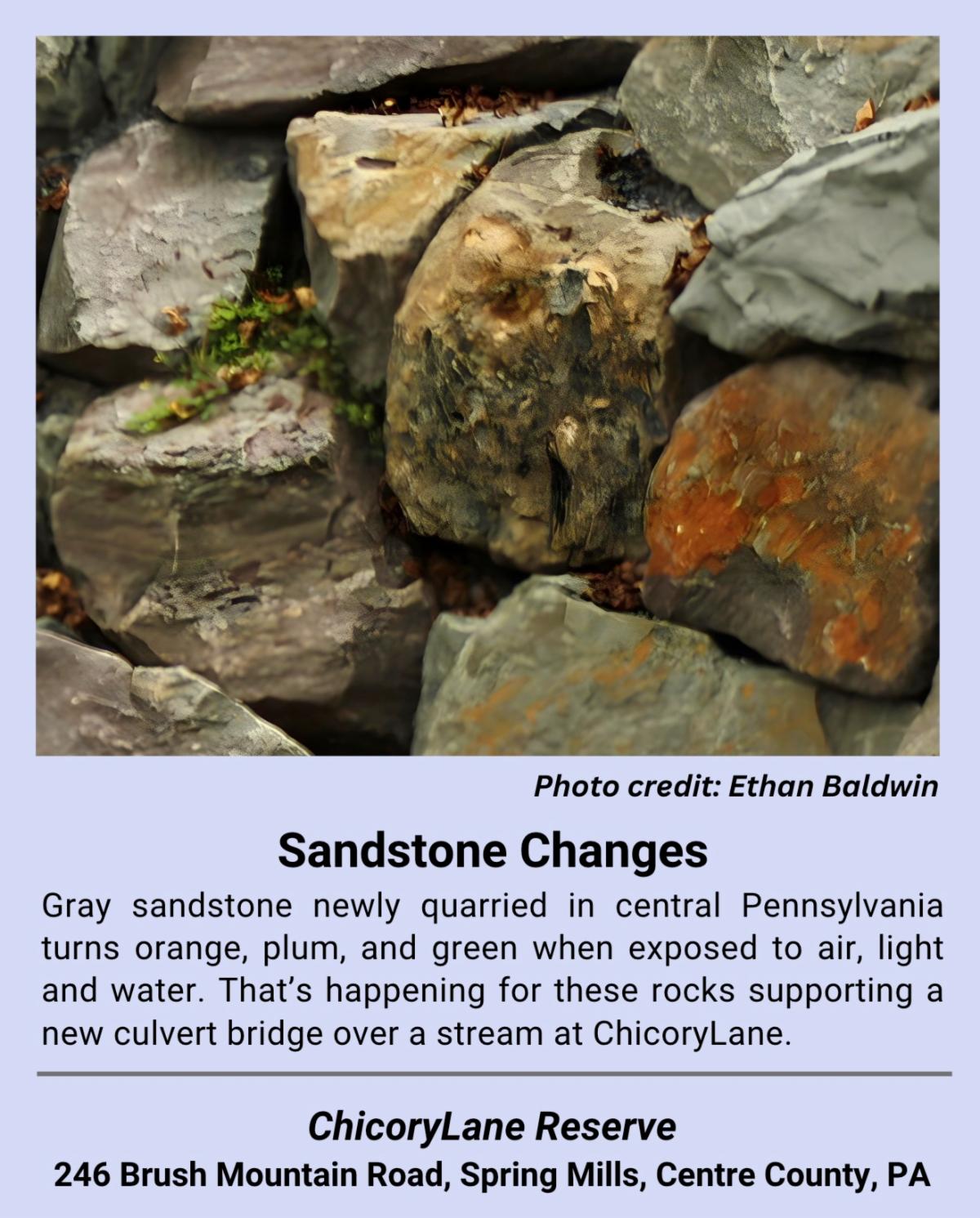
| | Common greenshield lichen (Flavoparmelia caperata); False turkey tail mushroom (Stereum ostea); Greater tongue moss (Anomodon viticulosus) Photo credit: ChicoryLane Collection | Green prevails in the September landscape at ChicoryLane, with subtle color changes here and there. Summer flowering natives like Joe Pye have become brown stalks and seedheads. Coppery hues appear in oxidizing gray sandstones. White, blue, or scarlet berries cluster on wetland shrubs. Gardens of green moss, gray-blue lichen, and rainbow-colored mushrooms grow on rotting logs. | | |
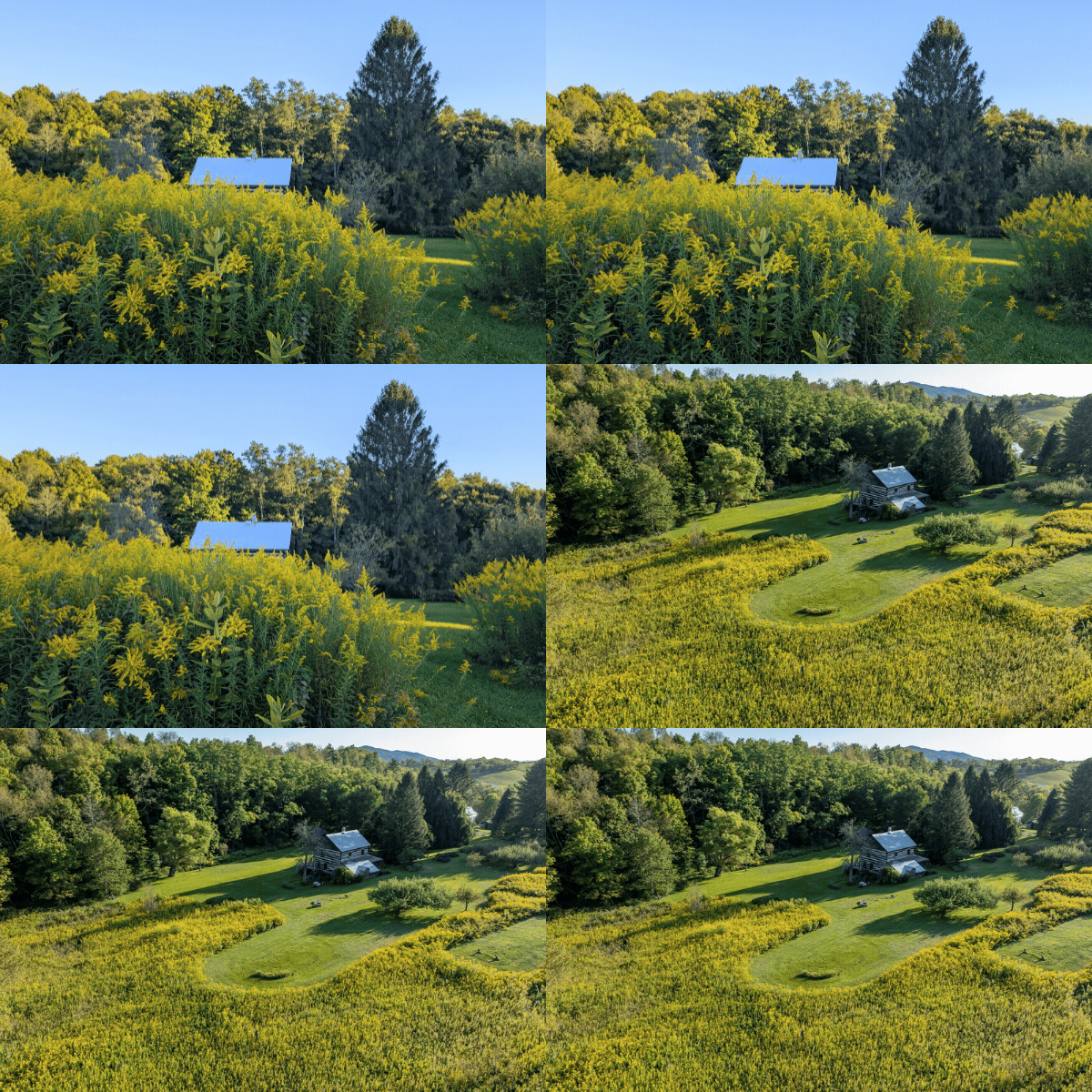
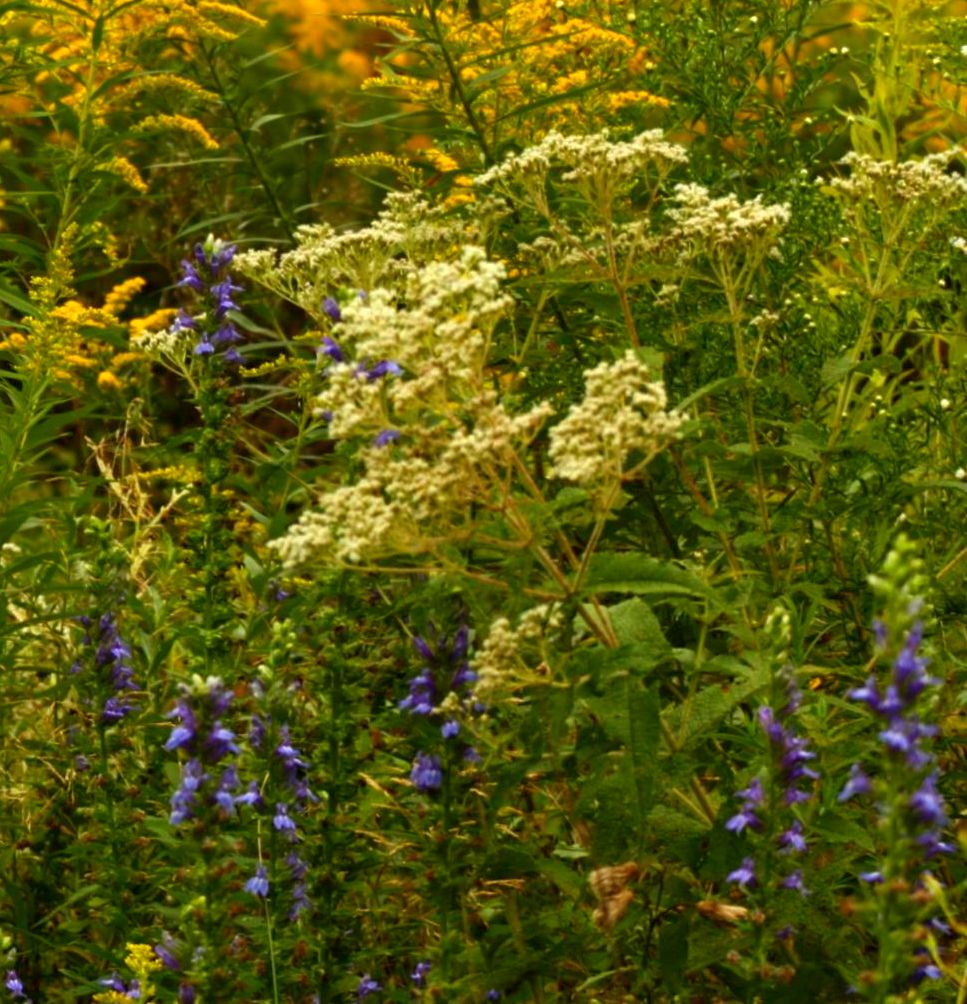
But you might miss those subtle changes if your view is filled by the not-so-subtle, bold flowering natives. The boldest? Goldenrod. Five species of goldenrod command the vistas, frame the green spaces, and border the trails at ChicoryLane. Ecologists call goldenrod an apex native plant species because of its value to other wildlife. So, because goldenrod offers food or nesting for crickets, grasshoppers, bees, spiders, and birds, we grudgingly accept its visual prominence in the September scene. And we like hearing cricket and grasshopper music coming from goldenrod patches. Photo credits: Bill Rathfon; ChicoryLane Collection
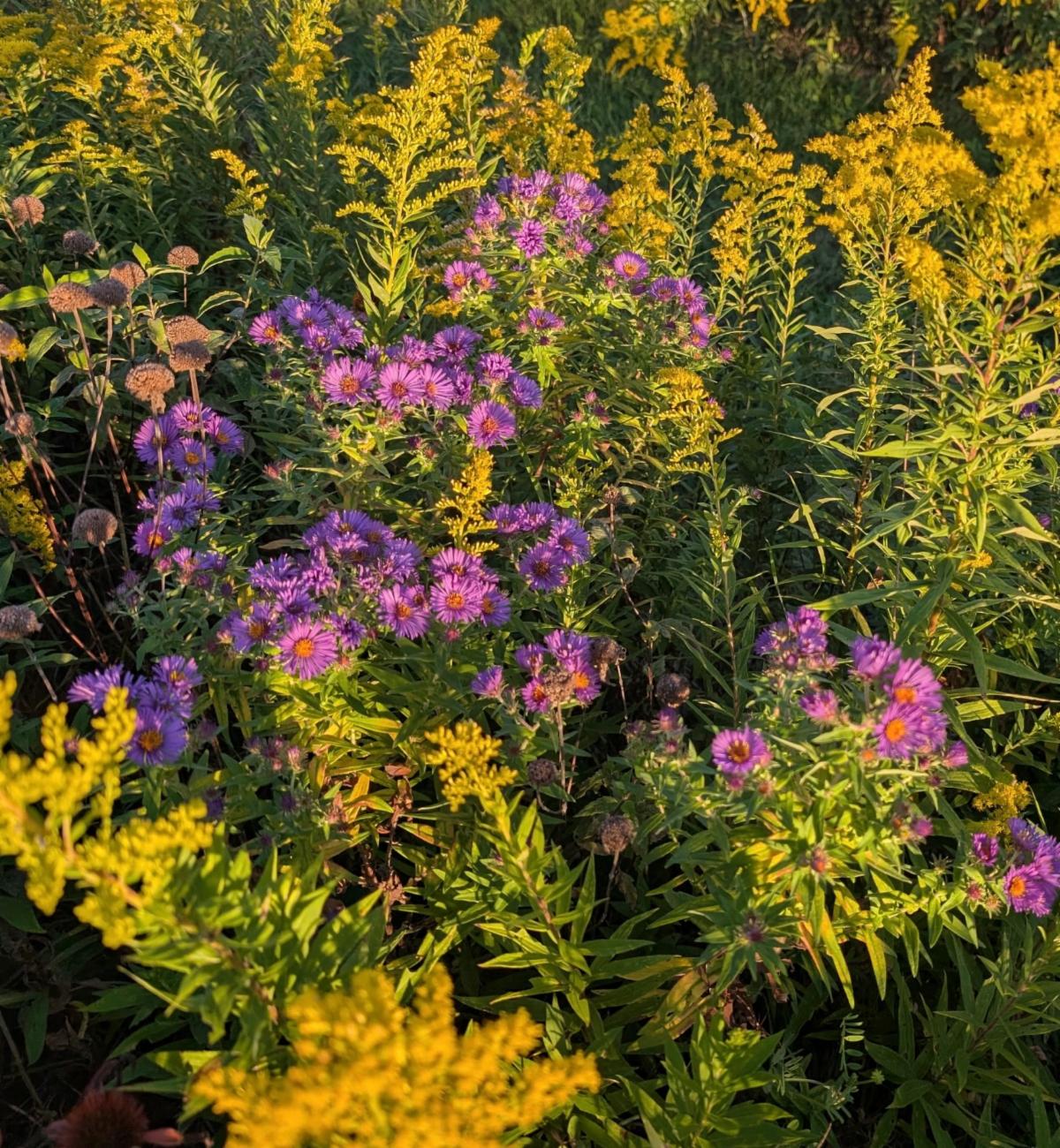
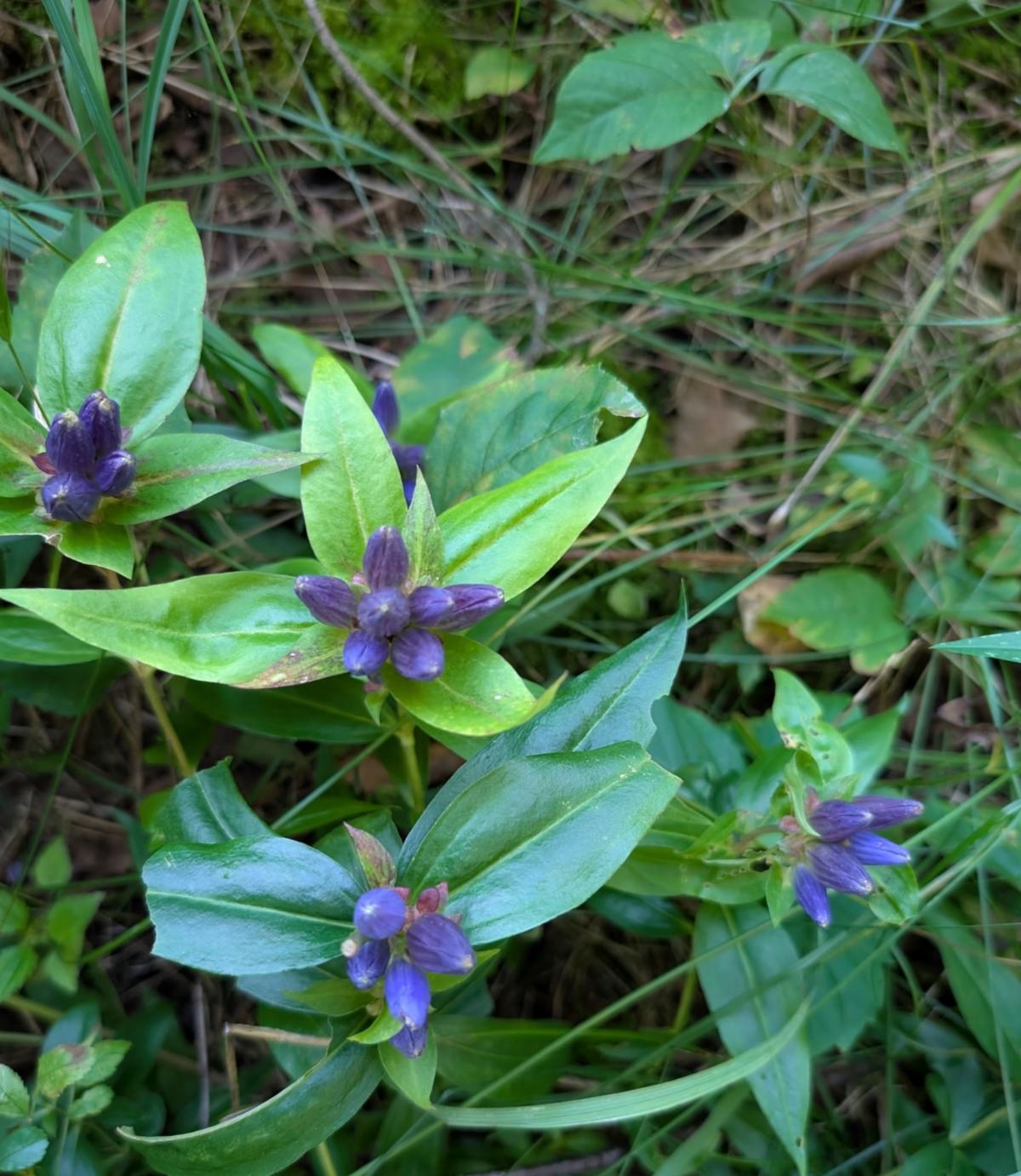
| | Happily, native plant diversity persists in the yellow mass. At its edges, you might see common asters, lobelia, boneset. Walking along a streamside trail, you might glimpse uncommon bottle gentians clustering in shady places. | | Photo credits: Ethan Baldwin (center); ChicoryLane Collection | | |
Birds, Insects
During his talk at ChicoryLane’s 2026 Symposium in May, entomologist Doug Tallamy emphasized the importance of caterpillars (insect larvae) as food for nestling birds in spring. Equally important, caterpillars feed fall migrating birds. Caterpillars are protein. Migrants need protein, fat, carbohydrates, and antioxidants to fuel long flights, rebuild muscle, and restore energy during rest stops. At ChicoryLane, abundant caterpillars provide birds with the essentials.
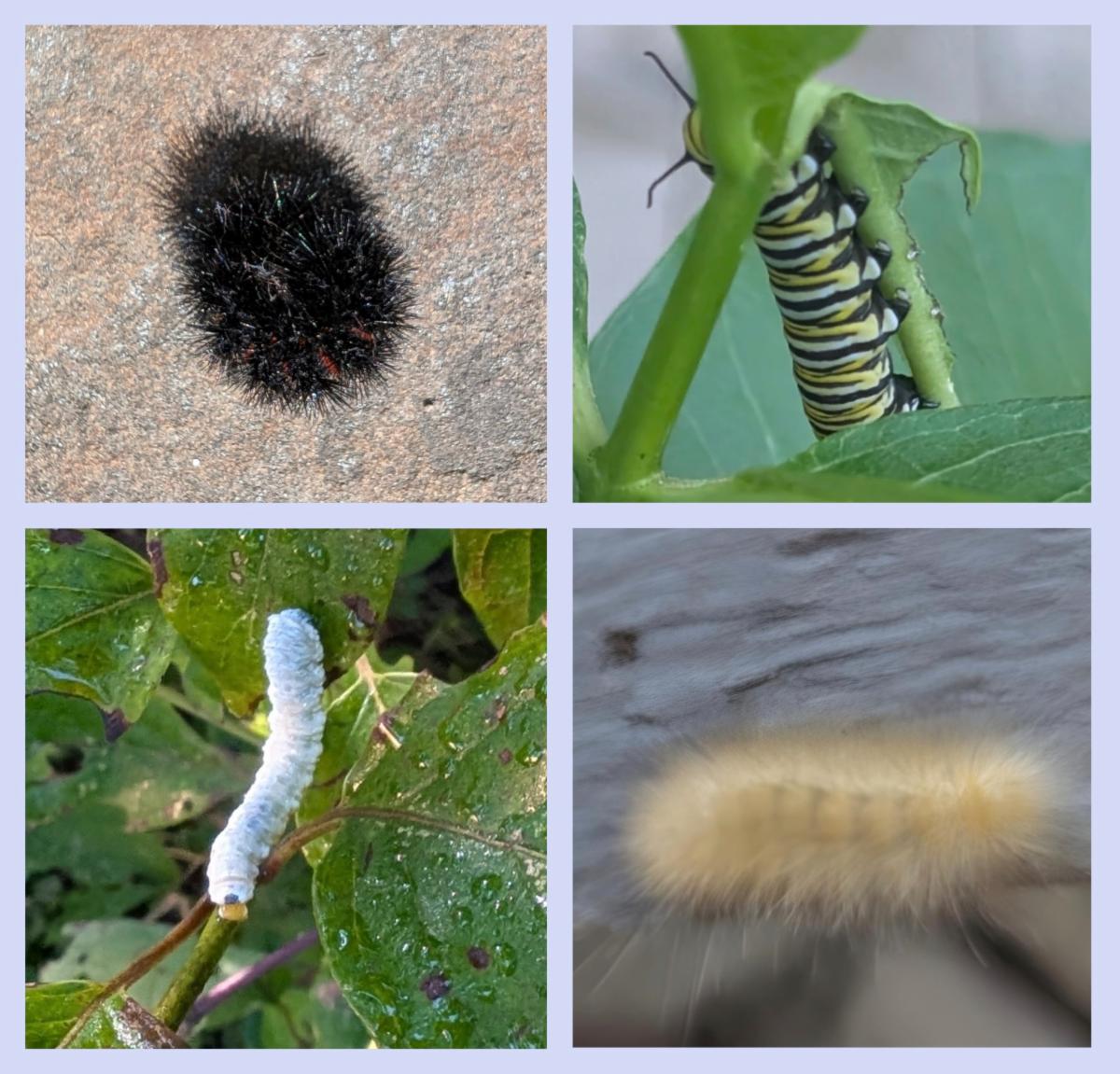
Images: Top to Bottom, L to R:
Black woolly worm larva, Isabella Tiger Moth (Pyrrharctia Isabella); Monarch Butterfly larva (Asclepias); Dogwood Sawfly larva (Macremphytus tarsatus); Yellow woolly worm larva/Virginian Tiger moth (Spilosoma virginica) Photo credit: ChicoryLane Collection
| | |
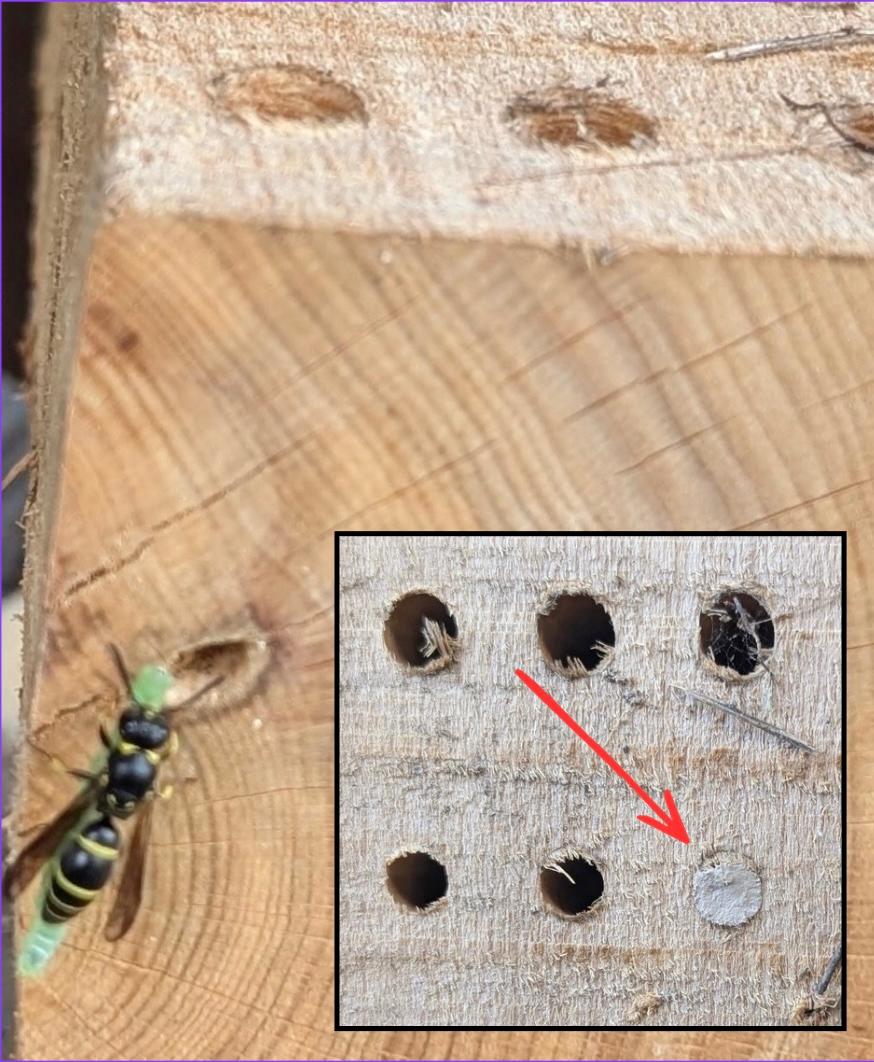
Predatory insects eat (other insect) caterpillars in fall, too. I witnessed a feeding episode one morning taking place in a bee nesting block on our back porch. I used my phone camera to record it, then read/viewed information about wasps to understand. The photo shows a hunting wasp hauling an unidentified, paralyzed caterpillar to her nest hole in wood. Her fertilized eggs were already in the hole. After depositing the caterpillar in the hole and sealing it (inset with arrow), the female wasp died, according to my quick research. Her life task, reproduction, was accomplished. The larvae hatch later, eat the live food, and emerge as young wasps to restart the life cycle. I’ll watch the hole, hoping to see the emergence.
| Food for thought: Wasps are the ancestor of bees. Wasps, bees, and flowering plants have co-evolved for 120 million years. At ChicoryLane, people can observe some evolutionary life processes — migration, metamorphosis, reproduction, predation — simply by being present and watching the natural show. If you’re willing, try it where you live. |
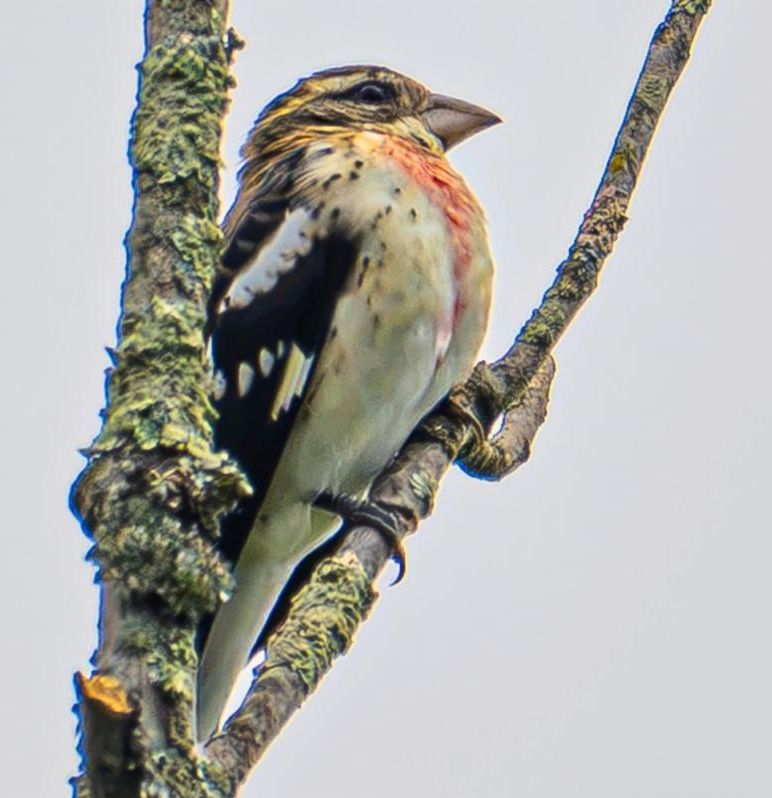
 | | At our Open Day on September 12, we welcomed 50 or so visitors to ChicoryLane. State College Bird Club members and others co-led by Joe Gyekis and Andrew Bechdel started the day off with migratory and resident bird observations. Sightings of 44 species included a bald eagle, a rose-breasted grosbeak, 5 woodpecker species, 9 warbler species and more. Most interesting to Joe was a Connecticut warbler, independently seen 4 times in 24 separate September visits to ChicoryLane. Evidently a regular visitor during migration, the Connecticut warbler is “ChicoryLane’s top iconic bird for September,” in Joe’s opinion. Maybe because of abundant food sources? Joe adds “I love birding here in an environment of so many native species – certainly unlike birding in town where one is walking around only in non-native honeysuckle and barberry.” We appreciated his comment. It inspires us to continue the work of ecological restoration at ChicoryLane. Image: Rose-breasted Grosbeak (Pheucticus ludovicianus) Photo credit: Nick Winograd
| | |
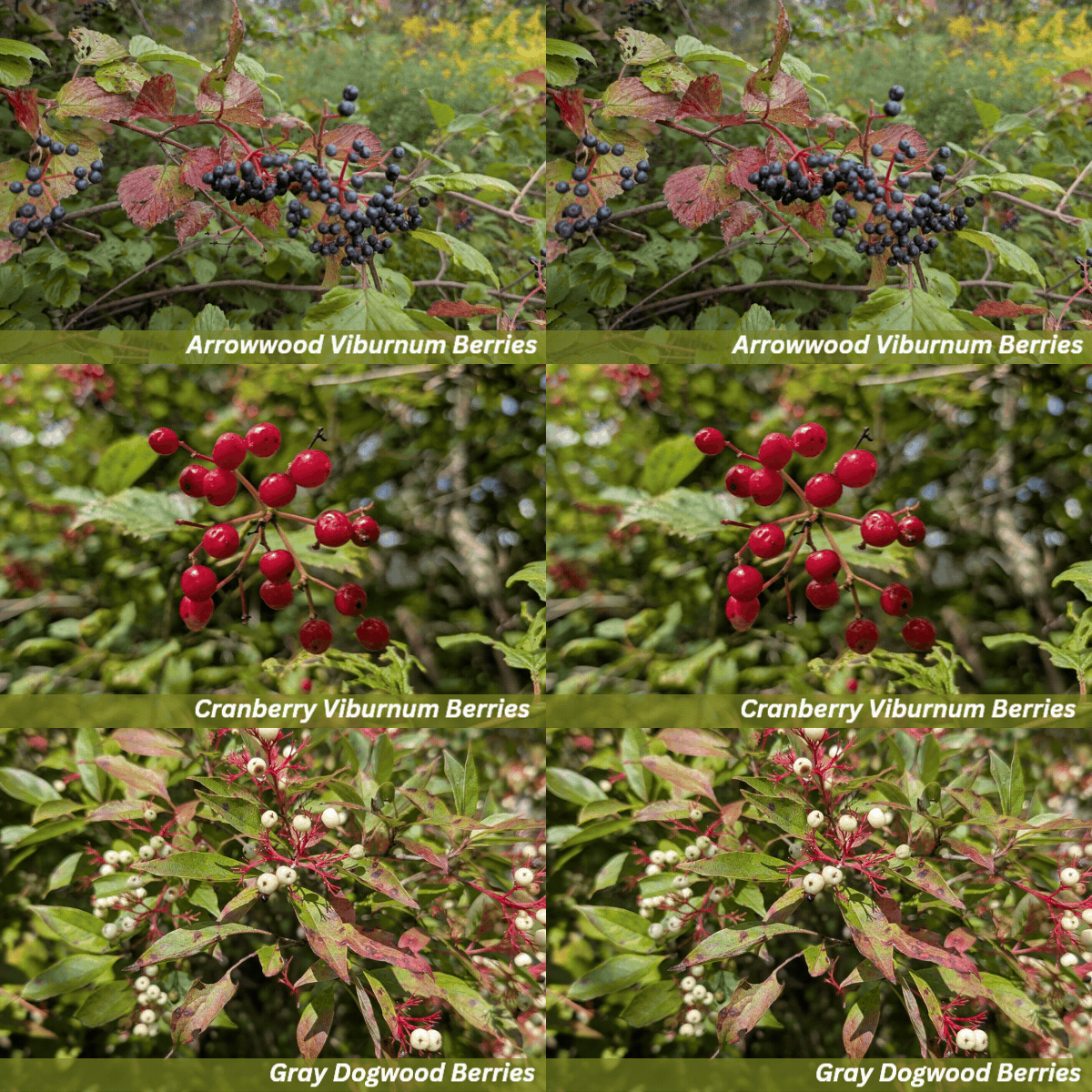
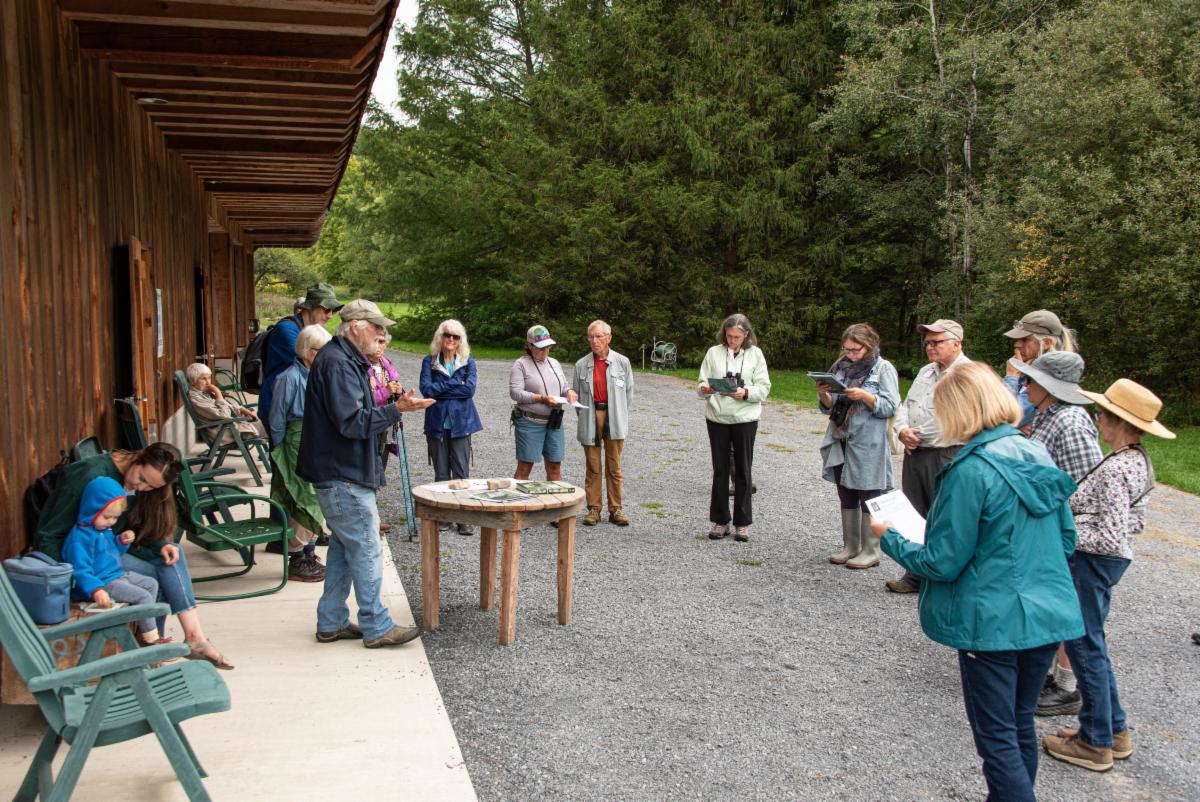
Mid-morning, visitors took a guided wetland walk focused on berries’ importance as food for fall migrating birds. At the walk’s start, co-leader John Smith introduced the idea of ‘ecosystem services’ and referred to Doug Tallamy’s book The Living Landscape that identifies the particular services different native plants provide to wildlife. John offered visitors a one-page handout “ChicoryLane Shrubs to Know” that applies Tallamy’s number of services to shrubs to be seen on the walk.
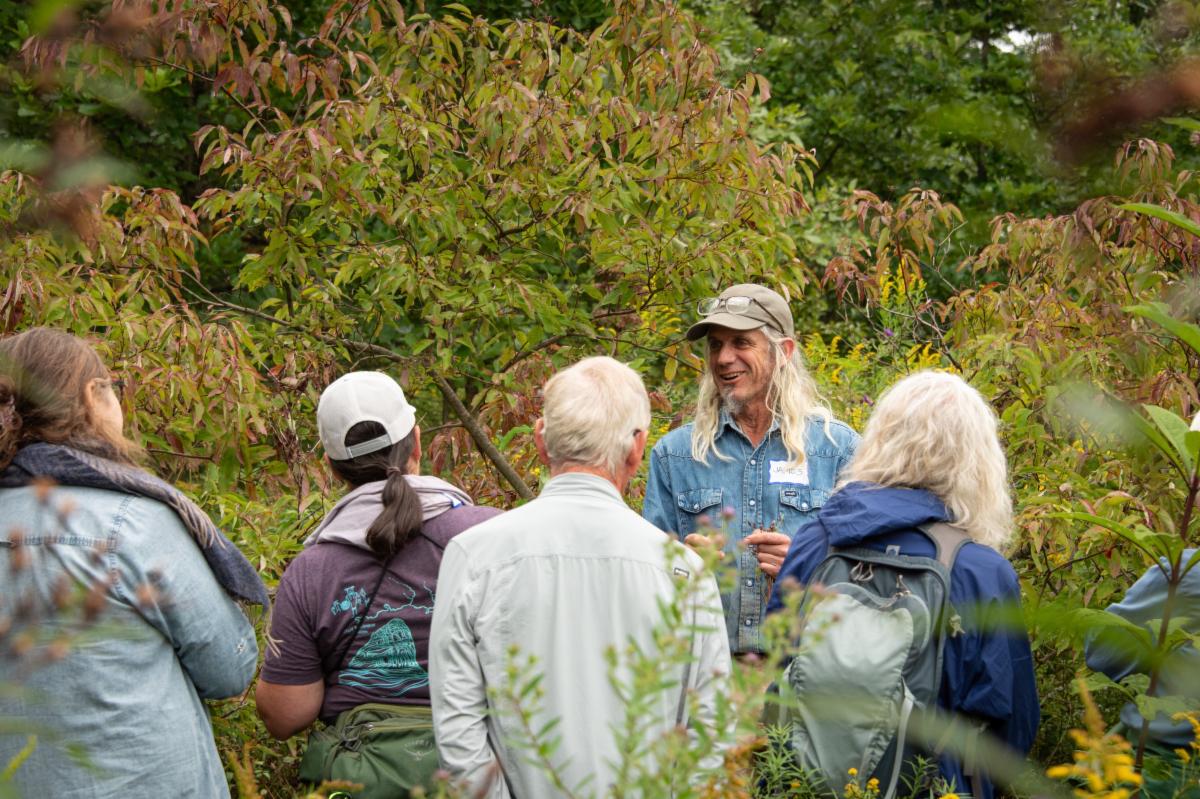
As walkers moved along, beneficial shrubs were discussed in reference to ChicoryLane’s “Field Notes” available on the ChicoryLane website. Walk co-leader James Lesher helped visitors identify the most beneficial berry-bearing shrubs.
| | John called attention to different contexts or ‘ecotopes’ (areas with shared conditions of soil, water, light, gradient) in which shrubs are growing. Pointing out contrasting ecotopes along the half to three-quarter mile walk, John highlighted differences among shrubs growing in different conditions. Why do the differences matter? Birds do not treat all shrubs alike. Birds need different resources in different seasons or for different purposes. For quick energy, fall migrants can use almost any berries or fruit, but for sustained energy they need the fat-rich white berries found on gray dogwood. To help repair muscles over-worked during long flight, they need the clusters of blue, antioxidant-rich berries on arrowwood viburnum. To survive winter, residents hunt for late-season carbohydrate-rich berries on cranberry viburnum. | | |
Left: John explains ecosystem services and ecotopes
Right: James shows beneficial shrub characteristics
Photo credit: Bill Rathfon
| | Rounding out the Open Day, visitors rambled on their own. Lauren Smith gave visitors copies of James’ artful topographic and trail system map and shared a photographic identifier of trail features and stream crossings. A practical tip shared – “Our approximately four miles of trails link up inside Reserve boundaries. You won’t get lost or leave the property if you stay on a trail” — gave confidence. After their rambles, visitors voiced appreciation, saying the guidance enabled discovery without distraction. | | |
What We're About
We maintain ChicoryLane Reserve ecologically. Our goals are to sustain vital natural relationships. To learn more, see ChicoryLane Mission and Values.
|
- Bill Russell, “Turkey Tail,” Field Guide to Wild Mushrooms of Pennsylvania and the Mid-Atlantic (revised and expanded), 2017
-
Jessica A. Bolser, others. “Birds Select Fruits with More Anthocyanins and Phenolic Compounds During Autum Migration,” The Wilson Journal of Ornithology, March 2013, vol 125, No. 1 (March 2013), pp. 97-108
-
PAenflowered, “Closed Bottle Gentian;” “Greater Tongue Moss;” “Common Greenshield Lichen”
-
Solitary Bee Nesting Block available from the PA Game Commission. Plans to construct here.
-
Terry McLeish, “Bright Berries Beloved by Birds,” Northern Woodlands Magazine, Autumn 2010
-
Wikipedia, “Solidago”
| | |
Save the Date
ChicoryLane Symposium
August 13 - 14, 2027
Join us to explore the nature of insects and the ecosystem services they provide. Friday evening talk by entomologist Doug Tallamy. Saturday panel discussion and field day.
| | |
More Food for Thought
In a new section of ChicoryLane’s website titled Musings, interested readers will find essays prompted by reflective experiences at ChicoryLane extended beyond this place. See early fall additions that amplify an ecological perspective on human and artificial intelligence.
| | | | |
ChicoryLane is a reserve near Spring Mills protected by a conservation easement. Its 69 acres are actively managed for ecological enhancement.
The landscape is natural and scenic. It includes wetlands and meadows, streams, remnant and successional forests, and a grassland. This diversity of habitats is especially inviting to birds and insects. A system of mowed trails and boardwalks make most of the property accessible to walkers.
| | | | |