-
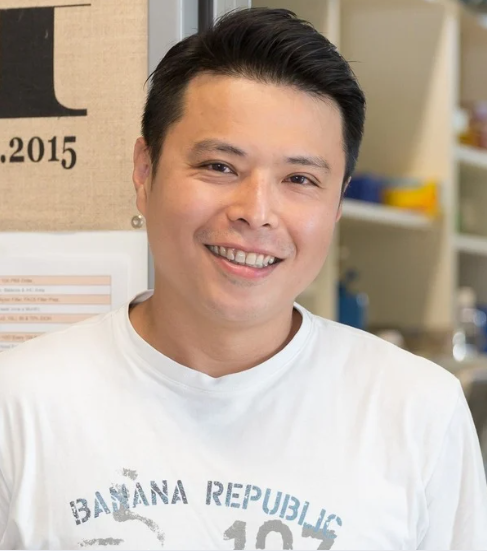
Researchers led by Ludwig Johns Hopkins’ Yuxuan Wang and Bert Vogelstein with Ludwig alumni Jeanne Tie and Peter Gibbs report in Nature Medicine their analysis of mature outcome data from the DYNAMIC trial evaluating ctDNA analysis as a guide for the use of adjuvant chemotherapy for stage II colon cancer.
-
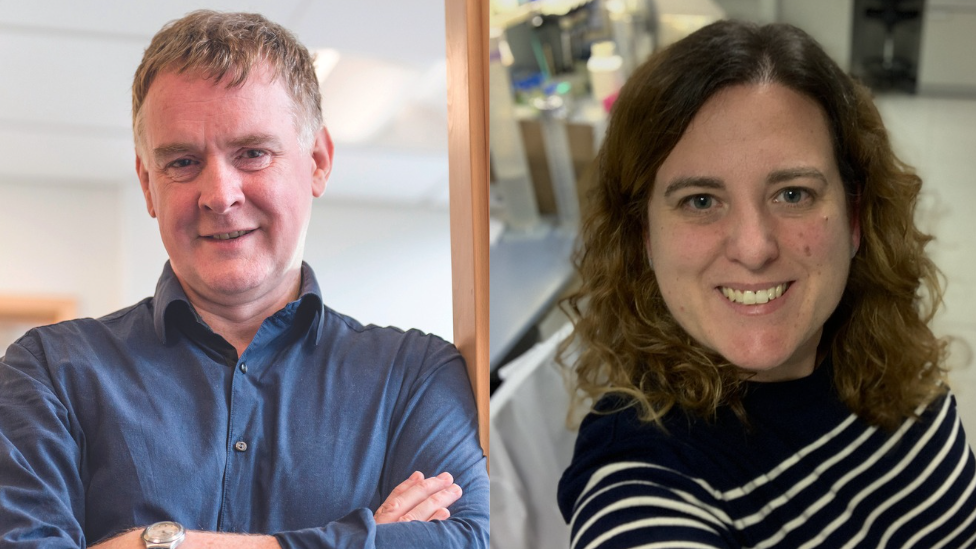
Researchers co-led by Ludwig Lausanne’s Ping-Chih Ho report in Nature Metabolism that asparagine deprivation rewired the metabolism of CD8+ T cells and enhanced responses to checkpoint blockade therapy in patients with recurrent metastatic nasopharyngeal carcinoma enrolled in an open-label study.
-
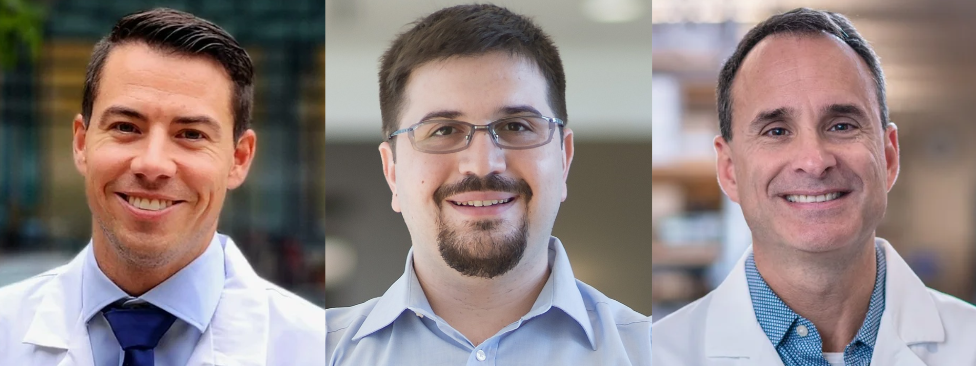
Researchers led by Ludwig Harvard’s Tyler Miller, Chadi El Farran and Bradley Bernstein report in Nature their exhaustive characterization of immunomodulating gene expression programs of myeloid cells associated with gliomas, uncovering potential strategies to improve responses to immunotherapy.
| |
| |  | Early data from the DYNAMIC study—a clinical trial evaluating the use of circulating tumor DNA (ctDNA) analysis as a guide for the use of adjuvant chemotherapy (ACT) for patients with stage II colon cancer—met its primary outcome: the approach accurately predicted the risk of recurrence; and directing chemotherapy only to ctDNA-positive patients reduced chemotherapy use overall without compromising recurrence-free survival. In this publication, researchers led by Ludwig Johns Hopkins’ Yuxuan Wang and Bert Vogelstein with Ludwig alumni in Melbourne, Jeanne Tie and Peter Gibbs, report analyses of overall survival, ctDNA levels and ctDNA clearance in trial enrollees. Analyses of mature DYNAMIC outcome data support a ctDNA-guided approach to ACT for stage II colon cancer, with potential to further risk-stratify ctDNA-positive patients based on ctDNA burden and results after ACT ends. The research stems from a five-year, $10 million program that was supported by the Conrad N. Hilton Foundation and the Ludwig Institute for Cancer Research for the prevention and early detection of colon cancer.
| |
|
Cancer cells reprogram their metabolism to thrive. But accurately measuring metabolic enzyme activity on a large scale remains challenging due to the complex, multi-layered regulatory mechanisms involved. Researchers co-led by Ludwig Lausanne's Ping-Chih Ho and a colleague in Xi’an, China, report here a framework that integrates metabolic-transcriptional networks with an information propagation strategy to infer enzyme activity from gene expression data. They use iMetAct to identify clinically significant subtypes of hepatocellular carcinoma with distinct metabolic preferences. They also apply it to single-cell RNA sequencing data and show that it enables the exploration of cancer cell metabolism and its interplay with immune regulation in the tumor microenvironment. An accompanying online platform further facilitates tumor metabolic analysis, patient stratification and the characterization of immune microenvironments.
| |
Preclinical studies have shown that asparagine deprivation can enhance the antitumor responses of T cells, which are stimulated by immune checkpoint blockade (ICB) therapies. This study, led by Ludwig Lausanne’s Ping-Chih Ho in partnership with a colleague in Taiwan employed L-asparaginase—an enzyme that degrades asparagine and is typically used to treat blood cancers—on a small group of patients with recurrent metastatic nasopharyngeal carcinoma in an open-label compassionate use study. They report that L-asparaginase strengthened CD8+ T cell fitness and enhanced responses to ICB. Aside from establishing a proof of concept for L-asparaginase as a booster of immunotherapy, the researchers share novel insights on the metabolic rewiring that reinvigorates T cells deprived of asparagine. | |
|
When expressed by cancer cells in specific phenotypic states, the AXL receptor plays a central role in cancer invasion and drug resistance. Researchers co-led by Ludwig Oxford’s Colin Goding and Ana Chocarro-Calvo and colleagues in Spain report here that, in a melanoma model, this receptor tyrosine kinase is activated by exposure to human adipocytes and to oleic acid, a fatty acid abundant in both lymph and in adipocytes. AXL activation triggers the nuclear translocation of a β-catenin–CAV1 complex required for melanoma invasiveness. The researchers show that only undifferentiated melanoma cells expressing AXL at high levels engage in symbiosis with human adipocytes, and CAV1 is abundant in the nucleus of human melanoma cells near adipocytes. Their findings, the researchers note, have implications for a broad range of other cancers that also express AXL.
| |
| | | Gliomas tend to be heavily infiltrated with myeloid cells that play a pivotal role in tumor progression, most notably by suppressing antitumor immune responses. Researchers led by Ludwig Harvard’s Tyler Miller, Chadi El Farran and Bradley Bernstein report in this open access article their exhaustive characterization of immunomodulating gene expression programs of myeloid cells. The researchers identify a couple such programs that are unique to myeloid cells in primary brain tumors, and two others that are more widely found in tumor-associated myeloid cells. These programs, they show, are driven by microenvironmental cues—including tumor hypoxia, interleukin-1β, TGFβ and standard-of-care dexamethasone treatment—and can predict responses to immunotherapy and overall patient survival. Their exhaustive characterization of mediating genomic elements, transcription factors and signaling pathways associated with each program uncovers potential strategies to manipulate glioma-associated myeloid cells to improve responses to immunotherapy.
| |
| | | Researchers led by Ludwig Chicago’s Jing Liu and Wenbin Lin report here their development of a core-shell nanoparticle, PPA/HG, for immunotherapy. They show that PPA/HG—comprising polyinosinic: polycytidylic acid (PPA) in the core and a cholesterol-conjugated prodrug of 3-(hydroxyolinoyl)glycine (HG) on the shell—persists stably in the blood and accumulates in tumors, where it releases its active ingredients. HG suppresses the expression of CD47, which inhibits the anti-tumor activity of macrophages, as well as PD-L1, which inhibits CD8+ T cell targeting of cancer cells. PPA, meanwhile, activates toll-like receptor 3, which flips tumor-associated macrophages from a pro-tumor state to an anti-tumor state and drives the maturation of dendritic cells, which boost CD8+ T cell responses to tumors. Together, the two drive CD8+ T cell infiltration and deplete suppressive Treg cells in tumors. Systemic administration of PPA/HG inhibits tumor progression in mouse models of triple-negative breast cancer and pancreatic ductal adenocarcinoma with minimal side effects.
| |
|
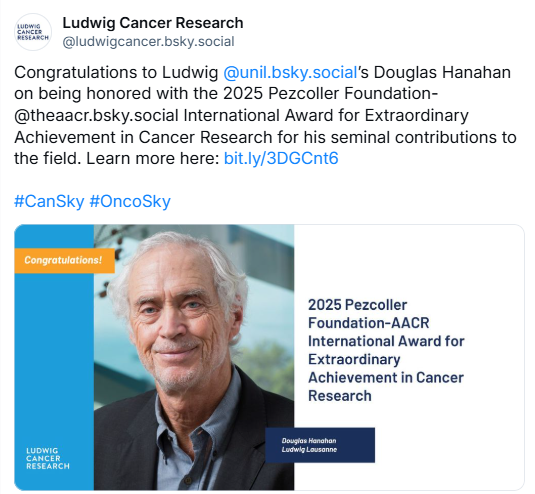
We congratulate Douglas Hanahan, Ludwig Distinguished Scholar at the Lausanne Branch of the Ludwig Institute for Cancer Research, on being named winner of the 2025 Pezcoller Foundation-AACR International Award for Extraordinary Achievement in Cancer Research. Established 28 years ago, this prestigious award recognizes scientists of international renown who have made major contributions to basic or translational cancer research. Hanahan’s numerous and varied contributions have profoundly influenced our understanding of cancer initiation and progression and opened new approaches to its diagnosis and treatment. Hanahan will officially receive the award and present a lecture during the AACR Annual Meeting 2025, which will be held from April 25-30 at the McCormick Place Convention Center in Chicago, Illinois. He will also be honored at a special award ceremony in May in Trento, Italy.
Additional coverage: The Pezcoller Foundation | AACR
| |
|
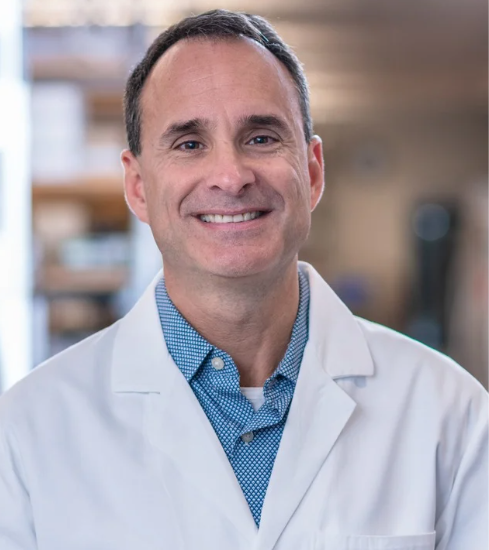
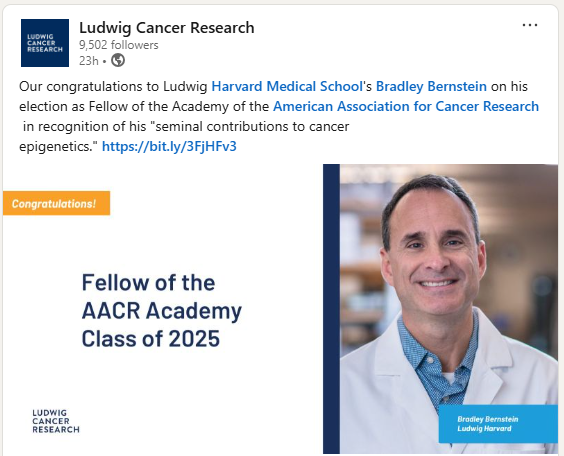
Our congratulations to Ludwig Harvard’s Bradley Bernstein on his election as Fellow of the Academy of the American Association for Cancer Research! One of 33 researchers so honored this year, Bernstein was recognized by the AACR Academy for his “seminal contributions to cancer epigenetics, including the discovery of bivalent chromatin domains that regulate developmental gene activation and the role of IDH mutations in disrupting chromosomal topology, resulting in the establishment of new mechanisms by which to characterize tumors and optimize therapeutic strategies.”
| |
|
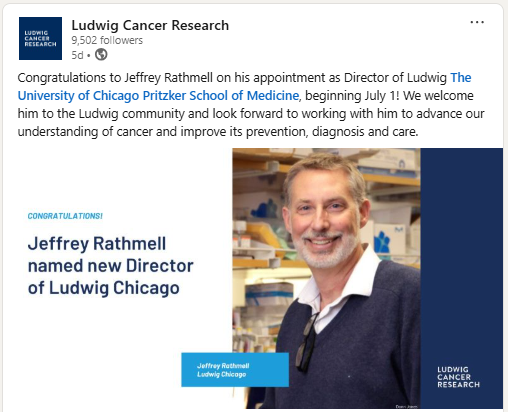
Ludwig Cancer Research welcomes Jeffrey Rathmell, who will join our global community this summer as the new director of the Ludwig Center at the University of Chicago, where he will also chair the Ben May Department for Cancer Research. He joins the University of Chicago from the Vanderbilt University School of Medicine, where he currently holds the Cornelius Vanderbilt Chair in Immunobiology. Rathmell has made major contributions to our understanding of the dynamism and functional significance of T cell metabolic programs, providing insights into their potential manipulation for cancer immunotherapy and the treatment of inflammatory diseases.
| |
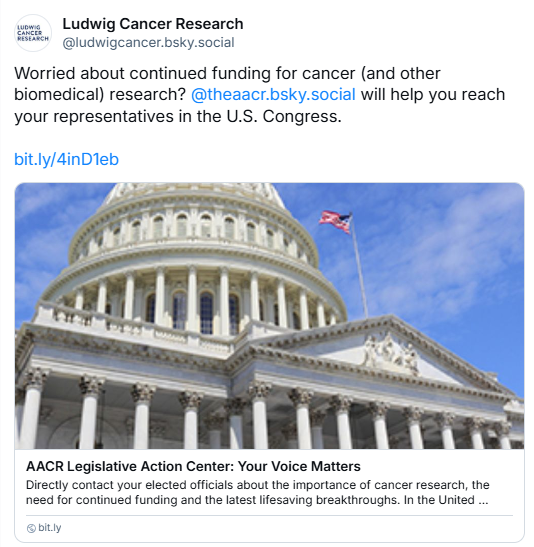
Worried about continued funding for cancer (and other biomedical) research? Hit the link above and the AACR will help you reach your representatives in the U.S. Congress to let them know. | |
ICYMI: In case you missed it... | |
|
Get involved
Events, careers and collaboration opportunities
| |
Do you know of any news, studies or events that would be relevant to the Ludwig community? Please contact us! | |
Ludwig Cancer Research | www.ludwigcancerresearch.org | |
Please note these clips are not intended to be a comprehensive overview of the news, but a compilation of Ludwig coverage, as well as topics and issues considered to be most relevant to our scientific community. Any views or opinions presented in the news clips are solely those of the cited news sources. When available, a link to the original study is provided. *Asterisk indicates a subscription or login may be required.
| | | | |