|
Source: OCA FY2025 Massachusetts Juvenile Justice Data Briefs
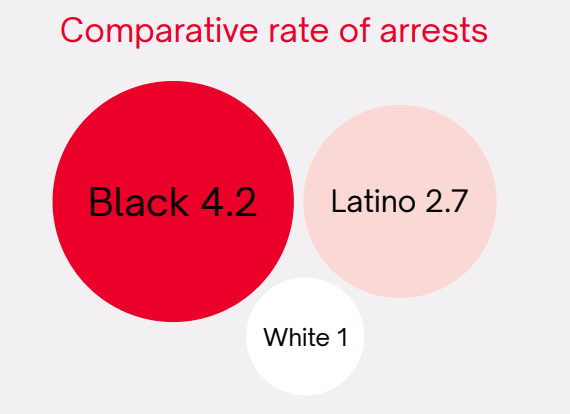
According to the OCA’s data, Black youth were 4.2x more likely and Latino youth were 2.7x more likely to be arrested than white youth. This disparity was especially prevalent in cases with younger children, with 54% of Black and Latino 12–13-year-olds’ cases starting with arrests compared to only 42% for their white counterparts.
High rates of arrests drive higher rates of arraignments for Black and Latino youth, which leaves the lasting mark of a court record and potentially drives further juvenile justice system involvement. Because cases initiated by arrest also typically cannot be diverted by clerk-magistrates, these high arrest rates also lead to higher rates of delinquency filings for youth of color.
Black and Latino youth had more contact with the system at every entry point, as they were also 2.8x and 1.9x more likely to be summonsed than white youth respectively.
Pretrial Detention and Bail
At arraignment, 19% of Black youth and 17% of Latino youth were detained awaiting trial, compared to only 10% of white youth. Black youth are also the least likely to be released on personal recognizance, with only 21% of Black youth released with no pretrial conditions of release, as opposed to 38% of white youth. In looking at which youth get held without bail during the pendency of their cases, Latino youth were 2.2x more likely, and Black youth were 1.8x more likely, to be the subject of a 58A dangerousness hearing, which, if a finding of dangerousness occurs, results in longer stays in detention prior to resolution of the case.
Black youth overall spend the longest amount time in detention, with an average length of stay at 56 days, and a median length of stay at 30 days. On average, Black youth are spending 12 more days in detention than white youth.
Case Outcomes
Compared to white youth who are arraigned in Massachusetts, Black and Latino youth were both less likely to have their case resolved via a continuance without a finding (CWOF) which avoids a delinquency finding on their record. Black youth were 1.5 times, and Latino youth 1.4 times, more likely to be adjudicated delinquent rather than continued without that delinquency finding with the opportunity to have the matter dismissed.
While Black youth are more likely to be adjudicated delinquent, their cases are also dismissed at higher rates than their white counterparts, at 77 dismissals per 100 filings vs. 58 dismissals per 100 filings. This raises the question of why so many youths were subjected to a delinquency finding to begin with rather than having their cases diverted so that these youth could access services and be held accountable in the community.
After a youth is adjudicated delinquent, the juvenile court has a number of sentencing options including placing the youth on probation, committing them to the care and custody of the Department of Youth Services (DYS), committing and suspending DYS commitment while they are on probation, or even placing the case on file without sanctions. Compared to white youth who are adjudicated delinquent in Massachusetts, Black youth were 1.5x more likely, and Latino youth were 1.2x more likely, to be committed to DYS, which is the harshest sentence for a delinquency case.
Next Steps
While OCA notes that disparities could stem from offending behavior, uneven diversion access, or inconsistent discretion, the pattern of higher dismissal rates combined with the higher likelihood for cases to be adjudicated delinquent for Black and Latino youth point to overcharging and over-arresting as a more likely explanation.
Advocate in your community for:
- Summons-first policies, especially for youth under 15
- Mandating documentation for when officers choose arrest over summons
- Expanding diversion access equitably
|