|
Council of Producers & Distributors of Agrotechnology
Terry Kippley, CPDA
| |
|
In this Issue:
- CPDA Heads to the Hill
- House Agriculture Hearing on Pest Control Challenges
- Chevron Deference
- Weed Science Society of America Sends DRA Letter of Support to EPA
- Register Today: 2024 CPDA Annual Meeting
- Industry Events
| |
|
CPDA Heads to the Hill
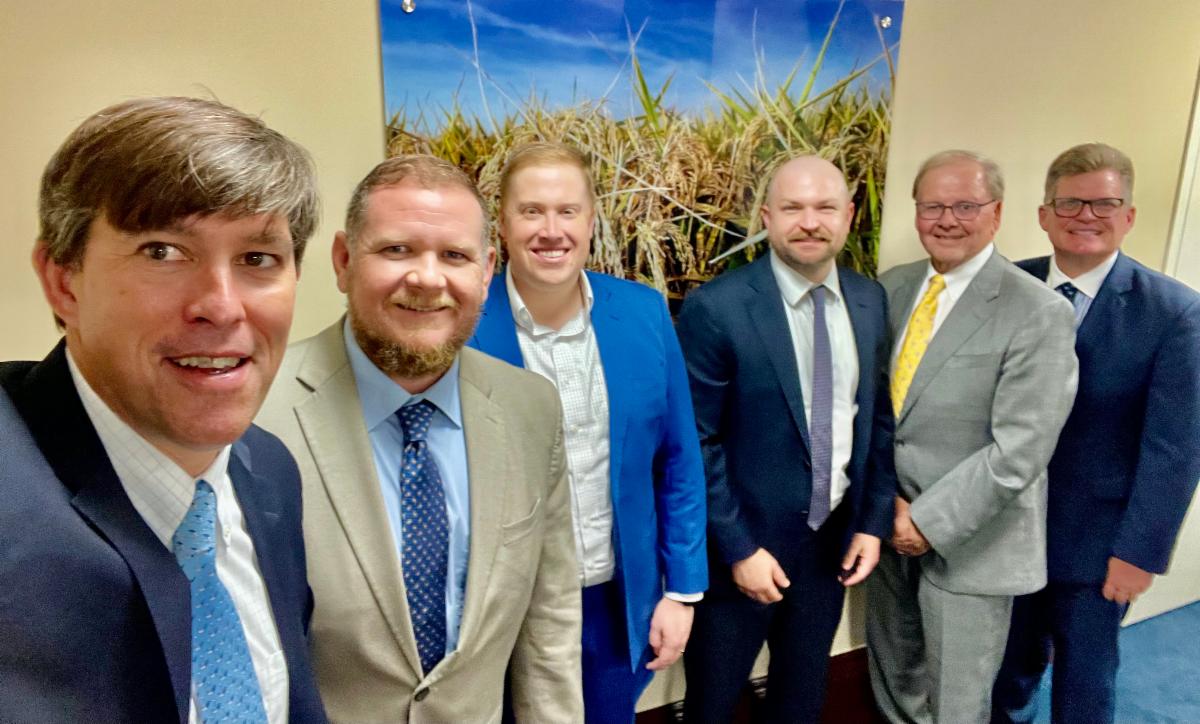
I was in Washington D.C. last week with our newest team member, CPDA Strategic Advisor Andrew Walmsley and Senior Advisor Jay Vroom to continue our efforts to secure our CPDA policy priorities. Thanks to Andrew’s organizational skills and network, we had a series of productive and fruitful meetings with Hill staff and Agency Leaders.
Farm Bill
Our focus continues on a new Farm Bill. However, prospects for a 2024 Farm Bill continue to dim though there is a sliver of a hope for lame duck action (after the elections in November). Senate Agriculture Chairwoman Debbie Stabenow (D-MI) and House Agriculture Chairman G.T. Thompson (R-PA) met privately on Monday evening to discuss farm bill progress. Talking to committee staff after the meeting, both chambers are still far apart on any type of agreement. The following CPDA priorities were discussed this week with Hill staff.
House Agriculture Committee Majority Staff: Three CPDA priorities were on the docket. First was the establishment of a new Centers of Excellence program at USDA developed through Land Grant and Historically Black Colleges that can work with private sector participants to drive things like more effective research and farmer outreach on pesticides.
Second were incentives for Drift Reduction Adjuvant (DRA) usage in USDA Natural Resources Conservation Service programs. Staff encouraged us to continue our work with Rep. Frank Lucas (R-OK) as he has been a champion on this issue. Third, we reiterated our support for the Technical Service Provider (TSP) provisions in the House Farm Bill that would allow qualified retailer agronomists to qualify as TSPs.
Senate Agriculture Committee Minority Staff: In addition to the similar discussion with House staff, we also discussed the possible need to codify a definition of adjuvants in statute. CPDA will be looking further into this issue.
| |
Dudley Hoskins, Senate Professional Staff/Counsel; Andrew Walmsley, CPDA; Jeremy Witte and Coleman Garrison, Senate Professional Staff; Jay Vroom and Terry Kippley, CPDA. | |
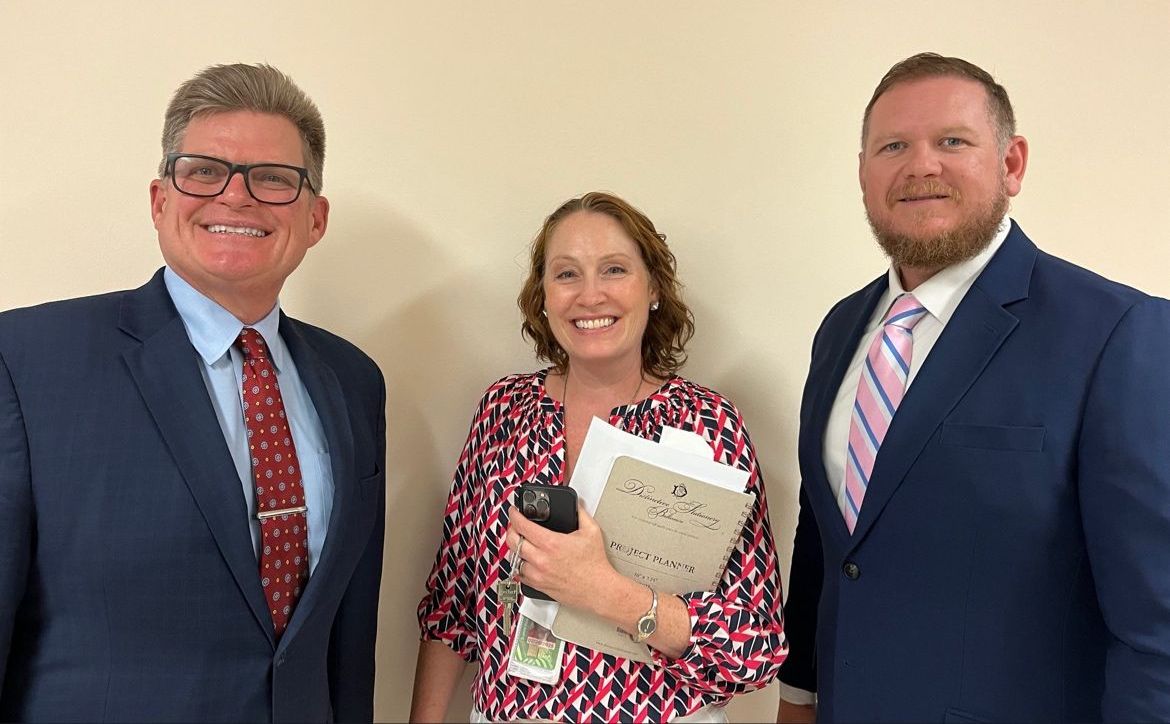
Senate Agriculture Committee Majority Staff: This was our first opportunity to introduce CPDA to Chairwoman Stabenow’s professional staff that handles Title II conservation issues. It was a very positive discussion around the use of adjuvants and working with USDA on increasing incentives for DRA usage. | |
Terry Kippley, CPDA; Callie Eideberg, Senior Professional staff to Senate Agricultural Committee Chairwoman Debbie Stabenow; Andrew Walmsley, CPDA. | |
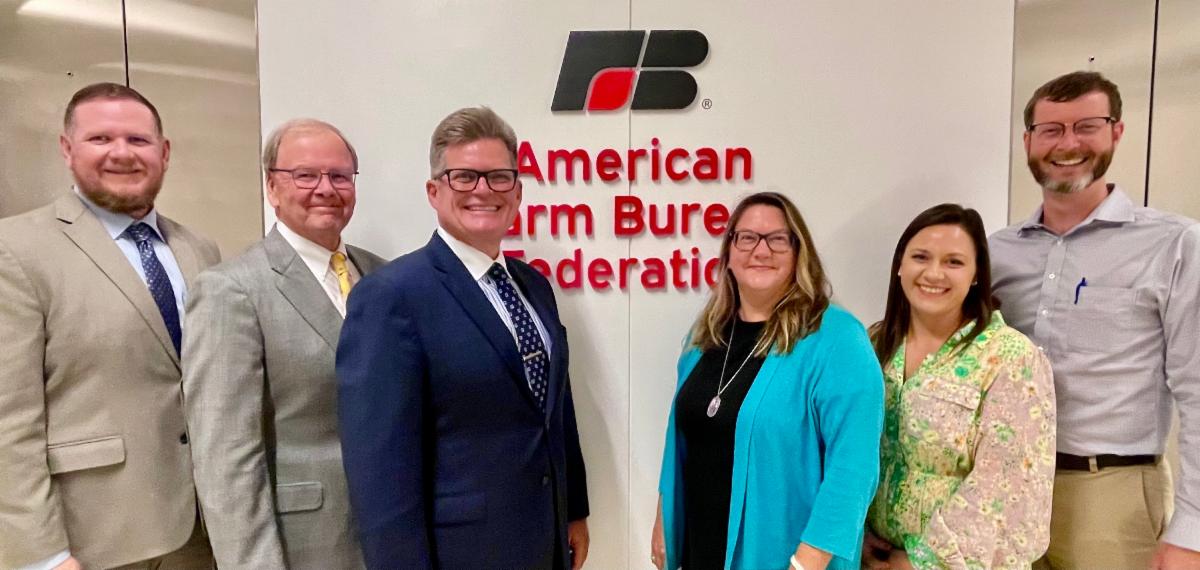
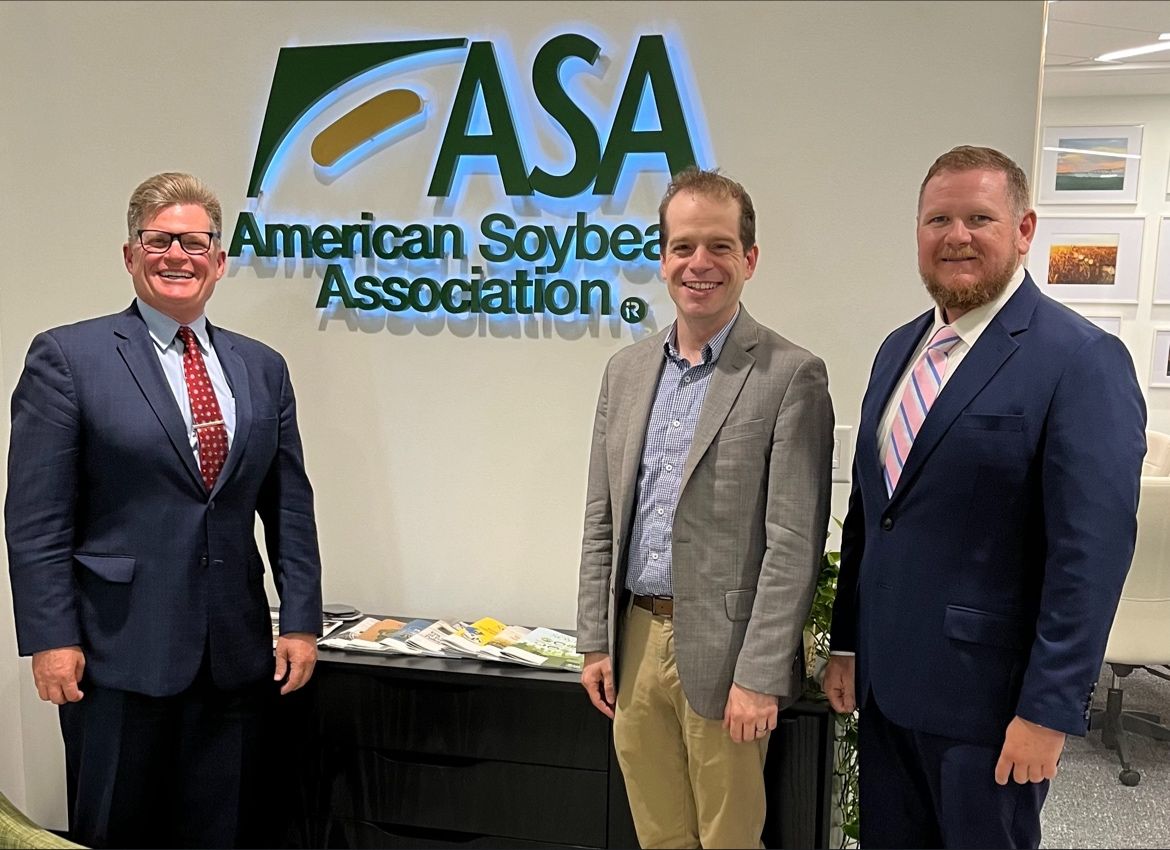
American Farm Bureau Federation (AFBF), National Association of State Departments of Agriculture (NASDA), and the American Soybean Association (ASA): It’s important that we are aligned with our agricultural allies as policy disagreements can cause fractures that give Congress a reason to do nothing or to take action against our interests. No such chance here as our meetings with AFBF, NASDA and ASA gave us an opportunity to discuss CPDA priorities and ensure alignment. | |
Andrew Walmsley, Jay Vroom and Terry Kippley, CPDA; Shelby Hagenauer, Emily Buckman and John Walt Boatwright, American Farm Bureau Federation. | |
Terry Kippley, CPDA; Kyle Kunkler, Director of Government Affairs, American Soybean Association; Andrew Walmsley, CPDA. | |
To round out our DC visits, Jay, Andrew and I met with the leadership and staff at the National Association of State Departments of Agriculture (NASDA). Ted McKinney, NASDA's President & CEO was able to join us for a discussion of upcoming Endangered Species Act pesticide restrictions and the role Drift Reduction Adjuvants play in mitigating and reducing "no-spray" buffers. Joining us were RJ Karney, NASDA's Senior Director of Public Policy and their Associate Director of Public Policy, Josie Montoney-Crawford. Many thanks to Ted and his team for the collaboration with CPDA! | |
Andrew Walmsley, Jay Vroom and Terry Kippley, CPDA; Josie Montoney-Crawford, Ted McKinney and RJ Karney, NASDA. | |
|
USDA Natural Resource Conservation Service (NRCS) Practice Standards
On Wednesday, we met with the current Under Secretary of Agriculture for Farm Production and Conservation, Robert Bonnie to discuss the ongoing work at USDA to update practice standards that appropriately account and provide higher incentives for adjuvant use as a conservation practice. He indicated support for our efforts and offered assistance with EPA, if needed.
We also met with NRCS staff to discuss what additional data needs are there for them to update the 595 practice standards. We committed to follow up with a simplified approach of providing the requested information. They are working to finish their update by the end of Fiscal Year 2024 (FY 24) in September.
We also received guidance from NRCS staff on how to better utilize conservation cost share incentives for adjuvant use. Staff indicated there are significant dollars that are under-utilized. They suggested that CPDA work with NRCS State Conservationists and State Technical Committees since many of the funding decisions are at the state and local level.
To that end, Andrew is meeting with approximately forty state Farm Bureau staff that handle local, state, and federal policy issues from OH, MI, IN, IA, IL, WI, MN, ND, SD, NE, MO and KS in 2 weeks to discuss State Technical Committee strategies.
| |
Terry Kippley, CPDA; Robert Bonnie, Under Secretary of Agriculture for Farm Production & Conservation; Andrew Walmsley, CPDA. | |
Overall, it was a busy week in DC. The American Farm Bureau Federation held its annual Council of Presidents meeting where the 51 state Farm Bureau Presidents (includes Puerto Rico Farm Bureau) were in town for AFBF's mid-year policy review. This allowed Jay and I to have a brief meeting with the new President of the California Farm Bureau, Shannon Douglas. | |
Terry Kippley, CPDA; Shannon Douglas, California Farm Bureau President; Jay Vroom, CPDA. | |
|
Fiscal Year 2025 Appropriations
In our meetings with AFBF, ASA and NASDA we also discussed appropriations priorities. Our organizations are aligned on funding for EPA’s Office of Pesticide Programs.
Last week, the House Appropriations Committee marked up the Fiscal Year 25 bill that funds EPA, the Department of Interior and other agencies. Pesticide program funding in the Environmental Programs and Management Account and the State and Tribal Assistance Grant account are level-funded at the FY 24 amount. While disappointing to not receive an increase for this account, it is a considerable victory to be spared the 20% cut which was applied to the overall bill.
For the Fish and Wildlife Service, the report specifies “no less than $4 million for pesticide consultations” while funding the Planning and Consultation activity at $113.2 million, a $5 million reduction below the FY 24 enacted level. This reflects a $2 million increase for pesticide consultations over the FY 24 enacted level.
| |
|
House Agriculture Hearing Examining the Consequences of EPA's Actions on American Agriculture
Last week, the US House Agriculture Committee held an important hearing about farmers and their pest control challenges— with four great witnesses representing crop and livestock producers and state departments of agriculture. Jay and Andrew attended the hearing where they were able to catch-up with the Director of the Missouri Department of Agriculture, Chris Chinn.
| |
Jay Vroom, CPDA; Chris Chinn, Director of Missouri Department of Agriculture; Andrew Walmsley, CPDA. | |
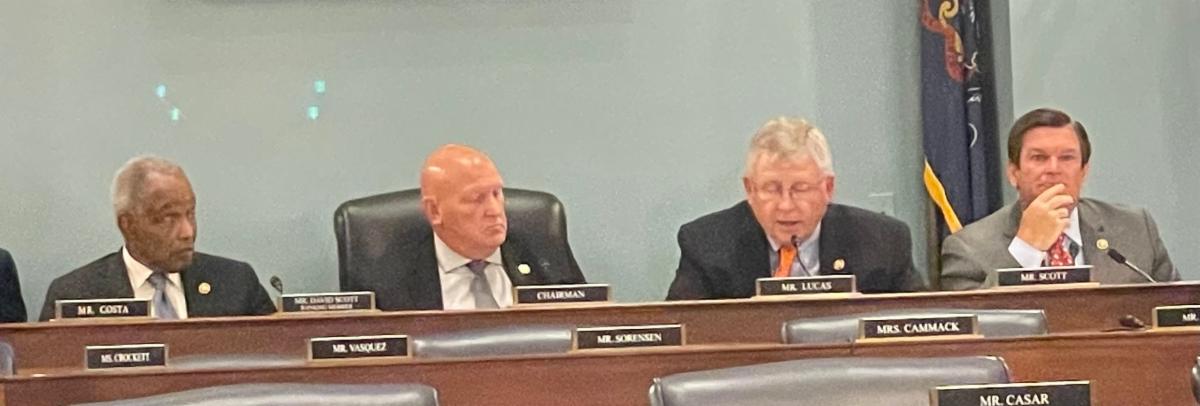
Members of the House Ag Committee during the hearing. Left to right: Ranking member David Scott; Chairman Thompson; Vice Chairman Lucas; Republican committee member Austin Scott. | |
During the hearing, Congressman Lucas talked about ESA mitigation and the impact that potential buffer zones would have for farmers. Rebecca Larson, VP, Chief Scientist, and Government Affairs, Western Sugar Cooperative spoke about additional challenges growers will have as a result of recent EPA decisions. | |
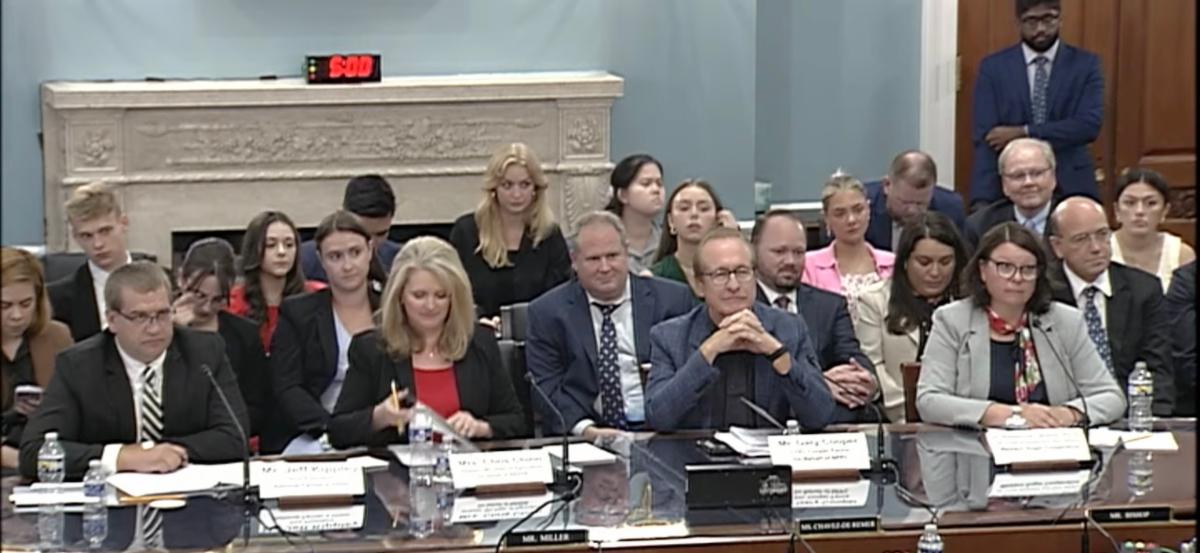
Hearing witnesses left to right: Farmer Jeff Kippley of South Dakota appearing on behalf of the National Farmers Union; Chris Chinn, Director of the Missouri Department of Agriculture; Gary Cooper farmer from Ohio appearing on behalf of the National Pork Producers Council; and Rebecca Larson on behalf of the Western Sugar Cooperative. | |
|
Chevron Deference
In a major ruling, the Supreme Court on Friday, June 28 reduced the power of federal agencies to interpret the laws they administer and ruled that courts should rely on their own interpretation of ambiguous laws. The decision will likely have far-reaching effects across the country.
By a vote of 6-3, the justices overruled their landmark 1984 decision in Chevron v. Natural Resources Defense Council, which gave rise to the doctrine known as the Chevron doctrine. Under that doctrine, if Congress has not directly addressed the question at the center of a dispute, a court was required to uphold the agency’s interpretation of the statute if it was reasonable. But in a 35-page ruling by Chief Justice John Roberts, the justices rejected that doctrine, calling it “fundamentally misguided.”
With this ruling in hand, the committee chairs from the House of Representatives wasted no time in responding. On July 10, each committee of jurisdiction sent letters to forty federal agencies, including USDA and EPA, asking among other things, to provide any “agency legislative rules proposed or promulgated since January 20, 2021, identifying in each relevant listing the rule or rulemaking and agency statutory interpretation concerned.”
The Committee Chairs added: “As the committee of jurisdiction overseeing your agency, we assure you we will exercise our robust investigative and legislative powers not only to reassert forcefully our Article I responsibilities, but to ensure the Biden administration respects the limits placed on its authority by the Court’s…decision. They asked each Agency to answer this inquiry no later than July 24, 2024.
| |
|
Weed Science Society of America Sends DRA Letter of Support to EPA
On July 2, the Weed Science Society of America (WSSA), along with the Aquatic Plant Management Society (APMS), North Central Weed Science Society (NCWSS), Northeastern Weed Science Society (NEWSS), Southern Weed Science Society (SWSS) and Western Society of Weed Science (WSWS) sent a letter to Jake Li, EPA Deputy Assistant Administrator for Pesticide Programs encouraging the Agency to add Drift Reduction Adjuvants (DRAs) to the list of mitigation options available to pesticide users for Endangered Species Act (ESA) compliance.
The Weed Science Societies Stated:
“Drift Reduction Adjuvants are commonly used by pesticide applicators in the United States. Their performance and benefits have been demonstrated and realized. Over one hundred million acres are treated annually using DRAs to improve deposition, coverage, and reduce off-target movement of pesticides.”
“Voluntary compliance is one of the most important ways to obtain the results of pesticide regulation. The addition of DRAs to spray mixtures is convenient, inexpensive, and is already widely used. Many pesticide retailers, crop advisors, growers and applicators have familiarity with these products. This would provide them with a method to recognize the mitigation that they are taking to provide protection to endangered species. It may encourage them to undertake additional mitigations that are listed.”
Many thanks to the technical experts at the Weed Science Societies for their incredible support!
| |
|
Register Today: 2024 CPDA Annual Meeting
The date and location for the 2024 CPDA Annual Meeting are set. This year’s meeting will be held on September 15-18 in beautiful San Diego, California. Please make plans to attend as we will layout our 2025 policy agenda while providing updates on a number of key CPDA initiatives.
Like the last two annual meetings, we will be holding our annual meeting at the same time CropLife America is holding theirs. To take advantage of this partnership, we will be holding a joint networking reception with CLA where you can reconnect with old friends while making new ones.
Agenda Includes:
| |
|
Sunday, September 15
- CLA/RISE Welcome Reception (CPDA Members Invited by Invitation)
Monday, September 16
- CPDA Executive Committee Meeting
- CPDA Board Meeting
- CLA/RISE Networking Reception (All CPDA Members Invited)
| |
|
Tuesday, September 17
- CPDA General Session
- Senior Executive Panel discussing regulatory & technical changes on the way
- Legislative Panel: Farm Bill Priorities & Political Outlook
- CPDA Awards
- Practical Implications of Implementing ESA Mitigation at the State Level
- CPDA Networking Reception & PAC Silent Auction
| |
|
AgriBusiness GlobalSM Trade Summit
August 7–8, 2024
Disney’s Coronado Springs Resort | Florida, USA
Dedicated to Worldwide Networking and New Business Development
The Trade Summit is the trusted forum for advancing development in the rapidly emerging global crop protection, ag tech, plant health, and biological sectors. It attracts leaders in the upstream value chain of manufacturing companies, export and trading companies, importers, and distributors at the national level.
The 2024 Trade Summit will facilitate global trade by offering educational sessions, a robust exhibit floor, private meeting rooms, and dedicated networking opportunities for the world market to connect, engage, and build business.
| | | | |