The American Society of Le Souvenir Français Inc.
Monthly Bulletin - Vol. III. No 7 - July 2023
|
|
The Adventure of La Belle in Texas
and
the sailor of Louis XIV at the Texas National Cemetery
|
|
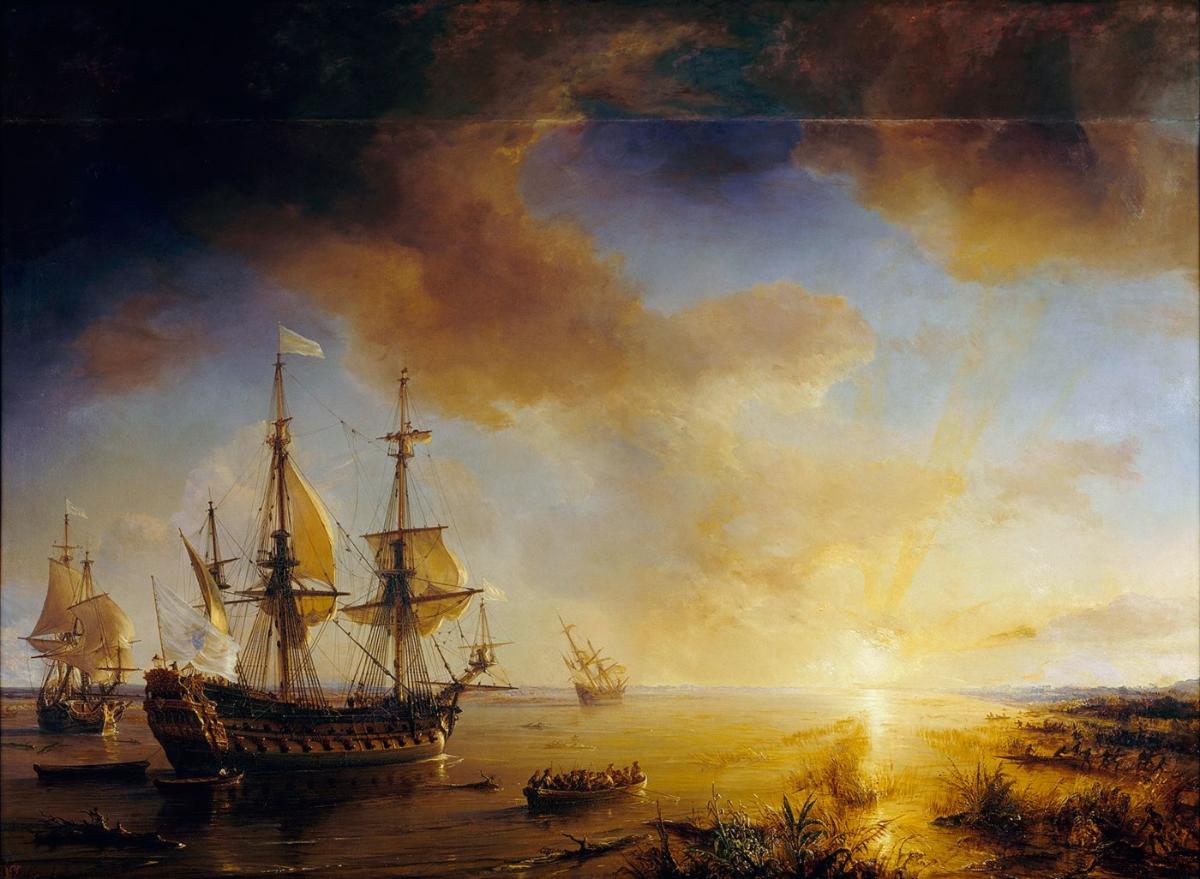
Cover illustration: La Salle's Expedition in 1684, painted in 1844 by Jean Antoine Théodore de Gudin. La Belle is on the left, Le Joly is in the middle, and L'Aimable is grounded on the right.
|
|
EDITORIAL
After exploring many land forts throughout the Mississippi basin in our past Bulletins, the name of Robert Cavelier de La Salle was never far. Indeed, this legendary explorer left his mark everywhere, from Chicago to New Orleans, and is lovingly honored and remembered in many States, counties and cities.
In this summer month of July, we narrate his ill-fated expedition to Texas, which left La Rochelle in France on July 24, 1684, and in so doing we will celebrate several historical ties that exist between France and Texas.
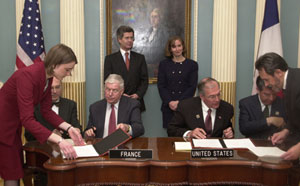
A mere 20 years ago, an Agreement was signed between The Government of the United States of America and the Government of the French Republic to handle the shipwreck of La Salle’s ship La Belle, which is considered to be one of the most important shipwrecks ever found in North America.
Today, one can marvel at the state of preservation of the ship in a special wing of the Bullock Texas State History Museum with the astounding number of 1,000,000 artifacts on display. In addition to being one of America’s fastest-growing city, Austin can be proud to host such a world-class museum.
While in the capital of Texas, one can also visit the gravesite of an unknown sailor of King Louis XIV, buried in Texas State Cemetery. While probably not the first French soldier buried in America, this is the oldest known official gravesite. We intend to host an annual commemoration with a wreath-laying ceremony in honor of this sailor who now rests for eternity under the 50 stars of the Star-Spangled Banner.
Almost next door, and closer to us, the French Legation State Historic Site in Austin reminds us that Texas was once an independent republic, and that Louis-Philippe, king of the French, had opened an Embassy there in 1839. It is well worth a visit as well.
Just a few years before, General Lafayette's triumphal tour of 1824-1825 was entering its last leg before his final farewell of September, 1825. "Our dear Marquis", who was originally invited to stay 3 months as "Guest of the Nation" following the invitation of President James Monroe, stayed a total of 13 months, feted in each and every 24 States. Once again in this Bulletin, we are highlighting some of his most memorable stops in July 1825.
As usual, towards the end of this Bulletin we will announce several upcoming events and "Save the Date" from like-minded organizations that should be of interest to our members and sympathizers.
Thank you for your remarks, suggestions, and support. Thank you also for your donations. Last month we sent you an illustrated recap of our exciting projects as part of our mid-year membership call and we would like to thank our readers who joined and who are thus supporting our work. If you believe this Bulletin could be of interest to friends and acquaintances, feel free to share it! And to those of you who haven't done so (yet), we are always grateful for any donation. It is never too late and it is easy to donate: simply click on:
In closing, we would like to wish everyone a wonderful vacation or relaxing time this summer. It is the perfect moment to catch up on your reading lists, and/or taking photos of your road trips throughout America the Beautiful. We hope that you will keep our Society in mind if you ever come across a site where there was a French presence and signal it to us... Make sure you include in your itineraries several of the sites that are catalogued with photos and GPS coordinates in the e-book Memories of France at: Amazon.com. All royalties go to your Society!
Un grand merci,
On behalf of the Board of Directors,
Thierry Chaunu, President,
American Society of Le Souvenir Français, Inc.
|
|
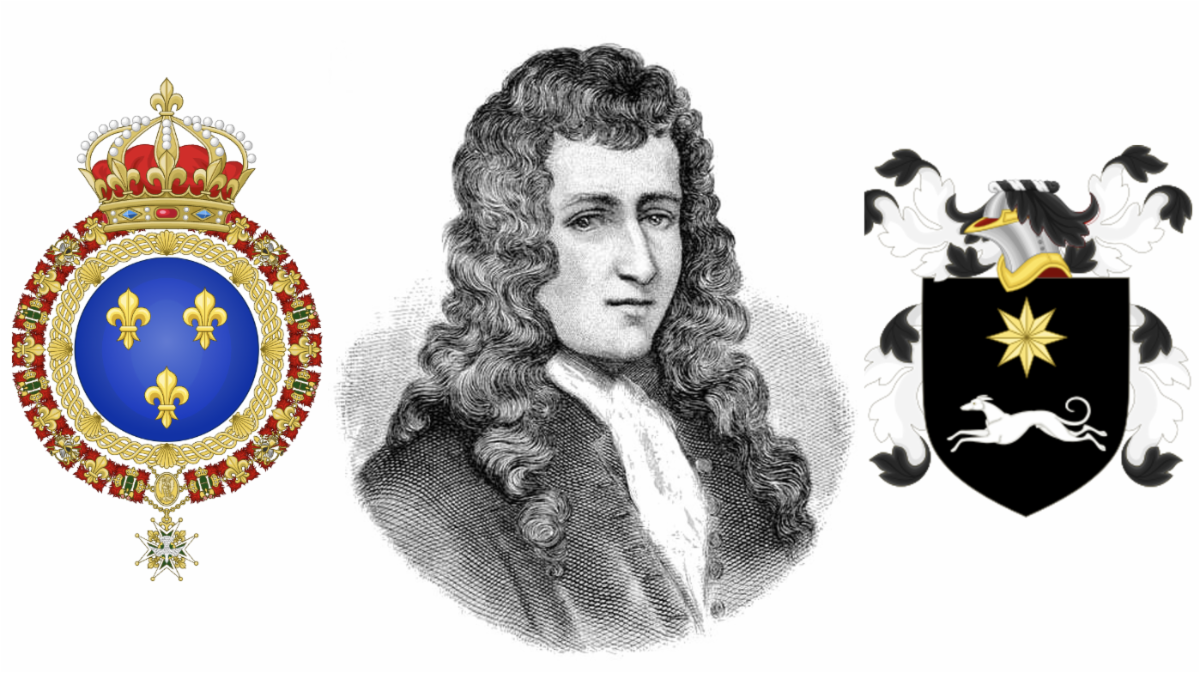
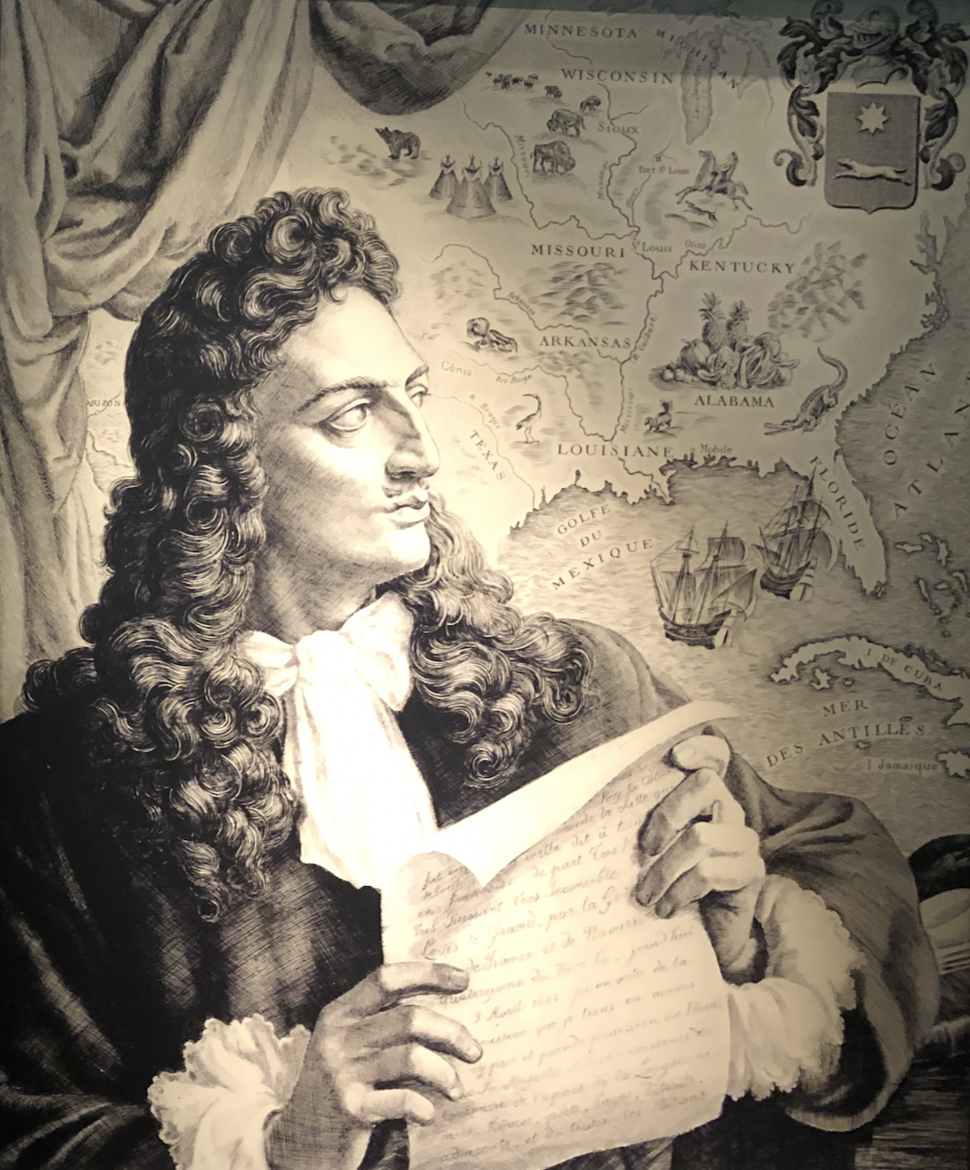
René-Robert Cavelier, Sieur de La Salle (1643-1687) |
|
René-Robert Cavelier, Sieur de La Salle by Charles André Waltner (1846-1925) -
Sulte - Histoires des Canadiens-français
, 1608-1880, tome II, 1882 (page 3), Public Domain,
https://commons.wikimedia.org/w/index.php?curid=25673
Left: Coat of Arms of New France, by By Sodacan - Own work, CC BY-SA 3.0, https://commons.wikimedia.org/w/index.php?curid=8098208
Right: Coat of arms of René-Robert Cavelier, Sieur de La Salle - via Wikimedia Commons By Glasshouse using element by Adelbrecht - Armorial du Canada français. Montréal: Librairie Beauchemin Limitée 1915, CC BY-SA .0,
|
|
• Robert Cavelier was born on November 22, 1643, into a well-off family in Rouen, Normandy. He became a Jesuit and sailed for New France in the spring of 1666 but was soon released from the Society of Jesus after citing "moral weaknesses”. He received the title Sieur de La Salle with his seigneurial purchase of Lachine near Montréal.
• He learned several native languages, such as the Iroquois and Seneca, and began to plan for expeditions to find a western passage to China. He built ships such as the Griffon to navigate the Great Lakes and build forts such as Fort Conti (later rebuilt and renamed Fort Denonville, and then Fort Niagara in Youngstown, NY, as narrated in our January 2023 Bulletin) and Fort Miami in Michigan (presented further below).
• In 1679, with a party of 40 men, he went on to explore the Mississippi
River, taking him to today’s Peoria, IL, (Fort Crevecoeur) Memphis, TN, (Fort Prudhomme), reaching the Gulf of Mexico in 1682 where he named the basin Louisiana in honor of King Louis XIV.
• In 1684 he went on an ill-fated mission to Texas (see further down the expedition of La Belle shipwreck) and after wandering for two years lost in the marshes of the Mississippi delta, he was killed during a mutiny near Navasota, TX on March 19, 1687.
• Dozens of sites, streets, parks, buildings throughout the United States bear the name of La Salle, with monuments and markers in several States:
LaSalle County, Illinois, La Salle County, Texas, the city of LaSalle in Illinois, LaSalle Parish, Louisiana, La Salle Landing Park on Irondequoit Creek in Penfield, NY, Robert LaSalle County Park, Wisconsin...
Dozens of avenues, streets, highways, buildings are named La Salle, such as:
the LaSalle Street, a north–south thoroughfare in Chicago which leads directly to the Board of Trade (the center of Chicago's financial district), or La Salle Avenue in downtown Minneapolis, La Salle Street in Navasota, Texas, to name a few.
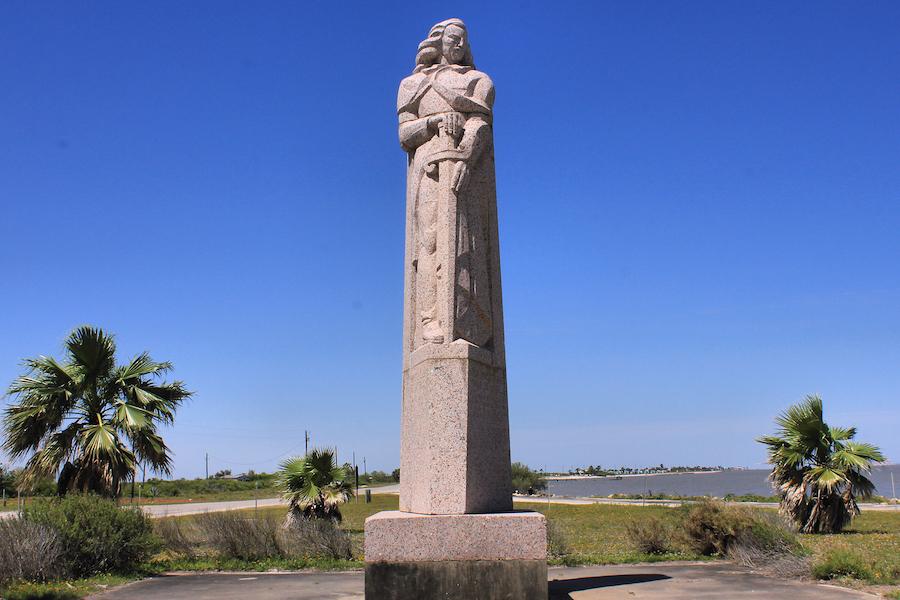
• Our society plans to honor with a wreath-laying ceremony the great explorer at the site of his statue in Port Lavaca, near Houston, Texas, which was erected in 1936 by the local Robert Raines Chapter of the National Society Daughters of the American Revolution and the Texas Society Daughters of the American Revolution.
|
|
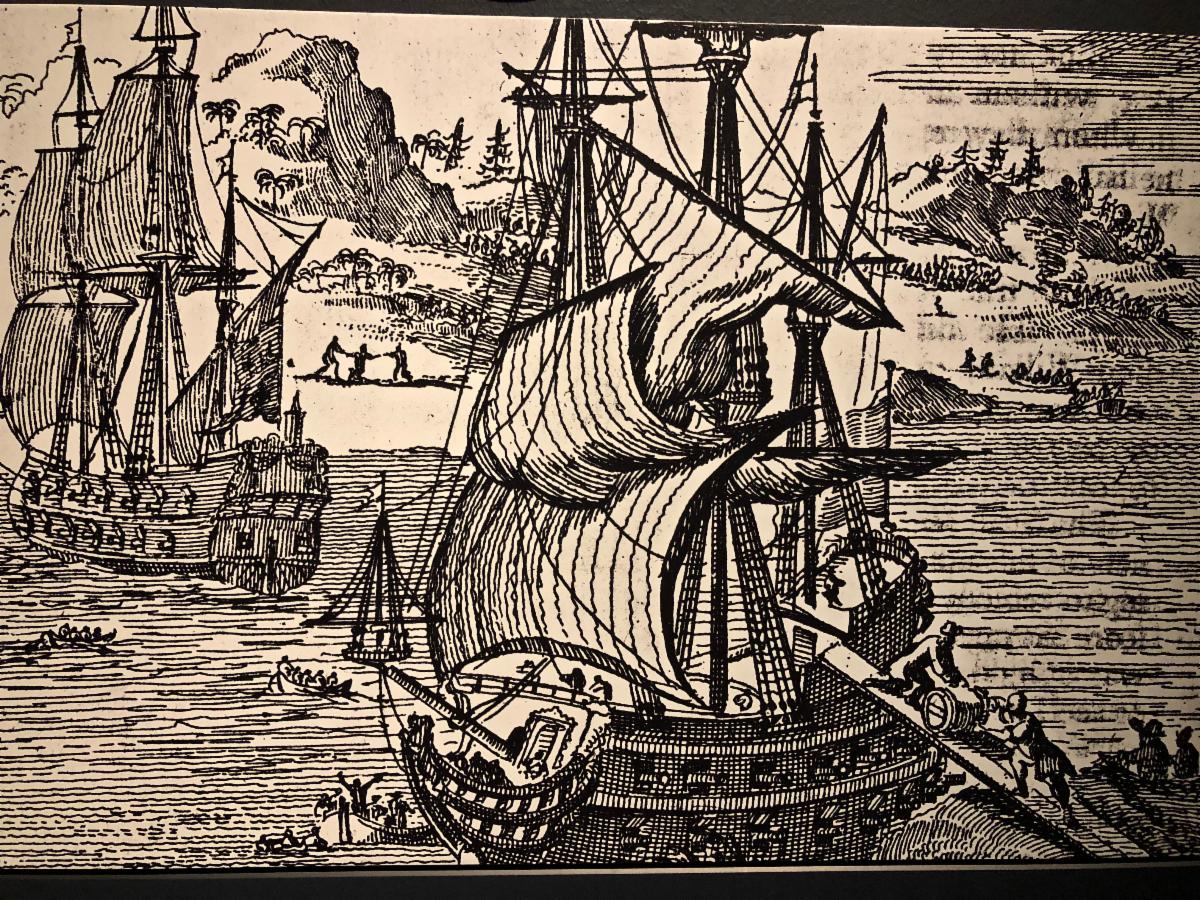
Illustration:
La Belle is considered to be one of the most important shipwrecks ever found in North America.
La Belle, which translates to "the Beautiful," was built in France in 1684. It had initial dimensions of 54 feet in length and 14 feet in width. The vessel was purposefully crafted with a shallow draft, enabling it to navigate coastal and river waters like the Mississippi River.
|
|
• Historical Context:
• In the late 17th century, European countries had established their claims on much of North America. Spain asserted control over Florida, while New Spain encompassed present-day Mexico and a significant portion of the southwestern region. Britain laid claim to the northern Atlantic coast, and New France covered a substantial part of modern-day Canada, including the Illinois Country. France, concerned about potential attacks on their colonies in the continent's heartland, initiated an expedition in 1681 led by French nobleman René-Robert Cavelier, Sieur de La Salle. The objective was to navigate the Mississippi River from New France, with hopes of discovering a passage to the Pacific Ocean. However, instead of reaching the Pacific, La Salle discovered a path that led to the Gulf of Mexico. Despite Hernando de Soto's prior exploration and Spanish claim on the area 140 years earlier, on April 9, 1682, La Salle claimed the Mississippi River valley for the French king, Louis XIV, christening it Louisiana in his honor.
• La Salle was aware that if France controlled the Mississippi, it would separate Spanish Florida from New Spain. He believed that the Mississippi River marked the boundary of New Spain. When he returned to France in 1683, La Salle argued that a small group of Frenchmen could successfully invade New Spain with the assistance of Indians who resented Spanish enslavement. La Salle proposed the establishment of a colony at the mouth of the Mississippi, which would serve as a base for spreading Christianity among the native peoples and conveniently allow for attacks on New Spain to gain control of its valuable silver mines.
• King Louis XIV agreed to support La Salle's expedition, who now was also entrusted with the mission to enlist the Indians' loyalty to the crown, evangelize them, and maintain peace among different tribes.
• Accounts documenting the ill-fated expedition can be found in writings by Henri Joutel, the expedition's chronicler, as well as five other survivors who made it to Canada before returning to France. Born in Rouen, Henri Joutel served as a soldier before joining La Salle's expedition and eventually becoming the commander at Fort Saint Louis in Texas. Following the loss of the colony's ships, a mutiny, and La Salle's untimely death in 1687–88, Joutel led a group of expedition members back to France. Their journey took them north, traversing land and rivers through the Illinois Country all the way to New France. Joutel's journal, titled "Joutel's Journal of La Salle's Last Voyage" (published in London by Lintot in 1714), provides valuable early insights into the interior, natural history, and ethnography of central North America.
|
|
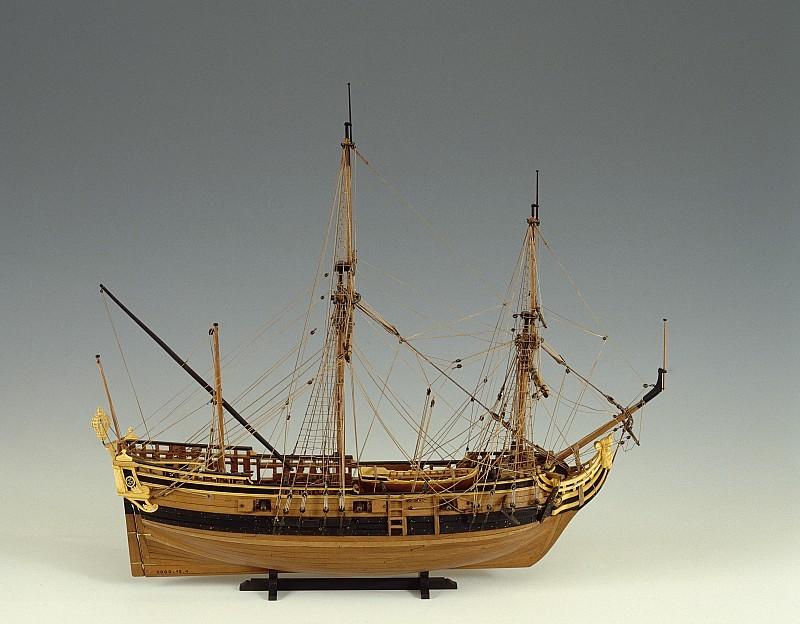
French expedition ship La Belle of 1686
|
|
Photo: Model made by Bernard Frölich, kept at the Musée national de la Marine, Paris, France —
La Belle was a type of ship known as a "barque-longue". It had three masts and a relatively shallow draft, measuring approximately 8 feet (2 meters). The ship's beam was 14 feet 9 inches (4.50 meters), and it measured 54 feet 4 inches (16.56 meters) in length. La Belle had a cargo capacity of approximately 40-45 tons.
|
|
La Belle was one of Robert de La Salle's four ships when he explored the Gulf of Mexico with the ill-fated mission of starting a French colony at the mouth of the Mississippi River in 1685.
• La Salle's initial plan was to navigate towards New France, make an overland trek to the Illinois Country, and subsequently sail down the Mississippi River to its estuary, where he intended to establish his colony. In order to transport his provisions, he required a sizable vessel for the Atlantic Ocean voyage, as well as a smaller one to transfer the supplies from Illinois to the Gulf of Mexico.
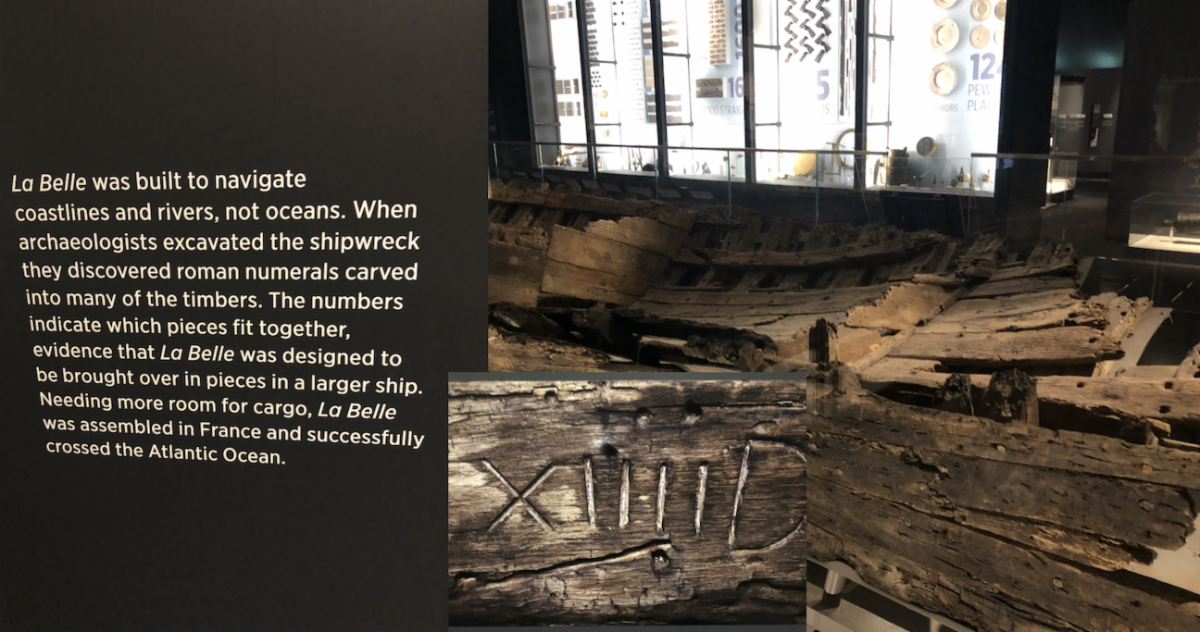
• Louis XIV granted La Salle permission to utilize two vessels, namely Le Joly and La Belle. Initially, La Belle was constructed in a modular manner, with its ship frames divided into four quadrants and sequentially numbered. This approach allowed for the easy assembly of the ship at a later stage. The plan involved loading the ship's components onto Le Joly for transportation to North America. From there, the pieces would be transported overland to the Mississippi River, where La Salle's crew would reconstruct the ship. Once assembled, La Belle would serve as the means to transport supplies to their final destination. However, at the king's urging, La Salle decided to sail directly to the Gulf of Mexico rather than New France. This change eliminated the need to construct a ship in the New World. Since Le Joly was already heavily loaded, La Salle made the decision to assemble La Belle in France and embark on an ocean voyage. Despite uncertainties about the ship's ability to endure such a journey, it was successfully constructed in less than two months, a remarkable feast! And was made ready for its transatlantic voyage.
|
|
The Voyage across the Atlantic |
|
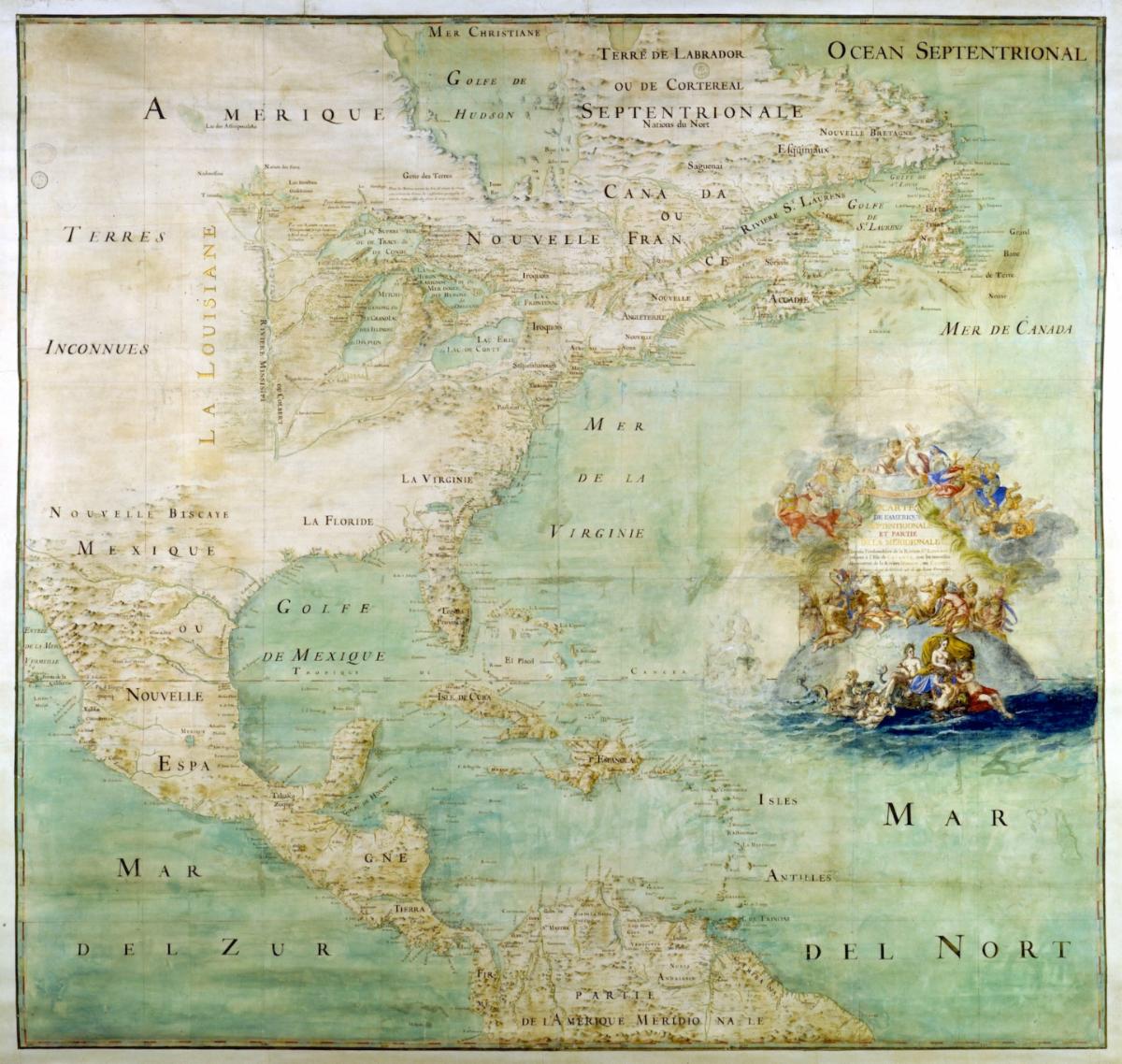
Photo: This 1681 map shows cartographer Claude Bernou's perception of North America before La Salle traversed the Mississippi River. The Rio Grande is labeled as Rio Bravo, and the map demonstrates a lack of understanding regarding the geography of Texas and the Gulf Coast, including the lower Mississippi and its unknown "Terra Incognita".
By Bernou, Claude (b. 16..–d. 17..), Abbot - Public Domain,
|
|
• On July 24th, 1684, La Salle embarked from La Rochelle with a fleet consisting of four vessels: the warship Le Joly with 36 guns, th storeship L'Aimable weighing 300 tons, the "barque-longue" La Belle, and the ketch St. François. The ships transported nearly 300 Frenchmen, comprised of 100 soldiers, six missionaries, eight merchants, over a dozen women and children, as well as various artisans and craftsmen.
• Regrettably, the St. François and its entire cargo of supplies, provisions, and tools for the colony were seized by Spanish pirates in Santo Domingo. La Belle also lost one of her two anchors, a loss that later proved tragic. In the latter part of November 1684, the three remaining vessels pursued their exploration for the delta of the Mississippi River.
• On December 18th, the ships arrived at the Gulf of Mexico and entered into waters that Spain declared as their exclusive territory. None of the expedition members had any prior experience in the Gulf of Mexico or possessed the knowledge to navigate it. Due to a variety of factors including flawed maps, La Salle's incorrect estimation of the latitude of the Mississippi River's mouth, and excessive adjustments made for the currents, the expedition was unsuccessful in locating the Mississippi. Instead, they made landfall at Matagorda Bay in Spanish Texas in early 1685, which was approximately 400 miles (644 km) west of the Mississippi.
Supplies loaded onto the La Belle in October 1685:
4800 pounds of dried meat or bacon, 2000 pounds of gold, arms, tools, 2 pounds of butter, 108 quintals of bread or flour, 90 quintals of powder and lead, 8 pigs, 10 casks of wine or brandy, 3 casks of vinegar, salt and oil, cannons, and an ample supply of "pétards" (small bombs).
|
|
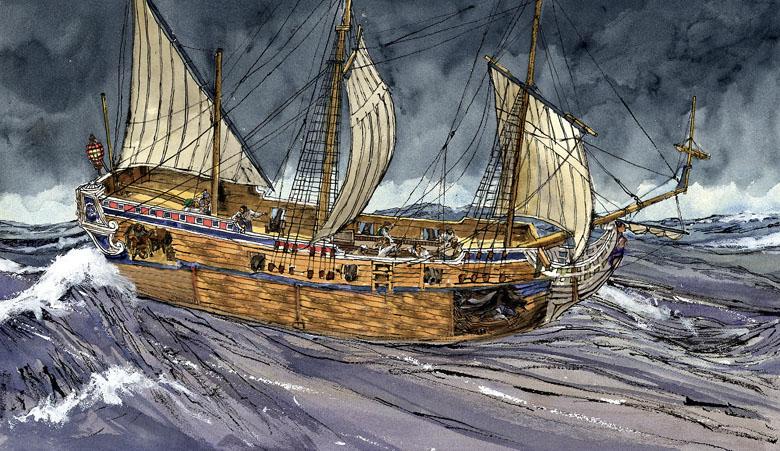
Illustration: The expedition encounters a severe storm in the Gulf of Mexico.
|
|
• The Aimable ran aground on a sandbar at Matagorda Bay. Due to a severe storm, La Salle was unable to salvage much from the ship, only managing to retrieve food, cannons, powder, and a limited quantity of merchandise. Eventually, on March 7th, the ship sank.
• Furthermore, the skilled capitaine de vaisseau Taneguy Le Gallois de Beaujeu, who exhibited his expertise in navigating unfamiliar waters, fulfilled his duty of escorting the settlers and then sailed back to France aboard the Joly in mid-March. Presumably, his purpose was to deliver a report to the crown. It is also highly probable that he took a group of unhappy colonists, and soldiers to return to France. As a result, La Belle became the sole remaining vessel for the settlers.
• La Salle made the decision to create his settlement on a high point that overlooked today's Garcitas Creek, which is situated approximately 50 miles (80 km) away from their original camping spot. Once the colonists had set up their permanent camp, they embarked on multiple brief excursions over the following months to gain a deeper understanding of the area surrounding them.
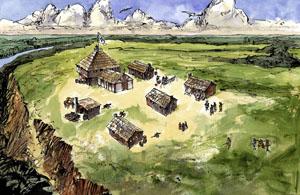
The name Fort Saint Louis, in tribute to King Louis XIV, is a later invention. The settlement consisted of a few huts, including one serving as a chapel.
• In late October 1685, La Salle made the decision to embark on a lengthier journey. He loaded La Belle with a significant portion of the remaining supplies and set sail with 50 men, along with the ship's crew of 27 sailors. This left behind a group of 34 individuals consisting of men, women, and children. The majority of the men traveled alongside La Salle in canoes, while the La Belle trailed behind along the coast. Unfortunately, a number of the men, including Canil Maraud, the captain of the La Belle, succumbed to illness after consuming prickly pear. Shortly thereafter, a small contingent of men, including the newly appointed captain of La Belle, former pilot Eli Richaud, fell victim to an attack by the Karankawa Indians while camping on the shore at night.
• In January 1686, La Salle left the La Belle, which was located 30 miles (48 km) away from Fort Saint Louis. Accompanied by a group of 20 men, La Salle embarked on an overland journey to reach the Mississippi River. He entrusted Pierre Tessier, the former second in command of La Belle, with the responsibility of overseeing the ship. Despite three months of exhaustive searching, La Salle and his group were unsuccessful in locating La Belle at the designated spot, ultimately necessitating a return on foot to the fort.
|
|
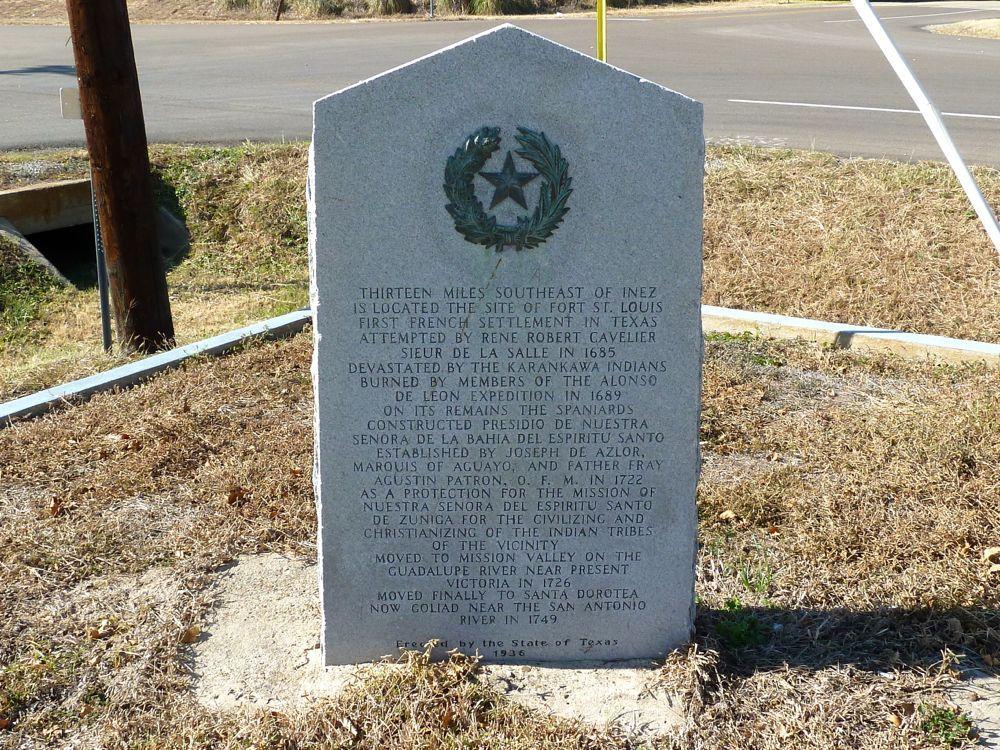
Marker, “Fort Saint Louis”
9 FM 444, on a gas station lot, Inez, TX 77968
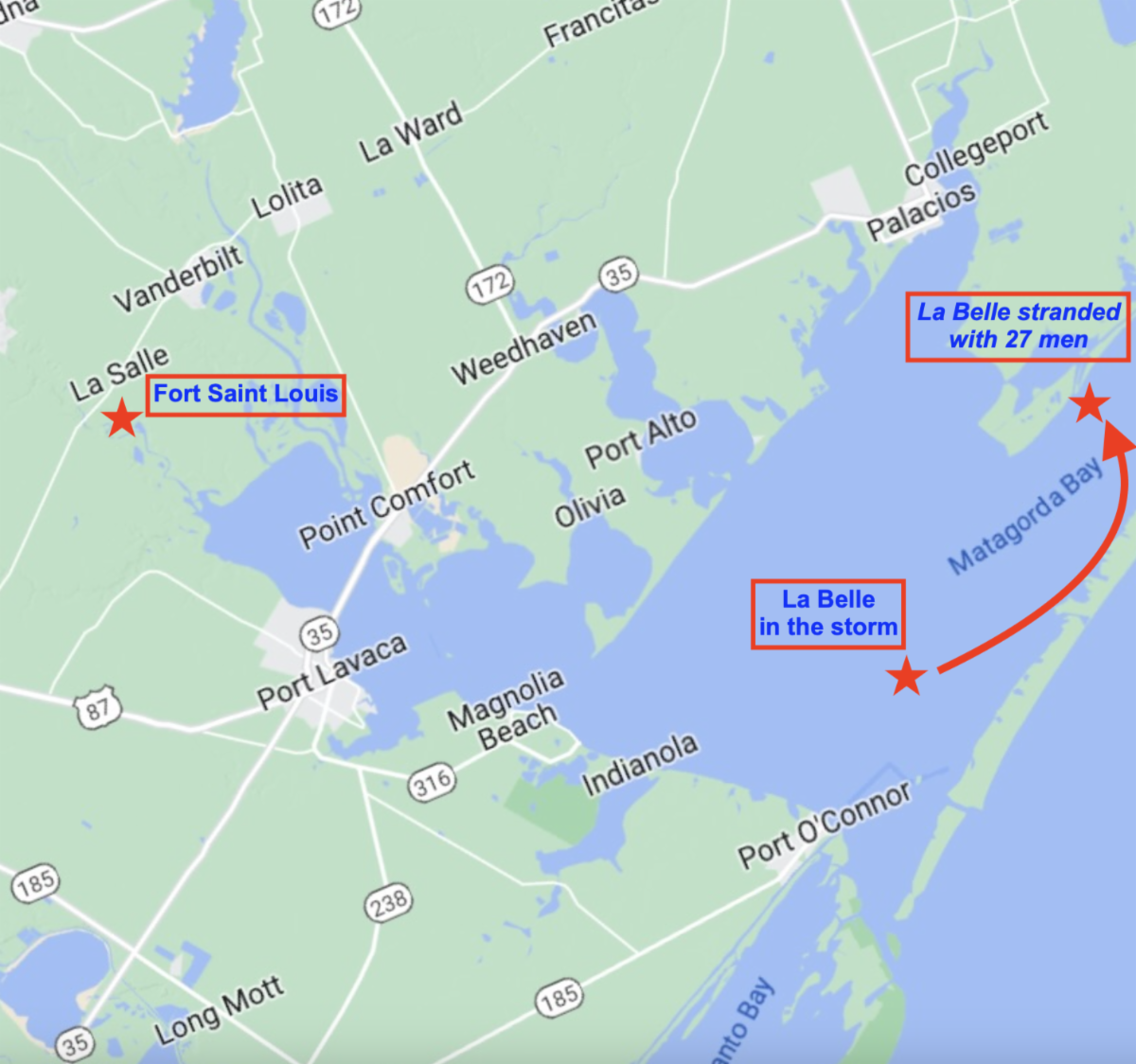
Map: Google map of Southern Texas with indications by Thierry Chaunu
Photo: Fort Saint Louis Marker in Inez, Texas, photo by John Stanton 8 Dec 2011
|
|
• La Salle tried to install a settlement in 1685 with the remnants of his expedition, and built a fort which has sometimes been referred to as "Fort St. Louis" but that name was not used during the life of the settlement and appears to be a later invention. La Salle himself referred to it as "the habitation on the rivière aux Boeufs [Buffalo River] near the baye Saint-Louis."
• The first marriage in Texas was, according to legend, celebrated in the chapel of the fort, and the first birth of a European in Texas, baby Barbier, who suffered an early and cruel fate when Karankawa Indians killed him and his mother. (https://www.tshaonline.org/handbook/entries/barbier-infant)
• Inscription:
“Thirteen miles southeast of Inez is located the site of Fort St. Louis. First French settlement in Texas attempted by Rene Robert Cavelier Sieur de La Salle in 1685. Devastated by the Karankawa Indians, burned by members of the Alonso de Leon Expedition in 1689. On its remains the Spaniards constructed Presidio de Nuestra Senora de la Bahia del Espiritu Santo, established by Joseph de Azlor, Marquis of Aguayo, and Father Fray Agustin Patron, O.F.M. In 1722 as a protection for the mission of Nuestra Senora del Espiritu Santo de Zuniga for the civilizing and christianizing of the Indian tribes of the vicinity. Moved to Mission Valley on the Guadalupe River near the present Victoria in 1726. Moved finally to Santa Dorotea now Goliad near the San Antonio River in 1749.
Erected 1936 by State of Texas.”
|
|
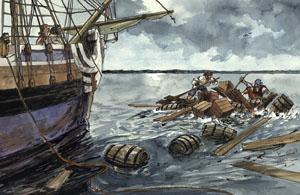
Illustration: Raft to save whatever could be saved
|
|
• During La Salle's absence, the ship started to face a shortage of drinking water. Tessier made the decision to send the ship's top five sailors ashore in La Belle's lone longboat to look for water. As night approached, the men were observed battling against a powerful wind in their attempt to return to the ship. However, they were considered lost when the longboat failed to reach its destination. The remaining sailors resorted to drinking wine instead of water, which only worsened their dehydration, resulting in the death of several crew members.
• Tessier ultimately made the determination that the vessel needed to sail back to Fort Saint Louis in order to acquire additional provisions. As they set off, an unexpected cold front moved in. Given that the remaining crew members lacked expertise, they were incapable of maintaining control over the ship. Furthermore, due to the loss of their second anchor, there was no means to halt the ship from being carried away by the wind. In a brief span of time, the La Belle ran aground at the southern tip of the bay, roughly a quarter of a mile (400 m) away from the shore.
• After the storm calmed, the men built a raft using planks and barrels and sent two people to the nearby shore. Sadly, the rough waves caused the raft to break, leading to the tragic drowning of both individuals. However, this setback didn't discourage the remaining group. They constructed a stronger raft, which successfully took them to safety on the shore. Over the next few days, they made regular trips back to the ship to salvage various items, including La Salle's documents and clothes, barrels of flour, casks of wine, glass beads, and other trade goods. Unfortunately, their efforts were short-lived as a strong southerly wind pushed the vessel into the muddy seabed, leaving only the rear deck visible above the water's surface. Out of the original 27 people on the ship, only Tessier, a priest, a military officer, a regular soldier, a servant girl, and a young boy survived. Stranded on the peninsula for three months, they had no choice but to cross Karankawa territory in order to reach the fort. Their luck changed when a small Indian canoe washed ashore, allowing them to paddle across the bay and return safely to the fort. Unfortunately, the loss of their final ship left the settlers marooned on the Texas coast, without any hope of assistance from the French colonies in the Caribbean Sea.
|
|
Discovery and manhunt by the Spanish |
|
The settlement of Fort St. Louis was established to give shelter to the colonists—men, women, and children—and an illusory protection from the Karankawa Indians.
|
|
• Over the course of several months, the ship gradually sank beneath the murky waters of the bay. Adding to the unfortunate turn of events, La Salle, the leader of the expedition, who had roamed all over the region's marshes also for several months in search for the mouth of the Mississippi, met his demise at the hands of one of his own crew members in an ambush.
• This tragic mutiny prompted the Karankawa tribe to launch an attack on Fort Saint Louis, resulting in the death of the majority of the French settlers who remained. Consequently, the French adventure along the shores of Texas came to an end, marking the conclusion of La Salle's ambitious vision.
• At about the same time, the Spanish officials became aware of La Salle's mission after apprehending Denis Thomas, a former resident of the settlement, on a pirate vessel. In an effort to spare his own life, Thomas divulged that La Salle intended to establish a settlement close to the Mississippi River and ultimately seize control of Spanish silver mines. Despite Thomas being swiftly hanged, the Spanish authorities regarded his account as credible and commenced their search for the French settlement.
• Captain Martin de Rivas and Captain Pedro de Yriarte led a Spanish expedition from Veracruz on December 25, 1686. Their goal was to sail along the Gulf Coast. It took them until April 4 to reach Matagorda Bay, where they sent out a few canoes to explore the surrounding area. Roughly 3 miles (4.8 km) away from their ship, they stumbled upon the half-sunk remnants of "La Belle." It was clearly identified by the three "fleur-de-lys" on its stern.
• The Spanish managed to salvage a pair of swivel guns and a total of five artillery pieces from the vessel, along with the anchor, some ropes, and the masts which were repurposed as oars. To provide conclusive evidence of the ship's French origin, the expedition also stumbled upon the location where the surviving French colonists had resided for a period of three months. Within the remnants of the fort, the team discovered the corpses of several settlers.
• Only around 15 or 16 individuals managed to survive the Fort Saint Louis colony, erring in the marshes after the Indian massacre. Out of these survivors, six made their way back to France, while the Spanish captured nine of them, including the four children who were spared by the Karankawa tribe. Initially, these children were taken to the Viceroy of New Spain, the Conde de Galve, who treated them as servants. Eventually, two of the boys, Pierre and Jean-Baptiste, returned to France. As for the rest of the Spanish captives, three of them became Spanish citizens and settled in New Mexico.
• Although the French colony had been completely destroyed, Spain anticipated that another French attempt was inevitable. As a result, the Spanish crown authorized the establishment of small outposts in eastern Texas and Pensacola for the first time. In 1722, the Spanish constructed a fort named Presidio La Bahia and a mission called Nuestra Señora del Espíritu Santo de Zúñiga on the former site of Fort Saint Louis.
• France did not relinquish its claims to Texas until November 3, 1762. This occurred when France conceded all of its land west of the Mississippi River to Spain in the Treaty of Fontainebleau. This decision followed France's defeat by Great Britain in the Seven Years' War, and as a result, France also conceded New France to Britain. In 1803, after Spain had returned Louisiana to France, Napoleon sold the territory to the United States. There was initial ambiguity and contradiction surrounding the borders of Louisiana, as the original agreement between Spain and France did not explicitly specify them. With the Louisiana Purchase, the United States doubled its size and it eventually opened the way for its expansion all the way to the West Coast.
• The United States, however, insisted that its purchase encompassed all of France's claimed territory, including Texas. The dispute was only resolved later, with the Adams-Onís Treaty of 1819 with Spain. In this treaty, Spain relinquished Florida to the United States in exchange for the United States renouncing its claim on Texas...
|
|
Rediscovery of La Belle in the 20th Century
|
|
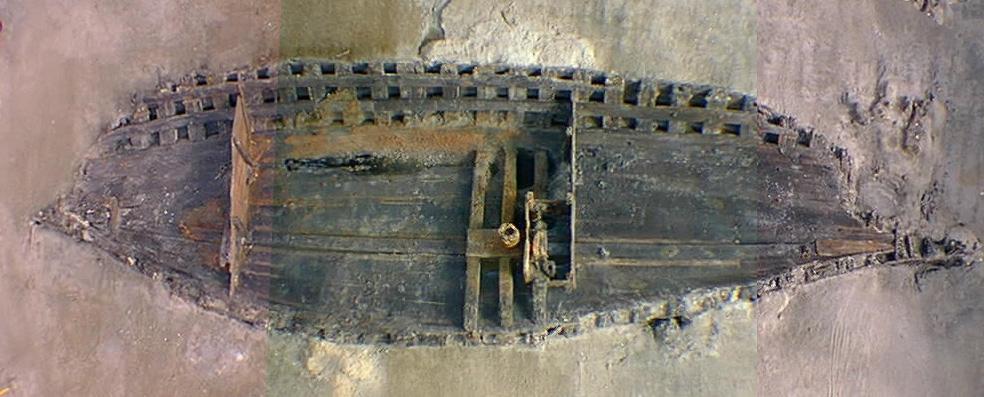
Photo: By Cmeide - Own work, CC BY-SA 3.0
|
|
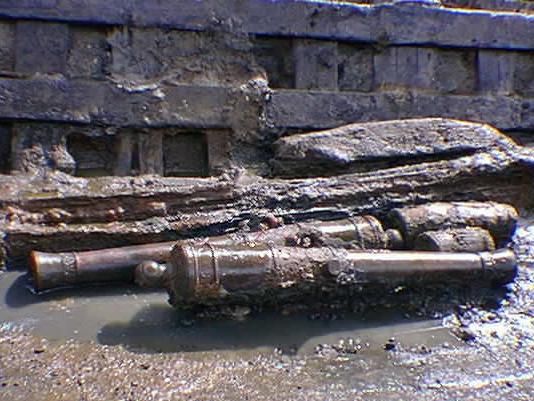
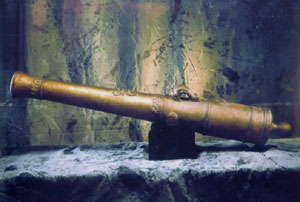
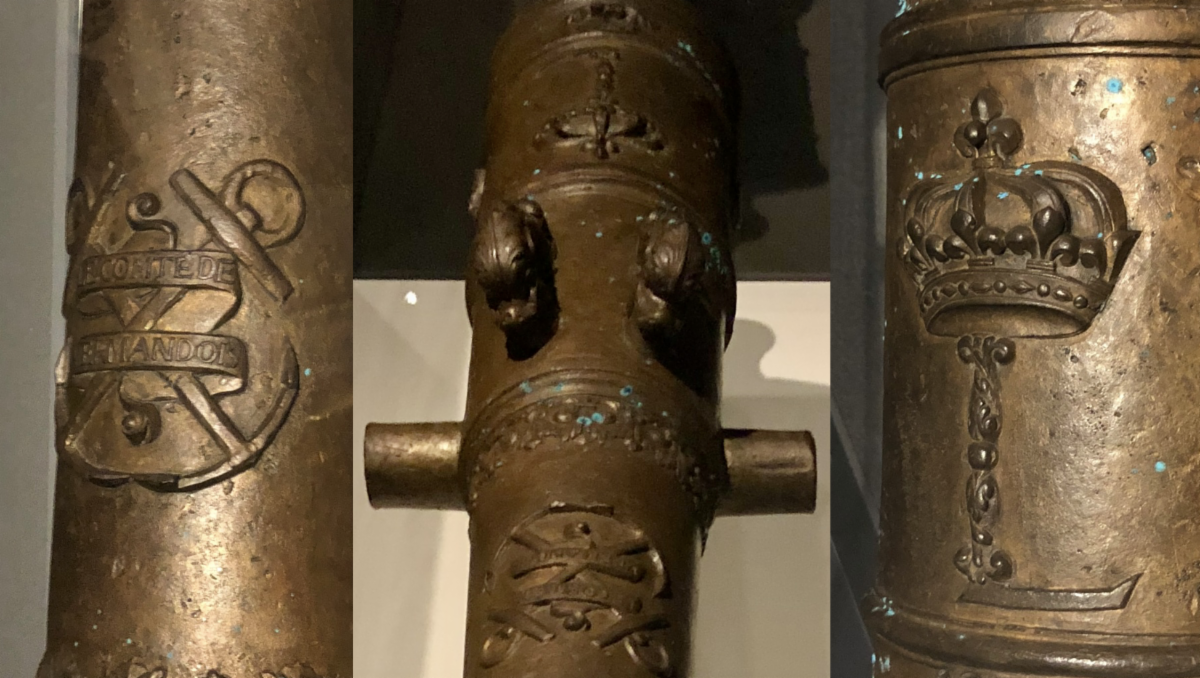
For 310 years, the Belle remained trapped in the muddy depths, undisturbed yet never forgotten. Historians and archeologists were aware of its existence somewhere in Matagorda Bay, but the precise location eluded them. In 1995, after numerous unsuccessful attempts, J. Barto Arnold, the Texas State Marine Archeologist from the Texas Historical Commission, ultimately discovered the long-awaited treasure. Using an underwater scanning device known as a magnetometer, a team of divers commenced their search for metallic objects beneath the murky waters of the bay. Eventually, they triumphantly resurfaced with a lavishly adorned brass cannon bearing the mark of Louis XIV, thus confirming the wreck's age and identity. It was none other than the French vessel, La Belle!
|
|
An amazing archeological find, a technical excavation prowess |
|
Photos: Cannons discovered in the hold of La Belle, recovered in July 1995.
Bronze cannon and other artifacts exposed in the lowermost part of the hull remains as seen during the final stages of excavation in February 1997.
Top: By Cmeide - Own work, CC BY-SA 3.0,
Middle: By Franklin M. Jones, US Department of State - https://2001-2009.state.gov/r/pa/ei/pix/b/oes/19238.htm, Public Domain,
Bottom: By Jim Evans - Own work, CC BY-SA 4.0,
|
|
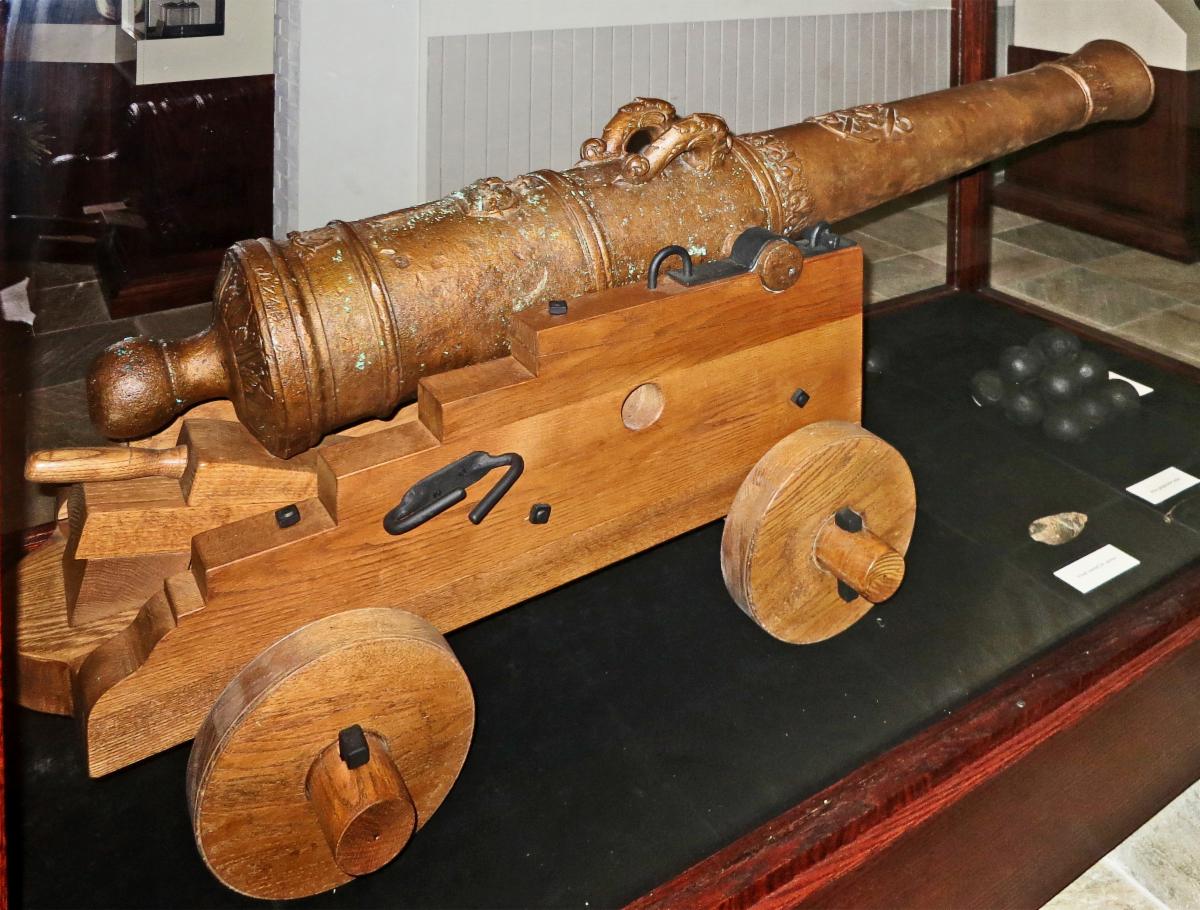
• The cannons discovered during the excavation of La Belle were undeniable evidence. One of these cannons, made of bronze, played a crucial role in confirming that the sunken ship in the murky waters of Matagorda Bay was indeed of French origin. The royal crest of French King Louis XIV, represented by the crowned "L" at the breach of the cannon, provided a clear indication. Additionally, the Le Comte de Vermandois insignia, which belonged to Louis de Bourbon, Admiral of the French Fleet from 1669 until his death in 1693, further supported this conclusion. By piecing together various pieces of evidence, such as French inscriptions, royal symbols, and artifacts from the correct historical period, archaeologists were able to determine that the shipwreck in Matagorda Bay was the ill-fated La Belle.
• The cannons, which hold significant historical value, remain the property of France. They are currently part of the collection of the Musée National de la Marine and are on loan to the Texas Historical Commission.
|
|
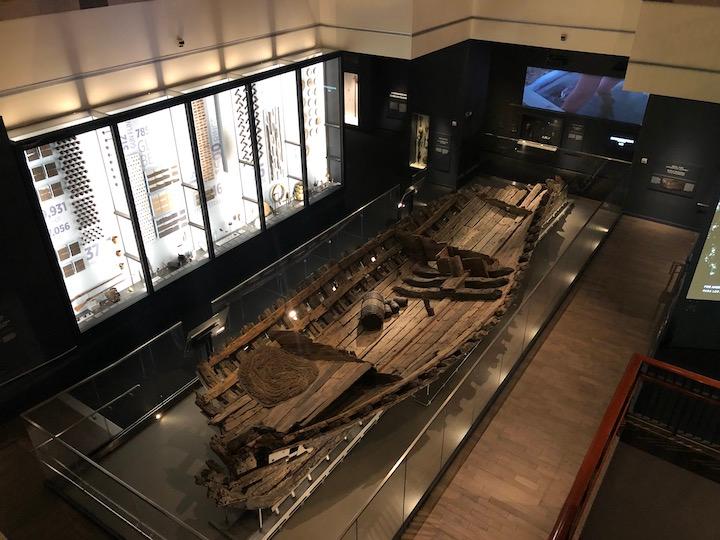
The La Belle exhibit
Bullock Texas State History Museum, Austin, TX.
|
|
• The exhibit "La Belle: The Ship That Changed History" officially opened in October 2014 at the Bullock Texas State History Museum in Austin.
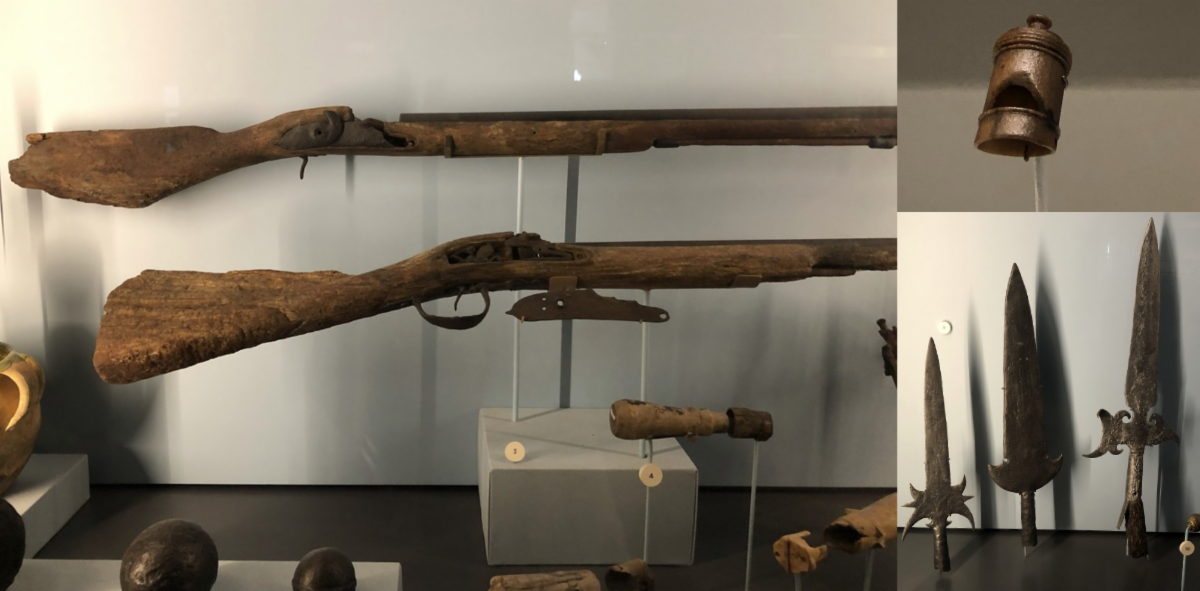
• Visitors can see the ship's hull and various recovered artifacts, La Belle contained all the salvaged supplies from the wrecked storeship L'Aimable. This provided a unique insight into the necessary supplies for a successful colonization mission. Since the French considered this area as enemy territory (as Texas was claimed by their Spanish rivals) and the local Indians were hostile, the vessel carried a wide range of weapons. These included three bronze cannons, one iron swivel gun, multiple boxes of muskets, numerous casks of lead shot and gunpowder, a few ceramic firepots (used as hand grenades), and multiple sword handles. The recovered items also included tools and supplies like smelting crucibles, a cooper's plane, a shovel, rope, and long bars of iron stock. Various ship's hardware and rigging components were found as well. Among the faunal remains were salt pork, rat skeletons, and trophy skulls of deer, complete with antlers.
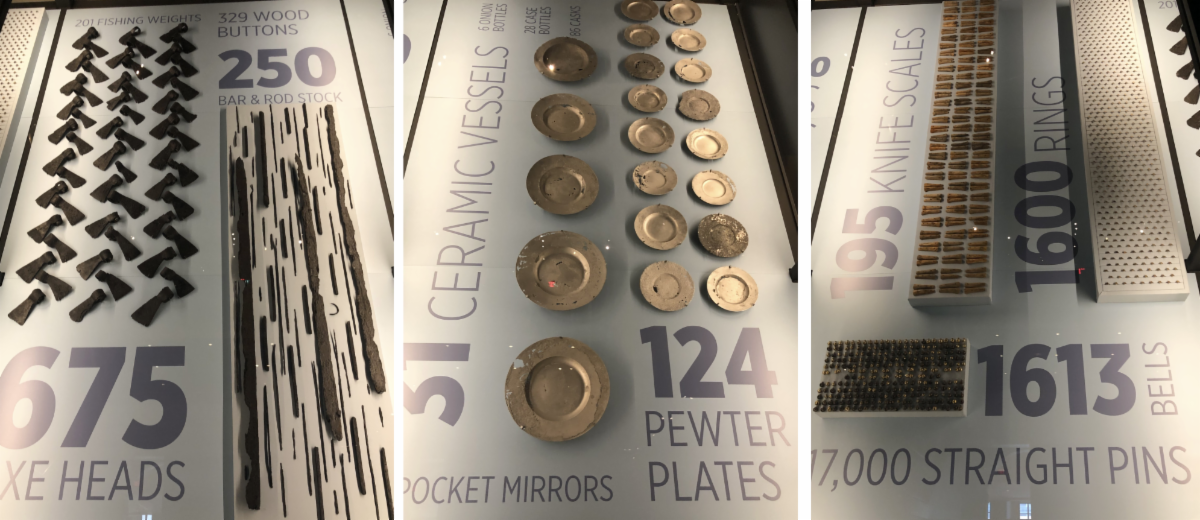
• La Belle's hull contained approximately 80 barrels and chests filled with a variety of everyday objects. Among these items were pewter plates and bowls, cooking pots and utensils, chess and backgammon pieces, clothing buckles, nested brass pots, clay pipe stems, navigators' instruments, candlesticks, a whisk broom, a shoe last, a brass powder flask, and a stoneware jar that still had traces of grease, possibly used for cooking. Some of the pewter dishes had markings from the maker and the initials of their owners, allowing for identification and matching with known colonists. Additionally, there were various trade goods such as hundreds of thousands of blue, white, and black glass beads, brass finger rings adorned with Catholic religious symbols, brass pins, brass hawk bells, wooden combs, and a barrel of iron axe heads. These were goods meant for trading with the indigenous people. Archaeologists discovered over half a million small Venetian glass beads, as well as bronze hawk bells, brass straight pins, iron ax heads, and brass finger rings. These were not mere trinkets, as the hawk bells were of high quality and had makers' marks. The Native Americans highly valued the metal items, as they had limited access to metals in their own culture.
• In all, archaeologists discovered about 1.6 million artifacts from the ship, making it one of the largest recoveries to date. These findings provide a unique insight into the lives of French colonists during the 17th century, shedding light on their strategies for planning, constructing homes and buildings, as well as their trading and daily lives in the newly colonized land.
• "This ship is sort of a colony kit. Many colonies were established in the New World, but the stuff that people brought with them is gone. . . What we have on the Belle is a good inventory of what a country in Europe felt was important for establishing a colony in the New World."
The Dallas Morning News, Oct 24, 2014
• Additional artifacts can be found in the La Salle Odyssey exhibit, which is spread across multiple museums in Texas. The Corpus Christi Museum of Science and History serves as the official storage place for these artifacts. The Museum of the Coastal Bend in Victoria, Texas also houses several La Belle artifacts, particularly the other seven cannons from Fort St. Louis.
• More details and a virtual visit can be found at:
• And to view the captivating video, click on the link below:
|
|
Homage to a sailor of Louis XIV |
|
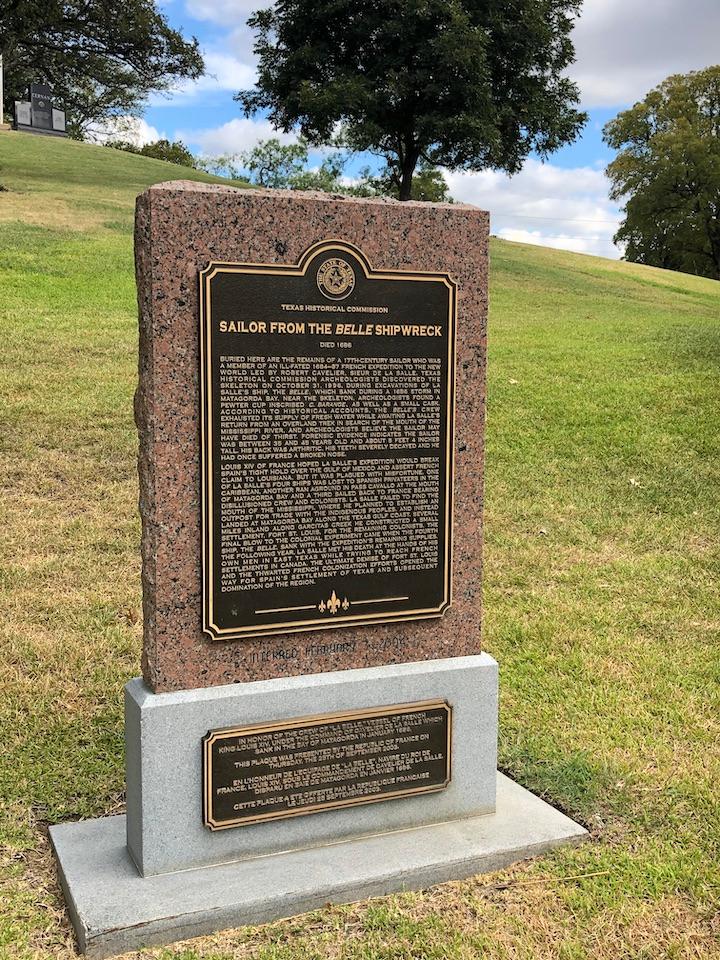
Grave Marker, Sailor from the ”La Belle” Shipwreck
Texas State Cemetery
Monument Hill, Section 2 (H2), Row D, Number 1
909 Navasota Street, Austin TX 78702
Photos, top and bottom: Thierry Chaunu © American Society of Le Souvenir Français, Inc.
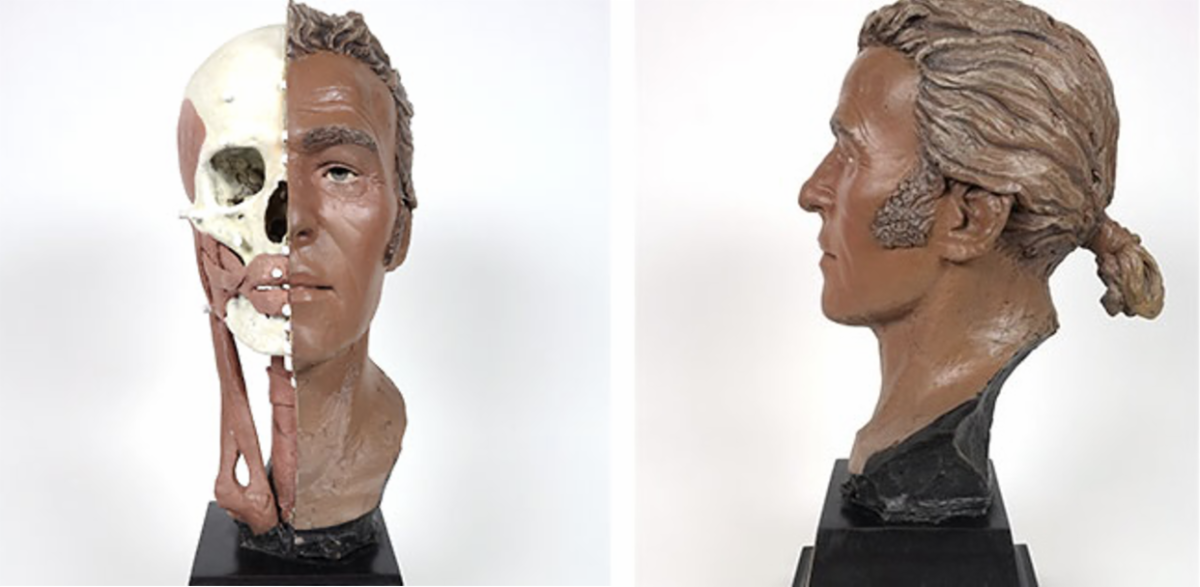
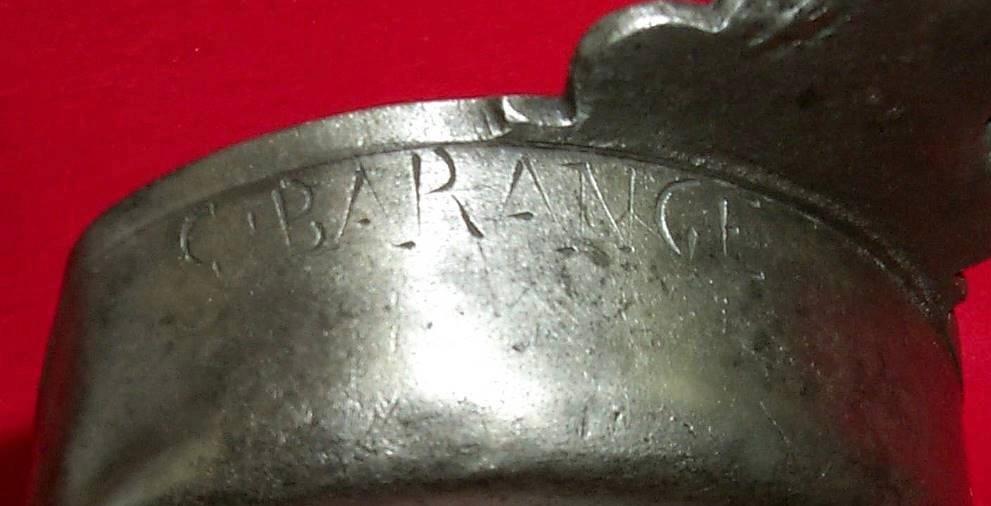
Forensic sculptor Amanda Danning employed a replica of the sailor's skull to shape the face and reveal his potential appearance in life. The pewter cup found next to the skeleton, whose identity may be C. Barange"
|
|
• One of the most poignant discoveries made was a complete human skeleton of an individual about 30 year-old. The sailor was discovered in a fetal position atop a coil of rope, likely experienced discomfort due to arthritis and a severely infected tooth. However, the probable cause of death was dehydration. Remarkably, a portion of this person's brain remained intact, preserved by the absence of oxygen in the thick, muddy sediments at the bay's bottom. The DNA thus preserved leads to the possibility of eventually finding the sailor's nearest living relative.
• Adjacent to the skeleton, an engraved pewter porringer bearing the inscription "C. Barange" was found.
• This French sailor now rests at Texas State Cemetery in Austin, a short drive from the Bullock Museum.
• Before the burial ceremony, the skeleton underwent computerized tomography (CT) scans. These scans were utilized to produce precise three-dimensional resin replicas of the sailor's skull for educational purposes. Forensic sculptor Amanda Danning employed a replica of the sailor's skull to shape the face and reveal his potential appearance in life. Her technique, which is visible on the left side of the forensic model in the photo above, involved the application of soft tissue "depth markers" specific to age, gender, and ethnicity. Subsequently, she crafted facial muscles, soft tissue, and skin out of clay. The completed half of the face on the model's right side showcases wrinkles and lines appropriate to the man's age and challenging life. It also displays signs of a broken nose and a jaw structure based on dental and gum damage identified by scientists during their examination of the skull.
• In addition, bones from another individual's leg, foot, and hand were discovered in a cargo hold. It is believed that these remains belong to an Indian who may have perished while attempting to board the ship.
• Inscription of grave marker:
“Buried here are the remains of a 17th-century sailor who was a member of an ill-fated 1684-87 French expedition to the new world led by Robert Cavelier, Sieur de La Salle. Texas Historical Commission archaeologists discovered the skeleton on October 31, 1996, during excavations of La Salle’s ship, the Belle, which sank during a 1686 storm in Matagorda Bay. Near the skeleton, archaeologists found a pewter cup inscribed C. Barange, as well as a small cask. According to historical accounts, the Belle’s crew exhausted its supply of fresh water while awaiting La Salle’s return from an overland trek in search of the mouth of the Mississippi River, and archaeologists believe the sailor may have died of thirst. Forensic evidence indicates the sailor was between 35 and 45 years old and about 5 feet 4 inches tall. His back was arthritic, his teeth severely decayed and he had once suffered a broken nose.
Louis XIV of France hoped La Salle’s expedition would break Spain’s tight hold over the Gulf of Mexico and assert French claim to Louisiana, but it was plagued with misfortune. One of La Salle’s four ships was lost to Spanish privateers in the Caribbean, another ran aground in Pass Cavallo at the mouth of Matagorda Bay and a third sailed back to France bearing disillusioned crew and colonists. La Salle failed to find the mouth of the Mississippi, where he planned to establish an outpost for trade with the indigenous peoples, and instead landed at Matagorda Bay along the Texas gulf coast. Several miles inland along Garcitas Creek he constructed a small settlement, Fort St. Louis, for the remaining colonists. The final blow to the colonial experiment came when the fourth ship, the Belle, sank with the expedition’s remaining supplies. The following year, La Salle met his death at the hands of his own men in east Texas while trying to reach French settlements in Canada. The ultimate demise of Fort St. Louis and the thwarted French colonization efforts opened the way for Spain’s settlement of Texas and subsequent domination of the region.”
Erected 2004 by Texas Historical Commission"
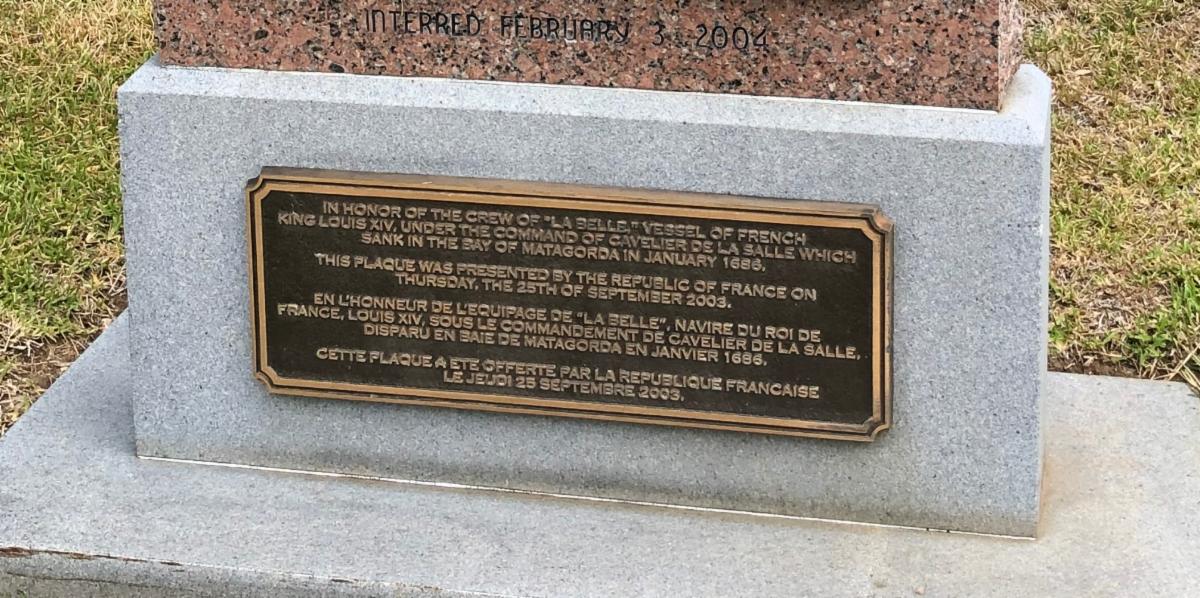
• Inscription at the base of the grave marker:
“IN HONOR OF THE CREW OF “LA BELLE” VESSEL OF FRENCH
KING LOUIS XIV UNDER THE COMMAND OF CAVELIER DE LA SALLE WHICH SANK IN THE BAY OF MATAGORDA IN JANUARY 1686.
THIS PLAQUE WAS PRESENTED BY THE REPUBLIC OF FRANCE ON
THURSDAY THE 25TH OF SEPTEMBER 2003.”
EN L'HONNEUR DE L'ÉQUIPAGE DU NAVIRE « LA BELLE »,
NAVIRE DU ROI DE FRANCE LOUIS XIV
SOUS LE COMMANDEMENT DE CAVELIER DE LA SALLE
DISPARU EN BAIE DE MATAGORDA EN JANVIER 1686
CETTE PLAQUE A ÉTÉ OFFERTE PAR LA RÉPUBLIQUE FRANÇAISE
LE JEUDI 25 SEPTEMBRE 2003.”
|
|
Epilogue 1:
a French Navy ship is now in the caring custody of Texas
|
|
The Agreement between France and the United States |
|
Signing of U.S. French Agreement: Representatives from the Musée National de la Marine of France and the Texas Historical Commission sign the Agreement regarding La Belle while French Ambassador Jean-David Levitte and U.S. Undersecretary of State for Global Affairs Paula Dobriansky look on. Photo: https://2001-2009.state.gov/g/oes/ocns/26820.htm
|
|
• Upon the completion of the excavation, the French government submitted an official request for ownership of the ship and its contents. According to international law, a naval vessel officially belongs to the country whose flag it flies. Some historians claimed that La Belle was a personal gift from the King to La Salle, however there is no documentary evidence to support this claim. However, research conducted in French archives uncovered two official documents that listed La Belle as being owned by the King but on loan to La Salle. Just before the end of the Clinton administration, Madeleine Albright conceded the ownership claim in favor of France. Following several years of negotiations, an agreement was finally signed on March 31, 2003, granting official title of the wreck and its artifacts to the Musée national de la Marine in Paris. The Texas Historical Commission was given day-to-day control of the site for a period of 99 years.
• “La Belle is a great historical icon: a sunken ship that accidentally charted a grand new direction for the state’s history... Millions of Americans now understand France’s contributions to the Lone Star State’s beginnings.”
James Bruseth, guest curator of the Bullock exhibit, in his book, From a Watery Grave: The Discovery and Excavation of La Salle’s Shipwreck.
A book on the La Belle is available from the Texas A&M University Press:
|
|
Epilogue 2:
A lasting legacy:
Monuments honoring La Salle in Texas
and enduring ties between Texas and France
|
|
• La Salle's failure to find the mouth of the Mississippi didn't stop the French to pursue the strategic goal of separating Florida from New Spain in Mexico. The Iberville expedition that finally established a lasting French presence near the mouth of the Mississippi River succeeded twelve years later in 1699, thus establishing a vast empire stretching from Canada to the Gulf of Mexico.
• The tragic episode of La Belle had an impact on the history in Texas.
The French attempt to colonize Texas prompted the Spanish to react and quickly populate the region.
|
|
La Salle Monument, Port Lavaca, TX |
|
Monument “René Robert Cavelier Sieur de la Salle”
2 TX-316 road, Port Lavaca, TX 77979
|
|
• The René Robert Cavelier Sieur de La Salle Monument is a 22-foot-tall pink Texas granite statuary figure in Indianola, Texas, overlooking Matagorda Bay. Commissioned for the 1936 Texas Centennial, sculptor Raoul Josset and architect Donald S. Nelson designed the monument that was dedicated in 1939 and listed on the National Register of Historic Places on July 27, 2018.
• Inscription (front):
“Born in Rouen France November 22, 1643. Came to Canada in 1668. Founded a first settlement near Montreal. Led several expeditions on the Great Lakes and the Ohio and Illinois rivers. Completed the exploration of the Mississippi, 1682. On July 24, 1684, La Salle sailed from France to establish a colony at the mouth of the Mississippi. Landed at Matagorda Bay February, 15, 1685. There established Fort St. Louis. While on his way to Canada he was murdered near the Trinity River March 19, 1687.”
• Inscription (side):
“A gentleman but not a courtier, a proud independent yet timid nature, an explorer of bold vision and untiring energy. La Salle's colony on Matagorda Bay gave the United Statues its first claim to Texas as a part of the Louisiana Purchase."
"America owes him an enduring memory for in this masculine figure she sees the pioneer who guided her to the possession of her richest heritage".
Francis Parkman”
Erected 1936 by State of Texas
|
|
Statue of LaSalle in Navasota, TX
Site of the mutiny
|
|
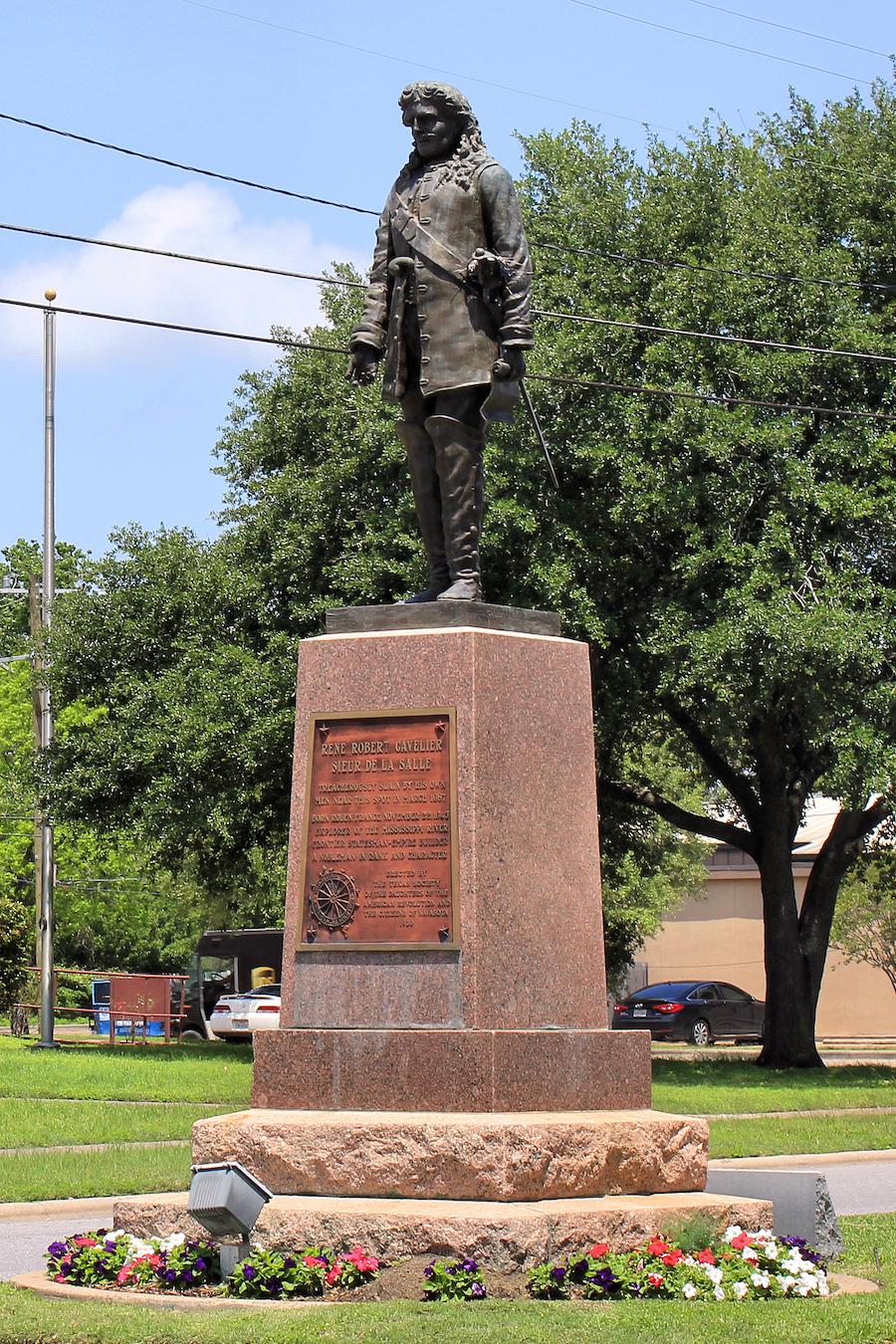
Statue & Marker “René Robert Cavelier Sieur de la Salle”
Corner of Washington Ave and Old McMillican Rd, at 40 Old Millican Rd, Navasota, TX 77868
|
|
• The Daughters of the American Revolution commissioned and erected a bronze statue of La Salle in Navasota during the Texas Centennial in 1930.
• Inscription:
“Treacherously slain by his own men near this spot in March 1687
Born Rouen France November 22 1643
Explorer of the Mississippi River
Frontier Statesman - Empire Builder
A Nobleman in Rank and Character”
“Erected 1930 by Texas Society of the Daughters of the American Revolution and the citizens of Navasota.”
|
|
Bust of La Salle, Navasota, TX |
|
Bust “René Robert Cavelier Sieur de la Salle”
August Horst Park Pavilion, 104 County Rd, Navasota, TX 77868
|
|
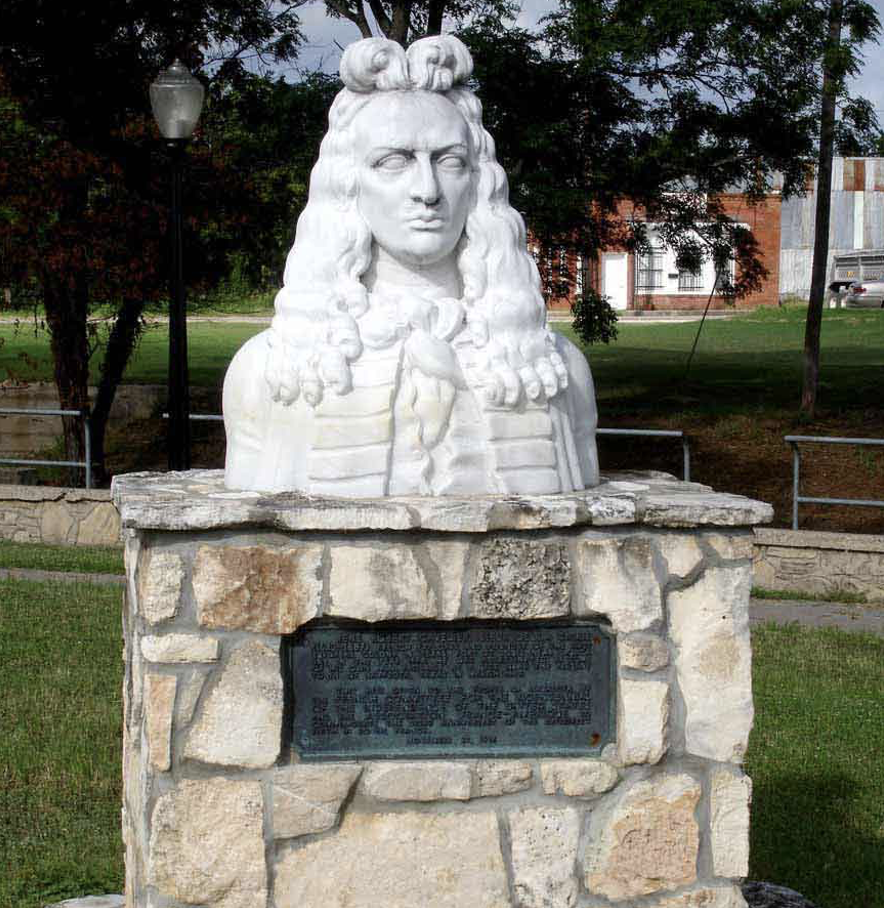
• French explorer René-Robert Cavelier, Sieur de La Salle, misguided in his 1687 attempt to locate the Mississippi River and trying to find his way back to French-held lands near the Great Lakes, came through the area which would become Navasota. It was there that La Salle was murdered by one of his men. After numerous voyages, explorations of the Mississippi River valley, trading ventures and several mutinies, La Salle's bones are believed to have found their resting place in the Navasota Valley.
• a stone bust that was previously in downtown, was re-dedicated by the French consulate in May 2012 at August Horst Park. The bust was donated to the City by the French government in 1978.
|
|
France and Texas, more than 3 centuries of continuing ties:
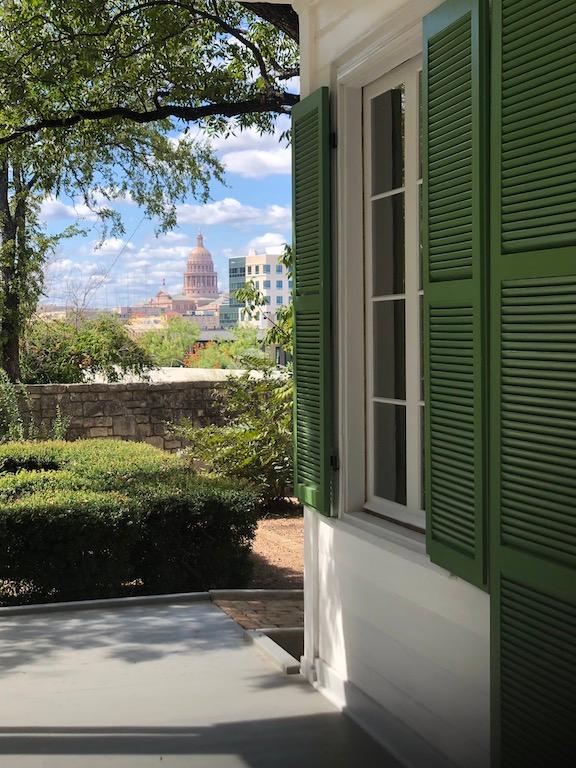
Eventually, Texas became independent and joined the Union. Today, it enjoys a particularly close relationship with France, which recognized the "Lone Star State" by opening an embassy in Austin under King Louis-Philippe in 1839, and whose enterprising immigrants, particularly from Alsace, left lasting imprints, such as in Castroville, TX.
And, just a few days ago, Texas Governor Greg Abbott attended this year's Bastille Day parade in Paris.
|
|
Marker, “The French Legation to the Republic of Texas” |
|
French Legation Historical Site, 802 San Marcos Street, Austin, TX 78702
(There are two identical markers, one inside the garden and one along the sidewalk by the gate)
Photo: Thierry Chaunu, © 2021 American Society of Le Souvenir Français, Inc.
|
|
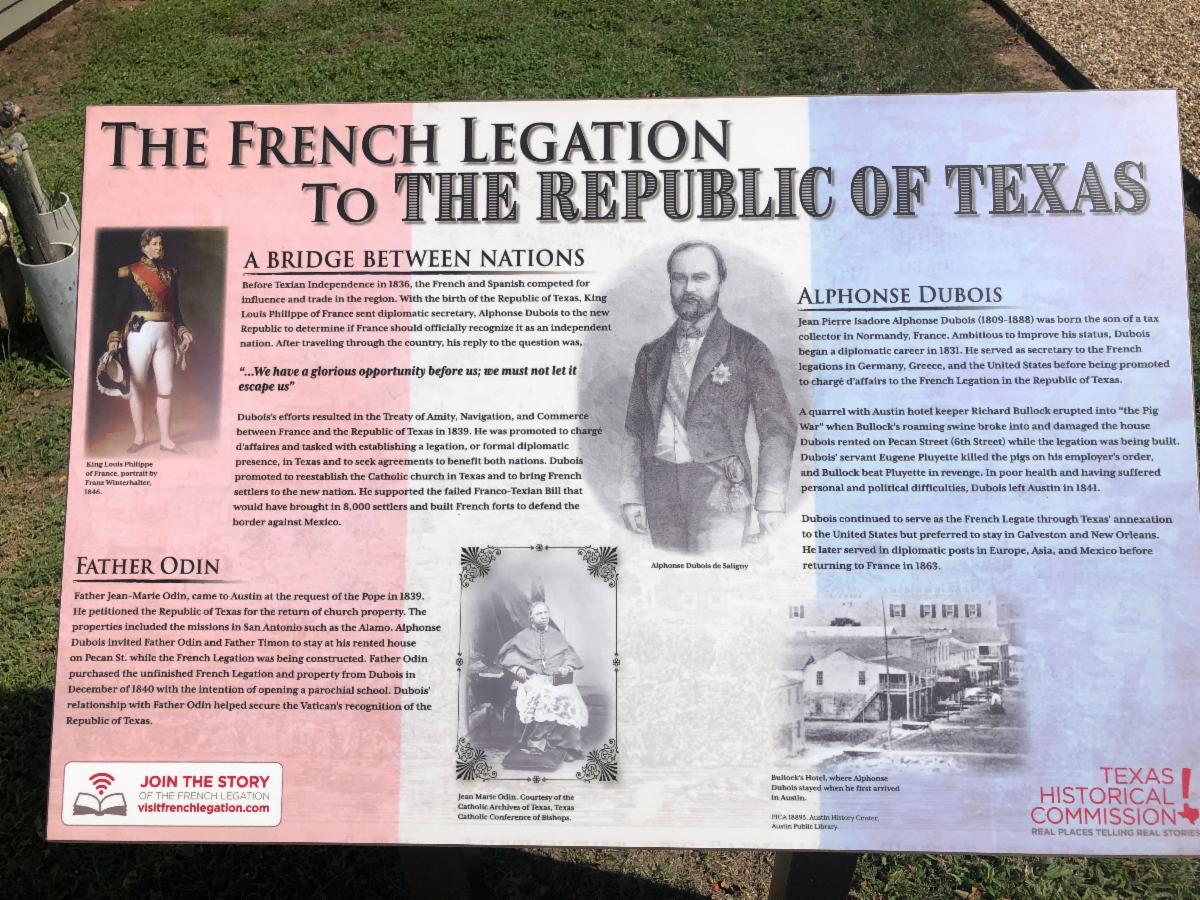
•Alphonse Dubois de Saligny, by his full name Jean Pierre Isidore Alphonse Dubois de Saligny, born in Caen, Normandy, France, on April 8, 1809, and died in Saint-Martin-du-Vieux-Bellême (Orne) on November 6, 18881, was a French diplomat.
• Inscription:
“A bridge between Nations: Before Texan Independence in 1836, the French and Spanish competed for influence and trade in the region. With the birth of the Republic of Texas, King Louis-Philippe of France sent diplomatic secretary, Alphonse Dubois to the new Republic to determine if France should officially recognize it as an independent nation. After traveling through the Coutnry, his reply to the question was, “…We have a glorious opportunity before us; we must not let it escape us” .Dubois’s (sic) efforts resulted in the Treaty of Amity, Navigation, and Commerce between France and the Republic of Texas in 1839. He was promoted to Chargé d’affaires and tasked with establishing a legation, or formal diplomatic presence, in Texas and to seek agreements to benefit both nations. Dubois promoted to reestablish the Catholic Church in Texas and to bring French settlers to the new nation. He supported the failed Franco-Texian Bill that would have brought in 8,000 settlers and built French forts to defend the border against Mexico.”
“Father Odin: Father Jean-Marie Odin came to Austin at the request of the Pope in 1839. He petitioned the Republic of Texas for he return of church property. The properties included the missions in San Antonio such as the Alamo. Alphonse Dubois invited Father Odin and Father Timon to stay at his rented house on Pecan St. while the French Legation was being constructed. Father Odin purchased the unfinished French Legation and property from Dubois in December of 1840 with the intention of opening a parochial school. Dubois’ relationship with Father Odin helped secure the Vatican’s recognition of the Republic of Texas."
“Alphonse Dubois: Jean-Pierre Isadore (sic) Alphonse Dubois (1809-1888) was born the son of a tax collector in Normandy, France. Ambitious to improve his status, Dubois began a diplomatic career in 1831. He served as secretary to the French legations in Germany, Greece, and the United States before being promoted to chargé d’affaires to the French Legation in the Republic of Texas. A quarrel with Austin innkeeper Richard Bullock erupted into “the Pig War” when Bullock’s roaming swine broke into and damaged the Hosue Dubois rented on Pecan Street (6th Street) while the legation was being built. Dubois’ servant Eugene lunette killed the pigs on his employer’s order, and Bullock beat Pluyette in revenge. In poor health and having suffered personal and political difficulties, Dubois left Austin in 1841. Dubois continued to serve as the French Legate through Texas’ annexation to the United States but preferred to stay in Galveston and New Orleans. He later served in diplomatic posts in Europe, Asia, and Mexico before returning to France in 1863.”
Erected by Texas Historical Commission”
|
|
Plaque, "The French Legation" |
|
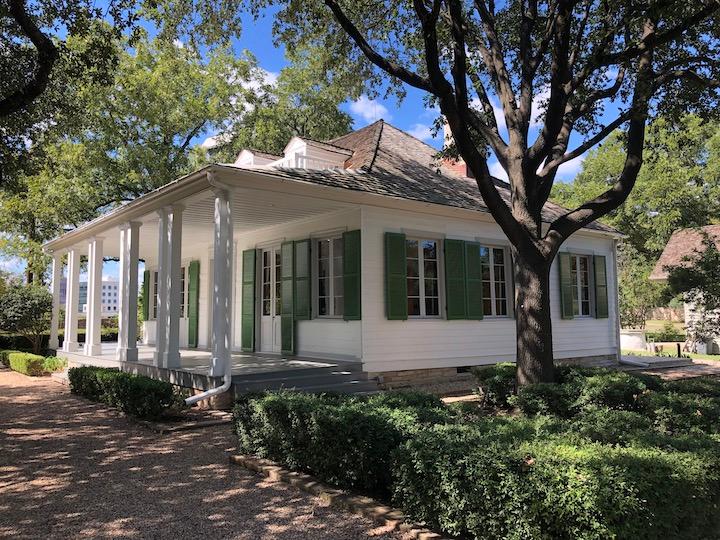
Plaque, "The French Legation"
French Legation Historical Site, 802 San Marcos Street, Austin, TX 78702802 San Marcos Street, Austin, TX 78702
Photo: Thierry Chaunu, © 2021 American Society of Le Souvenir Français, Inc.
|
|
• Inscription:
"The French Legation"
“Erected in the year 1841 by Conte (sic) Alphonse Dubois De Saligny, Charge D'Affaires for King Louis Philippe of France, to the Texas Republic. He lived here 1841-1842. House constructed of Bastrop pine, in Louisiana bayou style. Furnishings include several pieces once owned by Saligny. Purchased by State of Texas in 1945. Placed in custody of the Daughters of the Republic of Texas, who restored the house and maintain the property."
Recorded Texas Historic Landmark – 1967”
|
|
French Legation Historical Site, 802 San Marcos Street, Austin, TX 78702
Photo: Thierry Chaunu, © 2021 American Society of Le Souvenir Français, Inc.
|
|
Marker (temporarily removed during renovation)
• Inscription:
" French Embassy"
“This site, originally purchased by Anson Jones who later became the last President of the Republic of Texas, was sold by Jones on September 15, 1840, to Alphonse de Saligny, Charge D'Affaires of his majesty, Louis Philippe, the King of the French, to the Republic of Texas. Saligny built the house and occupied it until April 1, 1842. the building was later owned by John Mary Odin, first Bishop of the Diocese of Galveston, and by Moseley Baker, hero of the Texas Revolution and Congressman of the Republic. Joseph W. Robertson, who bought the property from Baker in 1848, was responsible for the name Robertson Hill. The home was owned by his heirs until it was purchased by the State of Texas in 1945.”
|
|
PART ELEVEN OF THE SERIES
"LAFAYETTE, GUEST OF THE NATION"
If you missed the episodes from our past Bulletins...
• President James Monroe invited Lafayette, the last surviving major general of the American Revolutionary War, to tour the United States, officially to celebrate the nation's 50th anniversary but also to instill the "spirit of 1776" in the next generation of Americans at a time of great political divide. His tour drew large crowds and sparked a renewal of patriotism.
• From July 1824 to September 1825, Lafayette made a tour of all 24 States in the United States. He was received with a hero's welcome everywhere he stopped. Immense crowds, children, old veterans would come from miles away and wait hours to have a chance to see him, approach him, touch him. Many honors and monuments were presented to commemorate and memorialize the visit.
• The 24 states visited were: Alabama, Connecticut, Delaware, Georgia, Illinois, Indiana, Kentucky, Louisiana, Maine (ex-Massachusetts / North part), Maryland, Massachusetts, Mississippi, Missouri, New Hampshire, New Jersey, New York, North Carolina, Ohio, Pennsylvania, Rhode Island, South Carolina, Tennessee, Vermont, Virginia, Washington D.C.
• The main means of transportation were stagecoach, horseback, canal barge, and steamboat.
• Throughout the years 2024 and 2025 each city will celebrate this most illustrious Frenchman, ranked alongside the Founding Fathers, practically on a par with George Washington. If anyone harbors any doubt about it, one only needs to read some of the hundreds of local newspaper articles and the accounts or memoirs of contemporary witnesses accounts.
|
|
• Several of his stops are memorialized with markers and plaques, some decades-old, and an increasing number of brand new ones, thanks to the energy and enthusiasm deployed by Julien Icher, president of the LafayetteTrail.org, whose goal is to dedicate all 175 markers by 2024.
• These new markers from the LafayetteTrail.org are all made in the same distinctive blue and red cast metal and signed by the William C. Pomeroy Foundation which is generously funding this gigantic project.
• The American Society of Le Souvenir Français Inc. is honored to partner with these two like-minded organizations, as well as all other American patriotic associations and volunteers who are participating in these celebrations, under the umbrella of America250.
|
|
As we started with the August 2022 Bulletin, we continue our narration every month with some of the most salient episodes of this remarkable journey of the corresponding month 199 years ago, while keeping you abreast of the many celebrations planned by the local committees of the American Friends of Lafayette in 2024 and in 2025.
For this series we borrow primarily from the testimonies of a privileged close witness, Auguste Levasseur, Lafayette’s personal secretary, who traveled along with the Marquis and his son, George Washington Lafayette, and who published his extensive daily journal: “Lafayette en Amérique 1824-1825, ou Journal d'un voyage aux Etats-Unis" (Published by the Librairie Baudoin, Paris, in 1829). We also rely on other well-documented sources, such as Samuel Lorenzo Knapp. “Memoirs of General Lafayette : with an Account of His Visit to America and His Reception By the People of the United States; From His Arrival, August 15th, to the Celebration at Yorktown, October 19th, 1824”(Published in November, 1824)
|
|
- July 14 – Lafayette attends a banquet held in his honor at Sansay House in Morristown, New Jersey.
- July 15 – Lafayette attends a reception at Waverly House in then Bottle Hill, now Madison, New Jersey, on his way to Springfield.
-
July 16 – Lafayette arrives in Philadelphia for his second visit of the tour on SS Delaware from Bordentown, NJ.
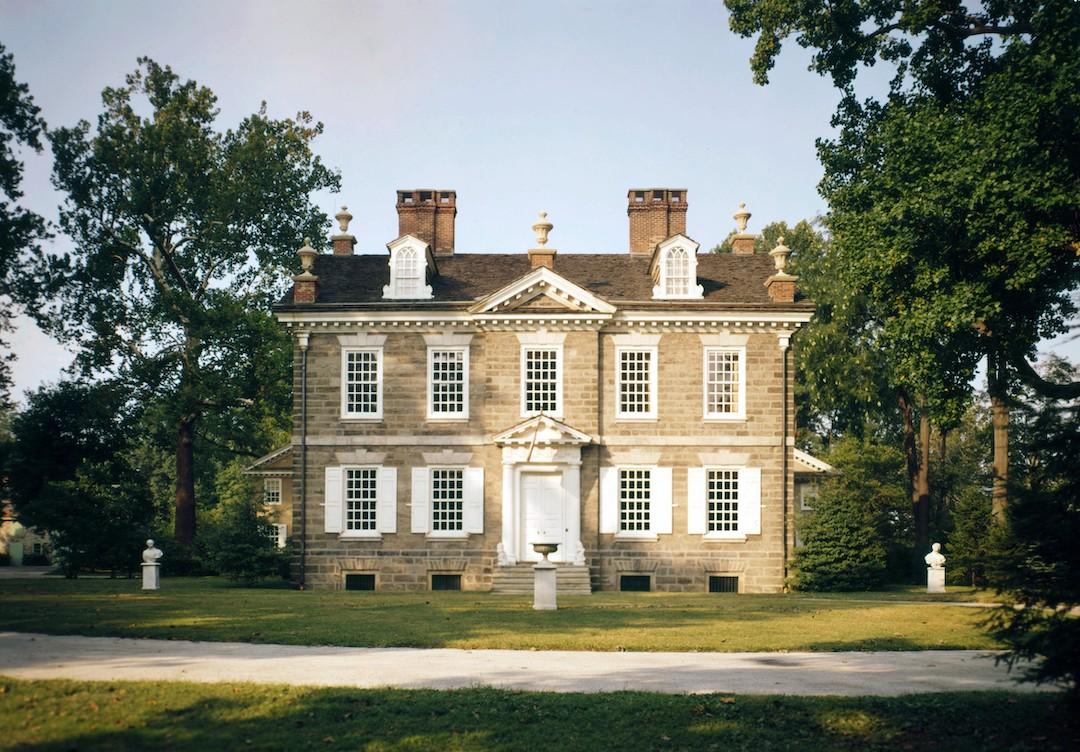
- July 20 – Lafayette visits Germantown and Chestnut Hill, near Philadelphia. He specifically visited Wyck Historic House and Cliveden.
-
July 25 – Lafayette leaves Philadelphia on the SS Delaware for Wilmington, Delaware
- July 26 – Lafayette departs Chester, Pennsylvania, for the Brandywine Battlefield, ending the day in West Chester.
- July 27 – Departs West Chester for Lancaster, Pennsylvania.
- Late July – Departs Lancaster for Baltimore, Maryland, via Port Deposit and Havre de Grace, Maryland. Spends two days in Baltimore.
We will only select below a few noteworthy stops. For a more complete list, refer to TheLafayetteTrail.org or our e-book Memories of France
|
|
Visit of Lafayette, Morristown, NJ
July 14, 1825
|
|
July 14, 1825
Marker, Lafayette’s visit, Sansay House
16-10 Dehart St, Morristown, NJ 07960
(Note: this house is a private residence)
|
|
• Following a welcoming ceremony on Morristown’s Green on July 14, 1825,during his triumphal Farewell Tour, General Lafayette visited the home of Charles Ogden across the way on the corner of Market Street. Later he attended a sumptuous “men only” banquet given to him in the upstairs room of the Sansay House on DeHart Street. Afterwards, back at the Ogden House, he was introduced to the ladies of Morristown. He spent the night at the home of James Woods on South Street leaving for Philadelphia the next day.
• Inscription:
“Monsieur Louis Sansay, French dancing maser, conducted dancing school here. House was site of ball honoring Lafayette in 1825. Later home of General Joseph Revere”
"National Register of Historic Places, New Jersey Register of Historic Places Morris County Heritage Commission."
|
|
2nd Visit of Lafayette, Philadelphia, PA
July 20, 1825
|
|
July 20, 1825
Marker, Lafayette’s tour, Philadelphia PA
6418 Germantown Ave, Philadelphia, PA 19119
Photos:
|
|
• Lafayette had received a triumphal reception during his 8-days stay in Philadelphia in September 1824. When he returned to the region for a somewhat longer, but quieter, stay near the end of his tour in July 1825, his itinerary included visits to Germantown, Mount Airy, and Chestnut Hill. On the way south for departure from Washington, he stopped in West Chester (where an estimated ten thousand people gathered to witness his procession) and joined military units and aged veterans in a tour of the area of the Battle of Brandywine, where he had been wounded during the Philadelphia campaign.
• “The Infantry and other Military Corps, together with the Manufacturers, Societies, Citizens, etc. brought up the rear and continued in their march up the Main-street, in Germantown, for two miles, until they arrived at the County Seat of Benjamin Chew, Esq. which is the very spot where the celebrated Germantown Battle was fought, when all those who preceded the General displayed columns, and the General and Suite proceeded through the door of Mr. Chew’s hospitable Mansion, where he was received by the family of Mr. Chew, and immediately afterwards introduced to his Brethren of the Masonic Family individually; then to the different Military Corps, and to a vast number of the inhabitants of the town, both males and females. After which, he partook of a sumptuous breakfast, and then proceeded to Mount Airy”. The United State Gazette, July 26, 1825.
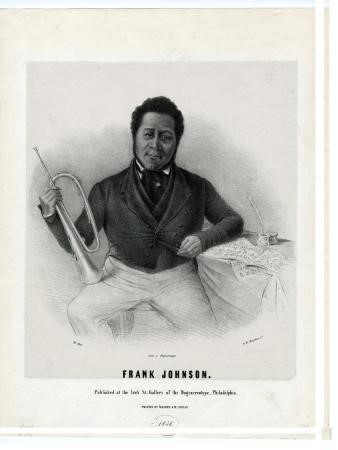
• Something we omitted to mention in our September 2022 Bulletin, Frank Johnson, a famous musician, composer, and band leader, performed with his African American band at the “Lafayette Ball,” a major social event during Lafayette’s last night in Philadelphia during his first visit. We will never stress enough the fact that Lafayette was a staunch abolitionist, and was seen hugging African-Americans in public, something that was not frequently seen in America at that time.
• Inscription:
“On July 20, 1825, general
Lafayette, revolutionary
war hero and outspoken
abolitionist, was received
here at the Chew house."
William G. Pomeroy foundation 2022
|
|
Visit of Lafayette, Brandywine, PA
July 26, 1825
|
|
July 26, 1825
Plaque & Marker, General Lafayette at Brandywine
421 N. Matlack Street & Lafayette Street, West Chester, PA 19380 (marker)
421 N Walnut St, West Chester, PA 19380 (in-ground plaque, 400 ft away)
Photos:
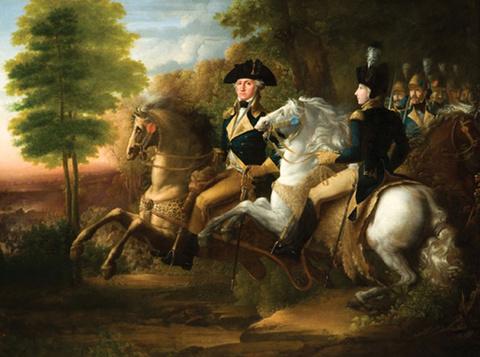
Top: Washington and Lafayette at the Battle of Brandywine, c. 1825
|
|
• Brandywine was the first battle in which the Marquis de Lafayette saw combat. While he was instrumental in rallying the retreating American soldiers, he was shot through the calf and wounded. Washington sent future president James Monroe to see Lafayette as Monroe spoke French. Lafayette would be sent to a hospital in Bethlehem, Pennsylvania, to recuperate for 2 months before joining Valley Forge.
• In his 1824-25 visit to the United States, Lafayette visited again and indicated where he was wounded: along the crest of the hill.
• On February 25, 1825, Lafayette granted Poulson's Advertiser, one of Philadelphia's leading newspapers, an interview. In the piece, Lafayette recalled receiving his wound at Brandywine:
"The ball went through and through; I was on foot when I received my wound; a part of our line had given way but a part still held its ground. To these I repaired. To encourage my comrades, and to show them I had no better chance of flight than they, I ordered my horse to the rear. The news of my being hurt was conveyed to the commander-in-chief, with the usual exaggerations in such cases. The good General Washington freely expressed his grief that one so young, and a volunteer in the holy cause of freedom, should so early have fallen; but he was soon relieved by an assurance that my wound would stop short of life, when he sent me his love an gratulation that matters were no worse. On the field of battle the surgeon prepared his dressings, but the shot fell so thick around us, that in a very little time, if we had remained, we should both have been past all surgery. Being mounted on my horse I left the field, and repaired to the bridge near Chester, where I halted and placed a guard, to stop fugitive soldiers, and direct them to join their respective regiments. I could do no more; becoming faint, I was carried into a house in Chester and laid on a table, when my wound received its first dressing. The general officers soon arrived, when I saluted them by begging that they would not eat me up, as they appeared to be very hungry, and I was the only dish upon the table in the house. The good general-in-chief was much gratified on finding me in such spirits, and caused a litter to be made, on which I was conveyed to the Indian Queen [a tavern/hotel] in Philadelphia, and was there waited upon by the members of Congress, who were all booted and spurred and on the wing for a place of greater safety to hold their sessions. The enemy continuing to advance, I was removed to Bristol, and thence in the coach of President Laurens (and coaches were rare in those days) to Reading [here Lafayette's memory fails him — he was actually moved to Bethlehem], where I remained until so much recovered as to be able to repair to head-quarters."... (https://www.ushistory.org/march/other/lafwound.htm)
• Inscription (marker):
“After visiting the Brandywine Battlefield on July 26, 1825, General Lafayette came to West Chester. From a point half a block west from here, he reviewed troops parading in his honor.”
Erected 1952 by Pennsylvania Historical and Museum Commission.
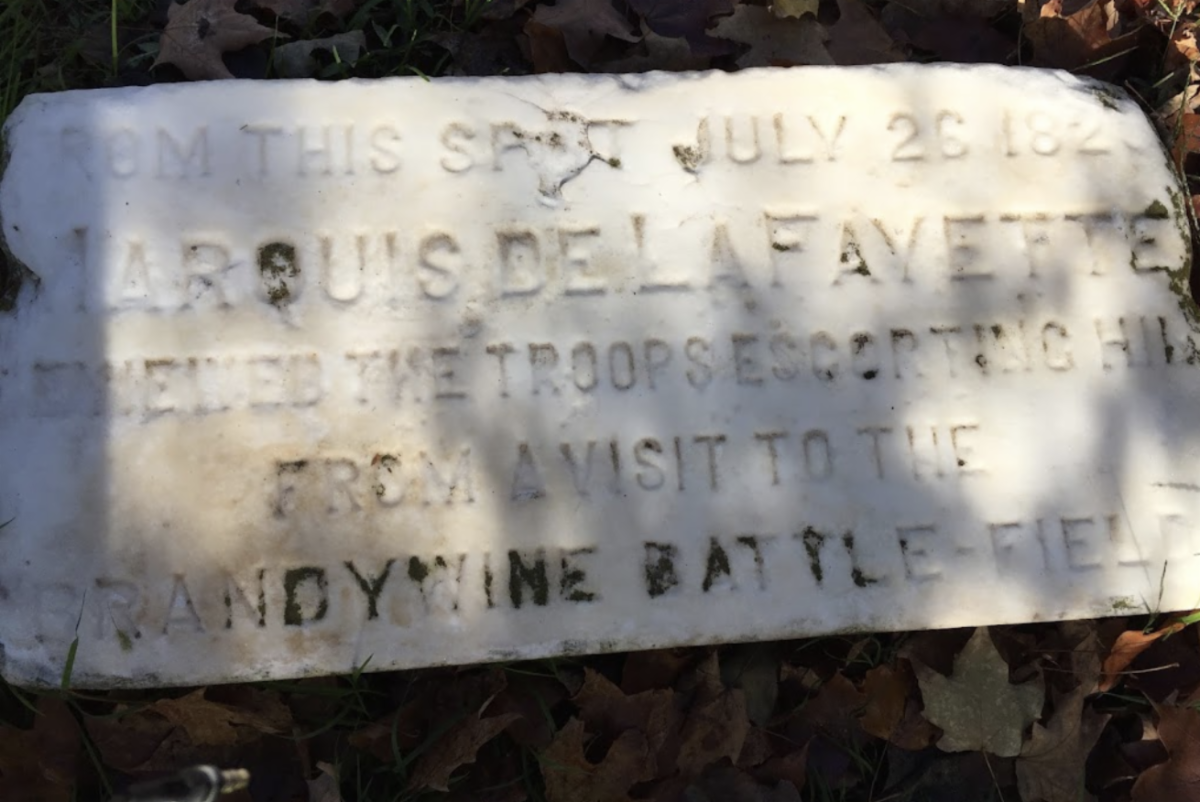
• Inscription of in-ground plaque (hardly legible):
“From this spot July 26, 1825
Marquis De Lafayette
Viewed the troops escorting him
from a visit to the
Brandywine Battle-Field”
|
|
War memorial column, Général Lafayette & Pulaski, Brandywine |
|
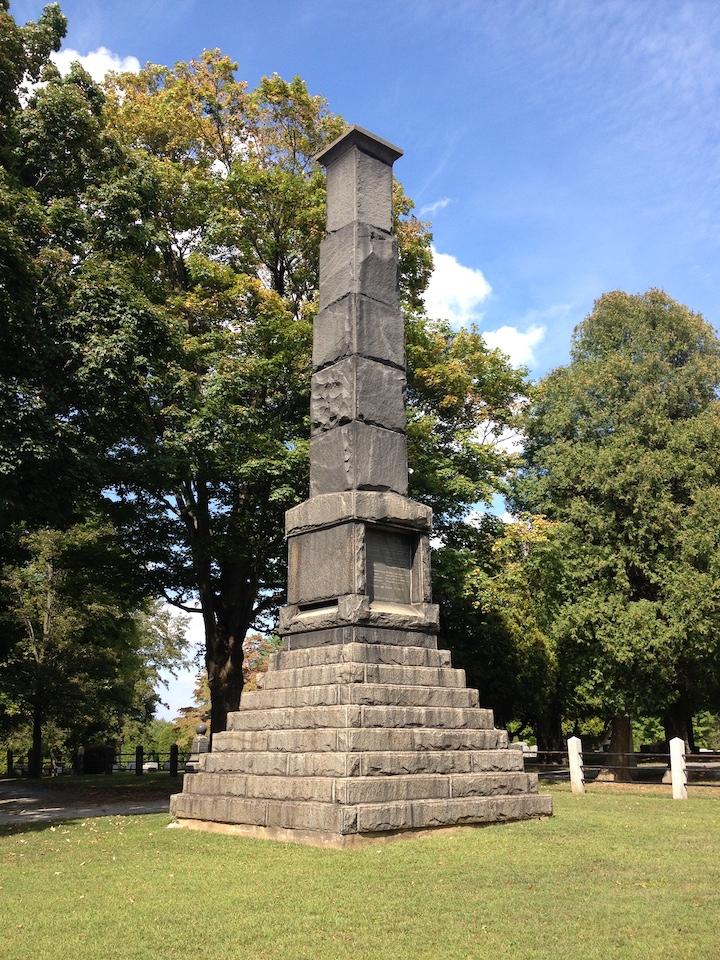
War memorial column, Général Lafayette & Pulaski, Brandywine
Birmingham Lafayette Cemetery, 1235 Birmingham Rd, West Chester, PA 19382
|
|
• The monument was dedicated at the Lafayette Cemetery in 1900. Located next to the wartime Birmingham Meeting House, the cemetery was named in his honor. This monument was funded by local banker John G. Taylor, who had an ancestor in the battle and took a personal interest in commemorating it.
• Portions of this cemetery existed during the battle, and it was the site of fighting. The low walls near the meetinghouse were used by soldiers for protection from British gunfire. In the cemetery are several large monuments, the most impressive of which was dedicated to Lafayette.
• Inscription:
"Should days of brisk be forgot,
Although these days have fled.
Can we neglect the sacred spot,
Where Patriot Heroes bled?
An not those days of "old lang syne,"
We never can forget.
When with our sires to Brandywine,
Come gallant Lafayette.
By Brandywine's enchanting stream,
Our swains in peace abode,
Until the Tyrants' minions came,
To stain its banks with blood, &c.
To meet the Foe-men on the plain
Each Patriot, onward press'd.
And there with Washington, and Wayne
Appeared our honored Guest, &c.
And there he bore him in the van,
Where Washington still led
And to sustain the Rights of Man
The youthful Warrior bled &c.
Then long as our romantic stream,
Shall roll its silver wave,
Its vales shall echo with the name
Of Lafayette, the brave. &c.
Great God, Proniter and Father of Liberty
John G. Taylor, Erected 18ft. 1900
Admiral Count DeGrasse
B. 1722 - D. 1788, France"
Erected 1900 by John G. Taylor.
|
|
Marble column, Général Lafayette Brandywine |
|
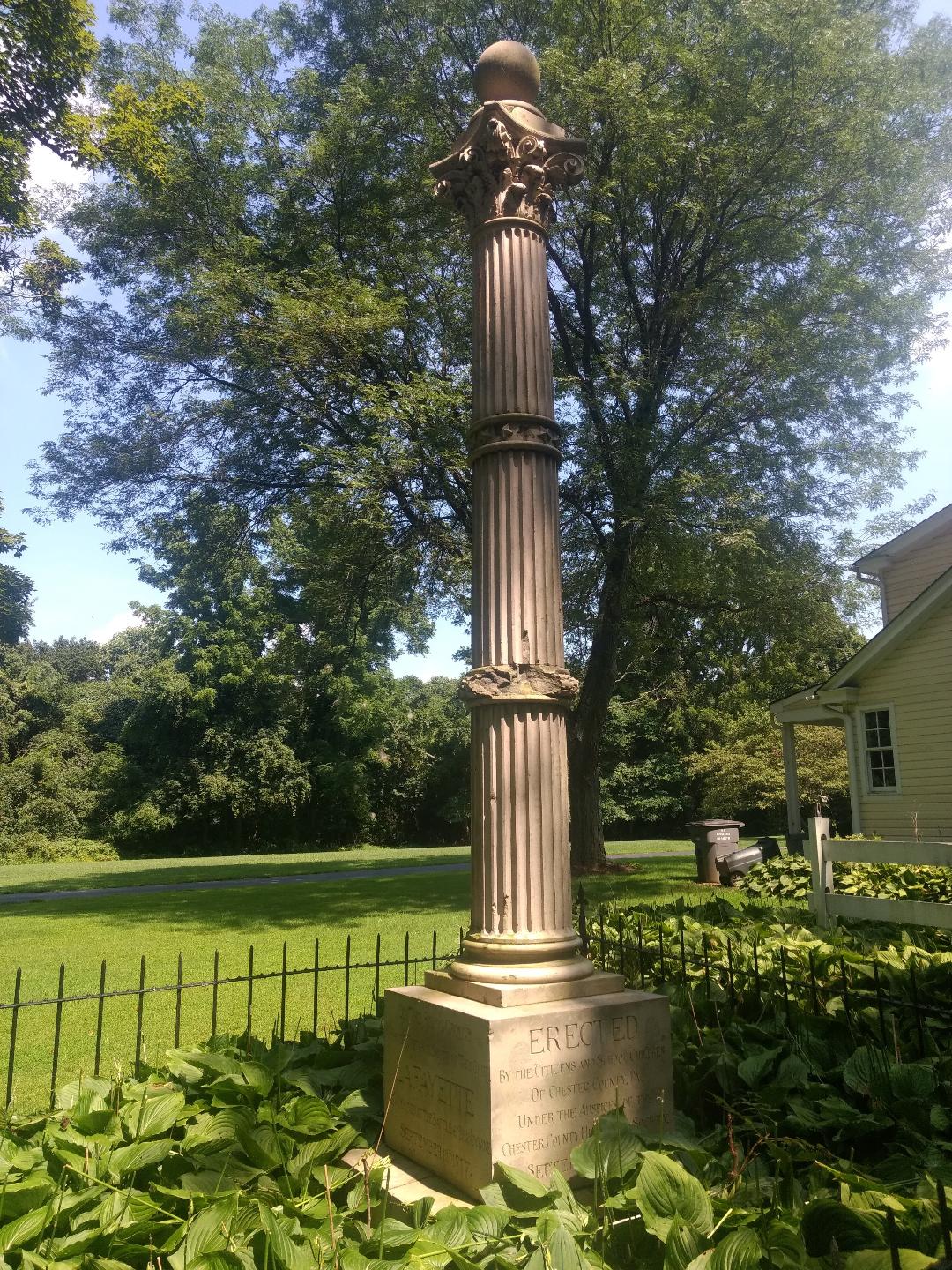
Marble column, Général Lafayette Brandywine
Birmingham Lafayette Cemetery, 1235 Birmingham Rd, West Chester, PA 19382
|
|
• On Brandywine Day, September 11, 1895, in the presence of the Governor, the French consul, local dignitaries, militia units, and military bands, Chester County schoolchildren dedicated a marble monument to Lafayette, with five thousand attending the ceremony. Placed along Birmingham Road, it is not in the spot where he was actually wounded. An article about the dedication notes that it is the highest spot on the battlefield, and “visible from every part of the compass.”
• Inscriptions:
“On the rising ground
A short distance south of this spot
Lafayette
was wounded at the battle of Brandywine
September 11th 1777”
Side:
“May the blood spilled by thousands, with
equal merit, in the cause of independence and
freedom, be to ensuing generations an
eternal pledge of unalloyed
Republicanism, Federal union,
Public prosperity and Domestic happiness”
Lafayette’s Toast, at West Chester, July 26, 1825
|
|
Lafayette visit to West Chester, PA
July 26-27, 1825
|
|
Lafayette’s tour, July 26-27, 1825
Boulder & Plaque “Lafayette”
Behind houses in the vicinity of the intersection of Old Phila. Pike (Route 340) and Greenfield Road. The Lafayette Fire Company is located just south of this area on E. Lincoln Highway (Route 462), West Chester, PA
GPS not known
Photo: Lafayette Fire Company
|
|
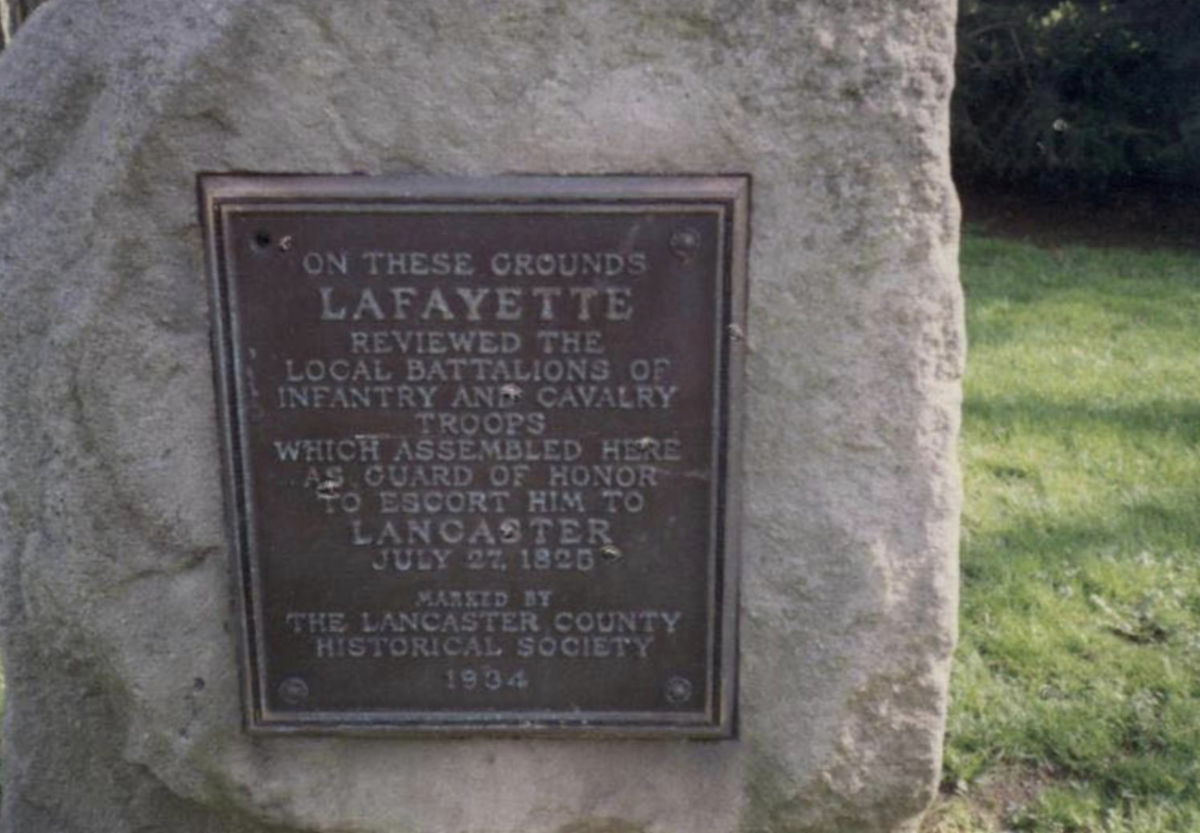
• Inscription:
“On these grounds
LAFAYETTE
Reviewed the
Local battalions of
Infantry and Cavalry
Troops
Which assembled here
As Guard of Honor
to escort him to
LANCASTER
July 27, 1825
Marked by
The Lancaster County
Historical Society
1904”
|
|
Visit of Lafayette, Havre de Grace, Maryland
July 29, 1825
|
|
July 29, 1825
Marker, Lafayette Tour, Havre de Grace, MD
at the intersection of Union Ave and St. John Street, 425 MD-7A, Havre De Grace, MD 21078
|
|
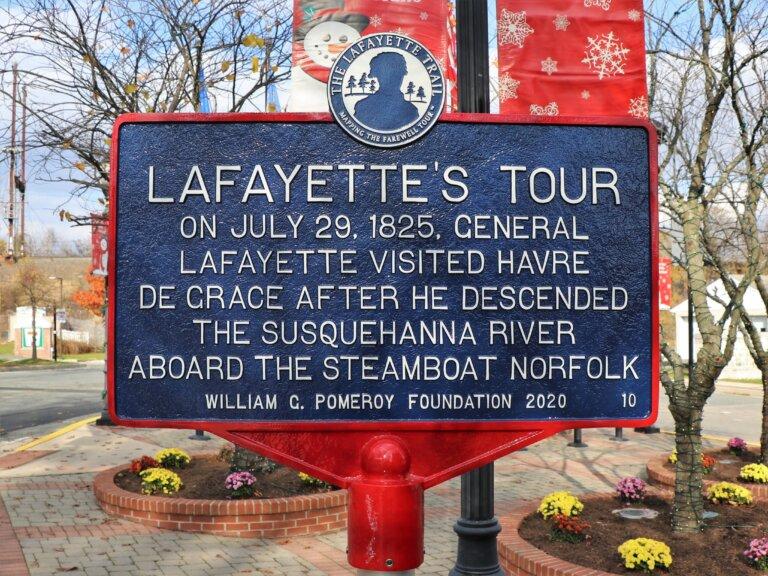
• During his 13-month tour, Lafayette visited all 24 of the then United States as a “guest of the nation.” At the time, he was the last surviving general of the American Revolution. He briefly visited Havre de Grace on July 29, 1825, as he passed from Lancaster, Pennsylvania, to Port Deposit, then to Baltimore aboard the steamboat Norfolk.
• Inscription:
“On July 29, 1825, General
Lafayette visited Havre
de Grace after he descended
the Susquehanna River
aboard the Steamboat Norfolk.”
William C. Pomeroy Foundation 2020
|
|
Statue of Lafayette, Havre de Grace, Maryland |
|
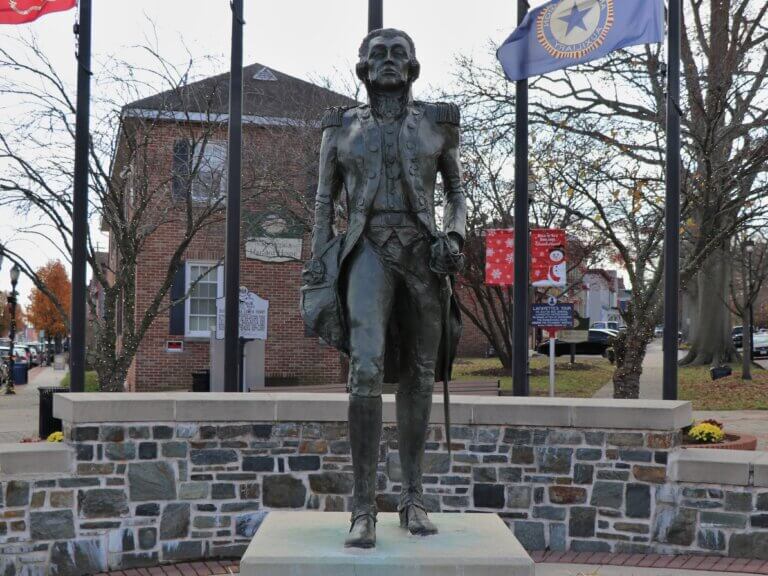
Statue of Lafayette, Havre de Grace, MD
425 N. Union Avenue and Warren Street in Legion Square , Havre de Grace, MD 21478
Photo: Pomeroy Foundation
|
|
• In 1975, David Craig, a history teacher and mayor of the city, presented the idea of erecting a statue to Marquis de Lafayette at the time of the Bicentennial in 1976.
• He found the artist, Gary Siegel, then a student at Maryland College of Art in Baltimore and proposed the location. After being approved by the City Commission, and after a fund raising drive encouraged by the French Ambassador in the US, Jacques Kosciusco-Morizet, the New Arts Foundry in Baltimore realized the statue.
• As David Craig explained: “Lafayette played a major role in re-naming the city. Prior to 1781 it was known as Lower Susquehanna. It was not a municipality at the time. Then, a French army traveled through and camped here on their way to the future battle at Yorktown, Va. While it was here, local residents suggested that the place be renamed to Havre de Grace since many people had told them that it looked like Le Havre, France. The French officers agreed and presented the idea to Lafayette and he agreed and was given the credit for the official suggestion. When the place was charted in 1785, becoming the second official municipality in Maryland with continuous existence, it was named 'Havre de Grace.’
• After the American Revolution ended, Maryland made Lafayette a citizen of the state. During his tour of the United States (1824-5) he briefly visited Havre de Grace.
• In the early 1980’s Havre de Grace, Maryland, created a “Sister City” relationship with Le Havre, France.
• Inscription:
[Front:]
Major General Marquis de LaFayette
"C'est le Havre"
[Translation:] "It's the Harbor"
[Reverse]
"To all those who have risked their lives for liberty and freedom
this statue is dedicated"
Erected as a bicentennial project for the City of Havre de Grace by the Joseph L. Davis Post No. 47 American Legion and the Havre de Grace Bicentennial Committee. November, 1976, Gary Siegel — Sculptor
|
|
WE WILL CONTINUE TO TRAVEL WITH LAFAYETTE
OVER THE NEXT 2 MONTHS!...
|
|
PAST MONTHLY BULLETINS
OUR GOAL: turn the spotlight on a famous, or less famous, episode or historical figure during the long shared history between France and the United States, with illustrations and anecdotes.
You can have access to all our past Monthly Bulletin
since February 2021 by visiting our website:
You can click on the photos throughout our bulletins and also on the links indicated in blue for more information and direct access to sources.
|
|
Next month in August we will narrate the exploits of aviation pioneers Dieudonné Costes & Maurice Bellonte, who were the first to cross the Atlantic from Paris to New York on September 1-2, 1930. |
|
Bastille Day concert in Central Park
with the Cadets Lafayette marching band
and the Federation of French War Veterans
|
|
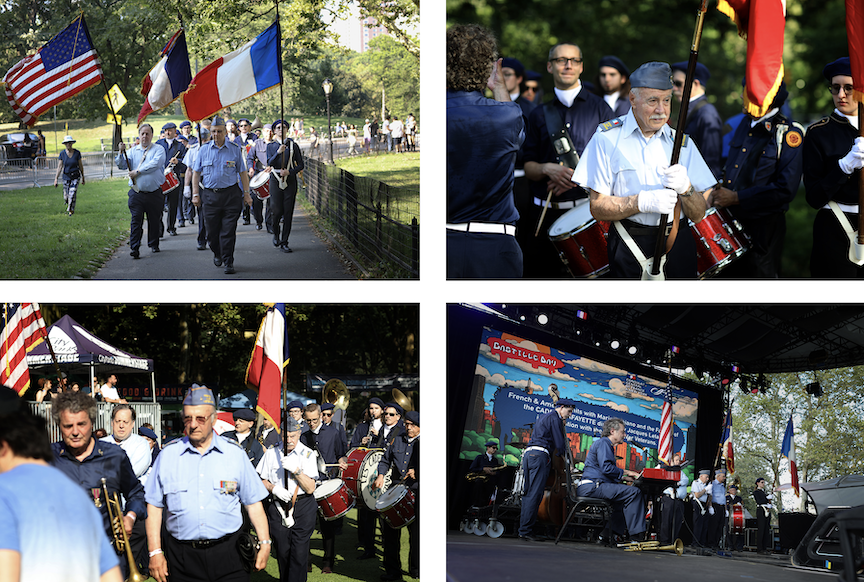
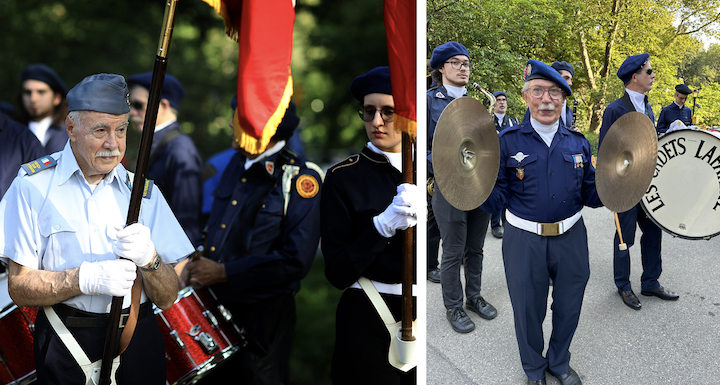
The annual concert celebration in Central Park was kicked off by a medley of French and American patriotic and popular tunes performed by the Cadets Lafayette marching Band led by Jacques Letalon and his wife Marie on stage, with the honor guard of the Federation of French War Veterans led by its president Alain Dupuis (also 2nd VP of our Society and Deputy General Delegate of Le Souvenir Français in the United States). Photos: Alain Dupuis, leading the march, Jacques Letalon on stage at the keyboard, French War Veterans Henri Dubarry holding the French flag, and André Ferrara (former president of the Federation of French War Veterans) at the cymbals.
|
|
Tribute to the French weekend in Newport, RI.
Friday, July 14 - Saturday, July 15, 2023
|
|
Click on the picture above to view "The French are coming!" |
|
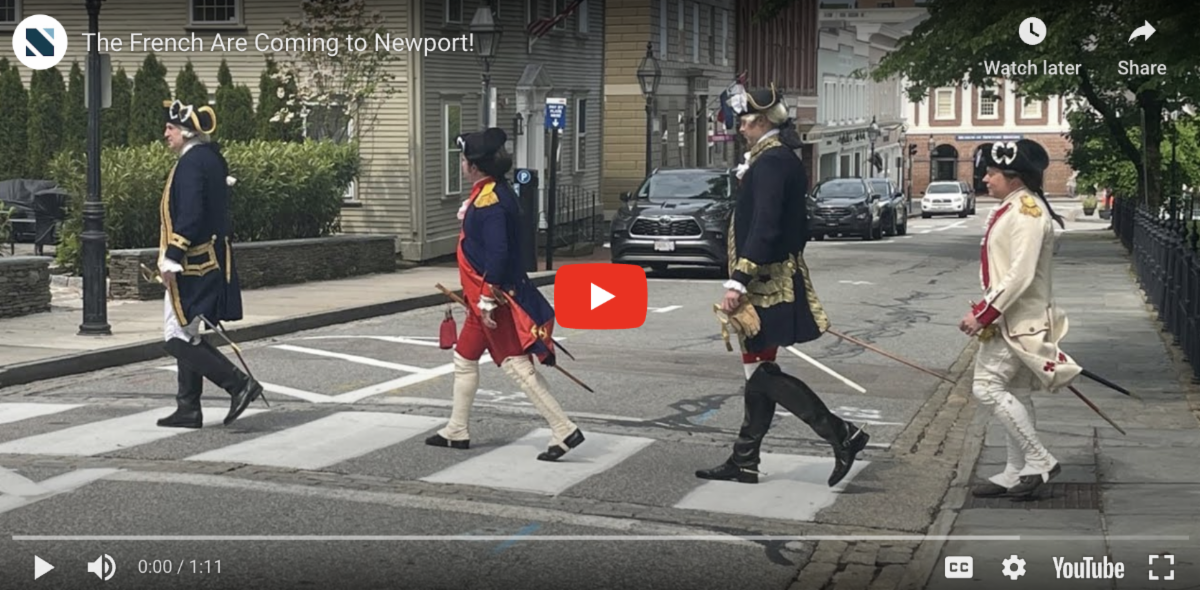
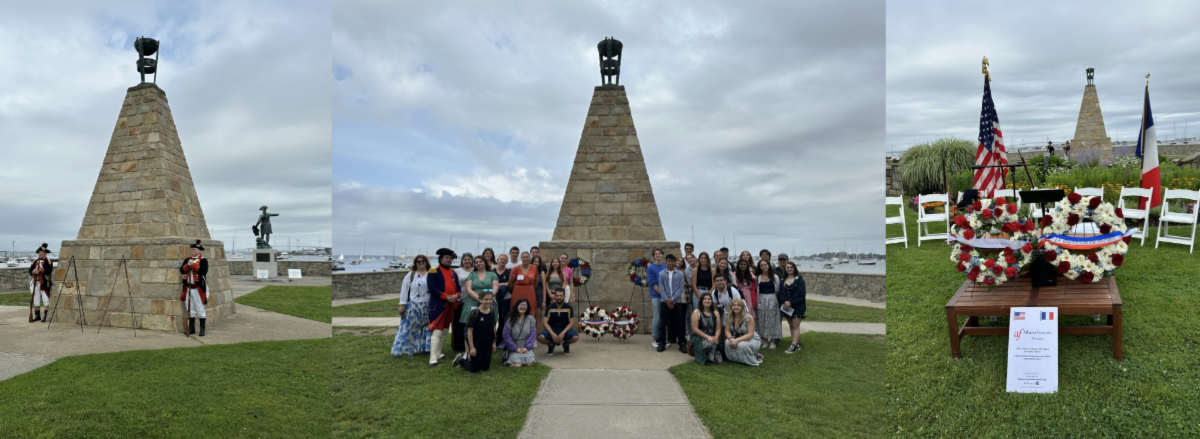
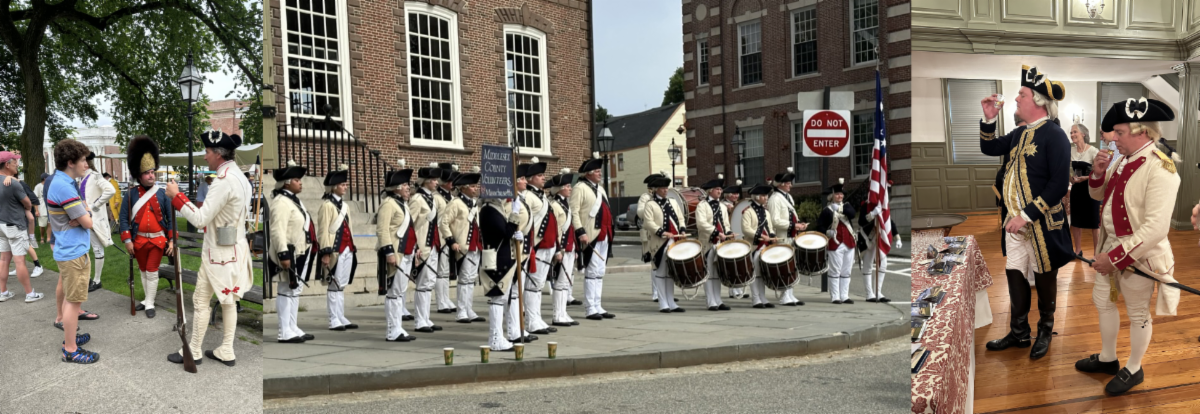
The weekend of July 14-15 celebrating the French in Newport was organized by the Newport Historical Society, the Alliance Française of Newport, the National Park Service, with the active participation of the American Friends of Lafayette and the American Society of Le Souvenir Français, who paid tribute to Rochambeau with their wreaths at the foot of the Monument to the French Fleet. Numerous tourists marveled at the period uniforms, re-enactors, and attended a public concert of drums and fifes as well as public lectures on the crucial role of the French Army and Navy to secure American Independence.
It was particularly encouraging to meet with a group of young French High School students visiting America and working on an archeological field in Bolton, Connecticut, site of the fifth encampment of the French Army on its way to Yorktown.
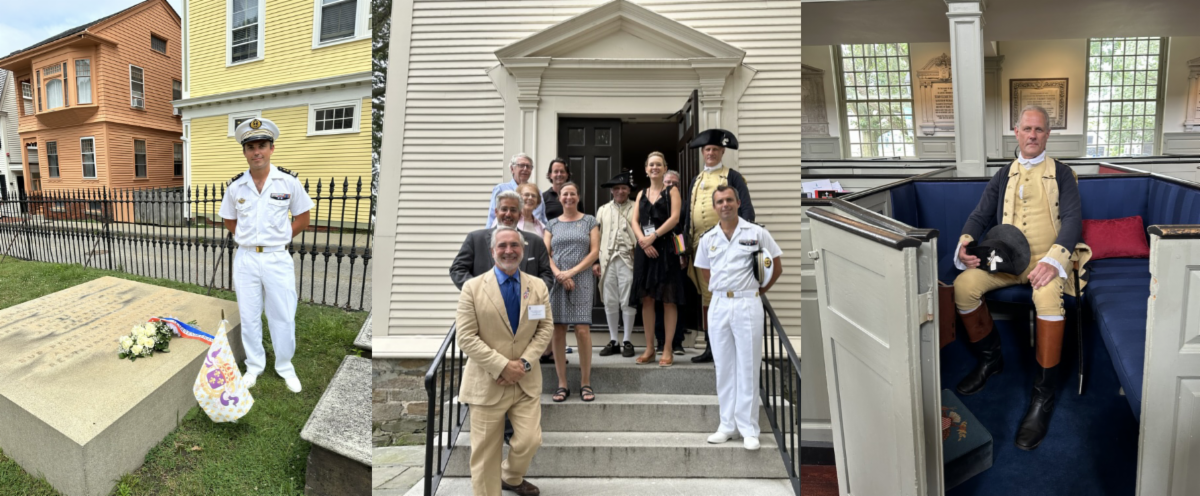
In a separate ceremony with Commander Malo Raoul, French Navy, US Navy Naval War College, Professor Norman Desmarais, Regional Delegate of Le Souvenir Français in New England, Allan Hoffman and Marilyn Hoffman, Chuck and Bonnie Schwam, respectively president and COO of the American Friends of Lafayette, and Dr. Iris de Rode, Ph.D., we laid a bouquet of white roses on the tomb of Admiral de Ternay at historic Trinity churchyard, and paid our respects to the two French Navy officers from the frigate Hermione who are also buried nearby.
John Koopman III, author of the book "George Washington at War - 1776", (https://johnkoopmaniii.com) whose physique and dimensions are almost identical to George Washington, came with us and sat in the very same pit where the illustrious general prayed.
Our thanks to all the organizations who joined forces to make it such a resounding success. Newport, R.I is a gem of a town, practically unchanged since the days of the French Army and Navy's presence in 1780.
(Photos: Thierry Chaunu)
|
|
From the American Revolution Museum, Yorktown, VA
August 3rd, 2023 at 6:30PM
|
|
Lecture at the American Revolution Museum, Yorktown, VA |
|
In the midst of the Summer heat we will be assembling in the cool classrooms and learning more about the American Battlefield Trust and the good work they are doing. Our speaker will be Owen Lanier who is a student at Gettysburg College and is a promising historian speaking on why preserving history is important.
So join us Thursday August 3rd at 6:30 PM at the American Revolution Museum at Yorktown. Members are encouraged to bring a friend and share and learn more about this great work.
|
|
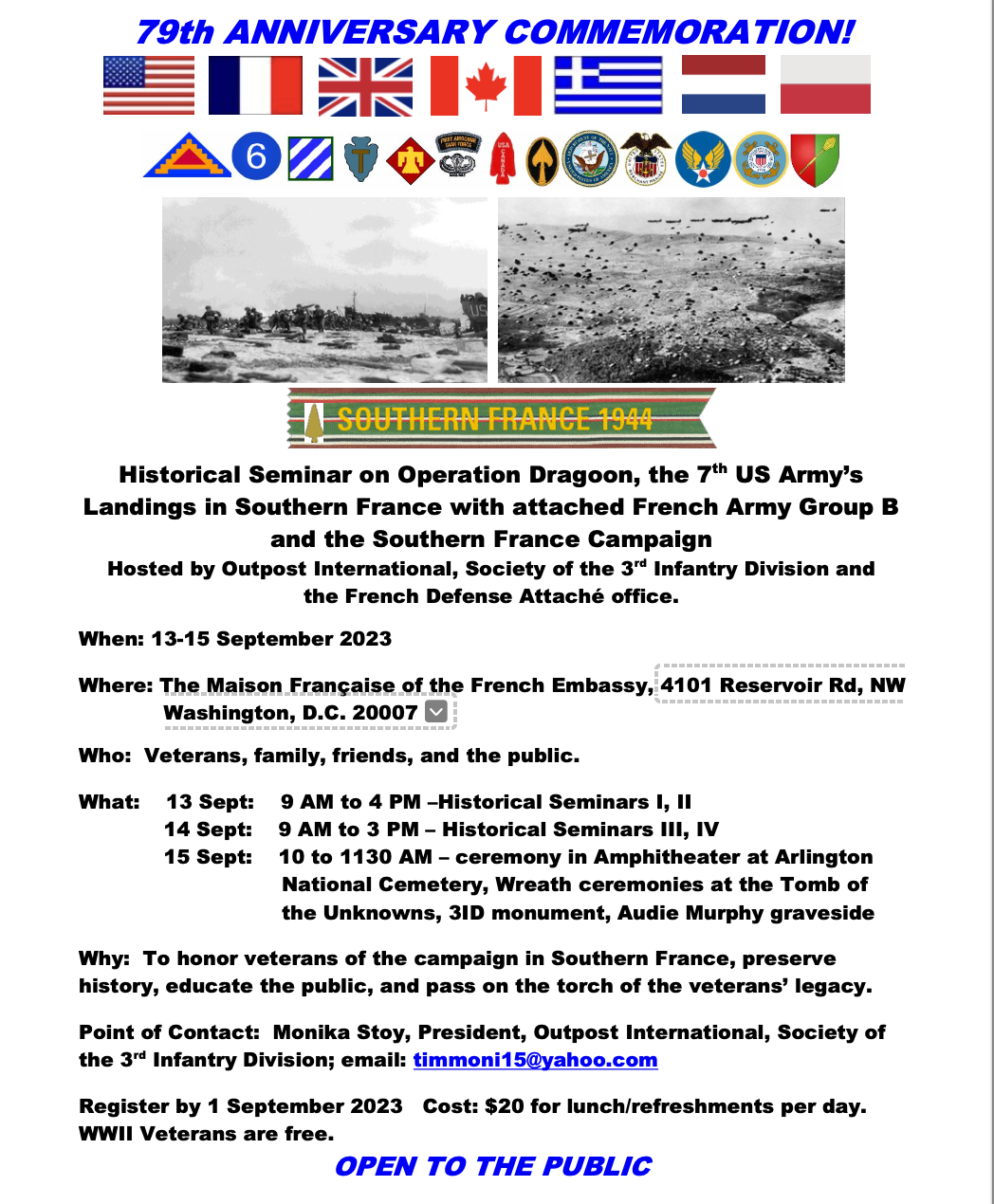
From the Society of the 3rd Infantry Division
13-15 September 2023
at the Maison Française, French Embassy in Washington D.C.
|
|
From Odell House - Rochambeau Headquarters
Sept 29, 2023 from 5 to 7:00PM
425 Ridge Rd, Hartsdale, NY 10530
|
|
You’re Invited to a Special Event!
SAVE THE DATE!
September 29, 5 to 7 p.m.
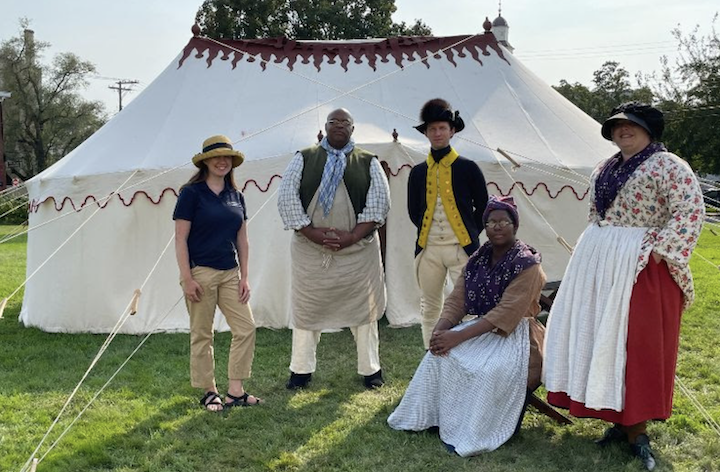
Please join Friends of Odell House Rochambeau Headquarters for a private showing of General George Washington’s Revolutionary War Tent, coming to Hart’s Brook Park & Preserve from the Museum of the American Revolution (MAR) in Philadelphia. Reenactors from MAR, in period costumes, will take you through exact replicas of Washington’s personal tent, the baggage and dining tents and the soldiers’ quarters. When American troops camped in Ardsley in 1781, Washington’s tents were erected on Appleby Farm nearby, while General Rochambeau stayed at OHRH.
There will be hors d’oeuvres and mocktails served in the historic Geisman Barn and a showing of the Odell House Rochambeau Headquarters artifacts. The following day the public will be invited to see the tent during our Colonial Day event.
Funds will go toward the creation of the exhibits to be used in the museum when the restoration of OHRH is completed.
More information and the link to purchase tickets will be sent in August.
|
|
THE SCULPTURE OF LE PETIT PRINCE®
SOON AT HOME IN NEW YORK IN SEPTEMBER!
|
|
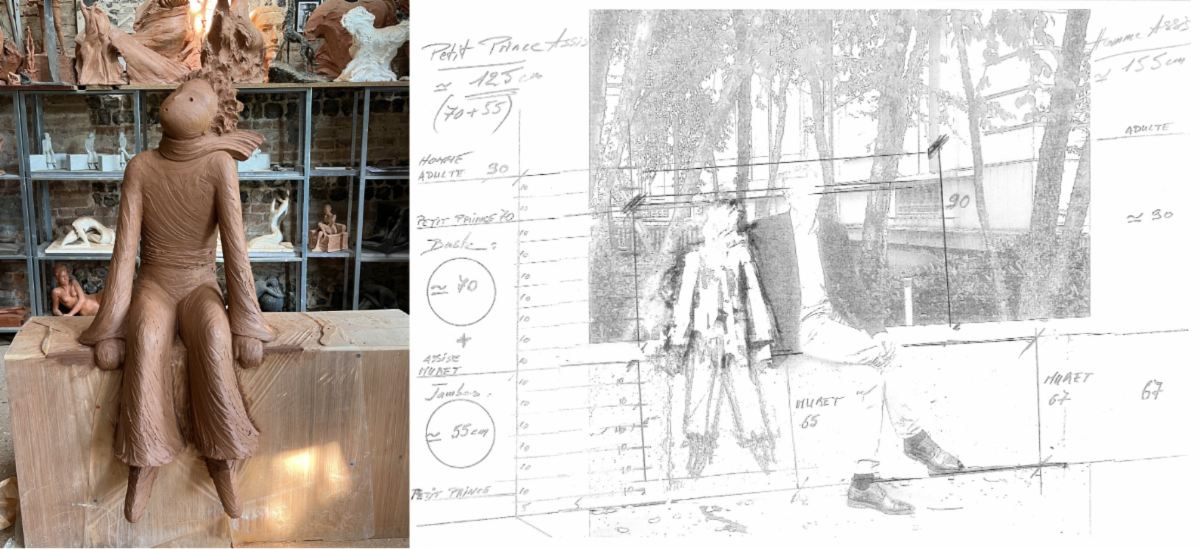
Photos and illustration courtesy of sculptor Jean-Marc de Pas. LE PETIT PRINCE® in the artist's studio at the Château de Boisguilbert, Normandie, looking at the stars and soon to be cast in bronze before flying courtesy of Air France to its new home at the French Cultural Services - Villa Albertine, NY.
|
|
Our association The American Society of Le Souvenir Français is at the origin of the Little Prince sculpture project in Manhattan, with the support of the Saint Exupéry Youth Foundation. It will be permanently installed facing Central Park, sitting on the wall near the entrance of the Services Culturels of the French Embassy / Villa Albertine bookstore.
The sculpture has just left the foundry to be transported to New York graciously by Air France, for an installation in August and an inauguration scheduled for around September 18-19, 2023.
The list of our "Grands Donateurs" will be publicized and be permanently featured on our website as well as the website of the Antoine de Saint Exupéry Youth Foundation:
Olivier d'Agay • Pierre-Olivier & Alexandra Bouée • Henri & Elisabeth Gazay • Jean-Hugues & Véronique Monier • Gildo Pallanca Pastor, Consul General of Monaco in New York • Rémy Raisner • Lionel & Jinus de Saint Exupéry •
And the following companies: Dassault • Air France • Venturi
We will keep you further informed in the coming August Bulletin!
|
|
OTHER SAVE THE DATES:
Tuesday, October 3 (TBC): dedication of our new historical marker "Duc de Lauzun and his Legion of hussars" at the Battle of the Hook at Gloucester, VA, just across the York river in Yorktown.
Thursday, October 19: Celebration of the combined French-American Victory at Yorktown, VA. with wreath-laying ceremonies at the French Cemetery at 8:30AM, the French Memorial Monument at 9:30AM and patriotic exercises at the Monument to Alliance and Victory at 11:00AM.
We will publish more details in our upcoming September Bulletin.
|
|
SUPPORT US AND BUY (OR OFFER) OUR E-BOOK ON AMAZON! |
|
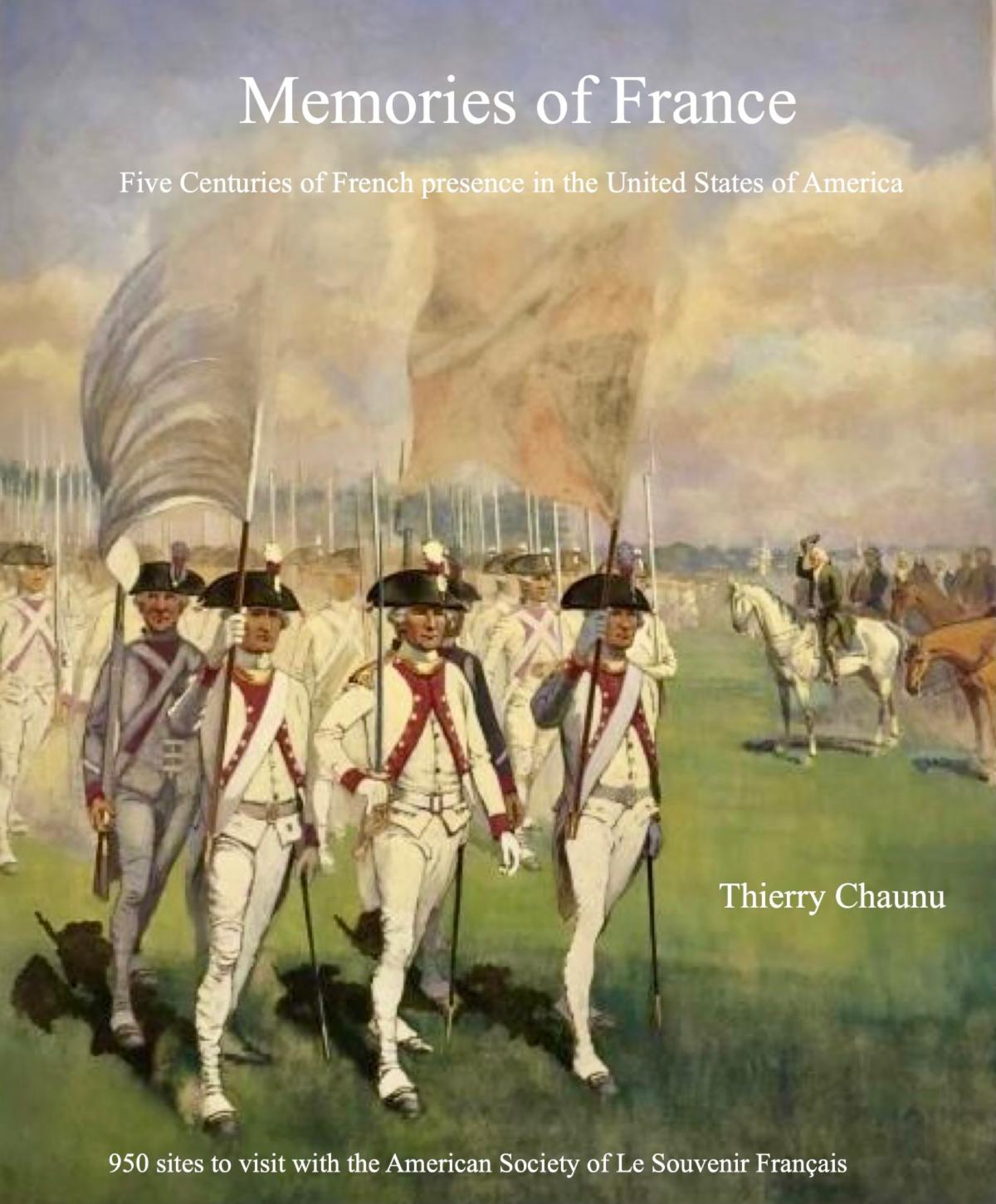
Book Cover : "Scenes from the American Revolution: The French "Soissonnais" Regiment Being Reviewed at Philadelphia by President Washington and Congress, 1781". By Charles MacKubin Lefferts (American, 1873 – 1923). Reproduced with permission of the New York Historical Society Museum. |
|
Support our organization! Purchase or offer this e-book which makes great reading for all ages. All royalties go to the American Society of Le Souvenir Français, Inc. Simply click on this link: Amazon.com
We are pleased to have given to the Consulate General of France several dozens of sites for the application mapstr. The complete and extensive descriptions are only available in our book, copyrighted by our organization.
MEMORIES OF FRANCE
950 sites of French presence in the United States over the past 5 centuries
Everyone knows that Lafayette, the Statue of Liberty, or New Orleans, were all French imports…
But did you know what the first protestant prayer in America, the first recorded birth of a European in North America, the first commercial artist, the first free school west of the Mississippi, the first discovery of Niagara Falls, the first grapefruit planter in Florida, the first discoverer of oil in America, the first Pulitzer Prize in history, the first archbishop of New Mexico, to name just a few, have in common? (Hint: they were all French)
CONTENTS:
Guide - historical directory of more than 950 sites where a French footprint has been left across the 50 states of the present United States, from 1524 to the turn of the 20th century.
It is written in two versions: in English and in French.
It is a tribute to explorers, missionaries, soldiers, adventurers, French, illustrious or unknown, who left their mark in the United States and are recognized, whose memory is honored by a monument, a statue, a stele, a panel, a billboard, a plaque...
Each page corresponds to one site and includes:
• Photo (with url link)
• Address with postal code
• Exact GPS coordinates
• A brief historical explanation
• The exact transcription of the inscription appearing on the pedestal or plaque
• One or more internet links directing the reader to more detailed information
• Some divider pages are dedicated to a brief biography of a related historical figure
This Guide can thus be compared to:
• An “Enthusiast’s dictionary” compiling the traces left by Frenchmen in the United States
• A collection of French postcards from the 50 States
• A tourist guide for all lovers of US history
Available in e-book
• E-book price: $19.50
• The book is copyrighted © American Society of Le Souvenir Français, Inc.
|
|
OUR MISSIONS:
• To preserve the memory of the French soldiers, sailors and airmen who gave their lives for freedom, and who are buried in the United States.
• To honor French Citizens who did great deeds in the United States, or with a strong connection with the United States,
• To promote the appreciation for French culture and heritage in the United States, and the ideals that unite our two nations, in order to pass the torch of memory to younger generations.
• To strengthen the long-standing traditional bonds of friendship between the American and French peoples, and to this end: erect or maintain memorials and monuments and encourage historical research, public presentations and publications in the media.
We are looking to complete our geographic coverage with Regional Delegates for the SouthWest in cities such as Austin, or Houston, and Louisiana, in cities such as New Orleans or Baton Rouge.
The American Society of Le Souvenir Français, Inc. is an independent American corporation, apolitical, established in 1993 in NY, with 501 (c) 3 non-profit status.
|
|
Board of Directors
American Society of Le Souvenir Français, Inc.
Members (2023):
Françoise Cestac, Honorary President • Thierry Chaunu, President, and General Delegate, Le Souvenir Français in the United States • Yves de Ternay, Treasurer • Patrick du Tertre, 1st Vice President • Henri Dubarry • Francis Dubois • Alain Dupuis, 2nd Vice President & Deputy General Delegate, Le Souvenir Français in the United States • Daniel Falgerho, General Secretary • Pierre Gervois • Caroline Lareuse • Clément Mbom, Education Advisor • Jean-Hugues Monier, Auditor • Harriet Saxon • Nicole Yancey
Regional Delegates:
Jacques Baisnenou, Great Lakes and Midwest • Bruno Cateni, South
Prof. Norman Desmarais, New England • Alain Leca, Washington D.C. •
Marc Onetto, West Coast • Brigitte Van den Hove – Smith, Southeast • Nicole Yancey, Yorktown & Virginia, former Honorary Consul of France in Virginia
|
|
Help us implement several historic commemorative projects celebrating the 245-year-old Franco-American friendship and alliance! |
|
The American Society of Le Souvenir Français, Inc. is a registered NY State non-profit corporation and has full IRS tax exempt 501(c)3 status. All donations are tax deductible.
Copyright © 2023 The American Society of Le Souvenir Français, Inc.
All Rights Reserved
Merci de nous contacter si vous souhaitez recevoir ce bulletin dans sa version traduite en français.
Contact: Thierry Chaunu, President
697 Third Avenue #341 New York, NY 10017
|
|
|
|
|
|
|