Phelim Lyos, left, with a colleague at Athlone station
Photo credit: Michael S. Murray | |
During the month of March, the Church celebrates the life and legacy of Patrick: Missionary and the Patron Saint of Ireland. In the run-up to his feast day, I find myself recalling my first-ever visit to the Emerald Isle.
It was the summer of 1994. Long before the terms “Uber” or “Lyft,” I served as my parents’ unofficial driver for two weeks. After landing in Shannon airport, over several days we made our way along local roads through Counties Clare and Galway before reaching our primary destination: County Mayo and the birthplace of my maternal grandparents, the village of Aghagower, perhaps best known for its links to Saint Patrick and Tóchar Phádraig, the pilgrimage route from Ballintubber Abbey to Croagh Patrick.
During our stay in the region, I frequently visited Irish Rail’s station in the town of Westport, the western terminus of the so-called “Mayo Branch.” Through connections with my Irish Carney cousins, I was offered the chance of a lifetime: to travel by train clear across the country to Dublin (and back, of course!) in the best seat in the house: up front in the locomotive, courtesy of life-long engineer (“engine driver,” in Irish), Mr. Phelim Lyons.
| |  | |
I cherish many images from my excursion that day. Halfway through our journey together, Phelim remarked, “Over the years, lots of people have sat in the same seat in which you’re sitting right now. Celebrities, ordinary folks, millionaires, farmers, politicians, and even the occasional clergyman. (He laughed, while looking straight ahead.) But you know what they have in common? We all run out of time.”
At the time, I thought: “Sounds to me like a little role reversal here. I mean, who’s preaching to whom? Can’t I just enjoy the moment?” Thirty-two years later, his comment is what I remember – and cherish – the most: the importance of living, savoring and making the best use of each and every moment of life as it comes. After a life well lived, Phelim’s time ran out on June 5, 2017.
With the passing of years, I associate the observation of this wise Irish engineer with similar thoughts from Francis de Sales, who wrote:
“Keep your eyes steadfastly fixed on that blissful day of eternity towards which the course of years bears us on; and these, as they pass, themselves pass by us stage by stage until we reach the end of the road. But meanwhile, in each passing moment there lies enclosed as in a tiny kernel the seed of all eternity; and in our humble little works of devotion lies hidden the prize of everlasting glory.”
Quite the insight: the journey to our eternal future is best advanced by fully living each moment in the present. For his part, Fr. Louis Brisson noted: “Let us use well the time that God gives us, so that God may give us His eternity.”
The Season of Lent is a great time to consider how well we are using the time with which we are gifted. For that matter, so is every season of life: day in and day out.
| | |
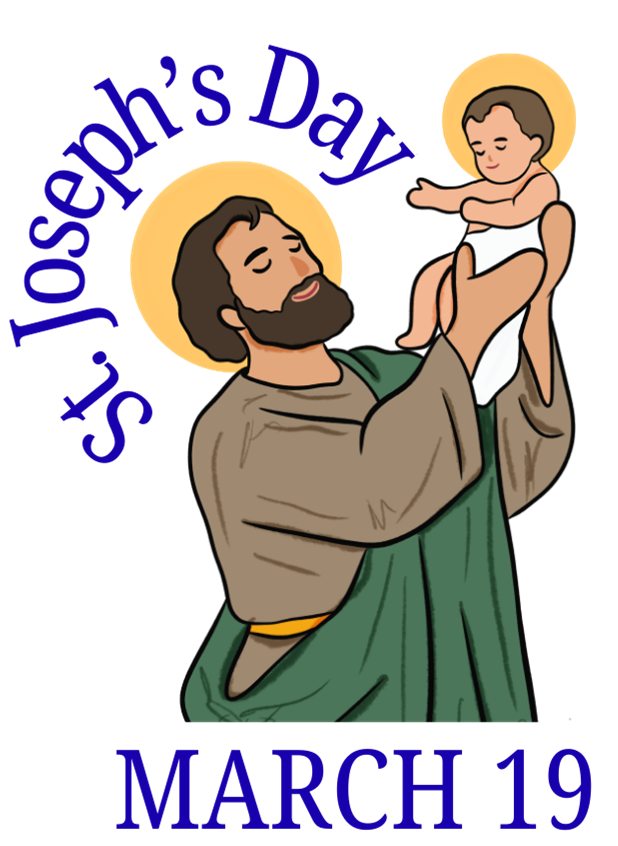
St. Joseph does not have quite as many celebrations as our beloved Mother Mary, but he does have two: the feast of St. Joseph the Worker on May 1 and the feast we celebrate on March 19, St. Joseph, spouse of the Blessed Virgin Mary. St. Joseph is honored as the protector of the family and patron of the universal Church. For centuries, St. Joseph's Day has been recognized with the tradition of the St. Joseph's Table.
Originating on the island of Sicily, it is said that villagers were experiencing a drought that left them without crops. They prayed for the intercession of St. Joseph to protect their hungry families, and St. Joseph guided them to plant the fava bean, which could thrive in harsh conditions. After the drought ended, as a sign of gratitude, they held a feast and invited all to celebrate their bounty.
Around the world yet today, St. Joseph's Table is celebrated in communities. Three tables are set in ascending heights, with a statue of St. Joseph positioned at the center of the highest table. The tables are filled, often with traditional Italian food and soups, and the fava bean is roasted to accompany the feast. Zeppole or St. Joseph Sfingi, a cream puff filled with ricotta cheese and adorned with candy fruit, is a favorite punctuation to the celebration. Traditionally, any leftovers from a St. Joseph's Table are given to the poor. The celebration reflects gratitude as well as the humility and simplicity of the spouse of the Blessed Virgin Mary, St. Joseph.
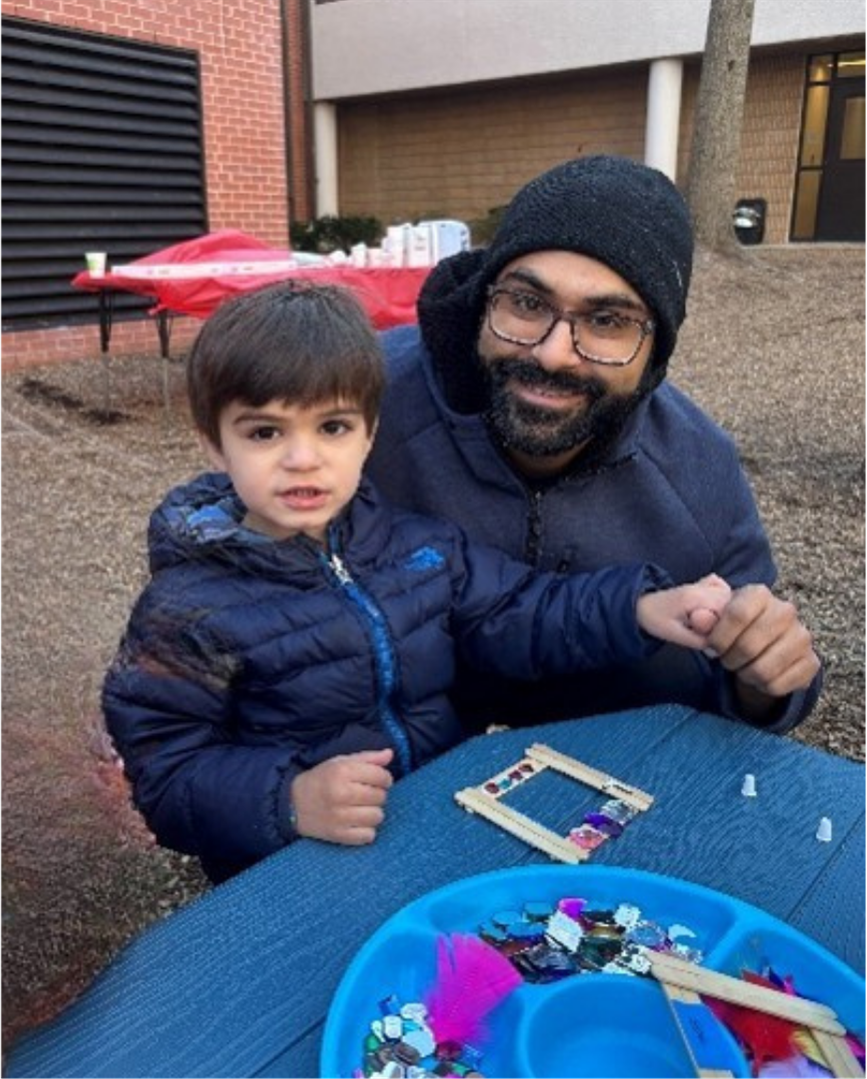
| | Dads enjoying SJN Preschool's St. Joseph Day Celebration last year. | | |
St. Joseph's Day at SJN Preschool
contributed by Kathy Dallessandro
How does St. John Neumann Preschool celebrate St. Joseph’s feast day? With Dads, of course! On (or about) March 19, all the dads, grandpas, and other father figures are invited to the Preschool to celebrate St. Joseph's Day with us before school begins for the day. We enjoy donuts (instead of Zeppole) with coffee (only the dads have coffee!) and just cherishing time spent together. In one class, dads and their children decorate a picture frame together, which we then complete with a sweet picture of just the two of them. In another class, each dad is presented with a letter written to remind him of all the ways he is loved. Best of all, the children spend precious time with their dads, treasuring the opportunity to show them all the fun they have on the playground and what they are learning in the classroom.
March 19 is a wonderful time to reflect on the role of St. Joseph in the Holy Family and our own salvation story. It is also the perfect opportunity to show gratitude for the gift of fathers in all of our lives.
| | Taking Up the Cross: In Recognition of Catholic Women
by Elizabeth Connell Wright | |
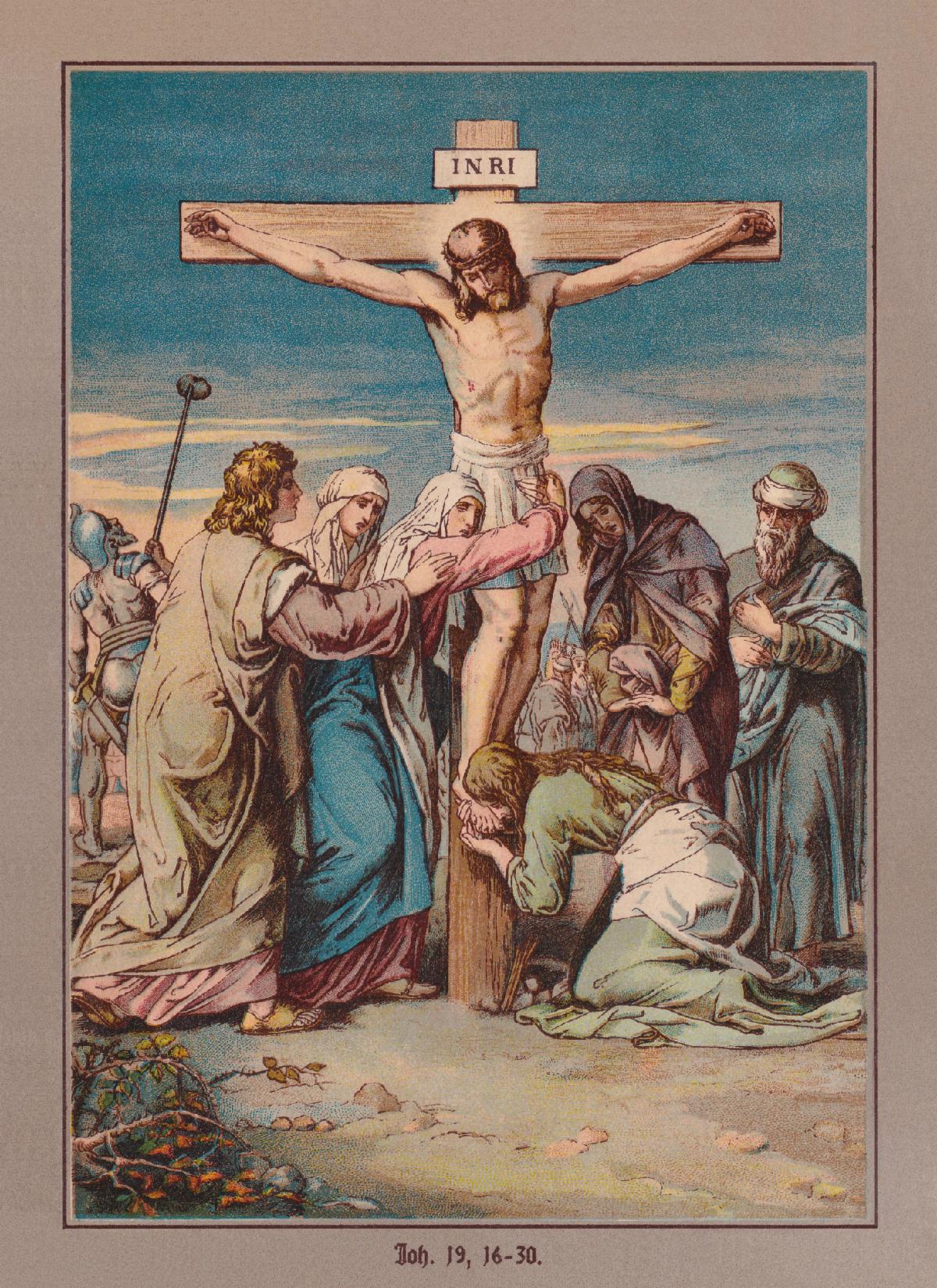
Three of the fourteen Stations of the Cross highlight the ministering of women to Jesus: Jesus meets his mother, Veronica Wipes the Face of Jesus, and Jesus Meets the Women of Jerusalem. All four Gospels include the mention of faithful women at the crucifixion, and all four also record Mary Magdalene (and possibly other women) as witnesses to the Resurrection. Over the past two millennia, women have continued to build up the Church by their strength of conviction and spread the Gospel through their sacrificial service to the most vulnerable. Designated as Women’s History Month, in March, we celebrate the contributions of women. Though there are countless women, many whose names are already forgotten, I will share a few of my favorite Catholic women who helped nurture Catholicism in the U.S. while embodying one of Christ’s most difficult directives: “Whoever wishes to come after me must deny himself, take up his cross and follow me” (Matthew 16:24).
|
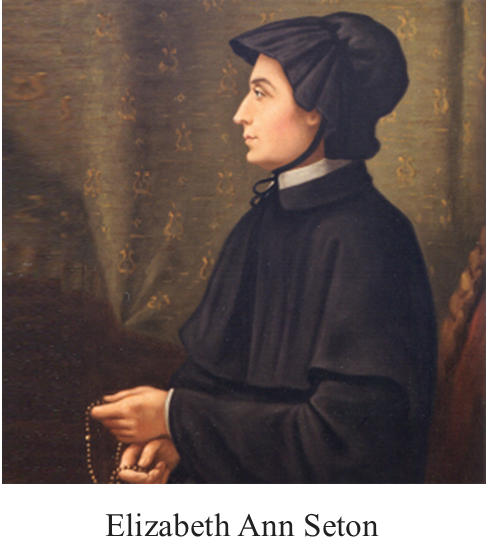
 | | Long before our nation was formed as we know it today, women were accompanying missionaries to the “New World.” Just two years before our Declaration of Independence was signed was the birth of the first American-born saint, Saint Elizabeth Seton. Born into a prominent, Episcopalian family in New York City in 1774, Elizabeth suffered tremendous loss before converting to Catholicism at the age of 30. Her mother died when she was just three years old, and her husband died when she was 29, leaving her with five children and no financial security. The Seton family had traveled to Italy in hopes that the warmer climate would relieve her husband, William McGee Seton’s sufferings from tuberculosis, but William succumbed to his illness shortly after arriving in Italy. Elizabeth remained in Italy with the Filicchi family, associates of her husband, who were also devout Catholics. In her time with the Filicchis, as she grieved, she became increasingly interested in the Catholic faith they practiced.
In 1804, Elizabeth returned to New York and continued to contemplate Catholicism. Unlike Italy, the United States did not look favorably on Catholics — in response to immigration, anti-Catholicism was rampant. Converting would even further alienate the already desperate Seton family. But knowing the consequences, Elizabeth Ann Seton took up her cross. On March 14, 1805, she was received into the Church. Immediately, she suffered the impacts: her family disowned her, and the academy for young ladies that she ran to support her family collapsed as parents removed their daughters. Despair and doubt plagued Elizabeth, had her religious idealism left her children destitute?
| |
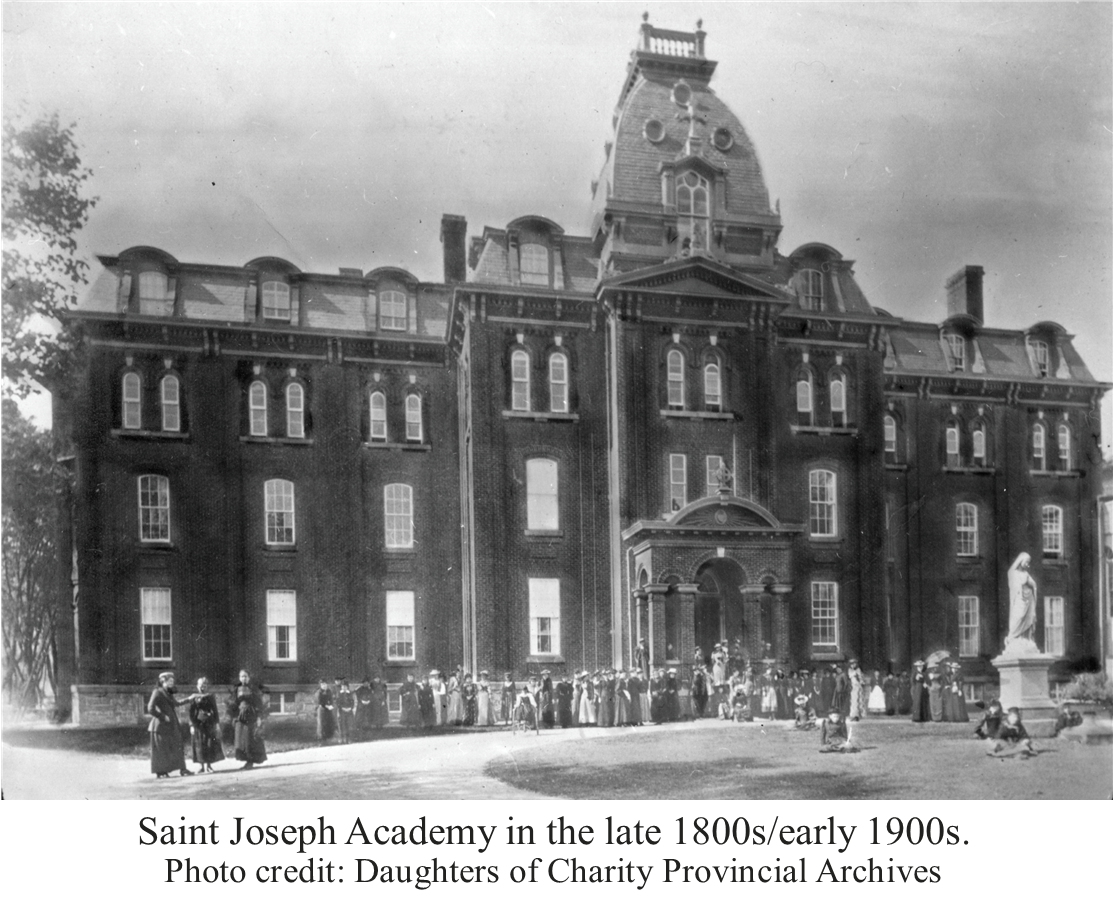
Archbishop John Carroll, the nation’s first Catholic bishop, wrote to Elizabeth in 1808, inviting her to Baltimore to open a new school under his guidance, and she relocated her family. A year later, she moved from Baltimore to Emmitsburg, Maryland, to establish the first religious community of women founded in the U.S., the Sisters of Charity, serving as their Mother General. The following year, the sisters, led by Mother Seton, opened Saint Joseph’s Academy and Free School, which provided a Catholic education to girls and planted the seed for the growth of Catholic schools in the United States. (Read here a letter Elizabeth Seton wrote to Filippo Filicchi, who had hosted her family in Italy, about her plans.)
On January 4, 1821, Elizabeth, like her husband, also succumbed to tuberculosis, but not before she had firmly established a legacy of love in the U.S. The Sisters of Charity went on to create many other schools as well as hospitals, orphanages, and support for those with mental illness. (See details here.)
Saint Elizabeth Ann Seton was canonized the first American-born saint on September 14, 1975, by Pope Paul VI. He said of her, “Elizabeth Ann Seton is a saint. St. Elizabeth Ann Seton is an American. All of us say this with special joy, and with the intention of honoring the land and the nation from which she sprang forth as the first flower in the calendar of the saints. Elizabeth Ann Seton was wholly American! Rejoice for your glorious daughter. Be proud of her. And know how to preserve her fruitful heritage.”
| |
Twenty years after, in 1829, Saint Elizabeth Ann Seton established the Sisters of Charity, the first religious congregation founded in the U.S., Mary Elizabeth Lange established the Oblate Sisters of Providence, the first religious congregation for African Americans. Thought to be born in 1789 in Santiago de Cuba, Elizabeth Clarisse Lange was educated well before her family had to flee Cuba in the early 1800s, seeking security in the U.S. By 1813, she was living in Baltimore, and was inspired and determined to respond to the suffering she saw amidst the Black community. With a friend, Marie Magdelaine Balas, she began to educate Black children in her home and evangelize to their community of immigrants and freedmen.
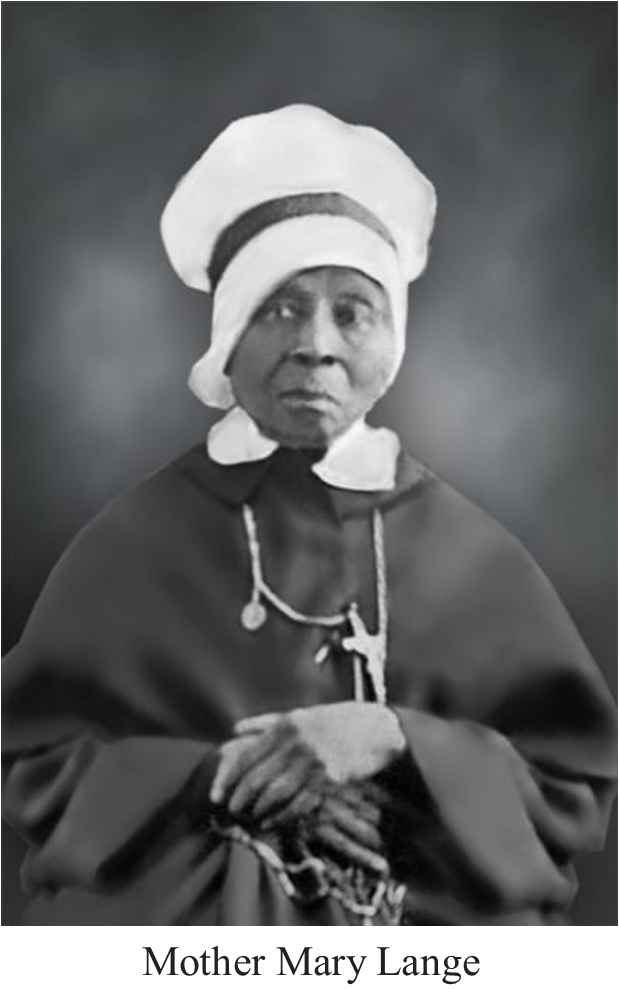
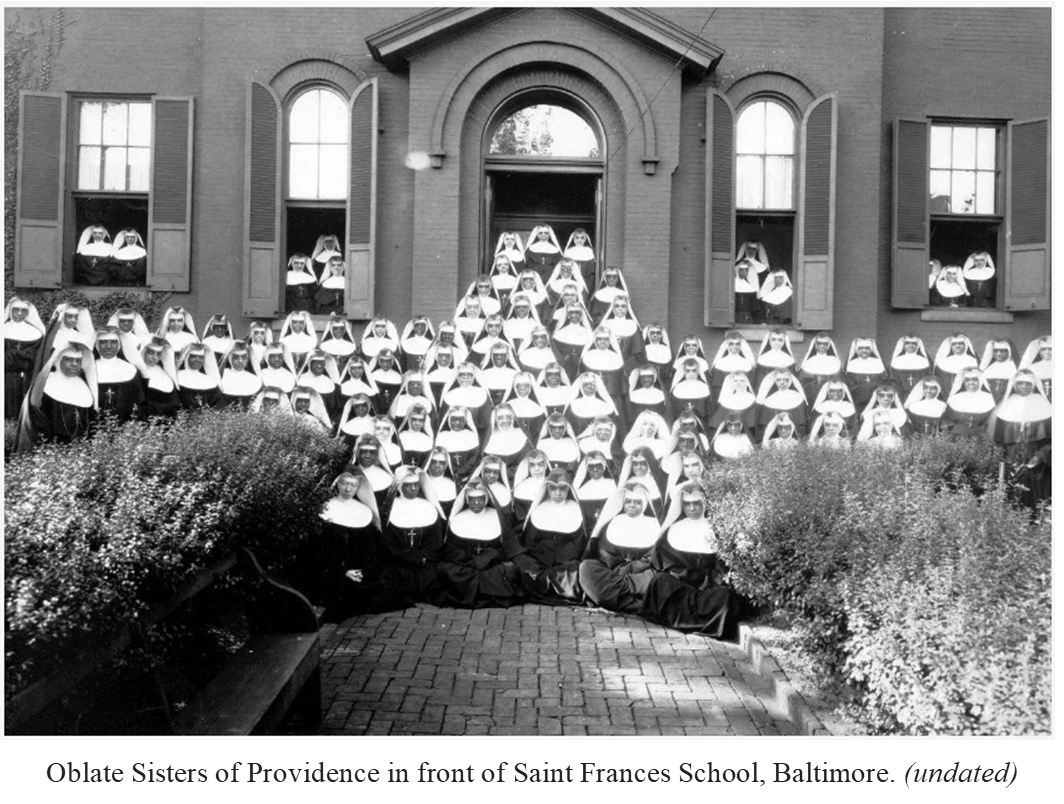
In 1828, Fr. James Joubert, S.S. encouraged her to officially open a Catholic school for Black girls; with his support, she established Saint Frances Academy, which today is our nation’s oldest continually operating Black Catholic school. On July 2, 1829, she and three other women took vows of poverty, chastity, and obedience, and the Oblate Sisters of Providence was born with Elizabeth Lange becoming their Mother General, Mary Lange.
| |
Their small community had a significant impact as they worked tirelessly to educate and evangelize youth, orphans, and those who had been freed from slavery. During the cholera epidemic of 1832, they nursed the elderly and terminally ill. It was not an easy road for the Oblate Sisters. Though they lived and worked in a “free state,” injustice, cruelty, and racial discrimination was rampant — in society and the Church. Only Mary’s deep well of faith and conviction empowered her to carry her cross and accomplish works that were thought impossible for a Black woman in the United States in the 1800s. When the Civil War ended and Blacks who had been enslaved flocked to Baltimore seeking an opportunity to live free, the Oblate Sisters had already been established over thirty years. With schools to educate youth and adults, an orphanage, spiritual direction, vocational training, and religious education, the Sisters were Christ’s shining light for the vulnerable, destitute, and hopeless.
In 1882, Mother Mary Lange died. Baltimore Catholics immediately regarded her as a saint, but it wasn’t until 1991 that her path to canonization began. In 2023, she was declared Venerable by Pope Francis and continues the path to sainthood. The United States Council of Catholic Bishops (USCCB) says of Mother Mary Lange, “Her ministry was not merely charitable — it was an act of justice... Her life calls the Church to deeper reconciliation, and her witness continues to inspire movements for justice, inclusion, and healing.” It would be fitting for this strong, remarkable, determined woman to one day become the first African American saint.
| |
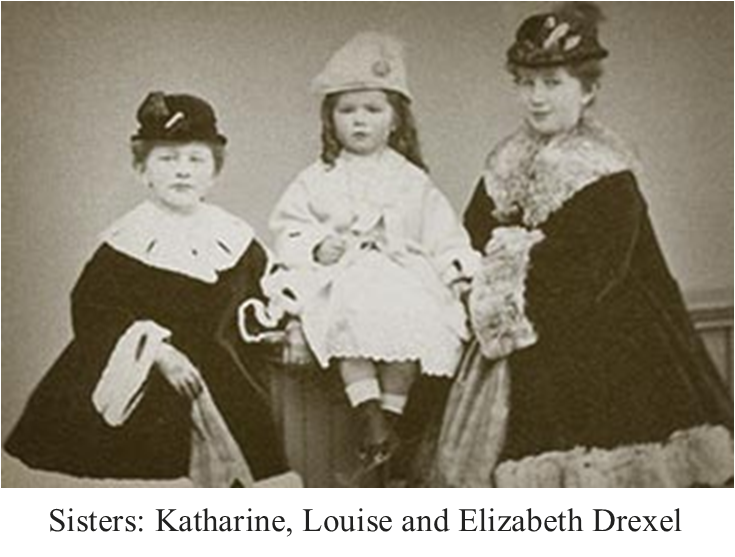
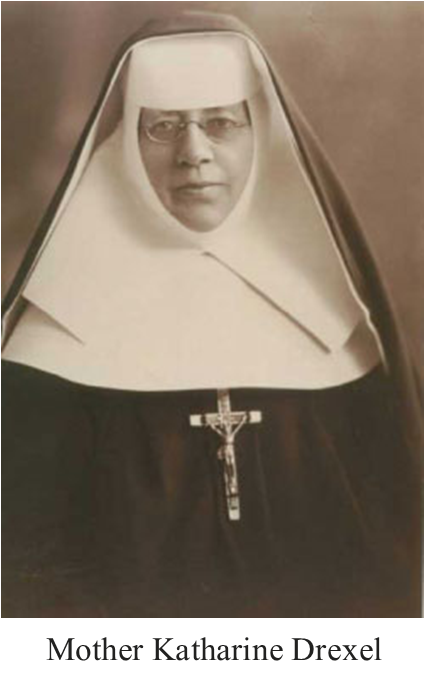
In some ways, the mission of Saint Katharine Drexel was similar to that of Mother Mary Lange, yet from opposite ends of society’s hierarchy. Katharine Drexel was born into a prominent, wealthy Catholic family in Philadelphia in 1858. Her mother died just five weeks after her birth, but her father remarried, and she grew up in a loving home. Alongside her two sisters, Katharine regularly witnessed her devout Catholic parents’ deep devotion to caring for the poor. As a young woman, she had the opportunity to accompany her father, Francis Anthony Drexel, on a trip out West and was deeply impacted by what she encountered. She observed firsthand the stark injustice and poverty that Native Americans were experiencing as they were forced onto reservations. Their cry for love and mercy was engraved on her heart.
In 1883, her beloved stepmother, Emma, died after three years of Katharine nursing her as she suffered from cancer. In 1885, her father, who was one of the wealthiest men in the U.S., died and the daughters inherited $15 million. Katharine, now with the clear means to serve the Native American people, established St. Catherine Indian School in Santa Fe in 1887, and began a mission to provide food, clothing, and financial support. In 1887, she and her two sisters had a private audience with Pope Leo XIII, requesting missionaries to support her mission to Native Americans, and instead, he challenged Katharine to grow her own missionaries.
| |
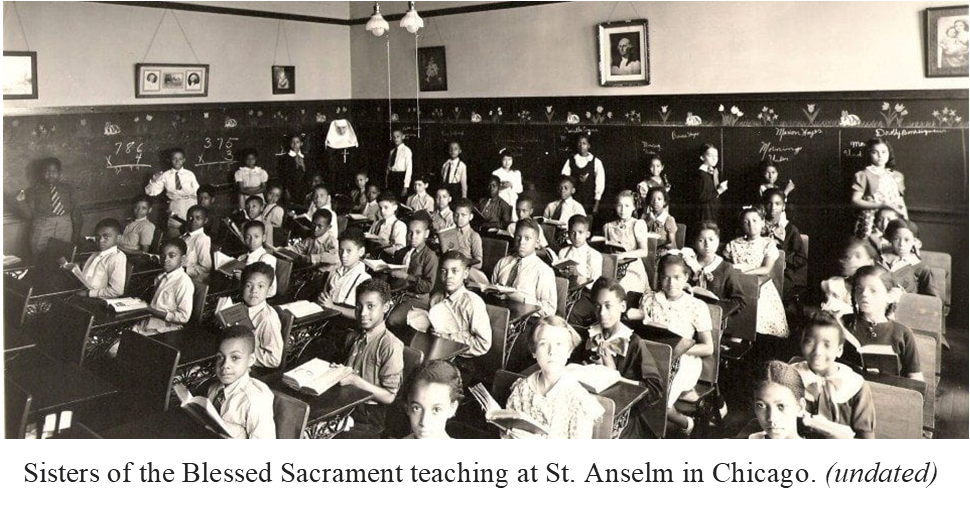
She accepted the challenge and joined the Sisters of Mercy in Pittsburgh. In 1891, she and fifteen of her Sisters, founded the Sisters of the Blessed Sacrament with a fourth vow added to poverty, chastity, and obedience: to serve the Black and Native American people. Believing education was needed to be truly free, the Sisters, under Katharine Drexel and her legacy of love, have now opened almost 60 missions, schools, hospitals, houses of prayer, and pastoral centers. In the 1920s, the Sisters established the nation’s only Historically Black Catholic University, Xavier University of Louisiana. In 1955, upon her death at the age of 96, the Sisters of the Blessed Sacrament had grown to 500 sisters in 51 convents. In the end, she gave more than her treasure, she gave her life: “I am not made to enjoy riches, luxury – these are not my end. My end is God. All is his gift; all must be returned to him.”
While Katharine Drexel’s privilege and fortune certainly paved a smoother path and opened more doors, she readily took up her cross, “The patient and humble endurance of the cross —whatever nature it may be — is the highest work we have to do.” On October 1, 2000, Saint Katharine Drexel was canonized by Pope John Paul II becoming the first person born a U.S. citizen to be declared a Catholic saint.
| |
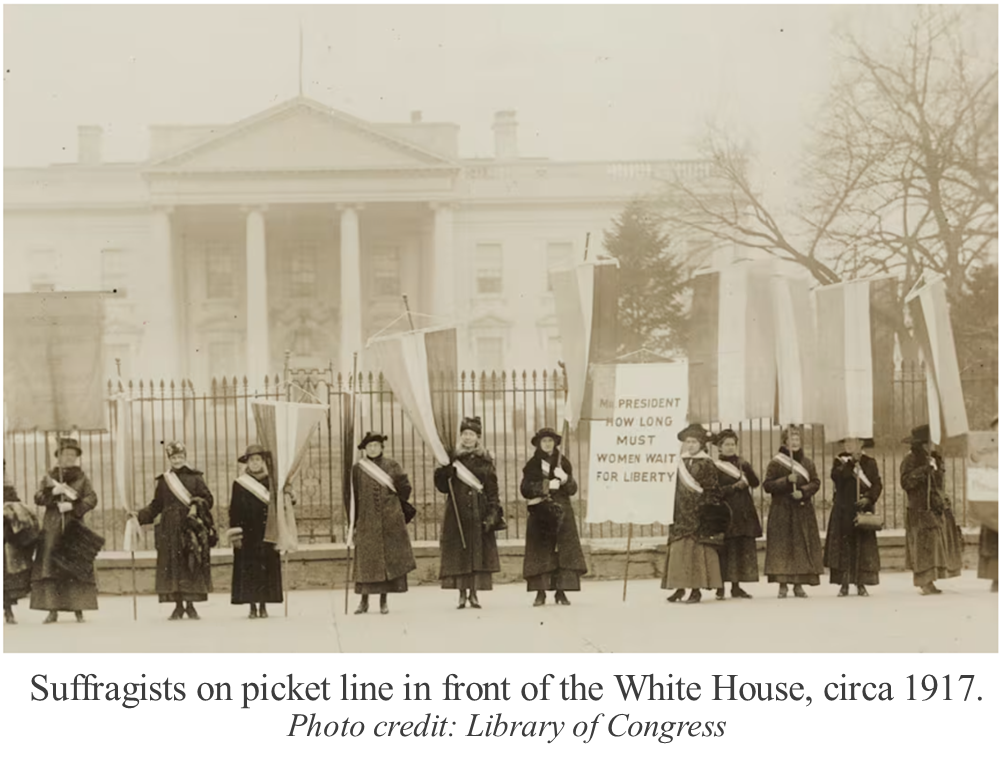
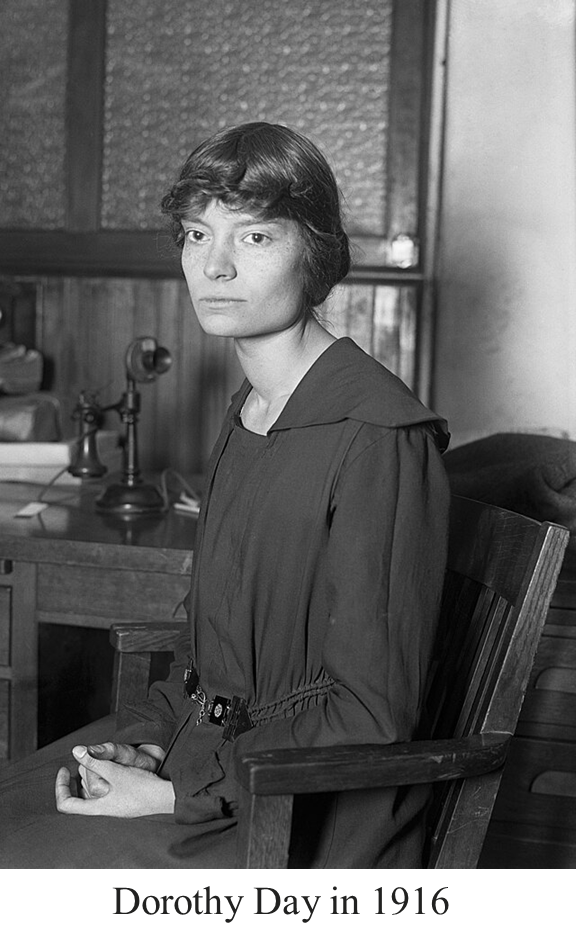
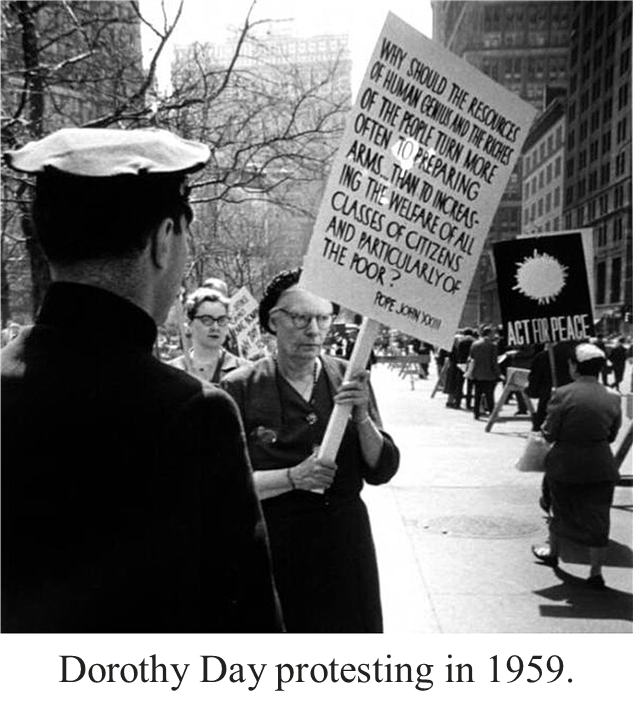
Like Saint Elizabeth Ann Seton, many other Catholic converts to Catholicism have been inspired by their conversion to take up a cross and love radically, especially Dorothy Day. Born in Brooklyn in 1897, Dorothy Day came into adulthood at another tumultuous time in American history: We were on the brink of the first World War, and women were fighting for the right to vote. An avid reader and writer, even in her youth, Dorothy leaned heavily toward political activism; her first arrest was in front of the White House in 1917 as part of the Silent Sentinels organized by Alice Paul for women’s suffrage.
| After dropping out of college, Dorothy moved back to New York (from Chicago) and settled into writing and activism. After giving birth to her daughter, Tamar Teresa, in 1926 she began seriously studying Catholicism, enlightened by the social teachings that aligned with her own passion. In 1927, after having her daughter baptized a Catholic, Dorothy converted to Catholicism. In 1932 with Peter Maurin, Dorothy founded the Catholic Worker Movement; their newspaper, The Catholic Worker, was first published on May 1, 1933, at the height of the Great Depression. The newspaper’s mission was to give hope to those suffering in the Great Depression, to teach them of the Catholic Church’s social programs, and advocate for justice. For the next 50 years, she became, one of America’s greatest champions for the poor, continuing her activism and establishing Catholic Worker houses for charity and justice. | |
Dorothy Day declared her manifesto to be the Beatitudes, and she embodied this by voluntarily living in poverty, challenging racism and injustice, and establishing houses to feed and shelter the poor. While her writing and choices seemed radical to many, they were profoundly rooted in the Gospel. A devoted pacifist and champion to the causes of the vulnerable, she was arrested and imprisoned at least four times, the final time at the age of 76 when she spent ten days in jail for a nonviolent demonstration against the Teamsters Union in support of Cesar Chavez and the United Farm Workers in California. Through her prodigious writing, dedication to the teachings of Christ, and commitment to peace and justice, Dorothy Day lived her faith out loud. She seemed to take up the cross with confidence and unwavering vigor that was anchored by a humble trust in God and a devout commitment to the Eucharist.
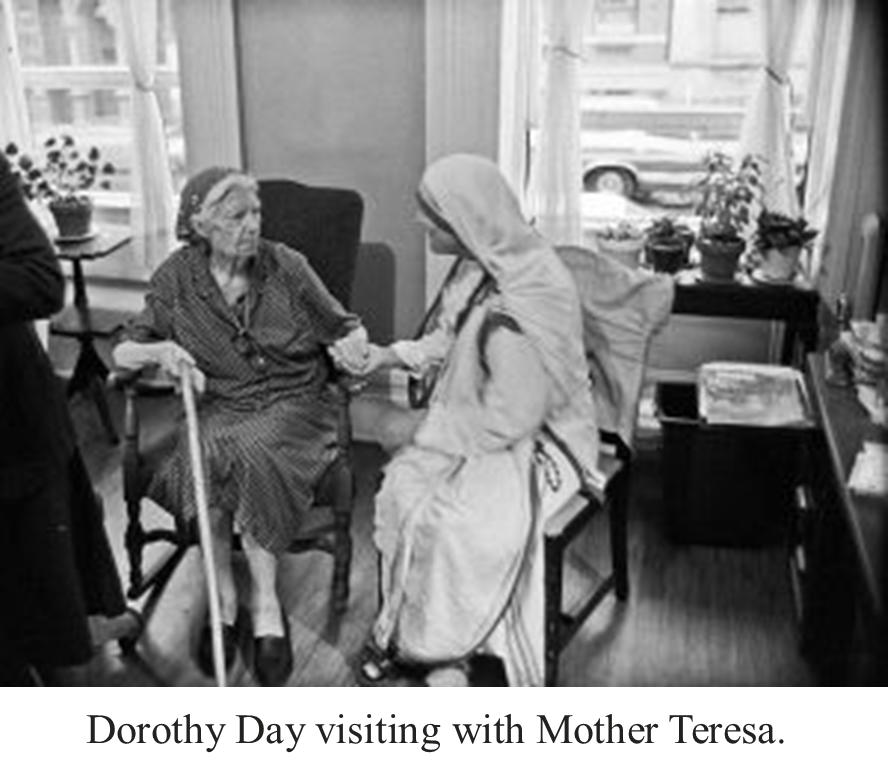
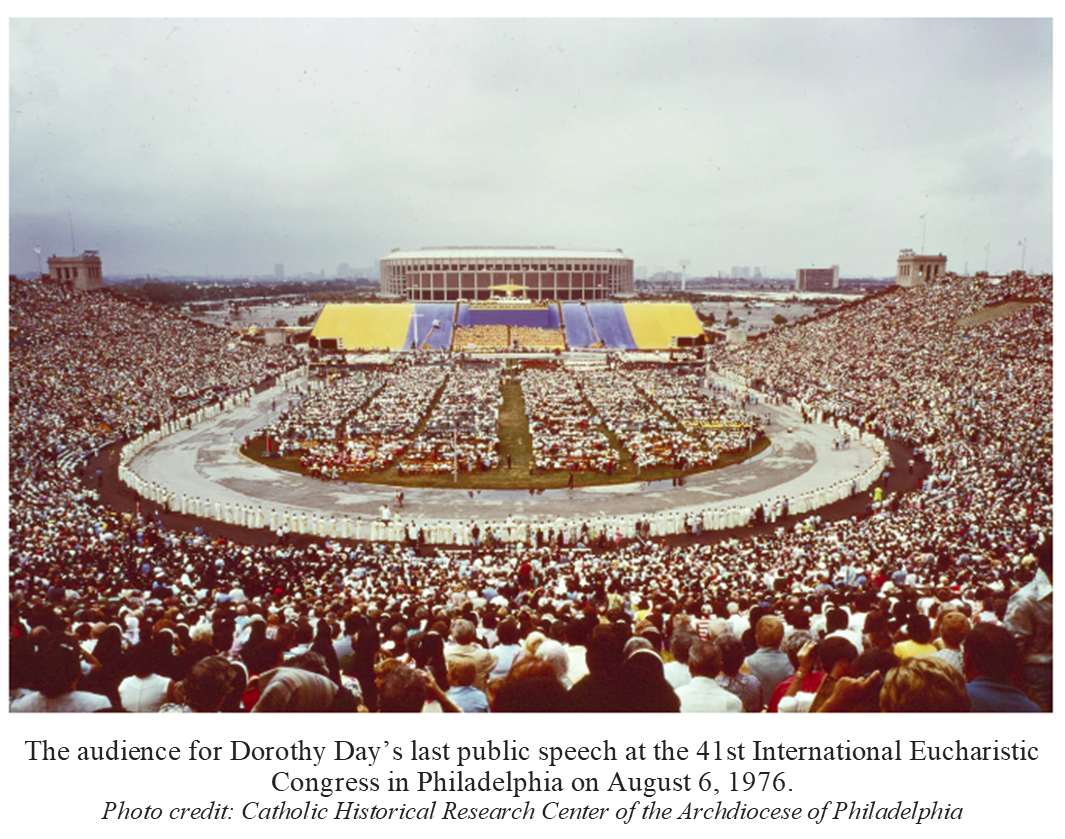
In her lifetime, she met with Mother Teresa on multiple occasions as well as Pope John XXIII in 1963. Her last public speech was before the Eucharistic Congress in Philadelphia on August 6,1976. She spoke of her love for the Church: “She was my mother and nourished me and taught me. She taught me the crowning love of the life of the Spirit.” She also encouraged Catholic women to be activists for peace saying, “Women, who were born to nourish, to bring forth life, not to destroy it, must do more than thank God we survived it.” After this appearance, she suffered a heart attack and never fully recovered; she died just over four years later on November 29, 1980.
| |
In November 2025, Pope Leo XIV said of her, “Dorothy served meals, gave clothes, dressed and ate like those she served: she united mind, heart, and hands. In this way, hope is taking a stand. This is what peacemakers are like: they take a stand and bear the consequences, but they move forward. To hope is to take a stand, like Jesus, with Jesus. His fire is our fire.”
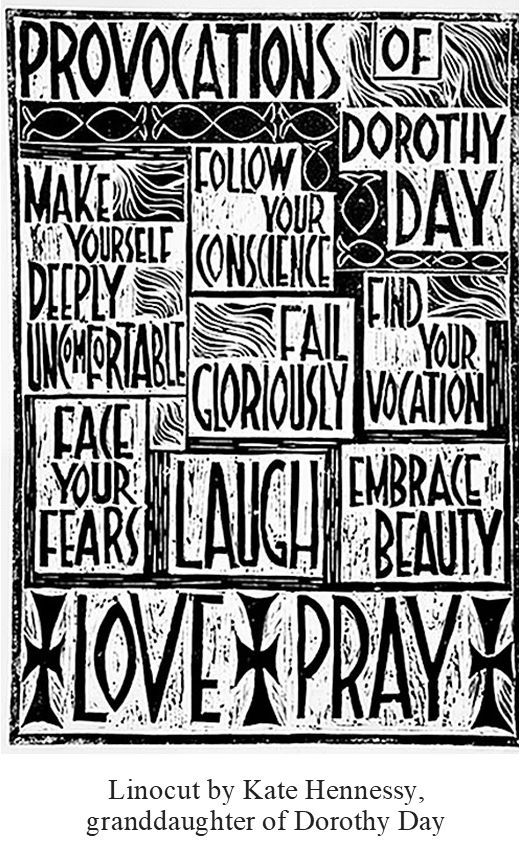
| | The legacy of peace and justice she left burns in the hearts of many Catholics yet today. Last year, The Catholic Worker Movement published the Nine Provocations of Dorothy Day and never have these been truer than in our nation and faith today: | | |
1. Make yourself deeply uncomfortable
2. Follow your conscience
3. Find your vocation
4. Face your fears
5. Fail gloriously
6. Open yourself up to beauty
7. Laugh
8. Love
9. Pray
In 2000, Dorothy Day was named a Servant of God and the cause for canonization commenced. The Dorothy Day Guild was established five years later, and in 2022, the Vatican’s Dicastery for the Causes of Saints received all documentation, including the FBI files on her, in which J. Edgar Hoover writes, “Dorothy Day is a very erratic and irresponsible person who makes every effort to castigate the Bureau whenever she feels inclined.” Although she is on the path to sainthood, she famously said, “Don’t call me a saint. I don’t want to be dismissed so easily.” Well, she may not get her way regarding sainthood, but I also don’t think she will ever be easily dismissed...and that, is a very good thing.
These women are just a few examples of the countless who shaped Catholicism in the U.S. The bitter truth is that women on their own had few rights in our country. We weren’t allowed to vote until 1920; we weren’t fully allowed to own property or open a line of credit — without being married, inheriting it, or having a male cosigner — until 1974. Yet, even without their own societal power, these Catholic women uniquely wielded their feminine genius to profoundly root American Catholicism in living the Gospel, caring for the poor, and amplifying the voices of the marginalized through education. Like the women in the Way of the Cross and the Passion Scriptures, they believed, responded, and ministered the pure love born of Christ with dignity and courage.
| | |
To the Heights!
contributed by Audrey Nord-Murphy
In the words of Saint Pier Giorgio Frassati, “Verso L’Alto!” During the High School Youth Ministry’s winter retreat, we gathered in food, faith, fun, and fellowship and explored both the physical and spiritual meaning of the recently canonized saint’s famous quote, “to the heights.”
Not only did we enjoy going to a waterpark and taking to the slopes — whether it was our first time or our hundredth — but it was also a chance for each of us to grow in community and learn about Pier Giorgio. Specifically, we explored how he lived out the beatitudes in his daily life and how it can translate to our lives. From being more mindful of our language to the service project, making toiletry kits for those less fortunate, there are lots of ways we found to live the beatitudes.
It was a transformative retreat for the H.S. Youth Ministry. If you are a teen in high school, make sure to keep an eye out for our next one and join us every Sunday for Youth Group!
| | |
Walking with Jesus
by Elizabeth Connell Wright
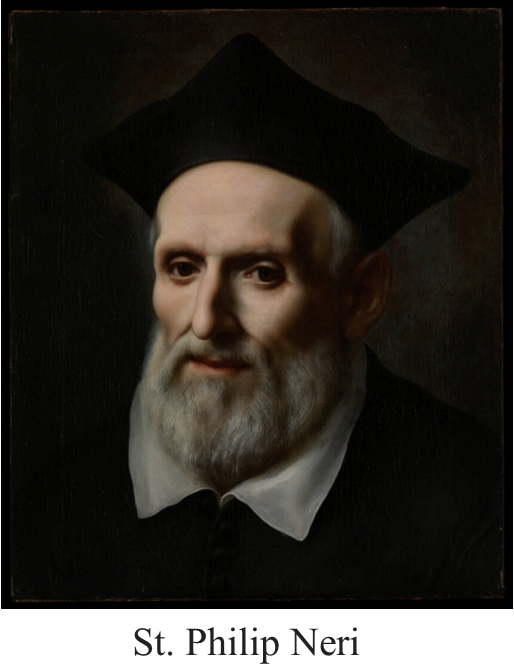
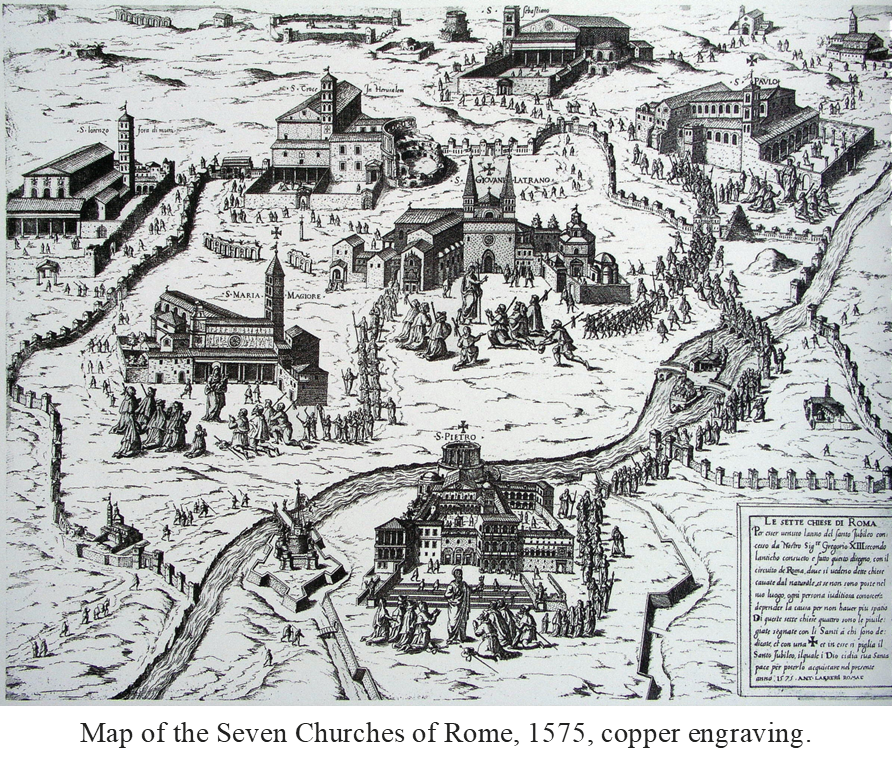
When Philip Neri lived in Rome in 1553, shortly after his ordination, response to Martin Luther’s Reformation was still rippling across Europe, while the Council of Trent was formulating the Church's clarifying reply to doctrinal accusations. Both indifference and corruption were plaguing clergy, and Philip Neri knew that these "new times" needed new ideas. Philip, known for his cheerful heart and devotion to saving souls, began hosting one-day pilgrimages. Packing a picnic and selecting a musician to accompany the devotional walk, he would invite people to join him as he visited seven churches: beginning at St. Peter’s Basilica and on to St. Paul Outside the Walls, St. Sebastian, St. John Lateran, Holy Cross in Jerusalem, St Lawrence, and ending at Basilica di Santa Maria Maggiore (St. Mary Major). Over time, the short pilgrimage attracted many devotees, bolstering both their faith and sense of community. The simple devotion took root and thrives yet today: the street between St. Paul Outside the Walls and St. Sebastian is today known as Via Delle Sette Chiese – Seven Churches Walk. In Rome, the Seven Churches Walk will happen on the Wednesday of Holy Week, but in many other places, including Mexico, Poland, the Philippines, and here in our own diocese, the Seven Churches Pilgrimage will happen after Holy Thursday Mass as we stay awake with Jesus.
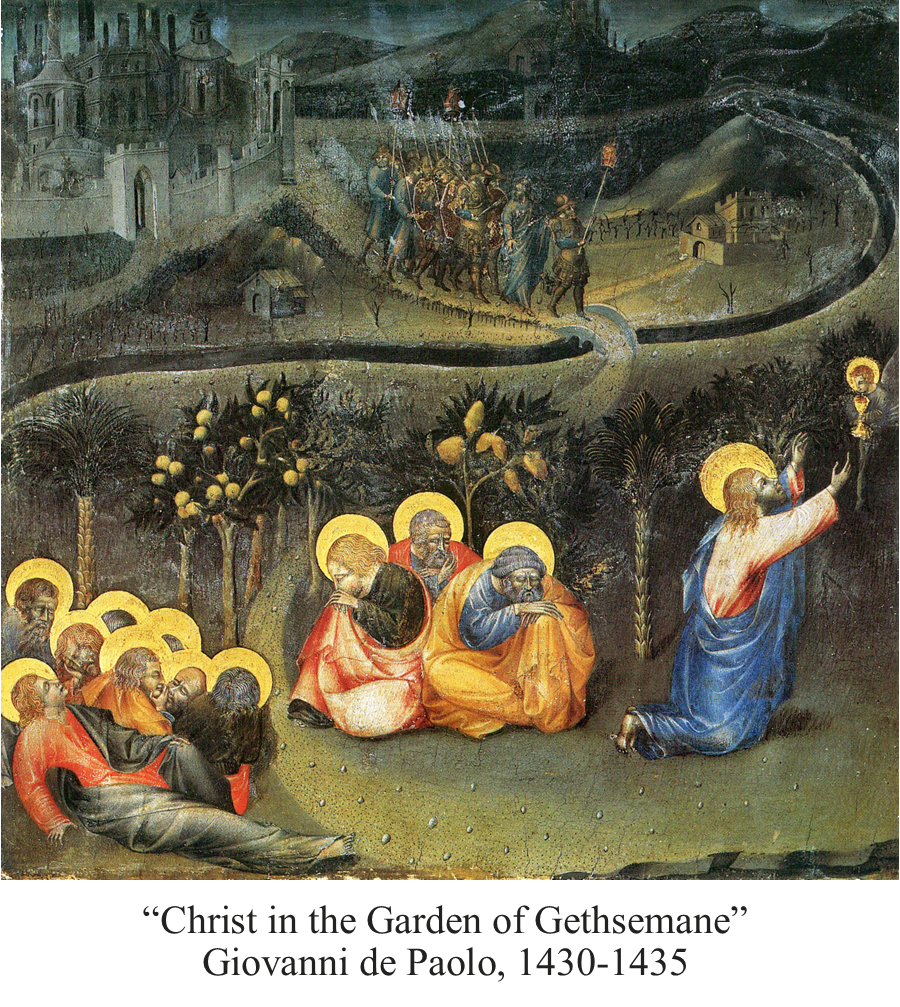
| One of the reasons the Seven Churches Pilgrimage remains popular among the faithful is its simplistic beauty. After the symbolic Holy Thursday Mass, celebrating the Institution of the Eucharist, we sit with Jesus at the Altar of Repose — remembering the Apostles who slept while Christ in his agony sweated drops of blood at the Garden of Gethsemane. We are devoted to our vigilance in accompanying Jesus in his final night before the crucifixion. This is where the devotion of the Seven Churches begins. The seven churches represent the last seven places of Christ’s life here on earth. At each one, the pilgrim approaches the altar of repose, makes the Sign of the Cross, and reads the corresponding Scripture before spending time in reflection. Following are the seven Scriptures traditionally used for the devotion: | |
1. Jesus in the Garden of Gethsemane, Luke 22:39-46
2. Jesus bound and taken before Annas, John 18:19-22
3. Jesus before the High Priest, Caiaphas, Matthew 26:63-65
4. Jesus taken before Pontius Pilate, John 18:35-37
5. Jesus taken before Herod, Luke 23:8-9, 11
6. Jesus once again taken before Pilate, Matthew 27:22-26
7. Crowning Jesus with thorns, Matthew 27:27-31
Here in the Diocese of Arlington, the Scripture reflections differ slightly, but the devotion remains true. Churches are divided into different routes consisting of seven churches with each route named for a different tree. St. John Neumann is on the Palm route, which also includes St. Theresa in Ashburn, Our Lady of Hope in Potomac Falls, Christ the Redeemer in Sterling, St. Joseph in Herndon, St. Thomas á Becket in Reston, and St. Veronica in Chantilly. The diocese also has created downloadable reflections in both English and Spanish for three different levels of pilgrims: Adult, Teen, and Children.
If you, like the faithful in Philip Neri’s 16th century Rome, are seeking an experience to deepen your personal connection to Christ and our Catholic faith — a spiritual refresher to awaken your soul — the Seven Churches Pilgrimage may be for you. Perhaps this year, this beautiful and simple devotion will be a powerful reminder of both the sacrifice and the salvation we celebrate in the Triduum as we prepare our hearts for the Resurrection.
| | From the Holy See This Month | | |
The Pope's Intention for Prayer
and Action for March:
For disarmament and peace
Let us pray that nations move toward effective disarmament, particularly nuclear disarmament, and that world leaders choose the path of dialogue and diplomacy instead of violence.
| | | |
PLEASE NOTE:
Due to Triduum, the April Newsletter will be distributed on the
SECOND Saturday of the month, April 11.
| | |
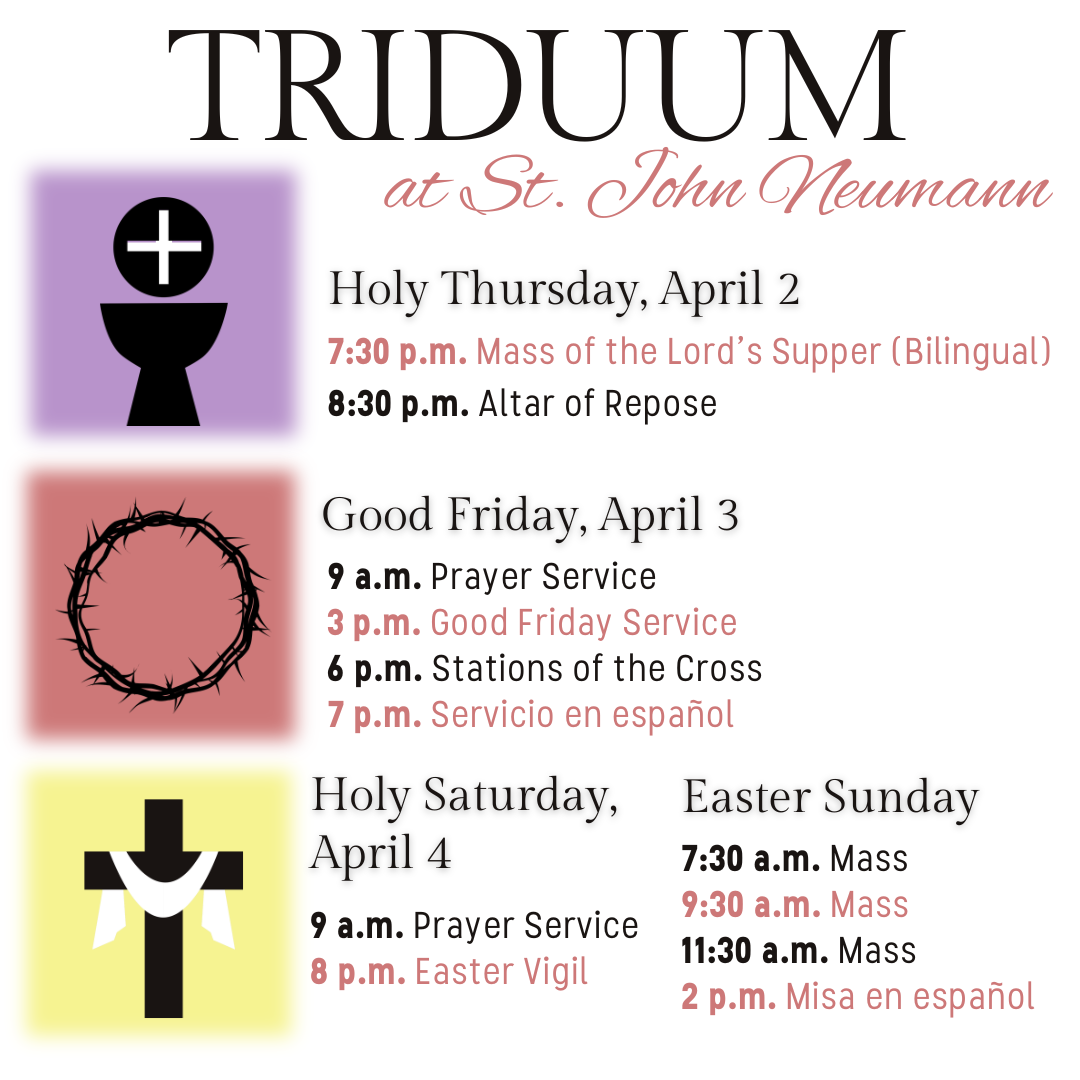
PLEASE NOTE: Masses & Services in colored text will be livestreamed.
There is no daily Mass on Holy Thursday & Good Friday.
On Easter Sunday, there is no 5 p.m. Mass.
| | |
Current Mass Times
Saturday: 5 p.m.
Sunday: 7:30 a.m., 9:30 a.m., 11:30 a.m., 2 p.m. (Spanish), 5 p.m.
Monday-Friday: 9 a.m.
Wednesday & Friday: 12:10 p.m.
Watch a livestreamed or recorded Mass
Confession
Saturday: 10 a.m.-10:30 a.m. (English)
Sunday: 3 p.m.- 4 p.m. (Spanish)
| | | | | |