|
Mountain laurel, the state flower of Connecticut and Pennsylvania, can be found all along the eastern US from Maine south to Florida and as far west as Indiana and Louisiana. In the southern part of its range, this broad-leaved evergreen shrub prefers north-facing slopes and higher elevations. On Cape Cod, it is happiest in humus-y soil in open woodlands and other locations that are shielded from the hottest rays of the afternoon sun. It can handle sunnier spots provided the soil remains somewhat moist and cool.
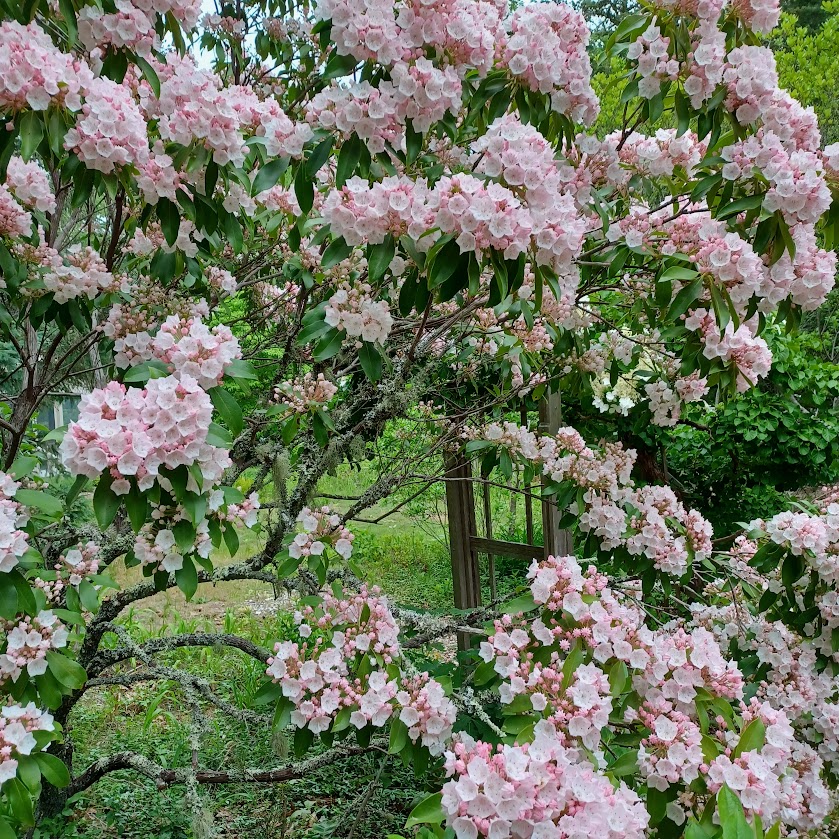
Typically, the straight species is a multi-stemmed shrub that reaches four to 10 feet in height, but it can also develop into a small single-trunked tree and grow several feet taller. Almost every plant database describing mountain laurel mentions its “gnarly” branches and peeling bark, which can give it a wild and even scruffy appearance before it bursts into bloom in late spring in a stunning transformation. As if touched by a fairy godmother’s wand, mountain laurel becomes a cloud of white to pale pink blossoms that attract bees and butterflies. Some cultivars flower in deeper shades of pink.
The blossoms eventually mature into seedpods that also provide visual interest, and the leathery leaves are attractive year-round. Gardeners should be aware that mountain laurel leaves, flowers and stems are highly poisonous to humans and other mammals, but this attribute also discourages deer from browsing on them.
Every month, Meg Voorhies profiles a different native plant for the Mayflower Point Association in Orleans, where she lives. Thank you, Meg, and Orleans Pond Coalition, for sharing this month's native plant.
|