PA Budget Passes:
Another Step Toward Fair School Funding | | |
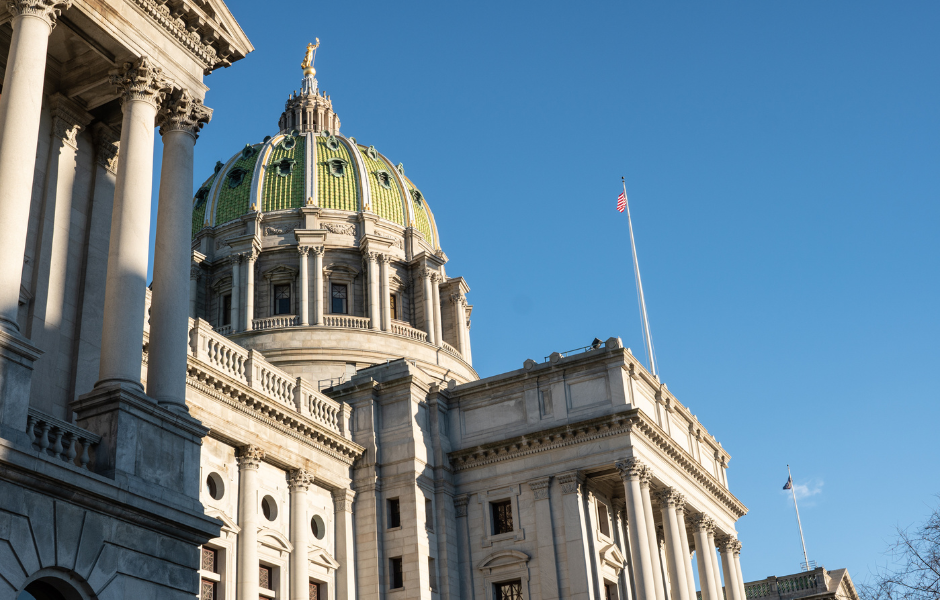
Lawmakers have passed a one-year state budget that continues Pennsylvania’s progress toward adequately and equitably funding for public schools, as required by the landmark Commonwealth Court ruling. After months of uncertainty that left schools and families in limbo — and forced many underfunded districts to cut programs and take out loans — the budget moves the Commonwealth forward on a path toward a fairly funded public education system.
This budget better positions Pennsylvania to address long-standing racial and structural inequities whereby Black and Brown students are harmed the most. It marks an important step forward — one that must be followed by a continued commitment and expanded investments until every student, in every community, has the opportunity to learn in a well-resourced, high-quality public school.
Education highlights in this year’s state budget include the following:
-
$565M in additional adequacy funding, ensuring essential resources go to districts and students that need them most;
-
$105M in additional basic education funding;
-
$40M in additional special education funding;
-
$125M in dedicated school facilities funds;
-
$78M in net savings as a result of cyber charter reforms; and
-
Increases in early childhood funding, including $41.7M for Early Intervention.
ELC-PA was quoted in multiple media outlets across the state, including the Philadelphia Inquirer (their story ran in dozens of outlets across the country), Chalkbeat, the Indiana Gazette, and the Pittsburgh Post-Gazette.
Read our statement about the budget, issued with our co-counsel the Public Interest Law Center, here and our e-blast with more details here.
| | |
Pennsylvania Lawmakers
Pass the CROWN Act
| | |
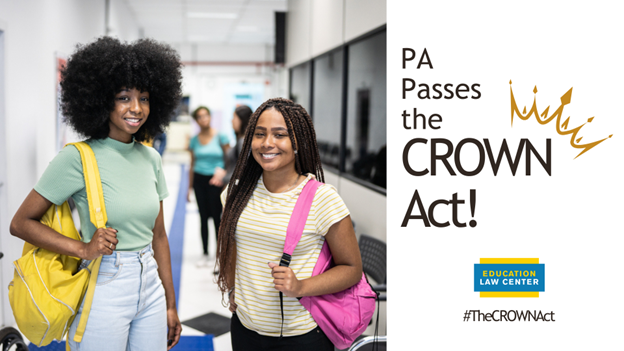
Last month, by an overwhelming, bipartisan, 44-3 vote, the Pennsylvania Senate approved the CROWN Act (HB 439), which protects Pennsylvanians against racial hair discrimination based on hair type, hair texture, or protective hairstyles like braids, twists, knots, and locs. Public school students are protected by this law and thus cannot be subject to school discipline or exclusion from extracurriculars on this basis.
The Education Law Center-PA advocated for this reform and applauds Pennsylvania lawmakers for passing this critical legislation, signed into law by Governor Shapiro last week. Enacting these statutory protections brings the Commonwealth into alignment with the growing majority of states and a growing number of municipalities to statutorily outlaw this type of racial discrimination.
Students, families, and advocates in our communities have been powerful champions for needed changes in our schools. As detailed in ELC-PA’s first-of-its kind report, We Need Supportive Spaces that Celebrate Us: Black Girls Speak Out About Public Schools, racially discriminatory school rules that punish children for their hair textures and protective hairstyles have been an ever present part of many children’s educational experiences. This discrimination is illegal. ELC-PA invites community members to learn more directly from Black girls by reading our report, four-page companion guide, and one-pager.
Read our statement on the passage of the CROWN Act here.
| |
Northwest Area School Board
Rejects Discriminatory Bathroom Policy | | |
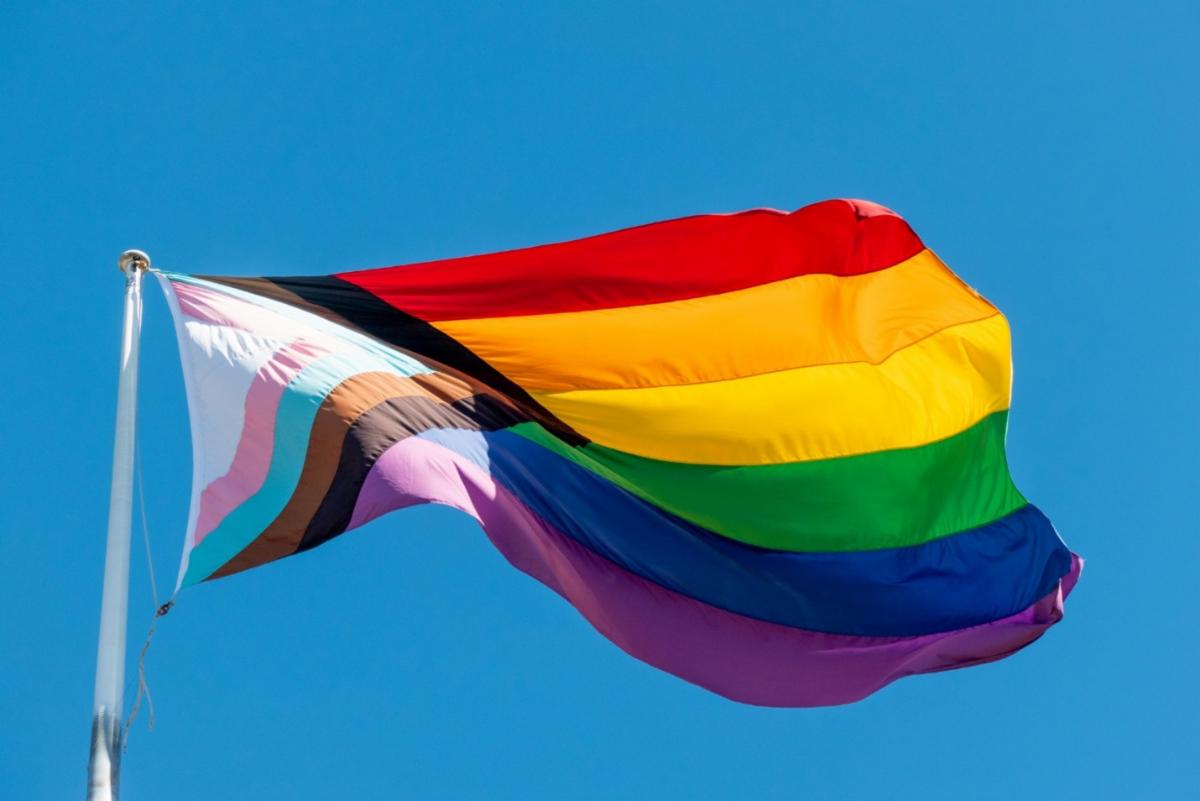
At the request of parents in the district concerned for the safety and civil rights of transgender and nonbinary students, ELC-PA sent an open letter to the board members of the Northwest Area School District outlining the legal rights of transgender students and urging members to reject a discriminatory proposed bathroom policy that would require transgender students to use school facilities that are not aligned with their gender identity. Bathroom bans forcibly 'out' transgender students, which makes them more vulnerable to harassment and also subjects all students to stereotyping and invasive sex-verification.
Parents testified before the school board with support from ELC-PA and other advocates, calling on the board to stay focused on students’ academic needs and the district’s significant funding challenges, rather than opening the district up to potential litigation risk with a discriminatory policy. On November 20, 2025 the school board rejected the policy by a clear majority.
Impacted students and families are encouraged to contact ELC-PA’s Helpline for information about advocacy and complaint options if these issues emerge in your school district.
| ELC-PA’s Individual Representation
Leads to Systemic Reforms | | |
ELC-PA recently represented “Gabby,” a multilingual learner who plans to attend college and enjoys making jewelry. Gabby has both an orthopedic impairment and an intellectual disability, but was not receiving any accommodations or special education services from her western Pennsylvania school district.
Despite concerns voiced by many teachers about her need for support and services, the school failed to conduct a special education evaluation. Without these school supports and without appropriate specialized transportation, Gabby missed nearly two years of education.
As a result of ELC-PA’s representation, Gabby was finally evaluated and found eligible for special education services. In addition to securing compensatory education for Gabby, the school district also agreed to implement systemic reforms. These reforms include training all staff on the District’s obligations to promptly identify and evaluate children who may have disabilities — including children who lack a formal medical diagnosis — and training staff on the right to specialized transportation for all students with disabilities.
| | ELC-PA Signs On to Amicus Brief
Defending Trans Students’ Rights | | |
ELC-PA joined a national amicus brief supporting rights of transgender students to participate on sports teams aligned with their gender identity, reinforcing that students must be able to play free from discrimination based on gender or sex. The brief, authored by Public Counsel, can be read here.
The U.S. Supreme Court will hear oral arguments on January 13, 2026 in the combined cases Little v. Hecox and BPJ v. West Virginia State Board, which will determine whether K-12 and college students can be limited to playing on school sports teams according to one’s sex assigned at birth.
Follow ELC-PA for information and advocacy opportunities relating to the oral argument and trans students’ rights.
| | |
Take Action:
Urge Lawmakers to Support HB 2041
and Protect Kids from Lead
| | |
ELC-PA urges state lawmakers to support HB 2041, a bipartisan bill that expands lead testing for pregnant women and young children. HB 2041 would ensure that every parent or guardian is offered two blood lead tests for their child by age 2, with the option to decline. Early testing is critical to protecting children from the developmental harm caused by lead exposure. The American Academy of Pediatrics recommends this approach, and legislative support is essential to make it a reality.
ELC-PA strongly supports HB 2041 because we know firsthand how lead poisoning undermines children’s ability to learn — a crisis we documented in our 2016 report, The Impact of Lead on Learning. Pennsylvania has the nation’s second-highest number of children poisoned by lead each year, due in part to aging housing stock, yet only about 20 percent of children are screened. This proposed legislation is a meaningful step toward early identification and intervention, and we’re proud to join the Lead Free Promise Project in advancing this urgent protection for children across the Commonwealth.
Reach out to your state lawmakers today and tell them to support HB 2041.
| | ELC-PA Welcomes
Senior Attorney John Valantassis | | |
Joining ELC-PA this month is John Valantassis (he/him), who will serve as a Senior Attorney in the Pittsburgh office of the Education Law Center-PA. He will focus on litigation and policy advocacy across all issue areas.
Previously, John worked as a staff attorney at KidsVoice, where he provided education advocacy for Allegheny County youth in the dependency system to help ensure they had school stability, educational supports, and access to learning despite persistent barriers. Prior to that, he represented families of children with disabilities as an associate with Ruder Law and advocated for children with disabilities across settings as the Child Advocacy Director at The Arc of Philadelphia.
John is a graduate of Haverford College and Temple University Beasley School of Law. John interned with ELC-PA during the summer following his second year of law school and returned to ELC-PA as a legal fellow after graduating law school. Welcome back, John!
| | A Landmark Win in the
Fight for Fair School Funding | | |
On February 7, 2023, Commonwealth Court Judge Renée Cohn Jubelirer issued a historic ruling that Pennsylvania’s school funding system is unconstitutional. The court recognized that our public schools require adequate funding to meet our constitution’s mandate, and the ruling directed the legislature to develop and implement a plan for bringing the state’s school funding system into constitutional compliance. This new school funding system must ensure that all students have the opportunity to access a “comprehensive, effective, and contemporary public education” – the standard set by the court.
The case, William Penn School District, et al. v. Pennsylvania Department of Education, et al., was filed more than a decade ago, in 2014, by the Education Law Center-PA, the Public Interest Law Center (PILC), and the private law firm O’Melveny on behalf of parents, school districts, and two statewide organizations. The respondents included state legislative leaders, the Governor, the Pennsylvania Department of Education, and state School Board, all of whom play a role in developing our school funding system. After a nearly four-month trial in the Commonwealth Court in 2021 and 2022 and post-trial proceedings, the court’s 2023 decision held for the first time that education is a fundamental right under Pennsylvania’s constitution and that the current funding system violates both the education clause and equal protection provision of our state constitution.
The court directed the state’s legislative and executive branches to come up with a plan, alongside petitioners, to fix the broken system. In the 2024-25 and 2025-26 budgets, funding the known $4.8B adequacy gap was front and center in lawmakers' minds, and our advocacy was central to that continued pressure. In two years, the legislature has invested $1 billion towards closing this unconstitutional funding gap. With a remaining adequacy gap of $3.8 billion, continued bipartisan commitment from elected officials is critical to investing in public education. We must continue to keep up the pressure and momentum to zero out that gap.
Much work remains to address the needs of all Pennsylvania students. But by continuing to close the funding gaps that public schools have long grappled with, we move from promise to implementation: from the acknowledgement of something fundamentally wrong, to the actual solution.
Read more about William Penn School District, et al. v. Pennsylvania Department of Education, et. al. here.
| | |
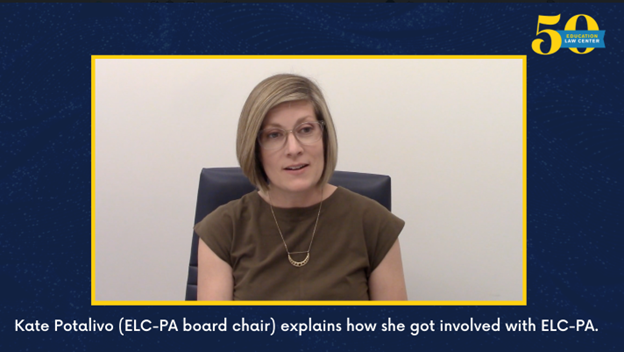
Our board chair, Kate Potalivo, explains how she got involved with ELC-PA.
Watch here.
| | |
Celebrate Giving Tuesday with ELC-PA on Tuesday, Dec. 2! Please consider participating in this global day of giving by supporting ELC-PA with a gift of any size.
As we conclude our milestone 50th year and look forward to the next 50 years of advocating for Pennsylvania schoolchildren, your sustained investment allows us to ensure all children in Pennsylvania have access to quality public education.
We can’t do this work without you. Not only do we need your support, but we also need your help to spread the word. Please take the opportunity to tell your friends and family why you believe in ELC-PA’s work and encourage them to support us, too!
Please support our work!
| | Check Out Our Job Postings! | | 50 YEARS: Rooted in Justice, Advancing Equity | |
Education Law Center | 215-238-6970 (Philadelphia) | 412-258-2120 (Pittsburgh)
| | A copy of the official registration and financial information of the Education Law Center may be obtained from the Department of State by calling toll-free, within Pennsylvania, 1-880-732-0999. Registration does not imply endorsement. | | | | |