CAREERS
Sabbaticals: Not just for academics anymore
If your employer offered a sabbatical, would you take it?
| |
|
MANY OF US are feeling some burnout at the moment. Be it inflation, the pandemic recovery or just trying nail down some work-life balance, exhaustion has set in for some of the workforce, and many might be daydreaming about taking a nice, long, relaxing sabbatical.
“Whether they’re paid or unpaid, a four-week break or a three-month idyll, a growing number of companies are offering extended leave to reward long-term employees before they burn out and quit,” writes Fortune’s Anne Kadet. “Spurred by the great resignation, sabbaticals are going mainstream.”
Plenty of research backs up the positives: higher job satisfaction, a better workplace culture and fewer sick days taken by staff. In a culture full of tired workers, renewed interest in sabbatical programs may well be a useful corporate tool.
And then there are those who go into a sabbatical looking to be refreshed, and come out feeling reoriented. The Norwegian crime writer Jo Nesbø, who took a sabbatical from a top investment brokerage, was one such case — he took some time off, but by the time he returned he was launching an authorial career.
Sometimes, a sabbatical makes you realize that you ultimately weren’t on the right path. That can be disorienting — but that’s not always a bad thing. “For most of us, this type of leave is precious,” writes Pilita Clark. “So, grab it if you can, even if it fails to deliver everything that you, or your colleagues or bosses, are expecting.” Kieran Delamont
| |
WORKFORCE
Hey, it’s working!
Record employment rates for women shows Canada’s susidized daycare plan is working. But can supply keep up with the increased demand?
| |
|
DURING THE EARLY days of the pandemic, we heard buzzy terms like “she-cession” thrown around, referring to the impact Covid was having on women in the workplace.
With kids at home, much more domestic work was falling on women and keeping them out of work. And as workplaces have reopened, the cost of childcare has replicated that effect for many women as well.
But the good news is that a subsidized daycare program, introduced in 2021, is working well to help close that gap.
A record 82 per cent of women had jobs and were working in November, according to new StatsCan data, which it says is pointing to the success of subsidized daycare.
“Some women had to stay home because either they couldn’t find a [childcare] space or they couldn't afford it,” Martha Friendly, board member of Child Care Now, said. “Now, people are getting child care at 50 per cent reduced fees on average and that means they can go back to work.”
That effect should be amplified as the $10-a-day care program gradually expands over the coming years.
The project now, say childcare providers, should be to expand the capacity of the system as the workforce expands. One prediction suggests that Canada will need to add around 300,000 new childcare spaces to meet demand, and concerns have been raised that it’s unclear who that is falling upon.
What the system, private or public, will need as it expands is money for jobs.
“Decent work should be the foundation of Ontario’s early learning and childcare plan,” said Karen Brown of the Elementary Teachers’ Federation of Ontario. “If we don’t address the workforce issues and chronic staffing shortages facing the childcare sector, then we will simply not have staff in place to meet the requirements for the newly created spaces.” Kieran Delamont
| |
|
|
Terry Talks: Disaster in 140 characters or less
| From laying off more than half of the workforce to installing an “extremely hardcore” working environment for those that remain, Elon Musk’s Twitter is rapidly unfolding the direction (or the lack thereof) he plans to take the social media platform to. But above all else, it’s a case study of how not to treat people. Great employees will work hard and be loyal when a healthy environment exists, where they are self-motivated and feel safe. And good leaders don’t have to email employees to tell them that they are expected to work hard. | | | |
WELLNESS
Conquer the dread
Whether you call it the Sunday scaries or the Sunday blues, the feeling is the same: That creeping low-grade dread that looms on the evening before your return to the weekly grind
| |
|
IT’S SUNDAY NIGHT, and that creeping sense of anxiety starts building. Maybe you do some housework to ward it off, head out for a walk or take a nap. But by the time the day is done, there it is still: looming dread of the workweek ahead.
This experience — which now afflicts about seven in 10 working people polls show — is known as the Sunday scaries, and with more people experiencing anxiety about employment, money and the like, it’s becoming recognized as more than just an everyday boredom with work, but as an expression of more deep-rooted mental health issues.
But how do you tackle it? Experts offer some tips. First, try to actually finish work on Friday, allowing you to start fresh on Monday. Secondly, having a strong organization system is often helpful — it at least gives you the chance to start the week on autopilot if you need to.
That covers the work side of things, but experts also note that part of it is internal, too.
“If you have ruled out a problem with your job, but are still having Sunday scaries, your inner critic may be the main cause of the anxiety and depression,” writes Richard Brouillette. “It will criticize you for not getting more done, and if you do that, it will criticize you for not relaxing more.”
But that too can be defeated — be it by scheduling screen-free time on the weekends, setting aside a block of time for a favourite hobby or going for a Sunday walk. (Or, for authors of certain Monday newsletters you might be reading right now, not putting it off…)
Come Monday morning, your brain may begin to push you to be more productive, but on Sundays, “push back!” Brouillette advises. “Boldly put time aside that is unstructured and boring. This can be a great antidote to all the demands.” Kieran Delamont
| |
TECHNOLOGY
The write stuff
Canva, the $40-billion design juggernaut, has just moved AI text generation mainstream. Should scribes be worried?
| | |
|
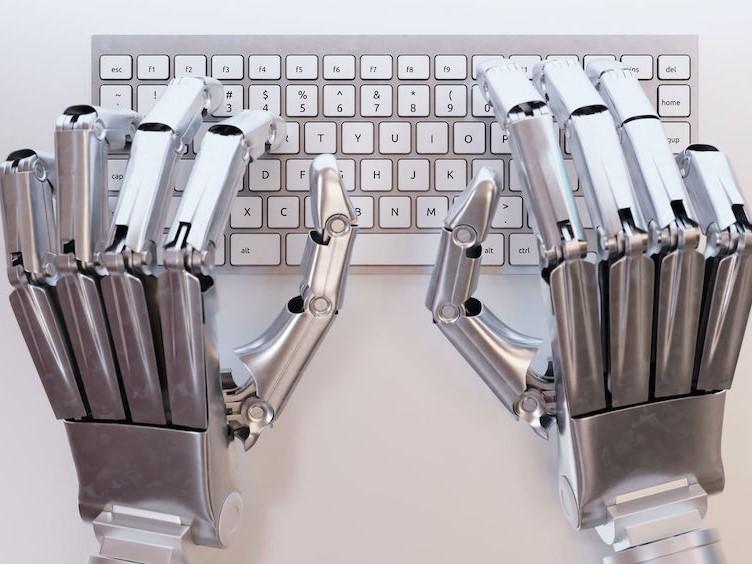
CANVA, THE POPULAR browser-based graphic design tool, launched its new Magic Write program last week — an AI-powered text generation tool built directly into its Canva Docs tool platform.
The tool itself is pretty simple — you start a text box and give it a simple prompt, and then Canva’s Magic Write tool fills it in with simple text of up to 1,500 words (a limit Canva imposed deliberately, to keep it as more of a writer’s tool than a writer’s replacement).
AI text generation tools are advancing at a rapid clip. It has quietly invaded the field of copywriting, and there has been a lot of debate recently about the value of AI art (as well as considerable consternation about its ethics). Canva, for their part, are pitching it as a productivity tool rather than a writer-replacement-tool.
“Magic Write is designed to break writer’s block the same way that graphical templates in the rest of Canva’s design suite break designer’s block,” writes Jesus Diaz at Fast Company. Its chief product officer Cameron Adams envisions it as the thing that gets you going while you stare at a blank page, not knowing where to start. “That can be the point where a lot of people just throw up their hands and walk away,” he said.
Many are still understandably uneasy about the rapid pace with which AI has infiltrated jobs long thought to be distinctly human and un-automate-able. Is AI out to get my job in the long run? I wondered. So, I put that question directly to the AI itself, using OpenAI’s GPT3:
“As a writer, it’s unlikely that AI will put you out of a job,” it answered. “While AI has the ability to generate text, it’s not yet capable of replicating the creativity and nuance of a human writer. In fact, AI may even be able to assist you in your work by helping you generate ideas or providing you with suggestions for improving your writing. Ultimately, the role of AI in the writing field is likely to complement rather than replace human writers.”
Phew. Kieran Delamont
|
| | | | |