June 30, 2026

PAL Girls Learn Their Own Strength

by Laura L. Sullivan, Public Relations Specialist

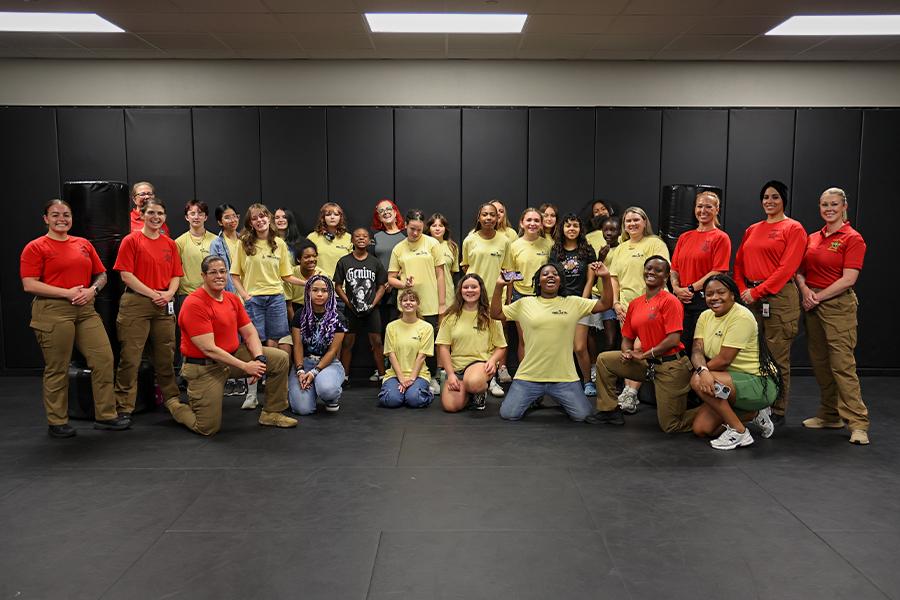
Girls from the Sheriff’s Police Athletic League (PAL) recently joined an all-female group of instructors from the Pinellas County Sheriff’s Office (PCSO) for a morning of self-defense training and empowerment.


“This defensive tactics day was a powerful opportunity for our girls to step outside of their comfort zones, build confidence, and learn practical skills,” said PAL executive director Randi Meyer. “By learning in an environment led by strong female role models, participants were encouraged to challenge themselves, ask questions, and discover just how capable they are.”


Corporal Lisa Archibald talked with the girls about the kind of mindset that will help keep them safe. She gave an example of a girl walking up to her door while juggling a purse, backpack, and water bottle, with no hands free and her eyes glued to her phone. “Do you think if someone was looking for someone to attack, she would be a good target?” Absolutely, the PAL girls said in chorus. “So we’re going to talk about some things to think about that will help you not be a good target.” She told them to carry themselves with confidence, pay attention, and let people know they see them so an attacker can’t count on surprise.


Corporal Archibald reminded them about the importance of situational awareness – knowing who is around you, watching for pre-attack indicators, being aware of where the nearest help or exit may be. “Action is faster than reaction,” she said. “If we don’t see something coming and we have to react to an attack we’re already at a disadvantage. Anything we can do to recognize something that might be a threat is going to give us an edge.”


She emphasized the importance of having a plan. If the girls think about what they can do to protect themselves in a variety of situations, they’ll be less likely to freeze or panic if something happens. One piece of advice was simple but vital: “Get loud!” She encouraged them to shout things like “Get back!” or “Go away!” as loudly as they could, to make a big commotion that will attract a lot of attention. An attacker doesn’t want to be noticed, so that could be enough to scare them away, and bystanders might intervene or call 911.


After the classroom portion they moved to the mat room where the girls got to try out some techniques… and learn about their own power. “The number one goal is survival,” Corporal Archibald said. “You need to go into any conflict knowing that you have a lot of power and a lot of strength. You will make it through. Give yourself permission to do whatever it takes to survive an encounter.” The PAL girls learned a stance that would help them counter surprises, and a few strikes and kicks to fend off an attacker. (If you want to try out the mat room and learn a lot more about PCSO, you can apply for the Sheriff’s Citizens Academy, a 10-week program that gives you a thorough introduction to the world of law enforcement.)


Talking about the dangers of the world can be scary to young people, but PCSO’s trainers handled it with a deft combination of honesty and sensitivity. “I’m not doing all this to tell you the world is terrible and everyone is out to get you,” Corporal Archibald told the girls. “But it’s not perfect either, and there are bad people out there. The more you can be alert and aware and prepared for those things, the better off you’ll be. The only person who may be around to help you is you.”


While the PAL girls learned about defensive tactics and personal safety, the PAL boys were having a unique experience of their own with the Gentleman’s Course, led by BB King’s grandson Christopher King. The program, led by male mentors and supported by male PAL staff, focused on the qualities of a strong young man through lessons on respect, responsibility, discipline, character, leadership, and accountability. The day provided opportunities for fellowship and meaningful conversation, while encouraging participants to reflect on the kind of men they want to become and the impact they can have on their families, schools, and communities.


Though the PAL boys and girls were each doing different activities, their experiences had some commonalities. “An important part of both experiences was the opportunity for youth to learn from positive role models who could relate to their experiences and encourage their growth,” Meyer said. “Whether learning defensive tactics or discussing leadership and character, the message remained the same: strength is not about power over others. It is about self-control, integrity, empathy, confidence, and using your abilities to make a positive difference in the world around you.”


Cyclists and Drivers Share a Common Goal of Preventing Crashes

by Laura L. Sullivan, Public Relations Specialist

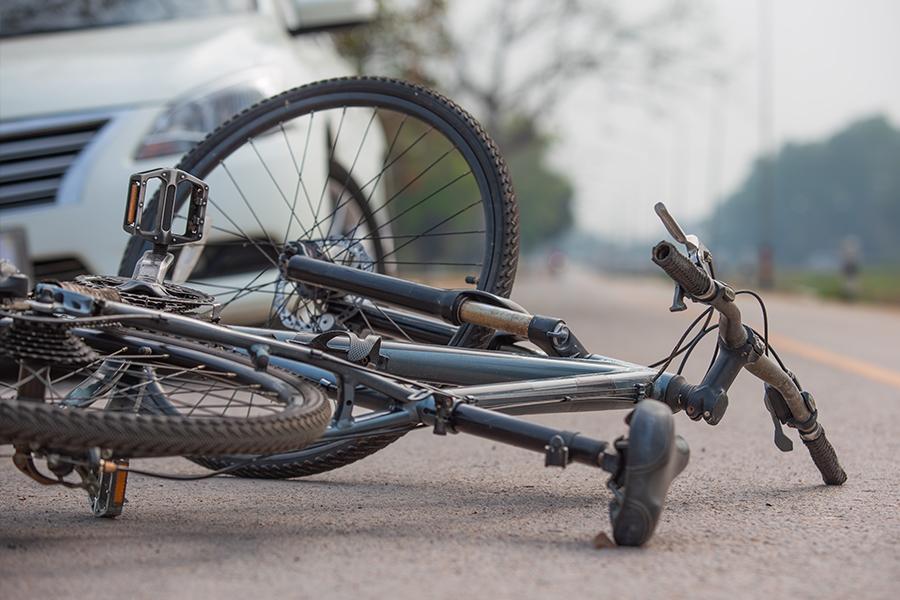
A friend of mine who is an avid cyclist told me this: “When I’m driving a car I can’t stand bicyclists, and when I’m on my bike I hate cars.” Bicycle riders and car drivers sometimes seem to find themselves in opposition. Drivers complain that cyclists slow them down, block the road, don’t stop at stop signs, and ride illegally or unpredictably. Cyclists say that cars don’t yield to them, give them space, or even see them. Most drivers and cyclists have had a near miss, and the Tampa Bay area is among the nation’s most deadly for cyclists. Instead of antagonism, cyclists and drivers should recognize that they have a common goal of preventing crashes, injuries, and fatalities.


When a bicycle is on a sidewalk it is legally a pedestrian, but when a bicycle is on the road it follows the same rules as a vehicle. On the road, cyclists should be in the bike lane or as close to the curb as possible, always in the direction of traffic. If you “salmon” in the opposite direction you’ll interfere with another cyclist’s right of way, and often not be seen by drivers who are expecting bikes to only come from the legal direction.


Drivers must allow a 3-foot buffer between their vehicle and any bicycle on the road. They should also be aware that a cyclist might have to move out of the bike lane to avoid debris. The driver can cross a double yellow line to safely pass a cyclist, provided there is no oncoming traffic and it is safe to do so.


Intersections are among the most dangerous places for cyclists. When a driver is turning, they must yield to any cyclist in a bike lane or on the sidewalk. They should come to a full stop before proceeding and look both ways. But both drivers and cyclist should be aware that business signs and landscaping can easily obscure a bike. Drivers should note any obstacles and check to make sure that nothing is concealed behind them before proceeding. Cyclists should be aware of situations when they may be hidden, and proceed carefully. No matter who has the right of way, it’s a good idea for drivers and cyclists to make eye contact at intersections, so each can be sure the other is aware of them.


Cyclists are notorious for violating stop signs, particularly in places where the Pinellas Trail crosses roads. Someone biking for exercise doesn’t want to slow their cardio, and those with pedal clips don’t want to bother unclipping. Cyclists should remember that they can be ticketed for failing to stop at a stop sign, and violating the right of way puts them at risk of being hit.


In these situations, cars with no stop sign should not give up their right of way to let a cyclist with a stop sign proceed without stopping. The cyclist may believe it is safe because you stopped, but the car going in the other direction (which also has the right of way) may not stop. You might think it is polite to let the cyclist go, but it impedes the safe flow of traffic and puts the cyclist at risk.


We recently talked about the science behind why motorcycles can be hard for drivers to spot, and the same holds true for cyclists. They are small, without a solid outline, and can blend in with the background. When drivers scan quickly from the far left to far right a phenomenon called saccadic masking can hide objects, making small things like cyclists and pedestrians disappear to the eyes and the brain. Drivers should be aware of these phenomena and look twice or more, scanning slowly and checking both near and far distances. Cyclists should never assume that a driver sees them, and never assume that even if they have the right of way it is safe to proceed.


Another thing for drivers to think about is checking for bikes before they open their doors. Particularly when parallel parking on a road, they might open their door directly in a cyclist’s path. A good rule of thumb is to use what is known as the “Dutch reach” – instead of opening the door with your closest hand, use the hand farthest from the door, which forces you to turn your body. That way you can check the mirror and the road for a bike coming up behind you.


There are other things cyclists can do to keep themselves safe, including wearing properly fitting helmets and highly visible clothing. If you ride a bike at night you are required to have a light on the front and back, plus a reflector on the back. Additional reflectors can help with visibility. Don’t wear headphones, don’t text, and don’t bike while impaired.


Regardless of the laws, drivers should always be aware that they are huge and deadly, and cyclists are very vulnerable. Err on the side of caution and always protect cyclists and other pedestrians. By the same token, cyclists should never forget how easily they can be hurt, and should never assume that a vehicle will see them or yield to them.


Facebook  X  Instagram  LinkedIn  YouTube