Volume 29 | September 2026

SWANA Old Dominion News
President's Message

Hello Old Dominion Chapter Members,


I hope everyone had a great Labor Day weekend. It’s hard to believe summer is coming to a close! Although it has been a quiet hurricane season so far, it is a good time to review your emergency plans for addressing bad weather and its solid waste implications. 


The Chapter will be hosting DEQ for our annual regulatory training session in October and we hope you can join us to hear the latest from them as well as participate in the discussions generated from their presentations. We will also be offering a health and safety training session in December.  


As we move into Fall we approach prefiling of bills for the 2027 General Assembly session. We will be tracking solid waste related bills, however, if you become aware of a particular bill that warrants our attention please let us know and we will add it to those we are tracking.  


The chapter continues to seek volunteers for serving on our committees and if you are interested please contact me or any other Board member.  


I hope you all have a productive and safe Fall.


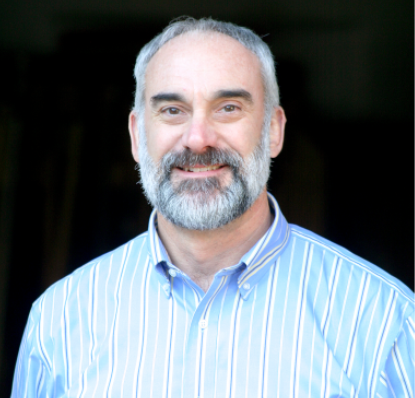
Michael D. Lawless, CPG, PG

SWANA Old Dominion President

Save the Date

Regulatory Training

Thursday October 15

8:30 am - 3:30 pm

The Place in Glen Allen, VA


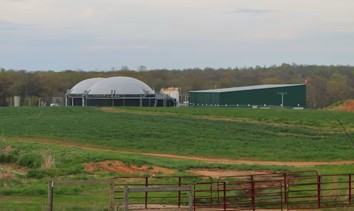
Technical Tour: Vanguard Renewables Anaerobic Digestion Facility

Tuesday, November 10

10:00 - 12:00 pm

16120 Giles Rd., Amelia Court House, VA 23002


Health and Safety Training

Tuesday December 1

Time: 8:00 am - 3:30 pm

Germanna Community College Fredericksburg Area Campus

10000 Germanna Point Drive, Fredericksburg, VA


Registration Open


Regulatory Training

Thursday October 15

8:30 am - 3:30 pm

The Place in Glen Allen, VA


SWANA Members: $130 (includes breakfast, lunch and breaks)


Non-members: $200 (includes breakfast, lunch and breaks)


Virtual: $50 (Link will be provided to join)


Registration Open


Technical Tour: Vanguard Renewables Anaerobic Digestion Facility

Tuesday, November 10

10:00 - 12:00 pm

16120 Giles Road, Amelia Courthouse, VA


Join SWANA Virginia Chapter members for a tour of the facility, the only solid waste digester in the Commonwealth.


$40 (includes tour and lunch)


Fairfax County Solid Waste Management gets an EMMY for Talking “Basura”

By Kirsten Büchner


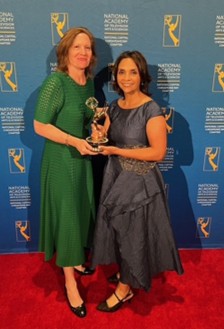
This past June at the 68th National Capital Chesapeake Bay Chapter, the Spanish version of the Fairfax County Solid Waste Management “Trash Talk” video on composting won an Emmy Award in the Environment/Science-Short Form category! 


This is the first time Fairfax County Government has won an Emmy for producing a Spanish-language story. Check out the exciting moment the Emmy is announced (at 2 min, 45 sec):


73 321 SOCIAL Noms Wins 133 134 135 136


“Trash Talk”/Hablemos Basura is a video series that highlights Fairfax County’s Solid Waste Management Program (SWMP) services and the wide range of people who join us in the effort to divert and identify sustainable methods to manage waste. “Trash Talk”/Hablemos Basura is developed, coordinated, and hosted by Kirsten Büchner of Solid Waste and produced by Maria Rosa Lucchini with Fairfax County Channel 16. Each video is on a different topic and features one or more guests. The winning video spotlights Juan Pablo Echeverria from Arcadia Farms and Liza Moore, formerly the coordinator of Fairfax County Farmers Markets (now with Arlington Food Assistance Center).


“Trash Talk” is innovative in that it represents the first time in SWMP history that we produced mission-specific messaging (1) in a short-form video format and (2) in Spanish. The bilingual focus was a key piece of our goal in this new outreach and communication strategy. Spanish is the language most frequently spoken in Fairfax county after English. Anecdotally, at least half (50%) of our customers, employees of home renovation and landscape businesses, are Spanish speakers and indicate a preference to receive communication in their native language.


With the success and feedback received from our audiences regarding “Trash Talk”/Hablemos Basura, we were encouraged to begin developing a new series. The series “Reel Trashy” (Pura Basura in Spanish) is shorter (one minute or less) and faster-paced because the focus is on conveying one key message per reel. So far SWMP—again in collaboration with Channel 16—has published reels on four topics (eight reels) which are generating significantly higher engagement across all social media platforms–over 400% increase!


We are happy to share more of our outreach strategies, video concepts, development process, and social media metrics. Please email Kirsten.Buchner@fairfaxcounty.gov


And if you want to view the Reel Trashy series or better yet follow us, check out the links below:


Facebook: @ffxpublicworks; Instagram: @ffxpublicworks

Preparedness Starts at Home: RVRA Encourages Residents to Identify Hidden Hazards During National Preparedness Month


(ROANOKE, VA) When most people think about emergency preparedness, they picture flashlights, bottled water, first aid kits, and emergency supplies. But the Roanoke Valley Resource Authority (RVRA) is reminding residents that preparedness also means taking a closer look at what's stored in garages, sheds, laundry rooms, and junk drawers.

In recognition of National Preparedness Month, RVRA has launched a new online resource to help residents identify common household hazards, store them safely, and dispose of them responsibly.


"Preparedness isn't just about having the right supplies when an emergency happens. It's also about reducing the hazards already inside your home," said Tiffany Bradbury, Director of Community Engagement for RVRA. "Many everyday products can pose fire, safety, or environmental risks if they're stored improperly or thrown in the trash. Here at RVRA we want to help our residents learn how to keep their families safe from these hidden dangers.”


Common household items that require special handling include:

  • Lithium-ion and rechargeable batteries
  • Paints, stains, and solvents
  • Gasoline and automotive fluids
  • Pesticides and pool chemicals
  • Propane cylinders
  • Fluorescent light bulbs
  • Cleaning chemicals such as bleach and ammonia


Improper disposal of these materials can increase the risk of fires, chemical spills, injuries, and environmental contamination. Lithium batteries, in particular, have become a growing concern because they can ignite when damaged or crushed in garbage trucks, transfer stations, or landfills. These batteries are found in many household items such as cell phones, laptops, remote controls, toys, electric scooters and e-bikes. 

To help residents create a safer home, RVRA has developed a Home Hazardous Waste Safety Plan and a free downloadable Home Safety Checklist that walks families through identifying hidden hazards, safely storing hazardous products, and planning for proper disposal. Residents can access these free resources by visiting:

www.rvra.net/beprepared


As part of National Preparedness Month, RVRA also encourages residents to take advantage of the free Household Hazardous Waste Collection Days, held by appointment on the third Saturday of every month from 10:00 a.m. to 2:00 p.m. at the Tinker Creek Transfer Station. The program is available to residents of the City of Roanoke, Roanoke County, the City of Salem, and the Town of Vinton and you must have an appointment. To register and find out what materials are accepted, visit www.rvra.net/HHWTakeback or call (540)857-5050. 

From Food Scraps to Healthy Soil


How a regional market-based collection partnership is turning organics diversion into healthy soil, donated produce, and stronger community connections.

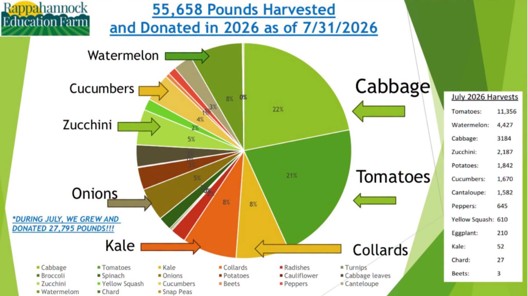
The Rappahannock Educational Farm reported 55,658 pounds of fresh produce harvested and donated to local food banks and pantries as of July 31, 2026. Chart courtesy of the Rappahannock Educational Farm.


Food scraps are often treated as ordinary trash, even though they are heavy, moisture-rich materials that can be composted and returned to productive use. A regional partnership among the Rappahannock Regional Solid Waste Management Board (R-Board), FXBG Compost, the Fredericksburg Farmers Market, Long Family Market, and the Rappahannock Educational Farm is giving residents a practical alternative—and the early results show that the approach is working.


The program gives Stafford County and Fredericksburg residents scheduled food scrap drop-off opportunities at familiar community destinations. Instead of asking participants to navigate a complicated system, the partnership connects one simple household action—saving accepted food scraps—with an organized local collection and composting process.


How the program works

Every other weekend, residents bring accepted food scraps to staffed collection points at the Fredericksburg Farmers Market at Hurkamp Park on Saturdays and Long Family Market in Stafford on Sundays.


FXBG Compost receives the material at the collection sites and manages its transportation and composting. The R-Board coordinates the regional program, public outreach, and education so residents understand what is accepted and why separating food scraps matters. The Fredericksburg Farmers Market and Long Family Market provide trusted, accessible host locations where staff can answer questions and help reduce contamination. The finished compost is provided to the Rappahannock Educational Farm, where it helps improve soil used to grow fresh produce. Food harvested at the farm is donated to local food banks and pantries.


Six weekends of measurable progress

During the first six biweekly collection weekends, residents dropped off 4,151.5 pounds of food scraps. That is more than 2 tons diverted from disposal and redirected into a beneficial local use. The growing total shows that residents will participate when collection is convenient, consistent, and connected to an outcome they can understand.


The early results reflect clearly defined roles and a shared outcome:

• R-Board: coordinates outreach, communicates the environmental purpose, and connects residents across Stafford County and the City of Fredericksburg with the program.

• FXBG Compost: provides the organics collection and composting expertise needed to handle the material responsibly.

• Fredericksburg Farmers Market and Long Family Market: offer trusted community locations where residents can participate while supporting local vendors.

• Rappahannock Educational Farm: puts compost to work in food production and donates its harvest to local food banks and pantries.

• Residents: make the system function by separating food scraps at home and bringing them to the scheduled collection points.


Lessons for other communities

This project offers a replicable approach for municipalities and regional waste authorities that want to test food scrap collection without immediately building a permanent network of dedicated sites.

• Start where people already gather: Farmers markets and other recurring community destinations can lower participation barriers and make the program part of an existing routine.

• Give every partner a clear role: Collection, processing, outreach, hosting, and beneficial use require different capabilities. A successful partnership matches each task with the organization best equipped to perform it.

• Connect diversion to a visible local benefit: Residents are more likely to understand the value of separation when they can see how discarded material becomes compost, supports a farm, and helps provide food locally.

• Track and share results early: Reporting pounds collected gives participants proof that individual actions are adding up and provides the operating partners with information for future planning.

• Pair operations with education: Staffed collection points create opportunities to answer questions, reduce contamination, and teach residents how food scraps move through the composting process.


More than a diversion number

For the R-Board, the initiative reinforces a central lesson of community outreach: participation grows when residents are offered a practical action, a convenient place to take it, and a clear explanation of why it matters. For FXBG Compost and the participating markets, the collection weekends demonstrate the role local businesses can play in building circular systems. For the Rappahannock Educational Farm, compost supports the soil that makes its food-donation mission possible.


Together, these organizations are changing the story of food scraps. Material once viewed only as waste becomes a resource that improves soil, supports local food production, and strengthens community connections. The model is modest in scale, but its value is broad—and its early success shows how regional collaboration can turn a routine household habit into measurable community impact.

Welcome New Members

Maximilian Belyantsev- Geosyntec Consultants

Gregory Campbell- Atmos Technologies

Tyrus Clayton- McGill Associates, Inc.

Katie Raverty-Evans- National Waste & Recycling Association

Sagle Slaughter- New River Resource Authority

Anna Stechschulte- Geosyntec

Amber Styles- Loudoun County - Virginia

Samantha Villegas- Raftelis