Weekly Digest Number 26 - June 28, 2022 |
|
Welcome to the RWU Rail & Labor News! This news bulletin is produced and emailed out each Tuesday morning. We hope you find each week's news and information useful. If so, please share with co-workers, friends, and colleagues. If you like, you can sign them up to get all the news from RWU HERE. Or forward them the link. Note: If you read over this news bulletin each week, you will be sure to never miss the important news of what is going on in the railroad world from a worker's perspective!
|
|
(Editor's Note: All railroad workers are encouraged to read everything they can in the coming weeks about this important development. This struggle affects ALL railroad workers from ALL unions and ALL crafts, whether party to the national freight agreement or otherwise, as we are all dependent upon each other. RWU encourages all rail workers - if and when you are balloted on the question - to stand in solidarity and vote YES! This is our moment to show unity and solidarity with one another and to send a message to the carriers: We will stand and fight!) |
|
BLET to Hold Strike Authorization Vote |
|
Pierce made the announcement after holding a conference call with all BLET general chairmen. The call followed the National Mediation Board’s move to release the BLET and all other rail labor unions from mediation with the nation’s major rail carriers on June 17.
The NMB action triggered a 30-day cooling-off period, which expires at 12:01 a.m. EDT on July 18. At that point, the "self-help" process is available to the parties, unless President Joe Biden appoints a presidential emergency board (PEB) under the Railway Labor Act, officials said. A PEB would halt any strike or lockout by the parties, and would investigate and issue a report and recommendations concerning the dispute.
NOTE: Ballots were mailed June 24. BLET members have until 10:00 a.m. EDT on Tuesday, July 12, to cast their votes.
BLET members who are employed on the railroads where the dispute exists and where the BLET has representation rights for their craft are eligible to participate in the strike authorization vote. The following BLET members may participate in the vote: All active locomotive engineers, except company officers, employed by the:
- Belt Railway Company of Chicago.
- BNSF Railway.
- Cedar River Railroad Company d.b.a. Canadian National.
- Consolidated Rail Corporation.
- CSX Transportation.
- Grand Trunk Western Railroad Company d.b.a. Canadian National.
- Illinois Central Railroad Company and Chicago, Central & Pacific Railroad Company d.b.a. Canadian National.
- Indiana Harbor Belt Railroad Company.
- Kansas City Southern Railway Company, including the following subsidiaries: Kansas City Southern Railway; Louisiana and Arkansas Railway; MidSouth Rail Corporation; Gateway Western Railway; SouthRail Corporation; and Texas Mexican Railway Company (locomotive engineers and train service employees).
- Longview Switching Company.
- Norfolk Southern Company.
- Portland Terminal Railroad Company.
- Soo Line Railroad Company d.b.a. Canadian Pacific.
- Union Railroad Company.
- Union Pacific Railroad Company.
- Winston Salem Southbound Railway Company.
- Wisconsin Central d.b.a. Canadian National.
|
|
(Editor's Note: This is a short, concise analysis that basically lays out clearly what is troubling the U.S. rail industry today. The question now is what do we do about this mess. The "logic" of Wall Street is killing the rail industry. Perhaps it is time to look at another model of ownership since privately held hedge funds are not acting in the interests of practically anyone except a small handful of very wealthy stockholders.) |
|
How Wall Street Holds Railroads Hostage: Analysis
Focus on operating ratio inhibits volume growth, hurts service, and prevents share gain from highway
|
|
The U.S. Class I railroads’ recurring crew shortages, related bouts of service problems, and a lack of meaningful volume growth are intertwined. You can lay the blame for all three problems at just one place: Wall Street.
BNSF Railway, CSX Transportation, Norfolk Southern, and Union Pacific are in the midst of the mother of all crew shortages. The lack of crews has caused congestion, which in turn has slowed the network and sent operations into a downward spiral that requires even more crews.
So transit times are up. On-time performance is way down. Angry shippers are diverting loads to trucks. And frustrated regulators are demanding answers.
There’s no doubt that current crew shortages are exacerbated by pandemic-related changes in the labor market. It’s equally certain that the railroads’ operational changes and onerous attendance policies have prompted many longtime engineers and conductors to pull the pin, further thinning the crew ranks.
But we’ve seen this movie before. Over the past decade, service has suffered due to crew shortages three times each at BNSF and CSX, four times at UP, and five times at NS, according to a tally by Loop Capital Markets analyst Rick Paterson. “It cannot be all bad luck,” Paterson told the Surface Transportation Board during its rail service hearings in April.
He’s right. The culprit is a persistent failure to keep a sufficient cushion of crews on hand to ensure that a railroad can recover quickly from unexpected surges in traffic or extreme events like hurricanes, cold snaps, and wildfires. And the reason railroads don’t keep that capacity buffer? The Cult of the Operating Ratio, as analyst Anthony B. Hatch calls Wall Street’s hyperfocus on the key efficiency metric.
This short-term focus means railroads aim to keep costs at a bare minimum and reduce them every year — even if it jeopardizes service over the long term. Paterson notes that since gaining pricing power in 2004, railroads (except BNSF) have used a simple and wildly successful financial formula: Raise rates faster than costs and nevermind volume growth. This pushed Class I operating ratios from the 80s to the 50s and ushered in a Golden Era for railroad investors.
|
|
(Editor's Note: The BNSF "Hi Viz" availability policy has taken its toll, decimating train and engine crews systemwide but especially in California. The current debacle is reminiscent of previous meltdowns such as on UP in 1995 and NS in 1999. How many more debacles will the American people be subject to as the result of corporate mismanagement of the nation's railroads?) |
|
Beset by Congestion, BNSF to Limit Carload Traffic Bound for California |
|
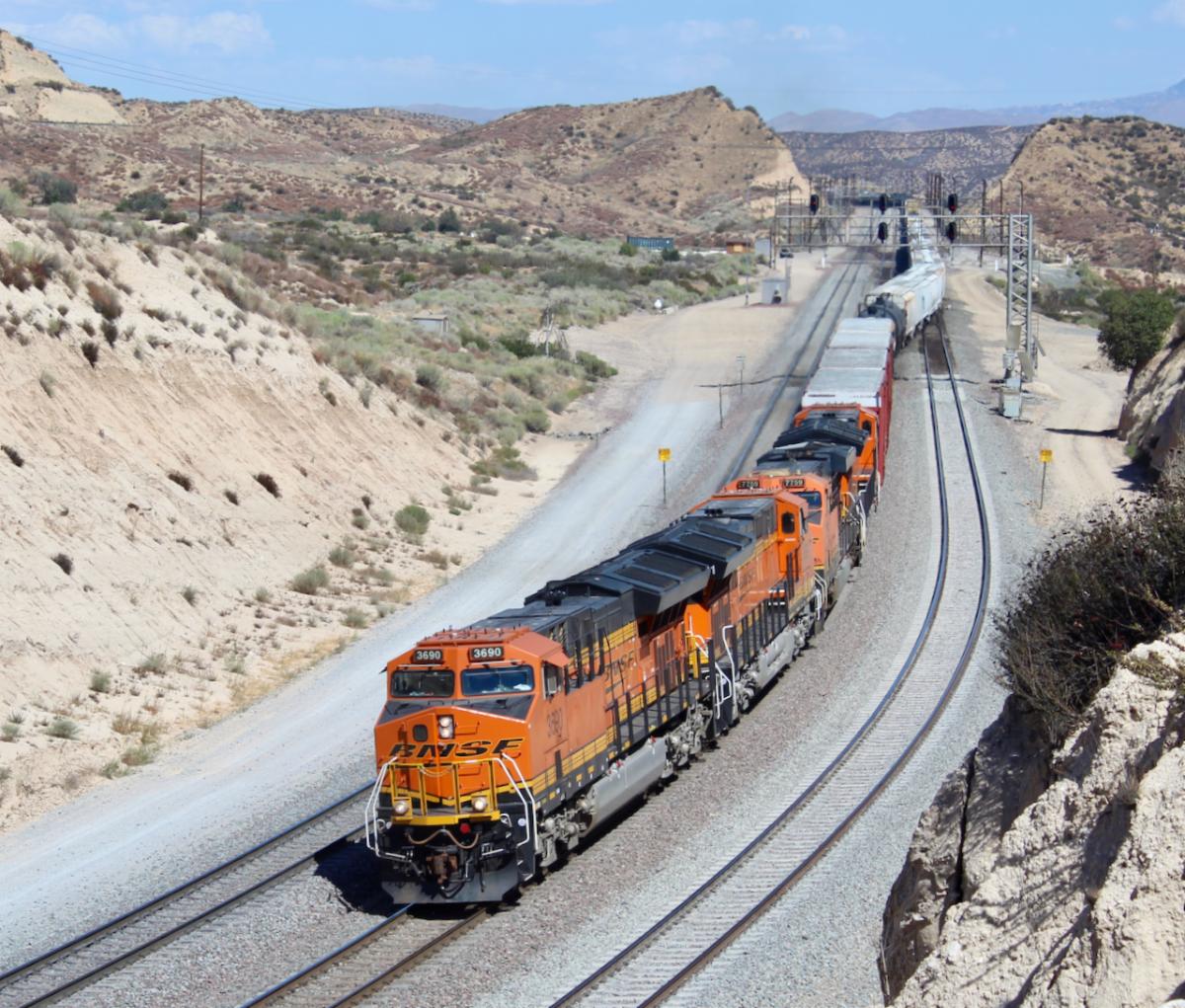
FORT WORTH, Texas — BNSF Railway will limit carload traffic bound for California through the end of July as it struggles to overcome congestion related to crew shortages and bad weather along portions of its Southern Transcon.
“This limited embargo will impact automotive shipments as well as specific agricultural and industrial commodities. Intermodal shipments, which are being managed through alternate means, are not covered by this embargo,” BNSF said in its advisory.
BNSF said it was confident the embargoes would help it resolve worsening congestion in Southern California.
“We have experienced a sharp increase in congestion throughout Southern California during the past few weeks due to several high wind events concurrent with the high levels of traffic seeking to move through the region,” the railroad said. “In addition, flash flooding from monsoonal rains caused a service outage earlier this week on a portion of our Southern Transcon near Laguna, New Mexico, approximately 70 miles west of Belen. Both main tracks at this location were out of service for several hours. Temporary speed restrictions were implemented while crews restored and inspected affected track, which resulted in additional congestion and reduced fluidity on the Transcon.”
BNSF’s latest Surface Transportation Board update, filed on Wednesday, showed that 12% of the railroad’s road trains experienced unplanned recrews, double the normal rate of 5% to 6% when the railroad is running well.
But the recrew rate was much higher along the Southern Transcon, which across New Mexico, Arizona, and into Southern California carries more than 80 trains per day and is the busiest freight railroad in North America. BNSF recrewed 19.9% of its trains on the California Division and 22.5% on the neighboring Southwest Division.
|
|
(Editor's Note: This STB Order might just open the floodgates for other shippers to ask for similar measures, as hundreds of shippers nationwide are desperate for better service, and may plead their case to the STB for similar action on their behalf. How in the world will UP and the other Class Ones be able to comply? When they fail, they need to be fined for violation of the law.) |
|
STB Issues Emergency Service Order to UP |
|
The Surface Transportation Board (STB) on June 17 directed Union Pacific (UP) to deliver on its commitment to move unit trains of corn from origins in the Midwest to California on behalf of Foster Poultry Farms, following the chicken and feed producer’s exparte petition for an emergency service order.
According to Livingston, Calif.-based Foster’s June 15 petition, UP hauls corn to Foster facilities in 100-car unit trains, where it is processed into corn meal for animal feed. “The petition alleges that service failures began in February 2022 and that Foster Farms … engaged the Board’s Office of Public Assistance, Governmental Affairs, and Compliance (OPAGAC) to resolve the situation,” the Board wrote in its June 17 decision (download below). “According to Foster Farms, an emergency service order is necessary to alleviate the harm to its business and the poultry, dairy, and feed yard livestock that depend on the distribution of corn meal supplied by Foster Farms. … Foster Farms further states that the corn delivered by UP is corn exclusively used to feed hundreds of thousands of cattle and millions of chickens that provide food supplies and that UP’s service failures impact Foster Farms’ ability to serve the public.”
STB explained that it may issue an emergency service order “under 49 U.S.C. § 11123 when it determines that circumstances, such as the unauthorized cessation of operations or other failure of traffic movement exists that creates ‘an emergency situation of such magnitude as to have substantial adverse effects on shippers, or on rail service in a region of the United States or that a rail carrier providing transportation subject to the jurisdiction of the Board … cannot transport the traffic offered to it in a manner that properly serves the public.” STB found that the order was “warranted” in this case.
|
|
Support New Amtrak and Passenger Rail Programs from the Bipartisan Infrastructure Act! |
|
The passage of the Bipartisan Infrastructure Law has launched a new era for America’s rail passengers. The Investment in Infrastructure and Jobs Act (IIJA) establishes several important new passenger rail programs and, for the first time, provides ambitious, multi-year federal funding for the upgrade and expansion of the national intercity passenger rail network. There will be challenges in implementing the BIL’s rail title, as well as restoring passenger rail service to pre-pandemic levels. Importantly, the funding that the BIL provides to Amtrak is reserved for specific uses, so achieving that restoration will require robust annual funding for the railroad's Northeast Corridor and the National Network accounts as part of the appropriations process.
The Rail Passengers Association is asking for your help to encourage Congress to provide effective oversight of new and expanded passenger rail programs and ensure that appropriators fully fund rail programs at the authorized levels established by the Bipartisan Infrastructure Law.
|
|
TTD and Union Pacific Disagree Over Safety Technology Deployment |
|
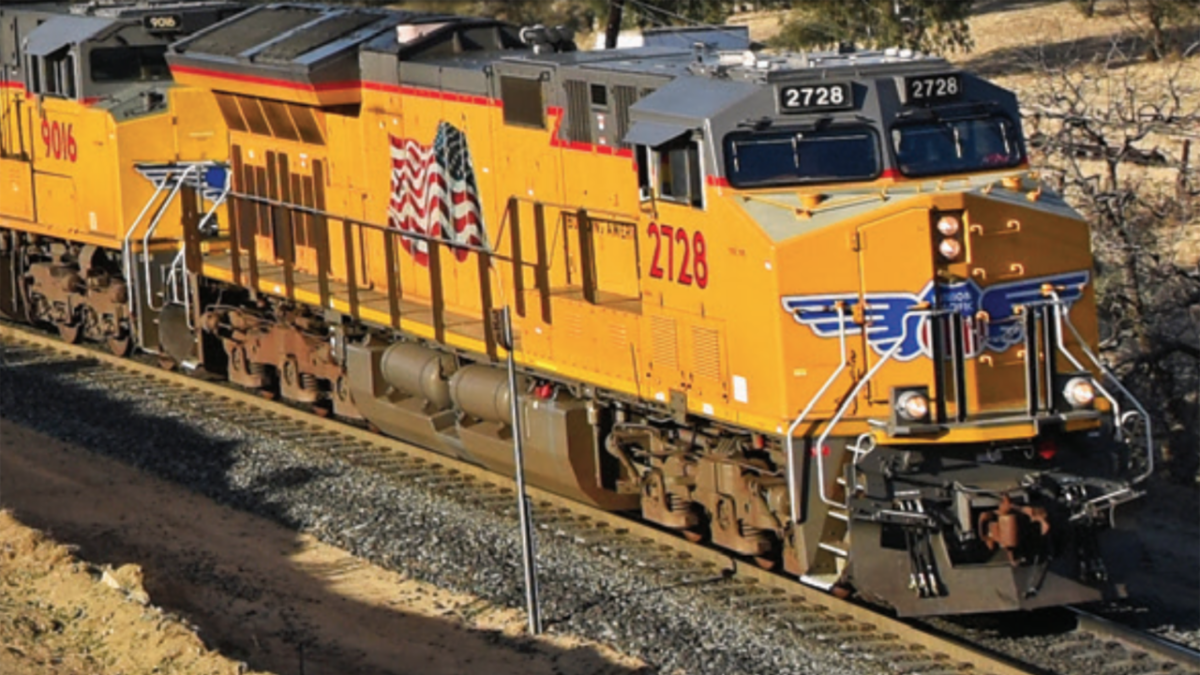
Union members are responding to Union Pacific’s request to the Federal Railroad Administration to extend a waiver governing UP’s test program for wheel temperature detectors (WTDs).
UP (NYSE: UNP) is asking FRA to allow the use of WTDs on intermodal trains operated on segments of UP’s system, as well as extend the distance at which visual inspections would be performed. UP has been using WTDs under normal operating and traffic conditions between the coal mines of Wyoming’s Powder River Basin and an unloading facility at White Bluff, Arkansas.
But union members say UP’s goal is to reduce visual inspections and save on overhead costs.
WTDs are “actually a useful device that’s clearly valuable as a complement to the inspections, but [the technology is] really about detecting the temperature on the rail,” Regan told FreightWaves. WTDs have “to be used as a complement to the inspections. A person is trained to see where there might be a defect, where there could be a problem down the road and what might need to be improved or upgraded or replaced in the near future. This device cannot do that.”
|
|
Is Transport of LNG By Rail Safe? |
|
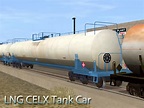
The debate on whether the U.S. federal government should allow the movement of liquefied natural gas by rail could come to a head this summer, with the Pipeline and Hazardous Materials Safety Administration (PHMSA) poised to make some big decisions.
By June 30, PHMSA and the Federal Railroad Administration are expected to issue their decision on whether they should temporarily suspend a 2020 rule allowing for the transport of LNG by rail via specialized tank cars while they review the impact on safety, the environment and on Native American tribes. That 2020 rule was enacted under former President Donald Trump.
But there are other pending matters before federal regulators pertaining to LNG by rail. PHMSA is also considering a final rulemaking to modify regulations governing LNG by rail to incorporate ongoing research efforts. That decision is due by June 30, 2024.
Meanwhile, Energy Transport Solutions (ETS) is seeking to renew a permit granting it permission to ship LNG by rail. Trump had granted ETS the permit in 2020 so that the company could export LNG via a terminal in New Jersey. PHMSA’s decision on that permit renewal is pending.
To add more complexity to the issue, six environmental groups and 14 states plus the District of Columbia and a Native American tribe have filed a lawsuit against the U.S. Department of Transportation over the 2020 rule.
|
|
FAMES Report: Fatal Accidents Involving Roadway Workers-in-Charge and Lone Workers |
|
Over a 25-year period, 24 fatally injured roadway workers were RWICs or Lone Workers responsible for establishing on-track safety. During this period, RWIC’s and Lone Workers represented 26% of the 89 fatalities analyzed. In 17 of the 24 fatalities, the RWIC was providing on-track safety for a roadway work group, the remaining 7 fatalities were Lone Workers. Read the full Report below. |
|
(Editor's Note: Just one more ruling by a conservative pro-corporate court that will thwart the efforts of communities and states nationwide in their efforts to limit blocked railroad crossings at grade in their communities. This ruling was made in the name of protecting the rights of interstate commerce. It appears that the Class One interstate rail carriers can get away literally with murder - and anything else - all in the name of "interstate commerce".) |
|
Supreme Court Won’t Hear Oklahoma Crossing-Law Case |
|
WASHINGTON — The U.S. Supreme Court has declined to review a lower-court ruling striking down an Oklahoma law allowing railroads to be fined for blocking grade crossings longer than 10 minutes.
Oklahoma passed its Blocked Crossing Statute in 2019, and when BNSF Railway was cited under the law, it sued in federal court and was granted temporary and permanent injunctions, with U.S. District Judge Charles B. Goodwin saying that “a statute that tells rarilroad companies how long they may stop their trains — for whatever ends — intrudes on the territory” reserved for federal regulators.
|
|
WEBINAR: What Can Be Done About Amtrak Trains On-Time Performance - Wednesday, June 29th |
|
In July 2021, Federal rules took effect covering late trains and customer service – rules we worked more than 10 years to get out of the courts and into the books. If you strip away the formulas and formality, the bottom line is this: the FRA, the Surface Transportation Board, Amtrak, and the Rail Passengers Association are all now keeping score and enforcement could be just around the corner. With three of Amtrak's long-distance trains running late 87% of the time last month, this conversation couldn't be more timely.
Join us next Wednesday, June 29th, at 3pm eastern when Rail Passengers Association CEO Jim Mathews will sit down with Amtrak's Host Railroads Group to talk about today's late trains and what all of us can do about it to make it better. Plan on attending? Submit your questions! Send in your topic specific questions to Madison Butler at mbutler@narprail.org with the subject line "M&S Webinar" to be answered during the event. Questions will be due by Friday, June 24th.
Registration will close this coming Monday, June 27th, at Midnight eastern. Space, as always, is limited to 475 participants, so reserve your spot now. The Zoom link will be sent to you the day before the event.
|
|
(Editor's Note: This represents an important development. If rail workers strike in the USA later this summer/fall, we will need support of groups like this. RWU has been working tirelessly since 2014 to build such an alliance between rail workers and community/environmental activists in preparation for just a showdown with the freight carriers. Rail workers in the USA might just have more support out there than we know!) |
|
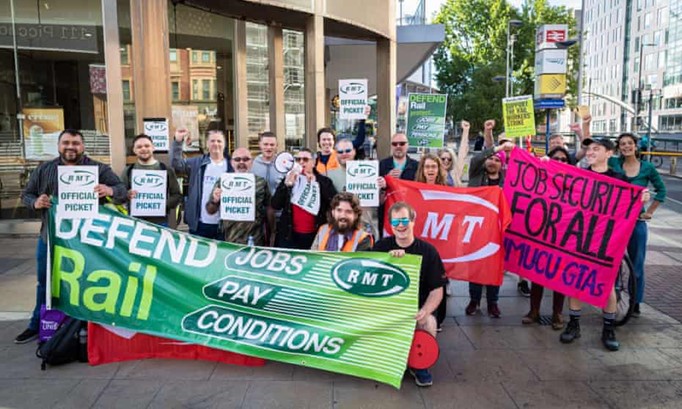
Climate Justice Groups Join British Rail Strike Picket Lines |
|
Climate justice groups have joined RMT picket lines across Great Britain to support the rail strike and argue the government must invest in public transport to avoid the worst impacts of global heating.
Hundreds of activists from several groups including Just Stop Oil, War on Want, Extinction Rebellion [XR] and Friends of the Earth Scotland have joined striking workers on more than 40 picket lines in towns and cities, with more expected to turn out in the coming days. They argue that well-funded, publicly owned and affordable public transport will be essential to reduce the UK’s dependence on fossil fuels, moving people away from cars to more energy-efficient trains.
But they warn the cuts and redundancies proposed by the government will not only hit workers in the middle of a cost of living crisis but also weaken the rail network, locking in high carbon transport such as cars for decades to come.
According to government figures, transport is the UK’s largest source of emissions, responsible for 27% of greenhouse gases in 2019. Of this, 55% comes from cars and most of the remainder is from vans and lorries.
Bruce Murphy, an organiser with Just Stop Oil, is one of scores of the group’s activists who have been on picket lines in the past few days.
“You can’t separate the cost of living crisis and the climate crisis and I think more people are understanding that in both the green movement and the progressive labour movement,” he said.
|
|
Week 24: Intermodal A Drag on U.S. Rail Traffic |
|
U.S. freight-rail traffic continued its downward trend during the week ending June 18, with railroads logging 501,207 carloads and intermodal units, down 2.5% compared with the same week last year, according to Association of American Railroads data.
Total carload volume ticked up 0.4% to 232,291 units, with six of the 10 carload commodity groups posting increases. However, U.S. railroads' intermodal traffic slumped 4.9% to 268,286 containers and trailers.
Among commodity groups that logged increases were grain, up 2,411 carloads to 22,012; nonmetallic minerals, up 860 carloads to 32,505; and motor vehicles and parts, up 833 carloads to 13,366. Commodity groups that posted decreases included metallic ores and metals, down 2,707 carloads to 20,915; coal, down 1,539 carloads to 66,281; and miscellaneous, down 382 carloads to 8,908.
|
|
|
|
|
|
|