e-Newsletter | August 6, 2021 |
|
Part 3: “The Sailing Life for Me”
The 1877 Memoir of Captain Joshua Hale (1812-1894)
Introduced and edited by Kristen Fehlhaber
Part 3 - in which the author rubs elbows with royalty, goes to a German fair, catches (but can’t land) some big fish and swims ashore from Plum Island on his return home. For information about this memoir, see previous newsletter editions here. Note: The author had just arrived in Hamburg, Germany - the final destination of his first-ever, trans-Atlantic sea voyage. The time is late summer, 1830.
We were to report to, and receive orders from, Messers Hope & Co. Merchants & Bankers and used often to go into their office. Our letters from home were all directed to their care, and we were so anxious to receive them as soon as they came. I called at the office every day.
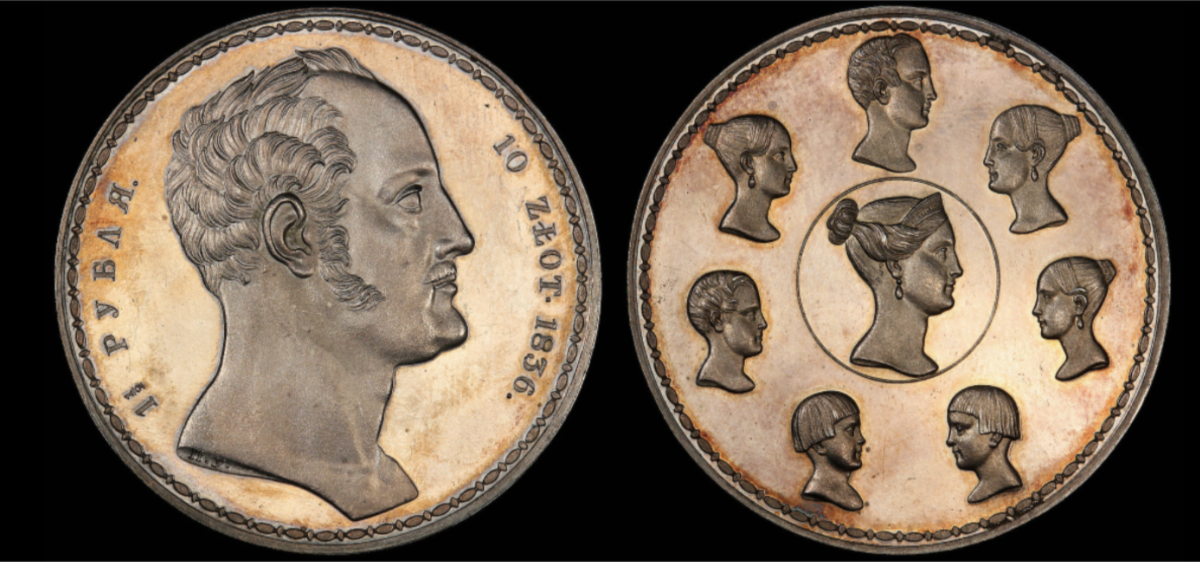
Hope & Co. were very rich and had a very high reputation for business, and high standing for integrity and honesty, and were the bankers for many of the different governments of Europe, and the sons of Royal Houses were entrusted to their care to learn the great art of taking care of the pecuniary affairs and of the business management of the nations. One son of the then Emperor of Russia [Nicholas I] was there - which I do not know - and two sons of the Dukes of some of the small kingdoms of Germany.
|
|
Hamburg was near and we were there often, and a good deal of the time. In fact, we boarded there and went down to the ship every day, a good pleasant walk, no regular conveyance that I can remember. We had a very pleasant time and enjoyed it very much. I had no care of any business and walked about the city freely and saw all I could, the public gardens, parks, etc.
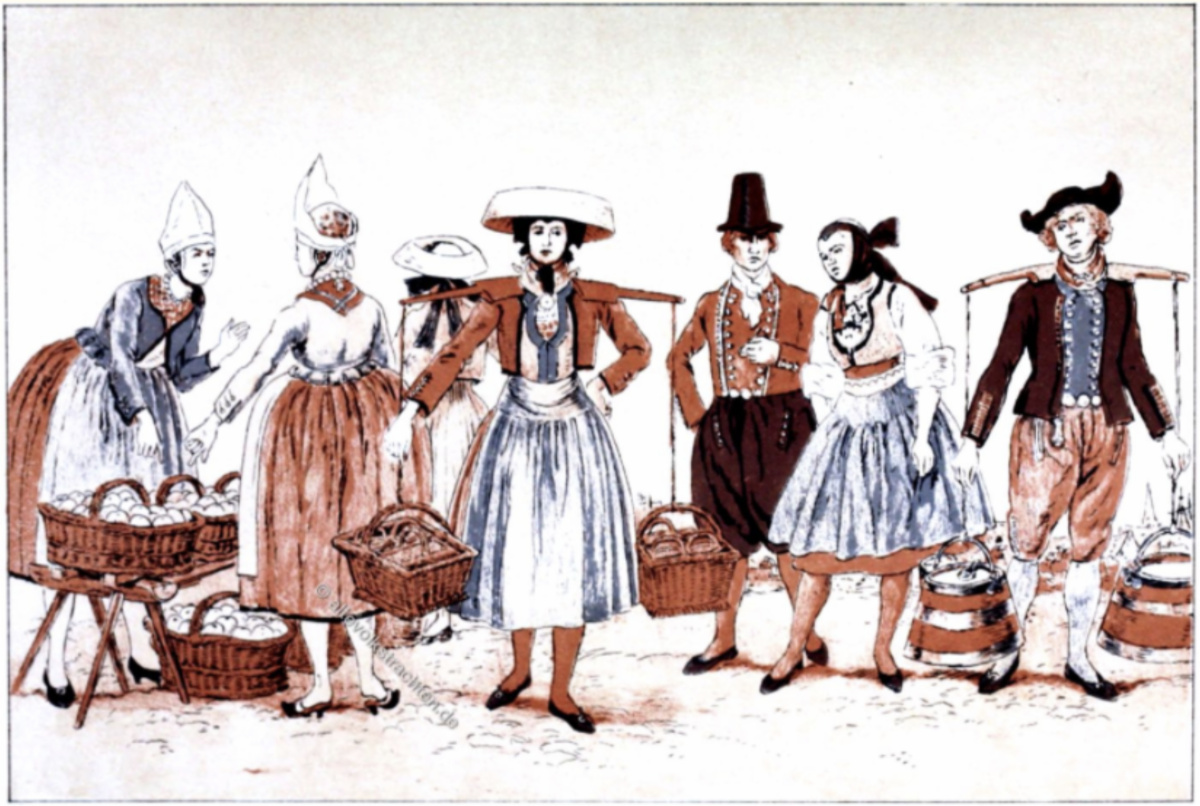
There was a great fair there, and people from the neighboring towns and villages flocked in, and it was very amusing to me to see their different dresses and customs, all so very odd looking to me, who had never seen such high caps, wooden shoes, clogs, etc. All sorts of games and amusements were there to please and things to sell. The farmers brought in their horses, cows, pigs, hens and fowls and birds of many kind and the women their work to sell, and every trade and tradesman represented there and it was a great high market time for all to buy and sell, and to enjoy themselves. It came I think then only once a year and was looked forward to as their great holiday and lasted for a whole week. Our cargo now is all out and vessel ready for sea, business all done and we set sail for home, in ballast and got safely there, but had some rough time, and a rather long passage.
|
|
Traditional dress from the Hamburg in early 1800s: fruit sellers on left, strawberry seller in middle, milkman on right. Photo credit here.
|
|
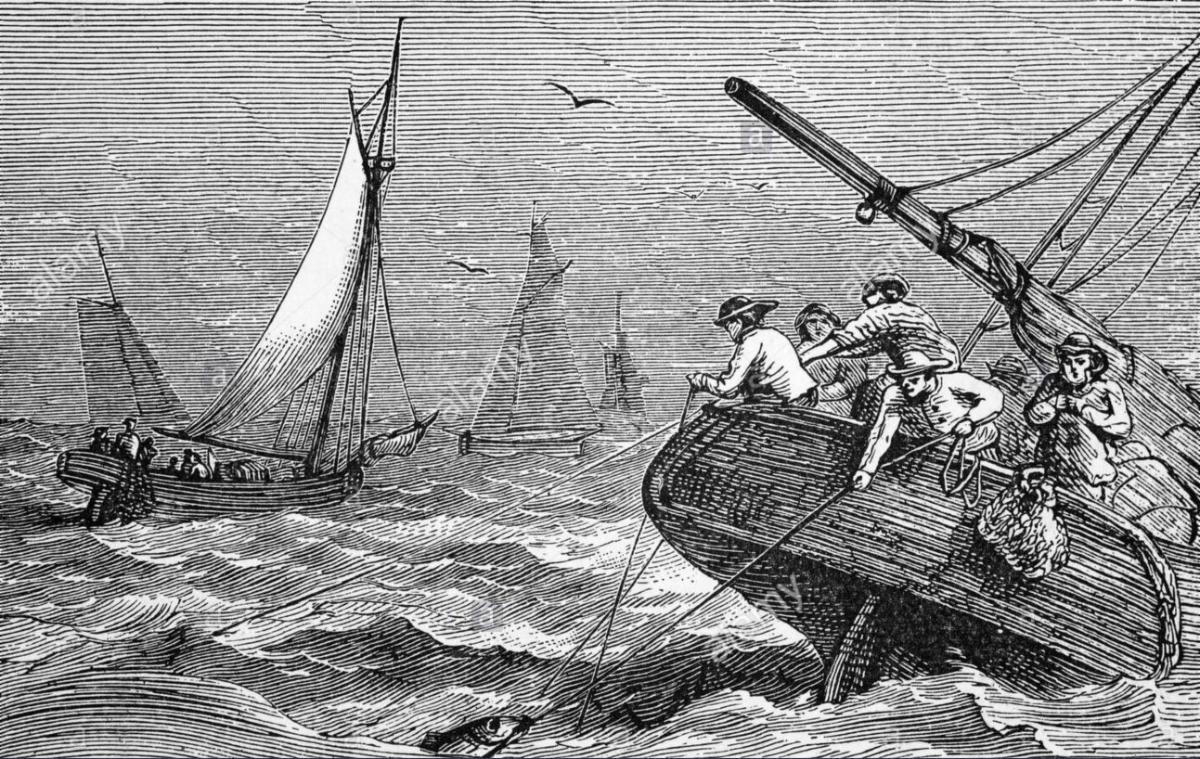
It was on this passage that in crossing the Grand Banks of Newfoundland I had so good success in catching fish though laughed at by the older one for this idea. There was but little wind, and the vessel was moving very slowly and the captain said if I cast the lines overboard I would hand them in myself, the water was deep over 60 fathoms or 320 feet. |
|
Cod fishing off the Newfoundland banks during the 19th century. Courtesy image. |
|
I got the deep sea line ready and my fish hooks all on two and sea line ready on the small lead of 14 lbs. and threw it over. Soon I thought I felt a bite and again very soon another, and then it began to draw in the line and it came very hard and no one would help me. The Mate Mr. Hunt was watching me and very soon he pushed me to one side and said “go away boy” for he saw there were fish on the hooks and true enough we had caught two large fish. Cod, one weighing 16 ½ and one 16 lbs, and soon the wind increased and the vessel moved faster through the water so they could not catch any more, and were pleased with my success in fishing for they would help eat the nice fish.
When we neared our own coast we had a hard gale of wind from northeast and had a hard time to keep off the shore. When the gale abated we beat out of the bay of Boston and ran around the Cape Ann and in to our bar, and anchored Saturday night, and Sunday morning landed on Plumb [sic] Island and rode up home, and met Father in the chaise to bring us up home. Mr. Moses Pettingell was bringing us up in his carriage.
It seemed to me as we were riding up High Street I never saw so beautiful a place. Just after the cold swim we had – I am satisfied now there [are] but few pleasanter rides in the country anywhere. My first voyage was ended and my vacation from the office up, and as I was fully well returned to duty and enjoyed for some months, the pleasure and duties of the office, and hoped I could remain there for permanence.
|
|
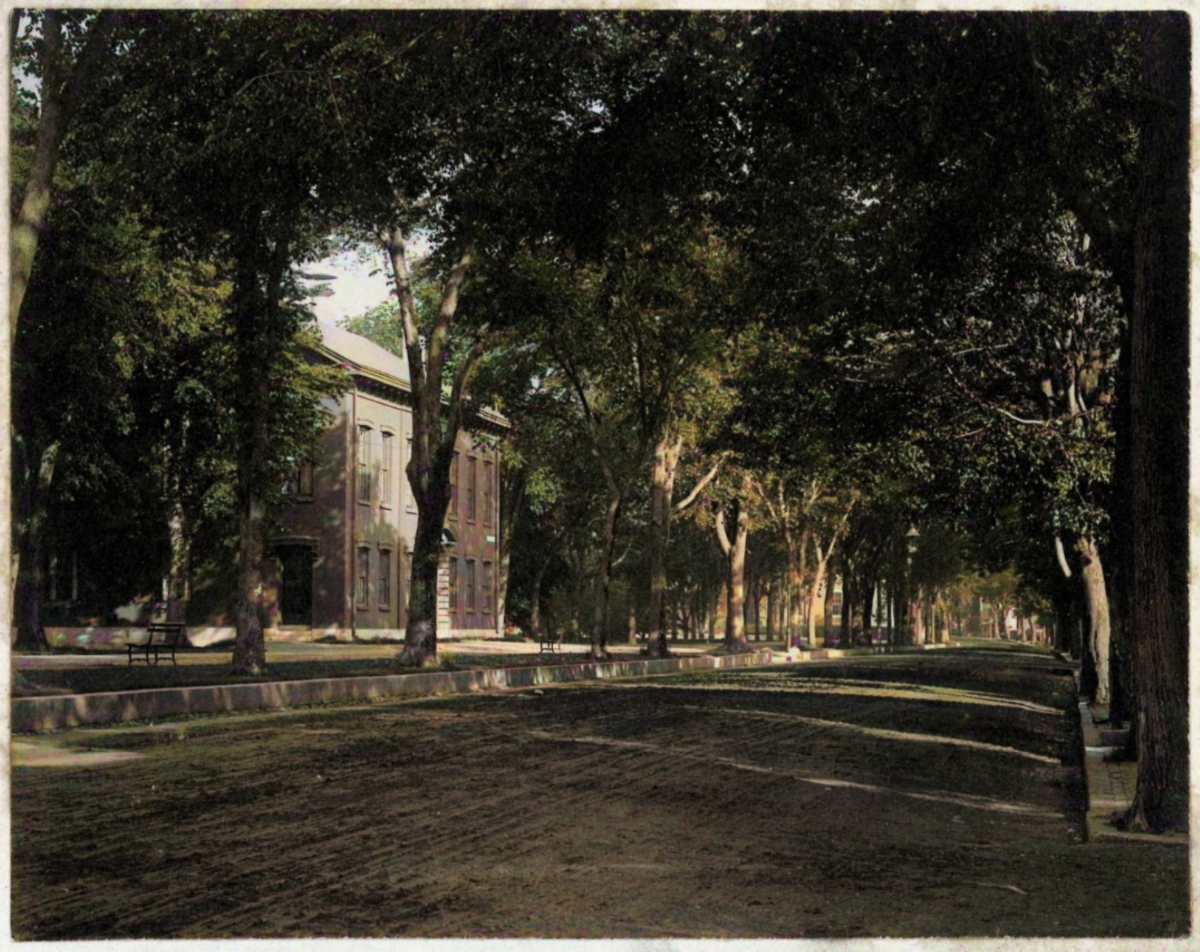
Early morning on High Street, near the Superior Court and Bartlett Mall, collection of Museum of Old Newbury (colorized), date and photographer unknown. |
|
I returned to work on first of October, and was at work until Spring or nearly – and was taken sick again, and after several trial waitings I felt I must give up the idea of living on shore and doing such kind of work.
Next time, "Liverpool, Amsterdam and Cholera" – K.F.
|
|
Woman on the MOON
The Holy Fingerbone of Old Newbury...a blog by Bethany Groff Dorau
This is how rumors get started.
The scene: Screen porch, summer night, (mostly) empty bottle of pink wine. Four women around a metal table, one holding forth.
That would be me, of course, gesticulating wildly, trying to explain to my friends why I love the Museum of Old Newbury like I do. “We have hard tack from the Civil War!” I said. “Hair! Death masks! Fingerbones!”
Ah, yes. That last one is a lie. I have found that since I am one of those people to whom unbelievable things seem to happen, I must stick quite closely to the truth or risk never being believed again. But my hard tack revelation had fallen flat, and I was determined to make my point. Kelly pushed back in her chair with a squeal. “Fingerbones?” Her jaw dropped open. “Like, in a drawer? That’s CRAZY!” The others were equally charmed by the one item on that list that, so far as I can tell is not in the collections of the Museum of Old Newbury.
Fingerbones are actually a thing, though, as any good museum-goer from Kansas City will tell you. The Nelson-Atkins Museum of Art in that great city, houses, among other things, the venerated finger of St. John the Baptist, purchased from the collection of the Brunswick Cathedral in Germany.
Alleged bits of John the Baptist reside in all corners of the world – his hand in Montenegro; his head in France; and an assortment of knuckles, teeth and other bones in Bulgaria. A friend told me just this morning that until 1969, every Catholic church was required to place a holy relic, generally a bone, a piece of skin, or a lock of hair, under their sacramental altar. Relics are not always body parts. They can be a piece of clothing, or a bit of a walking stick, things so familiar to a saint that they became extensions of the physical body.
It's not just Christians, either. The Famen Temple in Shaanxi Province, China housed the fingerbone of the Buddha. And we can all get behind the fingerbone of Santa Claus, given to Battle Abbey in Sussex, England, nine hundred years ago. There is no holy finger in the Islamic catalog of relics, but the beard and teeth of the Islamic prophet Muhammad are kept in Turkey’s Topkapı Palace.
As most parents will tell you, the physical intimacy of caring for children often bleeds into the realm of holy relics. How many of us have our children’s baby teeth or a first pigtail, or braid, in a box somewhere for our horrified descendants to find? Just me? Don’t lie. It’s not a fingerbone, you may retort. Ah, yes, and Jed and Meg’s teeth don’t cure the sick, but they are sacred to me, evidence of the existence of another kind of miracle.
Though we have no actual fingerbones (yet), the Museum of Old Newbury has an important collection of a kind of relic that lived a much more public life than a private memento.
Hair jewelry was ubiquitous in the nineteenth century, though it had been around for centuries. The distribution of jewelry made with locks of the hair of the executed King Charles I in the 17th century seems to have kicked off this trend.
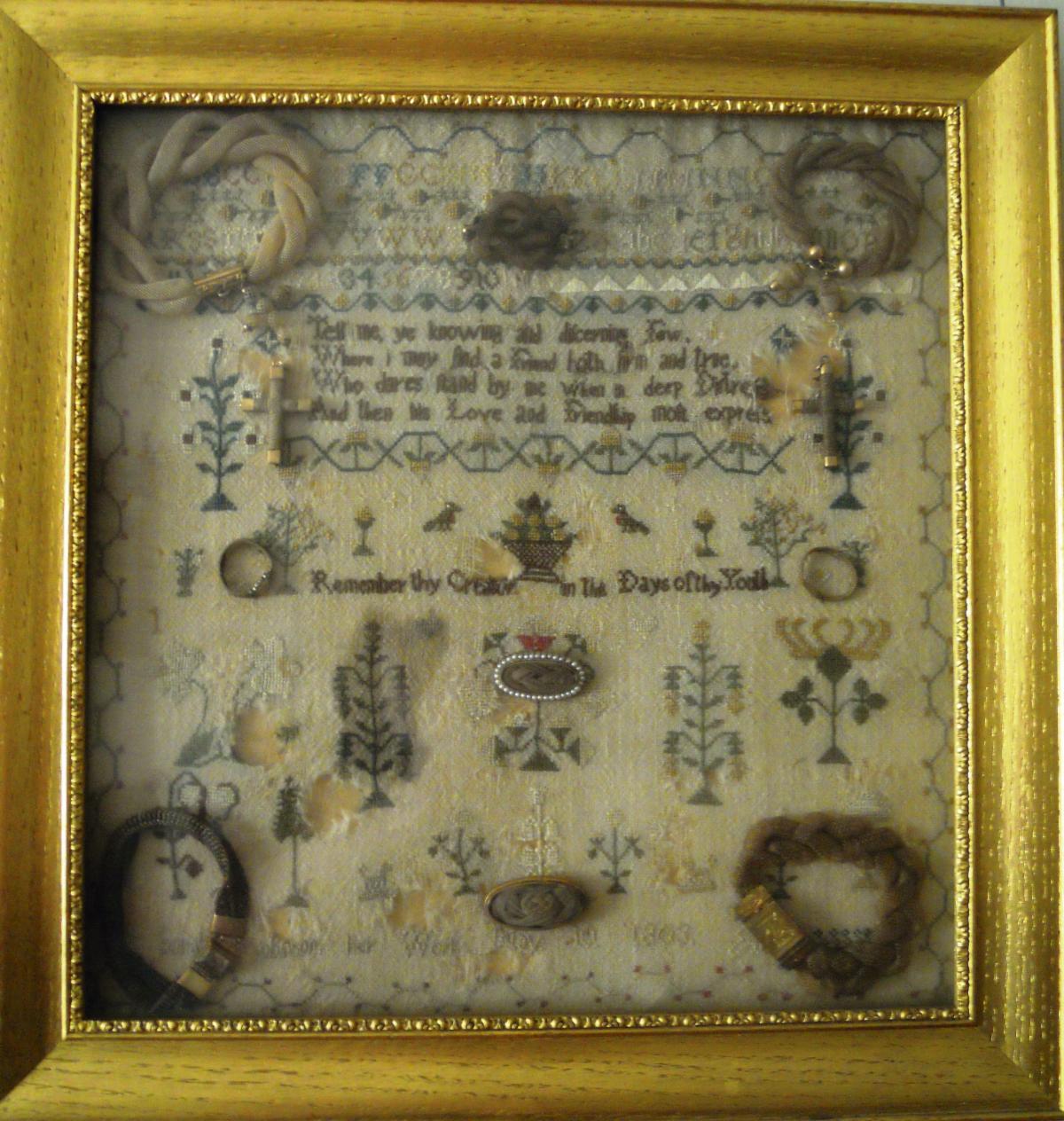
By the 19th century, hair was everywhere. People were painting with it, weaving it into ropey tubes, making faux flower arrangements out of it, all to remember the family and friends who had contributed the strands. Hairwork was considered a highly appropriate creative expression for women with time on their hands.
On October 1, 1860, Mrs. E.M. Brown of Newburyport won fifty cents for her human hair art at the Amesbury and Salisbury Horticultural and Agricultural Fair, which seems to have cast a wide net, also awarding prizes for the best wax dolls and work in moss.
|
|
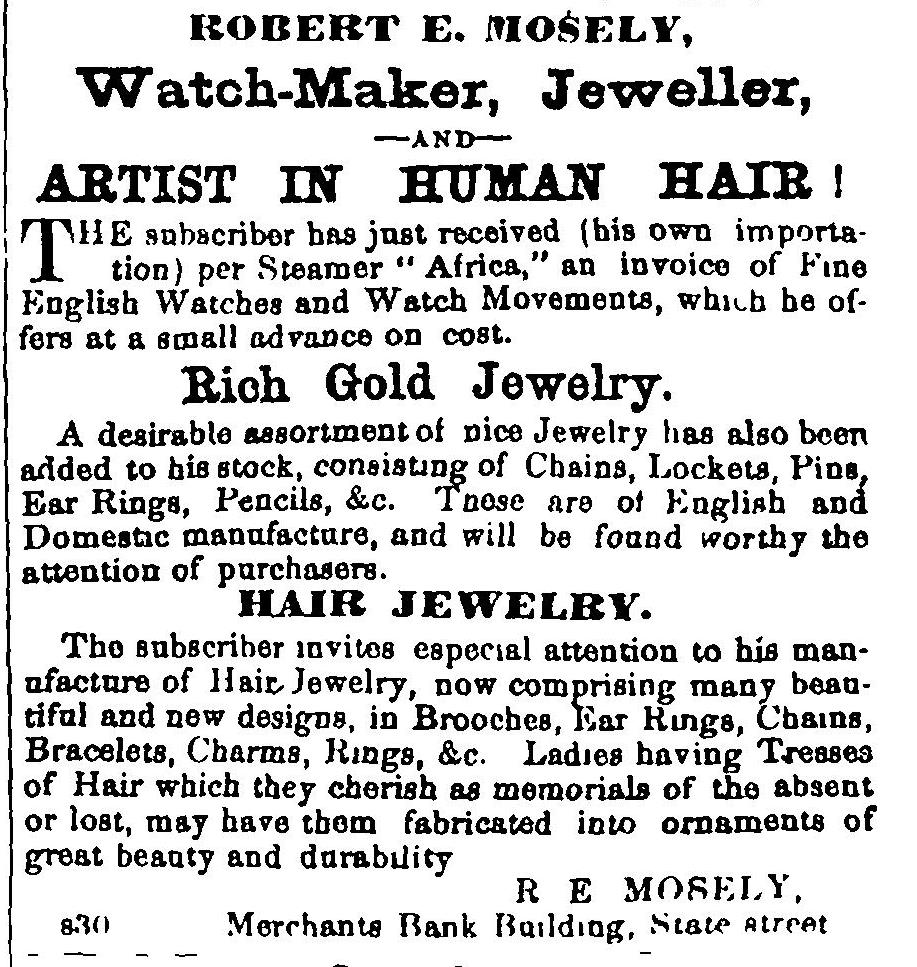
Mosely advertisement from Daily Herald published in Newburyport, Mass., Monday, October 27, 1856. |
|
Of course, not everyone had the time and patience to weave intricate patterns from dear departed Aunt Bessie’s locks.
The solution in 1856? Get thee down to the Merchants Bank Building, now 59-61 State Street to the shop of Robert E. Mosely, ARTIST IN HUMAN HAIR (emphasis is his), where “ladies having tresses of hair which they cherish as memorials of the absent or lost, may have them fabricated into ornaments of great beauty and durability.”
Nearly twenty years later, patrons were encouraged to visit the shop of William P. Jones, whose shop at 11 Middle Street advertised “hair jewelry and ornaments made to order.”
|
|
Our Mosely may have done the hairwork himself, but it is much more likely that he sent it out to one of the many factories employed in hairwork, utilizing the labor of women with no time on their hands, often immigrants who were encouraged to contribute their own hair to a stockpile of color-sorted tresses. The sentimental ladies of Newburyport were none the wiser, until competing manufacturers began accusing each other of substituting pre-made jewelry from the hair of strangers, leading to a boom in DIY kits and patterns advertised in such publications as Godey’s Lady’s Book.
Two friends visited me at the museum this morning, and I took them up the stairs to see two framed landscapes made of human hair. Leana’s mouth turned down at the corners. “Yuck,” she said. “I’m not into that at all.” She paused in front of the fireplace, tilting her head. “Although, come to think of it, I would love to have something made of Grouper’s hair.”
Grouper is a celebrity, a large, lovely grey cat who Leana (and I) adore. “Aha!” I exclaimed, triumphantly. “Okay, okay, I get it,” she said.
Don’t tell Leana, but sometime before Christmas I will corner Grouper with a pair of scissors and make that dream come true. Turns out she is not alone, and the website Etsy boasts over a dozen artisans who will craft your loved one’s hair into a ring, a locket, or just send you a custom pendant that you can fill yourself.
It’s not a holy fingerbone, but it will have to do.
|
|
Mourning sampler dated May 10, 1863, and embellished with multiple examples of jewelry made with loved one's hair. From the collections of the Museum of Old Newbury. |
|
Learn about upcoming programs, register, find Zoom links and catch up on previous presentations here. All of our virtual programs are free, however donations are gratefully accepted to help defray speaker fees.
|
|
Reminder:
Join us for the reinstallation of the Abigail Chase stone, today, Friday August 6, 2021, 1:00 p.m. @ The Bridge Street Cemetery, West Newbury.
In case you missed it, Susan Edwards, collections and development manager, joined WBUR's Lisa Mullins to talk about the stone's return for a segment on All Things Considered. Read here (audio link will be added when available, please check back) .
|
|
Martin Johnson Heade and the New England Landscape
Martin Johnson Heade (1819-1904) was a prolific painter of landscapes, still life and exotic portraits of tropical birds and flowers. Perhaps most iconic, are his salt marsh paintings of New England centered around Newbury's Great Marsh.
Colleene Fesko, an appraiser on the hit PBS television series Antiques Roadshow since its inception 25 years ago, will explore Heade's work beyond his associations with the Hudson River School of artists and discuss him as a Luminist painter, placing his salt marsh paintings and seascapes in the context of his own oeuvre and that of his contemporaries.
|
|
Save the Date
Monday, October 11, 2021
9:00 a.m. to 5:00 p.m.
Race & Slavery Symposium
Wilkie Center for the Performing Arts, Governor's Academy
Presented by the Museum of Old Newbury
Partnering Sponsor: The Governor's Academy
Scholars and historians scheduled to present include Manisha Sinha, Draper Chair in American History at the University of Connecticut; John Stauffer, Sumner R. & Marshall S. Kates Professor of English and of African and African American Studies at Harvard; Kabria Baumgartner, Dean's Associate Professor of History and Africana Studies at Northeastern University; Allegra di Bonaventura, Associate Director of Graduate Programs at Yale Law School; James DeWolf Perry, Principal Historical Consultant for Traces of the Trade: A Story from the Deep North, former Executive Director at Tracing Center on Histories and Legacies of Slavery; and Keidrick Roy, PhD candidate in American Studies at Harvard University, to name a few.
Registration and additional information to follow.
|
|
2021 Garden Tour Gallery – Part 7
Some of the fabulous images sent in by attendees of this year's 42nd Annual Garden Tour. Many more to come! Do you have a few? Send along (with your name and the town you live in) and you could be eligible for free Garden Tour tickets next year.
|
|
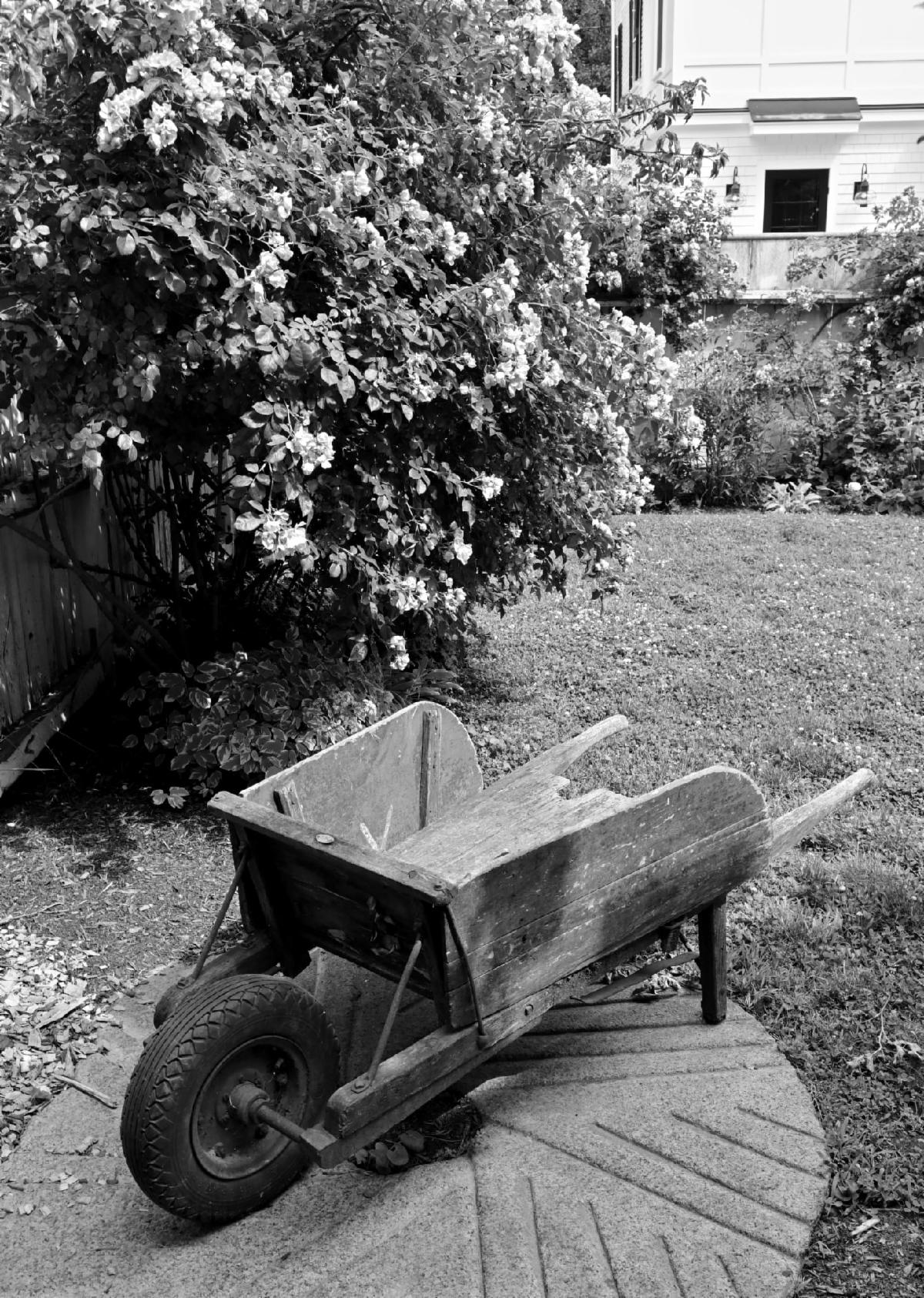
Photos by Rita Mihalek, Newburyport (top); Bob Watts, Newburyport (left) and Rochelle Perry-Platine, Haverhill (right). |
|
Puzzle Me This...
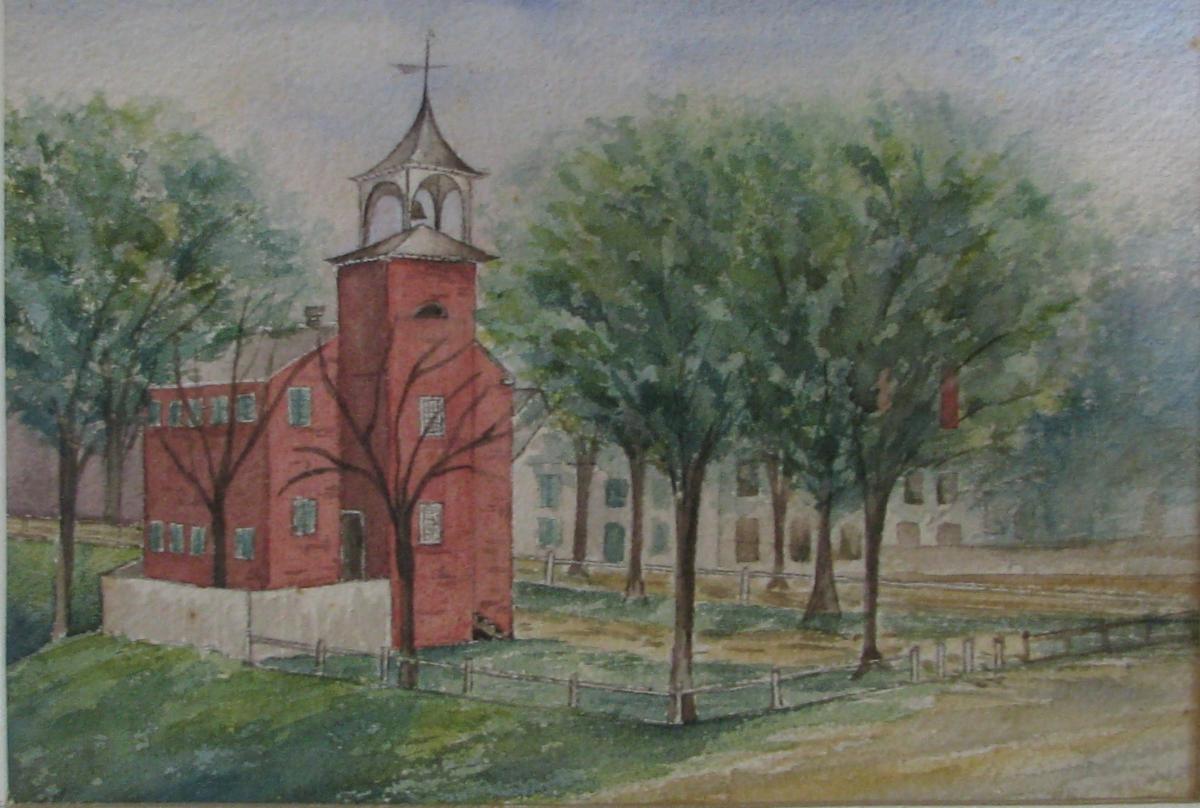
Watercolor on paper
The Grammar School at the Bartlet Mall
Cornelia Perrin Stone (1855-1940)
This brick schoolhouse was built at the eastern end of the Mall on town land near the Frog Pond. The one story schoolhouse was constructed in 1796 and enlarged in 1809. It served the town for nearly a century but was taken down in 1884 following its sale by auction.
Cornelia Stone, a Newburyport native, and a well recognized American artist, was popular in the early years of the 20th century.
From the collections of the Museum of Old Newbury.
Click on image to begin.
|
|
Something is Always Cooking at the Museum
Longtime docent Alice Gould keeps the Museum of Old Newbury theme going with this recipe as adapted by Craig Claiborne and Pierre Franey, from the 1880 recipe of "Bob the Sea Cook."
Potted Salmon
1 (13-ounce) can salmon
4 tablespoons softened butter
1 teaspoon anchovy paste
1/8 teaspoon ground mace or nutmeg
1/8 teaspoon cayenne pepper
1/2 tablespoon tarragon or white wine vinegar
Freshly ground pepper
Drain and bone the salmon, reserving some liquid to thin mixture if too dry. Put salmon in food processor. Add remaining ingredients and process until smooth. Refrigerate for day or two so that flavors meld. Serve with crackers or small toasts.
Editor's note: Potted refers to the process of preserving the meat (in this case the canned salmon), leading me to think canned chicken or tuna would also make a wonderful option for topping the suggested crackers or small toasts.
|
|
During this difficult period of COVID-19, we rely on your support more than ever. We continue to develop new, online programs for you to enjoy and keep us connected and look forward to in-person events as protocols for safety loosen. We hope, if you are able, that you will consider a donation to the museum. Thank you for your continued support.
|
|
Museum e-Newsletter made possible through the
generosity of our sponsors:
|
|
|
Museum of Old Newbury
98 High Street
Newburyport, MA 01950
978-462-2681
|
|
|
|
|
|
|
|